
Financial Literacy for Teachers: Understanding Retirement Savings, Insurance, and Long-Term Financial Security
Financial Literacy for Teachers: Understanding Retirement Savings, Insurance, and Long-Term Financial Security

Article by
Milo
ESL Content Coordinator & Educator
ESL Content Coordinator & Educator
All Posts
A teaching pension can support your retirement. But it may not cover every expense you will face. Understanding what your benefits provide, what your insurance protects, and where your savings fit in helps you prepare for life beyond the classroom.
Teachers often juggle several financial decisions at once. For example, pension contributions could come out automatically, supplemental retirement accounts could arrive with unfamiliar terms, and insurance paperwork could sit untouched for years.
Having those benefits does not necessarily mean they work together.
Financial literacy for teachers starts with practical questions rather than complicated investing strategies. How much retirement income can you expect, who depends on your paycheck, and which expenses could interrupt your plans?
You do not need to solve everything over one weekend. Breaking the work into retirement savings, insurance coverage, and long-term planning makes the process more manageable. Each area gives you a clearer picture of what you already have and what may need attention.
Still grading everything by hand?
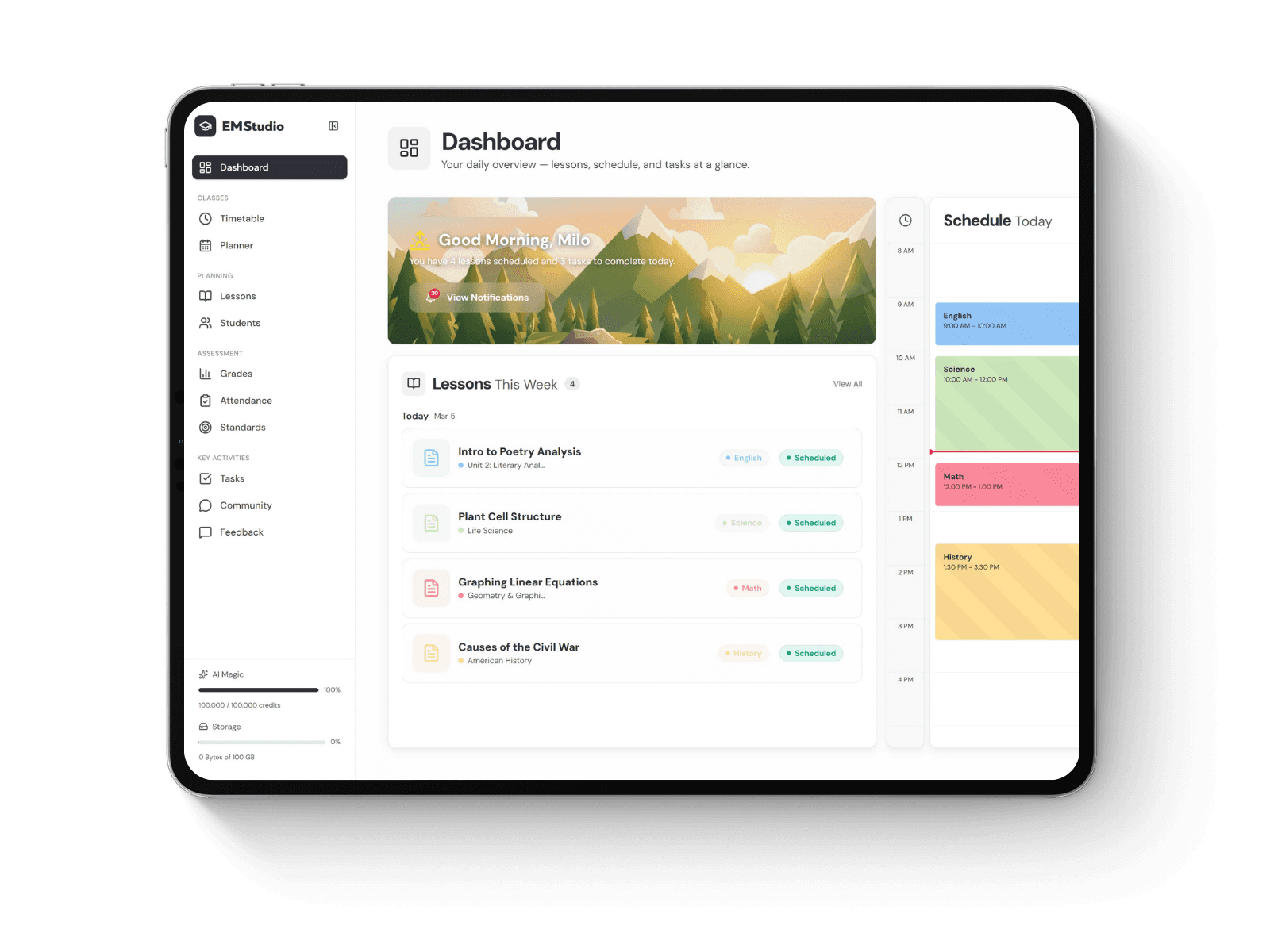
EMStudio is a free teaching management app — manage your classes, students, lessons, and more!
Learn More
Still grading everything by hand?
EMStudio is a free teaching management app — manage your classes, students, lessons, and more!
Learn More
Table of Contents
Retirement Savings
Start by identifying every source of retirement income available to you. Your pension, Social Security eligibility, workplace savings accounts, and personal savings each play different roles, so avoid treating them as interchangeable.
According to research by The Pew Charitable Trusts, approximately 40% of teachers work in public pension systems without Social Security coverage.
For your planning, the takeaway is straightforward: verify whether your teaching position earns Social Security credits instead of assuming those benefits will supplement your pension.
Request a pension estimate through your retirement system. Review the assumptions behind it, including your retirement age, service credit, salary history, and any survivor benefit election.
An estimate based on working several additional years may look very different from the benefit available if you leave sooner.
Look Beyond the Pension Estimate
A 403(b) or another supplemental account may help you build savings alongside your pension. Before choosing investments, compare account fees, investment expenses, withdrawal restrictions, and any surrender charges attached to an annuity.
Ask for costs in writing and find out whether you can choose among multiple approved providers. Small differences deserve attention when contributions may stay invested for decades.
Choose a contribution amount that fits your current budget rather than an ambitious number you cannot maintain. Revisit it after a salary increase, a paid-off debt, or another meaningful change in expenses.
Also, ask your benefits office how changing districts, taking leave, or leaving education could affect your retirement benefits.
Insurance
Insurance needs can change throughout a teaching career. Coverage that once protected young children or a mortgage may serve a different purpose as retirement approaches.
Start by reviewing your policy’s death benefit, premiums, beneficiaries, and any cash value. Consider who still depends on your income and whether maintaining coverage fits your budget.
You should know:
Who would need financial support without your income
What premiums can your household comfortably maintain
How long does the financial need last
Some eligible policyholders may also consider a life settlement, which involves selling an existing policy to a third party.
When investors buy life insurance policies through life settlements, those policies become alternative investments. Managing these investments is one form of alternative asset management.
To learn more, explore how Abacus Global Management firm combines alternative asset management and personalized, lifespan-based financial solutions.
Before changing coverage, compare keeping the policy, using available benefits, surrendering it, or pursuing a sale. Base the decision on your specific household’s needs rather than the appeal of receiving cash today.
It could be beneficial to ask a qualified financial adviser to explain how each option could affect your beneficiaries, taxes, and future coverage needs. A clear comparison can help you decide whether to keep or change your policy without losing sight of the people it was meant to protect.
Long-Term Financial Security
Long-term financial security depends partly on protecting your plans from everyday disruptions. A retirement account serves a different purpose from money you can access when, for example, your car needs repairs or a household bill arrives unexpectedly.
The Federal Reserve reported that 63% of adults could cover a $400 emergency expense with cash or its equivalent. For your household, the useful question is whether an unexpected bill would require borrowing or interrupting essential savings.
Build Flexibility Into Your Plan
Set an emergency savings target based on essential expenses, income stability, and the people who rely on you. Begin with a manageable amount and increase it over time rather than waiting until you can fund the entire goal.
Teachers whose paychecks follow a school-year schedule should also distinguish predictable summer expenses from emergencies. Setting money aside for known gaps helps preserve emergency savings for genuinely unexpected needs.
Debt belongs in the same review. List balances, interest rates, minimum payments, and repayment terms so you can weigh debt reduction alongside savings without overlooking either obligation.
Think beyond your expected retirement date, too. Discuss housing costs, healthcare expenses, caregiving responsibilities, and whether your household could manage if one income disappeared.
Keep beneficiary records and important financial documents organized. Make sure a trusted person knows where to find them without sharing account passwords casually.
Schedule a yearly review and another after major life changes. A marriage, divorce, new dependent, or job change can affect several parts of your plan at once, making a coordinated review more useful than isolated decisions.
Putting Your Financial Knowledge to Work
Financial literacy for teachers becomes useful when it leads to clear, manageable decisions. Understanding your pension, checking insurance coverage, and building accessible savings can help you connect today’s choices with your future needs.
Start with one task you can complete this week. Request a retirement estimate, locate your insurance documents, or review how much you have set aside for unexpected expenses.
You do not need a perfect plan before taking the first step. You need reliable information, realistic priorities, and time to revisit decisions as your circumstances change.
Hopefully this article has been helpful. If that is the case, peruse some of our related posts.
Still grading everything by hand?
EMStudio is a free teaching management app — manage your classes, students, lessons, and more!
Learn More
Still grading everything by hand?
EMStudio is a free teaching management app — manage your classes, students, lessons, and more!
Learn More



Notion4Teachers
Notion templates to simplify administrative tasks and enhance your teaching experience.



2026 Notion4Teachers. All Rights Reserved.
Notion4Teachers
Notion templates to simplify administrative tasks and enhance your teaching experience.
2026 Notion4Teachers. All Rights Reserved.
Notion4Teachers
Notion templates to simplify administrative tasks and enhance your teaching experience.
2026 Notion4Teachers. All Rights Reserved.