
Reciprocal Teaching: 4 Steps to Transform Reading Comprehension
Reciprocal Teaching: 4 Steps to Transform Reading Comprehension

Article by
Milo
ESL Content Coordinator & Educator
ESL Content Coordinator & Educator
All Posts
Are your students reading every word but still missing the point? Reciprocal teaching fixes that. It’s the comprehension strategy where students lead discussions using four specific moves: predicting, questioning, clarifying, and summarizing.
Developed by Palincsar and Brown in the 1980s, this isn’t another worksheet routine. You’re training kids to notice when meaning breaks down and fix it themselves.
The shift happens through gradual release of responsibility. You model first. Then students facilitate while you monitor from the edge of the room. Four steps total.
Still grading everything by hand?
EMStudio is a free teaching management app — manage your classes, students, lessons, and more!
Learn More

Still grading everything by hand?
EMStudio is a free teaching management app — manage your classes, students, lessons, and more!
Learn More
Table of Contents
What Do You Need Before Implementing Reciprocal Teaching?
Before implementing reciprocal teaching, you need heterogeneous groups of four students, grade-appropriate texts at 50L above independent reading level, and four colored role cards. Essential materials include sticky notes, a timer for 8-minute rounds, and established norms for text-based discussion. Students should read at a 3rd-grade level minimum with 90+ words per minute fluency to participate effectively.
You can't wing this. I tried once with zero prep—total disaster. Get the materials right, or you'll spend 40 minutes managing chaos instead of building comprehension monitoring and metacognitive reading strategies.
Texts at 50L above students' independent reading level—challenging but not frustrating.
Four colored role cards: Predictor (green), Questioner (blue), Clarifier (yellow), Summarizer (red).
Sticky notes, three per student, for marking confusion and evidence.
Timer set for 8-minute rounds—shorter than you think.
Physical space for groups of four, desks clustered, not rows.
Students need prerequisite skills for reciprocal teaching activities. They must read at minimum 3rd-grade level with 90+ words per minute fluency. Texts must be 90% decodeable with natural stopping points every 2-3 pages. If they can't decode, they can't clarify.
Total cost runs under $25 for a class of 30. Laminate the role cards, buy sticky notes wholesale, use a free phone timer. Skip this if your class exceeds 32 students or if students are in initial phonics instruction below 2nd-grade level.
Essential Materials and Text Selection Criteria
Use a three-tier rubric. First, check the Lexile—50L above independent level. Second, chapter length: 4-6 pages for middle school. Third, vary genre between narrative and informational.
Fourth graders handle Charlotte's Web (680L). Sixth graders manage The Great Fire (820L). High schoolers tackle New York Times articles at 1000L+. Apply the Goldilocks Test. You want effective reading comprehension strategies to activate.
Establishing Group Norms and Student Expectations
Post these five non-negotiables with hand signals. No interrupting—hand up. Evidence-based predictions—point to text. Thick how/why questions only. Summaries under 25 words. Rotate roles every two days. This gradual release of responsibility only works with clear structure.
Install a Parking Lot poster. If the Clarifier hits a wall, the question goes up. Answer during wrap-up. Reciprocal teaching dies without these guardrails. I learned that when my 7th period devolved into debate club.

Step 1 — Introduce the Core Strategies
Spread this introduction across four days. Twenty minutes each. Use the same 500-word practice text all week—maybe a short biographical piece—so students build familiarity while learning new lenses.
Day 1: Predicting using the Crystal Ball protocol. Day 2: Questioning with QAR. Day 3: Clarifying using Fix-Up Strategies. Day 4: Summarizing with SWBST.
Use explicit gradual release of responsibility daily. I Do: model the think-aloud strategy with stems. We Do: pairs practice together. You Do: solo application. The stems matter: "I predict... because the title shows..." for Day 1; "The author is suggesting... which makes me wonder..." for Day 2; "This word/idea is confusing because... so I will..." for Day 3; "In 20 words or less, this section is about..." for Day 4.
Watch for the literal question trap. If students generate only who/what/when questions during Day 2, pivot immediately. Post the Thick vs. Thin Questions anchor chart. Require two "thick" inferential questions before proceeding. This builds the reciprocal questioning strategy important for leading effective student discussions and true comprehension monitoring.
Teaching Summarizing and Questioning Techniques
Teach SWBST using "The Three Little Pigs." Somebody (the pigs) Wanted (shelter) But (the wolf came) So (they built brick houses) Then (they were safe). 3rd graders grasp it immediately. Apply it to your practice text on Day 4.
For questioning, use QAR—Question-Answer Relationships. Two buckets only: In the Book (Level 1: Right There and Think and Search) and In My Head (Level 2: Author and Me and On My Own).
Provide ten sentence stems for each level formatted as a printable bookmark:
Level 1 stems include: "According to the text..." "The author states..." "On page..." "In the section..." "The passage shows..."
Level 2 stems include: "The author implies..." "This reminds me..." "I infer that..." "The message is..." "This connects to..."
This distinction prevents the "find and copy" trap. When students ask only Level 1 questions, they aren't doing metacognitive reading strategies. They are just hunting facts.
Teaching Clarifying and Predicting Protocols
Introduce the four Fix-Up Strategies on Day 3. When meaning breaks down, students choose: re-read the sentence, read ahead for context, use context clues, or break the word into parts. Draw it as a flowchart decision tree on chart paper. "I'm confused" leads to four branches.
For predicting, use the Evidence-Based Crystal Ball. Students write predictions on sticky notes and physically place them on the page margin. After reading, they confirm or revise using text citations. "I was wrong because paragraph 3 states..." This builds accountability.
By Day 4, you've laid the foundation for true collaborative learning. Palincsar and Brown designed reciprocal teaching as a dialogue, not a worksheet. These protocols give your kids the language to sustain that dialogue independently.
Step 2 — How Do You Model Reciprocal Teaching Activities?
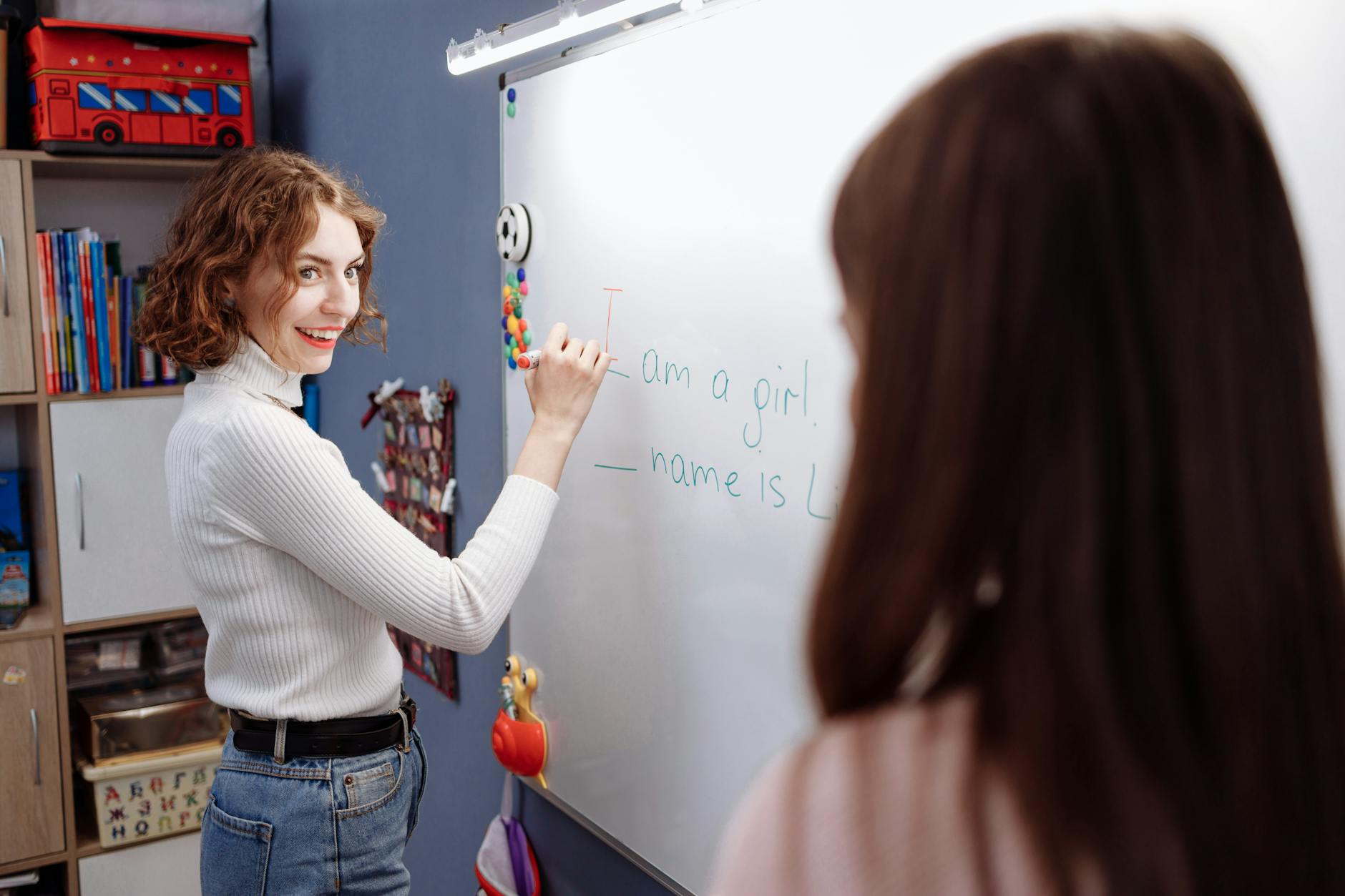
Model reciprocal teaching through a three-phase gradual release: First, conduct 15-minute fishbowl demonstrations with four students modeling roles while the class observes. Next, use think-alouds showing strategy application with deliberate errors for students to catch. Finally, transition to collaborative practice using scripted role cards before moving to student-led facilitation over a three-week period.
You cannot hand students the reins on day one. They need to see the engine running before they drive.
Start with a fishbowl demonstration. Select four students to model a complete round of reciprocal teaching activities while the rest observe using a "Strategy Spotting" checklist. Students mark when they spot each of the four strategies. This takes 15 minutes. The observers learn what quality looks like before they perform.
Follow this exact timeline:
Week 1: You facilitate 100% using think-alouds.
Week 2: You facilitate with student apprentices handling 50% of roles.
Week 3: Students facilitate while you serve as silent observer, stepping in only 10% of the time.
Script your think-aloud strategy explicitly. Say: "I am confused by the word 'utopian' on page 3, so I am going to re-read the sentence." Or: "The heading says 'Ceremony of Twelve,' which reminds me of graduation, so I predict this ritual assigns jobs." Model the metacognitive reading strategies Palincsar and Brown identified.
Track your progression through this sequence: Start → Teacher Models (Days 1-3) → Collaborative Practice (Days 4-8) → Student-Led with Monitoring (Days 9-15) → Independent Groups (Day 16+).
Teacher-Led Demonstrations and Think-Alouds
Script a ten-minute think-aloud using a 7th-grade excerpt from The Giver (800L). Include two deliberate errors. First, make a prediction without text evidence. Second, deliver a summary over 30 words. Stop and say: "Wait, that doesn't meet our criteria—let me fix that." Show students that comprehension monitoring includes catching your own mistakes.
Use language that reveals your mental processing. When you encounter unfamiliar vocabulary, verbalize the confusion. When you connect the heading to prior knowledge, state the link explicitly. This demonstrates that reading is active construction, not passive consumption.
Gradual Release of Responsibility Techniques
Implement the "Role Cards with Training Wheels" system. Begin with fully scripted cards: "Predictor: Look at the title. Say: I predict... because..." Move to prompt cards: "Predictor: Make a prediction using evidence." Finally, distribute blank cards requiring independent generation. This transition takes exactly ten sessions. Do not rush.
This structured approach mirrors explicit direct instruction models. You provide heavy scaffolding initially, then systematically withdraw support as students internalize the collaborative learning routines. By day sixteen, students facilitate discussions without cards.

Step 3 — Transition Students to Facilitation
Assigning Roles and Rotation Schedules
Use your recent running records or STAR Reading scores to build groups of four using the 1-2-1 Formula. Place one high reader at the 75th percentile or above, two middle readers between the 25th and 75th, and one struggling reader below the 25th. Never stack more than one student from the bottom quartile in a single group. Keep these groups stable for four-week cycles so students build trust.
Assign roles using Clock Buddies positions. Twelve o'clock is the Predictor, three o'clock as the Questioner, six o'clock as the Clarifier, and nine o'clock as the Summarizer. Create a Role Ring from circular cardstock showing current roles. Students rotate clockwise every two days. This ensures each child practices every reciprocal questioning strategy twice before the week ends.
Track rotations with a printable 20-day chart taped inside their folders. When students know their roles shift predictably every two days, they spend mental energy on the text instead of negotiating power. This stability supports the gradual release of responsibility from your modeling to student-led collaborative learning. Over four weeks, these routines become automatic.
Structuring Small Group Practice Sessions
Run disciplined 20-minute sessions using the Reciprocal Teaching Protocol Timer. Project a large visible countdown so students internalize the pacing. When kids see time evaporating, they cut the off-topic chatter and focus on the text. The rigid schedule ensures every student practices their reciprocal questioning strategy without one voice dominating.
0-2 min: Silent reading
2-5 min: Predictor activates prior knowledge
5-9 min: Questioner generates queries
9-13 min: Clarifier addresses confusion
13-17 min: Summarizer distills meaning
17-20 min: Glow and Grow reflection
Finish with the Glow and Grow protocol. Each student states one thing the group did well and one specific target for next time. Post a Parking Lot poster for questions that cannot get clarified within the four-minute window. This prevents derailing comprehension monitoring while building metacognitive reading strategies. Students learn to park distractions and return to the text.
Palincsar and Brown's 1984 research demonstrates that structured peer interaction improves comprehension monitoring significantly when maintained for six to eight weeks. Hattie's Visible Learning research confirms reciprocal teaching carries an effect size of 0.74, indicating substantial impact on achievement. These collaborative learning methods require disciplined think-aloud strategy structures while structuring small group practice sessions.

Step 4 — Monitor and Adjust Group Dynamics
Group size dictates how well reciprocal teaching activities flow. Triads are easier to manage but force one student to double up on roles. Quartets fit the four strategies perfectly—Summarizer, Questioner, Clarifier, Predictor. Quintets let you add a Synthesizer role, yet the logistics turn complex fast. Stick with quartets until students internalize the routines without your constant think-aloud strategy modeling.
Use a 10-item observation checklist to rate each group on a 1–3 scale. Check strategy accuracy, equitable participation (no student speaks >40% of the time), text evidence citation, and time adherence. Hold off on reducing support until the group averages 3.0 across five sessions. This tracks comprehension monitoring without hovering.
Using Observation Checklists During Sessions
Create a snapshot assessment rubric for your clipboard. Score each role 0–4. Did the Summarizer capture the main idea in fewer than 25 words? Did the Questioner ask two or more inferential questions that probe deeper? Did the Clarifier resolve confusion using fix-up strategies? Did the Predictor cite text has as evidence?
Record scores in a clipboard matrix with student names down the side. Target three groups per day. Rotate so every collaborative learning circle gets checked twice weekly. You are not grading papers for a gradebook; you are spotting gaps in metacognitive reading strategies before they harden into bad habits that derail the group.
Providing Targeted Feedback and Interventions
Implement micro-interventions using the Pause and Prompt technique. Circulate with your clipboard. Intervene only when a group stalls for 30 seconds or more. Coach the process, not the content. Ask “What strategy comes next?” Never “What does that word mean?” This follows Palincsar and Brown’s gradual release of responsibility.
If one student dominates the discussion, deploy Talking Chips. Each student gets three poker chips. They must spend one to speak. They cannot talk without a chip. Reset the chips at the ten-minute mark to ensure equitable participation continues throughout the session.
Use specific feedback stems when you step in. Say, “I noticed you skipped the evidence step. Next time try pointing to the sentence first.” Focus strictly on process errors—skipping steps or ignoring assigned roles—rather than content errors. Wrong answers are fine; broken methods are not. For persistent issues, review your classroom behavior management strategies.

How Do You Troubleshoot Common Implementation Challenges?
Use 'Talking Chips' to manage dominant speakers and 'Prime and Preview' for silent participants. Implement 'Stop and Lock' procedures to prevent reading ahead, and adapt for grade levels by adjusting text complexity—400L-700L for elementary, 1000L+ for high school. Avoid using with classes over 32 students or students below 2nd-grade decoding levels.
Most reciprocal teaching failures stem from predictable logistics, not the strategy itself. You need specific protocols for when students read ahead, dominate discussions, or finish early. Fix the mechanics first; the comprehension monitoring follows naturally.
Watch for three critical breakdowns:
Stop and Lock: When students read ahead, call "Lock" and have them close books immediately. This preserves the gradual release of responsibility Palincsar and Brown designed.
Visual Summaries: For ELL students stuck on summarizing, let them sketch the main idea first or clarify in their native language before attempting English.
Extension Questions: Keep index cards with depth questions handy. Early finishers analyze author's purpose or bias instead of checking their phones.
Match text complexity to developmental stages:
K-2: Picture books with you as permanent Summarizer. Focus on predicting and questioning only.
3-5: Chapter books at 400L-700L. Run full four-role rotation once students show decoding fluency.
6-8: Content-area texts emphasizing clarifying strategies for technical vocabulary.
9-12: Primary sources at 1000L+ with peer assessment rubrics. Expect resistance for two weeks.
Skip reciprocal teaching entirely if your class exceeds 32 students, if kids read below 2nd-grade level, or if texts run under two pages. You also need twenty minutes daily for four consecutive weeks. Sporadic attempts waste everyone's time.
Managing Dominant Talkers and Silent Participants
Download the Equity Maps app or use a simple tally sheet. Track who talks. If one voice consumes more than 45% of airtime, enforce the "Step Back" rule—they skip their next turn automatically.
For silent students, use "Prime and Preview." Two minutes before the session, privately hand them the discussion question. Let them rehearse their think-aloud strategy with you first. This reciprocal questioning strategy only works when everyone contributes.
These methods for increasing class participation align with true collaborative learning. You're teaching metacognitive reading strategies, not just managing noise.
Adapting the Strategy for Different Grade Levels
In K-2, try "Reciprocal Teaching Plus." Replace standard roles with Illustrator, Predictor, Connector, and Reteller. Students picture-walk before reading. You handle all summarizing to model the strategies explicitly.
For high school, add a fifth role: the Synthesizer. This student connects the text to unit themes or current events daily. Use differentiated instruction examples for various grade levels to adjust text complexity appropriately—elementary needs 400L-700L, high school needs 1000L+.
Expect a two-week buy-in period with teenagers. They will call it "busy work" until they notice their own comprehension improving. Stick with it.

The Bigger Picture on Reciprocal Teaching
Reciprocal teaching isn't a worksheet you hand out on Monday and collect on Friday. It's a shift in who owns the thinking in your classroom. When you move through these four steps—modeling with think-aloud strategy, releasing control through gradual release of responsibility, and letting students facilitate—you're building comprehension monitoring habits that stick better than any graphic organizer.
Palincsar and Brown developed this framework decades ago, and it still works because it mirrors how skilled readers actually process text. Your struggling readers get concrete scaffolding. Your advanced students deepen their metacognition. When you prep the right texts and troubleshoot group dynamics early, everyone learns to catch their own confusion before it derails understanding.
Start small. One group, one short text, one week. Watch what happens when students begin asking the questions instead of answering yours. That's the moment reciprocal teaching shifts from something you perform to something they own—and that's when comprehension finally sticks.

What Do You Need Before Implementing Reciprocal Teaching?
Before implementing reciprocal teaching, you need heterogeneous groups of four students, grade-appropriate texts at 50L above independent reading level, and four colored role cards. Essential materials include sticky notes, a timer for 8-minute rounds, and established norms for text-based discussion. Students should read at a 3rd-grade level minimum with 90+ words per minute fluency to participate effectively.
You can't wing this. I tried once with zero prep—total disaster. Get the materials right, or you'll spend 40 minutes managing chaos instead of building comprehension monitoring and metacognitive reading strategies.
Texts at 50L above students' independent reading level—challenging but not frustrating.
Four colored role cards: Predictor (green), Questioner (blue), Clarifier (yellow), Summarizer (red).
Sticky notes, three per student, for marking confusion and evidence.
Timer set for 8-minute rounds—shorter than you think.
Physical space for groups of four, desks clustered, not rows.
Students need prerequisite skills for reciprocal teaching activities. They must read at minimum 3rd-grade level with 90+ words per minute fluency. Texts must be 90% decodeable with natural stopping points every 2-3 pages. If they can't decode, they can't clarify.
Total cost runs under $25 for a class of 30. Laminate the role cards, buy sticky notes wholesale, use a free phone timer. Skip this if your class exceeds 32 students or if students are in initial phonics instruction below 2nd-grade level.
Essential Materials and Text Selection Criteria
Use a three-tier rubric. First, check the Lexile—50L above independent level. Second, chapter length: 4-6 pages for middle school. Third, vary genre between narrative and informational.
Fourth graders handle Charlotte's Web (680L). Sixth graders manage The Great Fire (820L). High schoolers tackle New York Times articles at 1000L+. Apply the Goldilocks Test. You want effective reading comprehension strategies to activate.
Establishing Group Norms and Student Expectations
Post these five non-negotiables with hand signals. No interrupting—hand up. Evidence-based predictions—point to text. Thick how/why questions only. Summaries under 25 words. Rotate roles every two days. This gradual release of responsibility only works with clear structure.
Install a Parking Lot poster. If the Clarifier hits a wall, the question goes up. Answer during wrap-up. Reciprocal teaching dies without these guardrails. I learned that when my 7th period devolved into debate club.
Step 1 — Introduce the Core Strategies
Spread this introduction across four days. Twenty minutes each. Use the same 500-word practice text all week—maybe a short biographical piece—so students build familiarity while learning new lenses.
Day 1: Predicting using the Crystal Ball protocol. Day 2: Questioning with QAR. Day 3: Clarifying using Fix-Up Strategies. Day 4: Summarizing with SWBST.
Use explicit gradual release of responsibility daily. I Do: model the think-aloud strategy with stems. We Do: pairs practice together. You Do: solo application. The stems matter: "I predict... because the title shows..." for Day 1; "The author is suggesting... which makes me wonder..." for Day 2; "This word/idea is confusing because... so I will..." for Day 3; "In 20 words or less, this section is about..." for Day 4.
Watch for the literal question trap. If students generate only who/what/when questions during Day 2, pivot immediately. Post the Thick vs. Thin Questions anchor chart. Require two "thick" inferential questions before proceeding. This builds the reciprocal questioning strategy important for leading effective student discussions and true comprehension monitoring.
Teaching Summarizing and Questioning Techniques
Teach SWBST using "The Three Little Pigs." Somebody (the pigs) Wanted (shelter) But (the wolf came) So (they built brick houses) Then (they were safe). 3rd graders grasp it immediately. Apply it to your practice text on Day 4.
For questioning, use QAR—Question-Answer Relationships. Two buckets only: In the Book (Level 1: Right There and Think and Search) and In My Head (Level 2: Author and Me and On My Own).
Provide ten sentence stems for each level formatted as a printable bookmark:
Level 1 stems include: "According to the text..." "The author states..." "On page..." "In the section..." "The passage shows..."
Level 2 stems include: "The author implies..." "This reminds me..." "I infer that..." "The message is..." "This connects to..."
This distinction prevents the "find and copy" trap. When students ask only Level 1 questions, they aren't doing metacognitive reading strategies. They are just hunting facts.
Teaching Clarifying and Predicting Protocols
Introduce the four Fix-Up Strategies on Day 3. When meaning breaks down, students choose: re-read the sentence, read ahead for context, use context clues, or break the word into parts. Draw it as a flowchart decision tree on chart paper. "I'm confused" leads to four branches.
For predicting, use the Evidence-Based Crystal Ball. Students write predictions on sticky notes and physically place them on the page margin. After reading, they confirm or revise using text citations. "I was wrong because paragraph 3 states..." This builds accountability.
By Day 4, you've laid the foundation for true collaborative learning. Palincsar and Brown designed reciprocal teaching as a dialogue, not a worksheet. These protocols give your kids the language to sustain that dialogue independently.
Step 2 — How Do You Model Reciprocal Teaching Activities?
Model reciprocal teaching through a three-phase gradual release: First, conduct 15-minute fishbowl demonstrations with four students modeling roles while the class observes. Next, use think-alouds showing strategy application with deliberate errors for students to catch. Finally, transition to collaborative practice using scripted role cards before moving to student-led facilitation over a three-week period.
You cannot hand students the reins on day one. They need to see the engine running before they drive.
Start with a fishbowl demonstration. Select four students to model a complete round of reciprocal teaching activities while the rest observe using a "Strategy Spotting" checklist. Students mark when they spot each of the four strategies. This takes 15 minutes. The observers learn what quality looks like before they perform.
Follow this exact timeline:
Week 1: You facilitate 100% using think-alouds.
Week 2: You facilitate with student apprentices handling 50% of roles.
Week 3: Students facilitate while you serve as silent observer, stepping in only 10% of the time.
Script your think-aloud strategy explicitly. Say: "I am confused by the word 'utopian' on page 3, so I am going to re-read the sentence." Or: "The heading says 'Ceremony of Twelve,' which reminds me of graduation, so I predict this ritual assigns jobs." Model the metacognitive reading strategies Palincsar and Brown identified.
Track your progression through this sequence: Start → Teacher Models (Days 1-3) → Collaborative Practice (Days 4-8) → Student-Led with Monitoring (Days 9-15) → Independent Groups (Day 16+).
Teacher-Led Demonstrations and Think-Alouds
Script a ten-minute think-aloud using a 7th-grade excerpt from The Giver (800L). Include two deliberate errors. First, make a prediction without text evidence. Second, deliver a summary over 30 words. Stop and say: "Wait, that doesn't meet our criteria—let me fix that." Show students that comprehension monitoring includes catching your own mistakes.
Use language that reveals your mental processing. When you encounter unfamiliar vocabulary, verbalize the confusion. When you connect the heading to prior knowledge, state the link explicitly. This demonstrates that reading is active construction, not passive consumption.
Gradual Release of Responsibility Techniques
Implement the "Role Cards with Training Wheels" system. Begin with fully scripted cards: "Predictor: Look at the title. Say: I predict... because..." Move to prompt cards: "Predictor: Make a prediction using evidence." Finally, distribute blank cards requiring independent generation. This transition takes exactly ten sessions. Do not rush.
This structured approach mirrors explicit direct instruction models. You provide heavy scaffolding initially, then systematically withdraw support as students internalize the collaborative learning routines. By day sixteen, students facilitate discussions without cards.
Step 3 — Transition Students to Facilitation
Assigning Roles and Rotation Schedules
Use your recent running records or STAR Reading scores to build groups of four using the 1-2-1 Formula. Place one high reader at the 75th percentile or above, two middle readers between the 25th and 75th, and one struggling reader below the 25th. Never stack more than one student from the bottom quartile in a single group. Keep these groups stable for four-week cycles so students build trust.
Assign roles using Clock Buddies positions. Twelve o'clock is the Predictor, three o'clock as the Questioner, six o'clock as the Clarifier, and nine o'clock as the Summarizer. Create a Role Ring from circular cardstock showing current roles. Students rotate clockwise every two days. This ensures each child practices every reciprocal questioning strategy twice before the week ends.
Track rotations with a printable 20-day chart taped inside their folders. When students know their roles shift predictably every two days, they spend mental energy on the text instead of negotiating power. This stability supports the gradual release of responsibility from your modeling to student-led collaborative learning. Over four weeks, these routines become automatic.
Structuring Small Group Practice Sessions
Run disciplined 20-minute sessions using the Reciprocal Teaching Protocol Timer. Project a large visible countdown so students internalize the pacing. When kids see time evaporating, they cut the off-topic chatter and focus on the text. The rigid schedule ensures every student practices their reciprocal questioning strategy without one voice dominating.
0-2 min: Silent reading
2-5 min: Predictor activates prior knowledge
5-9 min: Questioner generates queries
9-13 min: Clarifier addresses confusion
13-17 min: Summarizer distills meaning
17-20 min: Glow and Grow reflection
Finish with the Glow and Grow protocol. Each student states one thing the group did well and one specific target for next time. Post a Parking Lot poster for questions that cannot get clarified within the four-minute window. This prevents derailing comprehension monitoring while building metacognitive reading strategies. Students learn to park distractions and return to the text.
Palincsar and Brown's 1984 research demonstrates that structured peer interaction improves comprehension monitoring significantly when maintained for six to eight weeks. Hattie's Visible Learning research confirms reciprocal teaching carries an effect size of 0.74, indicating substantial impact on achievement. These collaborative learning methods require disciplined think-aloud strategy structures while structuring small group practice sessions.
Step 4 — Monitor and Adjust Group Dynamics
Group size dictates how well reciprocal teaching activities flow. Triads are easier to manage but force one student to double up on roles. Quartets fit the four strategies perfectly—Summarizer, Questioner, Clarifier, Predictor. Quintets let you add a Synthesizer role, yet the logistics turn complex fast. Stick with quartets until students internalize the routines without your constant think-aloud strategy modeling.
Use a 10-item observation checklist to rate each group on a 1–3 scale. Check strategy accuracy, equitable participation (no student speaks >40% of the time), text evidence citation, and time adherence. Hold off on reducing support until the group averages 3.0 across five sessions. This tracks comprehension monitoring without hovering.
Using Observation Checklists During Sessions
Create a snapshot assessment rubric for your clipboard. Score each role 0–4. Did the Summarizer capture the main idea in fewer than 25 words? Did the Questioner ask two or more inferential questions that probe deeper? Did the Clarifier resolve confusion using fix-up strategies? Did the Predictor cite text has as evidence?
Record scores in a clipboard matrix with student names down the side. Target three groups per day. Rotate so every collaborative learning circle gets checked twice weekly. You are not grading papers for a gradebook; you are spotting gaps in metacognitive reading strategies before they harden into bad habits that derail the group.
Providing Targeted Feedback and Interventions
Implement micro-interventions using the Pause and Prompt technique. Circulate with your clipboard. Intervene only when a group stalls for 30 seconds or more. Coach the process, not the content. Ask “What strategy comes next?” Never “What does that word mean?” This follows Palincsar and Brown’s gradual release of responsibility.
If one student dominates the discussion, deploy Talking Chips. Each student gets three poker chips. They must spend one to speak. They cannot talk without a chip. Reset the chips at the ten-minute mark to ensure equitable participation continues throughout the session.
Use specific feedback stems when you step in. Say, “I noticed you skipped the evidence step. Next time try pointing to the sentence first.” Focus strictly on process errors—skipping steps or ignoring assigned roles—rather than content errors. Wrong answers are fine; broken methods are not. For persistent issues, review your classroom behavior management strategies.
How Do You Troubleshoot Common Implementation Challenges?
Use 'Talking Chips' to manage dominant speakers and 'Prime and Preview' for silent participants. Implement 'Stop and Lock' procedures to prevent reading ahead, and adapt for grade levels by adjusting text complexity—400L-700L for elementary, 1000L+ for high school. Avoid using with classes over 32 students or students below 2nd-grade decoding levels.
Most reciprocal teaching failures stem from predictable logistics, not the strategy itself. You need specific protocols for when students read ahead, dominate discussions, or finish early. Fix the mechanics first; the comprehension monitoring follows naturally.
Watch for three critical breakdowns:
Stop and Lock: When students read ahead, call "Lock" and have them close books immediately. This preserves the gradual release of responsibility Palincsar and Brown designed.
Visual Summaries: For ELL students stuck on summarizing, let them sketch the main idea first or clarify in their native language before attempting English.
Extension Questions: Keep index cards with depth questions handy. Early finishers analyze author's purpose or bias instead of checking their phones.
Match text complexity to developmental stages:
K-2: Picture books with you as permanent Summarizer. Focus on predicting and questioning only.
3-5: Chapter books at 400L-700L. Run full four-role rotation once students show decoding fluency.
6-8: Content-area texts emphasizing clarifying strategies for technical vocabulary.
9-12: Primary sources at 1000L+ with peer assessment rubrics. Expect resistance for two weeks.
Skip reciprocal teaching entirely if your class exceeds 32 students, if kids read below 2nd-grade level, or if texts run under two pages. You also need twenty minutes daily for four consecutive weeks. Sporadic attempts waste everyone's time.
Managing Dominant Talkers and Silent Participants
Download the Equity Maps app or use a simple tally sheet. Track who talks. If one voice consumes more than 45% of airtime, enforce the "Step Back" rule—they skip their next turn automatically.
For silent students, use "Prime and Preview." Two minutes before the session, privately hand them the discussion question. Let them rehearse their think-aloud strategy with you first. This reciprocal questioning strategy only works when everyone contributes.
These methods for increasing class participation align with true collaborative learning. You're teaching metacognitive reading strategies, not just managing noise.
Adapting the Strategy for Different Grade Levels
In K-2, try "Reciprocal Teaching Plus." Replace standard roles with Illustrator, Predictor, Connector, and Reteller. Students picture-walk before reading. You handle all summarizing to model the strategies explicitly.
For high school, add a fifth role: the Synthesizer. This student connects the text to unit themes or current events daily. Use differentiated instruction examples for various grade levels to adjust text complexity appropriately—elementary needs 400L-700L, high school needs 1000L+.
Expect a two-week buy-in period with teenagers. They will call it "busy work" until they notice their own comprehension improving. Stick with it.
The Bigger Picture on Reciprocal Teaching
Reciprocal teaching isn't a worksheet you hand out on Monday and collect on Friday. It's a shift in who owns the thinking in your classroom. When you move through these four steps—modeling with think-aloud strategy, releasing control through gradual release of responsibility, and letting students facilitate—you're building comprehension monitoring habits that stick better than any graphic organizer.
Palincsar and Brown developed this framework decades ago, and it still works because it mirrors how skilled readers actually process text. Your struggling readers get concrete scaffolding. Your advanced students deepen their metacognition. When you prep the right texts and troubleshoot group dynamics early, everyone learns to catch their own confusion before it derails understanding.
Start small. One group, one short text, one week. Watch what happens when students begin asking the questions instead of answering yours. That's the moment reciprocal teaching shifts from something you perform to something they own—and that's when comprehension finally sticks.
Still grading everything by hand?
EMStudio is a free teaching management app — manage your classes, students, lessons, and more!
Learn More
Still grading everything by hand?
EMStudio is a free teaching management app — manage your classes, students, lessons, and more!
Learn More






Notion4Teachers
Notion templates to simplify administrative tasks and enhance your teaching experience.



2026 Notion4Teachers. All Rights Reserved.
Notion4Teachers
Notion templates to simplify administrative tasks and enhance your teaching experience.
2026 Notion4Teachers. All Rights Reserved.
Notion4Teachers
Notion templates to simplify administrative tasks and enhance your teaching experience.
2026 Notion4Teachers. All Rights Reserved.