Observational Learning Psychology Definition: How It Works

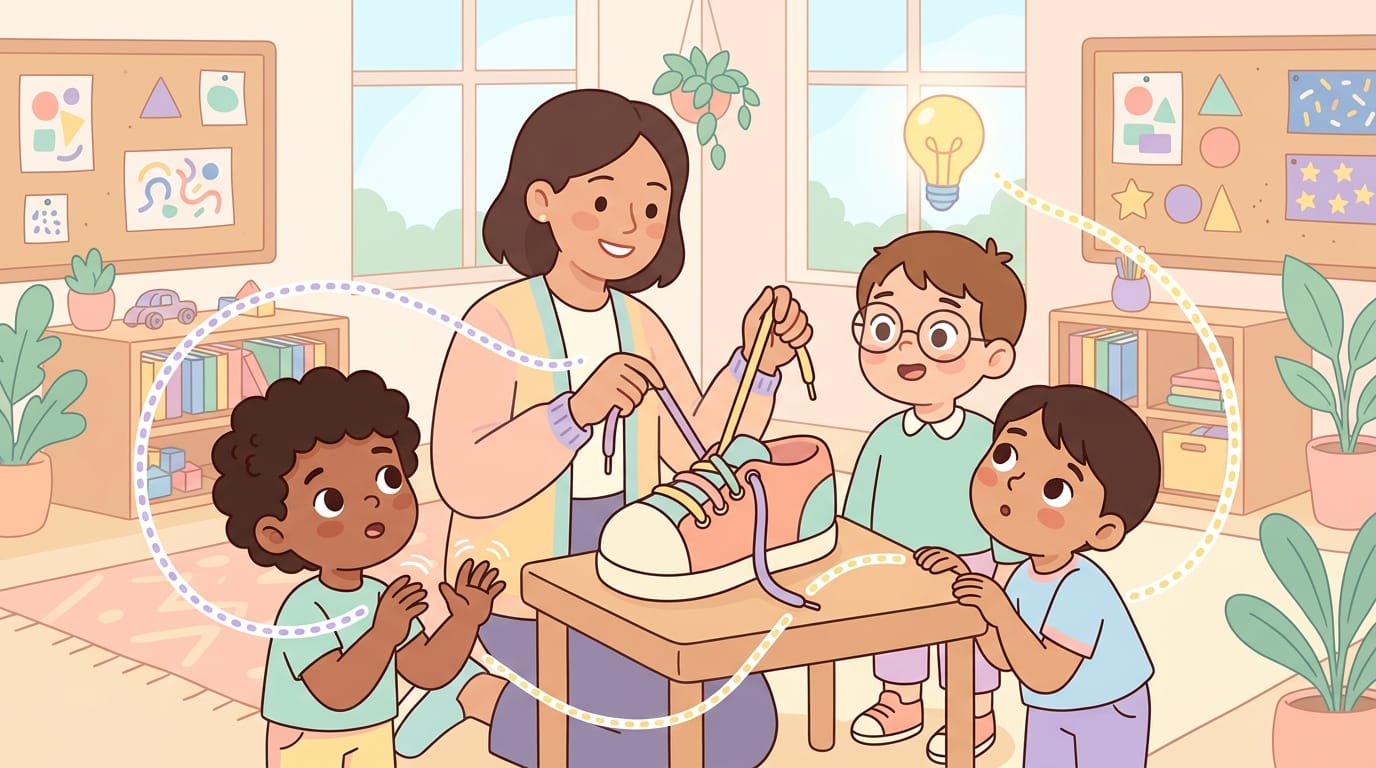
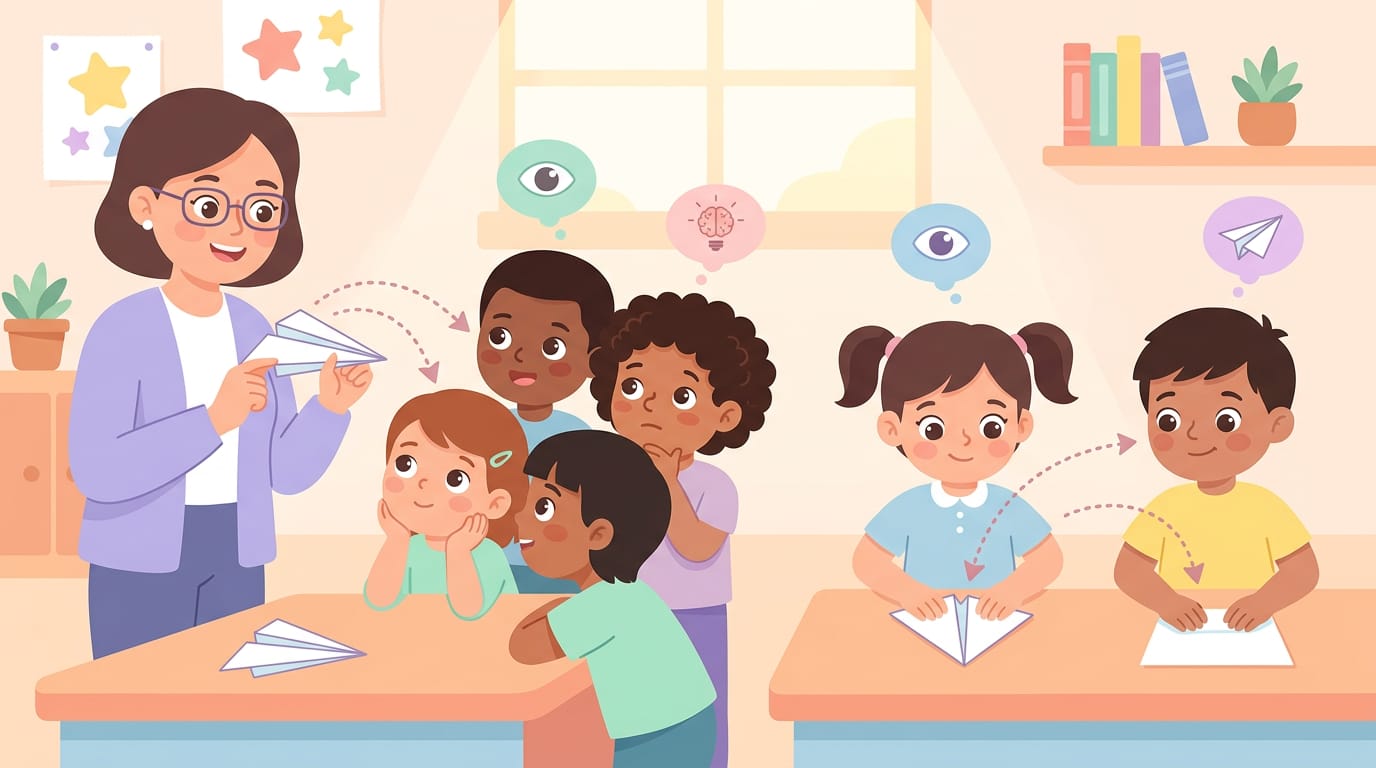
Think about the first time you watched a colleague calm a tense parent call. Later, you caught yourself using their steady tone and clear next steps. That's observational learning at work.
In psychology, observational learning is picking up new behaviors and attitudes by watching others and noticing what happens to them. Psychologist Albert Bandura's work made it central to social learning theory, and it's a useful lens for any classroom.
In this post, we'll cover Bandura's ideas, the four stages, the Bobo doll study, and the brain science behind it, then show how to use modeling on purpose in diverse, multilingual classrooms.
Ultimate Teacher Planner
The ultimate all-in-one education management system in Notion.

What Observational Learning Means in Psychology
We pick up plenty of skills just by watching others. Here's what that means.
The basic idea in plain terms
Observational learning is learning by watching others. You watch someone act, then store the pattern. Nobody has to hand you a script, and the lesson comes from watching rather than being told.
The model is the person being watched, and the observer learns from them. Because the lesson passes between people, it's a form of social learning.
Where we see it at home and work
Here's where it shows up:
At recess: A young child watches older kids play, then joins in with the same rules.
At dinner: A child sees adults place a napkin in their lap and copies them.
At work: A new hire notices how colleagues dress and greet, then adjusts.
On the platform: Riders who watch a crowd exit a subway car learn which door to use.
Online: A software video shows a formula step by step, and the viewer copies it.
A teacher who solves a problem aloud gives students a model for their own worksheets.
How it differs from conditioning
Learning theories don't come in one fixed list, so ask which lens fits your lesson.
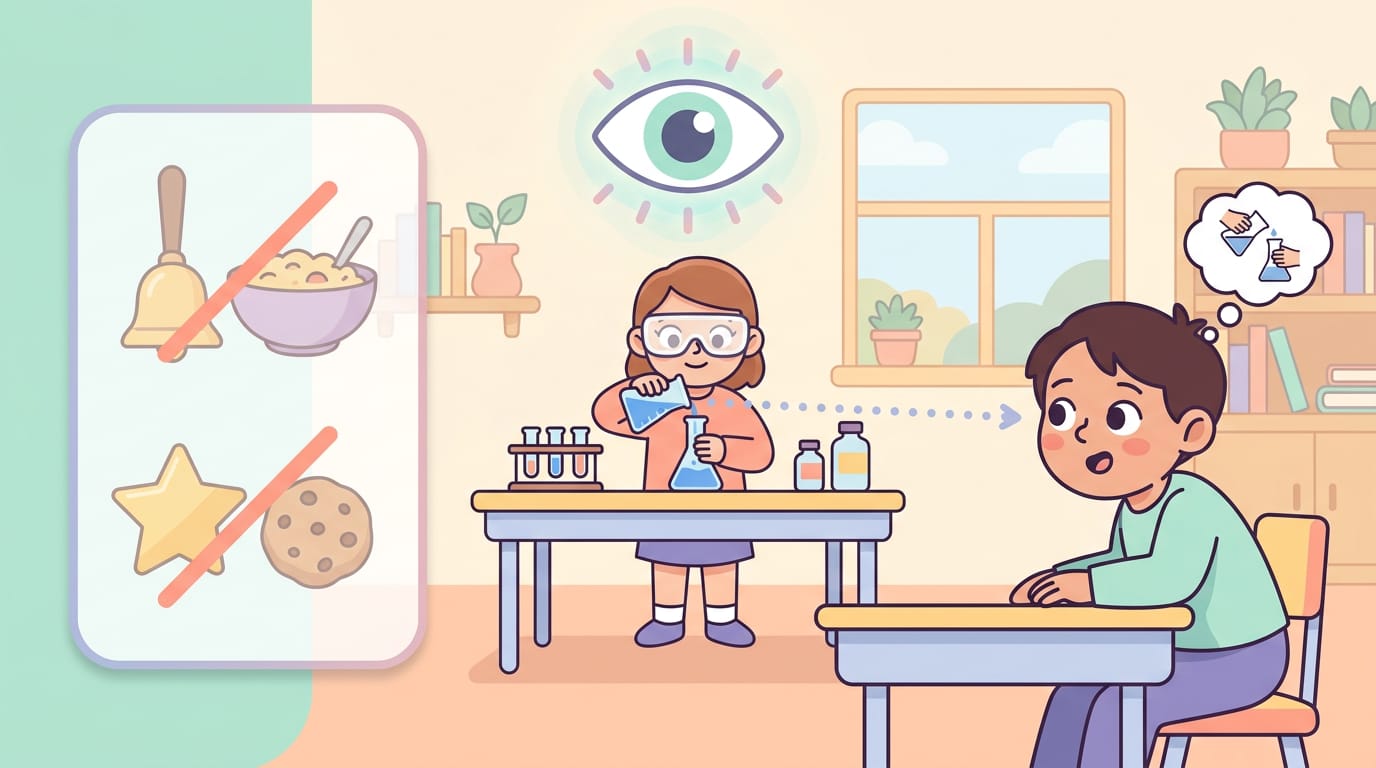
Not classical conditioning: Classical conditioning links one stimulus to another, like a bell tied to food. Observational learning comes from seeing a behavior performed.
Not operant conditioning: Operant conditioning shapes behavior through your own rewards and punishments. Observational learning can work when nothing rewards you directly.
Relies on perception and interpretation: You have to notice what the model does and make sense of it.
It's less about what happens to you and more about how you read what happens to someone else. Eyes can teach, too.
Bandura's Ideas on Social Learning and Cognition
Bandura's ideas began under one name and grew into another. Here's how that happened, plus the core ideas behind the theory.
How the theory was named and renamed
Bandura first developed these ideas in the 1960s, under the name social learning theory. In 1986, Albert Bandura relabeled it, shifting the name to social cognitive theory (SCT), a label that signals the role of thinking.
The theory has since found a use in public health.
How people and surroundings shape each other
Your behavior, your thoughts, and your surroundings all influence one another. We also shape our surroundings, not just the other way around. Consider a teacher with a quiet student.
The teacher calls on that student with an easy question, the student starts answering more often, and the teacher begins leaving more room for quiet voices. Parents and children work the same way: each shapes the other.
Core ideas behind the theory
The theory rests on a few core ideas:
Behavioral capability. You need the knowledge and skill to actually carry a behavior out, not just watch it.
Reinforcements. Rewards and penalties shape which behaviors you keep.
Expectations. What you expect to happen shapes whether you try a behavior, not just whether you can.
Self-efficacy. Added to the theory later, it's your belief that you can succeed at a task.
What is vicarious learning vs observational learning?
Observational learning means picking up a behavior by watching someone else. Vicarious learning is the part where you focus on what happens to that person.
Seeing a model rewarded makes you more likely to try a behavior, and seeing one punished makes you less likely. You don't need your own reward for this to work, either.
Think of a student who watches a classmate get praised for a clear presentation. Her next one is better organized, even though she never got that praise herself.
Without this kind of learning, you'd pick up everything through trial and error, which is slow and sometimes costly. Watching others is a shortcut worth having.
The Four Stages of Learning by Observing
Watching someone and learning from them isn't automatic. It unfolds in four stages, each asking something different of you.
Paying attention to the model
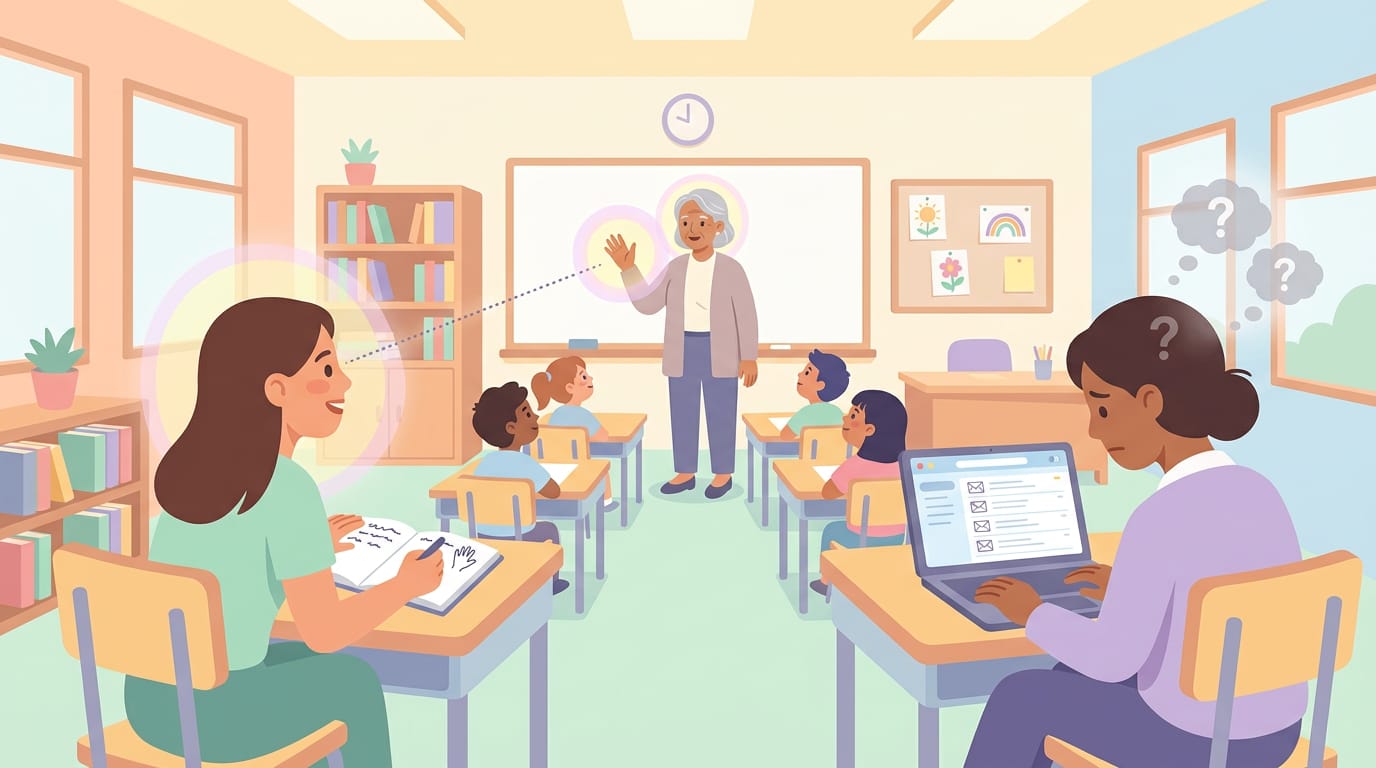
The first step is to notice the behavior. Being in the room isn't enough, because what matters is noticing rather than simply being present.
Distraction undermines learning fast, so a teacher checking email during a colleague's demo walks away with very little.
Watch models you admire or see as authorities, and pay attention to specific mannerisms, like how a veteran teacher pauses after a question or signals a transition with one hand gesture. Small details are easy to miss, but they're often the most useful.
Holding onto what you saw
Noticing is only the start. The behavior has to be stored in memory.
According to an interbehavioral paper on observational learning, which cites Bandura and Jeffery's 1973 work, retention turns transitory influences into enduring internal guides for memory.
That's how information about a behavior can move from working memory into long-term memory. Jot down notes or record a voice memo right after you observe a colleague, and build a mnemonic, a short memory cue for the steps.
Tie practice to a daily habit, like rehearsing the steps on your commute.
Trying the behavior yourself
You also need the ability to carry out the behavior, so check that you can. Practice soon after observing, while the steps are still clear. Expect trial and error, since your timing will be off. Seek feedback from coworkers, too.
Think of a new teacher who tries a colleague's group-work routine on Tuesday, stumbles through the transition, and asks a peer to watch Thursday's rerun and point out what to fix so the next run goes smoother.
It's about doing the behavior, not just knowing about it. Stumbles are part of learning.
What drives you to copy
Finally, you have to want to copy it. Your desire to learn and copy matters. So do the rewards you see the model earn, and how much you respect them. Consider a teacher who admires a colleague's visual check-in routine.
Her personal why is that every student, whatever language they speak at home, should feel included. That why keeps her going when the first try falls flat. Patience pays off.
Who We Tend to Learn From
Not everyone we watch makes an equally good model.
Kinds of people we copy
We tend to copy:
Parents, teachers, and authority figures. Their behavior is the most visible.
Admired or rewarded people. We notice whoever gets recognized.
Experts in relevant fields. Their knowledge makes them obvious models.
Peers acting as authorities. The classmate everyone asks for help counts too.
Model similarity matters too. We're more likely to imitate people who seem like us, a pull known as the identification effect. So the best model is often the one who feels familiar, not just the most impressive.
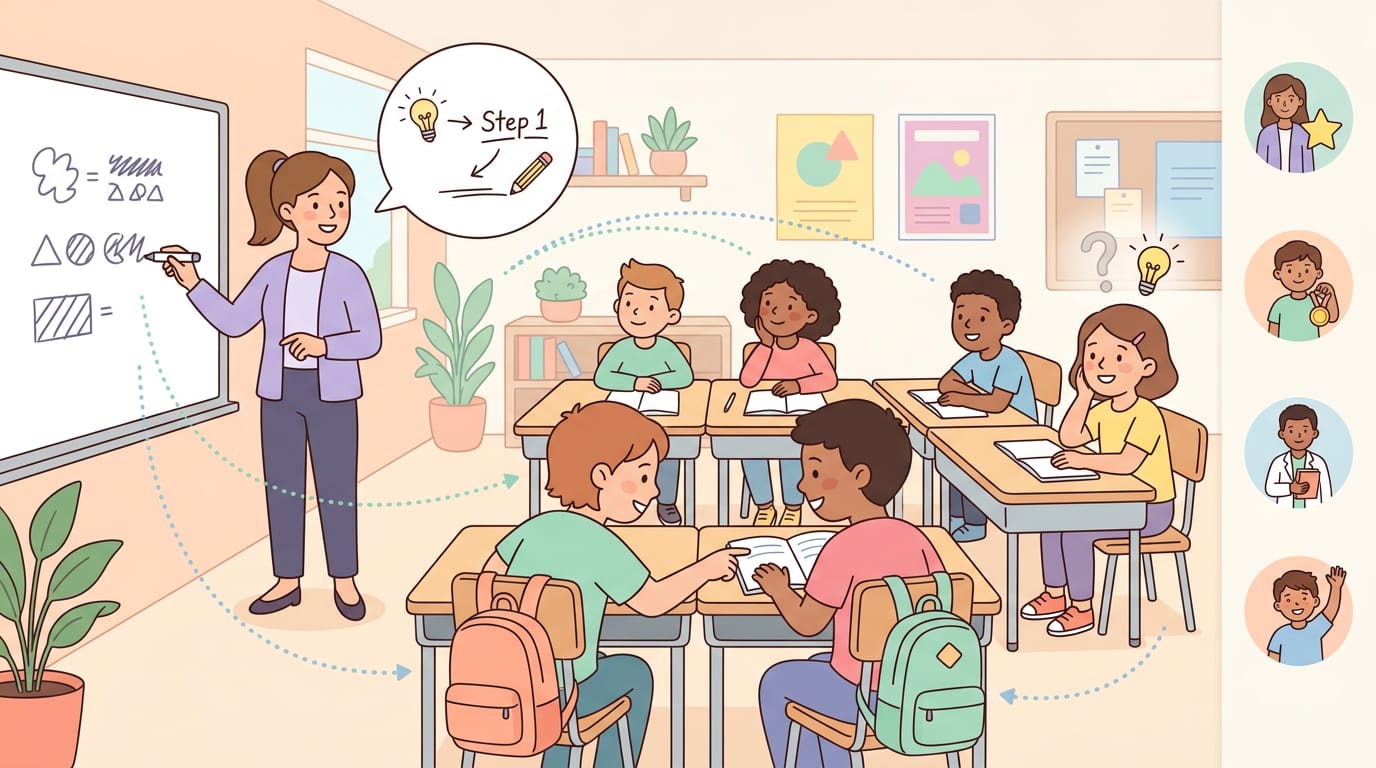
Teacher modeling is the classroom version. Picture a teacher thinking aloud through a tricky word problem. Learners who used to freeze at step one now see exactly how to start. That's modeling in action.
Picking role models you can reach
Proximity counts. Models you can see and talk with, in person or online, are easier to learn from than distant idols.
Mentors and shadowing offer the closest view. Sit in on a colleague's lesson, and you'll spot small moves no handbook captures.
Aim for models just 2-3 steps ahead. According to a Forbes article on finding the right mentor, the most effective mentor is "someone one or two levels ahead who still remembers what it was like to navigate those early years."
For a new teacher, that's a colleague a year or two in.
Learn from people who struggled first. A veteran who admits early classroom missteps shows you what to avoid and how to recover.
Students need models who share their backgrounds and languages. Invite guests from varied cultures so every learner can picture someone like themselves succeeding.
What the Bobo Doll Experiment Showed
Bandura's best-known test of observational learning focused on aggression. Here's what it found, and where it has been questioned.
Setup and results of the study
Children watched an adult interact with a Bobo doll. Some saw an aggressive model act aggressively toward the doll, while others saw a non-aggressive model.
The aggressive model increased imitation: children reproduced its aggressive acts more than children who saw non-aggressive models or no model at all.
In the paper Transmission of aggression through imitation of aggressive models, the researchers predicted this pattern. A follow-up version presented the model through film.
Whether the model was punished or not
Bandura also varied whether the model was punished for its behavior. Children who saw an unpunished model showed more aggression than children who saw a punished model.
A psychoanalytic critique of these experiments in Frontiers in Psychology puts the core idea plainly: if the adult model is punished for aggressive behavior, the probability that the child will show aggressive behavior is reduced.
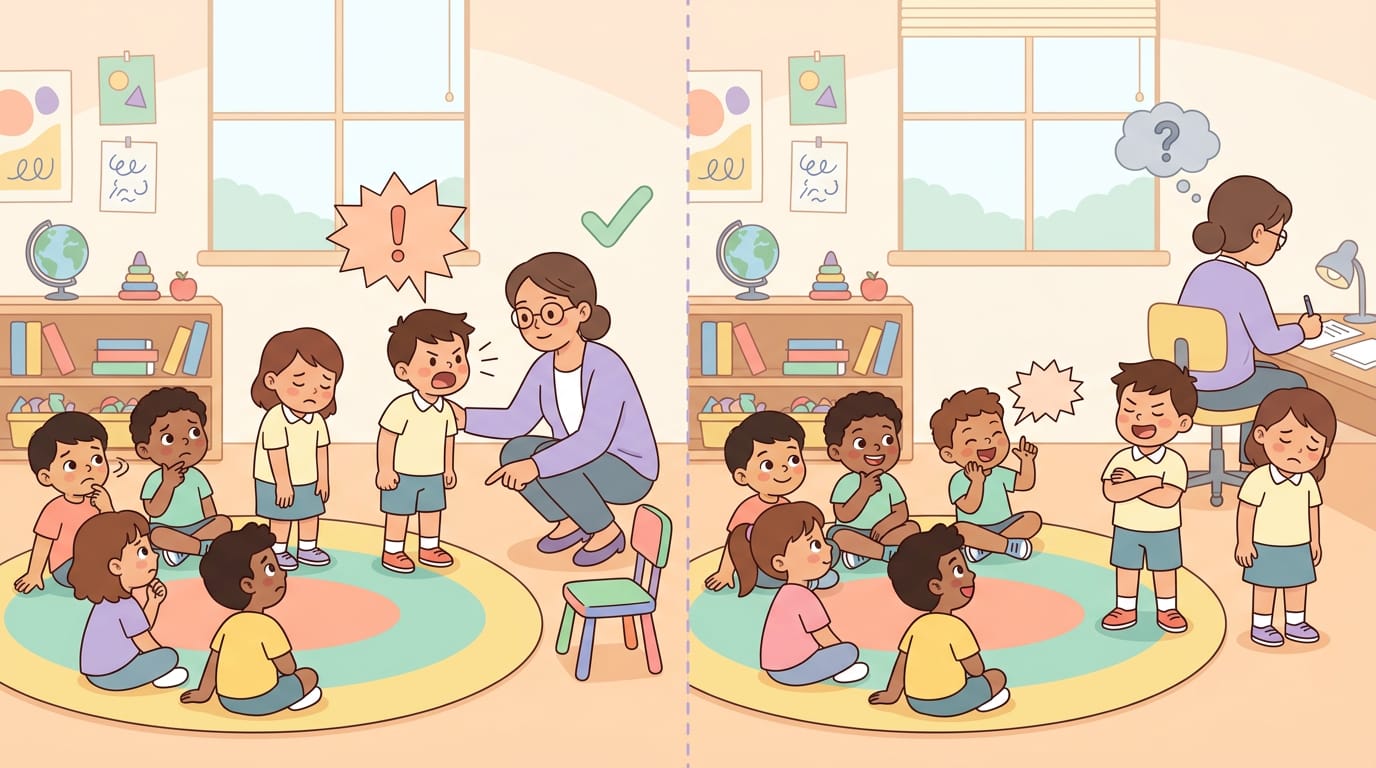
Think of a teacher whose class watches one student shout at another. If the shouting brings a fair consequence, the class learns one lesson. If it passes unnoticed, they learn another.
In other words, children seemed to judge whether a behavior was acceptable by its outcome. Outcomes teach too.
It's less about the act itself and more about what happens next. The findings have been questioned, too, and that psychoanalytic critique reads Bandura's experiments through a different theoretical lens, so it's worth weighing alongside the study.
What Happens in the Brain
Watching a model isn't passive, and two findings explain what your brain does while it watches:
How mirror neurons fire when we watch
Specialized cells called mirror neurons fire whether you're doing something or watching someone else do it.
In the 1990s, researchers found these cells in macaque monkeys, active when the monkeys performed simple object-directed actions and when they watched others do the same, as di Pellegrino and colleagues (1992) reported.
These cells don't just record what you see. They help your brain simulate the action. This shared wiring likely has evolutionary survival value, since grasping what others are doing helps us learn quickly.
Think of a teacher solving a fraction problem on the board. Her students' brains rehearse each step as they watch, so their first try feels familiar. Watching is a head start.
Other brain areas that get involved
Mirror neurons aren't the whole story. Studies of observational learning also report activation of the amygdala, which responds to value, and the anterior cingulate cortex (ACC).
In one human single-neuron study, Hill and colleagues (2016) found amygdala neurons that tracked the outcomes of what others did, though the most robust signals came from the rostral anterior cingulate cortex (rACC).
Regions tied to social cognition, the mental work of reading other people, also play a part. Cognitive flexibility, your ability to shift strategies as circumstances change, matters too.
Learners who can adapt what they observe are better placed to use it. Flexibility turns copying into learning.
Using Observational Learning on Purpose
Ever notice how fast you pick up a habit just by watching someone? You can do that on purpose.
A step-by-step way to build habits
Start by documenting specific actions. Pick one behavior to copy, such as how a colleague opens a meeting, and write down exactly what they do.
Within 24 hours, run a 10-minute experiment and try it yourself.
Reflect on what worked, then commit to a 7-day trial so you have real evidence, not guesses.
Growing your career by watching others
Watch how your manager handles a tough conversation, then note what you'd keep. Consider a new team lead who dreads public speaking.
She watches a senior colleague open each talk with a story and a question, then borrows that opening for her first all-hands, which settles her nerves. Over time, watching people you admire reveals the skills your next role will need.
Coaching adds blind-spot feedback that watching alone can't give.
Tools and other ways people learn
Watching only works when you're paying attention, so block digital distractions during practice sessions. Observation is one of several modes of learning, so use it alongside practice and direct instruction, not instead of them.
The VARK framework (Visual, Auditory, Reading/Writing, Kinesthetic) sorts learners by preference, and a live demonstration plays to visual learners.
So what is the observation method in teaching? It means watching students, or a peer's lesson, closely and recording what happens so you can adjust your instruction.
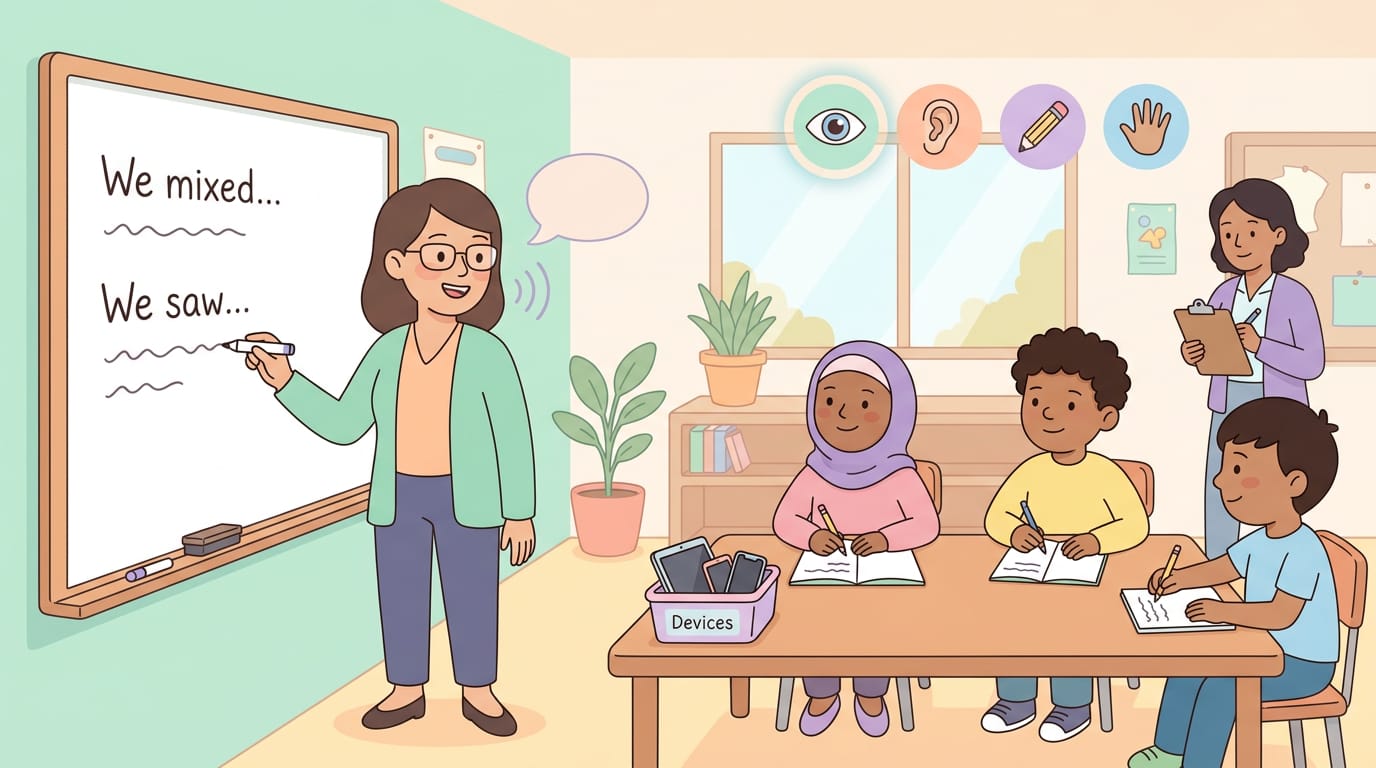
For English learners, modeling matters even more. Picture a teacher with several newcomers who writes a lab summary on the board, narrating each sentence aloud.
Newcomers can copy that pattern before they have all the vocabulary, which gives them a working starting point. Show it first, then let them try.
Benefits and Risks of Learning by Watching
Watching others is a real shortcut, but it's a double-edged one. Learning by watching is less about what you're told and more about what the models around you actually do.
Upsides of learning from others
A first-year teacher who sits in on a colleague's reading group can spot where students get stuck within one lesson. That's the appeal:
Faster than trial and error. Research on whether young children can learn exploratory strategies by observation found that children who watched a structured, correct approach made fewer errors and explored a maze more efficiently than those who learned without observing.
Accurate skills from experts. Watching a skilled expert shows you the right moves, not your best guess.
Transferable skills. A strategy you see modeled in one setting can carry over to new tasks.
Reinforces positive behavior. When helpful behavior gets noticed and rewarded, others tend to repeat it.
Supports mental fitness. Following someone else's reasoning keeps your own thinking sharp.
Picking up harmful habits from others
Watching doesn't sort the good from the bad. Observation has no filter, so learners copy both:
Copies good and bad habits. A student who watches a classmate cut corners or mock others may copy it just as readily as careful work.
Environment shapes behavior. The people and media around a learner supply the models that start to feel normal.
Unpunished behavior seen acceptable. Observers often focus less on what was done and more on what happened next. An unanswered sarcastic jab can quickly start to feel acceptable.
Audit people and content consumed. Take stock of who your students spend time with and what they watch.
Observational learning isn't just about watching. People absorb skills and attitudes from the models around them, often without noticing. Bandura's work and the Bobo doll study remind us how closely learners pay attention.
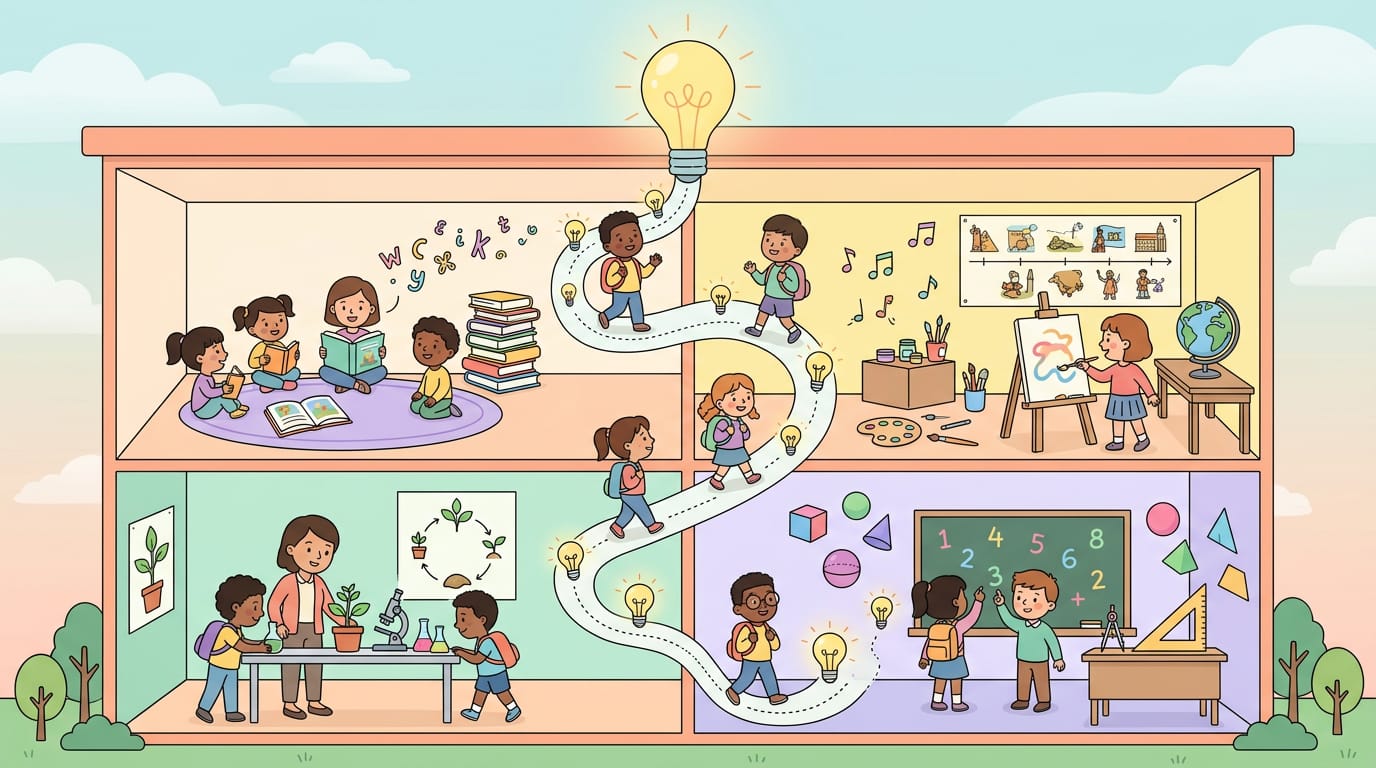
In diverse, multilingual classrooms, that's an opportunity. When you think aloud or show how you approach a problem, you give every student a path they can follow.
Ready to make modeling part of your teaching? Explore our Inclusive & Multilingual Education posts for ideas you'll use in your next lesson.
References
The role of the motor system in action understanding and communication: Evidence from human infants and non-human primates — pmc.ncbi.nlm.nih.gov (2018)
Frontiers | Albert Bandura's experiments on aggression modeling in children: A psychoanalytic critique — frontiersin.org (2022)
Transmission of aggression through imitation of aggressive models. — doi.org
Value-Related Neuronal Responses in the Human Amygdala during Observational Learning — doi.org
Are young children able to learn exploratory strategies by observation? — pmc.ncbi.nlm.nih.gov (2017)
Understanding Observational Learning: An Interbehavioral Approach — pmc.ncbi.nlm.nih.gov (2011)
Social Learning Theory and the Health Belief Model — doi.org (1988)
How To Find The Right Mentor At Every Career Stage — forbes.com (2026)
Ultimate Teacher Planner
The ultimate all-in-one education management system in Notion.