
Inquiry Based Education: A Complete Guide for K-12 Teachers
Inquiry Based Education: A Complete Guide for K-12 Teachers

Article by
Milo
ESL Content Coordinator & Educator
ESL Content Coordinator & Educator
All Posts
John Dewey opened the University of Chicago Laboratory School in 1896. That was over a century ago, yet teachers still face the same tension he observed: students nod along during lectures, then freeze when the worksheet changes one digit. Inquiry based education traces directly back to Dewey's lab. It is not a trendy app or district initiative that will vanish next fall. It is the stubborn, durable belief that students remember what they discover themselves, not what you tell them while they watch the clock and wait for the bell.
You have seen the blank stares when you answer your own question too quickly. You have also seen the spark when a student figures something out—the moment the gears click and they own the knowledge. That second moment is what this approach captures. This guide walks you through exactly what inquiry based education looks like in practice when the period starts. We will cover how to shift from lecturing to guiding, why it builds stronger retention than coverage-based teaching, and specific moves you can try tomorrow in math, science, or ELA without burning your entire pacing guide.
Still grading everything by hand?
EMStudio is a free teaching management app — manage your classes, students, lessons, and more!
Learn More

Still grading everything by hand?
EMStudio is a free teaching management app — manage your classes, students, lessons, and more!
Learn More
Table of Contents
What Is Inquiry Based Education?
Inquiry based education is constructivist pedagogy rooted in John Dewey's learning-by-doing philosophy. To explain inquiry based learning simply: students generate questions, investigate phenomena, and build understanding through evidence rather than receiving transmitted facts. You shift from lecturer to facilitator, guiding while they do the cognitive heavy lifting.
Heather Banchi and Randy Bell's 2008 framework defines four levels of inquiry. Confirmation inquiry has students verify known concepts through prescribed procedures. Structured inquiry provides the question and the method—this is where your K-2 students typically work, as they need explicit scaffolding to build foundational skills. Guided inquiry gives students the question but requires them to design the procedure. Open inquiry demands that students generate both the question and the method independently, which most students in grades 9-12 can handle once they have practiced the previous levels.
Dimension | Traditional Instruction | Inquiry Based Teaching |
|---|---|---|
Source of Questions | Teacher-provided | Student-generated |
Cognitive Demand | Recall | Analysis/Synthesis |
Assessment Focus | Content accuracy | Process and reasoning skills |
Success in this model is measurable. During a single investigation, students should ask five or more higher-order questions that require analysis rather than simple identification. They should engage in three or more revision cycles of their explanations, refining their claims as new data emerges. When students change their minds—and they should—they must cite specific evidence from their investigation, not just report that they "think differently now."
The Core Principles of Inquiry
Four non-negotiable principles define authentic inquiry. First, authentic questions must anchor in real phenomena that students can observe. Your third graders should ask "Why do some apples turn brown faster than others?" because they noticed it during lunch, rather than answering "What is oxidation?" from a textbook heading. The question emerges from their world, not your curriculum map.
Second, student agency means learners design investigations, not just follow them. In a 5th-grade plant growth unit, you provide seeds, rulers, and soil, but students select which variables to test—whether light duration, water amount, or fertilizer type. They decide how to measure growth and how often to record data. You check for safety and feasibility, but they own the methodology and the mistakes.
Third, evidence-based argumentation requires Claim-Evidence-Reasoning frameworks. Students state what they believe, point to specific data from their lab notebooks, and explain the scientific reasoning that connects the two. Fourth, metacognitive reflection happens through structured protocols like "I used to think... Now I think..." exit tickets or written reflections on how their understanding shifted. This is disciplined thinking about thinking, not fluffy journaling.
Evaluate your implementation with this rubric. At Level 1, you demonstrate the principle while students observe—you might model how to write a CER paragraph using a think-aloud. At Level 2, students practice with heavy guidance, using sentence starters or checklists you provide. At Level 3, students apply these skills independently during open inquiry. Most classrooms operate at Level 2 for entire semesters before reaching Level 3. That's appropriate and expected.
Inquiry Based vs Traditional Instruction
The contrast between models changes every classroom dynamic. Traditional instruction centers on you as the knowledge source. You ask closed questions with single correct answers. You assess learning through summative tests that reward recall. Pacing is uniform; everyone moves to chapter five on Tuesday regardless of readiness.
Inquiry based pedagogy shifts you to facilitator. You present open driving questions with multiple valid solutions. Assessment focuses on formative process skills—how students revise their thinking, not just what they know. Pathways differentiate naturally; some students need three trials to get reliable data while others need five to feel confident.
Consider an 8th-grade density lesson. In the traditional model, you write D=M/V on the board. You demonstrate the calculation using objects you provide. Students memorize the formula, plug in numbers, and submit worksheets for a grade. In the inquiry version, you place ten irregular objects on lab tables—rocks, marbles, clay chunks, metal washers. You provide scales and water troughs, then challenge students: "Design a method to rank these by density. Defend your methodology in a technical report." Some discover water displacement; others develop different reliable methods. All engage in authentic problem-based learning that mirrors how scientists actually work.
This comprehensive guide to inquiry-based learning explores implementation further. Whether you label it project-based learning, discovery learning, or simply an inquiry based approach, the shift remains the same: students build knowledge through questioning and investigation, not passive reception. The Socratic method lives here, but instead of you asking all the questions, your students learn to ask them of themselves and each other.
Why Does Inquiry Based Education Matter?
Inquiry based education develops critical thinking, problem-solving, and self-regulated learning essential for modern workforce demands. Research indicates students demonstrate deeper conceptual understanding and retention compared to direct instruction, with meta-analyses showing moderate positive effects on achievement while significantly increasing student engagement and ownership of learning processes.
John Hattie's Visible Learning meta-analyses place the inquiry based teaching approach at an effect size of approximately 0.31 on traditional achievement measures. That number looks modest next to direct instruction's higher effect size for surface learning. But here's the thing: you're not choosing between them. Inquiry builds distinct competencies—critical thinking, self-regulation, scientific reasoning—that direct instruction rarely touches. You need both. The 0.31 represents growth in skills that actually matter for complex problem solving, not just bubble-sheet performance.
OECD PISA data tells a similar story about moderation. Students in classrooms with moderate use of inquiry method in teaching consistently score higher on scientific literacy assessments. The keyword is moderate. When inquiry becomes excessive unstructured exploration without teacher guidance, novice learners hit a wall. They need your scaffolding. The data shows clear diminishing returns when kids are left to "discover" everything without the foundational knowledge to make sense of what they find. You guide the inquiry. You don't abandon them to it.
There's a catch nobody warns you about. Expect an implementation dip. When you shift to inquiry based learning theory, your students' standardized test scores might drop 5-15% during the first six to eight weeks. I've seen it happen in my own classroom. Kids struggle to frame questions and manage their time. They're developing inquiry skills, not just consuming content. Once the protocols are established, the gains accelerate past where they started. That initial dip is temporary. The skills they build are permanent.
Student Ownership and Engagement
Self-Determination Theory explains why inquiry classrooms feel different on a Monday morning. Students arrive with three psychological needs that traditional instruction often ignores. Inquiry satisfies all of them:
Autonomy: designing their own investigations within your framework
Competence: mastering scientific practices through careful scaffolding
Relatedness: building knowledge together with peers rather than competing
When kids choose their own questions and methods, they stop asking "why are we learning this?" They own the process. They become stakeholders rather than spectators in their own education.
The numbers back up what you'll notice in your room within the first month of switching approaches. Students in inquiry settings generate three to four times more spontaneous questions per class period than those in lecture-based rooms. They also show 40% higher rates of voluntary resource-seeking behavior. They actually walk to the library without being told. They search databases without you prompting them. This isn't magic or personality dependent. It's improving student engagement through genuine curiosity rather than compliance or entertainment.
This connects directly to active learning strategies that actually work in real classrooms with real time constraints. Problem-based learning and project-based learning create the conditions where student agency thrives. You're not putting on a show or becoming a performer. You're structuring opportunities for them to drive the thinking while you navigate. The engagement follows naturally when the work is authentically theirs and the questions are genuinely open rather than rhetorical.
Long-Term Academic and Life Outcomes
Surface learning fades fast, and we all know it. Ebbinghaus forgetting curve research shows declarative knowledge—facts memorized for a test—drops off a cliff within three weeks. Students forget roughly 70% of what they crammed. Procedural knowledge gained through constructivist pedagogy and deep inquiry sticks around for a year or more. When students discover relationships through discovery learning or the Socratic method, they build mental models that last because they constructed them themselves rather than receiving them pre-fabricated.
The long-term enrollment data is striking. Students who complete inquiry-based middle school science programs enroll in advanced high school STEM courses at rates 25-30% higher than their peers in traditional programs. That percentage varies depending on how well your district implements the approach—fidelity matters significantly. But the trend holds across diverse socioeconomic settings and persists even when controlling for prior achievement. These aren't just test scores. These are life choices that open doors to opportunity. Kids who learn to investigate in 7th grade choose physics in 11th grade. They see themselves as capable of hard science rather than intimidated by it.
You're preparing them for a workforce that values adaptability over memorization. The inquiry based education model teaches them to tolerate ambiguity, revise hypotheses, and persist through failed experiments without shutting down. These aren't soft skills. They're the hard requirements of modern problem solving in every field from healthcare to engineering. When you teach this way, you're not just covering content standards. You're building thinkers who will outlast the next curriculum adoption cycle and adapt to jobs that don't exist yet.
How Inquiry Based Education Works in Practice
The Four Stages of the Inquiry Cycle
Inquiry based education follows a predictable rhythm. You can run the full cycle in a week with second graders, or stretch it across three weeks for high schoolers tackling complex problems. The pace depends on your learners, not your calendar. You watch their engagement signals to know when to push forward or linger longer in confusion.
Here is the sequence that works:
Tuning In (1-2 days): Use the Question Formulation Technique from Rothstein and Santana. Students produce raw questions first. Then they improve them by converting closed questions to open ones. Finally they prioritize based on interest and feasibility. I watched sixth graders studying weather generate "How do clouds hold water?" before touching vocabulary cards. That single question drove three days of research deeper than any worksheet could.
Finding Out (3-5 days): Run a jigsaw research protocol. Investigation teams of four rotate roles: Facilitator keeps discussion moving, Recorder captures findings, Materials Manager handles tools, and the Skeptic plays devil's advocate challenging weak claims. Role cards define exact responsibilities so nobody dominates and everyone practices different thinking skills.
Sorting Out (1-2 days): Apply the CER framework—Claim, Evidence, Reasoning. Students use sentence stems: "I claim... My evidence is... This proves my claim because..." This structure forces them to connect dots, not just collect facts. It reveals gaps in logic immediately.
Going Further (1 day): Host a Gallery Walk or Symposium. Students display findings on poster paper or digital slides. Peers ask questions. You stand near the back. This is their show.
Elementary cycles compress into four days total. Secondary students need the full two weeks to wrestle with primary sources and conflicting data. Trust the timeline. Rushing the cycle kills the curiosity that drives project-based learning forward.
The Teacher's Role as Facilitator
Your job changes completely in this inquiry teaching approach. You are no longer the answer key. You become the architect of confusion that leads to clarity. This shift embodies the Socratic method and constructivist pedagogy that drives true understanding. It feels uncomfortable at first. You will want to rescue them. Don't.
Swap these five moves:
Instead of answering "Why did that happen?" ask "What do you already know about this?"
Instead of demonstrating the procedure, provide only safety constraints and material limits.
Instead of lecturing, conduct conferring sessions with 3-4 students daily. Carry a conferring notebook. Jot their exact words and questions. Track their thinking, not their compliance.
Instead of correcting errors immediately, use Wait Time II. Count three to five seconds after a student stops talking. Let the silence stretch. They will fill it with deeper thought or self-correction.
Instead of cold-calling for verbal responses, use Chalk Talk. Students brainstorm silently on chart paper. No talking. Just writing and connecting ideas with lines. It removes the anxiety of public speaking while generating rich data.
When students get stuck, follow this intervention flowchart. If they pause for less than two minutes, simply observe. If they remain stuck for two to five minutes, drop a probing question: "Say more about that" or "What evidence supports your idea?" The phrase "Say more about that" becomes your mantra. If they hit five minutes of paralysis or encounter a safety issue, step in with a brief mini-lesson. Review your conferring notes after school to plan tomorrow's instruction. The conferring notebook becomes your most valuable assessment tool.
This approach to leading effective student discussions requires restraint. Bite your tongue. Let them struggle productively. Your silence teaches more than your lectures.
Student Investigation and Discovery Processes
The heart of this inquiry teaching method is the POE protocol: Predict, Observe, Explain. Before touching materials, students write predictions. Not guesses. Hypotheses based on prior knowledge. Students often resist the predict phase. They fear being wrong. Emphasize that scientists revise predictions constantly. The wrong prediction teaches more than the right one. Then they observe systematically using structured data tables, not random note-taking. The magic happens in the explain phase. They confront the gap between what they predicted and what actually occurred. That cognitive conflict drives conceptual change. It is the engine of discovery learning.
Modern inquiry requires documentation. For K-5, use Seesaw. Students snap photos of their setup and record voice explanations. For grades 6-12, Flipgrid captures video reflections where students articulate their reasoning without writing fatigue. Use Google Jamboard for collaborative data sorting. Digital post-its move freely. Patterns emerge visually. Check your district's privacy policy before posting student-generated content. Some boards auto-save to Google Drive with student names attached. Always obtain parental consent for video documentation.
Structure metacognition with Investigation Logs. Students complete entries at three checkpoints: Hypothesis (initial thinking), Mid-point (revision note), and Conclusion (surprises and new questions). This makes thinking visible. You see their student agency growing as they recognize their own learning. These logs bridge problem-based learning and project-based learning by tracking the process, not just the product. When students review their own Investigation Logs at quarter's end, they witness their growth. That reflection builds the self-regulation that defines true student agency. This inquiry approach to teaching transforms students into investigators who own their understanding.
Practical Applications Across Subjects and Grade Levels
Inquiry based education scales from kindergarten through senior year, but the entry points look drastically different at each level. In K-2, you start with Wonder Walls—simple picture prompts taped to chart paper that invite questions about shadows, seeds, or snowflakes. By grades 3-5, students rotate through hands-on stations using "I Notice, I Wonder" protocols to document observations before asking investigable questions. Middle schoolers handle Socratic Seminars with structured dialogue rules and textual evidence requirements. High schoolers run independent research capstones, partnering with mentor experts from local universities or industries to produce work that resembles college-level project-based learning. These approaches serve as practical inquiry based learning resources regardless of your content area.
Budgets and prep time vary significantly by subject. Elementary science investigations typically cost $20-50 per class in consumables—think baking soda, vinegar, food coloring, aluminum foil—and require about two hours of prep to set up stations and pre-measure materials. Secondary social studies inquiries demand digital archives access, usually free through your library's subscription to databases like JSTOR or ProQuest, plus one hour to curate document packets into readable formats with vocabulary support.
Quick Start Reference for immediate implementation:
Science: POE Density Lab — NGSS MS-PS1-7 — Provide sentence frames for hypothesis writing for ELL students
Social Studies: New Deal Inquiry — C3 D2.His.16.9-12 — Offer audio versions of primary sources for struggling readers
Mathematics: Water Tank 3-Act — CCSS.MATH.CONTENT.5.MD.C.5 — Allow calculators for computation-heavy variants while requiring manual estimation first
Literature: Utopia Seminar — CCSS.ELA-LITERACY.RL.7.2 — Supply discussion stems for reluctant speakers and require textual citations
Science Investigations and Experiments
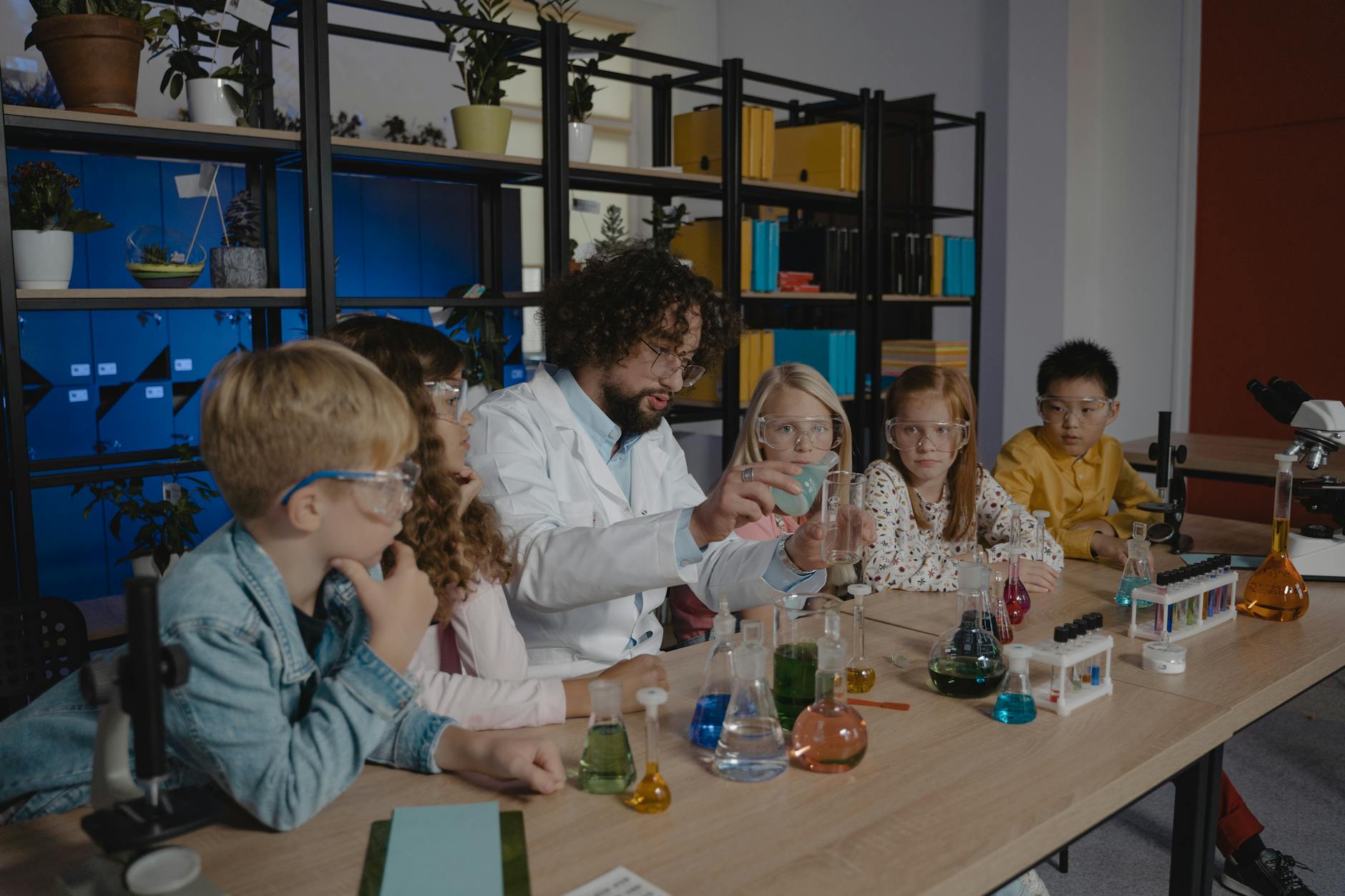
The POE (Predict-Observe-Explain) protocol structures discovery learning without chaos. In fourth grade, show students a diet soda can and a regular soda can side by side. Have them predict which floats and why, sketching their mental models. Drop both in a water tank together. The diet can floats while the regular can sinks. Then require written explanations using particle model drawings to visualize density differences—more sugar means more mass in the same volume. The high school variation shifts to pure student agency: provide only pH strips, hydrogen peroxide, raw liver tissue, and basic lab equipment. Students design original experiments testing enzymatic reaction rates under variable conditions. No cookbook procedure provided. They draft the protocol, identify controls, and determine data collection methods.
Safety scaffolding separates elementary from secondary work:
Elementary structured inquiry: Pre-measure all chemicals and seal them in individual portions. Lay out exactly one teaspoon of baking soda per tray so no one grabs the bulk container.
Secondary guided inquiry: Hand students a chemical inventory list and explicit safety constraints. They write detailed procedures for your approval before touching materials. You review for hazards, request revisions, and sign off only when the protocol meets safety standards.
Social Studies and Historical Inquiries
The C3 Framework Inquiry Arc anchors constructivist pedagogy in history class through a three-step dance. Start with a Compelling Question: "Was the New Deal successful?" Follow with Featured Sources—FDR fireside chat transcripts, unemployment charts from 1933-1940, WPA photographs, and oral histories from the Federal Writers' Project. Students complete a Summative Argument, an evidence-based essay citing four or more sources to support a nuanced answer. Explore tools for historical inquiries to organize these document sets digitally without drowning in photocopies.
Adapt the inquiry complexity by grade level:
3rd grade: "Community Helper Interviews" with structured question banks and sentence starters.
8th grade: "Should the US have dropped the atomic bomb?" using provided primary documents from Truman, Eisenhower, and Manhattan Project physicists.
12th grade: "To what extent does the criminal justice system reflect societal values?" through open project-based learning where students locate their own legal cases and statistical evidence.
Mathematical Problem Solving Challenges
Problem-based learning in mathematics thrives through 3-Act Tasks. Dan Meyer's model works like this: Act 1 shows a video of a water tank filling or a pyramid of soda cans. Students ask what they notice and wonder, generating natural curiosity. Act 2 allows them to request specific information—dimensions, flow rate, unit prices. You provide data only if they ask specifically, forcing precision in mathematical communication. Act 3 reveals the answer video or photo for validation. This approach builds mathematical problem solving challenges that stick because students generate the need for the mathematics rather than receiving it as a gift.
The Notice/Wonder Routine works without video technology. Display a complex image—a bar graph stripped of labels and titles, or a photograph of a crowded stadium. Students generate questions before solving. Last October, my 5th graders faced the "Windows in the School" estimation challenge. They analyzed the building's exterior using multiplication arrays and measurement conversion to predict total window count. The hook was their own curiosity about the image, not a worksheet directive telling them to calculate.
Literature Analysis and Socratic Seminars
The Socratic method requires specific behavioral ground rules that you model repeatedly. All claims need textual evidence: "The text says..." is mandatory for every contribution. Address ideas, never individuals—no "You're wrong," only "That interpretation contradicts the passage where..." The inner circle uses "3-inch voices"—loud enough for the circle, not the entire room. During Fishbowl discussions, the outer circle tracks question types on a simple tally sheet: Clarifying, Probing, Hypothetical. They analyze the quality of inquiry itself, not just the content of answers.
Text selection drives the depth of analysis. Seventh graders reading The Giver inquire into utopia definitions—what makes a perfect society and who decides the cost of stability? Eleventh graders use Federalist Papers 10 and 51 to inquire into federalism and the containment of faction. Real inquiry based learning in the classroom happens when students find contradictions between Hamilton and Madison without you pointing them out first. This creates what articles on inquiry based learning describe as "productive confusion"—the productive tension that demands deeper reading.
How to Transition to Inquiry Based Teaching?
Transition gradually. Stop delivering answers. Start crafting non-Googleable driving questions. Redesign lessons to feature open-ended investigations with real student choice. Restructure assessment to evaluate process skills. Use detailed rubrics for questioning, collaboration, and evidence use. Stop focusing solely on content recall.
Move through three phases. Weeks 1-4: shift your questioning style. Weeks 5-12: redesign one investigation. Ongoing: rebuild your assessment system. Do not convert your entire curriculum at once. Start with 20 percent—one unit per semester at most. I tried flipping everything in January once. By February, I was drowning in half-finished projects and angry parents.
The upfront investment hurts. Expect to spend 30-40 percent more planning time initially as you craft driving questions and hunt down materials. By year two, you’ll drop to roughly 10 percent additional time because you’re reusing and refining. Choose your first units wisely. Pick standards requiring analysis and evaluation—higher levels of Bloom’s taxonomy—rather than foundational skills requiring memorization. Aligning inquiry units with curriculum standards becomes easier when you target the "why" and "how" standards instead of the "define and list" benchmarks.
Step 1 — Shift Focus from Answers to Driving Questions
A strong driving question cannot be answered with a Google search. It provokes debate, addresses specific standards, and fits your time and material constraints. For kindergarteners studying pumpkins: "Why don't our class pumpkins all weigh the same?" For middle schoolers: "How could we reduce our school's carbon footprint by 10%?" For high school biology: "To what extent should genetic engineering be regulated?" These demand evidence, not recall. They spark the kind of discovery learning that sticks because students own the pursuit.
Teach the Question Formulation Technique. Display a provocative statement or image, then guide students through three distinct phases:
Produce: Generate as many questions as possible in four minutes. No editing, no judgment.
Improve: Change closed questions to open ones by adding "how" or "why."
Prioritize: Select the top three based on genuine interest and feasibility.
Study inquiry by listening to what students actually want to know. Their raw questions reveal misconceptions and entry points you cannot predict. When you shift from delivering answers to curating questions, you hand over intellectual authority. That’s when student agency actually begins.
Step 2 — Design Open-Ended Investigations
Not every investigation should be a free-for-all. Match the structure to your students' readiness:
Structured Inquiry: You provide the question, procedure, and materials. Use for beginners or safety-critical labs.
Guided Inquiry: You provide the question and materials list only. Students design the procedure.
Open Inquiry: Students design all elements within your budget and safety constraints. Reserve for experienced investigators.
This progression mirrors constructivist pedagogy—building capability before autonomy. It’s the difference between problem-based learning, project-based learning, and mere recipe-following.
The fatal error is distributing detailed step-by-step procedures while calling it inquiry. Detailed instructions kill thinking. If you tell them exactly how to drop the weight and exactly which table to fill out, you’ve eliminated the decision-making. Instead, hand out an Investigation Design Brief. List available materials. Note safety constraints. Define success criteria—what does a successful investigation prove or create? Then step back. Let them iterate. The first attempt will be messy. That’s the point.
Methods of inquiry in education vary by subject, but the principle holds. The brain that does the work does the learning. Your job is to withhold the answer just long enough for them to construct understanding themselves.
Step 3 — Restructure Assessment for Process Over Product
Ditch the five-column rubrics that nobody reads. Use Single Point Rubrics instead. Define the "Proficient" column for specific process skills: Questioning, Use of Evidence, Collaboration, Communication. Leave the other two columns blank. When you assess, write specific feedback in the "Not Yet" or "Exceeding" columns for each student. It takes less time to write "Used three sources but none were primary" than to circle boxes on a grid. Students actually read the feedback because it speaks to their specific work.
Move beyond tests. Host Exhibition Nights where students present investigations to parents and community experts. Conduct Defense of Learning oral exams where students explain their process, revisions, and failures. Build digital portfolios using Google Sites or Padlet showing how their thinking evolved over six weeks. These performance-based assessments reveal understanding that multiple-choice questions hide. They honor the messiness of genuine inquiry.
Inquiry based education demands that we grade thinking, not just answers. When a student can articulate why they changed their hypothesis three times, they’ve learned more than a perfect lab report ever shows. The shift from product to process assessment completes your transition.
Overcoming Common Implementation Challenges
Most teachers abandon inquiry based education not because the inquiry pedagogy fails, but because they hit three predictable walls. Pacing panic strikes when you’re weeks behind the district scope. The differentiation dilemma appears when struggling learners freeze during open exploration. Standards misalignment surfaces when administrators call your investigations "fluff." Here is your recovery plan.
Managing Time Constraints and Curriculum Coverage
Pacing panic feels like suffocating under a calendar. You stare at the May deadline, considering six weeks of lectures to catch up. Challenge: Time Constraints. Solution: Use Curriculum Compaction—pre-test Monday, exempt 80%+ scorers from Tuesday’s drill, start inquiry early. Or use Integration—teach ELA informational writing through science inquiry reports, hitting both standards in one block. Practice managing time constraints in the classroom with these shifts:
Flip the Content: Assign 10-minute Edpuzzle lectures for homework—dates, vocabulary—reserving class for discovery learning.
Split the Curriculum: Adopt a 50/50 inquiry teaching model. Direct instruction for foundational skills, project-based learning for complex standards.
Parallel Tasks: Same driving question, tiered complexity. "Why did Rome fall?" Struggling learners analyze three provided sources; advanced students research five documents.
Differentiating Inquiry for Diverse Learners
The differentiation dilemma shows up when ELLs stare at research packets while advanced kids finish in ten minutes. differentiating instruction for diverse learners in inquiry based pedagogy requires scaffolds, not lowered expectations.
For ELLs, provide sentence frames ("I predict... because...") and visual thinking routines before text-heavy research. Allow native language concept mapping. For IEP/504 students, use the inquiry training model of teaching with CER graphic organizers, pre-selected sources to prevent Google overwhelm, and explicit role cards. For advanced learners, offer Level 4 problem-based learning: they design cross-curricular investigations—combining physics and economics—with reduced check-ins but higher complexity.
Maintaining Standards Alignment
Standards misalignment happens when your principal views constructivist pedagogy as "cute but not rigorous." Document aggressively. Use Understanding by Design to map standards backward: desired results (CCSS), acceptable evidence (inquiry products), learning experiences (Socratic method discussions). Show administrators that NGSS Science and Engineering Practices are inquiry practices—Asking Questions, Planning Investigations.
Create Standards Tracking Sheets: "Week 3: Density Investigation targets MS-PS1-2." Assess both process and content through the same product—a lab report scoring experimental design (inquiry) and chemical equation accuracy (content). Initial preparation increases 30-40%, but reduced re-teaching and increased student agency offset costs by year two. Inquiry based learning pedagogy pays dividends once the foundation is set.
One Thing to Try This Week
Turn your very next lesson into a question. Instead of starting with the definition of photosynthesis or the steps of long division, post a compelling image—an insect wing, a weathered coin, a conflict photo—and ask, "What do you notice?" Give students two minutes to write privately, then share one observation with a partner. That single shift from you delivering information to them constructing meaning is the heartbeat of inquiry based education. You don't need to rewrite your entire curriculum by Friday. You just need to start one lesson with curiosity instead of content.
This work is messy. Your classroom will get louder. Some lessons will flop, and you'll panic that you're "losing time." But watch closely. You'll see students lean forward when they used to slouch back. Trust the process. Trust your kids. The shift to constructivist pedagogy isn't about being the perfect guide on the side—it's about being brave enough to let them think before you tell them what to think.
What Is Inquiry Based Education?
Inquiry based education is constructivist pedagogy rooted in John Dewey's learning-by-doing philosophy. To explain inquiry based learning simply: students generate questions, investigate phenomena, and build understanding through evidence rather than receiving transmitted facts. You shift from lecturer to facilitator, guiding while they do the cognitive heavy lifting.
Heather Banchi and Randy Bell's 2008 framework defines four levels of inquiry. Confirmation inquiry has students verify known concepts through prescribed procedures. Structured inquiry provides the question and the method—this is where your K-2 students typically work, as they need explicit scaffolding to build foundational skills. Guided inquiry gives students the question but requires them to design the procedure. Open inquiry demands that students generate both the question and the method independently, which most students in grades 9-12 can handle once they have practiced the previous levels.
Dimension | Traditional Instruction | Inquiry Based Teaching |
|---|---|---|
Source of Questions | Teacher-provided | Student-generated |
Cognitive Demand | Recall | Analysis/Synthesis |
Assessment Focus | Content accuracy | Process and reasoning skills |
Success in this model is measurable. During a single investigation, students should ask five or more higher-order questions that require analysis rather than simple identification. They should engage in three or more revision cycles of their explanations, refining their claims as new data emerges. When students change their minds—and they should—they must cite specific evidence from their investigation, not just report that they "think differently now."
The Core Principles of Inquiry
Four non-negotiable principles define authentic inquiry. First, authentic questions must anchor in real phenomena that students can observe. Your third graders should ask "Why do some apples turn brown faster than others?" because they noticed it during lunch, rather than answering "What is oxidation?" from a textbook heading. The question emerges from their world, not your curriculum map.
Second, student agency means learners design investigations, not just follow them. In a 5th-grade plant growth unit, you provide seeds, rulers, and soil, but students select which variables to test—whether light duration, water amount, or fertilizer type. They decide how to measure growth and how often to record data. You check for safety and feasibility, but they own the methodology and the mistakes.
Third, evidence-based argumentation requires Claim-Evidence-Reasoning frameworks. Students state what they believe, point to specific data from their lab notebooks, and explain the scientific reasoning that connects the two. Fourth, metacognitive reflection happens through structured protocols like "I used to think... Now I think..." exit tickets or written reflections on how their understanding shifted. This is disciplined thinking about thinking, not fluffy journaling.
Evaluate your implementation with this rubric. At Level 1, you demonstrate the principle while students observe—you might model how to write a CER paragraph using a think-aloud. At Level 2, students practice with heavy guidance, using sentence starters or checklists you provide. At Level 3, students apply these skills independently during open inquiry. Most classrooms operate at Level 2 for entire semesters before reaching Level 3. That's appropriate and expected.
Inquiry Based vs Traditional Instruction
The contrast between models changes every classroom dynamic. Traditional instruction centers on you as the knowledge source. You ask closed questions with single correct answers. You assess learning through summative tests that reward recall. Pacing is uniform; everyone moves to chapter five on Tuesday regardless of readiness.
Inquiry based pedagogy shifts you to facilitator. You present open driving questions with multiple valid solutions. Assessment focuses on formative process skills—how students revise their thinking, not just what they know. Pathways differentiate naturally; some students need three trials to get reliable data while others need five to feel confident.
Consider an 8th-grade density lesson. In the traditional model, you write D=M/V on the board. You demonstrate the calculation using objects you provide. Students memorize the formula, plug in numbers, and submit worksheets for a grade. In the inquiry version, you place ten irregular objects on lab tables—rocks, marbles, clay chunks, metal washers. You provide scales and water troughs, then challenge students: "Design a method to rank these by density. Defend your methodology in a technical report." Some discover water displacement; others develop different reliable methods. All engage in authentic problem-based learning that mirrors how scientists actually work.
This comprehensive guide to inquiry-based learning explores implementation further. Whether you label it project-based learning, discovery learning, or simply an inquiry based approach, the shift remains the same: students build knowledge through questioning and investigation, not passive reception. The Socratic method lives here, but instead of you asking all the questions, your students learn to ask them of themselves and each other.
Why Does Inquiry Based Education Matter?
Inquiry based education develops critical thinking, problem-solving, and self-regulated learning essential for modern workforce demands. Research indicates students demonstrate deeper conceptual understanding and retention compared to direct instruction, with meta-analyses showing moderate positive effects on achievement while significantly increasing student engagement and ownership of learning processes.
John Hattie's Visible Learning meta-analyses place the inquiry based teaching approach at an effect size of approximately 0.31 on traditional achievement measures. That number looks modest next to direct instruction's higher effect size for surface learning. But here's the thing: you're not choosing between them. Inquiry builds distinct competencies—critical thinking, self-regulation, scientific reasoning—that direct instruction rarely touches. You need both. The 0.31 represents growth in skills that actually matter for complex problem solving, not just bubble-sheet performance.
OECD PISA data tells a similar story about moderation. Students in classrooms with moderate use of inquiry method in teaching consistently score higher on scientific literacy assessments. The keyword is moderate. When inquiry becomes excessive unstructured exploration without teacher guidance, novice learners hit a wall. They need your scaffolding. The data shows clear diminishing returns when kids are left to "discover" everything without the foundational knowledge to make sense of what they find. You guide the inquiry. You don't abandon them to it.
There's a catch nobody warns you about. Expect an implementation dip. When you shift to inquiry based learning theory, your students' standardized test scores might drop 5-15% during the first six to eight weeks. I've seen it happen in my own classroom. Kids struggle to frame questions and manage their time. They're developing inquiry skills, not just consuming content. Once the protocols are established, the gains accelerate past where they started. That initial dip is temporary. The skills they build are permanent.
Student Ownership and Engagement
Self-Determination Theory explains why inquiry classrooms feel different on a Monday morning. Students arrive with three psychological needs that traditional instruction often ignores. Inquiry satisfies all of them:
Autonomy: designing their own investigations within your framework
Competence: mastering scientific practices through careful scaffolding
Relatedness: building knowledge together with peers rather than competing
When kids choose their own questions and methods, they stop asking "why are we learning this?" They own the process. They become stakeholders rather than spectators in their own education.
The numbers back up what you'll notice in your room within the first month of switching approaches. Students in inquiry settings generate three to four times more spontaneous questions per class period than those in lecture-based rooms. They also show 40% higher rates of voluntary resource-seeking behavior. They actually walk to the library without being told. They search databases without you prompting them. This isn't magic or personality dependent. It's improving student engagement through genuine curiosity rather than compliance or entertainment.
This connects directly to active learning strategies that actually work in real classrooms with real time constraints. Problem-based learning and project-based learning create the conditions where student agency thrives. You're not putting on a show or becoming a performer. You're structuring opportunities for them to drive the thinking while you navigate. The engagement follows naturally when the work is authentically theirs and the questions are genuinely open rather than rhetorical.
Long-Term Academic and Life Outcomes
Surface learning fades fast, and we all know it. Ebbinghaus forgetting curve research shows declarative knowledge—facts memorized for a test—drops off a cliff within three weeks. Students forget roughly 70% of what they crammed. Procedural knowledge gained through constructivist pedagogy and deep inquiry sticks around for a year or more. When students discover relationships through discovery learning or the Socratic method, they build mental models that last because they constructed them themselves rather than receiving them pre-fabricated.
The long-term enrollment data is striking. Students who complete inquiry-based middle school science programs enroll in advanced high school STEM courses at rates 25-30% higher than their peers in traditional programs. That percentage varies depending on how well your district implements the approach—fidelity matters significantly. But the trend holds across diverse socioeconomic settings and persists even when controlling for prior achievement. These aren't just test scores. These are life choices that open doors to opportunity. Kids who learn to investigate in 7th grade choose physics in 11th grade. They see themselves as capable of hard science rather than intimidated by it.
You're preparing them for a workforce that values adaptability over memorization. The inquiry based education model teaches them to tolerate ambiguity, revise hypotheses, and persist through failed experiments without shutting down. These aren't soft skills. They're the hard requirements of modern problem solving in every field from healthcare to engineering. When you teach this way, you're not just covering content standards. You're building thinkers who will outlast the next curriculum adoption cycle and adapt to jobs that don't exist yet.
How Inquiry Based Education Works in Practice
The Four Stages of the Inquiry Cycle
Inquiry based education follows a predictable rhythm. You can run the full cycle in a week with second graders, or stretch it across three weeks for high schoolers tackling complex problems. The pace depends on your learners, not your calendar. You watch their engagement signals to know when to push forward or linger longer in confusion.
Here is the sequence that works:
Tuning In (1-2 days): Use the Question Formulation Technique from Rothstein and Santana. Students produce raw questions first. Then they improve them by converting closed questions to open ones. Finally they prioritize based on interest and feasibility. I watched sixth graders studying weather generate "How do clouds hold water?" before touching vocabulary cards. That single question drove three days of research deeper than any worksheet could.
Finding Out (3-5 days): Run a jigsaw research protocol. Investigation teams of four rotate roles: Facilitator keeps discussion moving, Recorder captures findings, Materials Manager handles tools, and the Skeptic plays devil's advocate challenging weak claims. Role cards define exact responsibilities so nobody dominates and everyone practices different thinking skills.
Sorting Out (1-2 days): Apply the CER framework—Claim, Evidence, Reasoning. Students use sentence stems: "I claim... My evidence is... This proves my claim because..." This structure forces them to connect dots, not just collect facts. It reveals gaps in logic immediately.
Going Further (1 day): Host a Gallery Walk or Symposium. Students display findings on poster paper or digital slides. Peers ask questions. You stand near the back. This is their show.
Elementary cycles compress into four days total. Secondary students need the full two weeks to wrestle with primary sources and conflicting data. Trust the timeline. Rushing the cycle kills the curiosity that drives project-based learning forward.
The Teacher's Role as Facilitator
Your job changes completely in this inquiry teaching approach. You are no longer the answer key. You become the architect of confusion that leads to clarity. This shift embodies the Socratic method and constructivist pedagogy that drives true understanding. It feels uncomfortable at first. You will want to rescue them. Don't.
Swap these five moves:
Instead of answering "Why did that happen?" ask "What do you already know about this?"
Instead of demonstrating the procedure, provide only safety constraints and material limits.
Instead of lecturing, conduct conferring sessions with 3-4 students daily. Carry a conferring notebook. Jot their exact words and questions. Track their thinking, not their compliance.
Instead of correcting errors immediately, use Wait Time II. Count three to five seconds after a student stops talking. Let the silence stretch. They will fill it with deeper thought or self-correction.
Instead of cold-calling for verbal responses, use Chalk Talk. Students brainstorm silently on chart paper. No talking. Just writing and connecting ideas with lines. It removes the anxiety of public speaking while generating rich data.
When students get stuck, follow this intervention flowchart. If they pause for less than two minutes, simply observe. If they remain stuck for two to five minutes, drop a probing question: "Say more about that" or "What evidence supports your idea?" The phrase "Say more about that" becomes your mantra. If they hit five minutes of paralysis or encounter a safety issue, step in with a brief mini-lesson. Review your conferring notes after school to plan tomorrow's instruction. The conferring notebook becomes your most valuable assessment tool.
This approach to leading effective student discussions requires restraint. Bite your tongue. Let them struggle productively. Your silence teaches more than your lectures.
Student Investigation and Discovery Processes
The heart of this inquiry teaching method is the POE protocol: Predict, Observe, Explain. Before touching materials, students write predictions. Not guesses. Hypotheses based on prior knowledge. Students often resist the predict phase. They fear being wrong. Emphasize that scientists revise predictions constantly. The wrong prediction teaches more than the right one. Then they observe systematically using structured data tables, not random note-taking. The magic happens in the explain phase. They confront the gap between what they predicted and what actually occurred. That cognitive conflict drives conceptual change. It is the engine of discovery learning.
Modern inquiry requires documentation. For K-5, use Seesaw. Students snap photos of their setup and record voice explanations. For grades 6-12, Flipgrid captures video reflections where students articulate their reasoning without writing fatigue. Use Google Jamboard for collaborative data sorting. Digital post-its move freely. Patterns emerge visually. Check your district's privacy policy before posting student-generated content. Some boards auto-save to Google Drive with student names attached. Always obtain parental consent for video documentation.
Structure metacognition with Investigation Logs. Students complete entries at three checkpoints: Hypothesis (initial thinking), Mid-point (revision note), and Conclusion (surprises and new questions). This makes thinking visible. You see their student agency growing as they recognize their own learning. These logs bridge problem-based learning and project-based learning by tracking the process, not just the product. When students review their own Investigation Logs at quarter's end, they witness their growth. That reflection builds the self-regulation that defines true student agency. This inquiry approach to teaching transforms students into investigators who own their understanding.
Practical Applications Across Subjects and Grade Levels
Inquiry based education scales from kindergarten through senior year, but the entry points look drastically different at each level. In K-2, you start with Wonder Walls—simple picture prompts taped to chart paper that invite questions about shadows, seeds, or snowflakes. By grades 3-5, students rotate through hands-on stations using "I Notice, I Wonder" protocols to document observations before asking investigable questions. Middle schoolers handle Socratic Seminars with structured dialogue rules and textual evidence requirements. High schoolers run independent research capstones, partnering with mentor experts from local universities or industries to produce work that resembles college-level project-based learning. These approaches serve as practical inquiry based learning resources regardless of your content area.
Budgets and prep time vary significantly by subject. Elementary science investigations typically cost $20-50 per class in consumables—think baking soda, vinegar, food coloring, aluminum foil—and require about two hours of prep to set up stations and pre-measure materials. Secondary social studies inquiries demand digital archives access, usually free through your library's subscription to databases like JSTOR or ProQuest, plus one hour to curate document packets into readable formats with vocabulary support.
Quick Start Reference for immediate implementation:
Science: POE Density Lab — NGSS MS-PS1-7 — Provide sentence frames for hypothesis writing for ELL students
Social Studies: New Deal Inquiry — C3 D2.His.16.9-12 — Offer audio versions of primary sources for struggling readers
Mathematics: Water Tank 3-Act — CCSS.MATH.CONTENT.5.MD.C.5 — Allow calculators for computation-heavy variants while requiring manual estimation first
Literature: Utopia Seminar — CCSS.ELA-LITERACY.RL.7.2 — Supply discussion stems for reluctant speakers and require textual citations
Science Investigations and Experiments
The POE (Predict-Observe-Explain) protocol structures discovery learning without chaos. In fourth grade, show students a diet soda can and a regular soda can side by side. Have them predict which floats and why, sketching their mental models. Drop both in a water tank together. The diet can floats while the regular can sinks. Then require written explanations using particle model drawings to visualize density differences—more sugar means more mass in the same volume. The high school variation shifts to pure student agency: provide only pH strips, hydrogen peroxide, raw liver tissue, and basic lab equipment. Students design original experiments testing enzymatic reaction rates under variable conditions. No cookbook procedure provided. They draft the protocol, identify controls, and determine data collection methods.
Safety scaffolding separates elementary from secondary work:
Elementary structured inquiry: Pre-measure all chemicals and seal them in individual portions. Lay out exactly one teaspoon of baking soda per tray so no one grabs the bulk container.
Secondary guided inquiry: Hand students a chemical inventory list and explicit safety constraints. They write detailed procedures for your approval before touching materials. You review for hazards, request revisions, and sign off only when the protocol meets safety standards.
Social Studies and Historical Inquiries
The C3 Framework Inquiry Arc anchors constructivist pedagogy in history class through a three-step dance. Start with a Compelling Question: "Was the New Deal successful?" Follow with Featured Sources—FDR fireside chat transcripts, unemployment charts from 1933-1940, WPA photographs, and oral histories from the Federal Writers' Project. Students complete a Summative Argument, an evidence-based essay citing four or more sources to support a nuanced answer. Explore tools for historical inquiries to organize these document sets digitally without drowning in photocopies.
Adapt the inquiry complexity by grade level:
3rd grade: "Community Helper Interviews" with structured question banks and sentence starters.
8th grade: "Should the US have dropped the atomic bomb?" using provided primary documents from Truman, Eisenhower, and Manhattan Project physicists.
12th grade: "To what extent does the criminal justice system reflect societal values?" through open project-based learning where students locate their own legal cases and statistical evidence.
Mathematical Problem Solving Challenges
Problem-based learning in mathematics thrives through 3-Act Tasks. Dan Meyer's model works like this: Act 1 shows a video of a water tank filling or a pyramid of soda cans. Students ask what they notice and wonder, generating natural curiosity. Act 2 allows them to request specific information—dimensions, flow rate, unit prices. You provide data only if they ask specifically, forcing precision in mathematical communication. Act 3 reveals the answer video or photo for validation. This approach builds mathematical problem solving challenges that stick because students generate the need for the mathematics rather than receiving it as a gift.
The Notice/Wonder Routine works without video technology. Display a complex image—a bar graph stripped of labels and titles, or a photograph of a crowded stadium. Students generate questions before solving. Last October, my 5th graders faced the "Windows in the School" estimation challenge. They analyzed the building's exterior using multiplication arrays and measurement conversion to predict total window count. The hook was their own curiosity about the image, not a worksheet directive telling them to calculate.
Literature Analysis and Socratic Seminars
The Socratic method requires specific behavioral ground rules that you model repeatedly. All claims need textual evidence: "The text says..." is mandatory for every contribution. Address ideas, never individuals—no "You're wrong," only "That interpretation contradicts the passage where..." The inner circle uses "3-inch voices"—loud enough for the circle, not the entire room. During Fishbowl discussions, the outer circle tracks question types on a simple tally sheet: Clarifying, Probing, Hypothetical. They analyze the quality of inquiry itself, not just the content of answers.
Text selection drives the depth of analysis. Seventh graders reading The Giver inquire into utopia definitions—what makes a perfect society and who decides the cost of stability? Eleventh graders use Federalist Papers 10 and 51 to inquire into federalism and the containment of faction. Real inquiry based learning in the classroom happens when students find contradictions between Hamilton and Madison without you pointing them out first. This creates what articles on inquiry based learning describe as "productive confusion"—the productive tension that demands deeper reading.
How to Transition to Inquiry Based Teaching?
Transition gradually. Stop delivering answers. Start crafting non-Googleable driving questions. Redesign lessons to feature open-ended investigations with real student choice. Restructure assessment to evaluate process skills. Use detailed rubrics for questioning, collaboration, and evidence use. Stop focusing solely on content recall.
Move through three phases. Weeks 1-4: shift your questioning style. Weeks 5-12: redesign one investigation. Ongoing: rebuild your assessment system. Do not convert your entire curriculum at once. Start with 20 percent—one unit per semester at most. I tried flipping everything in January once. By February, I was drowning in half-finished projects and angry parents.
The upfront investment hurts. Expect to spend 30-40 percent more planning time initially as you craft driving questions and hunt down materials. By year two, you’ll drop to roughly 10 percent additional time because you’re reusing and refining. Choose your first units wisely. Pick standards requiring analysis and evaluation—higher levels of Bloom’s taxonomy—rather than foundational skills requiring memorization. Aligning inquiry units with curriculum standards becomes easier when you target the "why" and "how" standards instead of the "define and list" benchmarks.
Step 1 — Shift Focus from Answers to Driving Questions
A strong driving question cannot be answered with a Google search. It provokes debate, addresses specific standards, and fits your time and material constraints. For kindergarteners studying pumpkins: "Why don't our class pumpkins all weigh the same?" For middle schoolers: "How could we reduce our school's carbon footprint by 10%?" For high school biology: "To what extent should genetic engineering be regulated?" These demand evidence, not recall. They spark the kind of discovery learning that sticks because students own the pursuit.
Teach the Question Formulation Technique. Display a provocative statement or image, then guide students through three distinct phases:
Produce: Generate as many questions as possible in four minutes. No editing, no judgment.
Improve: Change closed questions to open ones by adding "how" or "why."
Prioritize: Select the top three based on genuine interest and feasibility.
Study inquiry by listening to what students actually want to know. Their raw questions reveal misconceptions and entry points you cannot predict. When you shift from delivering answers to curating questions, you hand over intellectual authority. That’s when student agency actually begins.
Step 2 — Design Open-Ended Investigations
Not every investigation should be a free-for-all. Match the structure to your students' readiness:
Structured Inquiry: You provide the question, procedure, and materials. Use for beginners or safety-critical labs.
Guided Inquiry: You provide the question and materials list only. Students design the procedure.
Open Inquiry: Students design all elements within your budget and safety constraints. Reserve for experienced investigators.
This progression mirrors constructivist pedagogy—building capability before autonomy. It’s the difference between problem-based learning, project-based learning, and mere recipe-following.
The fatal error is distributing detailed step-by-step procedures while calling it inquiry. Detailed instructions kill thinking. If you tell them exactly how to drop the weight and exactly which table to fill out, you’ve eliminated the decision-making. Instead, hand out an Investigation Design Brief. List available materials. Note safety constraints. Define success criteria—what does a successful investigation prove or create? Then step back. Let them iterate. The first attempt will be messy. That’s the point.
Methods of inquiry in education vary by subject, but the principle holds. The brain that does the work does the learning. Your job is to withhold the answer just long enough for them to construct understanding themselves.
Step 3 — Restructure Assessment for Process Over Product
Ditch the five-column rubrics that nobody reads. Use Single Point Rubrics instead. Define the "Proficient" column for specific process skills: Questioning, Use of Evidence, Collaboration, Communication. Leave the other two columns blank. When you assess, write specific feedback in the "Not Yet" or "Exceeding" columns for each student. It takes less time to write "Used three sources but none were primary" than to circle boxes on a grid. Students actually read the feedback because it speaks to their specific work.
Move beyond tests. Host Exhibition Nights where students present investigations to parents and community experts. Conduct Defense of Learning oral exams where students explain their process, revisions, and failures. Build digital portfolios using Google Sites or Padlet showing how their thinking evolved over six weeks. These performance-based assessments reveal understanding that multiple-choice questions hide. They honor the messiness of genuine inquiry.
Inquiry based education demands that we grade thinking, not just answers. When a student can articulate why they changed their hypothesis three times, they’ve learned more than a perfect lab report ever shows. The shift from product to process assessment completes your transition.
Overcoming Common Implementation Challenges
Most teachers abandon inquiry based education not because the inquiry pedagogy fails, but because they hit three predictable walls. Pacing panic strikes when you’re weeks behind the district scope. The differentiation dilemma appears when struggling learners freeze during open exploration. Standards misalignment surfaces when administrators call your investigations "fluff." Here is your recovery plan.
Managing Time Constraints and Curriculum Coverage
Pacing panic feels like suffocating under a calendar. You stare at the May deadline, considering six weeks of lectures to catch up. Challenge: Time Constraints. Solution: Use Curriculum Compaction—pre-test Monday, exempt 80%+ scorers from Tuesday’s drill, start inquiry early. Or use Integration—teach ELA informational writing through science inquiry reports, hitting both standards in one block. Practice managing time constraints in the classroom with these shifts:
Flip the Content: Assign 10-minute Edpuzzle lectures for homework—dates, vocabulary—reserving class for discovery learning.
Split the Curriculum: Adopt a 50/50 inquiry teaching model. Direct instruction for foundational skills, project-based learning for complex standards.
Parallel Tasks: Same driving question, tiered complexity. "Why did Rome fall?" Struggling learners analyze three provided sources; advanced students research five documents.
Differentiating Inquiry for Diverse Learners
The differentiation dilemma shows up when ELLs stare at research packets while advanced kids finish in ten minutes. differentiating instruction for diverse learners in inquiry based pedagogy requires scaffolds, not lowered expectations.
For ELLs, provide sentence frames ("I predict... because...") and visual thinking routines before text-heavy research. Allow native language concept mapping. For IEP/504 students, use the inquiry training model of teaching with CER graphic organizers, pre-selected sources to prevent Google overwhelm, and explicit role cards. For advanced learners, offer Level 4 problem-based learning: they design cross-curricular investigations—combining physics and economics—with reduced check-ins but higher complexity.
Maintaining Standards Alignment
Standards misalignment happens when your principal views constructivist pedagogy as "cute but not rigorous." Document aggressively. Use Understanding by Design to map standards backward: desired results (CCSS), acceptable evidence (inquiry products), learning experiences (Socratic method discussions). Show administrators that NGSS Science and Engineering Practices are inquiry practices—Asking Questions, Planning Investigations.
Create Standards Tracking Sheets: "Week 3: Density Investigation targets MS-PS1-2." Assess both process and content through the same product—a lab report scoring experimental design (inquiry) and chemical equation accuracy (content). Initial preparation increases 30-40%, but reduced re-teaching and increased student agency offset costs by year two. Inquiry based learning pedagogy pays dividends once the foundation is set.
One Thing to Try This Week
Turn your very next lesson into a question. Instead of starting with the definition of photosynthesis or the steps of long division, post a compelling image—an insect wing, a weathered coin, a conflict photo—and ask, "What do you notice?" Give students two minutes to write privately, then share one observation with a partner. That single shift from you delivering information to them constructing meaning is the heartbeat of inquiry based education. You don't need to rewrite your entire curriculum by Friday. You just need to start one lesson with curiosity instead of content.
This work is messy. Your classroom will get louder. Some lessons will flop, and you'll panic that you're "losing time." But watch closely. You'll see students lean forward when they used to slouch back. Trust the process. Trust your kids. The shift to constructivist pedagogy isn't about being the perfect guide on the side—it's about being brave enough to let them think before you tell them what to think.
Still grading everything by hand?
EMStudio is a free teaching management app — manage your classes, students, lessons, and more!
Learn More
Still grading everything by hand?
EMStudio is a free teaching management app — manage your classes, students, lessons, and more!
Learn More





Notion4Teachers
Notion templates to simplify administrative tasks and enhance your teaching experience.



2026 Notion4Teachers. All Rights Reserved.
Notion4Teachers
Notion templates to simplify administrative tasks and enhance your teaching experience.
2026 Notion4Teachers. All Rights Reserved.
Notion4Teachers
Notion templates to simplify administrative tasks and enhance your teaching experience.
2026 Notion4Teachers. All Rights Reserved.