
Home Schooling: 5 Steps to Start Your Journey
Home Schooling: 5 Steps to Start Your Journey

Article by
Milo
ESL Content Coordinator & Educator
ESL Content Coordinator & Educator
All Posts
Are you thinking about pulling your kids out of school but worried you'll mess up their future? Stop worrying. Home schooling isn't about replicating the classroom at your kitchen table—it's about building an education that actually fits your child. I spent fifteen years in traditional schools before helping families make this transition, and the parents who succeed aren't the ones with teaching degrees. They're the ones who pay attention to how their kids learn.
You don't need a dedicated school room or a master's in education. You need a clear homeschool schedule, a solid learning styles assessment, and the patience to try curriculum comparison without buying everything on Pinterest. This guide walks you through the legal paperwork, the goal-setting conversations, and the reality of homeschool socialization—because yes, your kids will have friends.
We'll cover the five steps that actually matter: state requirements, defining your educational goals, choosing materials for visual learners (or whatever style fits), and setting up a home education space that works for real life. No philosophy lectures. Just the practical details that get you started this week.
Still grading everything by hand?
EMStudio is a free teaching management app — manage your classes, students, lessons, and more!
Learn More
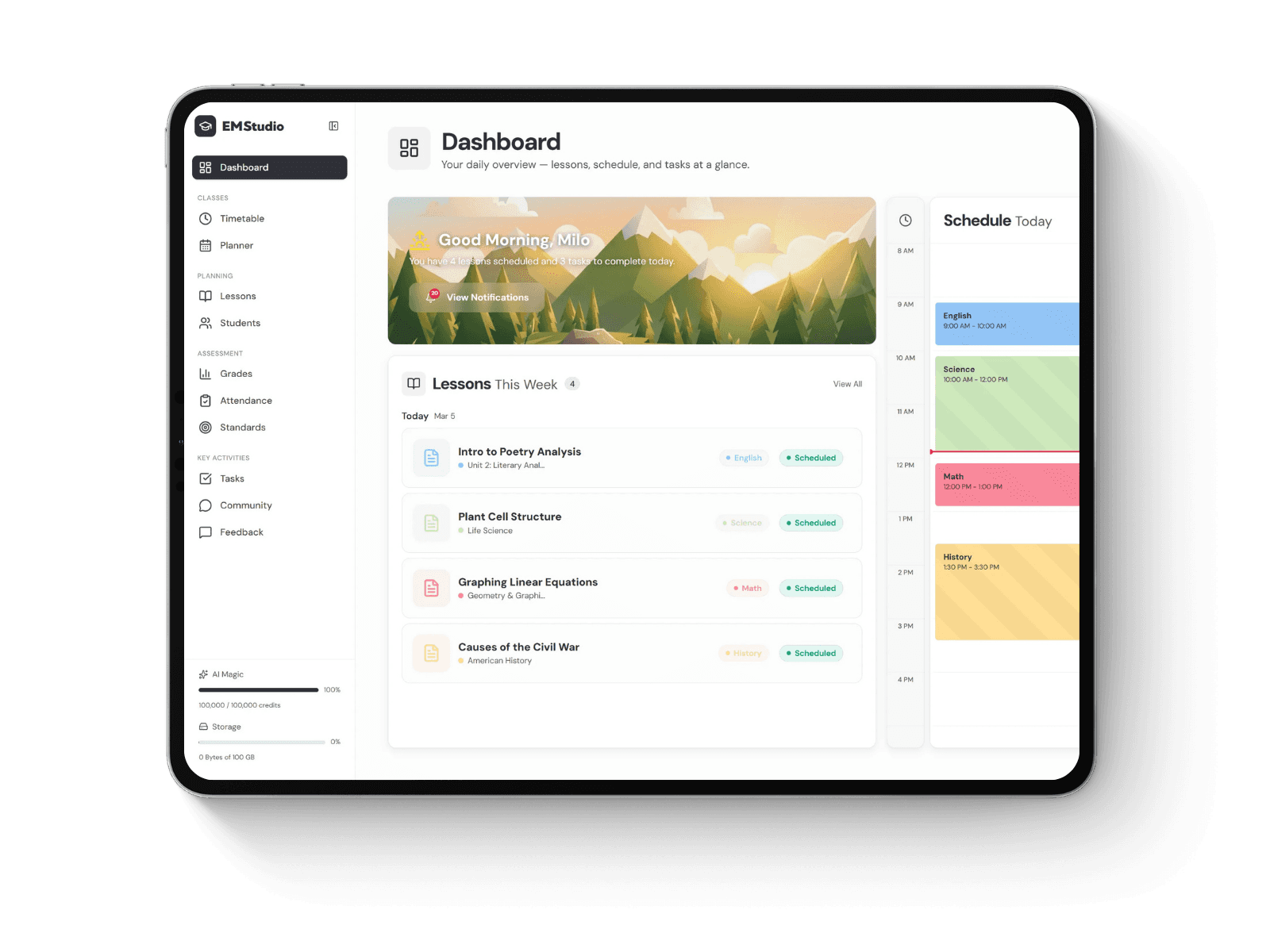
Still grading everything by hand?
EMStudio is a free teaching management app — manage your classes, students, lessons, and more!
Learn More
Table of Contents
What Do You Need to Know Before You Start Home Schooling?
Before you start home schooling, understand your state's legal requirements since regulations vary from zero paperwork to strict portfolio reviews. Budget $500–$2,500 annually per child for curriculum and activities, and commit to 90 minutes–5 hours of daily instruction depending on grade level. You will need backup support and honest answers about your work flexibility.
Home schooling is legal in all 50 states. That part is simple. But the bureaucracy ranges from invisible to overwhelming, and that difference determines your first month.
Texas, Idaho, and Alaska require zero notification. You simply start teaching. New York, Pennsylvania, and Massachusetts demand detailed portfolios, quarterly reports, standardized testing, and letters of intent. Check HSLDA.org for your specific statutes before you spend money on curriculum. The legal landscape shapes your homeschool record keeping requirements for the entire year.
Curriculum costs $300–$1,200 per child depending on whether you buy new, used, or boxed sets. Supplies run $100–$300 for basics like pencils, paper, and art materials. Extracurriculars add $200–$1,000 for sports, music lessons, or co-op fees. Then calculate lost income if you leave your job. See our comprehensive cost breakdown.
Shoestring budgets use library books, Khan Academy, and hand-me-down manipulatives. Moderate spending mixes new teacher guides with used student workbooks. Premium budgets include all-in-one boxed curriculum, online academies, and private tutors. Most families start big and scale down once they know their child's learning style.
Time commitments vary by age. Kindergarteners need 90 minutes of focused instruction daily. Grades 3–5 require 2–3 hours. Middle school jumps to 4–5 hours including labs and writing. High schoolers work 5–7 hours with heavy independent reading. One-on-one instruction moves faster than classroom management.
This assumes your child works independently for part of the day. Younger kids need constant supervision. Older students can work alone while you manage the household. Build your homeschool schedule around your energy levels, not a traditional school bell.
Ask hard questions before you start. Can you maintain your job with a seven-year-old interrupting every ten minutes? Can you teach long division to one child while nursing a toddler? Do you have a spouse, grandparent, or neighbor available 10–15 hours weekly to give you a break?
I tried teaching three grade levels simultaneously my first year. It nearly broke me. You need a learning styles assessment for each child and realistic expectations about home education. Read this pros and cons of homeschooling to understand the social and academic trade-offs.
Compare curriculum before you buy. Some programs require four hours of parent prep each Sunday. Others are open-and-go. Some emphasize rote memorization. Others use project-based learning. Match the philosophy to your child's temperament, not your Pinterest dreams.
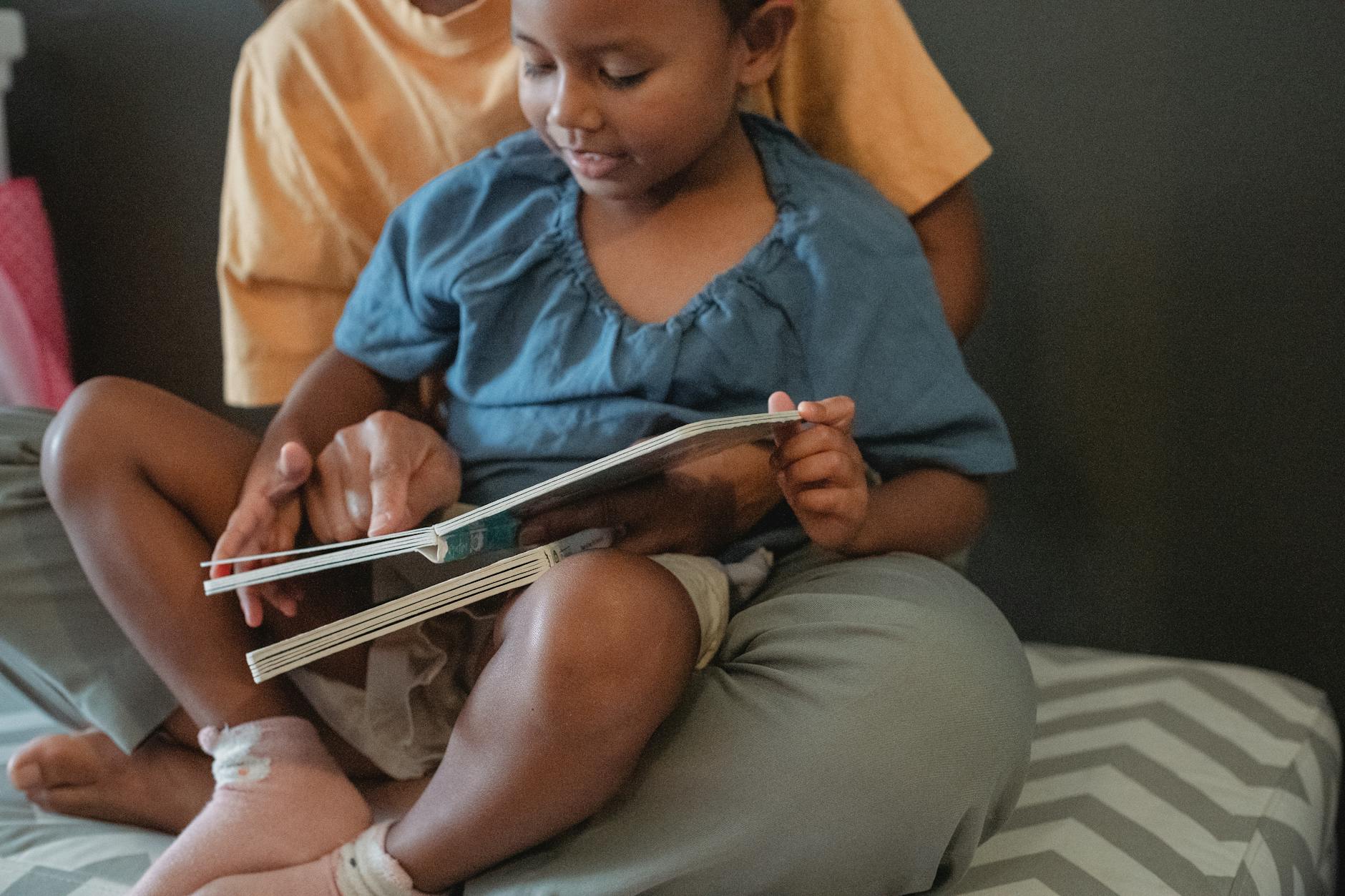
Step 1 — Understanding Legal Requirements in Your State
Home schooling is legal in all 50 states, but the paperwork for home education looks completely different in Texas than in New York. Some states treat you like a small private school. Others treat you like a district employee with strict filing deadlines and immunization requirements.
Start with HSLDA.org or your state Department of Education website. Find the page titled "homeschool law." You will find hard deadlines written in plain text. North Carolina wants your notice of intent by August 1. Washington gives you 14 days before you start instruction. Georgia requires an annual letter by September 1. Check three specific items while there: the intent form submission method, parent qualification requirements, and mandatory hours of instruction.
Notification Deadlines and Paperwork
Pennsylvania families file a notarized affidavit with their district superintendent by August 1. You also submit medical records, including immunization history, and a list of educational objectives for the year. The notary requirement trips up many parents who wait until the last week of July and find all notaries booked.
New York operates on a different timeline. You send an Individualized Home Instruction Plan within four weeks of starting your homeschool schedule. This document requires a detailed curriculum comparison and quarterly goals. Submit it late and you risk receiving a letter of non-compliance from your district.
Texas requires zero notification. You simply begin teaching when you are ready. Ohio asks for notification by the first week of school, usually a simple form listing your child's name and age. You can mail it or hand-deliver to the district office.
California operates on a completely different calendar. You file a private school affidavit between October 1 and October 15. Not September. Not November. That two-week window is your only shot until next October. The state website crashes every year on October 1 from traffic volume.
Keep copies of everything. Scan your signed forms and save them with clear file names like "2024_Affidavit_Submitted." This habit saves you when districts lose paperwork six months later. It also helps with managing teacher records online if you ever transition back to traditional school or apply to selective high schools.
Mandatory Subjects and Assessment Rules
California requires seven branches of study including English, math, social sciences, science, and physical education. Pennsylvania mandates eleven distinct subjects, adding fire safety, civics, and safety education separately. New York specifies hours per subject: 900 hours annually for elementary grades, 990 for secondary students. Track these hours in a simple notebook or spreadsheet.
Assessment mandates catch new homeschool parents off guard. Some states require standardized tests every two to three years. Others want annual evaluations regardless of grade level. Approved test lists usually include the Iowa Test, Stanford-10, or California Achievement Test. You cannot grab any free online quiz and call it compliance.
Portfolio evaluations offer an alternative in states like Florida and Pennsylvania. A certified teacher reviews your child's work samples and signs a form confirming adequate progress. You maintain these records for your homeschool record keeping. Choose a reviewer in April, not June, because certified teachers book up fast for June evaluations.
Submission deadlines for these assessments typically fall on June 30 or August 1. Mark these on your calendar now. Missing them triggers truancy investigations faster than missing a lesson plan deadline ever did. Some districts forgive late curriculum submissions. They rarely forgive missed assessment deadlines.

Step 2 — Defining Your Educational Goals and Child's Learning Style
Start with the free VARK questionnaire. It reveals whether your child processes through sight, sound, reading, or movement. Roughly 65% of elementary children are visual-kinesthetic learners. Know this before buying curriculum. It saves you from forcing workbooks on a kid who needs tiles.
Decide your anchor. Match state standards if public school re-enrollment is possible. Choose Charlotte Mason interest-led depth if you are committed to home education for the long haul. State alignment protects transcripts; interest-led builds lifelong learners.
Write SMART goals. "By June 2025, solve 4-digit multiplication with 90% accuracy on 3 consecutive assessments." Or "Complete 6 novel studies with summaries scoring 3+ on a 4-point rubric." Vague intentions fail. Specific benchmarks tell you whether your home schooling is working.
Identifying Visual, Auditory, and Kinesthetic Preferences
Watch your child during a math lesson. Do they reach for colored markers to map out the problem? That is a visual learner. Do they mutter steps aloud? Auditory. Do they build the equation with blocks? Kinesthetic. One dominates when they are stuck.
Complete this 10-question observation checklist. Do they track your finger when you point? Do they repeat instructions aloud? Do they tap feet while thinking? Do they prefer charts over verbal explanations? Do they hum while working? Do they need to stand to focus? Do they draw to explain concepts? Do they verbalize word problem steps? Do they fidget with objects? Do they gesture when describing ideas?
Score it. If seven out of ten indicators point to hands-on activity, trust that. Match your homeschool schedule to these needs. High visual scores mean color-coded notes. Strong auditory results suggest podcasts. Dominant kinesthetic needs require labs and motion.
Link this to your identifying different learning styles findings. If your learning styles assessment shows high kinesthetic need, history becomes reenactment and science happens at the kitchen counter. Ignore this and you fight your child every morning.
Setting Measurable Annual Benchmarks
Distinguish between three benchmark types. Skill-based: "Math facts at 40 problems per minute by December." Content-based: "Identify all 50 states by May." Portfolio-based: "Produce 5 writing samples showing progression from sentences to paragraphs." Each requires different evidence.
Write them down. A goal in your head is a wish, not a benchmark. Use the SMART template. Then build a quarterly review calendar. Check progress in October, January, and April. Did they hit the math speed? Can they label the map?
Adjust your curriculum comparison based on these data points. If the phonics program fails to produce fluency by January, switch it. Benchmarks drive decisions and remove the guilt of abandoning popular books that do not teach.
Keep records simple. For homeschool record keeping, use a spreadsheet with three columns: benchmark, date met, evidence. Photograph the model, screenshot the score, file the rubric. This answers questions about homeschool socialization. Solid homeschool education depends on knowing where you are headed and proving you got there.

Step 3 — How Do You Select the Best Curriculum for Visual Learners?
For visual learners, select curricula heavy in video instruction, graphic organizers, and colorful manipulatives. Top choices include Sonlight (literature-rich), Abeka (video lessons), and Time4Learning (interactive). Accredited programs offer transcript services and structured oversight, while non-accredited options provide flexibility and cost savings.
Visual learners need to see it to learn it. Your visual learning strategies should drive every purchase. Skip text-heavy workbooks unless they include diagrams, color coding, or video support. A mismatched curriculum means daily battles you do not have time to fight.
Comparing Accredited vs Non-Accredited Programs
Accredited programs like Bridgeway and Calvert cost $800–$2,000 annually. They provide official transcripts, diplomas, and NCAA eligibility tracking for athletes. You get assigned teachers who handle grading and documentation, which lightens your administrative load but restricts your scheduling flexibility. Non-accredited options like Sonlight and MasterBooks run $200–$600 with no credentialing services but offer complete content control and year-round pacing freedom.
Feature | Accredited | Non-Accredited |
|---|---|---|
Annual Cost | $800–$2,000 | $200–$600 |
Transcript Services | Official records provided | Parent-generated only |
NCAA Eligibility | Approved courses tracked | Not recognized |
Teacher Support | Licensed teachers assigned | Community forums |
Alignment | Usually secular | Often faith-specific |
Choose accredited if your student might return to public school, pursue NCAA athletics, or enlist in the military requiring diploma verification. Choose non-accredited for choosing the best homeschool curriculum with flexibility, religious content control, or cost savings. Your learning styles assessment matters more than the accreditation stamp for younger children. Accredited vs non accredited homeschool curriculum decisions become critical in high school, not kindergarten.
Military enlistment and many scholarship programs require diplomas from accredited institutions. If your child might need these pathways, pay for accreditation now. Otherwise, pocket the difference and invest in better manipulatives or museum memberships that support homeschool socialization.
Top Curriculum Choices for Visual Learners
The best homeschool curriculum for visual learners uses color, movement, and spatial organization. Dense text blocks lose them. All About Reading ($120, grades K–4) uses magnetic letter tiles and phonics cards that let kids build words physically on a board. Math-U-See ($95–$150 per level, Primer–Calculus) relies on integer block manipulatives where each number gets a specific color and length, making abstract concepts concrete.
Teaching Textbooks 4.0 ($40–$70 per level, Math 3–Pre-Calculus) delivers video instruction with animated graphics and immediate visual feedback on every problem. History Odyssey ($50–$80 per level, Ancients–Modern) focuses on timeline creation and mapping exercises that turn dates into spatial relationships. These programs support your homeschool schedule by reducing resistance. Visual kids engage faster when the material looks organized and colorful, not as black text on white pages.
Budgeting for Materials and Resources
Home schooling runs the gamut from shoestring to premium depending on your curriculum comparison. The Shoestring tier ($300–$400) combines Library Genesis for literature, Khan Academy for math, and used curriculum sales for hands-on materials. You will spend more time hunting resources but save cash for field trips.
Moderate budgets ($700–$900) pair new core programs like Math-U-See with free supplements such as NASA educational videos or Smithsonian virtual tours. This home education approach balances structure with economy. Premium setups ($1,200–$1,800) include accredited online academies with live video instruction and specialized STEM kits that require no parent prep.
Budget for hidden costs: shipping runs $25–$50, manipulative sets cost $50–$150, printer ink hits $30 monthly for worksheet-heavy days, and co-op fees range $100–$300 per semester. Track everything in a simple spreadsheet. Good homeschool record keeping prevents surprise shortfalls in May when you need those final lab kits.

Step 4 — Setting Up Your Home Based Education Environment and Schedule
Creating Dedicated Learning Zones
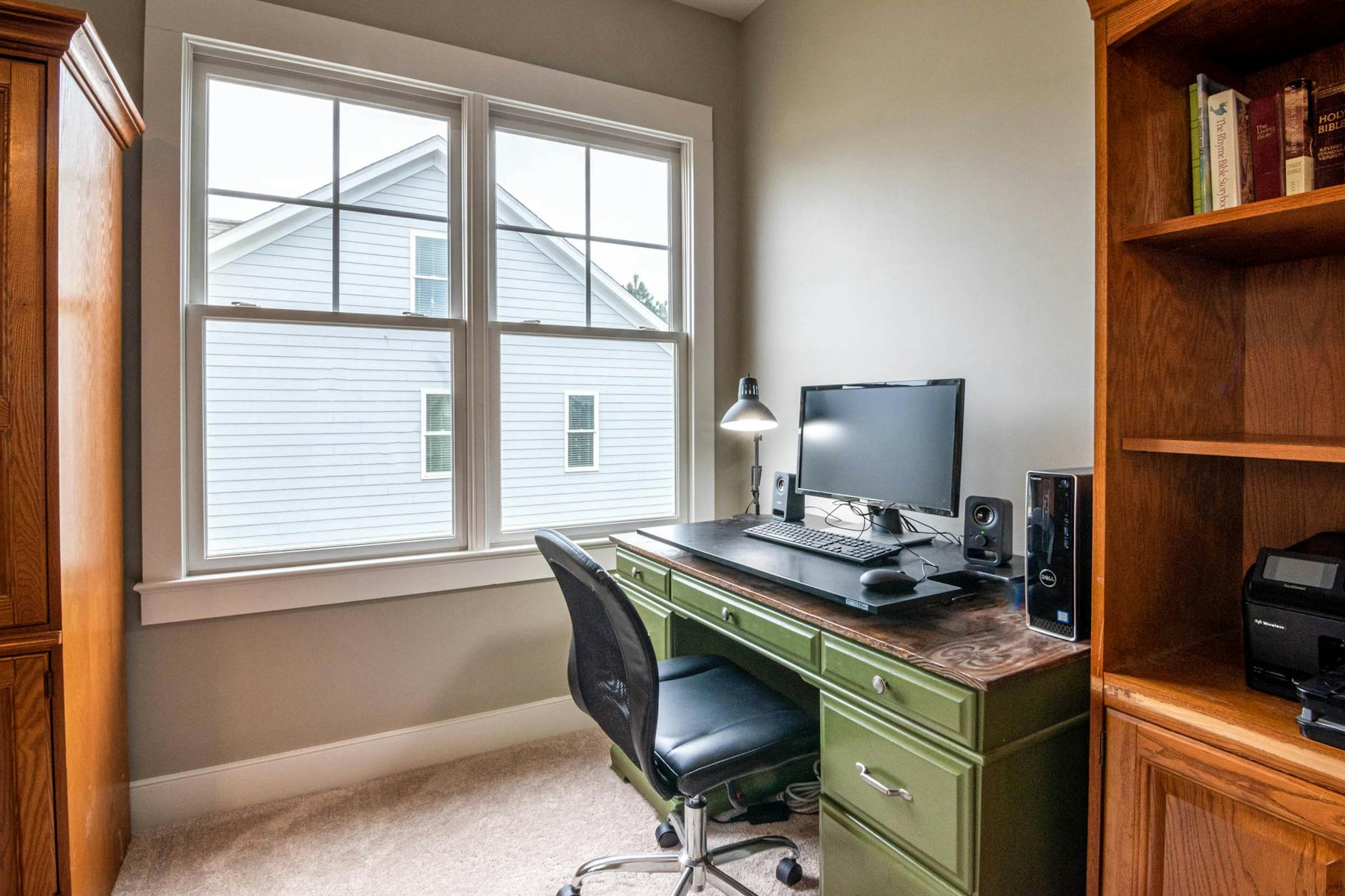
You need at least twenty square feet per child for a dedicated learning zone. That is roughly a four-by-five foot patch of floor per student, enough for a chair, desk, and elbow room. Place desks facing windows to maximize natural light, but position screens perpendicular to those windows to cut glare. I learned this the hard way when my daughter could not see her math problems through the afternoon sun streaming across her Chromebook.
Install 5000K daylight LED bulbs to reduce eye strain during reading and screen work. The color temperature mimics natural daylight and keeps circadian rhythms stable. Use vertical storage like Ikea Kallax units or rolling Sterilite carts to separate curricula by subject. This keeps math manipulatives from invading science space and lets you roll supplies into a closet when home based education ends for the day.
Mount pocket charts on the wall for visual schedules so your kids can track their own progress without asking what comes next. Create a library corner with bean bags away from the main work area. This signals to younger siblings that when someone sits there with a book, they are off limits and unavailable for play. Check out effective classroom design and learning zones for more layout ideas.
Building Flexible Daily Routines
Choose a homeschool schedule that works for your family from three proven templates. The four-day block runs Monday through Thursday from nine to two, leaving Fridays for field trips or catch-up. The split-day schedule puts academics from eight to eleven, then errands and lunch, with enrichment activities from two to four. Year-round Sabbath scheduling means six weeks on and one week off, preventing burnout while maintaining rhythm.
For grades one through three, keep lessons short. Try Morning Time at eight thirty for calendar and poetry, then math at nine. Run language arts from ten thirty to eleven thirty after a snack break. Serve lunch at noon, followed by science or history at one. Wrap by two with independent reading. This builds stamina without crushing young learners.
For older kids in grades three to five, extend the blocks. Keep the eight thirty Morning Time, but run math for forty-five minutes starting at nine. Add a twenty-minute recess at ten, then language arts for a full hour. Science or history gets forty-five minutes at one, ending with quiet reading at two. Adjust as needed for your home education rhythm.
Managing Distractions and Household Interruptions
Hang a Do Not Disturb door sign with a red and green traffic light system. Red means silence unless someone is bleeding. Green means you can ask a quick question. Supply noise-canceling headphones like the Sony WH-CH710N or JLab JBuds for students working while you teach a sibling. The headphones block out the vacuum cleaner and create a bubble of focus even when the dishwasher is running two rooms away.
Deploy toddler busy boxes during forty-five-minute focus blocks. Fill Sterilite bins with rotated sensory materials like water beads or sticker books. These are special toys that only appear when you are teaching formal lessons. The novelty buys you enough time to explain fractions to your third grader without a two-year-old climbing the bookshelf or dumping cereal on the floor.
Create a questions cup where older students drop written queries instead of interrupting. Review these during transition times or after lunch. Establish a Mommy is Teaching visual signal like a specific door hanger so toddlers learn to wait for the light to change. Home schooling requires managing the whole household, not just the curriculum, and these protocols protect your sanity and your lesson momentum.
Step 5 — What Are the Most Common Home Schooling Mistakes to Avoid?
Common home schooling mistakes include failing to maintain required attendance records, scheduling six-hour academic days for young children, and isolating from support networks. Research indicates that socialization outcomes depend on intentional community involvement rather than institutional setting alone. Correct these by setting realistic hours and joining local co-ops.
You will hit walls in your first year. Most are self-inflicted. The good news: these stumbles are predictable, and you can side-step them with a few concrete habits.
Neglecting State Record-Keeping Requirements
State education homeschool requirements vary wildly, but they all demand documentation. New York requires quarterly reports detailing hours and material covered. Pennsylvania mandates a portfolio reviewed by an evaluator plus standardized test results every third year. California tracks absence records meticulously. Skip these, and you risk truancy citations or forced public school re-enrollment. The panic of backdating logs in late May will destroy your credibility.
Don't rely on memory. Create a Google Sheets tracker with columns for Date, Subject, Hours, Activity Description, and Mastery Level on a 1–4 scale. Track all 180 days of instruction here. When an evaluator knocks or the district audits, you pull up dates and samples instantly. Vague entries like "read book" won't pass scrutiny; "Read Charlotte's Web, analyzed character motivation, 45 minutes, mastery level 3" will. Save every writing sample with the date attached. Include field trips under "Social Studies" or "Science" with specific locations listed.
Digital photos of artwork and timestamped reading logs satisfy homeschool record keeping requirements without the paper pile. Store everything in cloud storage. Filing cabinets flood and toddlers shred paper. Backup weekly.
Over-Scheduling Academic Content
Public school schedules do not transfer to home education. Effective home schooling requires about 90 minutes of formal academics for K–2, two and a half hours for grades 3–5, and four hours for middle school. Six-hour days produce burnout, not mastery. Watch for tears, resistance, or you yelling—those are signals to cut formal academics by 30 percent and increase outdoor time immediately. Burnout manifests as stomachaches on school mornings.
Red flags include completing only half your curriculum by December, your child expressing dread when you pull out the math book, or skipping recess to catch up. Conduct a learning styles assessment before buying materials to avoid mismatched expectations.
Implement a four-day week with one catch-up day, or use loop scheduling where you rotate subjects every three to four days instead of forcing every subject daily. This builds a sustainable productive online learning routine without the battlefield. Your homeschool schedule should include margin for doctor appointments and bad days.
Quality trumps quantity. A child who masters multiplication in ninety focused minutes learns more than one who stares at worksheets for six hours. Short lessons respect attention spans and preserve your relationship better than plowing through a checklist.
Isolating from Support Networks and Socialization
Research indicates that socialization outcomes correlate with intentional community involvement, not institutional setting. Your home education plan must include peers outside your immediate family. Aim for at least two to three peer interactions weekly outside your home through specific outlets: Classical Conversations co-ops meet weekly for academic accountability, 4-H clubs offer project-based learning, YMCA sports provide seasonal teams, library STEM clubs gather monthly, and Scouts BSA builds leadership skills through structured advancement. Rotate through these options until you find your fit.
Don't overcommit to every opportunity. Join one co-op for academic structure, one physical activity like gymnastics or soccer for energy release, and one service project such as nursing home visits or food bank volunteering. Deep relationships in two to three settings outperform shallow interactions in ten activities. This focused approach to homeschool socialization prevents isolation while protecting your schedule from chaos. Saying no to good opportunities allows space for great ones.
You need adults too. These networks provide honest curriculum comparison advice and emergency backup when you're sick. Creating effective support networks with other home schooling parents preserves your sanity. Isolation kills motivation faster than any math curriculum. Schedule your own social time with other parents monthly or you will lose perspective.

Key Takeaways for Home Schooling
You cannot skip the legal paperwork. File your intent, keep attendance logs, and handle homeschool record keeping before you buy a single workbook. Match your curriculum to how your child actually learns, not how you wish they learned. Run a learning styles assessment if you're unsure — it'll save you months of frustration and unused teacher manuals.
Your homeschool schedule will fall apart by October. Plan for that. Build buffer days into your calendar and keep records simple — a spreadsheet beats a complicated app you abandon in November. Home education works when you show up consistently, not when you execute a perfect plan.
Start with reading and math daily. Add subjects only when those feel solid. The biggest mistake is trying to replicate school at home. You have permission to finish lessons in two hours and spend the afternoon outside. Trust your instincts, track what matters, and adjust weekly.

What Do You Need to Know Before You Start Home Schooling?
Before you start home schooling, understand your state's legal requirements since regulations vary from zero paperwork to strict portfolio reviews. Budget $500–$2,500 annually per child for curriculum and activities, and commit to 90 minutes–5 hours of daily instruction depending on grade level. You will need backup support and honest answers about your work flexibility.
Home schooling is legal in all 50 states. That part is simple. But the bureaucracy ranges from invisible to overwhelming, and that difference determines your first month.
Texas, Idaho, and Alaska require zero notification. You simply start teaching. New York, Pennsylvania, and Massachusetts demand detailed portfolios, quarterly reports, standardized testing, and letters of intent. Check HSLDA.org for your specific statutes before you spend money on curriculum. The legal landscape shapes your homeschool record keeping requirements for the entire year.
Curriculum costs $300–$1,200 per child depending on whether you buy new, used, or boxed sets. Supplies run $100–$300 for basics like pencils, paper, and art materials. Extracurriculars add $200–$1,000 for sports, music lessons, or co-op fees. Then calculate lost income if you leave your job. See our comprehensive cost breakdown.
Shoestring budgets use library books, Khan Academy, and hand-me-down manipulatives. Moderate spending mixes new teacher guides with used student workbooks. Premium budgets include all-in-one boxed curriculum, online academies, and private tutors. Most families start big and scale down once they know their child's learning style.
Time commitments vary by age. Kindergarteners need 90 minutes of focused instruction daily. Grades 3–5 require 2–3 hours. Middle school jumps to 4–5 hours including labs and writing. High schoolers work 5–7 hours with heavy independent reading. One-on-one instruction moves faster than classroom management.
This assumes your child works independently for part of the day. Younger kids need constant supervision. Older students can work alone while you manage the household. Build your homeschool schedule around your energy levels, not a traditional school bell.
Ask hard questions before you start. Can you maintain your job with a seven-year-old interrupting every ten minutes? Can you teach long division to one child while nursing a toddler? Do you have a spouse, grandparent, or neighbor available 10–15 hours weekly to give you a break?
I tried teaching three grade levels simultaneously my first year. It nearly broke me. You need a learning styles assessment for each child and realistic expectations about home education. Read this pros and cons of homeschooling to understand the social and academic trade-offs.
Compare curriculum before you buy. Some programs require four hours of parent prep each Sunday. Others are open-and-go. Some emphasize rote memorization. Others use project-based learning. Match the philosophy to your child's temperament, not your Pinterest dreams.
Step 1 — Understanding Legal Requirements in Your State
Home schooling is legal in all 50 states, but the paperwork for home education looks completely different in Texas than in New York. Some states treat you like a small private school. Others treat you like a district employee with strict filing deadlines and immunization requirements.
Start with HSLDA.org or your state Department of Education website. Find the page titled "homeschool law." You will find hard deadlines written in plain text. North Carolina wants your notice of intent by August 1. Washington gives you 14 days before you start instruction. Georgia requires an annual letter by September 1. Check three specific items while there: the intent form submission method, parent qualification requirements, and mandatory hours of instruction.
Notification Deadlines and Paperwork
Pennsylvania families file a notarized affidavit with their district superintendent by August 1. You also submit medical records, including immunization history, and a list of educational objectives for the year. The notary requirement trips up many parents who wait until the last week of July and find all notaries booked.
New York operates on a different timeline. You send an Individualized Home Instruction Plan within four weeks of starting your homeschool schedule. This document requires a detailed curriculum comparison and quarterly goals. Submit it late and you risk receiving a letter of non-compliance from your district.
Texas requires zero notification. You simply begin teaching when you are ready. Ohio asks for notification by the first week of school, usually a simple form listing your child's name and age. You can mail it or hand-deliver to the district office.
California operates on a completely different calendar. You file a private school affidavit between October 1 and October 15. Not September. Not November. That two-week window is your only shot until next October. The state website crashes every year on October 1 from traffic volume.
Keep copies of everything. Scan your signed forms and save them with clear file names like "2024_Affidavit_Submitted." This habit saves you when districts lose paperwork six months later. It also helps with managing teacher records online if you ever transition back to traditional school or apply to selective high schools.
Mandatory Subjects and Assessment Rules
California requires seven branches of study including English, math, social sciences, science, and physical education. Pennsylvania mandates eleven distinct subjects, adding fire safety, civics, and safety education separately. New York specifies hours per subject: 900 hours annually for elementary grades, 990 for secondary students. Track these hours in a simple notebook or spreadsheet.
Assessment mandates catch new homeschool parents off guard. Some states require standardized tests every two to three years. Others want annual evaluations regardless of grade level. Approved test lists usually include the Iowa Test, Stanford-10, or California Achievement Test. You cannot grab any free online quiz and call it compliance.
Portfolio evaluations offer an alternative in states like Florida and Pennsylvania. A certified teacher reviews your child's work samples and signs a form confirming adequate progress. You maintain these records for your homeschool record keeping. Choose a reviewer in April, not June, because certified teachers book up fast for June evaluations.
Submission deadlines for these assessments typically fall on June 30 or August 1. Mark these on your calendar now. Missing them triggers truancy investigations faster than missing a lesson plan deadline ever did. Some districts forgive late curriculum submissions. They rarely forgive missed assessment deadlines.
Step 2 — Defining Your Educational Goals and Child's Learning Style
Start with the free VARK questionnaire. It reveals whether your child processes through sight, sound, reading, or movement. Roughly 65% of elementary children are visual-kinesthetic learners. Know this before buying curriculum. It saves you from forcing workbooks on a kid who needs tiles.
Decide your anchor. Match state standards if public school re-enrollment is possible. Choose Charlotte Mason interest-led depth if you are committed to home education for the long haul. State alignment protects transcripts; interest-led builds lifelong learners.
Write SMART goals. "By June 2025, solve 4-digit multiplication with 90% accuracy on 3 consecutive assessments." Or "Complete 6 novel studies with summaries scoring 3+ on a 4-point rubric." Vague intentions fail. Specific benchmarks tell you whether your home schooling is working.
Identifying Visual, Auditory, and Kinesthetic Preferences
Watch your child during a math lesson. Do they reach for colored markers to map out the problem? That is a visual learner. Do they mutter steps aloud? Auditory. Do they build the equation with blocks? Kinesthetic. One dominates when they are stuck.
Complete this 10-question observation checklist. Do they track your finger when you point? Do they repeat instructions aloud? Do they tap feet while thinking? Do they prefer charts over verbal explanations? Do they hum while working? Do they need to stand to focus? Do they draw to explain concepts? Do they verbalize word problem steps? Do they fidget with objects? Do they gesture when describing ideas?
Score it. If seven out of ten indicators point to hands-on activity, trust that. Match your homeschool schedule to these needs. High visual scores mean color-coded notes. Strong auditory results suggest podcasts. Dominant kinesthetic needs require labs and motion.
Link this to your identifying different learning styles findings. If your learning styles assessment shows high kinesthetic need, history becomes reenactment and science happens at the kitchen counter. Ignore this and you fight your child every morning.
Setting Measurable Annual Benchmarks
Distinguish between three benchmark types. Skill-based: "Math facts at 40 problems per minute by December." Content-based: "Identify all 50 states by May." Portfolio-based: "Produce 5 writing samples showing progression from sentences to paragraphs." Each requires different evidence.
Write them down. A goal in your head is a wish, not a benchmark. Use the SMART template. Then build a quarterly review calendar. Check progress in October, January, and April. Did they hit the math speed? Can they label the map?
Adjust your curriculum comparison based on these data points. If the phonics program fails to produce fluency by January, switch it. Benchmarks drive decisions and remove the guilt of abandoning popular books that do not teach.
Keep records simple. For homeschool record keeping, use a spreadsheet with three columns: benchmark, date met, evidence. Photograph the model, screenshot the score, file the rubric. This answers questions about homeschool socialization. Solid homeschool education depends on knowing where you are headed and proving you got there.
Step 3 — How Do You Select the Best Curriculum for Visual Learners?
For visual learners, select curricula heavy in video instruction, graphic organizers, and colorful manipulatives. Top choices include Sonlight (literature-rich), Abeka (video lessons), and Time4Learning (interactive). Accredited programs offer transcript services and structured oversight, while non-accredited options provide flexibility and cost savings.
Visual learners need to see it to learn it. Your visual learning strategies should drive every purchase. Skip text-heavy workbooks unless they include diagrams, color coding, or video support. A mismatched curriculum means daily battles you do not have time to fight.
Comparing Accredited vs Non-Accredited Programs
Accredited programs like Bridgeway and Calvert cost $800–$2,000 annually. They provide official transcripts, diplomas, and NCAA eligibility tracking for athletes. You get assigned teachers who handle grading and documentation, which lightens your administrative load but restricts your scheduling flexibility. Non-accredited options like Sonlight and MasterBooks run $200–$600 with no credentialing services but offer complete content control and year-round pacing freedom.
Feature | Accredited | Non-Accredited |
|---|---|---|
Annual Cost | $800–$2,000 | $200–$600 |
Transcript Services | Official records provided | Parent-generated only |
NCAA Eligibility | Approved courses tracked | Not recognized |
Teacher Support | Licensed teachers assigned | Community forums |
Alignment | Usually secular | Often faith-specific |
Choose accredited if your student might return to public school, pursue NCAA athletics, or enlist in the military requiring diploma verification. Choose non-accredited for choosing the best homeschool curriculum with flexibility, religious content control, or cost savings. Your learning styles assessment matters more than the accreditation stamp for younger children. Accredited vs non accredited homeschool curriculum decisions become critical in high school, not kindergarten.
Military enlistment and many scholarship programs require diplomas from accredited institutions. If your child might need these pathways, pay for accreditation now. Otherwise, pocket the difference and invest in better manipulatives or museum memberships that support homeschool socialization.
Top Curriculum Choices for Visual Learners
The best homeschool curriculum for visual learners uses color, movement, and spatial organization. Dense text blocks lose them. All About Reading ($120, grades K–4) uses magnetic letter tiles and phonics cards that let kids build words physically on a board. Math-U-See ($95–$150 per level, Primer–Calculus) relies on integer block manipulatives where each number gets a specific color and length, making abstract concepts concrete.
Teaching Textbooks 4.0 ($40–$70 per level, Math 3–Pre-Calculus) delivers video instruction with animated graphics and immediate visual feedback on every problem. History Odyssey ($50–$80 per level, Ancients–Modern) focuses on timeline creation and mapping exercises that turn dates into spatial relationships. These programs support your homeschool schedule by reducing resistance. Visual kids engage faster when the material looks organized and colorful, not as black text on white pages.
Budgeting for Materials and Resources
Home schooling runs the gamut from shoestring to premium depending on your curriculum comparison. The Shoestring tier ($300–$400) combines Library Genesis for literature, Khan Academy for math, and used curriculum sales for hands-on materials. You will spend more time hunting resources but save cash for field trips.
Moderate budgets ($700–$900) pair new core programs like Math-U-See with free supplements such as NASA educational videos or Smithsonian virtual tours. This home education approach balances structure with economy. Premium setups ($1,200–$1,800) include accredited online academies with live video instruction and specialized STEM kits that require no parent prep.
Budget for hidden costs: shipping runs $25–$50, manipulative sets cost $50–$150, printer ink hits $30 monthly for worksheet-heavy days, and co-op fees range $100–$300 per semester. Track everything in a simple spreadsheet. Good homeschool record keeping prevents surprise shortfalls in May when you need those final lab kits.
Step 4 — Setting Up Your Home Based Education Environment and Schedule
Creating Dedicated Learning Zones
You need at least twenty square feet per child for a dedicated learning zone. That is roughly a four-by-five foot patch of floor per student, enough for a chair, desk, and elbow room. Place desks facing windows to maximize natural light, but position screens perpendicular to those windows to cut glare. I learned this the hard way when my daughter could not see her math problems through the afternoon sun streaming across her Chromebook.
Install 5000K daylight LED bulbs to reduce eye strain during reading and screen work. The color temperature mimics natural daylight and keeps circadian rhythms stable. Use vertical storage like Ikea Kallax units or rolling Sterilite carts to separate curricula by subject. This keeps math manipulatives from invading science space and lets you roll supplies into a closet when home based education ends for the day.
Mount pocket charts on the wall for visual schedules so your kids can track their own progress without asking what comes next. Create a library corner with bean bags away from the main work area. This signals to younger siblings that when someone sits there with a book, they are off limits and unavailable for play. Check out effective classroom design and learning zones for more layout ideas.
Building Flexible Daily Routines
Choose a homeschool schedule that works for your family from three proven templates. The four-day block runs Monday through Thursday from nine to two, leaving Fridays for field trips or catch-up. The split-day schedule puts academics from eight to eleven, then errands and lunch, with enrichment activities from two to four. Year-round Sabbath scheduling means six weeks on and one week off, preventing burnout while maintaining rhythm.
For grades one through three, keep lessons short. Try Morning Time at eight thirty for calendar and poetry, then math at nine. Run language arts from ten thirty to eleven thirty after a snack break. Serve lunch at noon, followed by science or history at one. Wrap by two with independent reading. This builds stamina without crushing young learners.
For older kids in grades three to five, extend the blocks. Keep the eight thirty Morning Time, but run math for forty-five minutes starting at nine. Add a twenty-minute recess at ten, then language arts for a full hour. Science or history gets forty-five minutes at one, ending with quiet reading at two. Adjust as needed for your home education rhythm.
Managing Distractions and Household Interruptions
Hang a Do Not Disturb door sign with a red and green traffic light system. Red means silence unless someone is bleeding. Green means you can ask a quick question. Supply noise-canceling headphones like the Sony WH-CH710N or JLab JBuds for students working while you teach a sibling. The headphones block out the vacuum cleaner and create a bubble of focus even when the dishwasher is running two rooms away.
Deploy toddler busy boxes during forty-five-minute focus blocks. Fill Sterilite bins with rotated sensory materials like water beads or sticker books. These are special toys that only appear when you are teaching formal lessons. The novelty buys you enough time to explain fractions to your third grader without a two-year-old climbing the bookshelf or dumping cereal on the floor.
Create a questions cup where older students drop written queries instead of interrupting. Review these during transition times or after lunch. Establish a Mommy is Teaching visual signal like a specific door hanger so toddlers learn to wait for the light to change. Home schooling requires managing the whole household, not just the curriculum, and these protocols protect your sanity and your lesson momentum.
Step 5 — What Are the Most Common Home Schooling Mistakes to Avoid?
Common home schooling mistakes include failing to maintain required attendance records, scheduling six-hour academic days for young children, and isolating from support networks. Research indicates that socialization outcomes depend on intentional community involvement rather than institutional setting alone. Correct these by setting realistic hours and joining local co-ops.
You will hit walls in your first year. Most are self-inflicted. The good news: these stumbles are predictable, and you can side-step them with a few concrete habits.
Neglecting State Record-Keeping Requirements
State education homeschool requirements vary wildly, but they all demand documentation. New York requires quarterly reports detailing hours and material covered. Pennsylvania mandates a portfolio reviewed by an evaluator plus standardized test results every third year. California tracks absence records meticulously. Skip these, and you risk truancy citations or forced public school re-enrollment. The panic of backdating logs in late May will destroy your credibility.
Don't rely on memory. Create a Google Sheets tracker with columns for Date, Subject, Hours, Activity Description, and Mastery Level on a 1–4 scale. Track all 180 days of instruction here. When an evaluator knocks or the district audits, you pull up dates and samples instantly. Vague entries like "read book" won't pass scrutiny; "Read Charlotte's Web, analyzed character motivation, 45 minutes, mastery level 3" will. Save every writing sample with the date attached. Include field trips under "Social Studies" or "Science" with specific locations listed.
Digital photos of artwork and timestamped reading logs satisfy homeschool record keeping requirements without the paper pile. Store everything in cloud storage. Filing cabinets flood and toddlers shred paper. Backup weekly.
Over-Scheduling Academic Content
Public school schedules do not transfer to home education. Effective home schooling requires about 90 minutes of formal academics for K–2, two and a half hours for grades 3–5, and four hours for middle school. Six-hour days produce burnout, not mastery. Watch for tears, resistance, or you yelling—those are signals to cut formal academics by 30 percent and increase outdoor time immediately. Burnout manifests as stomachaches on school mornings.
Red flags include completing only half your curriculum by December, your child expressing dread when you pull out the math book, or skipping recess to catch up. Conduct a learning styles assessment before buying materials to avoid mismatched expectations.
Implement a four-day week with one catch-up day, or use loop scheduling where you rotate subjects every three to four days instead of forcing every subject daily. This builds a sustainable productive online learning routine without the battlefield. Your homeschool schedule should include margin for doctor appointments and bad days.
Quality trumps quantity. A child who masters multiplication in ninety focused minutes learns more than one who stares at worksheets for six hours. Short lessons respect attention spans and preserve your relationship better than plowing through a checklist.
Isolating from Support Networks and Socialization
Research indicates that socialization outcomes correlate with intentional community involvement, not institutional setting. Your home education plan must include peers outside your immediate family. Aim for at least two to three peer interactions weekly outside your home through specific outlets: Classical Conversations co-ops meet weekly for academic accountability, 4-H clubs offer project-based learning, YMCA sports provide seasonal teams, library STEM clubs gather monthly, and Scouts BSA builds leadership skills through structured advancement. Rotate through these options until you find your fit.
Don't overcommit to every opportunity. Join one co-op for academic structure, one physical activity like gymnastics or soccer for energy release, and one service project such as nursing home visits or food bank volunteering. Deep relationships in two to three settings outperform shallow interactions in ten activities. This focused approach to homeschool socialization prevents isolation while protecting your schedule from chaos. Saying no to good opportunities allows space for great ones.
You need adults too. These networks provide honest curriculum comparison advice and emergency backup when you're sick. Creating effective support networks with other home schooling parents preserves your sanity. Isolation kills motivation faster than any math curriculum. Schedule your own social time with other parents monthly or you will lose perspective.
Key Takeaways for Home Schooling
You cannot skip the legal paperwork. File your intent, keep attendance logs, and handle homeschool record keeping before you buy a single workbook. Match your curriculum to how your child actually learns, not how you wish they learned. Run a learning styles assessment if you're unsure — it'll save you months of frustration and unused teacher manuals.
Your homeschool schedule will fall apart by October. Plan for that. Build buffer days into your calendar and keep records simple — a spreadsheet beats a complicated app you abandon in November. Home education works when you show up consistently, not when you execute a perfect plan.
Start with reading and math daily. Add subjects only when those feel solid. The biggest mistake is trying to replicate school at home. You have permission to finish lessons in two hours and spend the afternoon outside. Trust your instincts, track what matters, and adjust weekly.
Still grading everything by hand?
EMStudio is a free teaching management app — manage your classes, students, lessons, and more!
Learn More
Still grading everything by hand?
EMStudio is a free teaching management app — manage your classes, students, lessons, and more!
Learn More




Notion4Teachers
Notion templates to simplify administrative tasks and enhance your teaching experience.



2026 Notion4Teachers. All Rights Reserved.
Notion4Teachers
Notion templates to simplify administrative tasks and enhance your teaching experience.
2026 Notion4Teachers. All Rights Reserved.
Notion4Teachers
Notion templates to simplify administrative tasks and enhance your teaching experience.
2026 Notion4Teachers. All Rights Reserved.