Higher or lower: a five-minute estimation starter for any classroom

Ask a class how many people live in Canada and you will get answers from two million to two billion. Most students can recite facts they were taught last week. Far fewer have a feel for how big things are compared with each other, and that sense of scale is what lets them spot a wrong answer before they hand it in.
Estimation is hard to drill with a worksheet. It is easy to practise with a game that takes five minutes, needs no prep and works with one screen at the front of the room. The higher or lower format does exactly that.
Still grading everything by hand?
EMStudio is a free teaching management app — manage your classes, students, lessons, and more!
How the game works
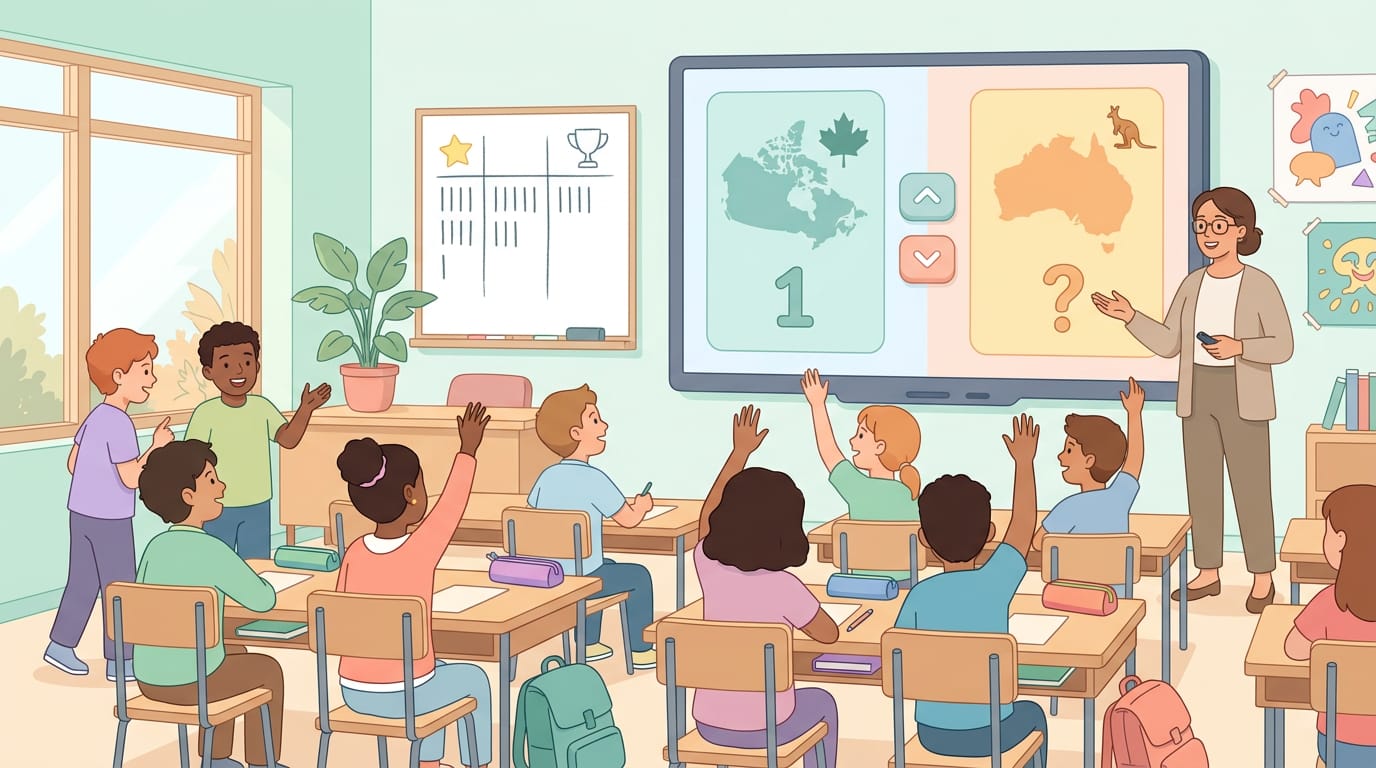
Students see two items. The first has a number attached: a population, a height, a year, a price. They decide whether the second item's number is higher or lower. If they are right, the second item becomes the new baseline and another appears. The run ends on the first miss.
That's all. There are no instructions to explain and nothing to hand out. A new class can be playing within a minute.
One free site built around this format is Play Higher Lower. It runs in a browser with nothing to install, and it has more than 80 ready-made games on real data: geography, animals, sport, films, music and technology. Students can play without making an account.
Five ways to use it in a lesson
1. Bell-ringer. Put a game on the board as students come in. The class votes by raising hands or standing on one side of the room. Keep a tally of the class's best streak on the whiteboard for the week. Five minutes, and everyone has made a dozen estimates before the lesson starts.
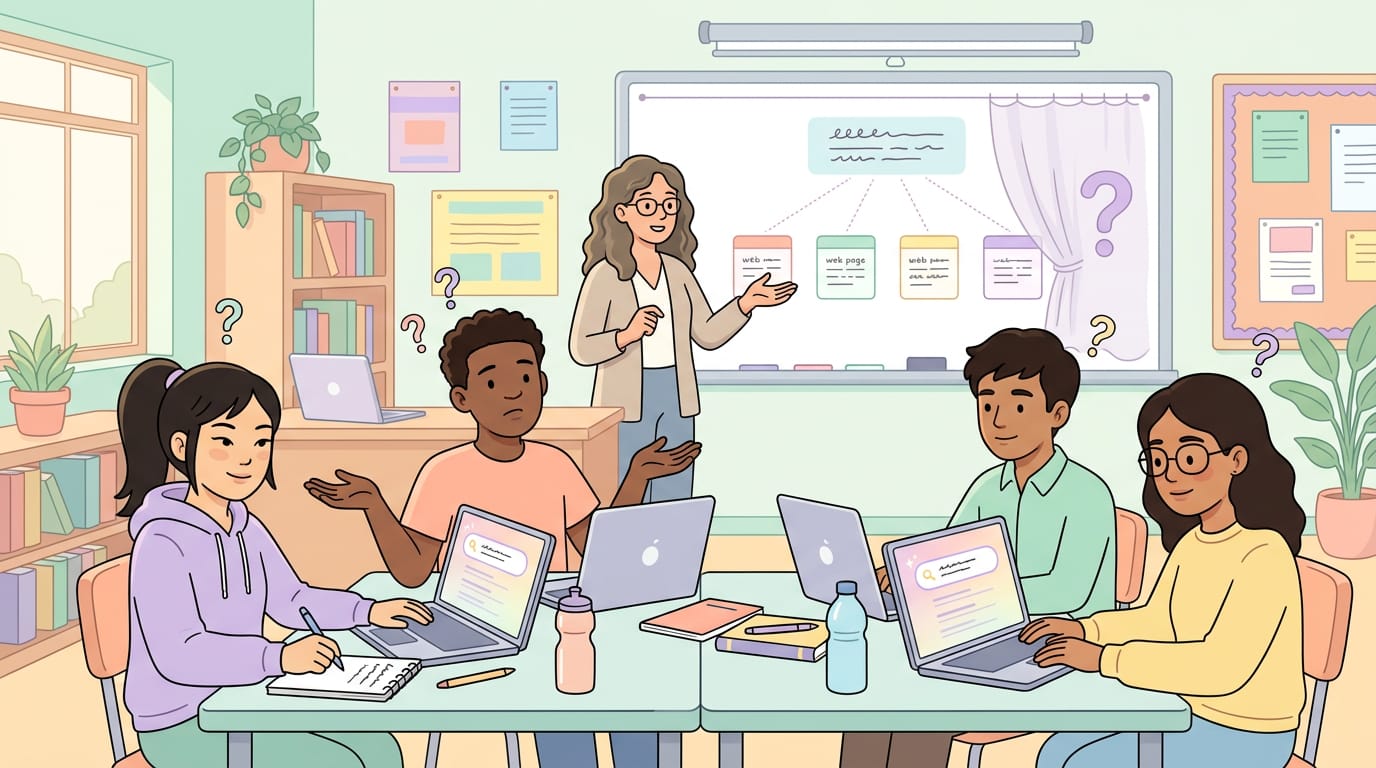
2. Think, pair, share. Before the vote, give pairs twenty seconds to agree on an answer and one reason for it. "It's higher because it's in Asia" is weak. "It's higher because it has three cities over ten million" is reasoning. The game gives instant feedback on which kind of thinking works.
3. Topic hook. Starting a unit on GDP, animal adaptations or the solar system? Play a round on that topic first and note which comparisons the class got wrong. Those are your misconceptions, handed to you in the first five minutes.
4. Exit ticket. At the end of a unit, play the same game again. A class that could manage a streak of three in week one and reaches nine in week four has learned something measurable, and they can see it themselves.
5. Early finishers. A student who is done can play alone and try to beat a personal best. It is quiet, it is on task, and it ends by itself when they miss.
Build a game from your own lesson
The ready-made games are a start. The more useful feature for teachers is that you can make your own higher or lower quiz from any list where each item has a number.
You pick a topic, add items with their values, and share the link. No coding. Some ideas that work well:
History: events and the year they happened. "Did the printing press come before or after the fall of Constantinople?"
Science: elements and their atomic numbers, planets and their number of moons, animals and their lifespans.
Maths: fractions, decimals and percentages mixed together, so students have to compare 3/8 with 0.4.
Geography: rivers by length, mountains by height, cities by distance from your school.
Languages: word frequency, or the number of speakers of each language.
Literature: books by publication year or page count.
Ten to fifteen items is enough for a good round. Better still, have students build the game. Researching twenty values, checking them and deciding which pairs will be tricky is a research task with a product their classmates will play.
Whole-class and group play
For a quick whole-class round, one screen and a show of hands is enough. If students have devices, the site has a versus mode: you create a room, share a six-character code, and up to 32 players get the same items in the same order with a live scoreboard. You can set a time limit per round or leave it off for classes that need longer to think.
There is also a daily challenge: one set of matchups that is the same for every player that day, with a single attempt. It works well as a standing Friday routine. The class plays it together, records the score, and tries to beat last week's.
A sample five-minute starter
Here is one way a round might run at the start of a geography lesson.
Minute one. Open a game on a topic linked to the lesson and read the first pair aloud. Students write H or L on a mini whiteboard and hold it up together, so nobody copies a neighbour.
Minutes two to four. Play on. After each reveal, ask one student who was right and one who was wrong to explain their thinking in a sentence. Keep the pace quick.
Minute five. Stop on a question, not an answer. Ask the class which comparison surprised them most and why, and write it on the board. That surprise is the way into the lesson.
Record the streak in a corner of the board. Classes get competitive about beating their own number, and that works in your favour.
What to watch for
A few practical notes.
Ask for the reason, not just the answer. Without that step it becomes guessing. With it, students practise using what they know to bound what they don't.
Celebrate good wrong answers. A student who reasons carefully and misses has done better work than one who guessed right.
Check the data on custom games. If students build a game, have a partner verify three values at random. It is a natural lesson in checking sources.
Test it on your school's network first. Filters vary from school to school, so open the site on a classroom device before you plan a lesson around it.
Keep it short. Five minutes leaves them wanting more. Fifteen turns it into noise.
Estimation is a skill students use for the rest of their lives, every time they read a headline with a number in it. A game where they find out, twenty times in five minutes, whether their sense of scale was right is about the cheapest practice there is.
Still grading everything by hand?
EMStudio is a free teaching management app — manage your classes, students, lessons, and more!