
Game-Based Language Learning: What the Research Actually Shows in 2026
Game-Based Language Learning: What the Research Actually Shows in 2026

Article by
Milo
ESL Content Coordinator & Educator
ESL Content Coordinator & Educator
All Posts
Ultimate Teacher Planner
The ultimate all-in-one education management system in Notion.
Learn More
Ultimate Teacher Planner
The ultimate all-in-one education management system in Notion.
Learn More
Table of Contents
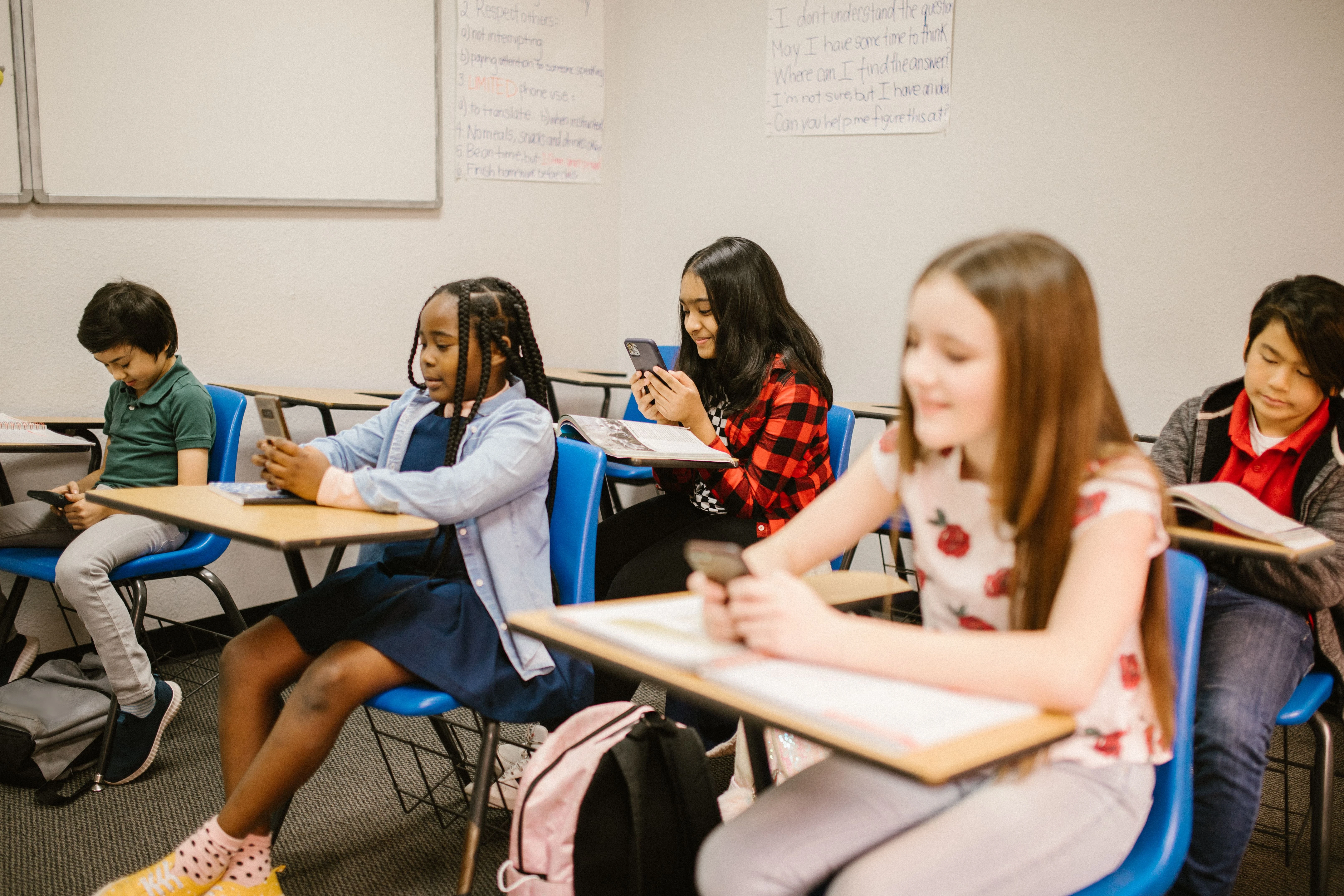
Gamification has become one of the most overused words in EdTech marketing — nearly every app claims it, and few define what they actually mean by it. The research is more precise than the marketing, and the distinction between what works and what merely looks like it works matters for anyone deciding how to spend limited classroom time.
What Works
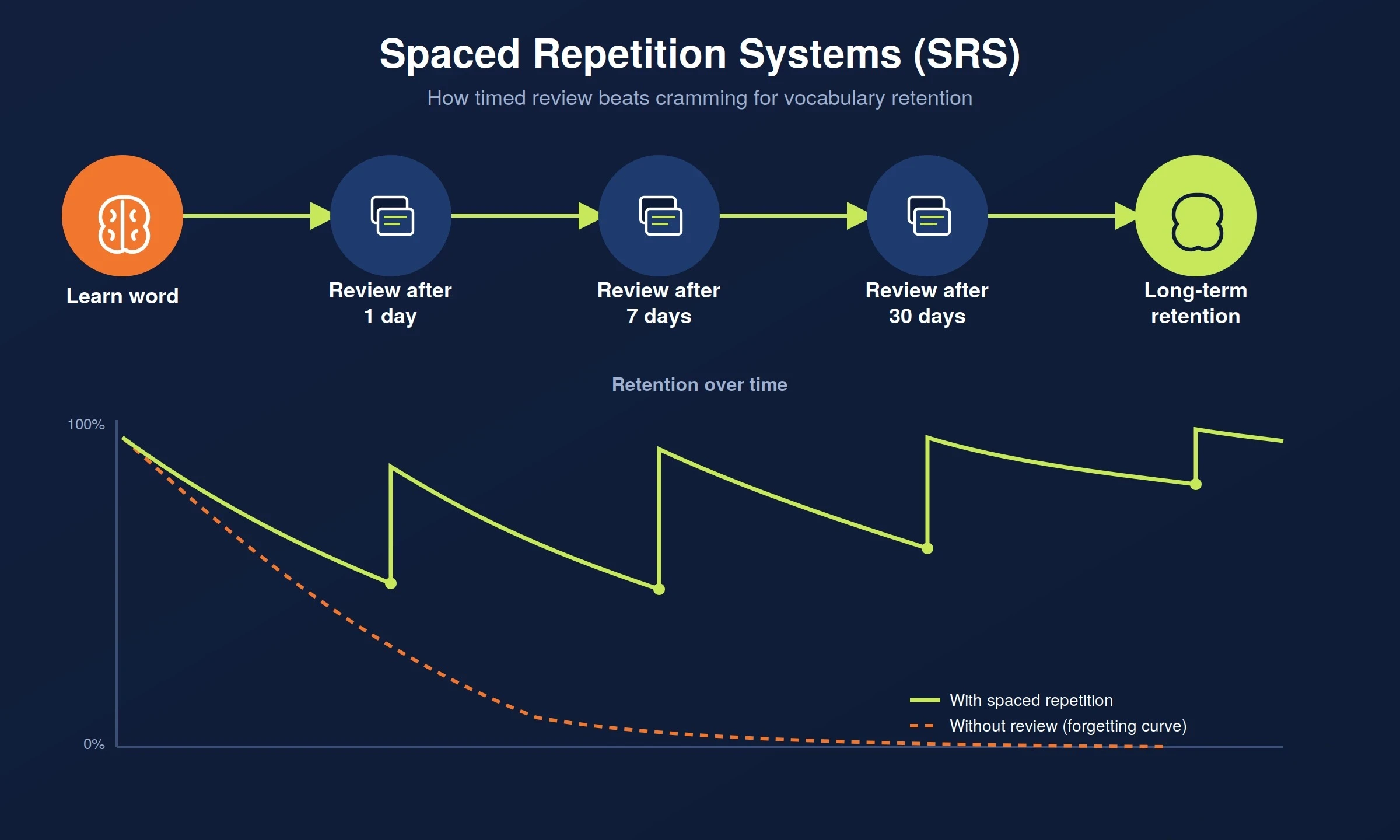
Spaced repetition systems (SRS).
Algorithmically timed review — surfacing a vocabulary item right before a learner is likely to forget it — improves retention by 200–300% compared to unstructured study. This is one of the most consistently replicated findings in the space.
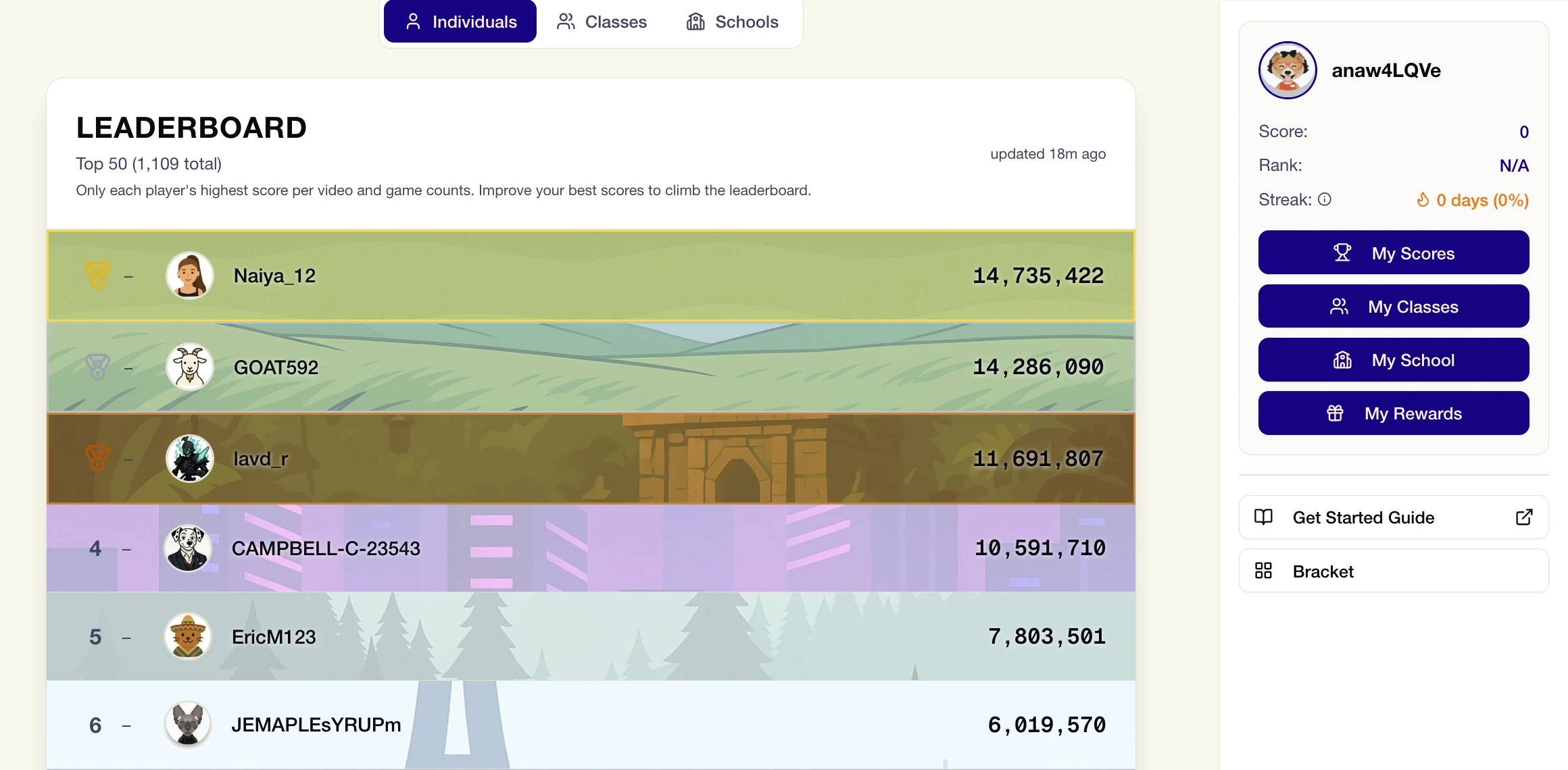
Competition with linguistic stakes.
When points require accurate language production rather than simple participation, competition produces genuine practice. The stakes have to be tied to the language itself, not just to showing up.
Collaborative games. Team-based activities that require students to coordinate in the target language create a communication necessity that solo drilling can’t replicate — students use the language because they need to, not because they’re told to.
Sustained competitions. Competition windows lasting 30–60 days sustain engagement in a way single-session games don’t, with documented participation rates above 80% in schools that run them for a full window.
A Real-World Example
Schools running month-long, bracket-style language competitions — where classes vote on and engage with songs or content in daily matchups throughout a season — routinely report participation rates well above 80%, sustained across the entire window rather than dropping off after the first week, which is the typical failure pattern for single-session gamified activities. Explore Roxxem Language Competitions
What Doesn’t Work (As Marketed)
Streak mechanics alone.
Streaks increase short-term logins, but multiple studies find no correlation between streak length and proficiency at six-month follow-up. A long streak measures consistency of app-opening, not language ability.
Points without language gates.
When students earn points for any activity regardless of linguistic accuracy, the incentive disconnects entirely from learning — students optimize for the point system, not the language.
Difficulty mismatch.
Games that are too easy produce boredom; games that are too hard produce anxiety. Both are counterproductive, and neither failure mode is unique to gamified content — but gamification’s reward loops can mask a difficulty mismatch longer than a traditional worksheet would, since students keep engaging with the game mechanic even after the learning value has dropped off.
Myth vs. Reality: Streaks
The myth: A long streak indicates strong, consistent language progress. The reality: A streak measures app-opening behavior. Studies tracking learners at six-month follow-up find no meaningful correlation between streak length and measured proficiency gains.
5 Game Types That Build Language
SRS vocabulary games (Quizlet, Anki) — timed at the moment a vocabulary item is about to be forgotten, maximizing the retention benefit of spaced repetition.
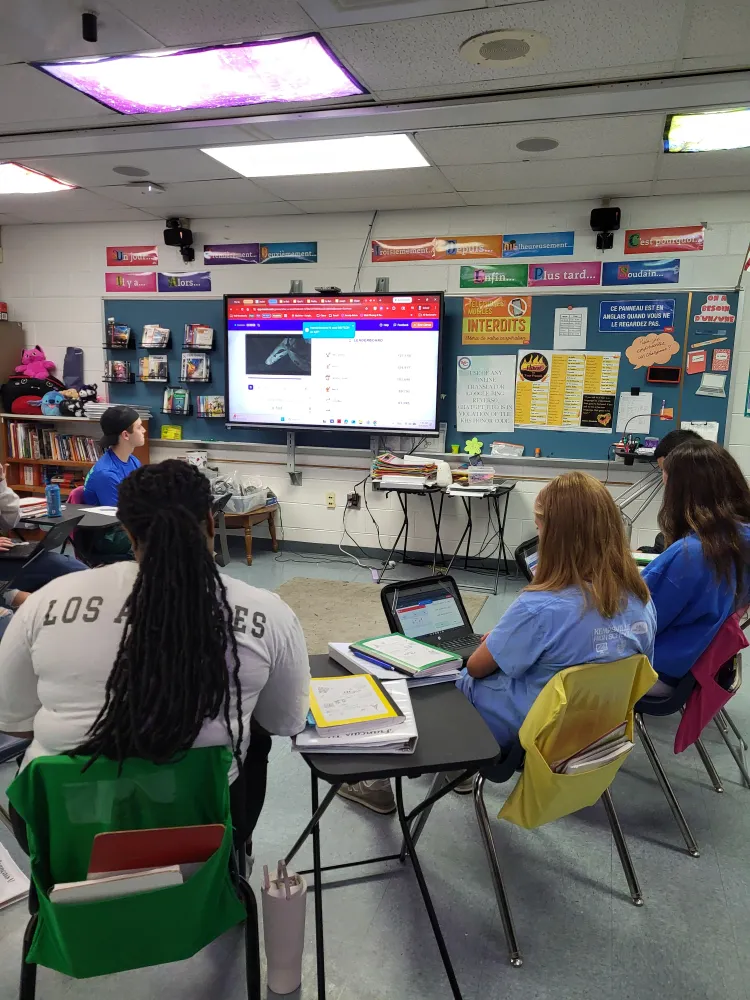
Communication games requiring production — modified versions of tools like Kahoot! that require typed target-language responses rather than multiple-choice clicking, closing the gap between recognition and production.
Collaborative storytelling — each student adds one sentence to a shared story, forcing genuine, real-time language production under mild social pressure.
Global language competitions with cultural content — 30–60 day windows with social stakes create motivation that individual streaks can’t replicate. Roxxem runs global, month-long language competitions built on exactly this model, pairing bracket-style music contests with skills-based scoring so points reflect actual comprehension rather than popularity alone.
Authentic content-based games — platforms that wrap authentic media (songs, clips, shows) in game mechanics combine the motivational power of competition with the acquisition power of real, comprehensible input.
FAQ
Does gamification work for all ages?
The core mechanisms — spaced repetition, meaningful competition, collaborative production — work across age groups, but the specific format matters. Younger students respond well to simple point systems and visual rewards; older students and adults tend to need higher-stakes, more socially meaningful competition to stay engaged over time.
How long should a classroom competition run?
The research consistently favors longer windows — 30 to 60 days — over single-session activities. Short competitions produce a burst of engagement that fades quickly; sustained windows are what produce the above-80% participation rates seen in the research.
Is gamification a replacement for direct instruction?
No. Every study cited here treats gamification as a supplement that sustains motivation and provides additional practice repetitions — not as a substitute for explicit instruction, feedback, or authentic input.
What’s the single biggest mistake schools make with gamified tools?
Choosing a tool for its reward mechanics (streaks, badges, leaderboards) without checking whether those mechanics are actually gated behind accurate language production. A beautifully gamified app with ungated points is, functionally, just a game — not a language learning tool.
Gamification has become one of the most overused words in EdTech marketing — nearly every app claims it, and few define what they actually mean by it. The research is more precise than the marketing, and the distinction between what works and what merely looks like it works matters for anyone deciding how to spend limited classroom time.
What Works
Spaced repetition systems (SRS).
Algorithmically timed review — surfacing a vocabulary item right before a learner is likely to forget it — improves retention by 200–300% compared to unstructured study. This is one of the most consistently replicated findings in the space.
Competition with linguistic stakes.
When points require accurate language production rather than simple participation, competition produces genuine practice. The stakes have to be tied to the language itself, not just to showing up.
Collaborative games. Team-based activities that require students to coordinate in the target language create a communication necessity that solo drilling can’t replicate — students use the language because they need to, not because they’re told to.
Sustained competitions. Competition windows lasting 30–60 days sustain engagement in a way single-session games don’t, with documented participation rates above 80% in schools that run them for a full window.
A Real-World Example
Schools running month-long, bracket-style language competitions — where classes vote on and engage with songs or content in daily matchups throughout a season — routinely report participation rates well above 80%, sustained across the entire window rather than dropping off after the first week, which is the typical failure pattern for single-session gamified activities. Explore Roxxem Language Competitions
What Doesn’t Work (As Marketed)
Streak mechanics alone.
Streaks increase short-term logins, but multiple studies find no correlation between streak length and proficiency at six-month follow-up. A long streak measures consistency of app-opening, not language ability.
Points without language gates.
When students earn points for any activity regardless of linguistic accuracy, the incentive disconnects entirely from learning — students optimize for the point system, not the language.
Difficulty mismatch.
Games that are too easy produce boredom; games that are too hard produce anxiety. Both are counterproductive, and neither failure mode is unique to gamified content — but gamification’s reward loops can mask a difficulty mismatch longer than a traditional worksheet would, since students keep engaging with the game mechanic even after the learning value has dropped off.
Myth vs. Reality: Streaks
The myth: A long streak indicates strong, consistent language progress. The reality: A streak measures app-opening behavior. Studies tracking learners at six-month follow-up find no meaningful correlation between streak length and measured proficiency gains.
5 Game Types That Build Language
SRS vocabulary games (Quizlet, Anki) — timed at the moment a vocabulary item is about to be forgotten, maximizing the retention benefit of spaced repetition.
Communication games requiring production — modified versions of tools like Kahoot! that require typed target-language responses rather than multiple-choice clicking, closing the gap between recognition and production.
Collaborative storytelling — each student adds one sentence to a shared story, forcing genuine, real-time language production under mild social pressure.
Global language competitions with cultural content — 30–60 day windows with social stakes create motivation that individual streaks can’t replicate. Roxxem runs global, month-long language competitions built on exactly this model, pairing bracket-style music contests with skills-based scoring so points reflect actual comprehension rather than popularity alone.
Authentic content-based games — platforms that wrap authentic media (songs, clips, shows) in game mechanics combine the motivational power of competition with the acquisition power of real, comprehensible input.
FAQ
Does gamification work for all ages?
The core mechanisms — spaced repetition, meaningful competition, collaborative production — work across age groups, but the specific format matters. Younger students respond well to simple point systems and visual rewards; older students and adults tend to need higher-stakes, more socially meaningful competition to stay engaged over time.
How long should a classroom competition run?
The research consistently favors longer windows — 30 to 60 days — over single-session activities. Short competitions produce a burst of engagement that fades quickly; sustained windows are what produce the above-80% participation rates seen in the research.
Is gamification a replacement for direct instruction?
No. Every study cited here treats gamification as a supplement that sustains motivation and provides additional practice repetitions — not as a substitute for explicit instruction, feedback, or authentic input.
What’s the single biggest mistake schools make with gamified tools?
Choosing a tool for its reward mechanics (streaks, badges, leaderboards) without checking whether those mechanics are actually gated behind accurate language production. A beautifully gamified app with ungated points is, functionally, just a game — not a language learning tool.
Ultimate Teacher Planner
The ultimate all-in-one education management system in Notion.
Learn More
Ultimate Teacher Planner
The ultimate all-in-one education management system in Notion.
Learn More





Notion4Teachers
Notion templates to simplify administrative tasks and enhance your teaching experience.



2026 Notion4Teachers. All Rights Reserved.
Notion4Teachers
Notion templates to simplify administrative tasks and enhance your teaching experience.
2026 Notion4Teachers. All Rights Reserved.
Notion4Teachers
Notion templates to simplify administrative tasks and enhance your teaching experience.
2026 Notion4Teachers. All Rights Reserved.