
How Education Software Development Companies Build Better Learning Experiences
How Education Software Development Companies Build Better Learning Experiences

Article by
Milo
ESL Content Coordinator & Educator
ESL Content Coordinator & Educator
All Posts
Educational software development faces challenges like user engagement, regulatory compliance, and integration with legacy infrastructure. The education technology market is expected to grow as more institutions invest in online learning and digital courses across every level of instruction. Education software development companies build effective learning experiences using adaptive AI personalization, scaffolded content, and real time analytics. Behind each of these capabilities is a team that translates pedagogy and institutional goals into concrete product roadmaps, interfaces, and system integrations.
Still grading everything by hand?
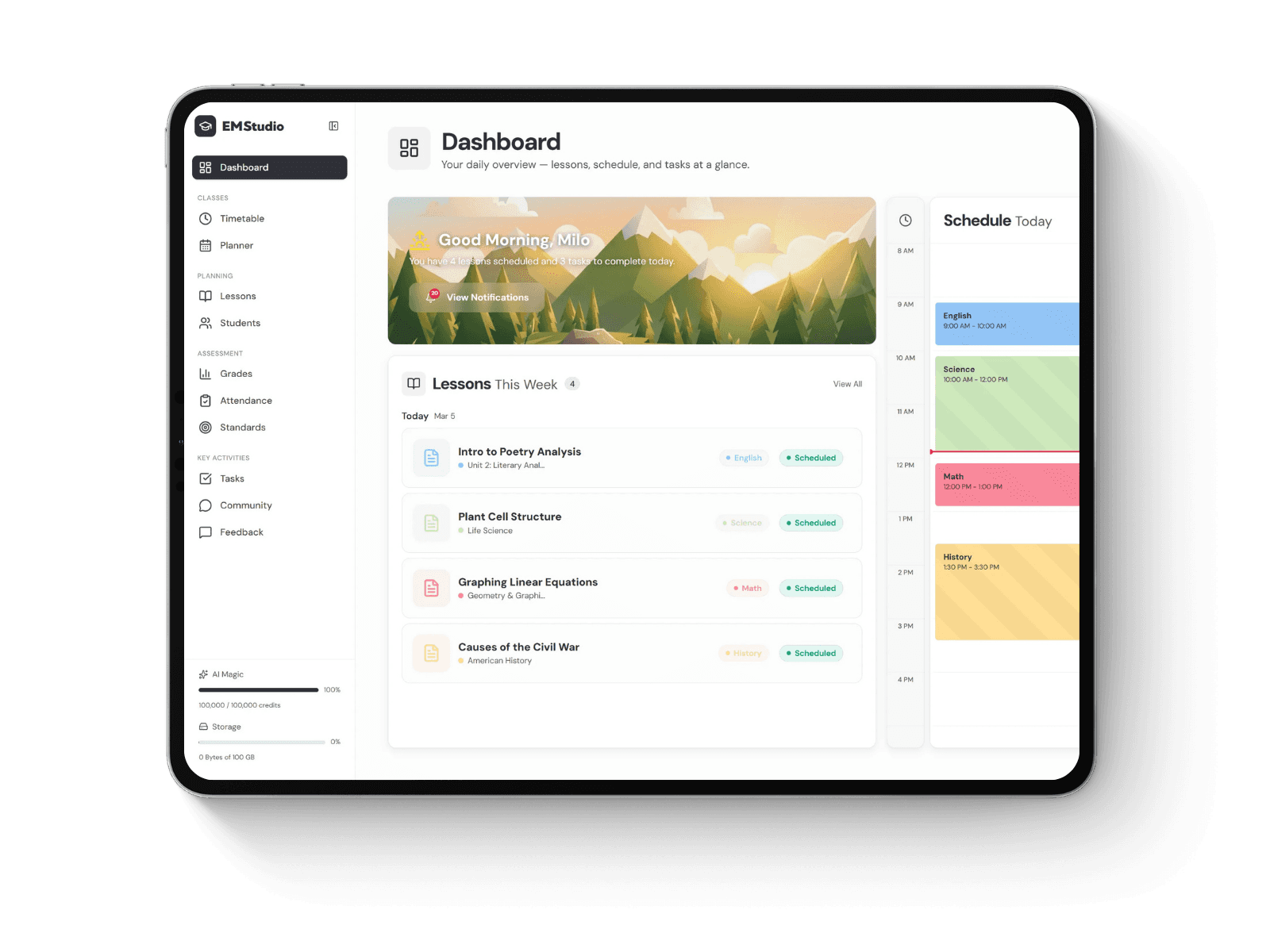
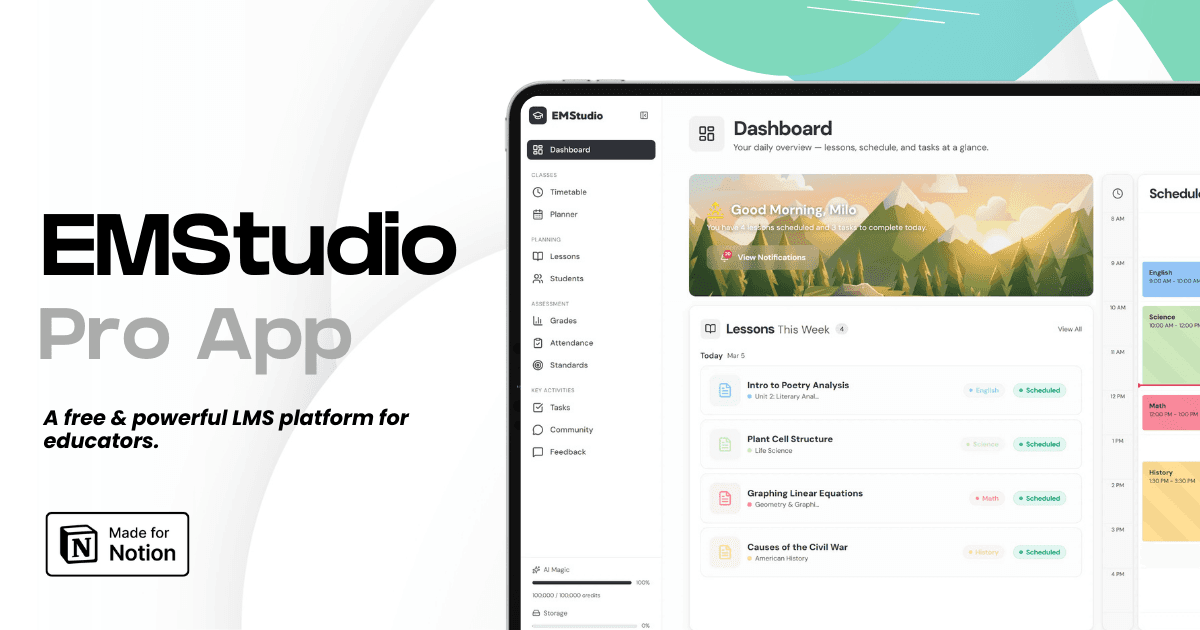
EMStudio is a free teaching management app — manage your classes, students, lessons, and more!
Learn More
Still grading everything by hand?
EMStudio is a free teaching management app — manage your classes, students, lessons, and more!
Learn More
Table of Contents
From Pedagogy to Product: Turning Learning Science Into Software
Evidence based teaching practices from the past decade now inform concrete product decisions inside modern course platforms and learning management systems. Alignment with pedagogy is essential for effective educational software; without it, tools become digital worksheets with no measurable impact on knowledge retention or skill development.
Education software companies that succeed begin with curriculum standards and learning objectives. In K-12, that means mapping to Common Core or state frameworks. In higher education, it means institutional program outcomes and accreditation requirements. Education software should be designed with clear learning objectives and instructional support before a single line of code is written.
Teams ateducation software development companies translate those standards into user journeys, feature sets, and assessment flows. "We start every engagement by sitting with educators to understand what mastery looks like for their learners, then work backward into product features," notes a SoftDoes product strategist. Specific techniques make this translation concrete:
Spaced repetition becomes scheduled review quizzes and algorithmic flashcard decks.
Formative assessment becomes low stakes checks embedded in lessons, supporting self paced learning.
Mastery progression becomes gating mechanisms where modules stay locked until a student demonstrates proficiency.
Scaffolded learning pathways segment complex topics into modular steps with instant feedback. K-12 education software focuses on interactive learning and gamification; educational games are commonly used in K-12 software to keep users engaged across subjects. Immediate feedback in software based learning supports continuous improvement through practice, and immediate feedback helps students experience correct misconceptions and understand knowledge gaps.
A math practice module illustrates the effect. After introducing mastery checkpoints requiring 80% correct before advancing, plus immediate feedback on errors, average weekly engagement rose from two hours to 3.5 hours in the treatment group. Module completion climbed from 45% to 70%. These results mirror the meta-analysis outcomes where adaptive difficulty produced the strongest measured effects.

Designing User Centered Learning Platforms for Students, Instructors, and Admins
User experience is a performance factor, not just aesthetics. For college students balancing work, family, and study, interface friction causes dropouts. Different users have distinct needs, and accessibility and inclusivity are key challenges in educational software development.
UX teams conduct interviews and usability tests with students, instructors, and admins, designing for their unique requirements. Educational software can be customized for various educational levels and improved over time through iteration.
For students, effective platforms offer:
Clear weekly task lists with deadlines
Mobile-first, responsive design for seamless multi-device use
Offline content like downloadable lessons, eBooks, and videos
Collaboration tools for peer interaction and feedback
Gentle motivational nudges
Cognitive load management reduces mental fatigue with clean layouts, collapsible modules, and progress bars.
For instructors, platforms reduce grading overhead with drag-and-drop course builders, reusable templates, inline grading, simple rubrics, and bulk feedback.
For admins, centralized configuration, role-based access, audit trails, and dashboards tracking enrollment, retention, and compliance are essential. Special education needs require extra reporting and accommodation tracking.
Accessibility must be embedded in the design process to ensure usability for all learners. Accessibility ensures compliance with universal design standards for diverse learning environments. Educational software should comply withWCAG guidelines for accessibility, covering screen reader compatibility, keyboard navigation, and captioned video.
Personalized Learning Experiences Powered by Data and AI
Data from course platforms, logins, quiz scores, forum activity, feeds into cloud warehouses and ML models to generate recommendations. Learning analytics assess student interactions for data-driven improvements.
Key personalization features include:
Adaptive difficulty: content adjusts in real time based on student performance.
Dynamic sequencing: engines suggest next lessons or practice sets.
At-risk flags: models predict dropouts, prompting advisor outreach.
AI tutoring: personalized help during homework and practice.
Analytics deliver actionable insights without overwhelming users. Tutoring platforms focus on personalized pacing and scheduling.
Continuous testing refines the experience through A/B tests and model updates.
Building for Integration: Course Platforms That Fit Into Existing Ecosystems
Institutions use multiple systems, student info, HR, assessment, library, finance—often starting from legacy or partial digital setups. Integration with these systems is a common challenge.
Education software companies design APIs and middleware to connect tools like PowerSchool, Banner, PeopleSoft, Canvas, and Blackboard, reducing duplicate data entry and ensuring consistent records.
Integration methods include:
Real-time webhooks for instant updates
Nightly batch syncs for grades and reports
Secure file exchanges for legacy systems
Asreported by The Verge, school districts are under increasing pressure to connect disparate digital platforms into coherent ecosystems while managing student data privacy. SoftDoes treats integration design as a first class workstream, involving solution architects early to map data models, error handling, and fallback procedures with institutional IT teams.
A practical example: connecting a custom assessment app to an existing student information system so that final scores and attendance data are written back automatically. One school district collapsed eleven disconnected systems through an integration layer, eliminating over nineteen thousand hours of manual data entry per year.
How Education Software Development Companies Manage the Full Product Lifecycle
Successful learning platforms evolve continuously through discovery, design, development, testing, deployment, and improvement. Corporate training platforms add layers like compliance tracking, requiring ongoing maintenance.
A typical twelve-month rollout includes:
Months 1-2 (Discovery): Research with stakeholders, shadowing classes, analyzing retention data, and defining success metrics.
Month 3 (Planning): Setting roadmap priorities aligned with academic calendars and establishing communication protocols.
Months 4-7 (Build): Agile sprints with demos to leadership, focusing on core features like course authoring, assessments, and dashboards.
Month 8 (Pilot): Testing with small cohorts to gather feedback and make adjustments.
Months 9-11 (Launch): Full deployment with monitoring of activation, drop-off, and performance trends.
Month 12 (Review): KPI assessment and planning for the next cycle.
QA includes content accuracy checks, WCAG accessibility testing, and real-device testing on common hardware.
How SoftDoes Builds Custom EdTech Software That Scales
SoftDoes creates bespoke edtech software for organizations needing specific features beyond generic tools. Their teams include product strategists, UX designers, data engineers, ML experts, and cloud architects collaborating with stakeholders.
They use modern frameworks compatible with popular LMS and course platforms, enabling institutions to adopt new tools without losing existing investments. Long-term partnerships focus on co-creating roadmaps, providing analytics support, and refining personalized learning experiences with data.
If you're evaluating education software development companies, SoftDoes meets the engineering, compliance, and scalability needs of mission-critical education systems.
From Pedagogy to Product: Turning Learning Science Into Software
Evidence based teaching practices from the past decade now inform concrete product decisions inside modern course platforms and learning management systems. Alignment with pedagogy is essential for effective educational software; without it, tools become digital worksheets with no measurable impact on knowledge retention or skill development.
Education software companies that succeed begin with curriculum standards and learning objectives. In K-12, that means mapping to Common Core or state frameworks. In higher education, it means institutional program outcomes and accreditation requirements. Education software should be designed with clear learning objectives and instructional support before a single line of code is written.
Teams ateducation software development companies translate those standards into user journeys, feature sets, and assessment flows. "We start every engagement by sitting with educators to understand what mastery looks like for their learners, then work backward into product features," notes a SoftDoes product strategist. Specific techniques make this translation concrete:
Spaced repetition becomes scheduled review quizzes and algorithmic flashcard decks.
Formative assessment becomes low stakes checks embedded in lessons, supporting self paced learning.
Mastery progression becomes gating mechanisms where modules stay locked until a student demonstrates proficiency.
Scaffolded learning pathways segment complex topics into modular steps with instant feedback. K-12 education software focuses on interactive learning and gamification; educational games are commonly used in K-12 software to keep users engaged across subjects. Immediate feedback in software based learning supports continuous improvement through practice, and immediate feedback helps students experience correct misconceptions and understand knowledge gaps.
A math practice module illustrates the effect. After introducing mastery checkpoints requiring 80% correct before advancing, plus immediate feedback on errors, average weekly engagement rose from two hours to 3.5 hours in the treatment group. Module completion climbed from 45% to 70%. These results mirror the meta-analysis outcomes where adaptive difficulty produced the strongest measured effects.
Designing User Centered Learning Platforms for Students, Instructors, and Admins
User experience is a performance factor, not just aesthetics. For college students balancing work, family, and study, interface friction causes dropouts. Different users have distinct needs, and accessibility and inclusivity are key challenges in educational software development.
UX teams conduct interviews and usability tests with students, instructors, and admins, designing for their unique requirements. Educational software can be customized for various educational levels and improved over time through iteration.
For students, effective platforms offer:
Clear weekly task lists with deadlines
Mobile-first, responsive design for seamless multi-device use
Offline content like downloadable lessons, eBooks, and videos
Collaboration tools for peer interaction and feedback
Gentle motivational nudges
Cognitive load management reduces mental fatigue with clean layouts, collapsible modules, and progress bars.
For instructors, platforms reduce grading overhead with drag-and-drop course builders, reusable templates, inline grading, simple rubrics, and bulk feedback.
For admins, centralized configuration, role-based access, audit trails, and dashboards tracking enrollment, retention, and compliance are essential. Special education needs require extra reporting and accommodation tracking.
Accessibility must be embedded in the design process to ensure usability for all learners. Accessibility ensures compliance with universal design standards for diverse learning environments. Educational software should comply withWCAG guidelines for accessibility, covering screen reader compatibility, keyboard navigation, and captioned video.
Personalized Learning Experiences Powered by Data and AI
Data from course platforms, logins, quiz scores, forum activity, feeds into cloud warehouses and ML models to generate recommendations. Learning analytics assess student interactions for data-driven improvements.
Key personalization features include:
Adaptive difficulty: content adjusts in real time based on student performance.
Dynamic sequencing: engines suggest next lessons or practice sets.
At-risk flags: models predict dropouts, prompting advisor outreach.
AI tutoring: personalized help during homework and practice.
Analytics deliver actionable insights without overwhelming users. Tutoring platforms focus on personalized pacing and scheduling.
Continuous testing refines the experience through A/B tests and model updates.
Building for Integration: Course Platforms That Fit Into Existing Ecosystems
Institutions use multiple systems, student info, HR, assessment, library, finance—often starting from legacy or partial digital setups. Integration with these systems is a common challenge.
Education software companies design APIs and middleware to connect tools like PowerSchool, Banner, PeopleSoft, Canvas, and Blackboard, reducing duplicate data entry and ensuring consistent records.
Integration methods include:
Real-time webhooks for instant updates
Nightly batch syncs for grades and reports
Secure file exchanges for legacy systems
Asreported by The Verge, school districts are under increasing pressure to connect disparate digital platforms into coherent ecosystems while managing student data privacy. SoftDoes treats integration design as a first class workstream, involving solution architects early to map data models, error handling, and fallback procedures with institutional IT teams.
A practical example: connecting a custom assessment app to an existing student information system so that final scores and attendance data are written back automatically. One school district collapsed eleven disconnected systems through an integration layer, eliminating over nineteen thousand hours of manual data entry per year.
How Education Software Development Companies Manage the Full Product Lifecycle
Successful learning platforms evolve continuously through discovery, design, development, testing, deployment, and improvement. Corporate training platforms add layers like compliance tracking, requiring ongoing maintenance.
A typical twelve-month rollout includes:
Months 1-2 (Discovery): Research with stakeholders, shadowing classes, analyzing retention data, and defining success metrics.
Month 3 (Planning): Setting roadmap priorities aligned with academic calendars and establishing communication protocols.
Months 4-7 (Build): Agile sprints with demos to leadership, focusing on core features like course authoring, assessments, and dashboards.
Month 8 (Pilot): Testing with small cohorts to gather feedback and make adjustments.
Months 9-11 (Launch): Full deployment with monitoring of activation, drop-off, and performance trends.
Month 12 (Review): KPI assessment and planning for the next cycle.
QA includes content accuracy checks, WCAG accessibility testing, and real-device testing on common hardware.
How SoftDoes Builds Custom EdTech Software That Scales
SoftDoes creates bespoke edtech software for organizations needing specific features beyond generic tools. Their teams include product strategists, UX designers, data engineers, ML experts, and cloud architects collaborating with stakeholders.
They use modern frameworks compatible with popular LMS and course platforms, enabling institutions to adopt new tools without losing existing investments. Long-term partnerships focus on co-creating roadmaps, providing analytics support, and refining personalized learning experiences with data.
If you're evaluating education software development companies, SoftDoes meets the engineering, compliance, and scalability needs of mission-critical education systems.
Still grading everything by hand?
EMStudio is a free teaching management app — manage your classes, students, lessons, and more!
Learn More
Still grading everything by hand?
EMStudio is a free teaching management app — manage your classes, students, lessons, and more!
Learn More


Notion4Teachers
Notion templates to simplify administrative tasks and enhance your teaching experience.



2026 Notion4Teachers. All Rights Reserved.
Notion4Teachers
Notion templates to simplify administrative tasks and enhance your teaching experience.
2026 Notion4Teachers. All Rights Reserved.
Notion4Teachers
Notion templates to simplify administrative tasks and enhance your teaching experience.
2026 Notion4Teachers. All Rights Reserved.