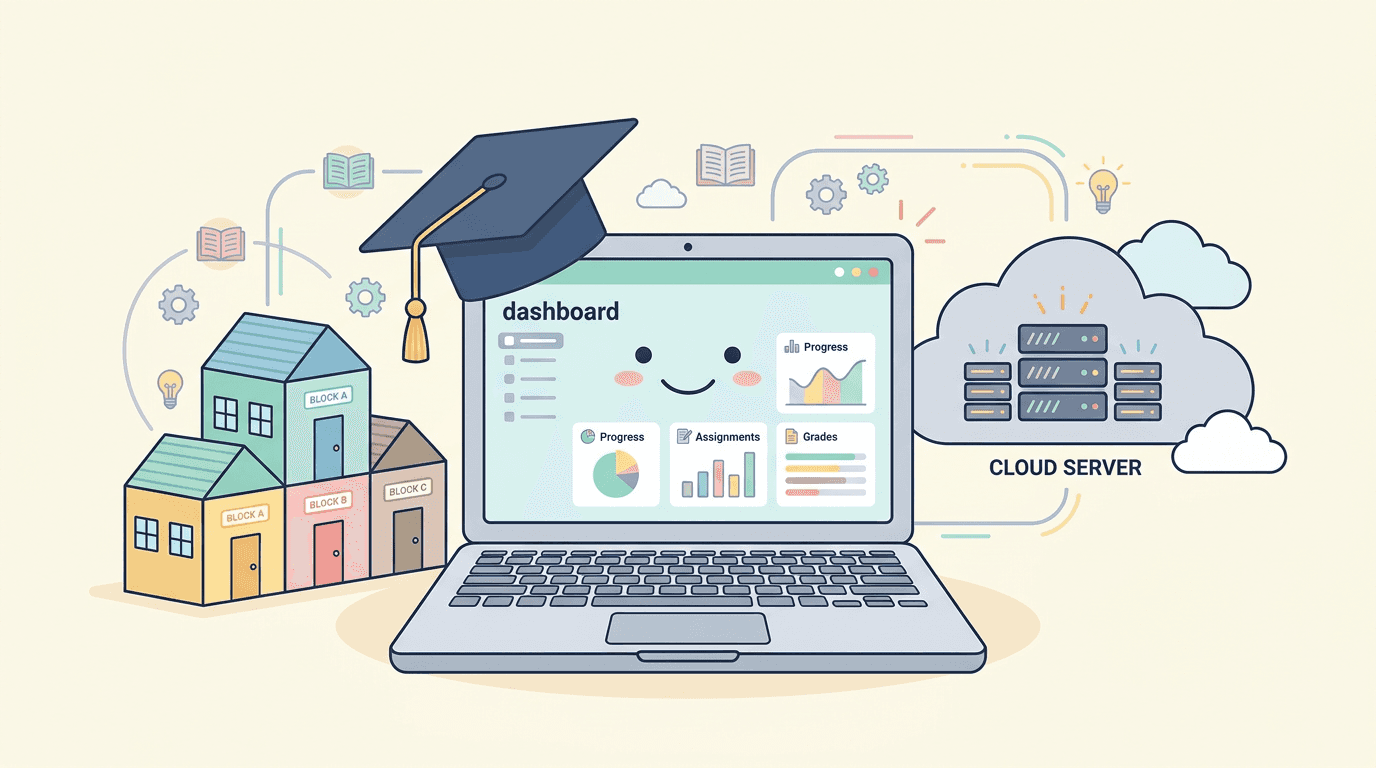
Why Schools and Training Providers Need Custom Learning Platforms
Why Schools and Training Providers Need Custom Learning Platforms

Article by
Milo
ESL Content Coordinator & Educator
ESL Content Coordinator & Educator
All Posts
Learning management systems were initially designed to deliver compliance courses, track training, and manage records. For years, this sufficed as schools and companies used basic modules and checked boxes.
However, off-the-shelf eLearning tools often fail to meet unique organizational needs. Generic LMS platforms force organizations to adapt their processes to the software, causing workarounds and frustration when pedagogy or accreditation requirements differ.
Still grading everything by hand?
EMStudio is a free teaching management app — manage your classes, students, lessons, and more!
Learn More
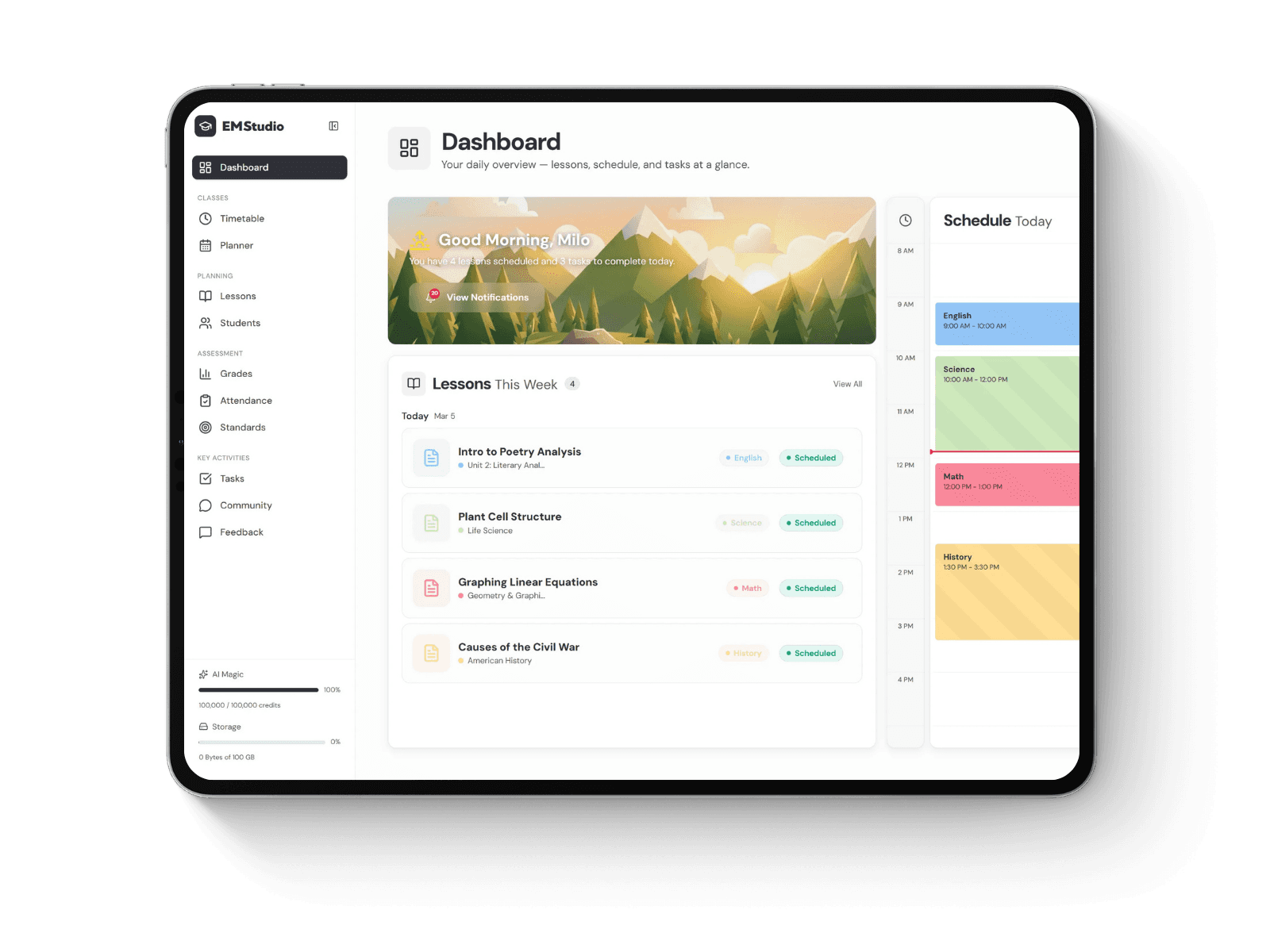
Still grading everything by hand?
EMStudio is a free teaching management app — manage your classes, students, lessons, and more!
Learn More
Table of Contents
From Generic LMS to Strategic Learning Platform
An LMS manages course delivery, user roles, quizzes, grades, and basic reporting. It enhances skills, compliance, and productivity when learning models are standard.
Custom learning platforms solve this by reflecting your actual curricula, assessment models, and accreditation workflows instead of forcing you into someone else's template.
Consider a community college with dual enrollment needing workflows across two systems, or a cybersecurity bootcamp requiring virtual labs and proctored exams. These needs don’t fit generic LMS products.
This is wherecustom education software development becomes essential. As one SoftDoes engineering lead puts it: "The most effective learning platforms are the ones that institutions never have to fight against. When the software mirrors the pedagogy, everything downstream gets easier."
Key Limits of Off the Shelf Learning Management Systems
Mature products like Moodle, Cornerstone, and Adobe Learning Manager often lack flexibility for institutions with unique instructional models. Custom LMS development addresses gaps these platforms cannot.
Common issues include:
Rigid course structures: Linear, time-bound modules limit competency-based programs.
Fixed grading models: Basic scoring fails for holistic assessments.
Weak competency support: Skill mapping and micro credentials hit system limits.
Patchy integration with SIS or HRIS: Data syncing requires manual work or costly connectors.
Extended enterprise challenges: Managing multiple brands and catalogs is nearly impossible.
Custom straining oftware replaces workarounds with tailored workflows.
Real World LMS Limitations
K-12 district: Manual reports and lagging analytics for standards tracking.
University nursing program: Clinical placements tracked via email and spreadsheets.
Global SaaS company: Single LMS portal causes manual reporting issues.
In all three cases, fragmentation harms learning outcomes, reporting accuracy, and accreditation compliance. Custom solutions automate enrollment reminders, grading, and compliance tracking, saving significant staff time.

Why Custom Learning Platforms Are Better for Modern Learning Programs
Custom platforms offer three main advantages over generic tools: alignment with your pedagogy, operational efficiency through automation, and differentiation in a competitive education market. They let organizations encode instructional models, assessments, and certification requirements directly.
Map complex learning paths and stackable credentials.
Support competency frameworks with skill-based learning paths.
Adapt content, assessments, pacing, and paths to individual learners.
Support subscription-based and professional education models.
Enhanced Learner Experience and Engagement
Custom platforms remove irrelevant features found in generic systems, streamlining the learning experience and boosting completion rates.
Learner-centered design increases engagement through interactive content, gamification, and simulations. Personalized learning adapts to individual needs, while microlearning allows learners to progress at their own pace, improving training outcomes.
Custom Reporting and Accreditation-Ready Analytics
Schools and training providers need reports aligned with regulators and funders, not generic LMS outputs. Custom platforms provide dashboards showing attendance, engagement, and competency attainment in auditor-friendly formats.
Analytics identify enrollment trends, retention challenges, and curriculum gaps, offering better visibility into learner progress. Personalized platforms deliver advanced progress tracking beyond generic reports.
Measuring Skills, Not Just Course Completion
The shift towardskills based hiring means institutions must measure proficiency, not just seat time. Competency matrices, skills taxonomies, and role based proficiency maps can be embedded directly into a custom platform. Personalization and adaptive learning are recognized benefits of educational technology that make this possible.
In employee training and extended enterprise scenarios, partners and customers need role-specific learning paths and certifications. For example, tracking cloud skills across a tech company or safety competencies on a manufacturing site over multiple years.
Integration with Your Real World Systems and Workflows
Deep integration is crucial. Custom platforms connect seamlessly with systems like SIS, HR, CRM, and video conferencing. Without this, staff spend hours on manual data entry, causing errors.
Examples include feeding training completion data into Salesforce for customer success tracking or syncing enrollment from Workday to avoid duplicate HR records.
Hybrid classrooms, remote cohorts, micro credentials, and skills based hiring are not edge cases anymore. They are the baseline expectation for academic institutions, bootcamps, and corporate academies alike. Research shows thatinstitutional interest in micro credentials has surged, yet most schools lack the platform infrastructure to deliver them properly.
Extended Enterprise and Multi Tenant Delivery
Extended enterprise learning trains customers, partners, franchisees, and employees together. Custom platforms support diverse learners within one system while offering separate branded experiences.
For example, a US SaaS vendor certifying thousands of customer admins across partner brands needs localized content, regional pricing, and distinct compliance rules. Custom platforms enable this with:
Branded portals per tenant with unique domains and styling
Reporting silos restricting data visibility per partner
SSO setup per tenant
Regional compliance and localization
Designing a Custom Learning Platform: From Vision to Architecture
Success begins with planning. Stakeholders align on learner profiles, content types, accreditation rules, data needs, and business models. Discovery workshops capture target audiences, learning styles, assessment tools, and reporting needs.

Prioritizing Features for Version One
A realistic MVP targets essential features: enrollment workflows, course delivery, assessments, reporting, and basic integrations. Advanced capabilities like adaptive learning and AI-powered analytics can come later. Custom solutions automate administration and scale gradually.
Cost of Ownership and Long-Term Flexibility
Subscription and customization fees add up. Over time, institutions with many users often find owning a custom platform more cost-effective than ongoing licenses. Custom platforms require upfront investment but lower marginal costs as enrollments grow.
Educational institutions retain data ownership and control, avoiding vendor lock-in. Custom development reduces migration and contract risks. Automation improves operational efficiency, increasing savings.
How SoftDoes Approaches Custom Learning Platform Development
SoftDoes, a US-based software engineering partner, specializes in custom education software, AI, data engineering, and digital transformation for education and corporate training. Their process includes discovery, UX and architecture, iterative development, pilot deployments, and ongoing evolution.
They support custom authoring workflows, legacy LMS migration, and long-term learning analytics. One client reduced enrollment management time and enabled instructional designers to update courses without developers.
If considering a custom platform, start with a discovery conversation to align pedagogy, workflows, and data needs before choosing a solution.
From Generic LMS to Strategic Learning Platform
An LMS manages course delivery, user roles, quizzes, grades, and basic reporting. It enhances skills, compliance, and productivity when learning models are standard.
Custom learning platforms solve this by reflecting your actual curricula, assessment models, and accreditation workflows instead of forcing you into someone else's template.
Consider a community college with dual enrollment needing workflows across two systems, or a cybersecurity bootcamp requiring virtual labs and proctored exams. These needs don’t fit generic LMS products.
This is wherecustom education software development becomes essential. As one SoftDoes engineering lead puts it: "The most effective learning platforms are the ones that institutions never have to fight against. When the software mirrors the pedagogy, everything downstream gets easier."
Key Limits of Off the Shelf Learning Management Systems
Mature products like Moodle, Cornerstone, and Adobe Learning Manager often lack flexibility for institutions with unique instructional models. Custom LMS development addresses gaps these platforms cannot.
Common issues include:
Rigid course structures: Linear, time-bound modules limit competency-based programs.
Fixed grading models: Basic scoring fails for holistic assessments.
Weak competency support: Skill mapping and micro credentials hit system limits.
Patchy integration with SIS or HRIS: Data syncing requires manual work or costly connectors.
Extended enterprise challenges: Managing multiple brands and catalogs is nearly impossible.
Custom straining oftware replaces workarounds with tailored workflows.
Real World LMS Limitations
K-12 district: Manual reports and lagging analytics for standards tracking.
University nursing program: Clinical placements tracked via email and spreadsheets.
Global SaaS company: Single LMS portal causes manual reporting issues.
In all three cases, fragmentation harms learning outcomes, reporting accuracy, and accreditation compliance. Custom solutions automate enrollment reminders, grading, and compliance tracking, saving significant staff time.
Why Custom Learning Platforms Are Better for Modern Learning Programs
Custom platforms offer three main advantages over generic tools: alignment with your pedagogy, operational efficiency through automation, and differentiation in a competitive education market. They let organizations encode instructional models, assessments, and certification requirements directly.
Map complex learning paths and stackable credentials.
Support competency frameworks with skill-based learning paths.
Adapt content, assessments, pacing, and paths to individual learners.
Support subscription-based and professional education models.
Enhanced Learner Experience and Engagement
Custom platforms remove irrelevant features found in generic systems, streamlining the learning experience and boosting completion rates.
Learner-centered design increases engagement through interactive content, gamification, and simulations. Personalized learning adapts to individual needs, while microlearning allows learners to progress at their own pace, improving training outcomes.
Custom Reporting and Accreditation-Ready Analytics
Schools and training providers need reports aligned with regulators and funders, not generic LMS outputs. Custom platforms provide dashboards showing attendance, engagement, and competency attainment in auditor-friendly formats.
Analytics identify enrollment trends, retention challenges, and curriculum gaps, offering better visibility into learner progress. Personalized platforms deliver advanced progress tracking beyond generic reports.
Measuring Skills, Not Just Course Completion
The shift towardskills based hiring means institutions must measure proficiency, not just seat time. Competency matrices, skills taxonomies, and role based proficiency maps can be embedded directly into a custom platform. Personalization and adaptive learning are recognized benefits of educational technology that make this possible.
In employee training and extended enterprise scenarios, partners and customers need role-specific learning paths and certifications. For example, tracking cloud skills across a tech company or safety competencies on a manufacturing site over multiple years.
Integration with Your Real World Systems and Workflows
Deep integration is crucial. Custom platforms connect seamlessly with systems like SIS, HR, CRM, and video conferencing. Without this, staff spend hours on manual data entry, causing errors.
Examples include feeding training completion data into Salesforce for customer success tracking or syncing enrollment from Workday to avoid duplicate HR records.
Hybrid classrooms, remote cohorts, micro credentials, and skills based hiring are not edge cases anymore. They are the baseline expectation for academic institutions, bootcamps, and corporate academies alike. Research shows thatinstitutional interest in micro credentials has surged, yet most schools lack the platform infrastructure to deliver them properly.
Extended Enterprise and Multi Tenant Delivery
Extended enterprise learning trains customers, partners, franchisees, and employees together. Custom platforms support diverse learners within one system while offering separate branded experiences.
For example, a US SaaS vendor certifying thousands of customer admins across partner brands needs localized content, regional pricing, and distinct compliance rules. Custom platforms enable this with:
Branded portals per tenant with unique domains and styling
Reporting silos restricting data visibility per partner
SSO setup per tenant
Regional compliance and localization
Designing a Custom Learning Platform: From Vision to Architecture
Success begins with planning. Stakeholders align on learner profiles, content types, accreditation rules, data needs, and business models. Discovery workshops capture target audiences, learning styles, assessment tools, and reporting needs.
Prioritizing Features for Version One
A realistic MVP targets essential features: enrollment workflows, course delivery, assessments, reporting, and basic integrations. Advanced capabilities like adaptive learning and AI-powered analytics can come later. Custom solutions automate administration and scale gradually.
Cost of Ownership and Long-Term Flexibility
Subscription and customization fees add up. Over time, institutions with many users often find owning a custom platform more cost-effective than ongoing licenses. Custom platforms require upfront investment but lower marginal costs as enrollments grow.
Educational institutions retain data ownership and control, avoiding vendor lock-in. Custom development reduces migration and contract risks. Automation improves operational efficiency, increasing savings.
How SoftDoes Approaches Custom Learning Platform Development
SoftDoes, a US-based software engineering partner, specializes in custom education software, AI, data engineering, and digital transformation for education and corporate training. Their process includes discovery, UX and architecture, iterative development, pilot deployments, and ongoing evolution.
They support custom authoring workflows, legacy LMS migration, and long-term learning analytics. One client reduced enrollment management time and enabled instructional designers to update courses without developers.
If considering a custom platform, start with a discovery conversation to align pedagogy, workflows, and data needs before choosing a solution.
Still grading everything by hand?
EMStudio is a free teaching management app — manage your classes, students, lessons, and more!
Learn More
Still grading everything by hand?
EMStudio is a free teaching management app — manage your classes, students, lessons, and more!
Learn More


Notion4Teachers
Notion templates to simplify administrative tasks and enhance your teaching experience.



2026 Notion4Teachers. All Rights Reserved.
Notion4Teachers
Notion templates to simplify administrative tasks and enhance your teaching experience.
2026 Notion4Teachers. All Rights Reserved.
Notion4Teachers
Notion templates to simplify administrative tasks and enhance your teaching experience.
2026 Notion4Teachers. All Rights Reserved.