
The Role of Independent Research in Developing Strong Academic Skills
The Role of Independent Research in Developing Strong Academic Skills

Article by
Milo
ESL Content Coordinator & Educator
ESL Content Coordinator & Educator
All Posts
The realization comes to most students in a similar way. The professor can’t possibly have assigned that reading. The syllabus gave no indication of what was expected. The student goes to the library and begins to dig. What he finds is that by the time he graduates, he will have something that his classmates will not possess.
That something isn't knowledge, exactly. It's judgment.
Still grading everything by hand?
EMStudio is a free teaching management app — manage your classes, students, lessons, and more!
Learn More
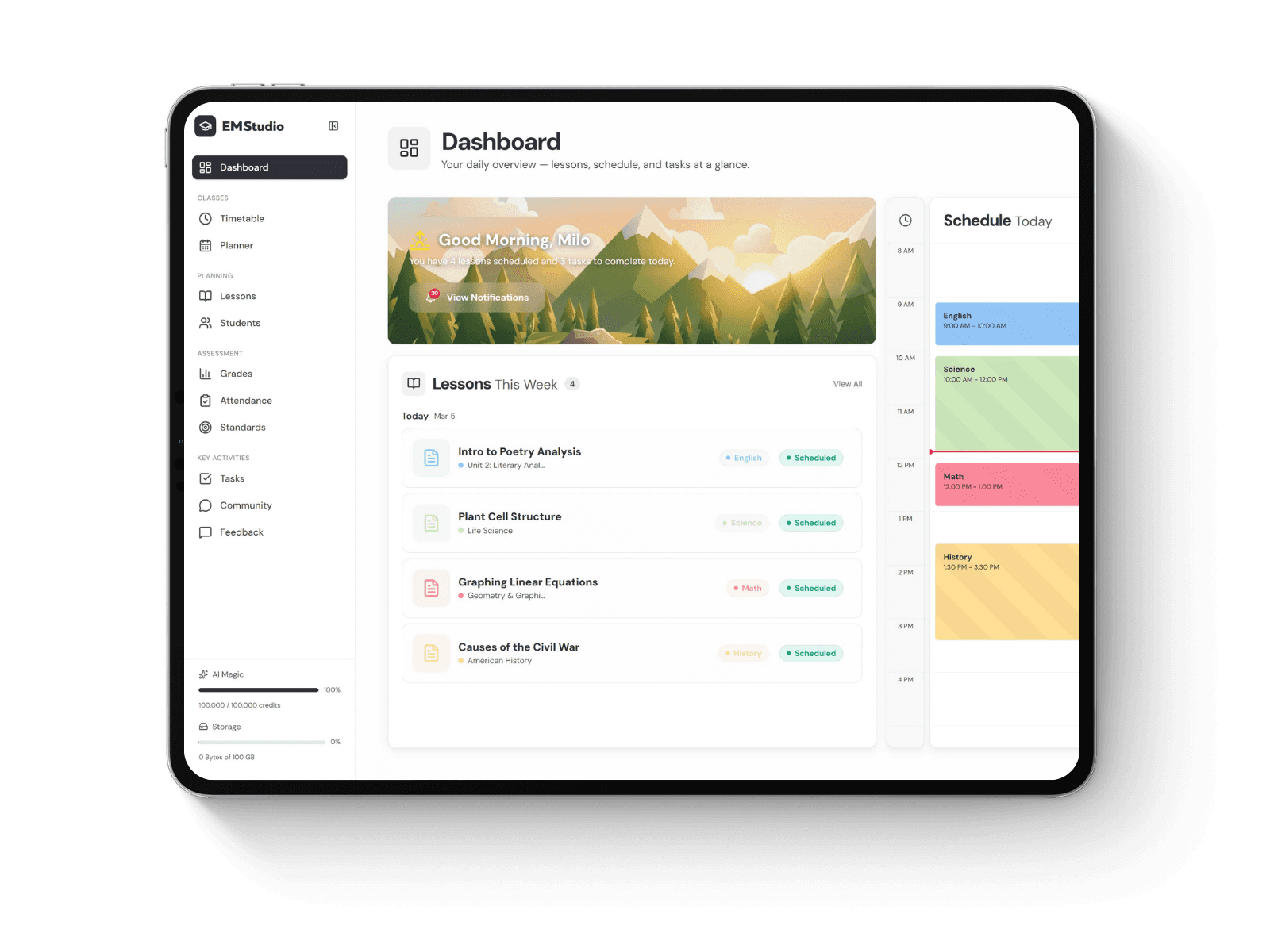
Still grading everything by hand?
EMStudio is a free teaching management app — manage your classes, students, lessons, and more!
Learn More
Table of Contents
What Independent Research Actually Trains
Yes, lectures can deliver information to you. But in order to handle information, you need to engage in research in order to answer a question that you come up with. The process involves defining a question, searching for information to answer that question, weighing the value of the information that you have found, and using that information to build an argument.
These skills, including learning to recognize a poor source before it ruins your paper, learning to live with not knowing an answer, and learning that asking a question is more important than arriving at an instant answer in the first place, are all highly important.
Research shows that the type of academic work that students do to learn to become independent researchers in academic courses is far more effective at helping students retain information than simply listening to lectures and reading summaries of someone else’s research (Bok Center for Teaching and Learning at Harvard University).
The Messy Middle Nobody Warns You About
You might notice that this stage of your work feels really confusing. Rather than straightening out your ideas on a topic for your paper, you could be spending a lot of time opening new tabs and pages in your browser and skimming through abstracts for forty different potential sources. After an hour or so, you might be even more confused than you were to begin with and have little to show for it.
Many students mistake the bewildering and often confusing research phase for the entire research project. As a result, many students will seek out ways to have others complete the writing for them. In some cases, a student may be desperate enough to search for write my paper for me in the search bar of their browser at 2 AM. The pressure that students feel is certainly understandable; however, the confusion that the student feels is part of learning. Skirting around this portion of the process will only serve to ensure that the student will not develop the appropriate skill for independent research.
Actually, it’s quite simple: first reduce the complexity of what you’re reading to understand, that is to find the core of a given piece of writing. Next, continue to read others on the same topic following the citations of the first article you read closely. In a short space of time you will have made great progress.
Skills You'll Actually Use Later
We asked a number of employers from different sectors what kind of skills they look for in new employees. Many of them mentioned that the ability to research information, make sense of it, and communicate it effectively to others is a skill that is in high demand. U.S. Department of Education (2013) noted in their Conditions and Effective Education Practices that research and information literacy are core competencies for college and career readiness in today’s information age.
When a junior analyst in her first month is given a question that her manager cannot answer within a short time period and a folder of somewhat relevant reports, that is a research assignment with a salary attached.
In addition, developing the ability to complete independent research also helps to become a stronger writer. This is because reading a lot helps to be more precise when writing, avoiding vague statements and clearly stating what a certain study found and why it matters. In other words, stronger writing comes from having stronger thinking.
Where Students Go Wrong
A few mistakes show up again and again.
Misconception: You can start your paper with your conclusions. Most students will naturally start their paper with the answer to the question(s) posed.
Relying on the first page of results. Search engines rank pages based on popularity, not accuracy. The best resources are often on subsequent pages.
Collecting without organizing. Fifty saved PDFs mean nothing without notes on why each one matters.
Citing late. Even with proper citations to sources in research papers, much time is wasted reconstructing a list of sources that the student could have easily recorded while reading.
Using Help Without Losing Skills: As for using help without losing skills, be sure to take advantage of the Writing Center, librarians, and your professors’ office hours. All of these resources exist to help you. Feedback on an outline can redirect an entire paper and a librarian can teach you a database trick in five minutes that you would never find on your own.
A Workable Research Routine
I’m going to focus on laying out the method by which the work is done rather than extolling the virtues of the individual. In other words, most successful students do similar work to arrive at their ends.
Write down your research question as a single sentence. (If it fills more than one sentence then you haven’t got a clear enough question yet).
An hour of background reading on the subject can also help to familiarize yourself with relevant vocabulary.
Search academic databases and library catalogs.
Take notes from your reading. They should be written in your own words with the appropriate page numbers and the credit given to the appropriate source.
Begin writing your thesis statement while you are still in the research phase. This helps you to identify holes in your knowledge that you must then fill.
Much to my students' surprise, writing a rough draft (even before they have finished reading) exposes the gaps in their knowledge much faster than would another week of reading.
Using Help Without Losing The Skill
Support. Many campuses now offer writing centers, academic libraries, and even departmental professors who are happy to help in office hours. In five minutes a librarian can show a student how to use a database to get the best results. Feedback on an outline can save a student much time and channel their research in just the right direction.
There is a critical distinction to make between help that teaches you how to do something and help that does it for you. In the end, help that teaches you how to do something actually builds your ability to do that thing, whereas help that does it for you merely leaves you where you are with the added bonus of having a grade to show for it.
Starting Small
There are many ways to practice research outside of a thesis project for a course. You could write about why certain cities have better public transportation. Or you could investigate how a certain medicine was approved for use. Write a one page paper about what you learn in your research for each of these examples.
And within a few more projects, that comfortable feeling spreads to the rest. Eventually, you realize that what once seemed mysterious about academic writing—about pursuing research—are actually just puzzles you can solve.
This is the central skill of academic writing: trusting yourself to research and write. All the rest – citing sources, searching databases, organizing an argument – follows from this.
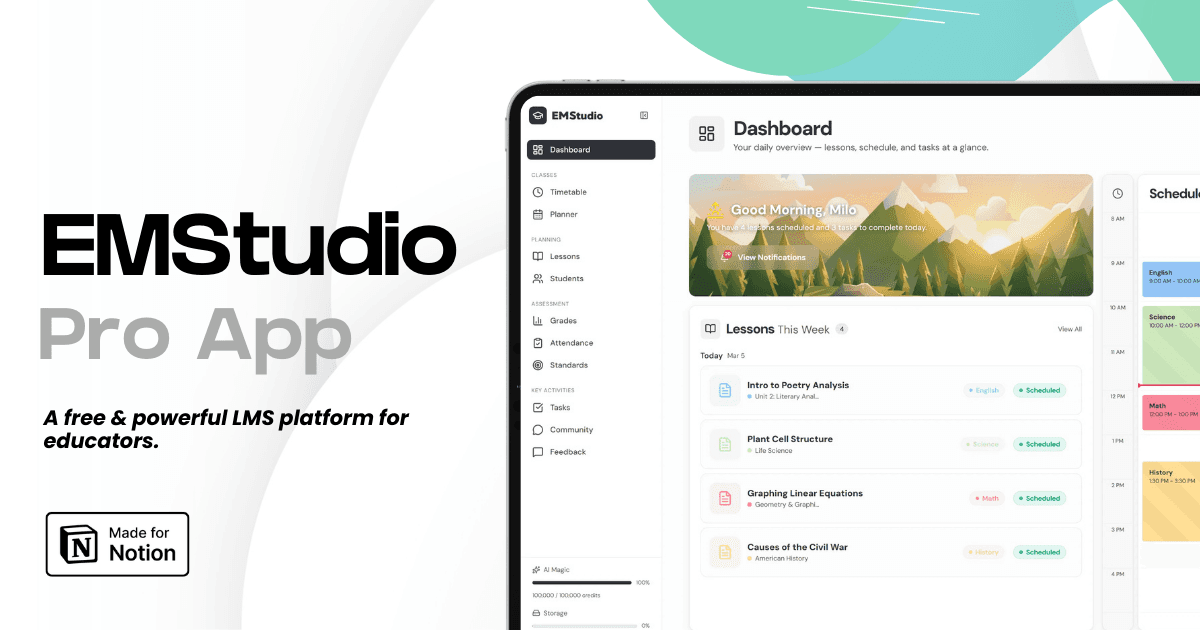
Still grading everything by hand?
EMStudio is a free teaching management app — manage your classes, students, lessons, and more!
Learn More
Still grading everything by hand?
EMStudio is a free teaching management app — manage your classes, students, lessons, and more!
Learn More


Notion4Teachers
Notion templates to simplify administrative tasks and enhance your teaching experience.



2026 Notion4Teachers. All Rights Reserved.
Notion4Teachers
Notion templates to simplify administrative tasks and enhance your teaching experience.
2026 Notion4Teachers. All Rights Reserved.
Notion4Teachers
Notion templates to simplify administrative tasks and enhance your teaching experience.
2026 Notion4Teachers. All Rights Reserved.