
Communication Skills Training for Educators: A Practical Guide
Communication Skills Training for Educators: A Practical Guide

Article by
Milo
ESL Content Coordinator & Educator
ESL Content Coordinator & Educator
All Posts
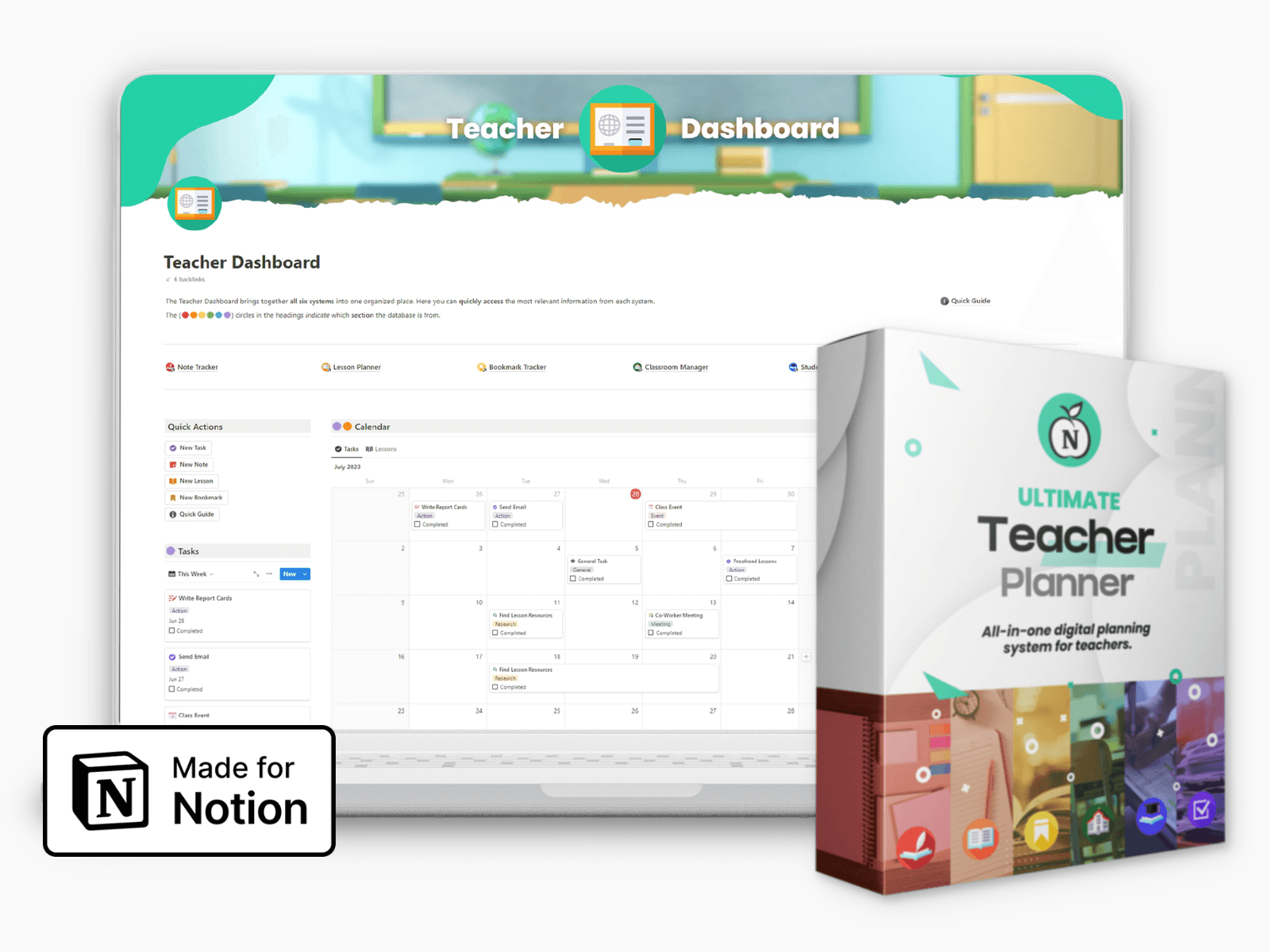
Ultimate Teacher Planner
The ultimate all-in-one education management system in Notion.
Learn More
Ultimate Teacher Planner
The ultimate all-in-one education management system in Notion.
Learn More
Table of Contents
Communication Skills Training for Educators: A Practical Guide
Lesson planning gets most of the attention, but the way you explain, listen, and follow up affects how much of that plan reaches students. January 2025 guidance from the U.S. Department of Education describes Title I family engagement as "regular, two-way, and meaningful communication." That is a useful standard for every channel an educator uses.
This field guide offers short drills, practical scripts, and a one-week plan you can start on Monday.
What Good Communication Looks Like in Classrooms
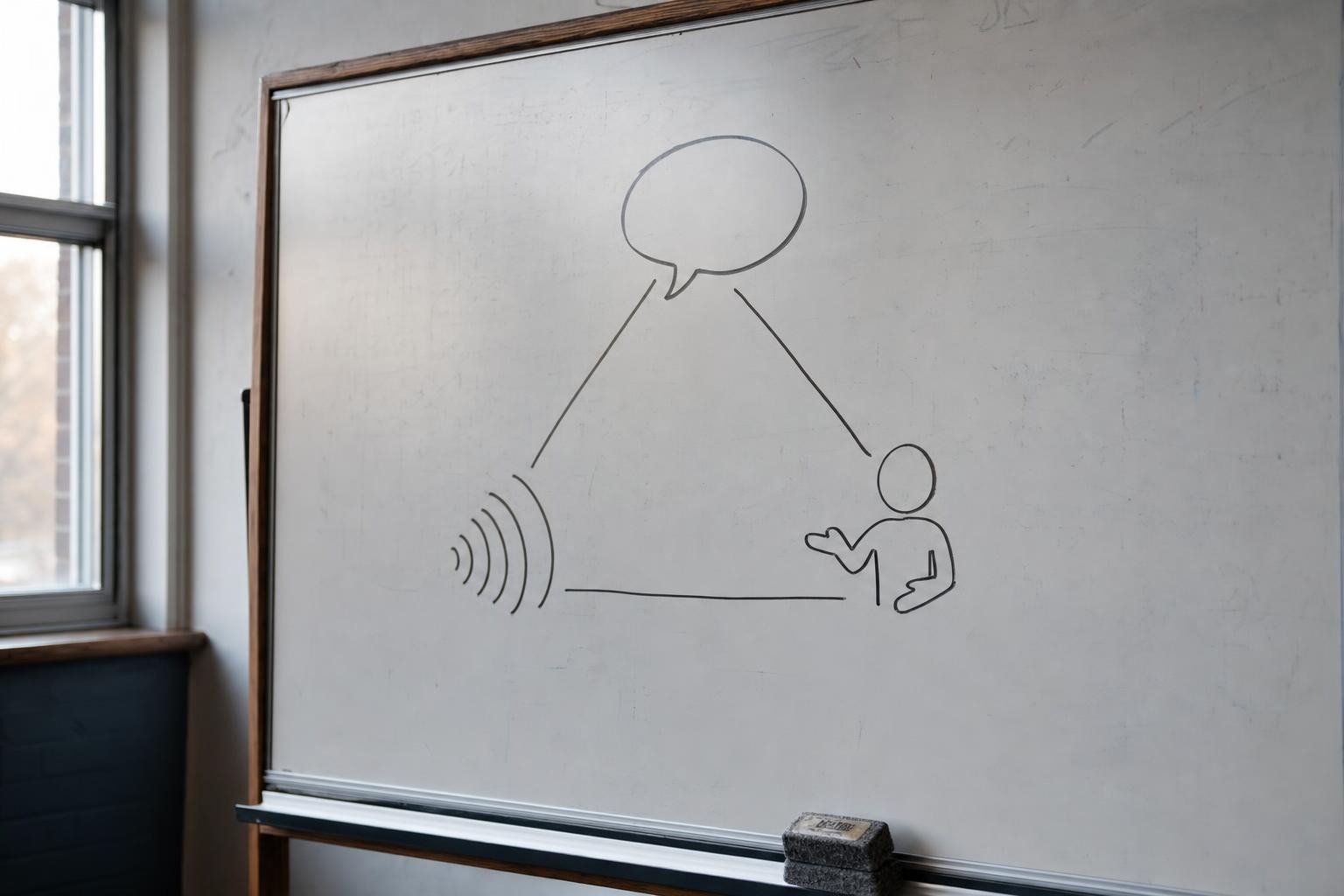
MIT's Teaching + Learning Lab frames classroom communication as three channels working at once: verbal (your words), vocal (tone, pace, and volume), and visual (posture, gestures, and what is on the board). Students process all three, and mismatches between them can create confusion.
Research on teacher language suggests that the quality of teacher talk matters more than the quantity. More talking is not the goal. Clearer talking is.
In practice, that means:
Give one instruction at a time, in the order students should complete it.
Use a slightly slower pace for directions and a lower volume for redirection.
Keep each visual focused on one idea, with key terms visible from every seat.
Use this ten-second check during a lesson:
Could a student repeat my last instruction in their own words?
Am I using tone and pacing instead of volume?
Does the board support what I am saying now?
Nonverbal habits matter too. Purposeful gestures, a calm posture, and a regular visual scan of the room can help students follow the lesson and feel included.
15-Minute Weekly Skill Drills
Drill 1: the turn-and-talk upgrade. Edutopia describes turn-and-talk as a simple strategy that can increase participation when it is structured well. Assign partners in advance, give students 30 seconds to pair up, and post two sentence starters: "I think... because..." and "I want to add to what you said about...." Set a clear time limit. Notice who speaks first in each pair, then reverse the order next time.
Drill 2: the nonverbal warm-up. Before the lesson, take 60 seconds to reset your posture, plan a visual scan that reaches all four corners of the room, and choose two gestures you will use, such as one for "pause" and one for "add on." During the lesson, notice whether your gestures clarify the idea or create a distraction.
Close each drill with one reflection line in your notes: what worked, and what will you change in the next lesson?
Communicating With Families
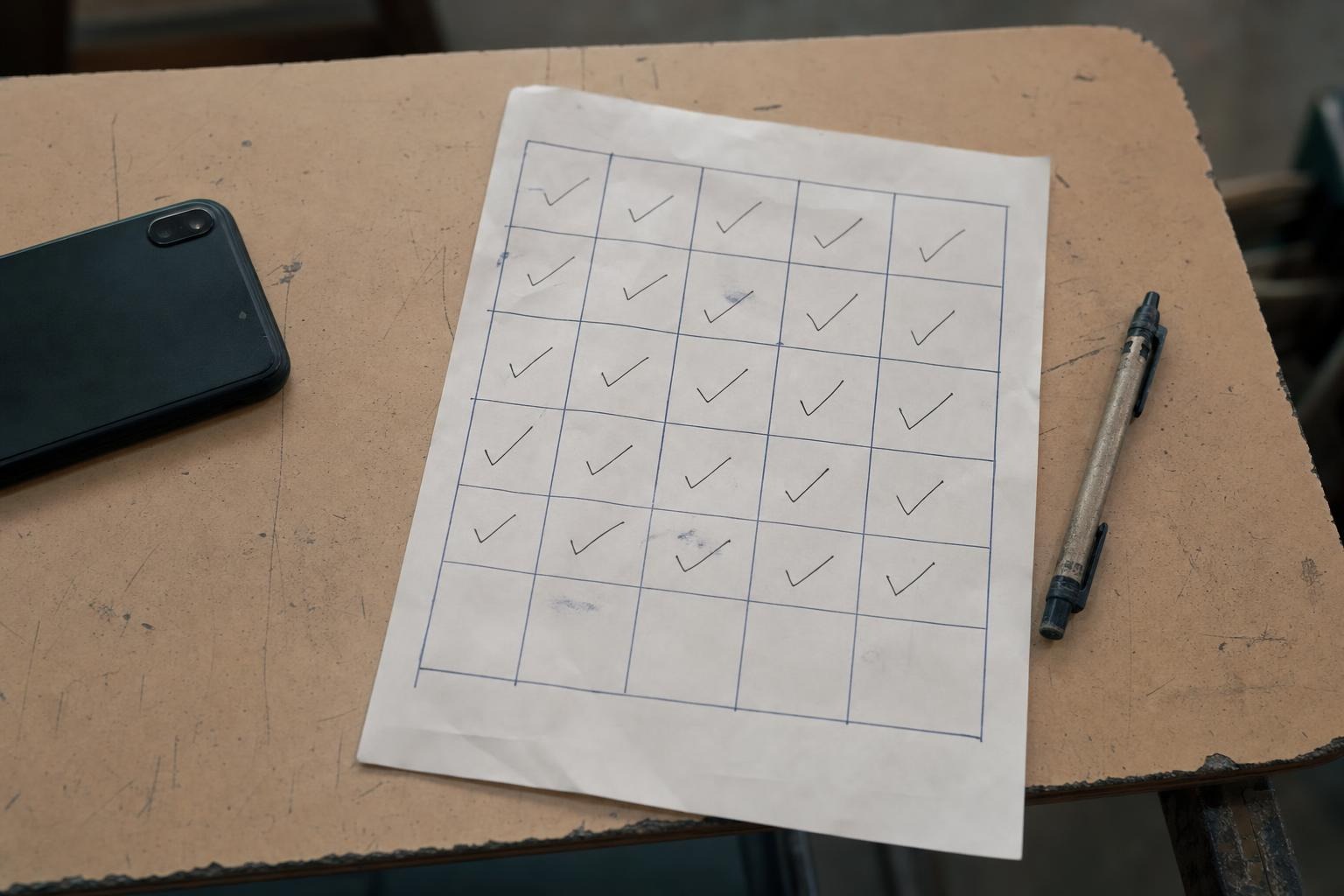
Trust is easier to build before a problem arises. Edutopia's 6x5 routine suggests contacting six families a day for five days at the start of the year. That allows an educator to reach about 30 households in one week.
A four-line first message works for calls, email, or translated text:
State who you are and which class you teach.
Share one specific, positive observation about the child.
Explain the best way and time to reach you.
Ask one question: "What questions do you have for me?"
Treat a 15- to 20-minute conference as the start of an ongoing conversation. End by writing down one shared next step, who is responsible for it, and the date you will check on progress.
Teachers who run the 6x5 routine at scale often template the first message rather than rewriting it, and existing Notion workflows for teachers show how a single database of guardian contacts and preferred languages can feed those messages.
Difficult Conversations With Students, Families, and Colleagues
Hard conversations are easier to manage with a small, repeatable framework. Try four steps:
Acknowledge: briefly name what the other person appears to be feeling or facing.
Ask: pose one open question, then allow time for an answer.
Clarify: restate what you heard and check your understanding: "Have I got that right?"
Agree: identify one next step, one owner, and one date.
Practice is most useful when it reflects real interactions. Some communication training uses recordings or transcripts instead of invented role-play because real conversations are less predictable. If school policy permits and everyone involved consents, record a short call for a ten-minute peer review. Spend two minutes listening, three minutes identifying wording that helped or hindered the conversation, three minutes revising one line, and two minutes planning where to use it. Remove personal details from any transcript or notes you share.
Organize Communication Without Adding Work
A simple tracker is more reliable than memory. In Notion, a spreadsheet, or another tool you already use, create one table with six fields: date, channel, goal, summary, follow-up needed, and next check-in. Filter by "follow-up needed" on Friday to create your Monday list.
Pair the tracker with a clarity checklist for written messages. Use a subject line that states the topic, include one main request, set a time-bound next step, and close with a question that invites a reply. If a message contains three unrelated requests, separate them or arrange a call.
Professional Development Paths
Start with low-effort options. Swap 20-minute observations with a colleague and agree in advance on one behavior to watch, such as wait time. Record a mini-lesson on your phone and review only the first three minutes. Rehearse one family-call script aloud before dialing.
For educators near Perth, Western Australia, an in-house workshop is another option. Communication Skills Academy offers communication courses in Perth covering writing, speaking, and difficult conversations. Programs are available in half-day, full-day, and two-day formats, while writing courses can also be delivered online. Communication Skills Academy lists group limits of 15 participants in person and 10 online, allowing time for individual practice and feedback. Educators elsewhere can look for similar features through district professional development or a nearby university: small groups, realistic exercises, specific feedback, and formats that fit existing schedules.
One-Week Practice Plan
Monday: Post two sentence starters and time one turn-and-talk.
Tuesday: Make six family contacts using the four-line script.
Wednesday: Run the 60-second nonverbal warm-up before two lessons.
Thursday: Rewrite three emails so each has one request and one dated next step.
Friday: Hold a ten-minute peer review and log follow-ups in your tracker.
Wrap-Up
Improving communication does not require a new curriculum or an extra planning period. It requires a few minutes of focused practice each week. Start with clearer instructions, structured student talk, early family contact, and one written next step after every difficult conversation. Small habits become more effective when they are repeated and reviewed.
FAQ
These brief answers address common questions about practicing and tracking communication skills.
What communication skills matter most for teachers?
Focus on clear verbal instructions, controlled vocal delivery, purposeful visuals, active listening, and two-way family contact. Choose one area to observe this week rather than trying to improve everything at once.
How do I measure improvement without running surveys?
Use countable signs of progress. Track how many students speak during turn-and-talk, how many families reply to a first message, and how many conversations end with a written next step. Compare the results from month to month.
How can I handle language differences with families?
Ask each family about its preferred language and communication channel during the first contact. Use district translation and interpreting services rather than improvising, and keep each message focused on one request. Add a "preferred language" field to your tracker.
How much time should I invest each week?
Start with 15 focused minutes, plus short drills built into lessons you already teach. Put the practice time on your calendar rather than waiting for an opening.
Are role-plays worth using?
They are more useful when based on realistic material. Recordings, anonymized transcripts, and detailed case examples often produce better discussion than vague scenarios. Small-group formats, such as the capped sessions Communication Skills Academy lists for its Perth workshops, also provide more time for practice and feedback.
What if I get nervous making family calls?
Write down the four-line script and keep it in front of you. Begin with a positive observation, and start with calls you expect to go well. Confidence usually grows through repetition.
Communication Skills Training for Educators: A Practical Guide
Lesson planning gets most of the attention, but the way you explain, listen, and follow up affects how much of that plan reaches students. January 2025 guidance from the U.S. Department of Education describes Title I family engagement as "regular, two-way, and meaningful communication." That is a useful standard for every channel an educator uses.
This field guide offers short drills, practical scripts, and a one-week plan you can start on Monday.
What Good Communication Looks Like in Classrooms
MIT's Teaching + Learning Lab frames classroom communication as three channels working at once: verbal (your words), vocal (tone, pace, and volume), and visual (posture, gestures, and what is on the board). Students process all three, and mismatches between them can create confusion.
Research on teacher language suggests that the quality of teacher talk matters more than the quantity. More talking is not the goal. Clearer talking is.
In practice, that means:
Give one instruction at a time, in the order students should complete it.
Use a slightly slower pace for directions and a lower volume for redirection.
Keep each visual focused on one idea, with key terms visible from every seat.
Use this ten-second check during a lesson:
Could a student repeat my last instruction in their own words?
Am I using tone and pacing instead of volume?
Does the board support what I am saying now?
Nonverbal habits matter too. Purposeful gestures, a calm posture, and a regular visual scan of the room can help students follow the lesson and feel included.
15-Minute Weekly Skill Drills
Drill 1: the turn-and-talk upgrade. Edutopia describes turn-and-talk as a simple strategy that can increase participation when it is structured well. Assign partners in advance, give students 30 seconds to pair up, and post two sentence starters: "I think... because..." and "I want to add to what you said about...." Set a clear time limit. Notice who speaks first in each pair, then reverse the order next time.
Drill 2: the nonverbal warm-up. Before the lesson, take 60 seconds to reset your posture, plan a visual scan that reaches all four corners of the room, and choose two gestures you will use, such as one for "pause" and one for "add on." During the lesson, notice whether your gestures clarify the idea or create a distraction.
Close each drill with one reflection line in your notes: what worked, and what will you change in the next lesson?
Communicating With Families
Trust is easier to build before a problem arises. Edutopia's 6x5 routine suggests contacting six families a day for five days at the start of the year. That allows an educator to reach about 30 households in one week.
A four-line first message works for calls, email, or translated text:
State who you are and which class you teach.
Share one specific, positive observation about the child.
Explain the best way and time to reach you.
Ask one question: "What questions do you have for me?"
Treat a 15- to 20-minute conference as the start of an ongoing conversation. End by writing down one shared next step, who is responsible for it, and the date you will check on progress.
Teachers who run the 6x5 routine at scale often template the first message rather than rewriting it, and existing Notion workflows for teachers show how a single database of guardian contacts and preferred languages can feed those messages.
Difficult Conversations With Students, Families, and Colleagues
Hard conversations are easier to manage with a small, repeatable framework. Try four steps:
Acknowledge: briefly name what the other person appears to be feeling or facing.
Ask: pose one open question, then allow time for an answer.
Clarify: restate what you heard and check your understanding: "Have I got that right?"
Agree: identify one next step, one owner, and one date.
Practice is most useful when it reflects real interactions. Some communication training uses recordings or transcripts instead of invented role-play because real conversations are less predictable. If school policy permits and everyone involved consents, record a short call for a ten-minute peer review. Spend two minutes listening, three minutes identifying wording that helped or hindered the conversation, three minutes revising one line, and two minutes planning where to use it. Remove personal details from any transcript or notes you share.
Organize Communication Without Adding Work
A simple tracker is more reliable than memory. In Notion, a spreadsheet, or another tool you already use, create one table with six fields: date, channel, goal, summary, follow-up needed, and next check-in. Filter by "follow-up needed" on Friday to create your Monday list.
Pair the tracker with a clarity checklist for written messages. Use a subject line that states the topic, include one main request, set a time-bound next step, and close with a question that invites a reply. If a message contains three unrelated requests, separate them or arrange a call.
Professional Development Paths
Start with low-effort options. Swap 20-minute observations with a colleague and agree in advance on one behavior to watch, such as wait time. Record a mini-lesson on your phone and review only the first three minutes. Rehearse one family-call script aloud before dialing.
For educators near Perth, Western Australia, an in-house workshop is another option. Communication Skills Academy offers communication courses in Perth covering writing, speaking, and difficult conversations. Programs are available in half-day, full-day, and two-day formats, while writing courses can also be delivered online. Communication Skills Academy lists group limits of 15 participants in person and 10 online, allowing time for individual practice and feedback. Educators elsewhere can look for similar features through district professional development or a nearby university: small groups, realistic exercises, specific feedback, and formats that fit existing schedules.
One-Week Practice Plan
Monday: Post two sentence starters and time one turn-and-talk.
Tuesday: Make six family contacts using the four-line script.
Wednesday: Run the 60-second nonverbal warm-up before two lessons.
Thursday: Rewrite three emails so each has one request and one dated next step.
Friday: Hold a ten-minute peer review and log follow-ups in your tracker.
Wrap-Up
Improving communication does not require a new curriculum or an extra planning period. It requires a few minutes of focused practice each week. Start with clearer instructions, structured student talk, early family contact, and one written next step after every difficult conversation. Small habits become more effective when they are repeated and reviewed.
FAQ
These brief answers address common questions about practicing and tracking communication skills.
What communication skills matter most for teachers?
Focus on clear verbal instructions, controlled vocal delivery, purposeful visuals, active listening, and two-way family contact. Choose one area to observe this week rather than trying to improve everything at once.
How do I measure improvement without running surveys?
Use countable signs of progress. Track how many students speak during turn-and-talk, how many families reply to a first message, and how many conversations end with a written next step. Compare the results from month to month.
How can I handle language differences with families?
Ask each family about its preferred language and communication channel during the first contact. Use district translation and interpreting services rather than improvising, and keep each message focused on one request. Add a "preferred language" field to your tracker.
How much time should I invest each week?
Start with 15 focused minutes, plus short drills built into lessons you already teach. Put the practice time on your calendar rather than waiting for an opening.
Are role-plays worth using?
They are more useful when based on realistic material. Recordings, anonymized transcripts, and detailed case examples often produce better discussion than vague scenarios. Small-group formats, such as the capped sessions Communication Skills Academy lists for its Perth workshops, also provide more time for practice and feedback.
What if I get nervous making family calls?
Write down the four-line script and keep it in front of you. Begin with a positive observation, and start with calls you expect to go well. Confidence usually grows through repetition.
Ultimate Teacher Planner
The ultimate all-in-one education management system in Notion.
Learn More
Ultimate Teacher Planner
The ultimate all-in-one education management system in Notion.
Learn More



Notion4Teachers
Notion templates to simplify administrative tasks and enhance your teaching experience.



2026 Notion4Teachers. All Rights Reserved.
Notion4Teachers
Notion templates to simplify administrative tasks and enhance your teaching experience.
2026 Notion4Teachers. All Rights Reserved.
Notion4Teachers
Notion templates to simplify administrative tasks and enhance your teaching experience.
2026 Notion4Teachers. All Rights Reserved.