
From Classroom Problem to Digital Tool: A Practical Plan for Teachers
From Classroom Problem to Digital Tool: A Practical Plan for Teachers

Article by
Milo
ESL Content Coordinator & Educator
ESL Content Coordinator & Educator
All Posts
A recurring classroom problem can be the beginning of a useful digital resource. Perhaps students need a simpler way to practise vocabulary, families need clearer updates, or teachers would benefit from a planning tool built around a particular curriculum. Turning that idea into an app or online service takes more than enthusiasm: it requires a clear user need, a realistic plan, and decisions about who will build and share the finished product.
Teachers do not need to become software developers to lead a project. Their knowledge of how learning actually happens is often the most important part. A careful process can help keep the tool focused on students and educators, rather than adding features simply because they are technically possible.
Still grading everything by hand?
EMStudio is a free teaching management app — manage your classes, students, lessons, and more!
Learn More
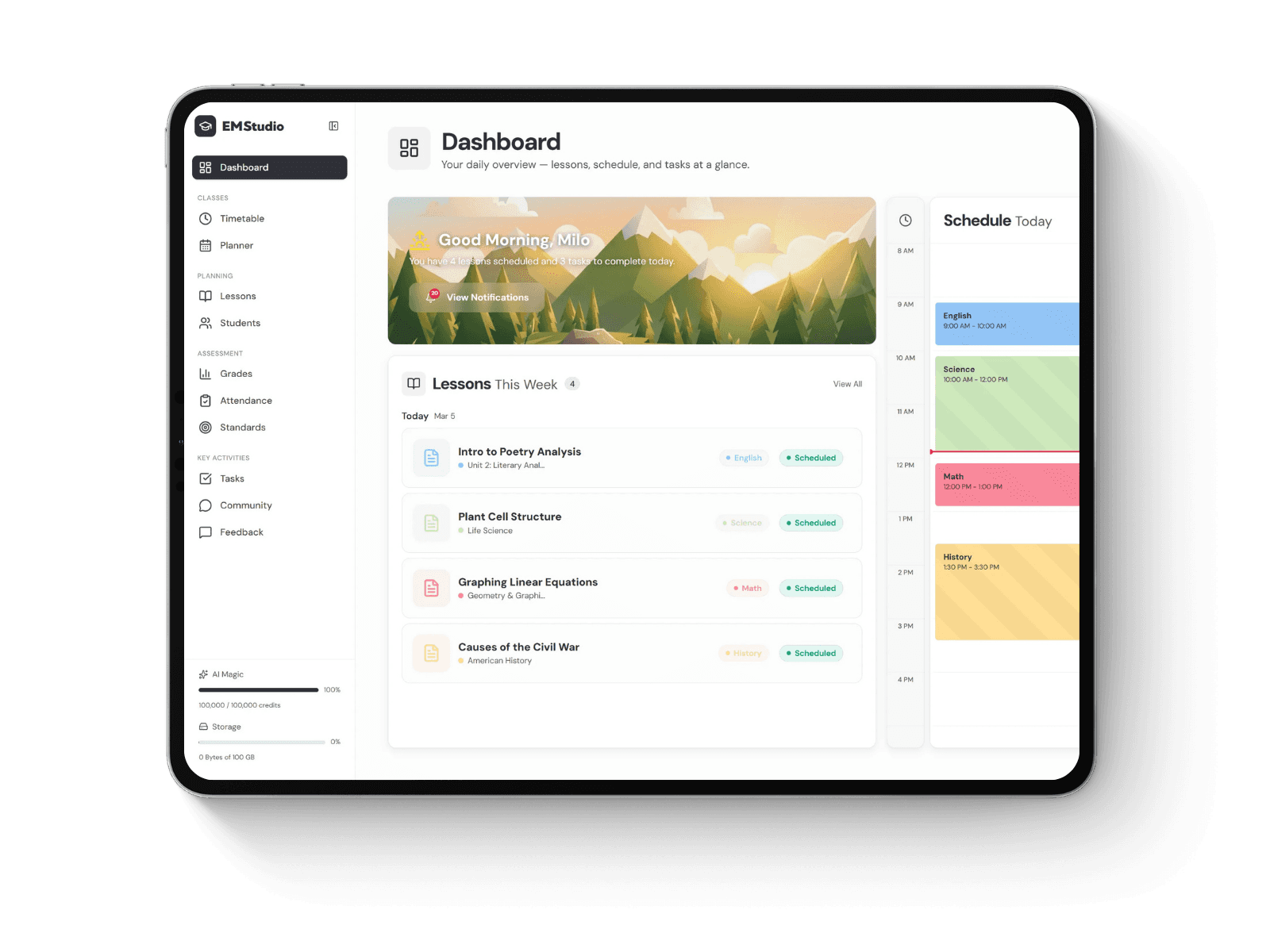
Still grading everything by hand?
EMStudio is a free teaching management app — manage your classes, students, lessons, and more!
Learn More
Table of Contents
Start with a specific teaching need
Describe the problem before deciding what the solution should look like. “Students need help with writing” is too broad to guide development. “Year 7 students need a way to practise identifying evidence in a short text and receive immediate feedback” is more useful. It identifies the learners, the task, and a possible measure of success.
Talk to the people who would use the tool. A few short conversations with teachers, students, or families can reveal constraints that are easy to miss from a desk: unreliable Wi-Fi, shared devices, accessibility needs, or limited time between lessons. A paper prototype or a simple clickable mock-up can help people react to an idea before significant money is spent.
It is also worth checking whether an existing platform already solves the problem. A spreadsheet, learning management system feature, or well-designed classroom routine may be enough. Building something new makes sense when the current options leave a clear gap.
Keep the first version small
A first release should test the central idea, not attempt to replace every tool a school already uses. Choose one important user journey. For a reading practice app, that might be selecting a passage, answering a few questions, and seeing feedback. Later versions can respond to what users actually find helpful.
Write down what the first version must do and what it will not do. This makes conversations with developers more productive and reduces the risk of costs rising as new ideas appear. It also creates a practical test: can a teacher explain the tool in a sentence, and can a student use it without a long tutorial?
For a mobile-first project, deciding between a native iPhone app and a cross-platform product is an early technical choice. Teachers planning that work can reviewhow to hire an iPhone app developer before comparing proposals. Osdire’s guide discusses rates, experience, and questions to check, which can help a project lead understand what a quote covers. The right choice depends on the intended users, available devices, features, and budget—not simply on which technology sounds most advanced.
Choose collaborators with the right evidence
A developer should be able to explain their approach in plain language, show relevant work, and ask questions about users and requirements. A polished portfolio is useful, but it does not prove that someone understands school settings. Ask how they handle accessibility, testing on older devices, data security, and changes after the first version is delivered.
Compare proposals on scope as well as price. Confirm which screens and features are included, who supplies content, how feedback rounds work, and what happens if a key feature does not perform as agreed. Ask for milestones that let you review progress before the full budget is committed. For work involving student information, establish what data is collected, where it is stored, who can access it, and when it will be deleted.
If a project also needs writing, design, or marketing support, the same careful comparison applies. A freelance specialist may offer direct communication and a close working relationship; a marketplace may make it easier to compare providers or manage payments and disputes. The details vary, so amarketplace-versus-freelancer comparison can help clarify how those arrangements differ when planning guest-posting work to reach an audience.
Test the tool in real conditions
Testing should involve the people the tool is meant to serve. A small pilot with a few teachers or a class can uncover confusing instructions, slow loading, or features that do not fit a lesson. Invite specific feedback: where did users pause, what did they expect to happen, and what would they remove?
Set a boundary for the pilot. Use appropriate school approval and avoid collecting personal student information unless it is genuinely necessary and properly protected. If the tool is for younger learners, involve the relevant school staff in checking privacy, accessibility, and safeguarding requirements before wider use.
Decide in advance what would count as a useful result. That might be fewer repeated questions, more completed practice activities, or teachers choosing to use the resource again. A pilot is not a demand that every participant praise the idea; it is a chance to find out what needs to change.
Plan how people will find and maintain it
A useful resource still needs a route to its intended audience. A short explanation for colleagues, a demonstration at a staff meeting, or a clear page on a school or teacher site may be more effective than a broad promotional campaign. If publishing articles on other relevant websites is part of the plan, focus on genuinely useful material for their readers rather than links alone.
Maintenance deserves attention before launch. Someone must respond to bug reports, update content, and check that the tool continues to work as devices and operating systems change. Agree who owns the source files and accounts, what documentation will be handed over, and how future support will be arranged.
Build around learning, not technology
The strongest education tools begin with a real teaching need and stay answerable to the people who use them. A small, tested first version, a clear agreement with collaborators, and a sensible plan for privacy and upkeep make a project more manageable. Technology can support good teaching, but its value comes from whether it helps learners and educators do something that matters.
Start with a specific teaching need
Describe the problem before deciding what the solution should look like. “Students need help with writing” is too broad to guide development. “Year 7 students need a way to practise identifying evidence in a short text and receive immediate feedback” is more useful. It identifies the learners, the task, and a possible measure of success.
Talk to the people who would use the tool. A few short conversations with teachers, students, or families can reveal constraints that are easy to miss from a desk: unreliable Wi-Fi, shared devices, accessibility needs, or limited time between lessons. A paper prototype or a simple clickable mock-up can help people react to an idea before significant money is spent.
It is also worth checking whether an existing platform already solves the problem. A spreadsheet, learning management system feature, or well-designed classroom routine may be enough. Building something new makes sense when the current options leave a clear gap.
Keep the first version small
A first release should test the central idea, not attempt to replace every tool a school already uses. Choose one important user journey. For a reading practice app, that might be selecting a passage, answering a few questions, and seeing feedback. Later versions can respond to what users actually find helpful.
Write down what the first version must do and what it will not do. This makes conversations with developers more productive and reduces the risk of costs rising as new ideas appear. It also creates a practical test: can a teacher explain the tool in a sentence, and can a student use it without a long tutorial?
For a mobile-first project, deciding between a native iPhone app and a cross-platform product is an early technical choice. Teachers planning that work can reviewhow to hire an iPhone app developer before comparing proposals. Osdire’s guide discusses rates, experience, and questions to check, which can help a project lead understand what a quote covers. The right choice depends on the intended users, available devices, features, and budget—not simply on which technology sounds most advanced.
Choose collaborators with the right evidence
A developer should be able to explain their approach in plain language, show relevant work, and ask questions about users and requirements. A polished portfolio is useful, but it does not prove that someone understands school settings. Ask how they handle accessibility, testing on older devices, data security, and changes after the first version is delivered.
Compare proposals on scope as well as price. Confirm which screens and features are included, who supplies content, how feedback rounds work, and what happens if a key feature does not perform as agreed. Ask for milestones that let you review progress before the full budget is committed. For work involving student information, establish what data is collected, where it is stored, who can access it, and when it will be deleted.
If a project also needs writing, design, or marketing support, the same careful comparison applies. A freelance specialist may offer direct communication and a close working relationship; a marketplace may make it easier to compare providers or manage payments and disputes. The details vary, so amarketplace-versus-freelancer comparison can help clarify how those arrangements differ when planning guest-posting work to reach an audience.
Test the tool in real conditions
Testing should involve the people the tool is meant to serve. A small pilot with a few teachers or a class can uncover confusing instructions, slow loading, or features that do not fit a lesson. Invite specific feedback: where did users pause, what did they expect to happen, and what would they remove?
Set a boundary for the pilot. Use appropriate school approval and avoid collecting personal student information unless it is genuinely necessary and properly protected. If the tool is for younger learners, involve the relevant school staff in checking privacy, accessibility, and safeguarding requirements before wider use.
Decide in advance what would count as a useful result. That might be fewer repeated questions, more completed practice activities, or teachers choosing to use the resource again. A pilot is not a demand that every participant praise the idea; it is a chance to find out what needs to change.
Plan how people will find and maintain it
A useful resource still needs a route to its intended audience. A short explanation for colleagues, a demonstration at a staff meeting, or a clear page on a school or teacher site may be more effective than a broad promotional campaign. If publishing articles on other relevant websites is part of the plan, focus on genuinely useful material for their readers rather than links alone.
Maintenance deserves attention before launch. Someone must respond to bug reports, update content, and check that the tool continues to work as devices and operating systems change. Agree who owns the source files and accounts, what documentation will be handed over, and how future support will be arranged.
Build around learning, not technology
The strongest education tools begin with a real teaching need and stay answerable to the people who use them. A small, tested first version, a clear agreement with collaborators, and a sensible plan for privacy and upkeep make a project more manageable. Technology can support good teaching, but its value comes from whether it helps learners and educators do something that matters.
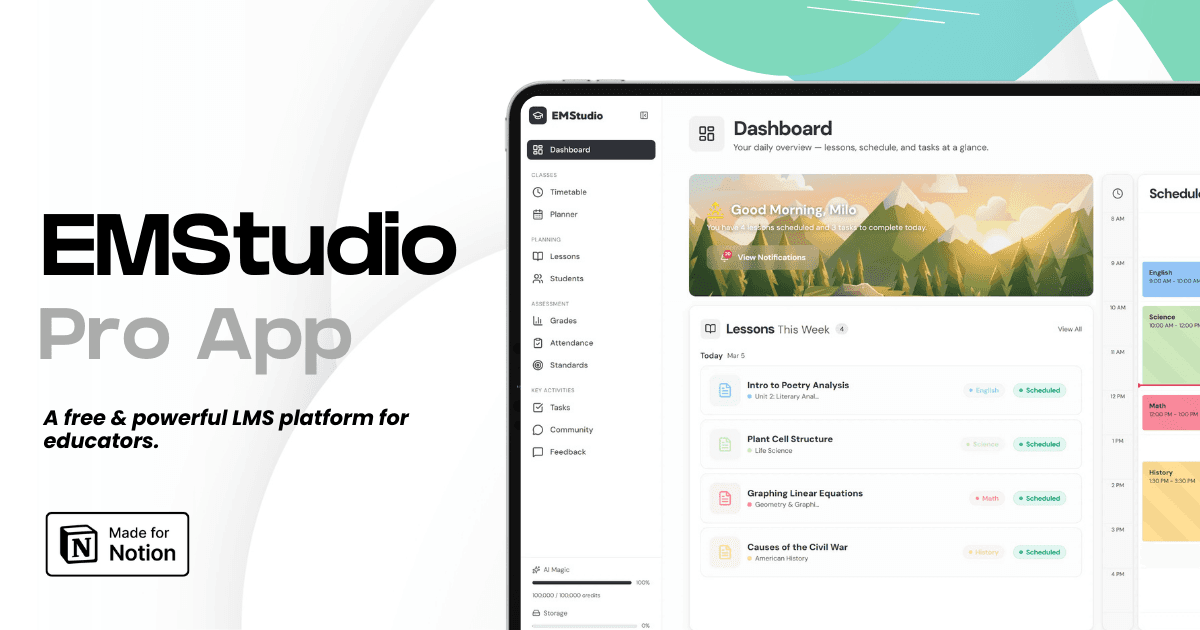
Still grading everything by hand?
EMStudio is a free teaching management app — manage your classes, students, lessons, and more!
Learn More
Still grading everything by hand?
EMStudio is a free teaching management app — manage your classes, students, lessons, and more!
Learn More


Notion4Teachers
Notion templates to simplify administrative tasks and enhance your teaching experience.



2026 Notion4Teachers. All Rights Reserved.
Notion4Teachers
Notion templates to simplify administrative tasks and enhance your teaching experience.
2026 Notion4Teachers. All Rights Reserved.
Notion4Teachers
Notion templates to simplify administrative tasks and enhance your teaching experience.
2026 Notion4Teachers. All Rights Reserved.