
Classroom Behavior Management Strategies: 4 Steps to Success
Classroom Behavior Management Strategies: 4 Steps to Success

Article by
Milo
ESL Content Coordinator & Educator
ESL Content Coordinator & Educator
All Posts
You’re three weeks into the semester and your behavior system is already cracking. Maybe it’s the chatty table in fourth period that derails every lesson. Maybe it’s the same two students testing limits while the rest watch to see if you’ll flinch. You’ve tried the clip chart. You’ve tried the token economy. Nothing sticks. You need classroom behavior management strategies that actually work in real rooms with real kids, not Pinterest boards.
This post gives you four concrete steps. We start with the audit you should run before changing anything—because switching systems mid-stream without knowing why the last one failed is like throwing spaghetti at a wall. Then we move into clear expectations, relationship investments that prevent blowups, responses that don’t escalate power struggles, and systems that survive March when everyone’s tired. These aren’t theories. I’ve used them in 7th grade inclusion classes and watched student teachers adapt them for kindergarten.
You won’t need a new app or a district workshop. You need clarity, consistency, and a plan for the hard days.
Still grading everything by hand?
EMStudio is a free teaching management app — manage your classes, students, lessons, and more!
Learn More
Still grading everything by hand?
EMStudio is a free teaching management app — manage your classes, students, lessons, and more!
Learn More
Table of Contents
What Should You Audit Before Changing Your Approach?
Audit current disruption patterns using ABC data tracking for 3-5 days, inventory the actual effectiveness of existing consequences against intended outcomes, and verify alignment between your personal strategies and school-wide behavior standards. This prevents implementing redundant systems and identifies specific trigger points requiring targeted intervention.
You can't fix what you haven't measured. Most teachers layer new classroom behavior management strategies over broken foundations, wasting energy on redundant systems. Spend three instructional days auditing before you change a single procedure.
Map Disruption Patterns by Time, Location, and Student
Carry a clipboard for three to five days. Record the ABC data: what happens immediately before the disruption (Antecedent), the specific behavior, and what follows (Consequence). Note the exact time—10:15 AM during transitions—and the physical location. Group work corners trigger different behaviors than independent desks.
Count frequencies per student. One student disrupting four times daily needs different support than four students disrupting once each. Create a simple scatterplot showing disruption density by time period. You will likely find 60 to 80 percent of problems cluster in specific 15-minute windows or transitions. Use a behavior tracking sheet to map disruption patterns if paper feels clumsy.
These patterns reveal environmental triggers, not character flaws. When you see that every Tuesday at 1:30 PM falls apart, you stop blaming the kids and start fixing the Tuesday afternoon routine. This is antecedent-based intervention at work—modifying conditions before the behavior occurs.
Inventory Current Consequences and Their Actual Effectiveness
List every consequence you used in the past two weeks. Include the big ones—office referrals—and the small ones—moving seats or silent lunch. You need seven to ten items minimum to see the pattern. Now rate each on a scale of one to five: did it actually stop the behavior, or did it just make you feel better?
Calculate the cost. If each office referral takes four minutes of paperwork plus eight minutes of class disruption, and you wrote three last week, you lost thirty-six minutes of instruction to a strategy that may not even work. Be honest about the deterrent effect. Many consequences feel like justice but function as lottery tickets—students gamble they won't get caught.
This inventory exposes the leaks in your system. When you see that detentions changed nothing but brief check-ins worked, you stop assigning detentions. Managing behaviors in the classroom requires pruning ineffective tools before adding new ones.
Align Personal Strategies with School-Wide Behavior Standards
Pull out your school's positive behavioral interventions and supports matrix or behavior expectation posters. Compare them line by line against your personal classroom rules. Do you mark a student tardy at the door while the school policy gives a five-minute grace period? These contradictions create variable schedules of reinforcement that confuse students and prolong power struggles.
Misalignment costs you authority. When your consequence contradicts the school-wide standard, students learn to shop for the better deal. They know Mrs. Johnson sends kids to the office for talking while you give warnings first. Audit your alignment to ensure you are not accidentally training students to test boundaries between systems.
Fix the gaps before you implement new interventions. If the school uses restorative practices for conflict but you jump straight to isolation, you are working against the building culture. Align first. Then build.

Step 1 — Establish Crystal-Clear Expectations and Non-Negotiables
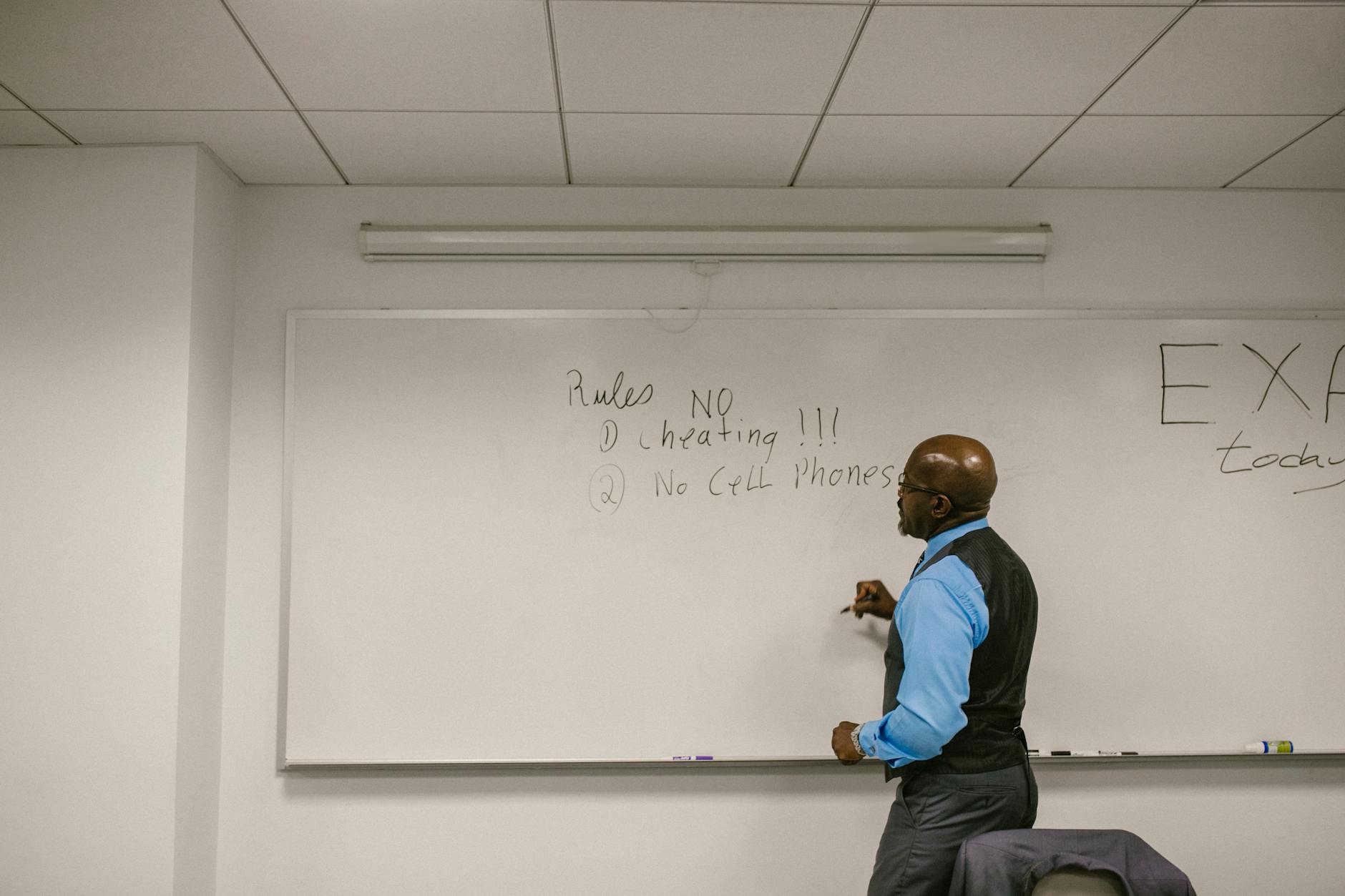
Cognitive load theory explains why your long list of classroom rules never sticks. Working memory can only hold three to five items at once. Exceed that limit, and compliance drops fast. For elementary students, cap your list at three non-negotiables. Middle and high school teachers can push to five, but never beyond. When you get this right, you should see rule-clarification questions drop by 80 percent within the first week. That is your benchmark for success. These classroom rules and procedures that transform behavior start with restraint, not addition.
Draft the 3-Rule Maximum Using Positive Framing
State what you want to see, not what you forbid. Replace "No yelling" with "Use respectful tone." Replace "Don't run" with "Walk safely." Frame rules around the behavior you expect, not the chaos you fear. Your wording shapes the classroom culture. Negative phrasing forces students to first imagine the forbidden action, then suppress it. Positive framing gives them a clear target to hit. This approach aligns with positive behavioral interventions and supports principles.
For kindergarten through second grade, pair each rule with picture symbols from Boardmaker or similar tools. Young readers process images faster than text. Third through fifth graders need written descriptors beneath each icon to bridge toward abstract thinking. By sixth grade, shift ownership. Use the Social Contract method and have students generate expectations themselves. They will enforce what they create.
A solid final product looks like "Be Safe, Be Respectful, Be Responsible." Map these abstracts to specific actions. Safe means hands to yourself and walking feet. Respectful means one voice at a time and active listening. Responsible means materials returned to designated bins and tasks completed. Three rules. No exceptions. This is the foundation of effective classroom behavior management strategies.
Teach Routines Through Modeling, Rehearsal, and Spaced Practice
Never assume students know how to enter your room. Use the "I do, We do, You do" protocol. Model the procedure for two minutes while students watch silently. Show them exactly where feet go and where eyes look. Then practice together for three minutes with your voice guiding each step. Narrow the focus to one specific action at a time. Finally, release them for two minutes of individual rehearsal while you circulate and correct. Time it. Keep it tight. Precision matters more than speed.
Spaced practice seals the habit. Review routines on days one, three, seven, and fourteen. This schedule follows retention research and pushes behaviors toward automaticity without cramming. Consider a fourth-grade teacher establishing a lining-up procedure. She places colored floor tape as physical anchor points showing where each row stands. Students practice three times daily during the first week. She watches for hesitation or wandering. By day seven, they snap into line without prompting. That is automaticity. You can track classroom rules and procedures to ensure you hit every review date and catch decay early.
Post Visual Anchors and Environmental Supports for Working Memory
Place supports where the work happens, not just where it looks nice. Group work expectations belong at group tables, not only on the front board. This is point of performance placement. Different tools serve different ages. Middle school teachers often use CHAMPS posters to clarify expectations for conversation, help, activity, movement, and participation. Elementary teachers might hang Zone of Regulation charts to help students identify emotional states and coping strategies. For gamification in K-5, Dojo point trackers provide immediate visual feedback. Physical tape markers define spatial boundaries for any grade level and serve as antecedent-based intervention.
Working memory needs backup. Provide task cards with picture cues, behavior flowcharts for conflict resolution, and posted choice menus for early finishers. When students can look up instead of asking you, they build independence. Build these yourself for five to ten dollars in laminating costs, or purchase complete systems like CHAMPS kits for thirty to fifty dollars. Either way, the goal is the same: reduce the mental load so students can focus on learning rather than remembering rules.
Step 2 — Build Prevention Through Strategic Relationship Investment
John Hattie's Visible Learning research puts teacher-student relationships at an effect size of 0.48. That puts relationship building in the same high-impact zone as direct instruction. When you invest in these connections, you're not just being nice. You're implementing a data-backed antecedent-based intervention that prevents disruptions before they start.
Think of it as relationship banking. Behavioral momentum research shows you need a 4:1 ratio of positive to corrective interactions to keep behavioral capital in the black. Students who chronically disrupt class are often seeking belonging. Meet that need proactively during the first ten minutes of your day, and they stop using negative behavior to get your attention. This is where classroom behavior management strategies shift from reactive firefighting to preventive architecture.
Implement the 2x10 Connection Strategy for At-Risk Students
The 2x10 strategy targets your highest-risk students—those carrying three or more office referrals or showing chronic disengagement. Spend two minutes per day for ten consecutive school days discussing anything except schoolwork. Minecraft builds, weekend soccer games, new puppies, favorite video games. The topic doesn't matter. The consistent, predictable attention does.
Track this on a simple half-sheet checklist taped inside your plan book. Column one: date. Column two: topic discussed. Column three: student affect rating on a 1-5 scale. By day six, you'll see the shift. They start greeting you at the door instead of avoiding eye contact. They raise their hand before calling out. The data helps you stay accountable when you're tempted to skip day four because you're exhausted.
Time these deposits during non-instructional moments. Arrival, lunch line, or transitions between blocks. These natural breaks protect your curriculum minutes while building the safety net that prevents escalation later. You're making proactive deposits so you don't have to write a referral when the student melts down during math. This is trauma-informed teaching in its simplest form—reliable connection that repairs the school experience for kids who expect to be rejected.
Create Micro-Check-In Routines at Entry and Transition Points
Stand at your door during arrival. Greet each student by name and add a fifteen-second pulse-check. "Thumbs up, middle, or down for readiness today?" That single gesture tells you who needs extra support before the first academic task begins. A thumb down doesn't require a long conversation. Just a nod and a sticky note on their desk that says, "Check in with me after the Do Now."
For grades three through eight, use the thirty-second bridge between activities for a "weather check." Students show hand signals: sunny, cloudy, or stormy. No verbal disruption required. You scan the room, note the stormy signals, and touch base with those three kids during independent practice. It takes less time than waiting for them to blow up over a math problem.
Post mood meters or emotion regulation scales at desk level. Students can tap their current state without raising their hand or breaking the flow. These social emotional learning activities take seconds but prevent the power struggles that eat up twenty minutes of your block. When you catch the storm before it hits, you save your entire lesson. The routine becomes automatic after two weeks of practice.
Deploy Strength-Based Specific Praise to Shape Culture
You can't manage what you don't measure. Use a tally counter or the Clicker app during a thirty-minute observation period. Count your positive and corrective interactions. If you're not hitting four positives for every one correction, you're overdrawing the relationship bank. Most teachers think they're positive until they count. The data usually surprises them.
Make your praise specific and public. Use this sentence frame: "I noticed you [specific observable behavior], which shows [character trait or learning skill]." Skip the generic "good job" that sounds like background noise. Specificity lands differently in a child's brain. It tells them exactly what to repeat.
Try this instead: "I noticed you waited for Marcus to finish his thought before adding your idea, which shows intellectual respect." That kind of feedback names the behavior and the virtue. It takes three extra seconds to say, but it pays dividends in student engagement strategies for elementary students and beyond. When you spotlight the behavior you want, you get more of it. That's managing student behavior through positive behavioral interventions and supports, not through consequences. The culture shifts one specific comment at a time.

Step 3 — How Do You Respond to Disruptions Without Power Struggles?
Respond using the least invasive intervention first: move into proximity and pause instruction for 3-5 seconds while maintaining eye contact. If ineffective, offer a choice-based redirect privately. Avoid public power struggles by deferring consequences until after class, using break cards or regulation spaces for escalation prevention rather than punishment.
Think of your responses as a flowchart: proximity first, then nonverbal cues, followed by a private prompt, then a choice offer, next a regulation break, and finally a delayed consequence only if the previous five steps fail. This hierarchy is antecedent-based intervention—you change the environment before the students' behavior in the classroom escalates. Public verbal corrections feed attention-seeking and trigger oppositional defiance. Never use public reprimands for minor class behavior issues. If your redirection takes longer than ten seconds, your strategy is too complex. These classroom management strategies for elementary teachers work across grade levels, grounded in functional behavior assessment research.
Deploy Proximity, Pause, and Nonverbal Cues First
Move within three feet of the student while continuing your lesson. Maintain instruction without breaking pace for three to five seconds while establishing eye contact. This simple act of proximity often stops the disruption before it starts because it removes the audience while preserving dignity. The student realizes you noticed, but their peers might not.
Your nonverbal toolkit includes hand signals for pause or focus, proximity standing, and the teacher pause—five seconds of deliberate silence that fills the room. These cues respect student autonomy while maintaining your instructional flow. You communicate authority without uttering a word.
During a 7th-grade math lecture, you notice a side conversation starting. You drift to stand between the desks, hold your position for five seconds while looking at the speakers, then resume the lesson without a word. The silence does the work. No audience, no power struggle, just a reset. These de-escalation techniques work because they avoid triggering the student's fight-or-flight response.
Offer Choice-Based Redirects and Private Conversation Invitations
When proximity fails to shift students' behavior in the classroom, offer a choice-based redirect delivered quietly at the student's shoulder. Use language like, "Would you prefer to complete this at your desk or in the quiet corner?" Avoid asking "why" questions that trigger defensiveness and instead focus on the next steps. This approach preserves student autonomy while maintaining your standards.
For deeper issues, use a private conversation invitation: "I need to discuss something with you. Would you prefer to talk now or in three minutes after you finish this problem?" This technique is effective conflict management in classroom settings, drawn from strategies for navigating classroom conflicts. It removes the public audience that feeds oppositional behavior.
Offering controlled choices reduces refusal rates significantly compared to direct commands because it gives students agency within boundaries. This method aligns with positive behavioral interventions and supports by addressing the function of the behavior without escalating the situation. You maintain authority without wrestling for control.
Use Regulation Spaces and Break Cards to De-Escalate
Set up a regulation space in a designated corner equipped with a timer set for five minutes maximum, noise-canceling headphones, fidget tools, and a feeling chart. This is not a timeout for punishment. Use it only for sensory or emotional regulation when a student needs to reset their nervous system. The space supports trauma-informed teaching by recognizing that some behaviors stem from overwhelm, not defiance.
Implement a break card system where students initiate the request, limited to three cards per day. Include a "pass" card for non-verbal requests to reduce anxiety about asking for help. When a student uses a card, they take their regulation break and then complete a return check-in using the "Ready to learn?" protocol before rejoining the activity. This practice reflects implementing restorative practices by focusing on readiness over retribution.
Never use the regulation space as a consequence for non-compliance. Doing so destroys its effectiveness as a classroom behavior management strategy. Keep it voluntary and supportive, making sure students return to instruction when regulated, not when a timer dictates.

Step 4 — How Do You Sustain Systems When Motivation Drops?
Sustain systems by conducting weekly 10-minute data reviews tracking disruption frequency and latency to compliance. Build teacher recovery rituals such as 30-second breathing resets between classes to prevent emotional escalation. Pivot tactics if no improvement occurs after 6 consistent weeks, or immediately seek specialist support for safety concerns.
Conduct Weekly Strategy Reviews Using Simple Behavior Data
Pick one target behavior and count it. Tally disruptions per period and time the gap between your direction and student action—latency to compliance. This takes ninety seconds per class if you keep a sheet on a clipboard.
Graph the trends weekly during your prep or lunch. If latency stays above ten seconds consistently, your cue is too complex—simplify it immediately. When frequency stays flat for three weeks despite your best fidelity, change the antecedent, not the consequence. Classroom behavior management strategies survive only when data shows roughly twenty percent improvement within six weeks; flat lines mean the strategy dies and you need an antecedent-based intervention overhaul before you burn out.
Use ClassDojo exports or a simple line graph in your plan. One glance should tell you if Wednesday was an outlier or if the whole week is sliding into chaos. build a behavior management plan with built-in review dates so you do not lie to yourself about implementation.
Keep the review to ten minutes. Set a timer. If you cannot spot the trend in that window, your data is too complicated. Simplicity sustains the system.
Six weeks is your hard stop. If the trend line does not bend downward by twenty percent, abandon the tactic and request a functional behavior assessment. Do not double down on exhaustion; clean data gives you permission to pivot without guilt.
Build in Teacher Recovery Rituals to Prevent Reaction Escalation
You cannot sustain de-escalation techniques when your own cortisol is spiking. Burnout kills consistency faster than bad pedagogy ever could. When you are depleted, you escalate power struggles. You skip the wait time. You raise your voice. You need a recovery ritual.
Between periods three and four—when fatigue peaks—take thirty seconds. Use 4-7-8 breathing: inhale four counts, hold seven, exhale eight. Sip water and correct your posture. Drop your shoulders. Visualize one successful interaction from this morning to anchor your nervous system.
Reframe the next incoming behavior as communication, not combat. That eye-roll is data about an unmet need, not a personal indictment. This cognitive shift protects your teacher stress management and wellbeing techniques from collapsing into reactive yelling that undermines your whole system.
Trauma-informed teaching starts with your own regulation. You cannot co-regulate a dysregulated child when you are running on adrenaline and coffee. The reset is not luxury; it is classroom infrastructure.
Schedule these resets like you schedule bathroom breaks. Non-negotiable. If you skip them, you will pay with emotional escalation by sixth period.
Know When to Pivot Tactics or Seek Specialist Support
Distinguish between a blip and a breakdown. Temporary regression during state testing, schedule changes, or a home crisis requires holding the line. Change nothing. Your consistency is the intervention during chaos, not new classroom behavior management tools.
Pivot immediately when safety is at risk or you see trauma indicators like self-harm or abuse disclosures. That is not a teaching moment; that is a counselor moment. Call your administrator and document.
After six weeks of faithful implementation with zero improvement, stop. Request positive behavioral interventions and supports Tier two or three support. Trigger a functional behavior assessment and consult the school psychologist. Hand over the data you collected. Do not wait until May to admit the mismatch.
Restorative practices work only when the brain is regulated. If a student is in crisis, skip the circle and get the specialist. Know the difference between a strategy failure requiring immediate pivot and a temporary storm requiring steady maintenance. Both require courage, but only one requires a new plan.
Trust the timeline. Six weeks is long enough to prove a concept but short enough to prevent drowning. If the data is flat, you have your answer.
What Should You Audit Before Changing Your Approach?
Audit current disruption patterns using ABC data tracking for 3-5 days, inventory the actual effectiveness of existing consequences against intended outcomes, and verify alignment between your personal strategies and school-wide behavior standards. This prevents implementing redundant systems and identifies specific trigger points requiring targeted intervention.
You can't fix what you haven't measured. Most teachers layer new classroom behavior management strategies over broken foundations, wasting energy on redundant systems. Spend three instructional days auditing before you change a single procedure.
Map Disruption Patterns by Time, Location, and Student
Carry a clipboard for three to five days. Record the ABC data: what happens immediately before the disruption (Antecedent), the specific behavior, and what follows (Consequence). Note the exact time—10:15 AM during transitions—and the physical location. Group work corners trigger different behaviors than independent desks.
Count frequencies per student. One student disrupting four times daily needs different support than four students disrupting once each. Create a simple scatterplot showing disruption density by time period. You will likely find 60 to 80 percent of problems cluster in specific 15-minute windows or transitions. Use a behavior tracking sheet to map disruption patterns if paper feels clumsy.
These patterns reveal environmental triggers, not character flaws. When you see that every Tuesday at 1:30 PM falls apart, you stop blaming the kids and start fixing the Tuesday afternoon routine. This is antecedent-based intervention at work—modifying conditions before the behavior occurs.
Inventory Current Consequences and Their Actual Effectiveness
List every consequence you used in the past two weeks. Include the big ones—office referrals—and the small ones—moving seats or silent lunch. You need seven to ten items minimum to see the pattern. Now rate each on a scale of one to five: did it actually stop the behavior, or did it just make you feel better?
Calculate the cost. If each office referral takes four minutes of paperwork plus eight minutes of class disruption, and you wrote three last week, you lost thirty-six minutes of instruction to a strategy that may not even work. Be honest about the deterrent effect. Many consequences feel like justice but function as lottery tickets—students gamble they won't get caught.
This inventory exposes the leaks in your system. When you see that detentions changed nothing but brief check-ins worked, you stop assigning detentions. Managing behaviors in the classroom requires pruning ineffective tools before adding new ones.
Align Personal Strategies with School-Wide Behavior Standards
Pull out your school's positive behavioral interventions and supports matrix or behavior expectation posters. Compare them line by line against your personal classroom rules. Do you mark a student tardy at the door while the school policy gives a five-minute grace period? These contradictions create variable schedules of reinforcement that confuse students and prolong power struggles.
Misalignment costs you authority. When your consequence contradicts the school-wide standard, students learn to shop for the better deal. They know Mrs. Johnson sends kids to the office for talking while you give warnings first. Audit your alignment to ensure you are not accidentally training students to test boundaries between systems.
Fix the gaps before you implement new interventions. If the school uses restorative practices for conflict but you jump straight to isolation, you are working against the building culture. Align first. Then build.
Step 1 — Establish Crystal-Clear Expectations and Non-Negotiables
Cognitive load theory explains why your long list of classroom rules never sticks. Working memory can only hold three to five items at once. Exceed that limit, and compliance drops fast. For elementary students, cap your list at three non-negotiables. Middle and high school teachers can push to five, but never beyond. When you get this right, you should see rule-clarification questions drop by 80 percent within the first week. That is your benchmark for success. These classroom rules and procedures that transform behavior start with restraint, not addition.
Draft the 3-Rule Maximum Using Positive Framing
State what you want to see, not what you forbid. Replace "No yelling" with "Use respectful tone." Replace "Don't run" with "Walk safely." Frame rules around the behavior you expect, not the chaos you fear. Your wording shapes the classroom culture. Negative phrasing forces students to first imagine the forbidden action, then suppress it. Positive framing gives them a clear target to hit. This approach aligns with positive behavioral interventions and supports principles.
For kindergarten through second grade, pair each rule with picture symbols from Boardmaker or similar tools. Young readers process images faster than text. Third through fifth graders need written descriptors beneath each icon to bridge toward abstract thinking. By sixth grade, shift ownership. Use the Social Contract method and have students generate expectations themselves. They will enforce what they create.
A solid final product looks like "Be Safe, Be Respectful, Be Responsible." Map these abstracts to specific actions. Safe means hands to yourself and walking feet. Respectful means one voice at a time and active listening. Responsible means materials returned to designated bins and tasks completed. Three rules. No exceptions. This is the foundation of effective classroom behavior management strategies.
Teach Routines Through Modeling, Rehearsal, and Spaced Practice
Never assume students know how to enter your room. Use the "I do, We do, You do" protocol. Model the procedure for two minutes while students watch silently. Show them exactly where feet go and where eyes look. Then practice together for three minutes with your voice guiding each step. Narrow the focus to one specific action at a time. Finally, release them for two minutes of individual rehearsal while you circulate and correct. Time it. Keep it tight. Precision matters more than speed.
Spaced practice seals the habit. Review routines on days one, three, seven, and fourteen. This schedule follows retention research and pushes behaviors toward automaticity without cramming. Consider a fourth-grade teacher establishing a lining-up procedure. She places colored floor tape as physical anchor points showing where each row stands. Students practice three times daily during the first week. She watches for hesitation or wandering. By day seven, they snap into line without prompting. That is automaticity. You can track classroom rules and procedures to ensure you hit every review date and catch decay early.
Post Visual Anchors and Environmental Supports for Working Memory
Place supports where the work happens, not just where it looks nice. Group work expectations belong at group tables, not only on the front board. This is point of performance placement. Different tools serve different ages. Middle school teachers often use CHAMPS posters to clarify expectations for conversation, help, activity, movement, and participation. Elementary teachers might hang Zone of Regulation charts to help students identify emotional states and coping strategies. For gamification in K-5, Dojo point trackers provide immediate visual feedback. Physical tape markers define spatial boundaries for any grade level and serve as antecedent-based intervention.
Working memory needs backup. Provide task cards with picture cues, behavior flowcharts for conflict resolution, and posted choice menus for early finishers. When students can look up instead of asking you, they build independence. Build these yourself for five to ten dollars in laminating costs, or purchase complete systems like CHAMPS kits for thirty to fifty dollars. Either way, the goal is the same: reduce the mental load so students can focus on learning rather than remembering rules.
Step 2 — Build Prevention Through Strategic Relationship Investment
John Hattie's Visible Learning research puts teacher-student relationships at an effect size of 0.48. That puts relationship building in the same high-impact zone as direct instruction. When you invest in these connections, you're not just being nice. You're implementing a data-backed antecedent-based intervention that prevents disruptions before they start.
Think of it as relationship banking. Behavioral momentum research shows you need a 4:1 ratio of positive to corrective interactions to keep behavioral capital in the black. Students who chronically disrupt class are often seeking belonging. Meet that need proactively during the first ten minutes of your day, and they stop using negative behavior to get your attention. This is where classroom behavior management strategies shift from reactive firefighting to preventive architecture.
Implement the 2x10 Connection Strategy for At-Risk Students
The 2x10 strategy targets your highest-risk students—those carrying three or more office referrals or showing chronic disengagement. Spend two minutes per day for ten consecutive school days discussing anything except schoolwork. Minecraft builds, weekend soccer games, new puppies, favorite video games. The topic doesn't matter. The consistent, predictable attention does.
Track this on a simple half-sheet checklist taped inside your plan book. Column one: date. Column two: topic discussed. Column three: student affect rating on a 1-5 scale. By day six, you'll see the shift. They start greeting you at the door instead of avoiding eye contact. They raise their hand before calling out. The data helps you stay accountable when you're tempted to skip day four because you're exhausted.
Time these deposits during non-instructional moments. Arrival, lunch line, or transitions between blocks. These natural breaks protect your curriculum minutes while building the safety net that prevents escalation later. You're making proactive deposits so you don't have to write a referral when the student melts down during math. This is trauma-informed teaching in its simplest form—reliable connection that repairs the school experience for kids who expect to be rejected.
Create Micro-Check-In Routines at Entry and Transition Points
Stand at your door during arrival. Greet each student by name and add a fifteen-second pulse-check. "Thumbs up, middle, or down for readiness today?" That single gesture tells you who needs extra support before the first academic task begins. A thumb down doesn't require a long conversation. Just a nod and a sticky note on their desk that says, "Check in with me after the Do Now."
For grades three through eight, use the thirty-second bridge between activities for a "weather check." Students show hand signals: sunny, cloudy, or stormy. No verbal disruption required. You scan the room, note the stormy signals, and touch base with those three kids during independent practice. It takes less time than waiting for them to blow up over a math problem.
Post mood meters or emotion regulation scales at desk level. Students can tap their current state without raising their hand or breaking the flow. These social emotional learning activities take seconds but prevent the power struggles that eat up twenty minutes of your block. When you catch the storm before it hits, you save your entire lesson. The routine becomes automatic after two weeks of practice.
Deploy Strength-Based Specific Praise to Shape Culture
You can't manage what you don't measure. Use a tally counter or the Clicker app during a thirty-minute observation period. Count your positive and corrective interactions. If you're not hitting four positives for every one correction, you're overdrawing the relationship bank. Most teachers think they're positive until they count. The data usually surprises them.
Make your praise specific and public. Use this sentence frame: "I noticed you [specific observable behavior], which shows [character trait or learning skill]." Skip the generic "good job" that sounds like background noise. Specificity lands differently in a child's brain. It tells them exactly what to repeat.
Try this instead: "I noticed you waited for Marcus to finish his thought before adding your idea, which shows intellectual respect." That kind of feedback names the behavior and the virtue. It takes three extra seconds to say, but it pays dividends in student engagement strategies for elementary students and beyond. When you spotlight the behavior you want, you get more of it. That's managing student behavior through positive behavioral interventions and supports, not through consequences. The culture shifts one specific comment at a time.
Step 3 — How Do You Respond to Disruptions Without Power Struggles?
Respond using the least invasive intervention first: move into proximity and pause instruction for 3-5 seconds while maintaining eye contact. If ineffective, offer a choice-based redirect privately. Avoid public power struggles by deferring consequences until after class, using break cards or regulation spaces for escalation prevention rather than punishment.
Think of your responses as a flowchart: proximity first, then nonverbal cues, followed by a private prompt, then a choice offer, next a regulation break, and finally a delayed consequence only if the previous five steps fail. This hierarchy is antecedent-based intervention—you change the environment before the students' behavior in the classroom escalates. Public verbal corrections feed attention-seeking and trigger oppositional defiance. Never use public reprimands for minor class behavior issues. If your redirection takes longer than ten seconds, your strategy is too complex. These classroom management strategies for elementary teachers work across grade levels, grounded in functional behavior assessment research.
Deploy Proximity, Pause, and Nonverbal Cues First
Move within three feet of the student while continuing your lesson. Maintain instruction without breaking pace for three to five seconds while establishing eye contact. This simple act of proximity often stops the disruption before it starts because it removes the audience while preserving dignity. The student realizes you noticed, but their peers might not.
Your nonverbal toolkit includes hand signals for pause or focus, proximity standing, and the teacher pause—five seconds of deliberate silence that fills the room. These cues respect student autonomy while maintaining your instructional flow. You communicate authority without uttering a word.
During a 7th-grade math lecture, you notice a side conversation starting. You drift to stand between the desks, hold your position for five seconds while looking at the speakers, then resume the lesson without a word. The silence does the work. No audience, no power struggle, just a reset. These de-escalation techniques work because they avoid triggering the student's fight-or-flight response.
Offer Choice-Based Redirects and Private Conversation Invitations
When proximity fails to shift students' behavior in the classroom, offer a choice-based redirect delivered quietly at the student's shoulder. Use language like, "Would you prefer to complete this at your desk or in the quiet corner?" Avoid asking "why" questions that trigger defensiveness and instead focus on the next steps. This approach preserves student autonomy while maintaining your standards.
For deeper issues, use a private conversation invitation: "I need to discuss something with you. Would you prefer to talk now or in three minutes after you finish this problem?" This technique is effective conflict management in classroom settings, drawn from strategies for navigating classroom conflicts. It removes the public audience that feeds oppositional behavior.
Offering controlled choices reduces refusal rates significantly compared to direct commands because it gives students agency within boundaries. This method aligns with positive behavioral interventions and supports by addressing the function of the behavior without escalating the situation. You maintain authority without wrestling for control.
Use Regulation Spaces and Break Cards to De-Escalate
Set up a regulation space in a designated corner equipped with a timer set for five minutes maximum, noise-canceling headphones, fidget tools, and a feeling chart. This is not a timeout for punishment. Use it only for sensory or emotional regulation when a student needs to reset their nervous system. The space supports trauma-informed teaching by recognizing that some behaviors stem from overwhelm, not defiance.
Implement a break card system where students initiate the request, limited to three cards per day. Include a "pass" card for non-verbal requests to reduce anxiety about asking for help. When a student uses a card, they take their regulation break and then complete a return check-in using the "Ready to learn?" protocol before rejoining the activity. This practice reflects implementing restorative practices by focusing on readiness over retribution.
Never use the regulation space as a consequence for non-compliance. Doing so destroys its effectiveness as a classroom behavior management strategy. Keep it voluntary and supportive, making sure students return to instruction when regulated, not when a timer dictates.
Step 4 — How Do You Sustain Systems When Motivation Drops?
Sustain systems by conducting weekly 10-minute data reviews tracking disruption frequency and latency to compliance. Build teacher recovery rituals such as 30-second breathing resets between classes to prevent emotional escalation. Pivot tactics if no improvement occurs after 6 consistent weeks, or immediately seek specialist support for safety concerns.
Conduct Weekly Strategy Reviews Using Simple Behavior Data
Pick one target behavior and count it. Tally disruptions per period and time the gap between your direction and student action—latency to compliance. This takes ninety seconds per class if you keep a sheet on a clipboard.
Graph the trends weekly during your prep or lunch. If latency stays above ten seconds consistently, your cue is too complex—simplify it immediately. When frequency stays flat for three weeks despite your best fidelity, change the antecedent, not the consequence. Classroom behavior management strategies survive only when data shows roughly twenty percent improvement within six weeks; flat lines mean the strategy dies and you need an antecedent-based intervention overhaul before you burn out.
Use ClassDojo exports or a simple line graph in your plan. One glance should tell you if Wednesday was an outlier or if the whole week is sliding into chaos. build a behavior management plan with built-in review dates so you do not lie to yourself about implementation.
Keep the review to ten minutes. Set a timer. If you cannot spot the trend in that window, your data is too complicated. Simplicity sustains the system.
Six weeks is your hard stop. If the trend line does not bend downward by twenty percent, abandon the tactic and request a functional behavior assessment. Do not double down on exhaustion; clean data gives you permission to pivot without guilt.
Build in Teacher Recovery Rituals to Prevent Reaction Escalation
You cannot sustain de-escalation techniques when your own cortisol is spiking. Burnout kills consistency faster than bad pedagogy ever could. When you are depleted, you escalate power struggles. You skip the wait time. You raise your voice. You need a recovery ritual.
Between periods three and four—when fatigue peaks—take thirty seconds. Use 4-7-8 breathing: inhale four counts, hold seven, exhale eight. Sip water and correct your posture. Drop your shoulders. Visualize one successful interaction from this morning to anchor your nervous system.
Reframe the next incoming behavior as communication, not combat. That eye-roll is data about an unmet need, not a personal indictment. This cognitive shift protects your teacher stress management and wellbeing techniques from collapsing into reactive yelling that undermines your whole system.
Trauma-informed teaching starts with your own regulation. You cannot co-regulate a dysregulated child when you are running on adrenaline and coffee. The reset is not luxury; it is classroom infrastructure.
Schedule these resets like you schedule bathroom breaks. Non-negotiable. If you skip them, you will pay with emotional escalation by sixth period.
Know When to Pivot Tactics or Seek Specialist Support
Distinguish between a blip and a breakdown. Temporary regression during state testing, schedule changes, or a home crisis requires holding the line. Change nothing. Your consistency is the intervention during chaos, not new classroom behavior management tools.
Pivot immediately when safety is at risk or you see trauma indicators like self-harm or abuse disclosures. That is not a teaching moment; that is a counselor moment. Call your administrator and document.
After six weeks of faithful implementation with zero improvement, stop. Request positive behavioral interventions and supports Tier two or three support. Trigger a functional behavior assessment and consult the school psychologist. Hand over the data you collected. Do not wait until May to admit the mismatch.
Restorative practices work only when the brain is regulated. If a student is in crisis, skip the circle and get the specialist. Know the difference between a strategy failure requiring immediate pivot and a temporary storm requiring steady maintenance. Both require courage, but only one requires a new plan.
Trust the timeline. Six weeks is long enough to prove a concept but short enough to prevent drowning. If the data is flat, you have your answer.
Still grading everything by hand?
EMStudio is a free teaching management app — manage your classes, students, lessons, and more!
Learn More
Still grading everything by hand?
EMStudio is a free teaching management app — manage your classes, students, lessons, and more!
Learn More





Notion4Teachers
Notion templates to simplify administrative tasks and enhance your teaching experience.



2026 Notion4Teachers. All Rights Reserved.
Notion4Teachers
Notion templates to simplify administrative tasks and enhance your teaching experience.
2026 Notion4Teachers. All Rights Reserved.
Notion4Teachers
Notion templates to simplify administrative tasks and enhance your teaching experience.
2026 Notion4Teachers. All Rights Reserved.