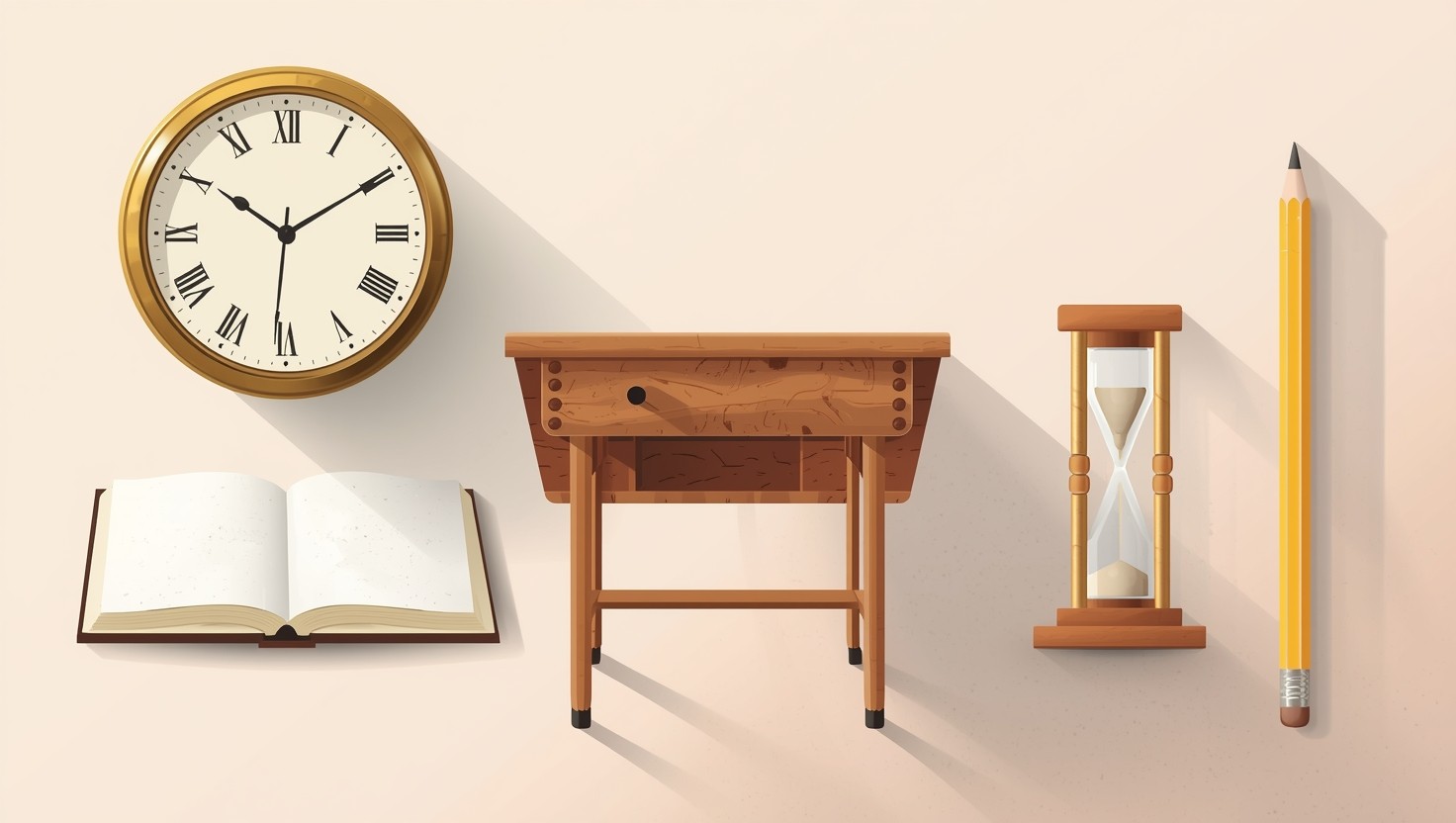
Class Time: 5 Steps to Maximize Instructional Minutes
Class Time: 5 Steps to Maximize Instructional Minutes

Article by
Milo
ESL Content Coordinator & Educator
ESL Content Coordinator & Educator
All Posts
Before optimizing class time, audit one full week using five metrics: actual instructional minutes, transition duration, teacher talk ratio, off-task interruptions, and material distribution delays. Use low-tech tools like clipboards or the Time Timer to avoid observer effects. This establishes your baseline, typically revealing recoverable time currently lost to non-instructional tasks.
John Hattie's Visible Learning research puts academic learning time at an effect size of 0.42. That correlation means every minute you reclaim from transitions or interruptions directly impacts student achievement. Track for exactly five school days, avoiding the first week of school, standardized testing windows, or assembly days. These atypical periods skew your data and sabotage improvement efforts. You want normal classroom routines and typical student energy levels.
Create a printable template with 5-minute interval rows running down the left side. Label columns for each metric so you can glance down and see patterns, like whether transitions balloon after 20 minutes.
Still grading everything by hand?
EMStudio is a free teaching management app — manage your classes, students, lessons, and more!
Learn More

Still grading everything by hand?
EMStudio is a free teaching management app — manage your classes, students, lessons, and more!
Learn More
Table of Contents
What Do You Need to Audit Before Changing Your Class Time?
Essential Data Points to Track for One Week
Actual instructional minutes: Target 85% of your period for active learning.
Transition duration: Keep it under 90 seconds from signal to student readiness.
Teacher talk ratio: Sample 30-second intervals. Aim for 40-50% teacher talk.
Off-task interruptions: Count frequency per 10-minute block using hash marks.
Material distribution delays: Measure seconds from instruction to the last student ready.
These metrics reveal exactly where your bell-to-bell instruction breaks down and help you establish transition protocols that stick. Paper beats digital here because you can tally without looking away from students.
Tools That Measure Without Disrupting Flow
Choose tools that don't distract from teaching. The Time Timer Plus 8-inch costs $34.99 and works without wifi. Its red disk shows visual countdowns students can see across the room. The main drawback is the price and the space it occupies on your desk. Teachers report it pays for itself within a month.
The clipboard tally system costs nothing and requires zero setup. You mark hash marks for interruptions or transitions using a simple grid. The con is obvious: you must multitask to mark while teaching, which can feel awkward at first.
Classroomscreen.com offers multiple widgets for projection but needs reliable wifi and a display students can see. It's free but requires navigating to the site. This digital option works well if you have a dedicated projector.
Skip phone-based apps entirely. They create observer effects and temptation. Select based on your infrastructure: use the Time Timer for low-tech reliability, the clipboard for simplicity, or Classroomscreen if you have consistent projection. These hacks teachers rely on to save time work because they measure without disrupting your classroom routines.
Step 1 — Map Your Current Class Time Usage and Identify Waste
Track every five minutes of your class time for one typical week. Use green for active instruction, yellow for transitions and setup, and red for management or behavior issues. Record these on sticky notes along a paper timeline, or use Google Sheets with conditional formatting to visualize the patterns. Most teachers discover their instructional minutes comprise only sixty percent of the period, while transitions eat twenty-five percent and management burns fifteen. Your targets: eighty-five percent green, ten percent yellow, five percent red.
Map during a routine week only. Project-based units, testing days, or assembly schedules create false baselines that skew your data. You need normal classroom routines to see where the leaks actually happen.
The Color-Coding Method for Activity Tracking
Draw a vertical timeline dividing your period into five-minute intervals. Carry three highlighters and mark each block in real time: green for direct instruction or guided practice, yellow for materials setup and movement, red for discipline, attendance, or administrative tasks. At day's end, calculate your percentages. Look for patterns—maybe every Tuesday loses twelve minutes to device distribution.
A 7th-grade math teacher at my former school mapped her week and found red-coded periods dominated her first ten minutes daily. She tightened her entry procedure and recovered twenty-two percent of her academic learning time within two weeks.
Spotting Hidden Transition Losses Between Tasks
Instructional dead time lives in the gap between when students finish one activity and start the next. Three culprits drain your clock:
Device distribution in 1:1 districts burns three to four minutes as students wait for Chromebooks to load.
Paper passing costs forty-five to ninety seconds per worksheet while students wait at the edge of their seats.
Bathroom or water requests during instruction steal thirty to sixty seconds each and break the rhythm.
Your goal is keeping dead time under ninety seconds. Use next task visibility—have materials ready and visible before you end the current activity. Solid transition protocols protect your bell-to-bell instruction and cut teacher talk time spent explaining what comes next. For more strategies on protecting these minutes, see our guide on time management for teachers.

Step 2 — How Do You Align Time Blocks With Learning Objectives?
Align time blocks by calculating each standard's instructional minute value: multiply its Depth of Knowledge level (1-4) by assessment weight percentage. High-value standards (scores 8-12) receive prime time slots during the first 15 minutes of class when attention peaks. Match activity duration to developmental attention spans: 5-8 minutes for K-2, 12-15 minutes for middle school, and 15-20 minutes for high school.
Not all standards deserve equal class time. You need a filter that separates what needs your live instruction from what students can review independently. This method is the backbone of effective time management in the classroom.
Prioritizing Standards by Instructional Minute Value
Use Larry Ainsworth's Power Standards criteria to decide what earns your live instruction. Check for endurance (concepts used across grade levels), leverage (skills that transfer to other subjects), and readiness (prerequisites for next year's work). Multiply the Depth of Knowledge level by the assessment weight percentage to calculate the instructional minute value.
Standards scoring 8 to 12 land in your prime time block during the first fifteen minutes of class when working memory is fresh and behavioral issues are rare. Scores of 4 to 7 get secondary slots after transitions or before lunch. Anything below 4 becomes homework, flipped video content, or station rotation material.
Run this decision flowchart: If a standard is DOK 3-4 and high-stakes tested, block twenty minutes in the first quarter of class. If it is DOK 1-2 and review, assign it to an exit ticket or bell ringer.
Here is how this plays out in a real seventh-grade week. CCSS.RL.7.1 requires citing textual evidence at DOK 2 and carries 15% weight on your state test. That gives it thirty points. CCSS.RL.7.9 compares themes across genres at DOK 3 with 25% weight, scoring seventy-five points.
Schedule the seventy-five-point standard for Tuesday at 9:00 to 9:20 AM when attention peaks and your teacher talk time has the most impact. Drop the thirty-point standard into Thursday at 9:45 to 9:55 AM when energy dips and students need lighter cognitive lifting. You just protected your academic learning time for the content that actually moves the needle.
Matching Activity Types to Student Attention Spans
Barak Rosenshine's Principles of Instruction recommend delivering new material in short segments followed by immediate student practice. For elementary students, present two to five minutes of content, then let them work. For secondary students, extend input to five to eight minutes before requiring a cognitive break or modality shift. This rhythm maximizes retention without overwhelming working memory or destroying classroom routines.
Match your activities to these developmental thresholds. Kindergarten through second grade can focus for five to eight minutes, perfect for a phonics mini-lesson. Third through fifth grade manage ten to twelve minutes, enough for a math strategy demonstration.
Sixth through eighth grade handle twelve to fifteen minutes of dense content. Ninth through twelfth grade sustain fifteen to twenty minutes of complex instruction before you lose them to daydreaming or phone checks.
Direct instruction should hit the threshold maximum. Guided practice can run one and a half times the threshold. Independent practice tops out at double the threshold. This means matching activity types to student attention spans protects your instructional minutes from waste and keeps classroom routines running smoothly.
Ignore these limits and attention crashes. A thirty-minute lecture in sixth grade exceeds the fifteen-minute threshold by one hundred percent. By minute sixteen, you are talking to empty faces even if everyone is sitting still. The wasted instructional minutes add up fast. Keep transition protocols tight and respect these boundaries to maintain true bell-to-bell instruction.

Step 3 — Build Your Ideal Class Time Schedule
Block Scheduling vs. Traditional Period Structures
Ninety-minute blocks let you dive deep into lab sciences or complex projects without rushing cleanup. Fifty-minute periods force tighter pacing but reset student attention more often. Neither structure wins universally—your choice depends on subject needs and student age.
Missing one day of block scheduling costs double the instructional minutes compared to traditional periods. Absenteeism hits harder when one class equals two lessons. Behavioral endurance drops significantly with middle schoolers in 90-minute stretches. Setup time runs high for blocks—you need curriculum redesign to fill the window effectively, though no budget changes.
Block scheduling fails without movement breaks or for students with ADHD who cannot sustain focus that long. Never use 90-minute blocks for K-2 or single-activity lectures exceeding 20 minutes. Traditional periods suit drill-based math and primary grades better because they limit teacher talk time and allow more transition protocols between subjects.
Embedding Natural Breaks for Sustained Focus
Research on sustained attention shows significant retention drops after 15-20 minutes of continuous cognitive load. You lose academic learning time not from taking breaks, but from pushing past the brain's natural saturation point. Implement the 20/2 rule: after 20 minutes of focused cognitive work, insert 2 minutes of physical movement to reset neural pathways.
Three concrete resets work in any classroom without equipment:
Stand and Stretch: Touch toes, reach sky, twist spine gently to release tension.
4-7-8 Breathing: Inhale for 4 seconds, hold for 7, exhale for 8 to lower cortisol.
Cross-Crawl: Touch opposite elbow to knee while standing to engage both brain hemispheres.
Building embedding natural breaks for sustained focus into your daily classroom routines prevents the attention decay that destroys retention during bell-to-bell instruction. For block scheduling, these breaks become non-negotiable survival tools rather than nice-to-have additions. Without them, your transition protocols collapse and you hemorrhage academic learning time during the final thirty minutes of the period.

Step 4 — Train Students for Self-Managed Transitions
Transitions eat your class time if you let them. Every time you wait for kids to shuffle papers or answer "Can I get a drink?" you lose instructional minutes. You need classroom procedures that eliminate daily chaos.
The 30-Second Transition Protocol
The 30-Second Transition Protocol works because it removes your voice from the equation. You cannot talk while students move. Talking creates confusion and extends the transition past the thirty-second target.
Choose a distinct audio cue. A chime, a specific song clip, or a bell. Use the same sound every time. Predictability creates speed.
Here is the exact sequence:
Step 1 (0:00-0:10): Audio cue plays. Students freeze and point to their destination.
Step 2 (0:10-0:15): Students verify materials. Book open to page X. Device awake. Pencil ready.
Step 3 (0:15-0:30): Silent movement to the new location. No talking. No questions.
Step 4 (0:30): Immediate engagement with the Do Now task displayed on the board.
Marcus Williams, a 4th-grade teacher in Ohio, practiced this for five sessions in September. His class averaged 28 seconds by October. They gained twelve minutes of bell-to-bell instruction daily.
Run three to five timed practice sessions at the start of the year. Use a stopwatch. Do not proceed with content until ninety percent of your students hit the sub-30-second mark.
Transition protocols fail when you talk over movement. They fail when you give multi-step verbal directions during the transition. Verbal processing slows physical movement. Enforce the silence. Let the procedure do the work.
Visual Cues That Reduce Teacher Talk Time
You speak too much during independent work. Every verbal interruption breaks concentration for the entire room. Visual cues return those minutes to you and protect your time management in the classroom.
Set out colored plastic cups for help requests. Red means stuck and needs you immediately. Yellow means working but has a question that can wait three to five minutes. Green means proceeding smoothly. Stack the cups upside down. Students flip the appropriate color without raising their hands. No motion interrupts the workflow.
Check the cups while you circulate. Visit reds first, yellows second. Ignore greens until you finish the reds. These classroom routines become automatic within three weeks.
Pair this with hand signals. One finger requests the bathroom. Two fingers mean water or tissue. Three fingers signal pencil or sharpener. A closed fist indicates a yes or no answer. Students never speak to ask permission. They signal, you nod or shake your head.
Project a timer visible to all students during transitions and work periods. Position it where every seat can see the countdown. They monitor their own pace. You stop being the timekeeper.
Research on non-verbal systems suggests these methods reduce instructional interruptions by fifty to seventy percent. Your teacher talk time drops below forty percent of class time. Students manage their own needs. You teach.
For more on silent signals, read about visual cues that reduce teacher talk time.

Step 5 — Build Buffer Zones for Unexpected Interruptions
Stop trying to cram 60 minutes of content into a 50-minute period. That leftover 10 minutes does not materialize from wishful thinking. It becomes instructional debt that compounds weekly.
The fix is the 85% Rule: schedule only 85% of your available class time. In a 50-minute block, plan 42 to 43 minutes of content. Leave 7 to 8 minutes as buffer.
Attempting to fill every instructional minute creates a brittle schedule. One interruption cascades into truncated explanations and half-finished practice sets. Academic learning time drops because you are constantly triaging which activity to sacrifice.
Where to Place Flexible Minutes in Your Schedule
Place 3-to-5-minute flex blocks inside the period, not at the end. In a 50-minute class, insert soft stops at minute 20 and minute 40. Hard stops at the bell never work; they evaporate into backpack zippers and hallway transition protocols.
Use these intervals for what actually happens. A misconception surfaces during the ratio lesson. Three kids need the concept re-explained. Or engagement is unusually high and you want to extend the discovery phase.
I learned this the hard way during a November observation. I had packed the period bell-to-bell with academic learning time. Then the announcement came: standardized testing prep packets needed distribution. My carefully planned inquiry cycle collapsed into 12 minutes of rushed teacher talk time.
Now I build in those soft stops every 20 minutes during complex instruction. They protect classroom routines from external chaos.
Hard stops at period end are invariably consumed by cleanup. Students start closing Chromebooks at minute 47 regardless of what you are saying. That buffer is gone before you open your mouth.
Soft stops at minute 20 and 40 hit differently. You can extend a minute or two if the concept is clicking, or pivot immediately if the fire alarm rings. That flexibility keeps your academic learning time intact without sacrificing classroom routines.
Recovery Strategies When Time Runs Short
Even with buffers, some days content runs long. You need recovery protocols that maintain rigor without accelerating your speech to auctioneer speed.
I used to panic when the lesson ran long, squeezing ten minutes of practice into three. The results were predictable. Now I pick one of three protocols based on what type of content I am trimming.
The Parking Lot: When a conceptual discussion exceeds its slot, write the topic on a whiteboard section labeled "Parking Lot." Address it during the next class's warm-up or as part of steps to quiet noisy classrooms while students settle.
Micro-lesson: For skill deficits, deliver a 5-minute condensed review at the start of the next period.
Flipped Bridge: For missed procedural content, record a 2-minute Loom video and post it to Google Classroom.
Rushing through slides at double speed kills retention rates. Students copy notes without processing them. You finish the slide deck but nobody learned the material.
Recovery strategies preserve the learning while acknowledging the reality of the clock. They turn potential disasters into manageable adjustments that respect both the content and the kids. You maintain momentum without leaving anyone behind.
How Do You Maintain Your Class Time System All Year?
Maintain your system through a Friday 10-minute review comparing planned versus actual time use, adjusting next week's schedule based on patterns observed. Implement seasonal modifications: dedicate 50% of August to procedures, 85% of October-January to content, and reduce new material to 40% during March testing windows. Aim for 80% adherence to prevent burnout while preserving gains.
Systems die in boredom. Your class time setup isn't a prison; it's a living tool that needs seasonal tune-ups and honest Fridays spent reviewing what worked. Ignore either maintenance task, and you'll slide back to chaotic transitions and lost instructional minutes by Halloween.
Weekly Review Habits for Continuous Improvement
Run the 10-10-10 protocol every Friday before you leave. Spend ten minutes scanning your planner to spot where instructional minutes leaked. Use a three-column reflection: Planned, Actual, Difference. Did that lab run twenty minutes over? Did dismissal lag because you skipped your transition protocol? Mark the real end times next to your estimates to see the patterns clearly. Compare this week to last to spot trends. Note one time-saving win to maintain your motivation through the weekend and confirm the system works.
Use the next ten minutes to steal back time. Move your buffer zones if Tuesday's fire drill proved you need cushioning after first period. Split that fifty-minute direct instruction block; your data shows attention crashes at minute thirty-five. Check which activities earned their academic learning time and which ones flopped so you don't repeat the losers. Adjust your transition protocols accordingly. Spend the final ten minutes prepping Monday materials—lay out bell-ringer papers, queue the slideshow, sharpen pencils, set out lab trays, eliminate morning friction. This practice mirrors the planning habits of highly effective educators who protect their Mondays fiercely.
Finish with sentence stems to cement the learning. Write: "This week I saved fifteen minutes by using the quiet signal instead of counting down." Then: "Next week I will try front-loading supply distribution to shave two minutes off lab setup." Celebrate one win to stay motivated, even if it is just noticing that your new bathroom procedure saved three minutes of transition time. Post these reflections on your desk where you plan. This keeps your time management in the classroom visible and iterative. One small tweak beats a complete overhaul every time you review.
Adjusting for Seasonal Energy and Testing Schedules
Map your academic calendar to energy cycles, not just standards. August and September demand fifty percent of your time on classroom routines and procedures because you cannot teach kids who don't know how to enter the room. By October, shift to eighty-five percent content delivery and fifteen percent assessment, riding the wave of fresh fall focus through January when students still tolerate rigid bell-to-bell instruction.
March is the killing month. State testing disrupts bell-to-bell instruction, so drop new material to forty percent and pivot to review strategies. Use April and May for project-based learning with flexible blocks; students are done with rigid teacher talk time by then. I always add two extra minutes to afternoon transitions in spring—teenagers melt after lunch when the clocks change, and your class time suffers if you rush them through the doorway.
Perfection kills sustainability. Aim for eighty percent adherence to your schedule, not one hundred. Missing your target twice a week won't destroy your time management in the classroom gains, but burning out trying to hit ninety-nine percent will wreck your enthusiasm by December. Forgive the messy Fridays when assemblies ran long. Show up Monday with the plan adjusted, not abandoned, and your instructional minutes will stay protected all year without crushing your spirit.

Class Time: The 3-Step Kickoff
You have the map. You have the tools. Now pick one day next week and start. Do not wait for the perfect moment or a new unit. The best class time systems grow from small adjustments made during real teaching, not from overhaul plans drawn up in July. Your current students deserve those minutes now. Protect them starting tomorrow.
Pick the biggest leak you found in your audit. Fix just that transition or buffer zone. Watch your instructional minutes climb for one week. Then attack the next bottleneck. Momentum beats perfection every time. Small wins train your students to manage classroom routines themselves, which buys you more time to actually teach the content instead of herding cats.
Print your schedule and highlight the one transition that steals the most minutes.
Teach the new protocol explicitly on Monday morning.
Track your academic learning time for three days using a simple tally.
Adjust the routine and repeat with the next time block.

What Do You Need to Audit Before Changing Your Class Time?
Essential Data Points to Track for One Week
Actual instructional minutes: Target 85% of your period for active learning.
Transition duration: Keep it under 90 seconds from signal to student readiness.
Teacher talk ratio: Sample 30-second intervals. Aim for 40-50% teacher talk.
Off-task interruptions: Count frequency per 10-minute block using hash marks.
Material distribution delays: Measure seconds from instruction to the last student ready.
These metrics reveal exactly where your bell-to-bell instruction breaks down and help you establish transition protocols that stick. Paper beats digital here because you can tally without looking away from students.
Tools That Measure Without Disrupting Flow
Choose tools that don't distract from teaching. The Time Timer Plus 8-inch costs $34.99 and works without wifi. Its red disk shows visual countdowns students can see across the room. The main drawback is the price and the space it occupies on your desk. Teachers report it pays for itself within a month.
The clipboard tally system costs nothing and requires zero setup. You mark hash marks for interruptions or transitions using a simple grid. The con is obvious: you must multitask to mark while teaching, which can feel awkward at first.
Classroomscreen.com offers multiple widgets for projection but needs reliable wifi and a display students can see. It's free but requires navigating to the site. This digital option works well if you have a dedicated projector.
Skip phone-based apps entirely. They create observer effects and temptation. Select based on your infrastructure: use the Time Timer for low-tech reliability, the clipboard for simplicity, or Classroomscreen if you have consistent projection. These hacks teachers rely on to save time work because they measure without disrupting your classroom routines.
Step 1 — Map Your Current Class Time Usage and Identify Waste
Track every five minutes of your class time for one typical week. Use green for active instruction, yellow for transitions and setup, and red for management or behavior issues. Record these on sticky notes along a paper timeline, or use Google Sheets with conditional formatting to visualize the patterns. Most teachers discover their instructional minutes comprise only sixty percent of the period, while transitions eat twenty-five percent and management burns fifteen. Your targets: eighty-five percent green, ten percent yellow, five percent red.
Map during a routine week only. Project-based units, testing days, or assembly schedules create false baselines that skew your data. You need normal classroom routines to see where the leaks actually happen.
The Color-Coding Method for Activity Tracking
Draw a vertical timeline dividing your period into five-minute intervals. Carry three highlighters and mark each block in real time: green for direct instruction or guided practice, yellow for materials setup and movement, red for discipline, attendance, or administrative tasks. At day's end, calculate your percentages. Look for patterns—maybe every Tuesday loses twelve minutes to device distribution.
A 7th-grade math teacher at my former school mapped her week and found red-coded periods dominated her first ten minutes daily. She tightened her entry procedure and recovered twenty-two percent of her academic learning time within two weeks.
Spotting Hidden Transition Losses Between Tasks
Instructional dead time lives in the gap between when students finish one activity and start the next. Three culprits drain your clock:
Device distribution in 1:1 districts burns three to four minutes as students wait for Chromebooks to load.
Paper passing costs forty-five to ninety seconds per worksheet while students wait at the edge of their seats.
Bathroom or water requests during instruction steal thirty to sixty seconds each and break the rhythm.
Your goal is keeping dead time under ninety seconds. Use next task visibility—have materials ready and visible before you end the current activity. Solid transition protocols protect your bell-to-bell instruction and cut teacher talk time spent explaining what comes next. For more strategies on protecting these minutes, see our guide on time management for teachers.
Step 2 — How Do You Align Time Blocks With Learning Objectives?
Align time blocks by calculating each standard's instructional minute value: multiply its Depth of Knowledge level (1-4) by assessment weight percentage. High-value standards (scores 8-12) receive prime time slots during the first 15 minutes of class when attention peaks. Match activity duration to developmental attention spans: 5-8 minutes for K-2, 12-15 minutes for middle school, and 15-20 minutes for high school.
Not all standards deserve equal class time. You need a filter that separates what needs your live instruction from what students can review independently. This method is the backbone of effective time management in the classroom.
Prioritizing Standards by Instructional Minute Value
Use Larry Ainsworth's Power Standards criteria to decide what earns your live instruction. Check for endurance (concepts used across grade levels), leverage (skills that transfer to other subjects), and readiness (prerequisites for next year's work). Multiply the Depth of Knowledge level by the assessment weight percentage to calculate the instructional minute value.
Standards scoring 8 to 12 land in your prime time block during the first fifteen minutes of class when working memory is fresh and behavioral issues are rare. Scores of 4 to 7 get secondary slots after transitions or before lunch. Anything below 4 becomes homework, flipped video content, or station rotation material.
Run this decision flowchart: If a standard is DOK 3-4 and high-stakes tested, block twenty minutes in the first quarter of class. If it is DOK 1-2 and review, assign it to an exit ticket or bell ringer.
Here is how this plays out in a real seventh-grade week. CCSS.RL.7.1 requires citing textual evidence at DOK 2 and carries 15% weight on your state test. That gives it thirty points. CCSS.RL.7.9 compares themes across genres at DOK 3 with 25% weight, scoring seventy-five points.
Schedule the seventy-five-point standard for Tuesday at 9:00 to 9:20 AM when attention peaks and your teacher talk time has the most impact. Drop the thirty-point standard into Thursday at 9:45 to 9:55 AM when energy dips and students need lighter cognitive lifting. You just protected your academic learning time for the content that actually moves the needle.
Matching Activity Types to Student Attention Spans
Barak Rosenshine's Principles of Instruction recommend delivering new material in short segments followed by immediate student practice. For elementary students, present two to five minutes of content, then let them work. For secondary students, extend input to five to eight minutes before requiring a cognitive break or modality shift. This rhythm maximizes retention without overwhelming working memory or destroying classroom routines.
Match your activities to these developmental thresholds. Kindergarten through second grade can focus for five to eight minutes, perfect for a phonics mini-lesson. Third through fifth grade manage ten to twelve minutes, enough for a math strategy demonstration.
Sixth through eighth grade handle twelve to fifteen minutes of dense content. Ninth through twelfth grade sustain fifteen to twenty minutes of complex instruction before you lose them to daydreaming or phone checks.
Direct instruction should hit the threshold maximum. Guided practice can run one and a half times the threshold. Independent practice tops out at double the threshold. This means matching activity types to student attention spans protects your instructional minutes from waste and keeps classroom routines running smoothly.
Ignore these limits and attention crashes. A thirty-minute lecture in sixth grade exceeds the fifteen-minute threshold by one hundred percent. By minute sixteen, you are talking to empty faces even if everyone is sitting still. The wasted instructional minutes add up fast. Keep transition protocols tight and respect these boundaries to maintain true bell-to-bell instruction.
Step 3 — Build Your Ideal Class Time Schedule
Block Scheduling vs. Traditional Period Structures
Ninety-minute blocks let you dive deep into lab sciences or complex projects without rushing cleanup. Fifty-minute periods force tighter pacing but reset student attention more often. Neither structure wins universally—your choice depends on subject needs and student age.
Missing one day of block scheduling costs double the instructional minutes compared to traditional periods. Absenteeism hits harder when one class equals two lessons. Behavioral endurance drops significantly with middle schoolers in 90-minute stretches. Setup time runs high for blocks—you need curriculum redesign to fill the window effectively, though no budget changes.
Block scheduling fails without movement breaks or for students with ADHD who cannot sustain focus that long. Never use 90-minute blocks for K-2 or single-activity lectures exceeding 20 minutes. Traditional periods suit drill-based math and primary grades better because they limit teacher talk time and allow more transition protocols between subjects.
Embedding Natural Breaks for Sustained Focus
Research on sustained attention shows significant retention drops after 15-20 minutes of continuous cognitive load. You lose academic learning time not from taking breaks, but from pushing past the brain's natural saturation point. Implement the 20/2 rule: after 20 minutes of focused cognitive work, insert 2 minutes of physical movement to reset neural pathways.
Three concrete resets work in any classroom without equipment:
Stand and Stretch: Touch toes, reach sky, twist spine gently to release tension.
4-7-8 Breathing: Inhale for 4 seconds, hold for 7, exhale for 8 to lower cortisol.
Cross-Crawl: Touch opposite elbow to knee while standing to engage both brain hemispheres.
Building embedding natural breaks for sustained focus into your daily classroom routines prevents the attention decay that destroys retention during bell-to-bell instruction. For block scheduling, these breaks become non-negotiable survival tools rather than nice-to-have additions. Without them, your transition protocols collapse and you hemorrhage academic learning time during the final thirty minutes of the period.
Step 4 — Train Students for Self-Managed Transitions
Transitions eat your class time if you let them. Every time you wait for kids to shuffle papers or answer "Can I get a drink?" you lose instructional minutes. You need classroom procedures that eliminate daily chaos.
The 30-Second Transition Protocol
The 30-Second Transition Protocol works because it removes your voice from the equation. You cannot talk while students move. Talking creates confusion and extends the transition past the thirty-second target.
Choose a distinct audio cue. A chime, a specific song clip, or a bell. Use the same sound every time. Predictability creates speed.
Here is the exact sequence:
Step 1 (0:00-0:10): Audio cue plays. Students freeze and point to their destination.
Step 2 (0:10-0:15): Students verify materials. Book open to page X. Device awake. Pencil ready.
Step 3 (0:15-0:30): Silent movement to the new location. No talking. No questions.
Step 4 (0:30): Immediate engagement with the Do Now task displayed on the board.
Marcus Williams, a 4th-grade teacher in Ohio, practiced this for five sessions in September. His class averaged 28 seconds by October. They gained twelve minutes of bell-to-bell instruction daily.
Run three to five timed practice sessions at the start of the year. Use a stopwatch. Do not proceed with content until ninety percent of your students hit the sub-30-second mark.
Transition protocols fail when you talk over movement. They fail when you give multi-step verbal directions during the transition. Verbal processing slows physical movement. Enforce the silence. Let the procedure do the work.
Visual Cues That Reduce Teacher Talk Time
You speak too much during independent work. Every verbal interruption breaks concentration for the entire room. Visual cues return those minutes to you and protect your time management in the classroom.
Set out colored plastic cups for help requests. Red means stuck and needs you immediately. Yellow means working but has a question that can wait three to five minutes. Green means proceeding smoothly. Stack the cups upside down. Students flip the appropriate color without raising their hands. No motion interrupts the workflow.
Check the cups while you circulate. Visit reds first, yellows second. Ignore greens until you finish the reds. These classroom routines become automatic within three weeks.
Pair this with hand signals. One finger requests the bathroom. Two fingers mean water or tissue. Three fingers signal pencil or sharpener. A closed fist indicates a yes or no answer. Students never speak to ask permission. They signal, you nod or shake your head.
Project a timer visible to all students during transitions and work periods. Position it where every seat can see the countdown. They monitor their own pace. You stop being the timekeeper.
Research on non-verbal systems suggests these methods reduce instructional interruptions by fifty to seventy percent. Your teacher talk time drops below forty percent of class time. Students manage their own needs. You teach.
For more on silent signals, read about visual cues that reduce teacher talk time.
Step 5 — Build Buffer Zones for Unexpected Interruptions
Stop trying to cram 60 minutes of content into a 50-minute period. That leftover 10 minutes does not materialize from wishful thinking. It becomes instructional debt that compounds weekly.
The fix is the 85% Rule: schedule only 85% of your available class time. In a 50-minute block, plan 42 to 43 minutes of content. Leave 7 to 8 minutes as buffer.
Attempting to fill every instructional minute creates a brittle schedule. One interruption cascades into truncated explanations and half-finished practice sets. Academic learning time drops because you are constantly triaging which activity to sacrifice.
Where to Place Flexible Minutes in Your Schedule
Place 3-to-5-minute flex blocks inside the period, not at the end. In a 50-minute class, insert soft stops at minute 20 and minute 40. Hard stops at the bell never work; they evaporate into backpack zippers and hallway transition protocols.
Use these intervals for what actually happens. A misconception surfaces during the ratio lesson. Three kids need the concept re-explained. Or engagement is unusually high and you want to extend the discovery phase.
I learned this the hard way during a November observation. I had packed the period bell-to-bell with academic learning time. Then the announcement came: standardized testing prep packets needed distribution. My carefully planned inquiry cycle collapsed into 12 minutes of rushed teacher talk time.
Now I build in those soft stops every 20 minutes during complex instruction. They protect classroom routines from external chaos.
Hard stops at period end are invariably consumed by cleanup. Students start closing Chromebooks at minute 47 regardless of what you are saying. That buffer is gone before you open your mouth.
Soft stops at minute 20 and 40 hit differently. You can extend a minute or two if the concept is clicking, or pivot immediately if the fire alarm rings. That flexibility keeps your academic learning time intact without sacrificing classroom routines.
Recovery Strategies When Time Runs Short
Even with buffers, some days content runs long. You need recovery protocols that maintain rigor without accelerating your speech to auctioneer speed.
I used to panic when the lesson ran long, squeezing ten minutes of practice into three. The results were predictable. Now I pick one of three protocols based on what type of content I am trimming.
The Parking Lot: When a conceptual discussion exceeds its slot, write the topic on a whiteboard section labeled "Parking Lot." Address it during the next class's warm-up or as part of steps to quiet noisy classrooms while students settle.
Micro-lesson: For skill deficits, deliver a 5-minute condensed review at the start of the next period.
Flipped Bridge: For missed procedural content, record a 2-minute Loom video and post it to Google Classroom.
Rushing through slides at double speed kills retention rates. Students copy notes without processing them. You finish the slide deck but nobody learned the material.
Recovery strategies preserve the learning while acknowledging the reality of the clock. They turn potential disasters into manageable adjustments that respect both the content and the kids. You maintain momentum without leaving anyone behind.
How Do You Maintain Your Class Time System All Year?
Maintain your system through a Friday 10-minute review comparing planned versus actual time use, adjusting next week's schedule based on patterns observed. Implement seasonal modifications: dedicate 50% of August to procedures, 85% of October-January to content, and reduce new material to 40% during March testing windows. Aim for 80% adherence to prevent burnout while preserving gains.
Systems die in boredom. Your class time setup isn't a prison; it's a living tool that needs seasonal tune-ups and honest Fridays spent reviewing what worked. Ignore either maintenance task, and you'll slide back to chaotic transitions and lost instructional minutes by Halloween.
Weekly Review Habits for Continuous Improvement
Run the 10-10-10 protocol every Friday before you leave. Spend ten minutes scanning your planner to spot where instructional minutes leaked. Use a three-column reflection: Planned, Actual, Difference. Did that lab run twenty minutes over? Did dismissal lag because you skipped your transition protocol? Mark the real end times next to your estimates to see the patterns clearly. Compare this week to last to spot trends. Note one time-saving win to maintain your motivation through the weekend and confirm the system works.
Use the next ten minutes to steal back time. Move your buffer zones if Tuesday's fire drill proved you need cushioning after first period. Split that fifty-minute direct instruction block; your data shows attention crashes at minute thirty-five. Check which activities earned their academic learning time and which ones flopped so you don't repeat the losers. Adjust your transition protocols accordingly. Spend the final ten minutes prepping Monday materials—lay out bell-ringer papers, queue the slideshow, sharpen pencils, set out lab trays, eliminate morning friction. This practice mirrors the planning habits of highly effective educators who protect their Mondays fiercely.
Finish with sentence stems to cement the learning. Write: "This week I saved fifteen minutes by using the quiet signal instead of counting down." Then: "Next week I will try front-loading supply distribution to shave two minutes off lab setup." Celebrate one win to stay motivated, even if it is just noticing that your new bathroom procedure saved three minutes of transition time. Post these reflections on your desk where you plan. This keeps your time management in the classroom visible and iterative. One small tweak beats a complete overhaul every time you review.
Adjusting for Seasonal Energy and Testing Schedules
Map your academic calendar to energy cycles, not just standards. August and September demand fifty percent of your time on classroom routines and procedures because you cannot teach kids who don't know how to enter the room. By October, shift to eighty-five percent content delivery and fifteen percent assessment, riding the wave of fresh fall focus through January when students still tolerate rigid bell-to-bell instruction.
March is the killing month. State testing disrupts bell-to-bell instruction, so drop new material to forty percent and pivot to review strategies. Use April and May for project-based learning with flexible blocks; students are done with rigid teacher talk time by then. I always add two extra minutes to afternoon transitions in spring—teenagers melt after lunch when the clocks change, and your class time suffers if you rush them through the doorway.
Perfection kills sustainability. Aim for eighty percent adherence to your schedule, not one hundred. Missing your target twice a week won't destroy your time management in the classroom gains, but burning out trying to hit ninety-nine percent will wreck your enthusiasm by December. Forgive the messy Fridays when assemblies ran long. Show up Monday with the plan adjusted, not abandoned, and your instructional minutes will stay protected all year without crushing your spirit.
Class Time: The 3-Step Kickoff
You have the map. You have the tools. Now pick one day next week and start. Do not wait for the perfect moment or a new unit. The best class time systems grow from small adjustments made during real teaching, not from overhaul plans drawn up in July. Your current students deserve those minutes now. Protect them starting tomorrow.
Pick the biggest leak you found in your audit. Fix just that transition or buffer zone. Watch your instructional minutes climb for one week. Then attack the next bottleneck. Momentum beats perfection every time. Small wins train your students to manage classroom routines themselves, which buys you more time to actually teach the content instead of herding cats.
Print your schedule and highlight the one transition that steals the most minutes.
Teach the new protocol explicitly on Monday morning.
Track your academic learning time for three days using a simple tally.
Adjust the routine and repeat with the next time block.
Still grading everything by hand?
EMStudio is a free teaching management app — manage your classes, students, lessons, and more!
Learn More
Still grading everything by hand?
EMStudio is a free teaching management app — manage your classes, students, lessons, and more!
Learn More




Notion4Teachers
Notion templates to simplify administrative tasks and enhance your teaching experience.



2026 Notion4Teachers. All Rights Reserved.
Notion4Teachers
Notion templates to simplify administrative tasks and enhance your teaching experience.
2026 Notion4Teachers. All Rights Reserved.
Notion4Teachers
Notion templates to simplify administrative tasks and enhance your teaching experience.
2026 Notion4Teachers. All Rights Reserved.