18 Books for 7 Year Olds Teachers Recommend
18 Books for 7 Year Olds Teachers Recommend

Article by
Milo
ESL Content Coordinator & Educator
ESL Content Coordinator & Educator
All Posts
It's October, and your second graders just finished Magic Tree House. Now they're staring at the wall, waiting for you to tell them what to read next. You need books for 7 year olds that hit the sweet spot between picture books and heavy chapter books—something with enough pictures to comfort them but enough text to build stamina. That gap is where reading growth happens or stalls.
Seven is a tricky age. Kids are transitional readers—some are still sounding out CVC words while others are sneaking Harry Potter under their desks at recess. You can't just dump them in the middle grade section and hope for the best. They need early chapter books with tight sentences, big fonts, and characters who worry about loose teeth and soccer tryouts, not dystopian futures. The books need to look inviting, not intimidating.
This list covers what actually works in classrooms. I've pulled illustrated chapter books that hook reluctant readers, book series that build reading stamina without crushing it, and nonfiction for the kid who only wants shark facts. These match second grade reading level expectations and real guided reading levels you're tracking in your conferring notes. No fluff. Just books that keep them turning pages during independent reading.
Still grading everything by hand?
EMStudio is a free teaching management app — manage your classes, students, lessons, and more!
Learn More
Still grading everything by hand?
EMStudio is a free teaching management app — manage your classes, students, lessons, and more!
Learn More
Table of Contents
First Chapter Books for 7 Year Olds
First chapter books bridge the gap between picture books and novels. These illustrated chapter books run 60-120 pages with art every 2-3 pages. They sit at Guided Reading Levels K-N (DRA 16-28), serving as the bridge from Elephant & Piggie to full chapter books for 7 year olds.
Research indicates grade-level 7-year-olds typically handle 70-90 page books with 10-15 words per sentence. For sports-focused reluctant readers, Matt Christopher's football books (Levels M-N) work as high-interest alternatives.
Watch for three warning signs that a book is too hard:
Finger tracking every word
Frustration within five minutes
Physical tension in shoulders
Do not start with Magic Tree House if the child still decodes CVCe patterns. Start with Mercy Watson instead.
Individual paperbacks range $5.99-$6.99. Classroom sets of 25 reduce the cost to $4.50 per book. Library binding adds $3-4 per book but survives 3+ years of classroom use.
Series | Author | Guided Reading Level | Pages | Cost (Individual / Box Set) | Titles | Appeal |
|---|---|---|---|---|---|---|
Magic Tree House | Mary Pope Osborne | M-N (DRA 24-28) | 65-80 | $5.99 / $89 (28 books) | 35+ | History |
Ivy and Bean | Annie Barrows | M-O | 120-130 | $5.99 / varies | 12 | Humor |
Mercy Watson | Kate DiCamillo | K-L (DRA 16-20) | 80 | $6.99 / $35 (6 books) | 6 | Animals |
Magic Tree House Series
Mary Pope Osborne's series includes 35+ titles at Guided Reading Levels M-N (DRA 24-28). Each book runs 65-80 pages and costs $5.99 individually, or $89 for the first 28 in a box set. The historical fiction plots pair with companion Fact Trackers for non-fiction pairing.
The format uses 10 short chapters with cliffhanger endings. Jack and Annie serve as a protagonist pair that appeals across genders. Students need 80+ words correct per minute with 95% accuracy for independent reading.
I align these with social studies units. Dinosaurs Before Dark (Book #1) fits dinosaur units, The Knight at Dawn (#2) supports medieval times, and Mummies in the Morning (#3) covers ancient Egypt. Find more engaging chapter books for elementary classrooms with curriculum ties.
Ivy and Bean Series
Annie Barrows' series offers 12 titles at Levels M-O with 120-130 pages each. Individual copies cost $5.99. The 2nd-grade girl protagonists present distinct personalities: Ivy is bookish, Bean is wild. The episodic structure allows chapter-per-night reading without plot loss.
This series builds on humor, not adventure. It works for reluctant readers who resist fantasy elements. The friendship dynamics mirror 7-year-old social development. Try Ivy and Bean Break the Fossil Record for STEM connections.
Mercy Watson Series
Kate DiCamillo's series contains 6 titles at Levels K-L (DRA 16-20). Each book has 80 pages with 16-point font and full-color illustrations by Chris Van Dusen. They cost $6.99 each or $35 for the box set. The pig protagonist appeals to animal lovers and reluctant readers.
The structural advantage is 12 very short chapters of 3-4 pages each. This provides frequent accomplishment moments for transitional readers building reading stamina. These suit 7-year-olds mastering CVCe and vowel team patterns. Think of them as the step after Elephant & Piggie.
Last year, my 2nd grader Marcus refused to move past Elephant & Piggie until we tried Mercy. He finished all six books in three weeks. The visual support and white space gave him confidence to tackle longer second grade reading level texts.
What Are the Best Illustrated Books for 7 Year Olds?
The best illustrated books for 7 year olds blend rich visuals with age-appropriate vocabulary, featuring 32-64 pages with text supported by images. Top choices include Jill Tomlinson's 'The Owl Who Was Afraid of the Dark' for emotional themes, Enid Blyton's 'The Enchanted Wood' for fantasy, and Jackie French's 'Diary of a Wombat' for humor, typically priced $7-12.
Illustrated books for this age run 32-64 pages with pictures covering half the spread. They bridge the gap between picture books that transform classroom libraries and early chapter books, offering 500-1,500 words with visual safety nets.
Look for these physical markers when building your collection:
32-64 page formats with 40-60% illustration density
Word counts between 500-1,500
"I Can Read" Level 3 or 4, or "Short Chapter Book" spine labels
These specifications signal tier-two vocabulary development within your students' visual comfort zone. Individual titles run $7-9, though library borrowing works best for out-of-print classics.
Unlike picture books with 300-500 words, these feature chapter divisions and complex sentences. Unlike full chapter books, they retain heavy visual support so your readers can monitor comprehension by checking the picture when text gets tricky.
The Owl Who Was Afraid of the Dark
Jill Tomlinson's 32-page text clocks in at 1,200 words with Paul Howard's soft watercolor illustrations covering half each spread. The plot follows Plop the barn owl through seven distinct nighttime encounters—a boy, a girl, a cat, and others—each teaching him something new about darkness. At guided reading level M, it hits second grade reading level expectations while addressing fear and anxiety themes common among 7-year-olds.
I read this every October to my second graders. Your nightlight kids will lean forward when Plop meets the old lady who loves the dark for owl watching. At $8.99 paperback, it costs less than Lemony Snicket's 'The Dark' but delivers more substantial character development and repeated text structures that build confidence.
Use it as a read-aloud for your younger 7s or independent reading for your older 7s. The seven-chapter format builds reading stamina without overwhelming transitional readers who still need picture support to confirm meaning.
The Enchanted Wood
Enid Blyton's classic runs 600+ pages in modern Egmont UK editions with full-color illustrations every three pages. At guided reading levels P-Q, it suits advanced 7-year-olds ready for fantasy complexity. You'll translate British vocabulary—biscuits mean cookies, petrol means gas—but the visual context clues help your readers bridge those gaps independently.
The three-book arc (Enchanted Wood, Magic Faraway Tree, Folk of the Faraway Tree) teaches true chapter book stamina despite heavy illustration support. Characters slide up the tree to rotating magical lands like the Land of Birthdays and the Land of Take-What-You-Want.
Each volume costs $12-15. I rotate single copies through my classroom library. Buying the full set drains the budget. The illustrations occupy roughly 40% of each page spread, making this a legitimate bridge text for kids who claim they "only like books with pictures" but need to build endurance for longer stories for 7 year olds.
Diary of a Wombat
Jackie French's Australian import spans 32 pages with Bruce Whatley's detailed paintings supporting a mere 200 words. At guided reading level L, the daily log format ("Monday: Slept. Tuesday: Slept. Wednesday: Slept.") introduces calendar concepts while deriving humor from wombat-human conflict over garbage bins and front doormats.
This text excels at teaching inference. Your students must figure out what the wombat is really doing when she complains about "dust baths" or refers to dogs as "flat hairy creatures." Compare it to Doreen Cronin's 'Diary of a Worm' for similar format with simpler vocabulary, though French's word choice runs richer.
At $7.99, it undercuts most personalized storybook companies while delivering authentic Australian content—gumnuts, dust baths, and eucalyptus trees. Use it for cross-curricular science connections or as a mentor text for diary writing. The visual format supports your struggling readers while deadpan humor engages advanced kids, making it one of the most versatile illustrated chapter books in my classroom rotation.
Book Series for 7 Year Olds That Build Reading Stamina
Reading stamina means sustaining attention for 15 to 20 minutes of independent reading. For seven-year-olds, that looks like starting with 80-page texts in September and building to 120-page chapter books by May. This progression mirrors evidence-based reading instruction principles for transitional readers.
If your student reads 90+ words correct per minute with 95% accuracy, choose The Princess in Black.
At 60-80 wcpm with 90% accuracy, choose Dragon Masters.
Below 60 wcpm, select Katie Woo.
Series | Word Count | Sentence Length | Incentive | Teacher Notes |
|---|---|---|---|---|
Princess in Black | ~2,500 | 8-10 words | Collect all 10+ titles | Predictable routines reduce cognitive load |
Dragon Masters | ~3,000 | 9-11 words | Complete the 8-book arc | Fantasy hooks reluctant readers |
Katie Woo | ~1,800 | 6-8 words | 30+ diverse titles | SEL topics support morning meetings |
Individual paperbacks run $5.95 to $6.99. Ten-book classroom libraries cost $55 to $65. Series completion motivates second graders more than standalone novels because character attachment drives volume reading.
The Princess in Black Series
Shannon Hale's The Princess in Black delivers 10+ books at 90 pages each, targeting Level O-P with Lexile measures of 480L-520L. The hybrid graphic novel format mixes traditional prose with illustrations and speech bubbles on every page, making these illustrated chapter books feel accessible while building endurance.
The monster-of-the-week predictable plot structure allows readers to anticipate story beats, reducing cognitive load so they can focus on expanding vocabulary. Princess Magnolia's double identity appeals equally to fans of superheroes and princesses. Last year, a hesitant reader in my 2nd grade class plowed through five titles in three weeks. She loved that she could predict when the monster would appear, but the goat sidekick still made her laugh out loud.
Dragon Masters Series
Tracey West's Dragon Masters series, published under Scholastic's Branches imprint, offers 23+ books at 90 pages each (Level N-O). These are specifically engineered for six- to eight-year-olds transitioning to early chapter books. Individual titles cost $5.99, or you can buy four-book packs for $25.
The series arc provides a natural progression path: the first eight books tell a complete story about a stone dragon hatching, then the narrative resets with new characters. This structure gives you a 20-book pathway for the school year without overwhelming continuity demands. The core fantasy element—children speaking telepathically with dragons—hooks transitional readers who need high-interest content at the second grade reading level.
Katie Woo Series
Fran Manushkin's Katie Woo collection includes 30+ books featuring a diverse Asian-American protagonist navigating realistic school and family situations. At 80 pages and Level K-L, these titles cost $5.95 each. They serve as essential books for 7 year olds who find fantasy genres overwhelming or distracting.
The "Dealing with Feelings" sub-series explicitly targets social-emotional learning, covering jealousy, worry, and honesty through relatable scenarios. Each book follows a strict four-chapter structure of roughly 20 pages, presenting a clear problem-solution arc that mirrors the comprehension strategies taught in guided reading levels K-L. This grounded approach builds stamina for later reading books for 8 year olds and book series for 8 year olds that demand longer attention spans without magical elements to carry the plot.
Are Activity Books Good for 7 Year Olds?
Yes, activity books benefit 7 year olds when selected for appropriate difficulty and limited to 20-30 minute sessions. Quality options include Highlights Hidden Pictures for visual discrimination, Brain Quest Grade 2 workbooks for math skills, and creative writing journals with sentence starters. Avoid over-reliance on workbooks; they should supplement, not replace, actual reading time.
Activity books work best as side dishes, not the main course. Use them to build specific skills between actual reading sessions.
Activity books for 7 year olds strengthen fine motor control and reinforce second-grade academic skills when you cap sessions at 20-30 minutes. Match the difficulty to your child's instructional level—not their frustration level. Watch for warning signs: tears, rushing through pages, or choosing workbooks exclusively over stories. These signal you need to pull back or switch formats immediately.
Alignment with Common Core Grade 2 standards
Perforated pages for fridge display of finished work
Answer key included for self-checking independence
Progression from concrete to abstract concepts
Space for creativity beyond rote fill-in-the-blank answers
Single-use workbooks run $8-15 and end up recycled after one use. Reusable whiteboard-style activities cost more upfront but survive multiple children or repeated practice. Keep the ratio at 70/30: seventy percent actual reading time, thirty percent activity books. This prevents the busy work overload that kills enthusiasm for real learning.
Over-reliance on workbooks for "quiet time" can hide reading difficulties. If your child grabs a math workbook but resists chapter books consistently, investigate possible reading anxiety. I once had a 2nd grader who begged for mazes daily; turns out he couldn't decode early chapter books and was avoiding embarrassment. We switched to illustrated chapter books at his level, and the anxiety disappeared.
Interactive Puzzle Books
Highlights Hidden Pictures 2024 and Usborne Puzzle Journey series offer 64-96 pages for $6.99-9.99. These build visual discrimination that supports reading tracking abilities. Choose word searches using only 2nd grade Dolch sight words, not advanced vocabulary.
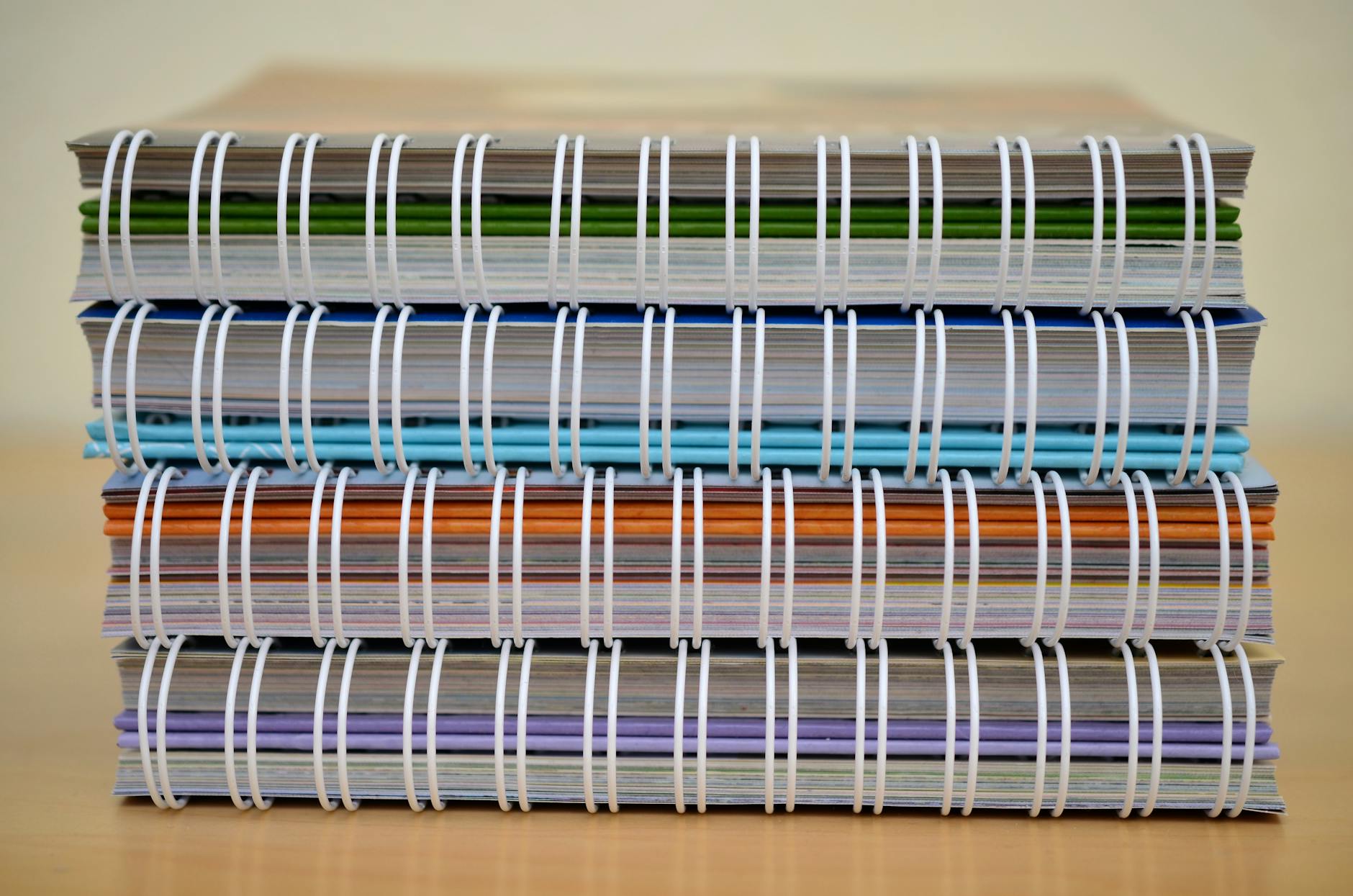
Check physical specs before buying. Spiral binding suits left-handed 7-year-olds better than standard bindings. Perforated pages allow fridge display of finished work. Avoid fonts smaller than 9pt; tiny text strains developing eyes and causes fatigue.
Keep a basket near the door for waiting rooms. They travel well without batteries. Visual discrimination practice directly correlates with better tracking when kids read transitional readers.
STEM Activity Workbooks
Brain Quest Grade 2 (320 pages, $12.95) and Star Wars Math Workbooks align with Common Core Grade 2 standards: 3-digit addition/subtraction, multiplication tables 2-5, and simple fractions. Content progresses from concrete examples to abstract problems.
Design your sessions for 15 minutes maximum to match attention spans. Stop immediately if you see tears or pencil-throwing—level down to Grade 1 if frustration appears. Target specific skill gaps like regrouping rather than using them for general entertainment.
Creative Writing Journals
My Book About Me by Dr. Seuss and Q&A a Day for Kids by Betsy Franco cost $10-14. The 8.5x11 format fits large 7-year-old handwriting from kids still developing fine motor control. These beat standard composition books at this age.
Look for scaffolding like sentence starters ("The day my dragon...") and story mountain graphic organizers. Blank journals often trigger writer's block. Find additional tools to support creative writers online to supplement these.
Use these alongside good books for 7 year olds to connect reading and writing. After reading an illustrated chapter book, have them write a similar opening sentence.
Non-Fiction Books for 7 Year Olds Who Love Facts
Seven-year-olds devour facts, but they need visual scaffolding. Look for titles with 50-70% picture support—diagrams, captions, and labels that break up text blocks. Most second graders read non-fiction one to two levels below their fiction comfort zone. If they handle Level M chapter books, stick to Level K-M for informational text.
Data shows elementary students spend 60% of reading time on fiction. Yet exposure to informational text correlates with later academic success. Aim for a 60/40 fiction-to-non-fiction ratio with your books for 7 year olds. This balance builds the background knowledge they'll need for middle school science and social studies.
Price-wise, you can stock a classroom library without breaking the bank. National Geographic Readers run $4.99, Who Was titles cost $5.99, and Magic School Bus books range $5.99-$6.99. Classroom sets for literature circles run $100-150 for 25 copies of a single title.
Teach text has explicitly. Show them how to use the table of contents, index, glossaries, and captions. These metacognitive skills transfer directly to internet research and textbook navigation in later grades.
National Geographic Readers
National Geographic Readers come in Levels 1 (PreK-K) and 2 (Grades 1-2). Each 32-page book costs $4.99 and covers high-interest topics like "Planets," "Dinosaurs," and "Weird Sea Creatures."
The series includes built-in text features:
Zoom In boxes for detailed examination
Glossaries with pronunciation guides
Parent discussion guides in the back matter
The photography helps children distinguish real from imaginary. Unlike illustrated fiction, these photos show actual animals, landscapes, and scientific phenomena. You can buy classroom sets for $100 (25 copies of one title), making them affordable books for elementary reading programs. The reading level typically runs one to two levels below fiction comfort zone.
During my second grade year, I watched a reluctant reader named Marcus spend twenty minutes studying a "Sharks" reader. He wasn't reading every word. He was reading the captions, studying the teeth diagrams, and flipping back to the glossary. That book taught him more about navigating informational text than any worksheet could.
Who Was Biography Series
Penguin Workshop's Who Was series offers 250+ biographies at Levels M-P. Each 112-page book costs $5.99 and includes Black History and Women's History sub-collections.
Each book models academic research through:
Timeline across the bottom teaching chronology
Bibliography showing sources
Further Reading sections for extension
The reading order is completely irrelevant, allowing kids to choose based on interest—sports figures, scientists, or artists. If you need easier biographies, compare these to the "Ordinary People Change the World" series for younger readers.
I use these for early chapter books during biography units. The consistent format helps struggling readers know what to expect. That predictability builds reading stamina for transitional readers who panic at thick chapter books. These make excellent reading books for 7 year olds who want real stories.
The Magic School Bus Science Books
Joanna Cole created a two-tier system. The original picture books run 40 pages at Level M, while the Scholastic Reader Chapter Books hit 80 pages at Level N. Prices range from $5.99 to $6.99.
These support NGSS standards including:
Matter and its properties
Ecosystems and interactions
Forces and motion
The format innovates through a narrative fiction wrapper. Ms. Frizzle's class goes on adventures while factual sidebars appear in dialogue balloons. Children can read just the story or dive deeper into the science facts. This flexibility accommodates different guided reading levels within the same classroom, allowing you to use the same title with both struggling and advanced readers.
With 30+ years of classroom validation, these books work for second grade reading level science integration. They're also good books for 8 year olds who need reinforcement on concepts they missed in first grade. The illustrated chapter books format bridges the gap between picture books and dense textbooks. Consider these book sets for 7 year olds when building classroom libraries.
Graphic Novels and Comic Books for 7 Year Olds
Graphic novels work for transitional readers only when the panel flow moves strictly left-to-right and top-to-bottom without confusing jumps. Limit each panel to three characters maximum to reduce visual clutter. Keep vocabulary density between twenty and thirty words per page to prevent cognitive overload while building confidence. These specifications create accessible books for 7 year olds who need visual support.
Traditional chapter books for 8 year olds differ significantly from sequential art formats in several key ways:
Words per page: Standard chapter books run seventy to one hundred words; comic books for 7 year olds use twenty to fifty.
Comprehension support: Text-only contexts versus image-text integration providing visual scaffolds.
Stamina building: Sustained prose engagement versus complex visual tracking and inference demands.
Re-read value: Lower in traditional prose; higher in comics as art reveals new narrative details each time.
Avoid graphic novels if a child uses them to mask decoding difficulties without receiving concurrent phonics remediation. They should function as a bridge to traditional formats, not a permanent replacement. When a student refuses all standard text, use comics sparingly while pushing toward early chapter books.
Pro: Motivates reluctant readers who resist dense text blocks.
Con: May become a crutch if traditional prose is abandoned completely.
Pro: Teaches complex inference through image-text integration.
Con: Limited exposure to complex syntax and varied punctuation found in standard novels.
Research confirms that reading graphic novels needs sophisticated inference skills as children synthesize visual cues with textual narrative. Multiple studies correlate their use with increased motivation in reluctant readers who avoid traditional formats. However, cap them at forty percent of the total reading diet to ensure adequate exposure to standard prose structures, complex syntax, and academic vocabulary.
Dog Man Series
Dav Pilkey's Dog Man series spans twelve books at two hundred forty pages each, but each page carries only fifty to seventy words in large, accessible font. Lexile measures run 260L-390L, placing them squarely at second grade reading level. Hardcovers cost $10.99; paperbacks run $5.99. The "flip-o-rama" pages require physical interaction, keeping hands busy during reading.
The humor targets fifth graders—expect potty jokes and misspelled signage that seven-year-olds adore but some educators dread. I used these with a reluctant second grader who had rejected every early chapter book I offered. The creation mythology adds a metafictional layer since the books claim to be written by characters within the Captain Underpants universe, which fascinates kids who know that backstory.
Narwhal and Jelly
Ben Clanton's seven-book series runs seventy pages with a gentle 3-4 panel layout per spread. Levels hit H-J on guided reading levels, priced at $7.99. Watercolor art softens the visual load compared to busy superhero comics.
The friendship between the optimistic narwhal and cynical jellyfish follows predictable text patterns. "Narwhal is..." and "Jelly is..." sentence structures support emergent readers who need linguistic repetition. Nonfiction facts labeled "Unicorn of the Sea" appear between chapters, adding content-area learning. The turn-taking dialogue structure works exceptionally well for guided reading groups because students know exactly when to switch speakers without text tags, building fluency.
Owly Series
Andy Runton's five illustrated chapter books use near-wordless storytelling across one hundred sixty pages. Pictograph speech bubbles replace written dialogue entirely. The series won a 2005 Eisner Award. Prices range $10-12 depending on format.
Black-and-white art reduces visual overwhelm while demanding strong inference skills. Readers must interpret emotion through subtle character expressions and body language rather than explicit narration. Themes of friendship, loss, and kindness align with social-emotional curriculum standards. These books for 8 year olds also suit advanced seven-year-olds ready to build reading stamina through sustained visual attention and interpretation across the full one hundred sixty pages.
How to Choose Books That Match 7 Year Old Reading Levels
Finding the right books for 7 year olds requires matching decoding skills with actual interest. I watched a 2nd grader struggle through a best book series for 8 year olds last October. She could pronounce every word in Magic Tree House book six, but when I asked what happened, she stared at me blankly. She was word-calling, not reading. You need a diagnostic approach, not just the "read the back cover" guess.
Step 1: Apply the 5-Finger Rule. Open any candidate to the exact middle. Have your student read 100 consecutive words aloud while you follow along. They hold up one finger for each word they cannot decode or do not know. Zero to one fingers means independent level—great for fluency practice, too easy for growth. Two to three fingers hits the instructional sweet spot where learning happens. Four to five fingers signals frustrational level. Put that one back, no matter how much they want the dinosaur cover.
Step 2: Check Guided Reading Level correlations. Seven-year-olds typically span Level J-N on the Fountas & Pinnell scale. Level J is early 2nd grade with simple sentences and high-frequency words. Level M marks mid-2nd grade with more complex plots. Level P sits at the end of 2nd or beginning of 3rd grade. Use this conversion chart when shopping or using library databases:
DRA: 16-28
Lexile: 400-600L
Accelerated Reader (AR) books: 2.0-3.5
Match these numbers to the inside cover or library catalog. Do not trust the grade level printed on the front; publishers market wide.
Step 3: Use the 3-Question Interest Test. Even perfect-level texts fail without engagement. Ask: Would they choose this cover at a bookstore without you prompting? Do they have background knowledge on the topic? Is the protagonist within two years of their age? For sports fans, football books for 7 year olds like Kickoff! or The Extra Yard work better than animal fantasies every time. Interest drives reading stamina more than lexile scores.
Step 4: Conduct a trial read. Have them read 20 pages independently in your classroom library corner while you observe discreetly. Watch for three red flags: finger tracking past mid-year 1st grade, visible lip movement indicating subvocalization, or raised shoulders showing physical tension. If you spot these behaviors after ten minutes, the book is too hard regardless of what the 5-Finger test showed. The body reveals what the score hides.
Step 5: Monitor comprehension separately. After the trial read, ask three specific questions: Who is the main character and what do they want? What happened first in the chapter you just read? What might happen next based on what you know? If they miss two of three answers, level down immediately. Word recognition without understanding is just pronunciation practice. Transitional readers need 90% comprehension minimum to build schema.
When you find the match, you will see it. The child settles into the chair. Pages turn without prompting. They laugh at the right spots. This is the 95-98% accuracy zone where actual reading growth happens.
Warning: Pushing children into best books for 8 year olds or early chapter books two levels above their independent reading triggers "fake reading." They turn pages, stare at text, and flip ahead without processing. Research indicates optimal growth occurs at 95-98% word recognition accuracy. At 90% accuracy, comprehension drops significantly and frustration builds. Track their actual progress with a digital book tracker and reading list templates to catch when they are faking it.
Stick to illustrated chapter books that match their second grade reading level. The right book feels hard but finishable. That is where reading for 7 year olds transforms from chore to habit.
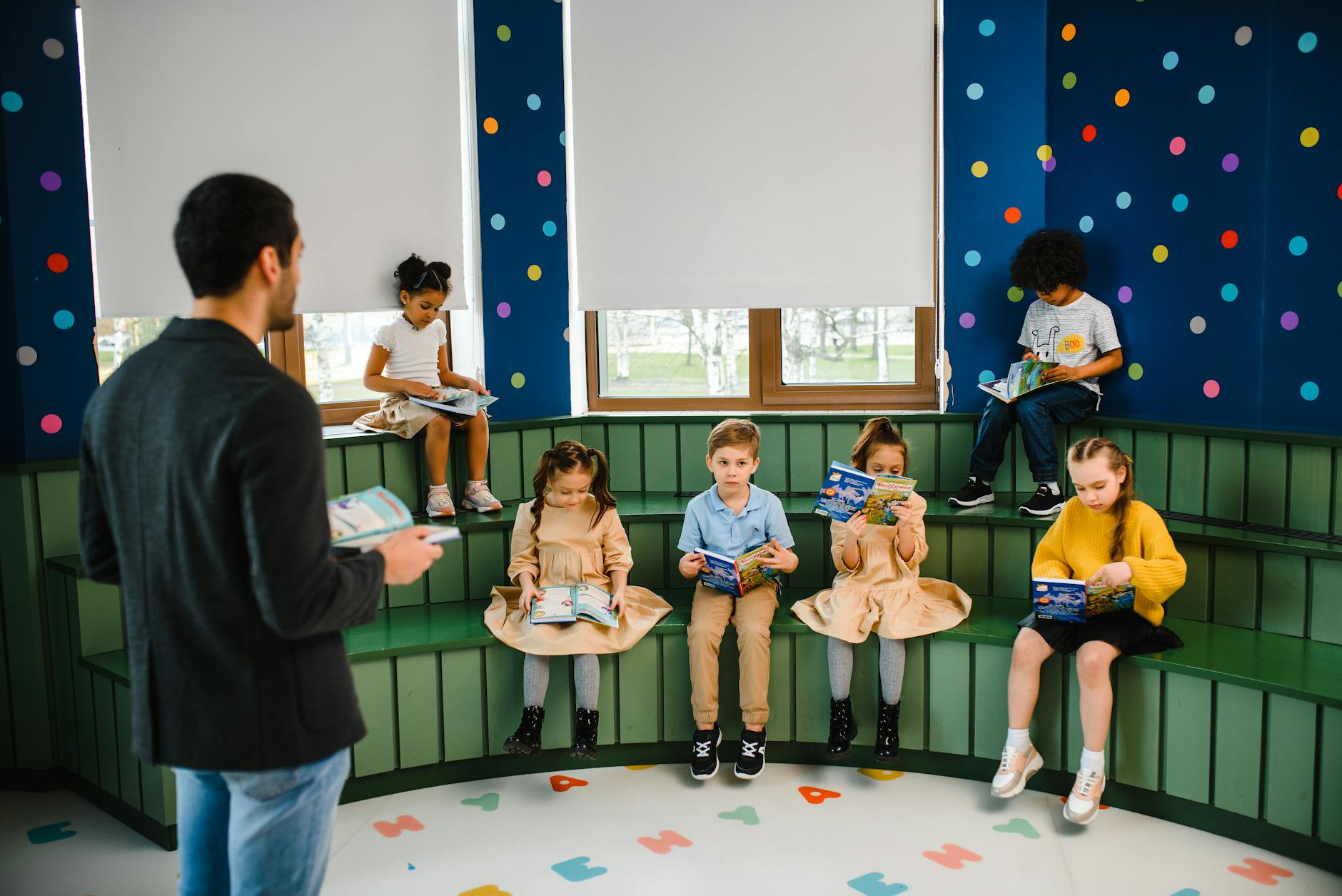
First Chapter Books for 7 Year Olds
First chapter books bridge the gap between picture books and novels. These illustrated chapter books run 60-120 pages with art every 2-3 pages. They sit at Guided Reading Levels K-N (DRA 16-28), serving as the bridge from Elephant & Piggie to full chapter books for 7 year olds.
Research indicates grade-level 7-year-olds typically handle 70-90 page books with 10-15 words per sentence. For sports-focused reluctant readers, Matt Christopher's football books (Levels M-N) work as high-interest alternatives.
Watch for three warning signs that a book is too hard:
Finger tracking every word
Frustration within five minutes
Physical tension in shoulders
Do not start with Magic Tree House if the child still decodes CVCe patterns. Start with Mercy Watson instead.
Individual paperbacks range $5.99-$6.99. Classroom sets of 25 reduce the cost to $4.50 per book. Library binding adds $3-4 per book but survives 3+ years of classroom use.
Series | Author | Guided Reading Level | Pages | Cost (Individual / Box Set) | Titles | Appeal |
|---|---|---|---|---|---|---|
Magic Tree House | Mary Pope Osborne | M-N (DRA 24-28) | 65-80 | $5.99 / $89 (28 books) | 35+ | History |
Ivy and Bean | Annie Barrows | M-O | 120-130 | $5.99 / varies | 12 | Humor |
Mercy Watson | Kate DiCamillo | K-L (DRA 16-20) | 80 | $6.99 / $35 (6 books) | 6 | Animals |
Magic Tree House Series
Mary Pope Osborne's series includes 35+ titles at Guided Reading Levels M-N (DRA 24-28). Each book runs 65-80 pages and costs $5.99 individually, or $89 for the first 28 in a box set. The historical fiction plots pair with companion Fact Trackers for non-fiction pairing.
The format uses 10 short chapters with cliffhanger endings. Jack and Annie serve as a protagonist pair that appeals across genders. Students need 80+ words correct per minute with 95% accuracy for independent reading.
I align these with social studies units. Dinosaurs Before Dark (Book #1) fits dinosaur units, The Knight at Dawn (#2) supports medieval times, and Mummies in the Morning (#3) covers ancient Egypt. Find more engaging chapter books for elementary classrooms with curriculum ties.
Ivy and Bean Series
Annie Barrows' series offers 12 titles at Levels M-O with 120-130 pages each. Individual copies cost $5.99. The 2nd-grade girl protagonists present distinct personalities: Ivy is bookish, Bean is wild. The episodic structure allows chapter-per-night reading without plot loss.
This series builds on humor, not adventure. It works for reluctant readers who resist fantasy elements. The friendship dynamics mirror 7-year-old social development. Try Ivy and Bean Break the Fossil Record for STEM connections.
Mercy Watson Series
Kate DiCamillo's series contains 6 titles at Levels K-L (DRA 16-20). Each book has 80 pages with 16-point font and full-color illustrations by Chris Van Dusen. They cost $6.99 each or $35 for the box set. The pig protagonist appeals to animal lovers and reluctant readers.
The structural advantage is 12 very short chapters of 3-4 pages each. This provides frequent accomplishment moments for transitional readers building reading stamina. These suit 7-year-olds mastering CVCe and vowel team patterns. Think of them as the step after Elephant & Piggie.
Last year, my 2nd grader Marcus refused to move past Elephant & Piggie until we tried Mercy. He finished all six books in three weeks. The visual support and white space gave him confidence to tackle longer second grade reading level texts.
What Are the Best Illustrated Books for 7 Year Olds?
The best illustrated books for 7 year olds blend rich visuals with age-appropriate vocabulary, featuring 32-64 pages with text supported by images. Top choices include Jill Tomlinson's 'The Owl Who Was Afraid of the Dark' for emotional themes, Enid Blyton's 'The Enchanted Wood' for fantasy, and Jackie French's 'Diary of a Wombat' for humor, typically priced $7-12.
Illustrated books for this age run 32-64 pages with pictures covering half the spread. They bridge the gap between picture books that transform classroom libraries and early chapter books, offering 500-1,500 words with visual safety nets.
Look for these physical markers when building your collection:
32-64 page formats with 40-60% illustration density
Word counts between 500-1,500
"I Can Read" Level 3 or 4, or "Short Chapter Book" spine labels
These specifications signal tier-two vocabulary development within your students' visual comfort zone. Individual titles run $7-9, though library borrowing works best for out-of-print classics.
Unlike picture books with 300-500 words, these feature chapter divisions and complex sentences. Unlike full chapter books, they retain heavy visual support so your readers can monitor comprehension by checking the picture when text gets tricky.
The Owl Who Was Afraid of the Dark
Jill Tomlinson's 32-page text clocks in at 1,200 words with Paul Howard's soft watercolor illustrations covering half each spread. The plot follows Plop the barn owl through seven distinct nighttime encounters—a boy, a girl, a cat, and others—each teaching him something new about darkness. At guided reading level M, it hits second grade reading level expectations while addressing fear and anxiety themes common among 7-year-olds.
I read this every October to my second graders. Your nightlight kids will lean forward when Plop meets the old lady who loves the dark for owl watching. At $8.99 paperback, it costs less than Lemony Snicket's 'The Dark' but delivers more substantial character development and repeated text structures that build confidence.
Use it as a read-aloud for your younger 7s or independent reading for your older 7s. The seven-chapter format builds reading stamina without overwhelming transitional readers who still need picture support to confirm meaning.
The Enchanted Wood
Enid Blyton's classic runs 600+ pages in modern Egmont UK editions with full-color illustrations every three pages. At guided reading levels P-Q, it suits advanced 7-year-olds ready for fantasy complexity. You'll translate British vocabulary—biscuits mean cookies, petrol means gas—but the visual context clues help your readers bridge those gaps independently.
The three-book arc (Enchanted Wood, Magic Faraway Tree, Folk of the Faraway Tree) teaches true chapter book stamina despite heavy illustration support. Characters slide up the tree to rotating magical lands like the Land of Birthdays and the Land of Take-What-You-Want.
Each volume costs $12-15. I rotate single copies through my classroom library. Buying the full set drains the budget. The illustrations occupy roughly 40% of each page spread, making this a legitimate bridge text for kids who claim they "only like books with pictures" but need to build endurance for longer stories for 7 year olds.
Diary of a Wombat
Jackie French's Australian import spans 32 pages with Bruce Whatley's detailed paintings supporting a mere 200 words. At guided reading level L, the daily log format ("Monday: Slept. Tuesday: Slept. Wednesday: Slept.") introduces calendar concepts while deriving humor from wombat-human conflict over garbage bins and front doormats.
This text excels at teaching inference. Your students must figure out what the wombat is really doing when she complains about "dust baths" or refers to dogs as "flat hairy creatures." Compare it to Doreen Cronin's 'Diary of a Worm' for similar format with simpler vocabulary, though French's word choice runs richer.
At $7.99, it undercuts most personalized storybook companies while delivering authentic Australian content—gumnuts, dust baths, and eucalyptus trees. Use it for cross-curricular science connections or as a mentor text for diary writing. The visual format supports your struggling readers while deadpan humor engages advanced kids, making it one of the most versatile illustrated chapter books in my classroom rotation.
Book Series for 7 Year Olds That Build Reading Stamina
Reading stamina means sustaining attention for 15 to 20 minutes of independent reading. For seven-year-olds, that looks like starting with 80-page texts in September and building to 120-page chapter books by May. This progression mirrors evidence-based reading instruction principles for transitional readers.
If your student reads 90+ words correct per minute with 95% accuracy, choose The Princess in Black.
At 60-80 wcpm with 90% accuracy, choose Dragon Masters.
Below 60 wcpm, select Katie Woo.
Series | Word Count | Sentence Length | Incentive | Teacher Notes |
|---|---|---|---|---|
Princess in Black | ~2,500 | 8-10 words | Collect all 10+ titles | Predictable routines reduce cognitive load |
Dragon Masters | ~3,000 | 9-11 words | Complete the 8-book arc | Fantasy hooks reluctant readers |
Katie Woo | ~1,800 | 6-8 words | 30+ diverse titles | SEL topics support morning meetings |
Individual paperbacks run $5.95 to $6.99. Ten-book classroom libraries cost $55 to $65. Series completion motivates second graders more than standalone novels because character attachment drives volume reading.
The Princess in Black Series
Shannon Hale's The Princess in Black delivers 10+ books at 90 pages each, targeting Level O-P with Lexile measures of 480L-520L. The hybrid graphic novel format mixes traditional prose with illustrations and speech bubbles on every page, making these illustrated chapter books feel accessible while building endurance.
The monster-of-the-week predictable plot structure allows readers to anticipate story beats, reducing cognitive load so they can focus on expanding vocabulary. Princess Magnolia's double identity appeals equally to fans of superheroes and princesses. Last year, a hesitant reader in my 2nd grade class plowed through five titles in three weeks. She loved that she could predict when the monster would appear, but the goat sidekick still made her laugh out loud.
Dragon Masters Series
Tracey West's Dragon Masters series, published under Scholastic's Branches imprint, offers 23+ books at 90 pages each (Level N-O). These are specifically engineered for six- to eight-year-olds transitioning to early chapter books. Individual titles cost $5.99, or you can buy four-book packs for $25.
The series arc provides a natural progression path: the first eight books tell a complete story about a stone dragon hatching, then the narrative resets with new characters. This structure gives you a 20-book pathway for the school year without overwhelming continuity demands. The core fantasy element—children speaking telepathically with dragons—hooks transitional readers who need high-interest content at the second grade reading level.
Katie Woo Series
Fran Manushkin's Katie Woo collection includes 30+ books featuring a diverse Asian-American protagonist navigating realistic school and family situations. At 80 pages and Level K-L, these titles cost $5.95 each. They serve as essential books for 7 year olds who find fantasy genres overwhelming or distracting.
The "Dealing with Feelings" sub-series explicitly targets social-emotional learning, covering jealousy, worry, and honesty through relatable scenarios. Each book follows a strict four-chapter structure of roughly 20 pages, presenting a clear problem-solution arc that mirrors the comprehension strategies taught in guided reading levels K-L. This grounded approach builds stamina for later reading books for 8 year olds and book series for 8 year olds that demand longer attention spans without magical elements to carry the plot.
Are Activity Books Good for 7 Year Olds?
Yes, activity books benefit 7 year olds when selected for appropriate difficulty and limited to 20-30 minute sessions. Quality options include Highlights Hidden Pictures for visual discrimination, Brain Quest Grade 2 workbooks for math skills, and creative writing journals with sentence starters. Avoid over-reliance on workbooks; they should supplement, not replace, actual reading time.
Activity books work best as side dishes, not the main course. Use them to build specific skills between actual reading sessions.
Activity books for 7 year olds strengthen fine motor control and reinforce second-grade academic skills when you cap sessions at 20-30 minutes. Match the difficulty to your child's instructional level—not their frustration level. Watch for warning signs: tears, rushing through pages, or choosing workbooks exclusively over stories. These signal you need to pull back or switch formats immediately.
Alignment with Common Core Grade 2 standards
Perforated pages for fridge display of finished work
Answer key included for self-checking independence
Progression from concrete to abstract concepts
Space for creativity beyond rote fill-in-the-blank answers
Single-use workbooks run $8-15 and end up recycled after one use. Reusable whiteboard-style activities cost more upfront but survive multiple children or repeated practice. Keep the ratio at 70/30: seventy percent actual reading time, thirty percent activity books. This prevents the busy work overload that kills enthusiasm for real learning.
Over-reliance on workbooks for "quiet time" can hide reading difficulties. If your child grabs a math workbook but resists chapter books consistently, investigate possible reading anxiety. I once had a 2nd grader who begged for mazes daily; turns out he couldn't decode early chapter books and was avoiding embarrassment. We switched to illustrated chapter books at his level, and the anxiety disappeared.
Interactive Puzzle Books
Highlights Hidden Pictures 2024 and Usborne Puzzle Journey series offer 64-96 pages for $6.99-9.99. These build visual discrimination that supports reading tracking abilities. Choose word searches using only 2nd grade Dolch sight words, not advanced vocabulary.
Check physical specs before buying. Spiral binding suits left-handed 7-year-olds better than standard bindings. Perforated pages allow fridge display of finished work. Avoid fonts smaller than 9pt; tiny text strains developing eyes and causes fatigue.
Keep a basket near the door for waiting rooms. They travel well without batteries. Visual discrimination practice directly correlates with better tracking when kids read transitional readers.
STEM Activity Workbooks
Brain Quest Grade 2 (320 pages, $12.95) and Star Wars Math Workbooks align with Common Core Grade 2 standards: 3-digit addition/subtraction, multiplication tables 2-5, and simple fractions. Content progresses from concrete examples to abstract problems.
Design your sessions for 15 minutes maximum to match attention spans. Stop immediately if you see tears or pencil-throwing—level down to Grade 1 if frustration appears. Target specific skill gaps like regrouping rather than using them for general entertainment.
Creative Writing Journals
My Book About Me by Dr. Seuss and Q&A a Day for Kids by Betsy Franco cost $10-14. The 8.5x11 format fits large 7-year-old handwriting from kids still developing fine motor control. These beat standard composition books at this age.
Look for scaffolding like sentence starters ("The day my dragon...") and story mountain graphic organizers. Blank journals often trigger writer's block. Find additional tools to support creative writers online to supplement these.
Use these alongside good books for 7 year olds to connect reading and writing. After reading an illustrated chapter book, have them write a similar opening sentence.
Non-Fiction Books for 7 Year Olds Who Love Facts
Seven-year-olds devour facts, but they need visual scaffolding. Look for titles with 50-70% picture support—diagrams, captions, and labels that break up text blocks. Most second graders read non-fiction one to two levels below their fiction comfort zone. If they handle Level M chapter books, stick to Level K-M for informational text.
Data shows elementary students spend 60% of reading time on fiction. Yet exposure to informational text correlates with later academic success. Aim for a 60/40 fiction-to-non-fiction ratio with your books for 7 year olds. This balance builds the background knowledge they'll need for middle school science and social studies.
Price-wise, you can stock a classroom library without breaking the bank. National Geographic Readers run $4.99, Who Was titles cost $5.99, and Magic School Bus books range $5.99-$6.99. Classroom sets for literature circles run $100-150 for 25 copies of a single title.
Teach text has explicitly. Show them how to use the table of contents, index, glossaries, and captions. These metacognitive skills transfer directly to internet research and textbook navigation in later grades.
National Geographic Readers
National Geographic Readers come in Levels 1 (PreK-K) and 2 (Grades 1-2). Each 32-page book costs $4.99 and covers high-interest topics like "Planets," "Dinosaurs," and "Weird Sea Creatures."
The series includes built-in text features:
Zoom In boxes for detailed examination
Glossaries with pronunciation guides
Parent discussion guides in the back matter
The photography helps children distinguish real from imaginary. Unlike illustrated fiction, these photos show actual animals, landscapes, and scientific phenomena. You can buy classroom sets for $100 (25 copies of one title), making them affordable books for elementary reading programs. The reading level typically runs one to two levels below fiction comfort zone.
During my second grade year, I watched a reluctant reader named Marcus spend twenty minutes studying a "Sharks" reader. He wasn't reading every word. He was reading the captions, studying the teeth diagrams, and flipping back to the glossary. That book taught him more about navigating informational text than any worksheet could.
Who Was Biography Series
Penguin Workshop's Who Was series offers 250+ biographies at Levels M-P. Each 112-page book costs $5.99 and includes Black History and Women's History sub-collections.
Each book models academic research through:
Timeline across the bottom teaching chronology
Bibliography showing sources
Further Reading sections for extension
The reading order is completely irrelevant, allowing kids to choose based on interest—sports figures, scientists, or artists. If you need easier biographies, compare these to the "Ordinary People Change the World" series for younger readers.
I use these for early chapter books during biography units. The consistent format helps struggling readers know what to expect. That predictability builds reading stamina for transitional readers who panic at thick chapter books. These make excellent reading books for 7 year olds who want real stories.
The Magic School Bus Science Books
Joanna Cole created a two-tier system. The original picture books run 40 pages at Level M, while the Scholastic Reader Chapter Books hit 80 pages at Level N. Prices range from $5.99 to $6.99.
These support NGSS standards including:
Matter and its properties
Ecosystems and interactions
Forces and motion
The format innovates through a narrative fiction wrapper. Ms. Frizzle's class goes on adventures while factual sidebars appear in dialogue balloons. Children can read just the story or dive deeper into the science facts. This flexibility accommodates different guided reading levels within the same classroom, allowing you to use the same title with both struggling and advanced readers.
With 30+ years of classroom validation, these books work for second grade reading level science integration. They're also good books for 8 year olds who need reinforcement on concepts they missed in first grade. The illustrated chapter books format bridges the gap between picture books and dense textbooks. Consider these book sets for 7 year olds when building classroom libraries.
Graphic Novels and Comic Books for 7 Year Olds
Graphic novels work for transitional readers only when the panel flow moves strictly left-to-right and top-to-bottom without confusing jumps. Limit each panel to three characters maximum to reduce visual clutter. Keep vocabulary density between twenty and thirty words per page to prevent cognitive overload while building confidence. These specifications create accessible books for 7 year olds who need visual support.
Traditional chapter books for 8 year olds differ significantly from sequential art formats in several key ways:
Words per page: Standard chapter books run seventy to one hundred words; comic books for 7 year olds use twenty to fifty.
Comprehension support: Text-only contexts versus image-text integration providing visual scaffolds.
Stamina building: Sustained prose engagement versus complex visual tracking and inference demands.
Re-read value: Lower in traditional prose; higher in comics as art reveals new narrative details each time.
Avoid graphic novels if a child uses them to mask decoding difficulties without receiving concurrent phonics remediation. They should function as a bridge to traditional formats, not a permanent replacement. When a student refuses all standard text, use comics sparingly while pushing toward early chapter books.
Pro: Motivates reluctant readers who resist dense text blocks.
Con: May become a crutch if traditional prose is abandoned completely.
Pro: Teaches complex inference through image-text integration.
Con: Limited exposure to complex syntax and varied punctuation found in standard novels.
Research confirms that reading graphic novels needs sophisticated inference skills as children synthesize visual cues with textual narrative. Multiple studies correlate their use with increased motivation in reluctant readers who avoid traditional formats. However, cap them at forty percent of the total reading diet to ensure adequate exposure to standard prose structures, complex syntax, and academic vocabulary.
Dog Man Series
Dav Pilkey's Dog Man series spans twelve books at two hundred forty pages each, but each page carries only fifty to seventy words in large, accessible font. Lexile measures run 260L-390L, placing them squarely at second grade reading level. Hardcovers cost $10.99; paperbacks run $5.99. The "flip-o-rama" pages require physical interaction, keeping hands busy during reading.
The humor targets fifth graders—expect potty jokes and misspelled signage that seven-year-olds adore but some educators dread. I used these with a reluctant second grader who had rejected every early chapter book I offered. The creation mythology adds a metafictional layer since the books claim to be written by characters within the Captain Underpants universe, which fascinates kids who know that backstory.
Narwhal and Jelly
Ben Clanton's seven-book series runs seventy pages with a gentle 3-4 panel layout per spread. Levels hit H-J on guided reading levels, priced at $7.99. Watercolor art softens the visual load compared to busy superhero comics.
The friendship between the optimistic narwhal and cynical jellyfish follows predictable text patterns. "Narwhal is..." and "Jelly is..." sentence structures support emergent readers who need linguistic repetition. Nonfiction facts labeled "Unicorn of the Sea" appear between chapters, adding content-area learning. The turn-taking dialogue structure works exceptionally well for guided reading groups because students know exactly when to switch speakers without text tags, building fluency.
Owly Series
Andy Runton's five illustrated chapter books use near-wordless storytelling across one hundred sixty pages. Pictograph speech bubbles replace written dialogue entirely. The series won a 2005 Eisner Award. Prices range $10-12 depending on format.
Black-and-white art reduces visual overwhelm while demanding strong inference skills. Readers must interpret emotion through subtle character expressions and body language rather than explicit narration. Themes of friendship, loss, and kindness align with social-emotional curriculum standards. These books for 8 year olds also suit advanced seven-year-olds ready to build reading stamina through sustained visual attention and interpretation across the full one hundred sixty pages.
How to Choose Books That Match 7 Year Old Reading Levels
Finding the right books for 7 year olds requires matching decoding skills with actual interest. I watched a 2nd grader struggle through a best book series for 8 year olds last October. She could pronounce every word in Magic Tree House book six, but when I asked what happened, she stared at me blankly. She was word-calling, not reading. You need a diagnostic approach, not just the "read the back cover" guess.
Step 1: Apply the 5-Finger Rule. Open any candidate to the exact middle. Have your student read 100 consecutive words aloud while you follow along. They hold up one finger for each word they cannot decode or do not know. Zero to one fingers means independent level—great for fluency practice, too easy for growth. Two to three fingers hits the instructional sweet spot where learning happens. Four to five fingers signals frustrational level. Put that one back, no matter how much they want the dinosaur cover.
Step 2: Check Guided Reading Level correlations. Seven-year-olds typically span Level J-N on the Fountas & Pinnell scale. Level J is early 2nd grade with simple sentences and high-frequency words. Level M marks mid-2nd grade with more complex plots. Level P sits at the end of 2nd or beginning of 3rd grade. Use this conversion chart when shopping or using library databases:
DRA: 16-28
Lexile: 400-600L
Accelerated Reader (AR) books: 2.0-3.5
Match these numbers to the inside cover or library catalog. Do not trust the grade level printed on the front; publishers market wide.
Step 3: Use the 3-Question Interest Test. Even perfect-level texts fail without engagement. Ask: Would they choose this cover at a bookstore without you prompting? Do they have background knowledge on the topic? Is the protagonist within two years of their age? For sports fans, football books for 7 year olds like Kickoff! or The Extra Yard work better than animal fantasies every time. Interest drives reading stamina more than lexile scores.
Step 4: Conduct a trial read. Have them read 20 pages independently in your classroom library corner while you observe discreetly. Watch for three red flags: finger tracking past mid-year 1st grade, visible lip movement indicating subvocalization, or raised shoulders showing physical tension. If you spot these behaviors after ten minutes, the book is too hard regardless of what the 5-Finger test showed. The body reveals what the score hides.
Step 5: Monitor comprehension separately. After the trial read, ask three specific questions: Who is the main character and what do they want? What happened first in the chapter you just read? What might happen next based on what you know? If they miss two of three answers, level down immediately. Word recognition without understanding is just pronunciation practice. Transitional readers need 90% comprehension minimum to build schema.
When you find the match, you will see it. The child settles into the chair. Pages turn without prompting. They laugh at the right spots. This is the 95-98% accuracy zone where actual reading growth happens.
Warning: Pushing children into best books for 8 year olds or early chapter books two levels above their independent reading triggers "fake reading." They turn pages, stare at text, and flip ahead without processing. Research indicates optimal growth occurs at 95-98% word recognition accuracy. At 90% accuracy, comprehension drops significantly and frustration builds. Track their actual progress with a digital book tracker and reading list templates to catch when they are faking it.
Stick to illustrated chapter books that match their second grade reading level. The right book feels hard but finishable. That is where reading for 7 year olds transforms from chore to habit.
Still grading everything by hand?
EMStudio is a free teaching management app — manage your classes, students, lessons, and more!
Learn More
Still grading everything by hand?
EMStudio is a free teaching management app — manage your classes, students, lessons, and more!
Learn More



Notion4Teachers
Notion templates to simplify administrative tasks and enhance your teaching experience.



2026 Notion4Teachers. All Rights Reserved.
Notion4Teachers
Notion templates to simplify administrative tasks and enhance your teaching experience.
2026 Notion4Teachers. All Rights Reserved.
Notion4Teachers
Notion templates to simplify administrative tasks and enhance your teaching experience.
2026 Notion4Teachers. All Rights Reserved.