
The Best Math Apps for Kids: A Teacher's 2026 Shortlist for Home Practice
The Best Math Apps for Kids: A Teacher's 2026 Shortlist for Home Practice

Article by
Milo
ESL Content Coordinator & Educator
ESL Content Coordinator & Educator
All Posts
Every teacher hits the same question at conferences. "What app should my child use for math at home?" You want a real answer, not a shrug. So I keep a short, tested list of the best math apps for kids that reinforce what happens in class, hold attention past week one, and give parents something to point at.
This is that list. Eleven math apps for kids, ranked, with honest notes on age range, price, and fit. Some are free. All treat math practice as something a child can do mostly alone, which is the point with a full class.
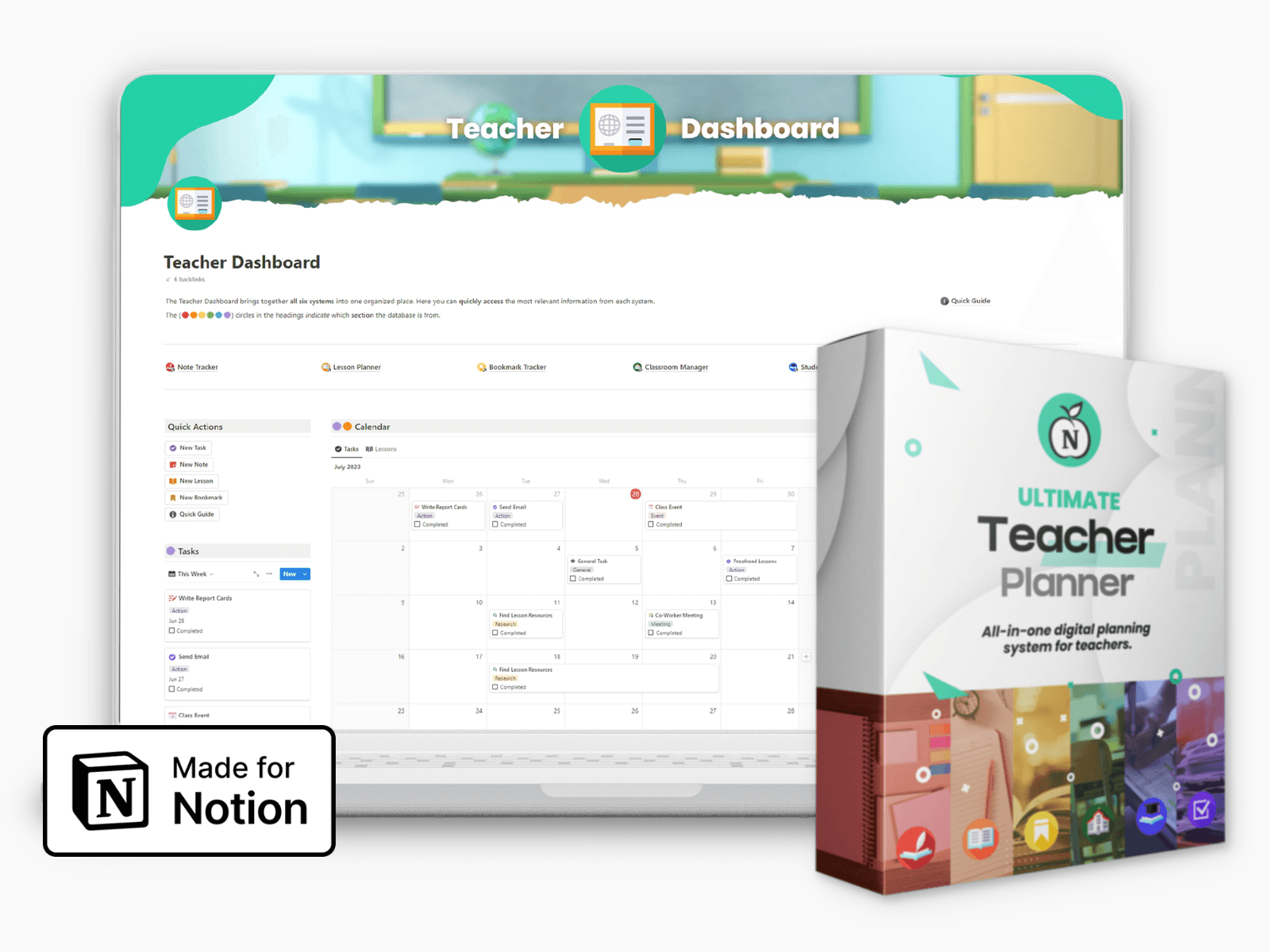
Ultimate Teacher Planner
The ultimate all-in-one education management system in Notion.
Learn More
Ultimate Teacher Planner
The ultimate all-in-one education management system in Notion.
Learn More
Table of Contents
What the best math apps for kids get right
Before anything lands here, it clears a few bars. Does it build basic math skills through practice rather than passive watching? A child learns arithmetic by doing math problems, not by watching someone else solve them. Does it adjust to skill level so struggling and confident kids both use it? Does it give immediate feedback, so a wrong answer becomes a teaching moment instead of a mystery?
Two more things matter for classroom-adjacent use. Good math learning apps show progress so parents can follow along, and they make the work feel like play. That last part is not fluff. Apps that use motivation based learning techniques, like coins and unlockables, get opened every day instead of once. For elementary students, that daily habit is what turns scattered effort into real math learning and stronger problem solving.
Where math apps fit into math instruction
No app replaces math instruction. Your explanation, your questioning, your read on which child is lost, that is the core of teaching math. What the best math apps do is handle the repetition. They turn math drills into something a child will repeat, which frees class time for the conceptual understanding that needs a human.
Think of these tools as the practice layer. You teach the concepts. The app runs the reps at home. Used that way, math apps for kids extend your reach into the hours you are not there, and they give you a window into student progress no paper worksheet offers.
The 11 best math apps for kids, ranked
1. MathHero: story-driven practice kids ask to do
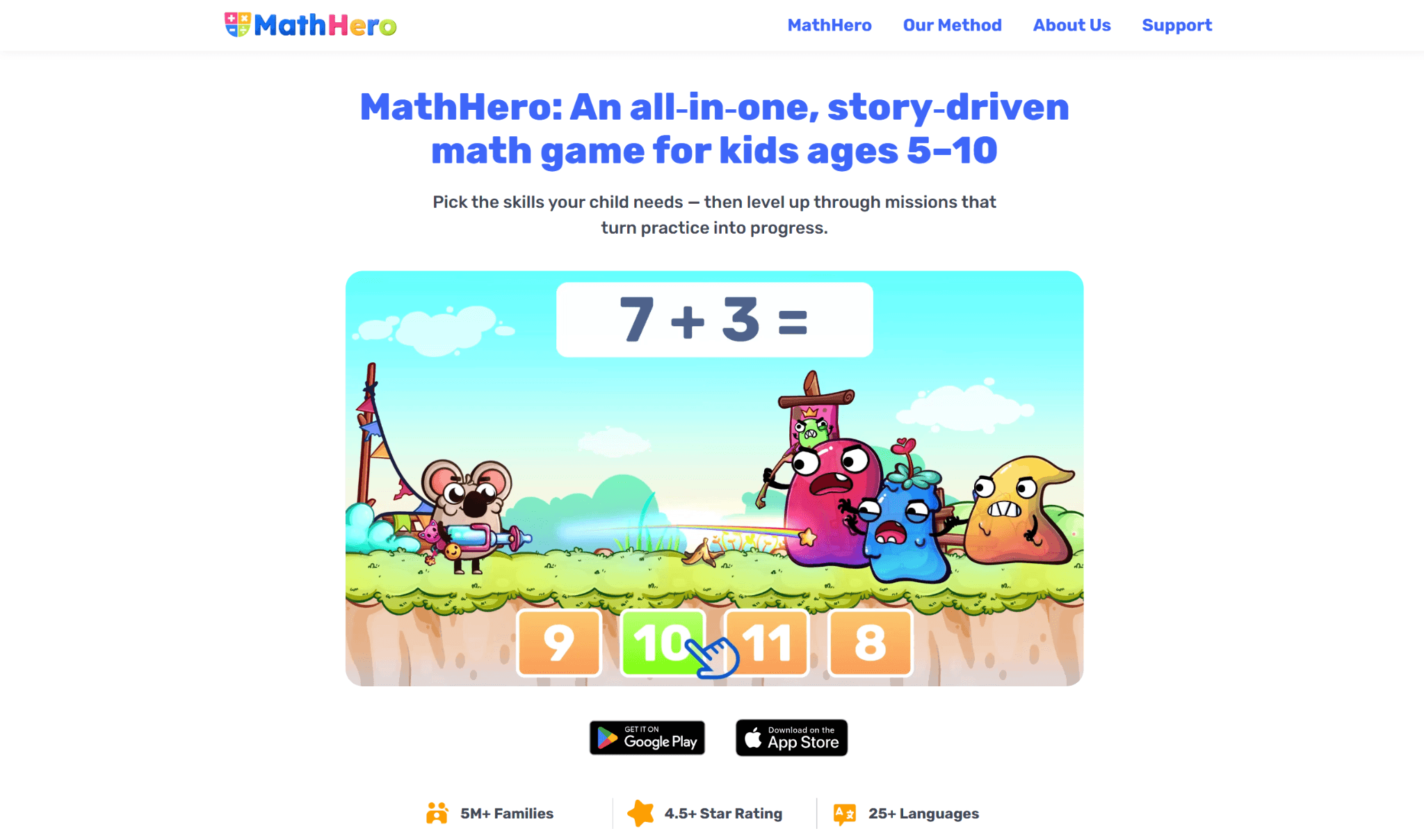
MathHero is built for kids ages 5 to 10, which lines up with kindergarten through grade 4. It covers the core mental-math curriculum across math topics: addition and subtraction within 10, 20, 100, and 1000, times tables, and division. There is no counting or number recognition from scratch, so it assumes a child already knows their numbers and starts from first addition.
Here is what makes it worth recommending. You, or the parent, choose the major math topic and difficulty, and the child plays a story-driven adventure where solving short sets of math facts is how you build, race, and rescue characters. Math is the action, not a gate between cartoons. The line parents repeat most is "he doesn't notice he's learning," and many describe a kid who hated math asking to play by day two. Kids call it so much fun they forget it counts.
The customization is what other apps miss. You get selectable math operations down to individual times tables, so a child stuck on their sevens and nines drills exactly those. Monster speed, typed versus multiple-choice input, and separate profiles let siblings share one game. It is free at a pace of 5 levels a day, and the whole game is completable without paying, no locked content and no ads. A subscription with a free trial removes the daily limit. For a family that wants independent learning, it is hard to beat.
2. Khan Academy Kids: the free math app for ages 2 to 8
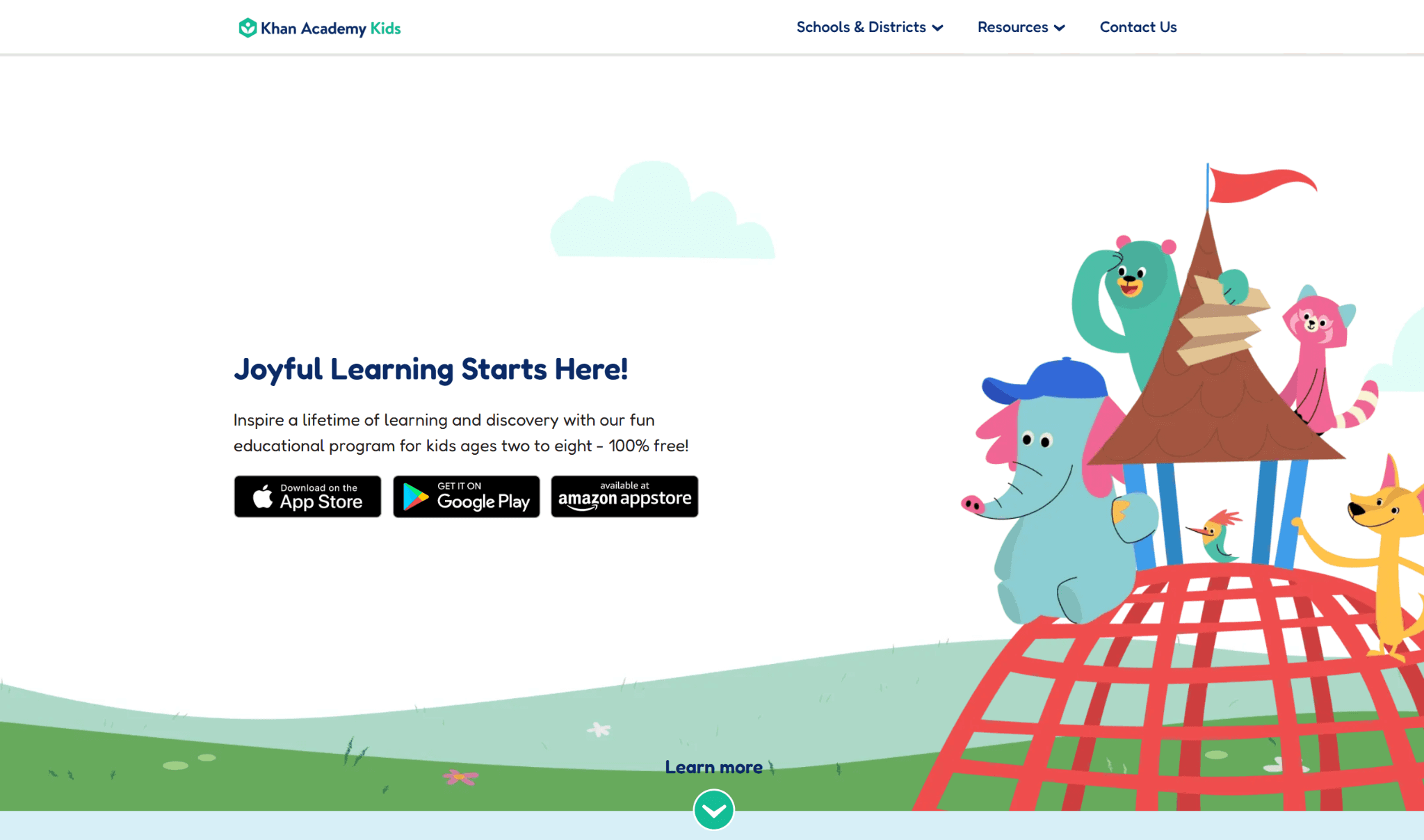
Khan Academy Kids is the free option I recommend most for the youngest learners, because it is genuinely free with no in app purchases and no ads. Designed for ages 2 to 8, it offers personalized learning paths that adjust as a child works. It also folds in reading and social-emotional lessons, a pure math practice tool it is not.
It leans on short instructional videos and friendly characters to carry young kids through early math concepts. Khan Academy offers personalized learning resources for older ages too, with instructional math videos many teachers already use. For one no-cost starting point for a preschooler, this is usually it.
3. SplashLearn: curriculum aligned games for Pre-K to Grade 5
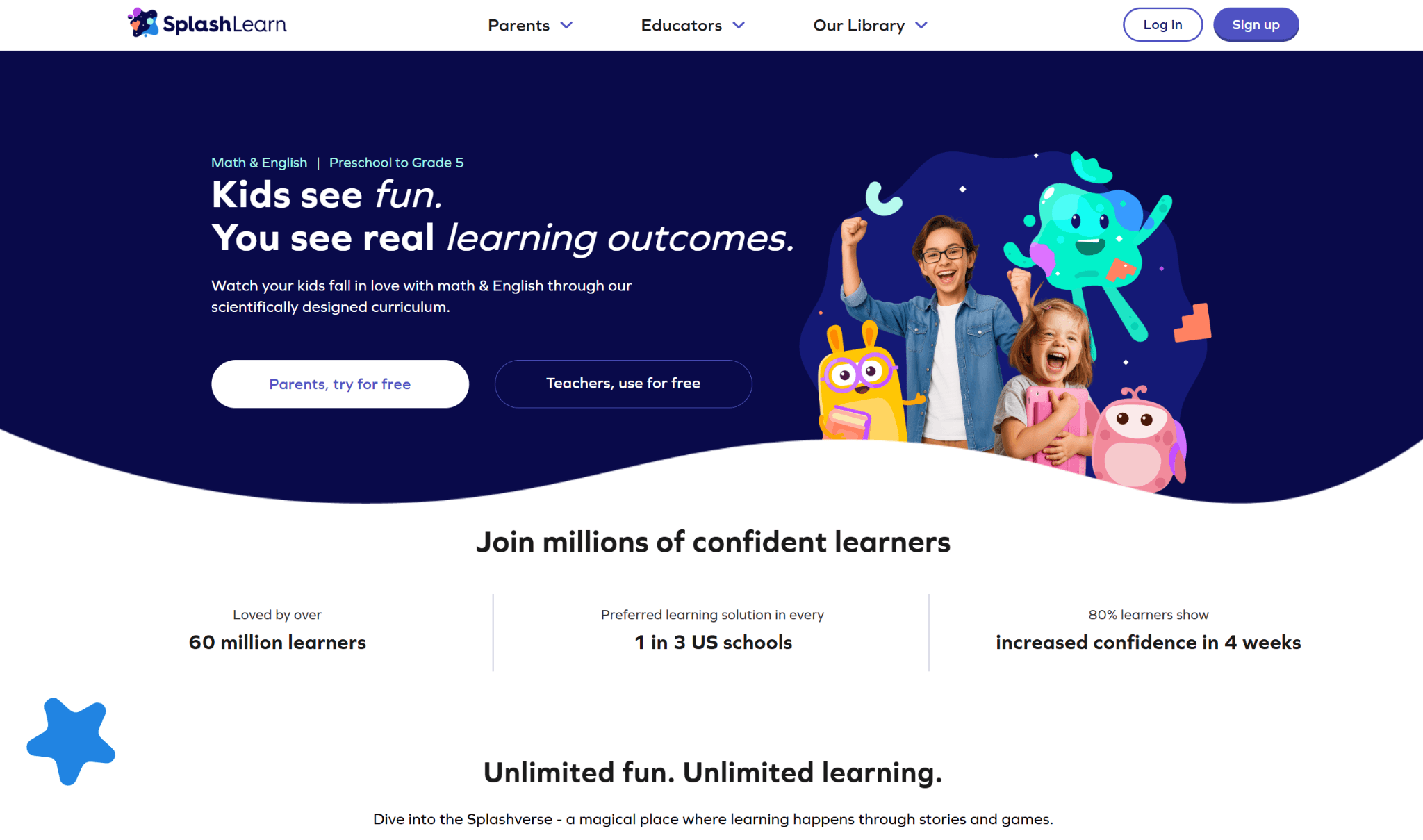
SplashLearn, once known as Splash Math, targets Pre-K through Grade 5 and is heavily curriculum aligned, which teachers like because it maps to what you already cover. Splash Math includes over 4,400 games and worksheets for early learners, spanning basic arithmetic through early fractions.
The interactive games use bright visual models and virtual manipulatives to make abstract math concepts concrete. There is a free tier, with a paid plan for the full library. Those visual models suit kids who need to see a concept first.
4. Prodigy Math: a fantasy based math game for wider ranges
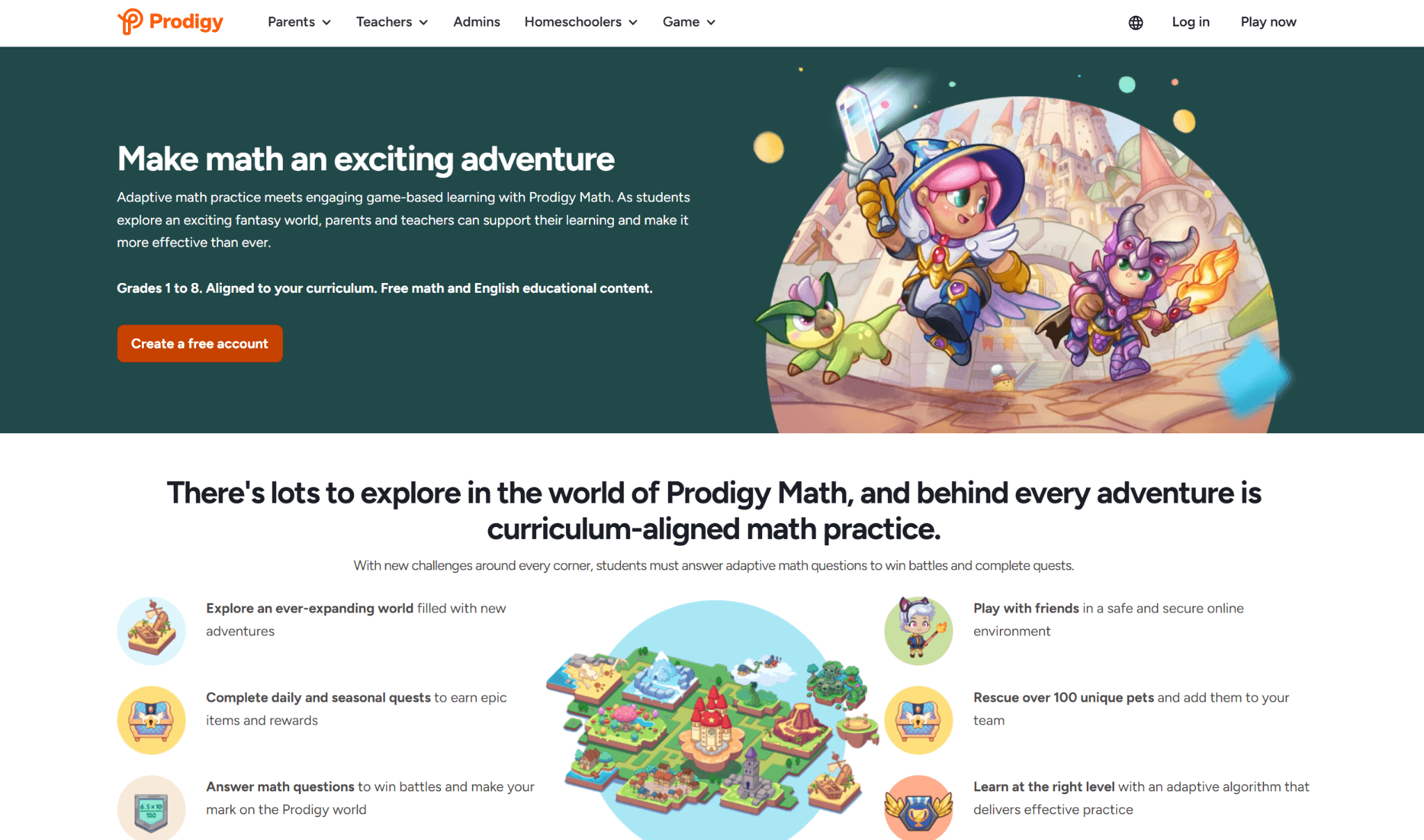
Prodigy Math is a fantasy game where students complete battles by answering math problems, covering over 1,500 skills from 1st to 8th grade. That range reaches past elementary school to middle school students who still want a game wrapper.
It uses adaptive learning to match question difficulty to each child's skill level, and offers a parent connect app so families follow student progress. The core game is free, with a premium membership from $9.95 per month. The reward loop leans on collecting and questing, which hooks some kids more than others.
5. Elephant Learning: accelerated math mastery
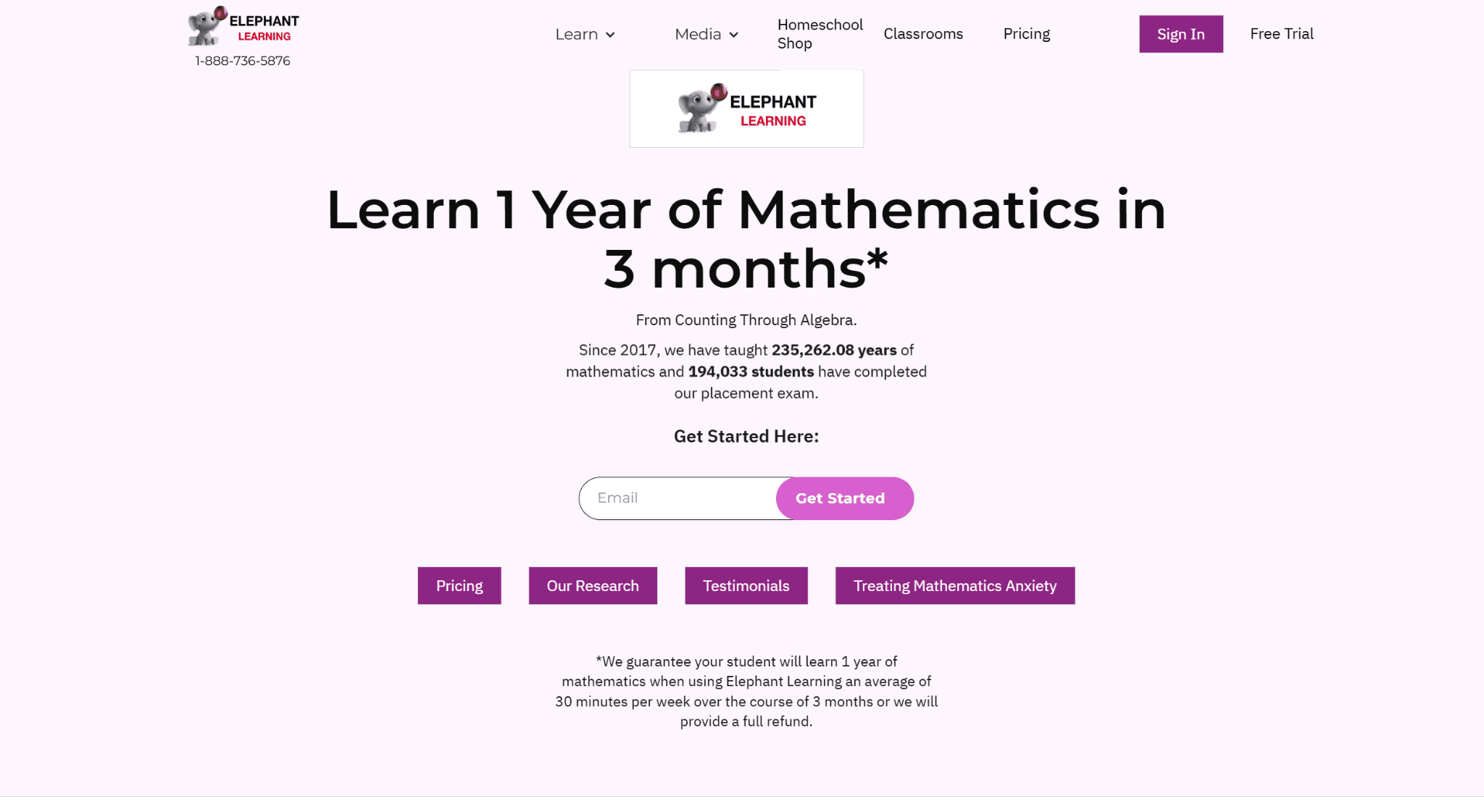
Elephant Learning promises speed. The company claims children learn a year's worth of math in three months, built around a system of personalized instruction aimed at math mastery. It targets ages 2 to 16, stretching toward middle school and up.
It is one of the pricier options at $35 per month, and lighter on game-style fun than the adventure apps. For a parent focused on measurable progress improvement over entertainment, the structured approach appeals.
6. Monster Math 2: adventure meets arithmetic
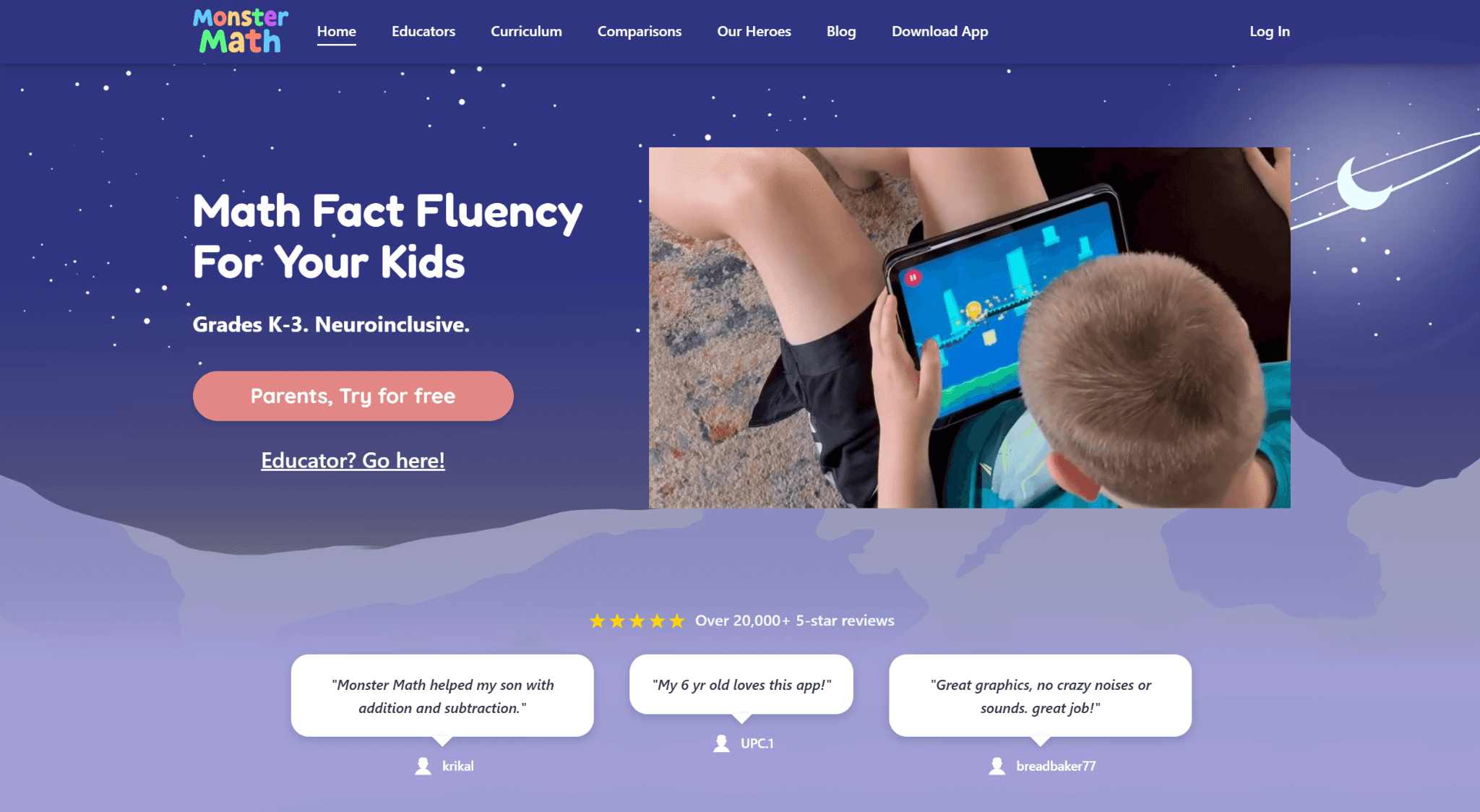
Monster Math 2 combines adventure gameplay with arithmetic practice, sending kids through levels where math facts power the action. Monster Math covers addition, subtraction, multiplication, and division, with difficulty that scales to a child's grade level.
It is one of the more fun math games here. There is a free version, plus a subscription for multiple children and reports. A solid choice for building fluency that does not feel like traditional flashcards.
7. DragonBox: basic algebra and geometry through puzzles
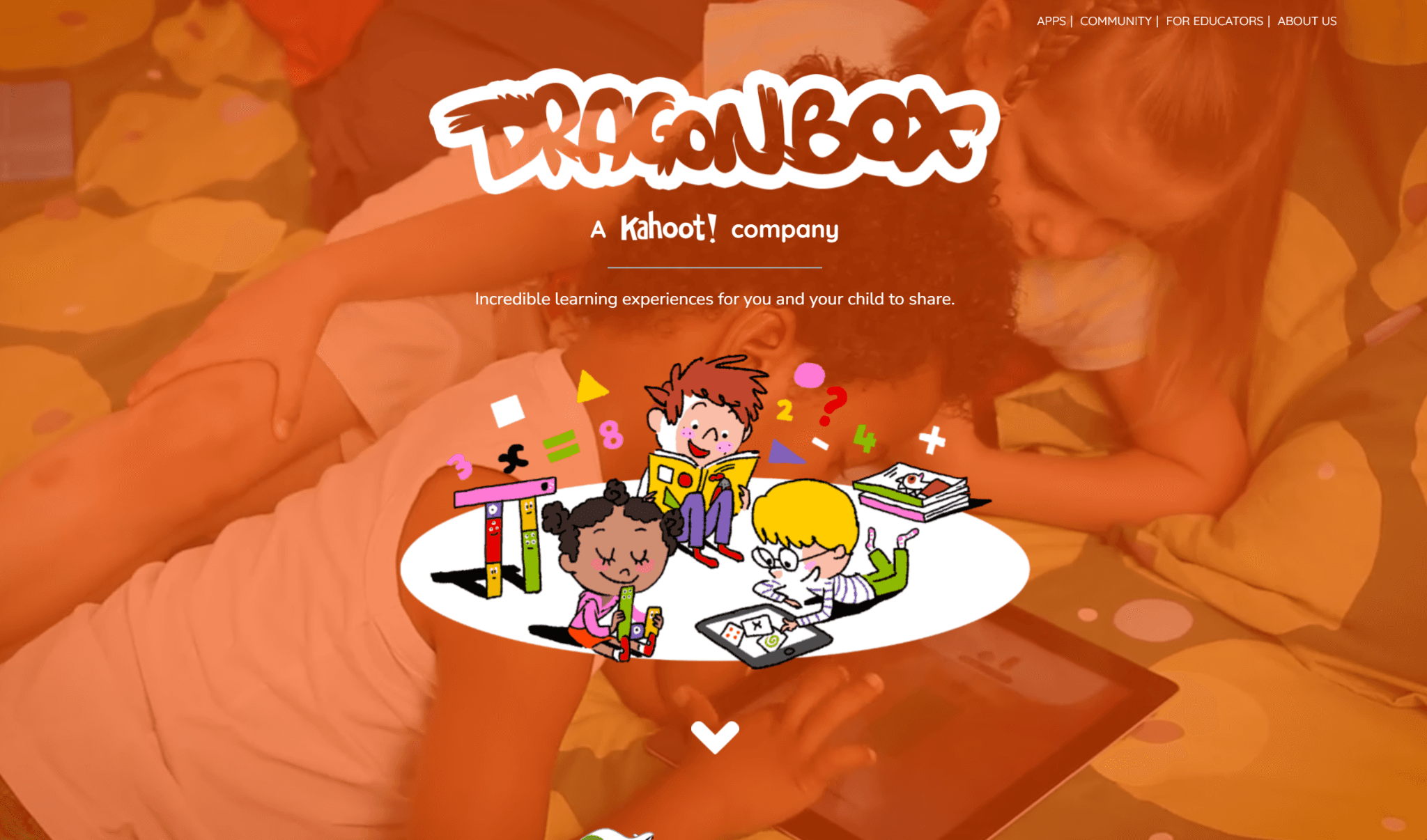
DragonBox proves apps can teach more than arithmetic. It teaches basic algebra and geometry through puzzles, sneaking real logical thinking into what looks like a game. Kids solve for a variable long before they know that is what they are doing, which quietly builds problem solving skills.
The titles are paid, usually a one-time purchase per app. For a bright kid ready for creative problem solving beyond arithmetic, it is clever.
8. Marble Math Junior: early math with a hands-on twist
Marble Math Junior teaches early math concepts by rolling a marble through a maze to collect numbers and solve problems. The tilt-and-collect mechanic builds number sense and basic math concepts for younger kids, roughly ages 5 to 8.
It is a low-cost paid app with no ads, which parents like. The movement suits kids who learn by doing. Verify the exact age range on the store page before recommending it, since the junior edition targets the younger end.
9. Moose Math: mini-games for young learners
Moose Math engages preschoolers with colorful mini-games in a friendly town, covering counting, addition, subtraction, sorting, and shapes. It is free and aimed squarely at young learners in the pre-K to kindergarten window.
Kids run a smoothie shop and build a city while practicing. Moose Math will not carry a child past kindergarten, but for a first exposure to math activities on a screen, it costs nothing.
10. IXL: diagnostic-driven practice from pre-K to 12th
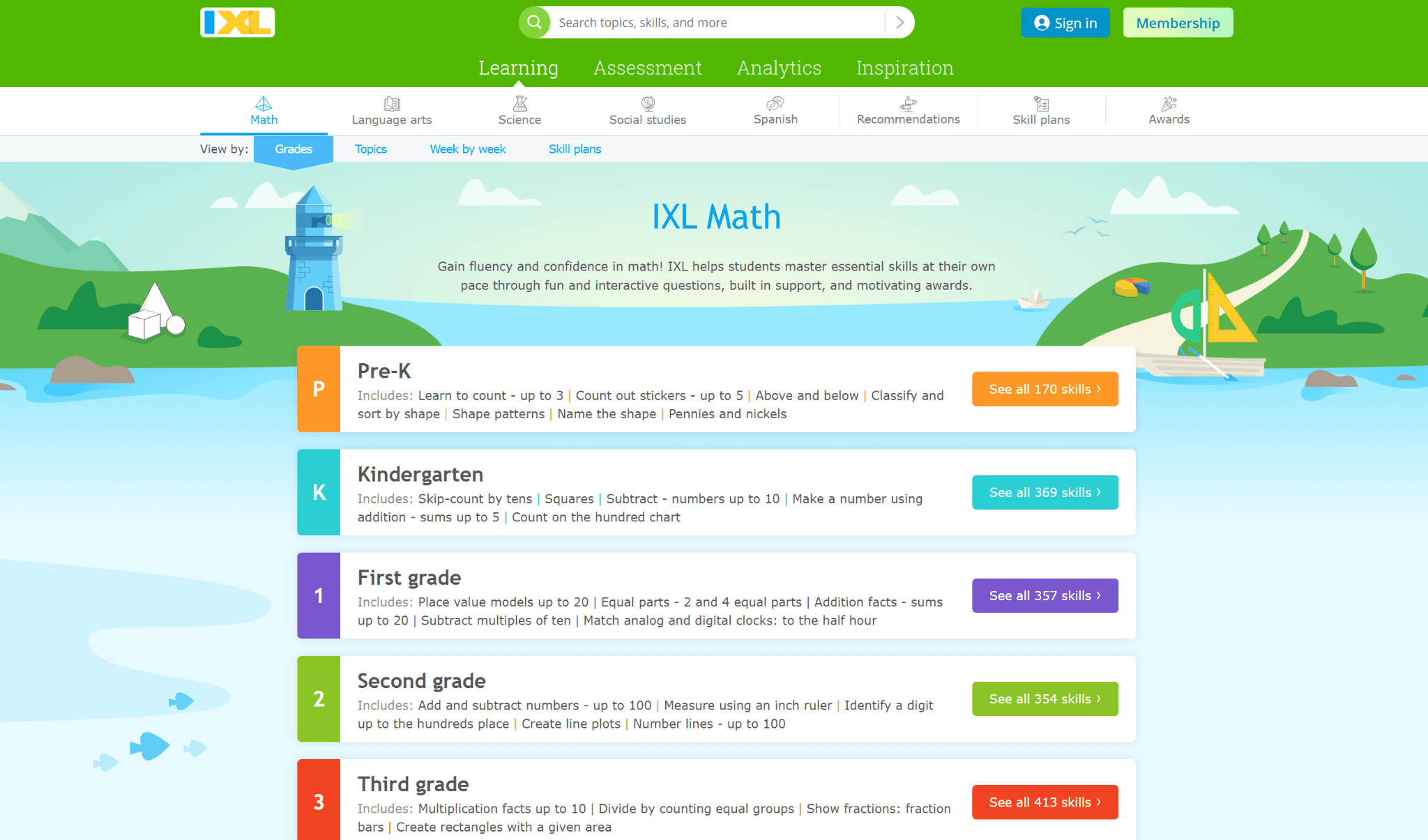
IXL provides math exercises for students from pre-K to 12th grade, with personalized skill recommendations from a built-in diagnostic. That breadth reaches high school students, so it is a long-haul tool covering basic arithmetic to basic algebra.
IXL is comprehensive but drill-forward, closer to a smart worksheet than a game. Subscriptions run $9.95 to $19.95 per month. For self paced learning with real curriculum depth, few apps match its coverage.
11. DoodleMath: personalized practice tuned to strengths and gaps
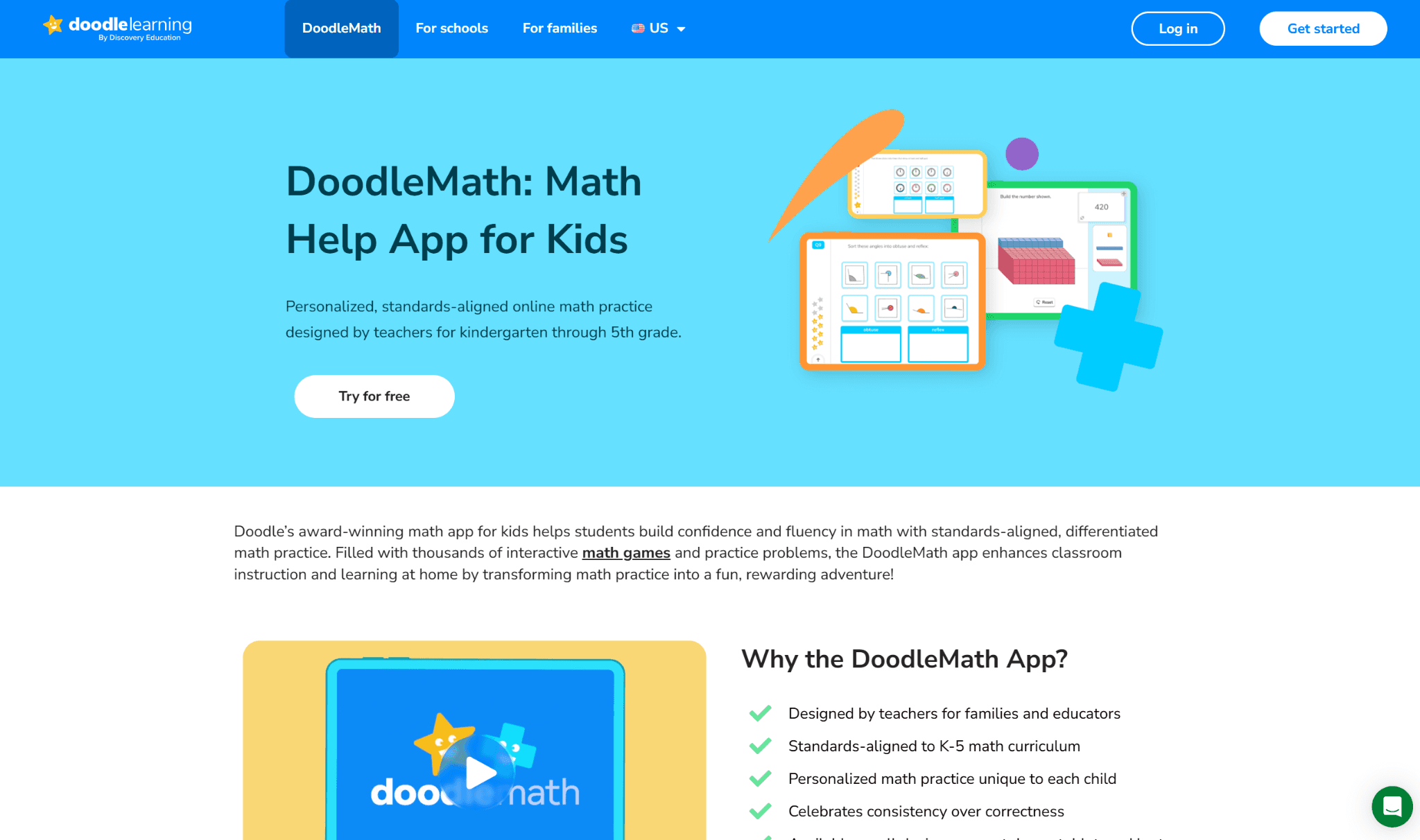
DoodleMath tailors math content based on each student's strengths and weaknesses, using adaptive learning to adjust the daily set so a child works at their own pace. Short daily practice exercises are the model, a few minutes a day rather than long sessions.
It runs about £7.99 per month or £69.99 per year, built to fit a routine. For a parent who wants a light, consistent habit that targets gaps, it fits well.
How much do these apps for kids cost?
Price ranges more than parents expect. Several apps for kids are free at a useful level: Khan Academy Kids and Moose Math cost nothing, and MathHero completes free at 5 levels a day. Others sit in the ten-dollar range, like Prodigy Math at $9.95 and IXL from $9.95 to $19.95. A few climb higher, with Elephant Learning at $35 per month and Buzzmath at $20 per month or $120 per year.
Honest advice: a free app is plenty for a young child who needs regular practice, and free apps can provide great value before you pay. Upgrade only when a kid outgrows the free tier or you want the reports.
Building math fluency without the drill fatigue
Math fluency comes from short, frequent practice, not marathon sessions. Five to fifteen minutes a day beats an hour on Sunday. The best math apps for kids build that rhythm in, capping daily play or nudging a quick session rather than letting a kid binge and burn out.
That is why the daily limit on some free tiers is not the flaw it looks like. A cap of five levels a day is close to the ideal dose for building math facts and basic math skills. Regular beats long. Every time.
Do math games really help kids learn?
Yes, when they are built right. Many children thrive with game-based learning because the reward loop keeps them practicing far longer than a worksheet would. Good math games use challenges and rewards to motivate students, then ramp difficulty as the child improves, turning practice into math learning apps a kid actually opens. The best math games do this without ever feeling like homework.
The catch is that the game has to make math the action, not a toll you pay to reach the fun. The best fantasy based math game and fun math games put arithmetic at the center. Weak ones bolt a few math problems onto an unrelated game, and kids rush the math to get back to the toy. When you evaluate math learning apps, check which kind you have.
The best math apps at a glance
Not every one of these math games works for every kid, so here is the best math apps for kids shortlist in one view.
App | Best for | Ages | Price |
|---|---|---|---|
MathHero | Story-driven daily practice kids ask to do | 5 to 10 | Free, 5 levels/day; subscription lifts the cap |
Khan Academy Kids | Free all-round early learning | 2 to 8 | Free |
SplashLearn | Curriculum-aligned games | Pre-K to Grade 5 | Free tier; paid upgrade |
Prodigy Math | Game-wrapped practice, wide range | 1st to 8th grade | Free; premium from $9.95/mo |
Elephant Learning | Accelerated, results-focused | 2 to 16 | $35/mo |
Monster Math 2 | Adventure arithmetic | Elementary | Free; paid subscription |
DragonBox | Algebra and geometry via puzzles | 4 and up | Paid, one-time |
Marble Math Junior | Hands-on early number sense | About 5 to 8 (verify) | Low-cost paid |
Moose Math | Preschool mini-games | Pre-K to K | Free |
IXL | Diagnostic-driven depth | Pre-K to 12th | $9.95 to $19.95/mo |
DoodleMath | Adaptive daily practice | Elementary | GBP 7.99/mo or 69.99/yr |
How to choose the right math app for your class or family
Start with the child, not the app. Look for apps that match your child's learning style and align with your child's skill level, because the fanciest app is useless if it frustrates the kid using it. A child with math anxiety needs low-stakes, forgiving practice with plenty of wins. A confident kid needs a ceiling high enough to stay challenged.
Then weigh three things. Does it cover the major math topic the child works on now? Does it fit a realistic daily routine at the child's grade level? Does it give you a real view of progress? Whether you run a math learning center, a full classroom, or one kitchen table, matching the tool to the learner beats chasing the highest-rated app. The best math apps for kids meet a learner where they are.
FAQ: math apps for kids
What is the best free math app for kids?
For the youngest learners, Khan Academy Kids is the strongest fully free option, covering ages 2 to 8 with no ads or in app purchases. For elementary school students who want a game they return to, MathHero completes free at 5 levels a day. Both give real value without a subscription.
At what age should kids start using math apps?
Most quality apps start around age 4 or 5, once a child recognizes numbers and follows simple rules. Moose Math suits preschoolers, while MathHero and SplashLearn fit kindergarten through the elementary grades. Match the app to where the child is, not to a fixed age.
Can math apps replace classroom teaching?
No. Apps handle practice and reinforcement, not first-time teaching of mathematical concepts. They supplement lessons and build confidence, most valuable for the repetition that develops foundational skills. Enabling students to practice alone is the goal, but the conceptual understanding still comes from you.
How many minutes a day should a child practice?
Ten to fifteen minutes most days beats a long weekly session. Short and regular is how math skills stick, which is why many apps build in daily caps. Consistency matters more than duration.
Are math games effective for building math skills?
Yes, when the game puts math at the center. Interactive games that reward correct answers and scale difficulty keep kids engaged long enough to build real math skills, and practicing alone becomes something a child chooses. The key is that solving math problems drives the play.
Are these math apps for kids safe and ad-free?
It depends, so check before recommending. MathHero and Khan Academy Kids run with no ads, which matters for young kids who should not be one tap from a video. Paid apps like DragonBox and Marble Math Junior skip ads too.
Do free apps work as well as paid ones?
For regular practice, often yes. A strong free tier carries a young child through the early grades, and interactive games do not improve simply because you paid. You mostly buy reporting, extra content, and removed limits.
Pick one, install it tonight, and let the kid surprise you.
What the best math apps for kids get right
Before anything lands here, it clears a few bars. Does it build basic math skills through practice rather than passive watching? A child learns arithmetic by doing math problems, not by watching someone else solve them. Does it adjust to skill level so struggling and confident kids both use it? Does it give immediate feedback, so a wrong answer becomes a teaching moment instead of a mystery?
Two more things matter for classroom-adjacent use. Good math learning apps show progress so parents can follow along, and they make the work feel like play. That last part is not fluff. Apps that use motivation based learning techniques, like coins and unlockables, get opened every day instead of once. For elementary students, that daily habit is what turns scattered effort into real math learning and stronger problem solving.
Where math apps fit into math instruction
No app replaces math instruction. Your explanation, your questioning, your read on which child is lost, that is the core of teaching math. What the best math apps do is handle the repetition. They turn math drills into something a child will repeat, which frees class time for the conceptual understanding that needs a human.
Think of these tools as the practice layer. You teach the concepts. The app runs the reps at home. Used that way, math apps for kids extend your reach into the hours you are not there, and they give you a window into student progress no paper worksheet offers.
The 11 best math apps for kids, ranked
1. MathHero: story-driven practice kids ask to do
MathHero is built for kids ages 5 to 10, which lines up with kindergarten through grade 4. It covers the core mental-math curriculum across math topics: addition and subtraction within 10, 20, 100, and 1000, times tables, and division. There is no counting or number recognition from scratch, so it assumes a child already knows their numbers and starts from first addition.
Here is what makes it worth recommending. You, or the parent, choose the major math topic and difficulty, and the child plays a story-driven adventure where solving short sets of math facts is how you build, race, and rescue characters. Math is the action, not a gate between cartoons. The line parents repeat most is "he doesn't notice he's learning," and many describe a kid who hated math asking to play by day two. Kids call it so much fun they forget it counts.
The customization is what other apps miss. You get selectable math operations down to individual times tables, so a child stuck on their sevens and nines drills exactly those. Monster speed, typed versus multiple-choice input, and separate profiles let siblings share one game. It is free at a pace of 5 levels a day, and the whole game is completable without paying, no locked content and no ads. A subscription with a free trial removes the daily limit. For a family that wants independent learning, it is hard to beat.
2. Khan Academy Kids: the free math app for ages 2 to 8
Khan Academy Kids is the free option I recommend most for the youngest learners, because it is genuinely free with no in app purchases and no ads. Designed for ages 2 to 8, it offers personalized learning paths that adjust as a child works. It also folds in reading and social-emotional lessons, a pure math practice tool it is not.
It leans on short instructional videos and friendly characters to carry young kids through early math concepts. Khan Academy offers personalized learning resources for older ages too, with instructional math videos many teachers already use. For one no-cost starting point for a preschooler, this is usually it.
3. SplashLearn: curriculum aligned games for Pre-K to Grade 5
SplashLearn, once known as Splash Math, targets Pre-K through Grade 5 and is heavily curriculum aligned, which teachers like because it maps to what you already cover. Splash Math includes over 4,400 games and worksheets for early learners, spanning basic arithmetic through early fractions.
The interactive games use bright visual models and virtual manipulatives to make abstract math concepts concrete. There is a free tier, with a paid plan for the full library. Those visual models suit kids who need to see a concept first.
4. Prodigy Math: a fantasy based math game for wider ranges
Prodigy Math is a fantasy game where students complete battles by answering math problems, covering over 1,500 skills from 1st to 8th grade. That range reaches past elementary school to middle school students who still want a game wrapper.
It uses adaptive learning to match question difficulty to each child's skill level, and offers a parent connect app so families follow student progress. The core game is free, with a premium membership from $9.95 per month. The reward loop leans on collecting and questing, which hooks some kids more than others.
5. Elephant Learning: accelerated math mastery
Elephant Learning promises speed. The company claims children learn a year's worth of math in three months, built around a system of personalized instruction aimed at math mastery. It targets ages 2 to 16, stretching toward middle school and up.
It is one of the pricier options at $35 per month, and lighter on game-style fun than the adventure apps. For a parent focused on measurable progress improvement over entertainment, the structured approach appeals.
6. Monster Math 2: adventure meets arithmetic
Monster Math 2 combines adventure gameplay with arithmetic practice, sending kids through levels where math facts power the action. Monster Math covers addition, subtraction, multiplication, and division, with difficulty that scales to a child's grade level.
It is one of the more fun math games here. There is a free version, plus a subscription for multiple children and reports. A solid choice for building fluency that does not feel like traditional flashcards.
7. DragonBox: basic algebra and geometry through puzzles
DragonBox proves apps can teach more than arithmetic. It teaches basic algebra and geometry through puzzles, sneaking real logical thinking into what looks like a game. Kids solve for a variable long before they know that is what they are doing, which quietly builds problem solving skills.
The titles are paid, usually a one-time purchase per app. For a bright kid ready for creative problem solving beyond arithmetic, it is clever.
8. Marble Math Junior: early math with a hands-on twist
Marble Math Junior teaches early math concepts by rolling a marble through a maze to collect numbers and solve problems. The tilt-and-collect mechanic builds number sense and basic math concepts for younger kids, roughly ages 5 to 8.
It is a low-cost paid app with no ads, which parents like. The movement suits kids who learn by doing. Verify the exact age range on the store page before recommending it, since the junior edition targets the younger end.
9. Moose Math: mini-games for young learners
Moose Math engages preschoolers with colorful mini-games in a friendly town, covering counting, addition, subtraction, sorting, and shapes. It is free and aimed squarely at young learners in the pre-K to kindergarten window.
Kids run a smoothie shop and build a city while practicing. Moose Math will not carry a child past kindergarten, but for a first exposure to math activities on a screen, it costs nothing.
10. IXL: diagnostic-driven practice from pre-K to 12th
IXL provides math exercises for students from pre-K to 12th grade, with personalized skill recommendations from a built-in diagnostic. That breadth reaches high school students, so it is a long-haul tool covering basic arithmetic to basic algebra.
IXL is comprehensive but drill-forward, closer to a smart worksheet than a game. Subscriptions run $9.95 to $19.95 per month. For self paced learning with real curriculum depth, few apps match its coverage.
11. DoodleMath: personalized practice tuned to strengths and gaps
DoodleMath tailors math content based on each student's strengths and weaknesses, using adaptive learning to adjust the daily set so a child works at their own pace. Short daily practice exercises are the model, a few minutes a day rather than long sessions.
It runs about £7.99 per month or £69.99 per year, built to fit a routine. For a parent who wants a light, consistent habit that targets gaps, it fits well.
How much do these apps for kids cost?
Price ranges more than parents expect. Several apps for kids are free at a useful level: Khan Academy Kids and Moose Math cost nothing, and MathHero completes free at 5 levels a day. Others sit in the ten-dollar range, like Prodigy Math at $9.95 and IXL from $9.95 to $19.95. A few climb higher, with Elephant Learning at $35 per month and Buzzmath at $20 per month or $120 per year.
Honest advice: a free app is plenty for a young child who needs regular practice, and free apps can provide great value before you pay. Upgrade only when a kid outgrows the free tier or you want the reports.
Building math fluency without the drill fatigue
Math fluency comes from short, frequent practice, not marathon sessions. Five to fifteen minutes a day beats an hour on Sunday. The best math apps for kids build that rhythm in, capping daily play or nudging a quick session rather than letting a kid binge and burn out.
That is why the daily limit on some free tiers is not the flaw it looks like. A cap of five levels a day is close to the ideal dose for building math facts and basic math skills. Regular beats long. Every time.
Do math games really help kids learn?
Yes, when they are built right. Many children thrive with game-based learning because the reward loop keeps them practicing far longer than a worksheet would. Good math games use challenges and rewards to motivate students, then ramp difficulty as the child improves, turning practice into math learning apps a kid actually opens. The best math games do this without ever feeling like homework.
The catch is that the game has to make math the action, not a toll you pay to reach the fun. The best fantasy based math game and fun math games put arithmetic at the center. Weak ones bolt a few math problems onto an unrelated game, and kids rush the math to get back to the toy. When you evaluate math learning apps, check which kind you have.
The best math apps at a glance
Not every one of these math games works for every kid, so here is the best math apps for kids shortlist in one view.
App | Best for | Ages | Price |
|---|---|---|---|
MathHero | Story-driven daily practice kids ask to do | 5 to 10 | Free, 5 levels/day; subscription lifts the cap |
Khan Academy Kids | Free all-round early learning | 2 to 8 | Free |
SplashLearn | Curriculum-aligned games | Pre-K to Grade 5 | Free tier; paid upgrade |
Prodigy Math | Game-wrapped practice, wide range | 1st to 8th grade | Free; premium from $9.95/mo |
Elephant Learning | Accelerated, results-focused | 2 to 16 | $35/mo |
Monster Math 2 | Adventure arithmetic | Elementary | Free; paid subscription |
DragonBox | Algebra and geometry via puzzles | 4 and up | Paid, one-time |
Marble Math Junior | Hands-on early number sense | About 5 to 8 (verify) | Low-cost paid |
Moose Math | Preschool mini-games | Pre-K to K | Free |
IXL | Diagnostic-driven depth | Pre-K to 12th | $9.95 to $19.95/mo |
DoodleMath | Adaptive daily practice | Elementary | GBP 7.99/mo or 69.99/yr |
How to choose the right math app for your class or family
Start with the child, not the app. Look for apps that match your child's learning style and align with your child's skill level, because the fanciest app is useless if it frustrates the kid using it. A child with math anxiety needs low-stakes, forgiving practice with plenty of wins. A confident kid needs a ceiling high enough to stay challenged.
Then weigh three things. Does it cover the major math topic the child works on now? Does it fit a realistic daily routine at the child's grade level? Does it give you a real view of progress? Whether you run a math learning center, a full classroom, or one kitchen table, matching the tool to the learner beats chasing the highest-rated app. The best math apps for kids meet a learner where they are.
FAQ: math apps for kids
What is the best free math app for kids?
For the youngest learners, Khan Academy Kids is the strongest fully free option, covering ages 2 to 8 with no ads or in app purchases. For elementary school students who want a game they return to, MathHero completes free at 5 levels a day. Both give real value without a subscription.
At what age should kids start using math apps?
Most quality apps start around age 4 or 5, once a child recognizes numbers and follows simple rules. Moose Math suits preschoolers, while MathHero and SplashLearn fit kindergarten through the elementary grades. Match the app to where the child is, not to a fixed age.
Can math apps replace classroom teaching?
No. Apps handle practice and reinforcement, not first-time teaching of mathematical concepts. They supplement lessons and build confidence, most valuable for the repetition that develops foundational skills. Enabling students to practice alone is the goal, but the conceptual understanding still comes from you.
How many minutes a day should a child practice?
Ten to fifteen minutes most days beats a long weekly session. Short and regular is how math skills stick, which is why many apps build in daily caps. Consistency matters more than duration.
Are math games effective for building math skills?
Yes, when the game puts math at the center. Interactive games that reward correct answers and scale difficulty keep kids engaged long enough to build real math skills, and practicing alone becomes something a child chooses. The key is that solving math problems drives the play.
Are these math apps for kids safe and ad-free?
It depends, so check before recommending. MathHero and Khan Academy Kids run with no ads, which matters for young kids who should not be one tap from a video. Paid apps like DragonBox and Marble Math Junior skip ads too.
Do free apps work as well as paid ones?
For regular practice, often yes. A strong free tier carries a young child through the early grades, and interactive games do not improve simply because you paid. You mostly buy reporting, extra content, and removed limits.
Pick one, install it tonight, and let the kid surprise you.
Ultimate Teacher Planner
The ultimate all-in-one education management system in Notion.
Learn More
Ultimate Teacher Planner
The ultimate all-in-one education management system in Notion.
Learn More





Notion4Teachers
Notion templates to simplify administrative tasks and enhance your teaching experience.



2026 Notion4Teachers. All Rights Reserved.
Notion4Teachers
Notion templates to simplify administrative tasks and enhance your teaching experience.
2026 Notion4Teachers. All Rights Reserved.
Notion4Teachers
Notion templates to simplify administrative tasks and enhance your teaching experience.
2026 Notion4Teachers. All Rights Reserved.