Academic support explained: services and how to get help

Think about the last time a friend walked you through a problem you'd been stuck on for an hour. That moment of getting unstuck is exactly what academic support is designed to deliver, just in a more organized way.
Academic support is the collection of services that help students learn, keep up, and reach their goals, from tutoring and advising to disability services and library help.
In this post, we'll break down each service type in plain terms, explain how students can access them, and share practical steps for teachers who want to spot a struggling student and point them to the right help.
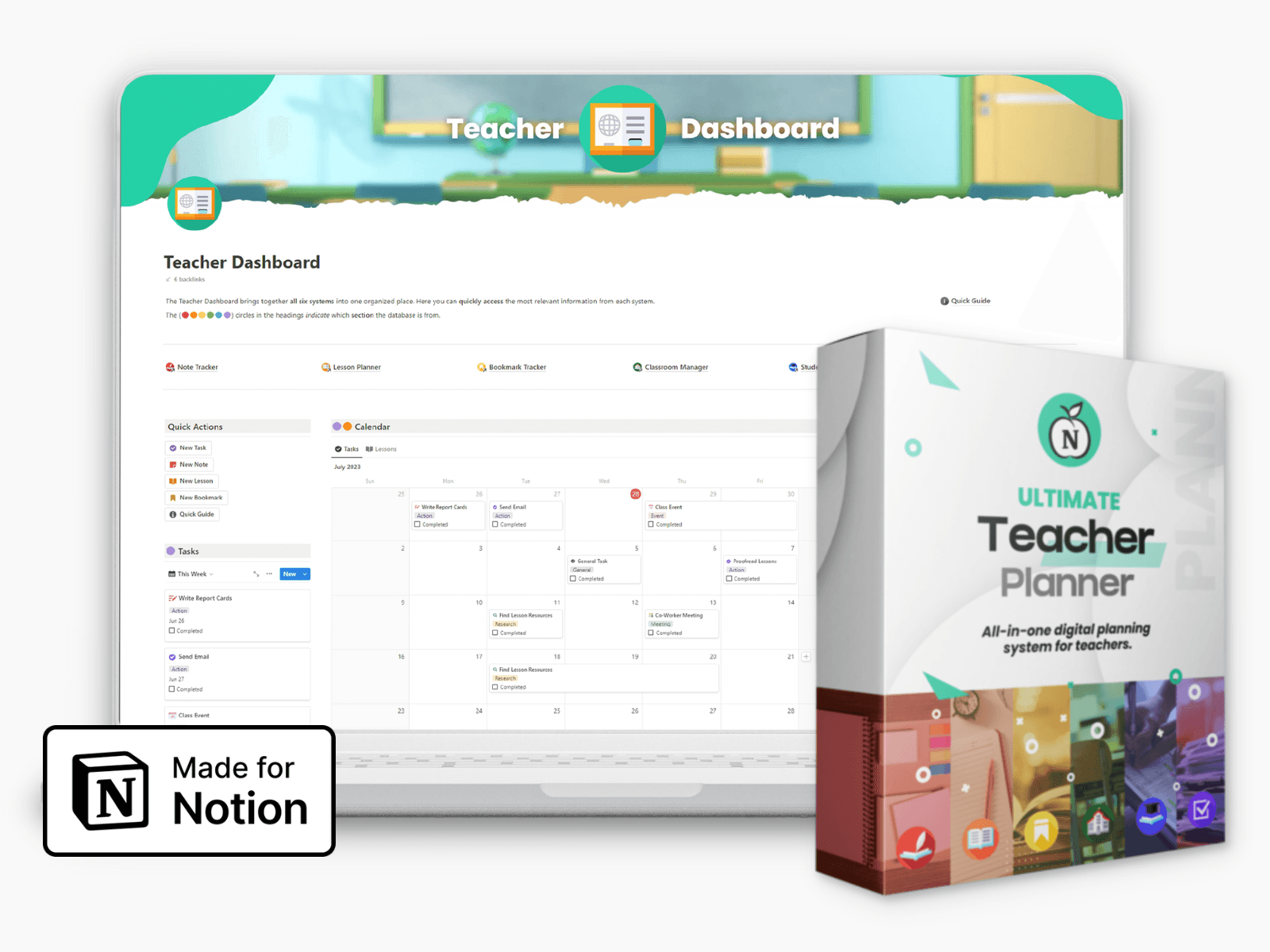
Ultimate Teacher Planner
The ultimate all-in-one education management system in Notion.
Core Academic Support Services at a Glance
Academic support is the range of services that help students learn, keep up, and succeed in their courses. You'll also hear it called academic help, learning assistance, or student success support.
In K-12, help often finds the student through teachers and counselors. In college, students usually have to seek it out, so knowing the options matters. Here's how we break down the main services:
Drop-in and one-on-one tutoring
Tutoring comes in several formats:
Drop-in tutoring by subject, with no appointment needed
One-on-one appointments for focused help with a single student
Group tutoring for students working through the same material
Free peer tutoring hours, staffed by fellow students
Online tutoring access, so students can get help without coming to campus
Picture a chemistry student stuck on balancing equations the night before a quiz. Your referral to a drop-in session can get that student unstuck before the test.
Supplemental Instruction groups for hard courses
Supplemental Instruction (SI) offers peer-led group study sessions for select large or difficult courses. The leaders are former students of those courses, which gives them a useful view of what's hard.
Tutoring answers a specific question, while SI works on the course as a whole, not one problem at a time. Different tool, different job.
Help with writing and citations
Writing centers help students with drafting and revision at any stage of a paper. Citation formatting help makes sure sources are credited correctly. Grammar and communication support covers sentence-level clarity and how students present their ideas.
Graduate writing consultants work with graduate students on longer research projects.
Say your history students keep turning in papers with the same citation errors. One referral to the writing center can fix that before the next paper is due.
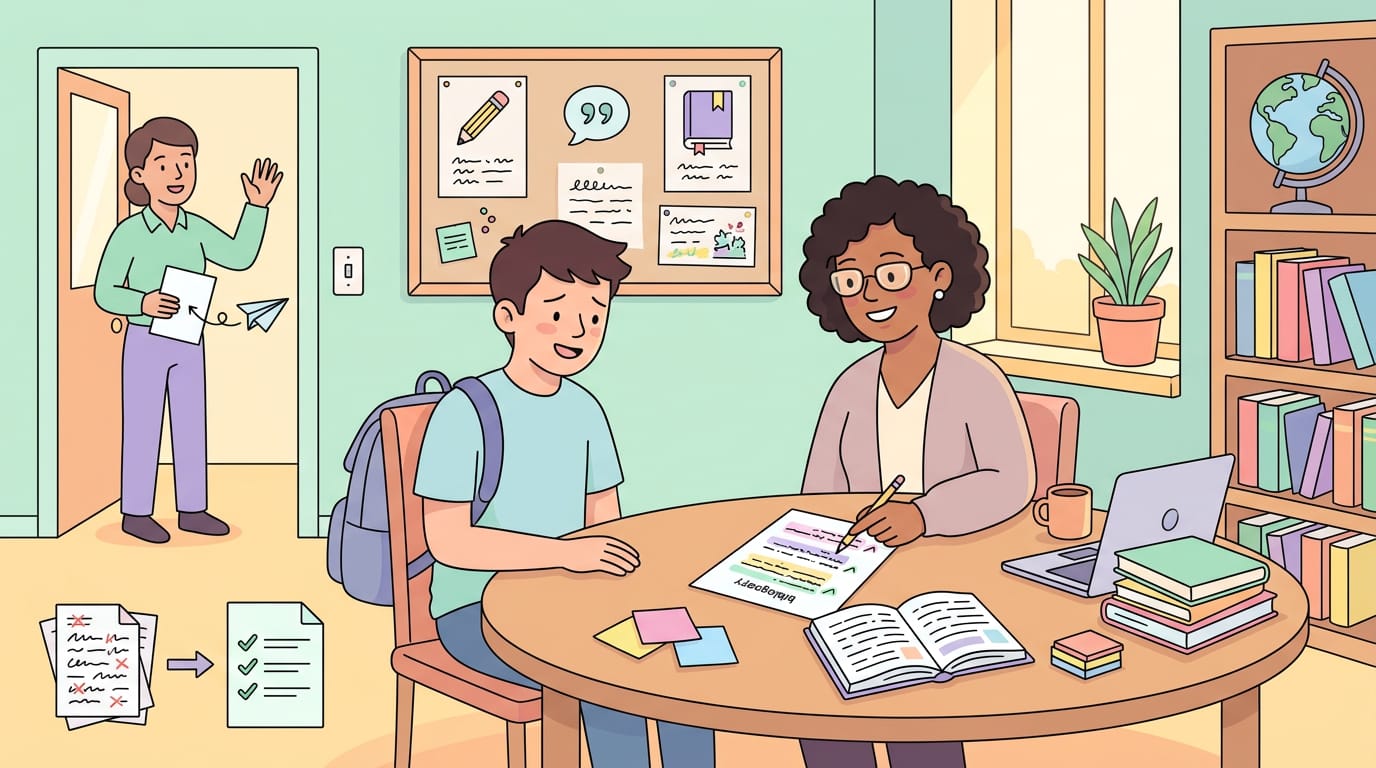
What are the 10 core academic skills?
The ten core academic skills form the foundation of this support, and coaching is where students build them.
Study skills development and time management and test taking make up much of that work, while peer academic mentoring adds a more experienced student who has already learned the ropes.
Students can book unlimited coaching appointments, so they can keep practicing as often as they need.
Test prep and success workshops
Workshops bring many of these skills to students in a group setting. Time management workshops help students plan their weeks around deadlines and exams.
Test prep covers the GRE (Graduate Record Examinations) and the MCAT (Medical College Admission Test) for students aiming at graduate or professional programs. Student success workshops round out the offering with broader skills for staying on track.
Access, Cost, and Ways to Get Help
Support only works if students can afford it, reach it, and feel comfortable using it.
Which services are free and which cost money
Most campus services are free, but some aren't. Private tutoring can carry a fee, and some charges may land on your bursar (billing) account.
Free support removes a real barrier. In an experiment reviewed in a systematic review of college help-seeking, Miranda Lery Santos and colleagues found students were more likely to seek help when it had no economic cost.
At Reed, students can access a range of peer tutoring services for free, as a field experiment on peer tutoring in higher education describes. Price matters.
Online and flexible ways to get help
A study of tutoring during the COVID-19 pandemic notes that after March 2020, colleges shifted some support, including tutoring, online. Several formats are worth knowing:
Virtual tutoring: live help online, from home or between classes.
Asynchronous peer tutoring: help on your own schedule rather than in a fixed session.
Chat and artificial intelligence (AI) tools: quick answers at any hour, best paired with a human tutor.
Book appointments early and easily
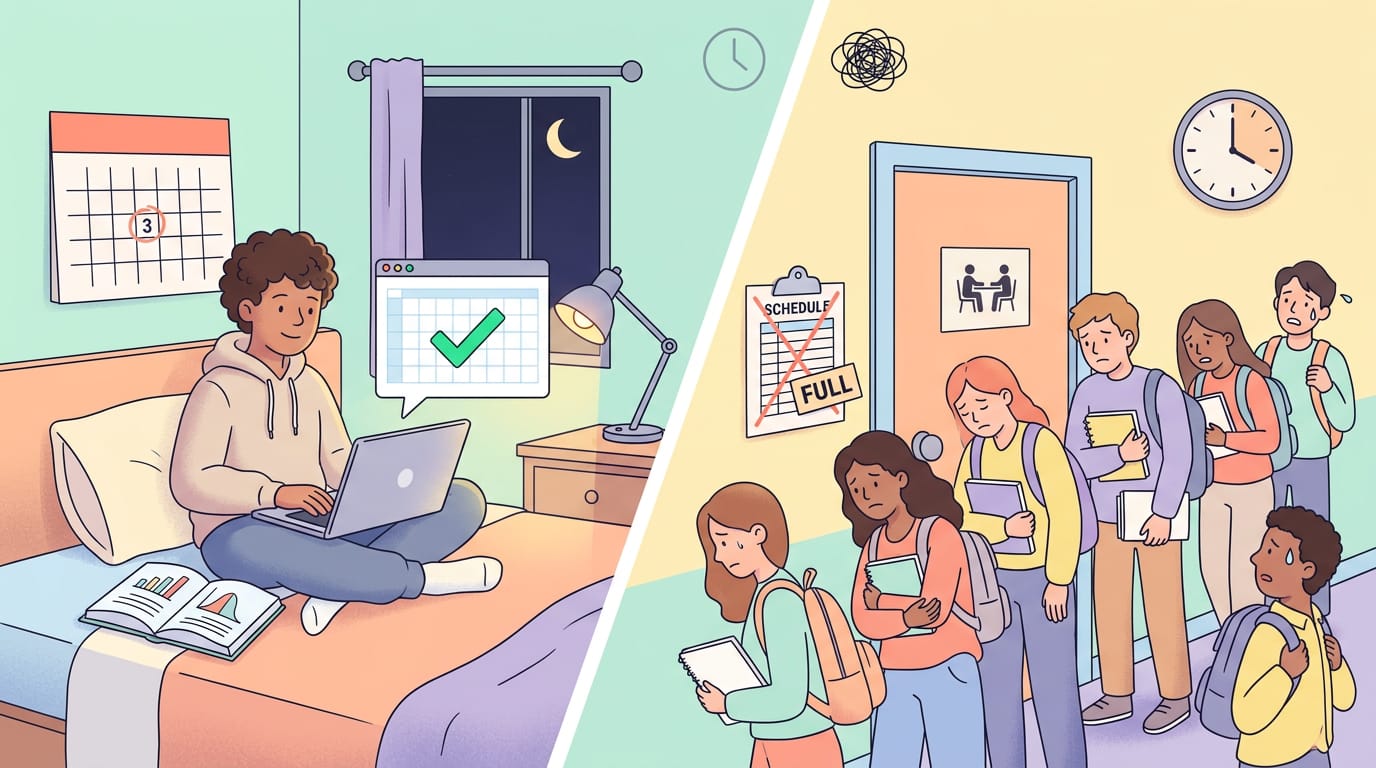
Look for online appointment systems that let you book in a few clicks. Picture a student who realizes three days before a midterm that statistics is slipping. Booking that night locks in a slot before the rush, while waiting may leave nothing open.
Check current hours too, since they shift around breaks and finals. Early beats frantic.
Why asking for help isn't a weakness
Asking for help is a strategy for getting better, not a sign of weakness. A growth mindset, the belief that ability grows with effort, makes that easier to see. Support is for everyone, strong students included.
Faculty set the tone. When you mention the tutoring center in class or welcome students at office hours, help-seeking starts to feel normal. Many students still find instructors intimidating, so a specific referral lowers the bar.
Watch for these signs:
Missed or late assignments
Quiz scores falling over several weeks
A student who has gone quiet in class
Consider a teacher who spots a student's quiz scores sliding. Instead of “let me know if you need anything,” she says, “Our tutoring center can help with exactly this. Want to book a session?” That specific ask is far easier to act on. Knowing where a teacher's role ends and the support staff's begins is part of that.
Help for working and caregiving students
Many students work or care for family, so weekday afternoons may not suit them. Non-traditional hours, like evenings or weekends, can make the difference. Take a student who works a closing shift and looks after a younger sibling.
A Saturday virtual session lets her get help without missing a shift. Meeting students where they are means offering help when and how they can use it.
Measuring whether support works is part of that. A 2019 study by Brandon Balzer Carr and Rebecca A. London examined administrative records from University of California, Santa Cruz to see who used tutoring and how it related to educational outcomes.
Usage shows who showed up. Outcomes show whether it helped.

Advising and Planning Your Academic Path
Every degree has a route, and support helps you map it.
What do academic advisors help with?
Academic advisors provide four core services:
course planning
goal setting
referrals to campus support
year-round contact
Course planning assistance. Advisors help you order classes so you stay on track to graduate.
Career and academic goals. They tie your classes to your long-term plans.
Referral to campus services. Tutoring, disability support, and library help are one conversation away.
Contact year-round. A July question doesn't have to wait for fall registration.
Picture a biology teacher whose student has missed several quizzes. Before referring that student, she works through a referral handoff checklist:
Name the specific concern, like missed assignments.
Talk with the student first, without judgment.
Name the office or advisor you're referring them to.
Follow up to confirm the student made contact.
The advisor starts with facts, not guesswork.
Tools for mapping out your degree
Good planning is less about how fast you finish and more about what order you take things in.
Degree planning systems. Online tools that lay out your requirements term by term.
Program sheets. Checklists of the courses your major requires.
Campus catalogs. The official record of courses, requirements, and policies.
Deadlines and policies. Check them every term, because deadlines don't wait.
Programs for undecided, struggling, and new students
Three programs fit students at different starting points:
Undecided major exploration. It lets you sample subjects before you commit.
Academic recovery programs. They give students who've fallen behind a structured way back.
First-year study skills seminar. It builds the habits new students need for college work.
Consider a first-year student who feels pressure to pick a major on day one. An exploration program lets her test a few subjects first. Exploring first beats guessing.
How Peer Tutors and Mentors Work
Peer tutors are students who help classmates with course material. Here's how programs choose and train them.
Hiring and training fellow students
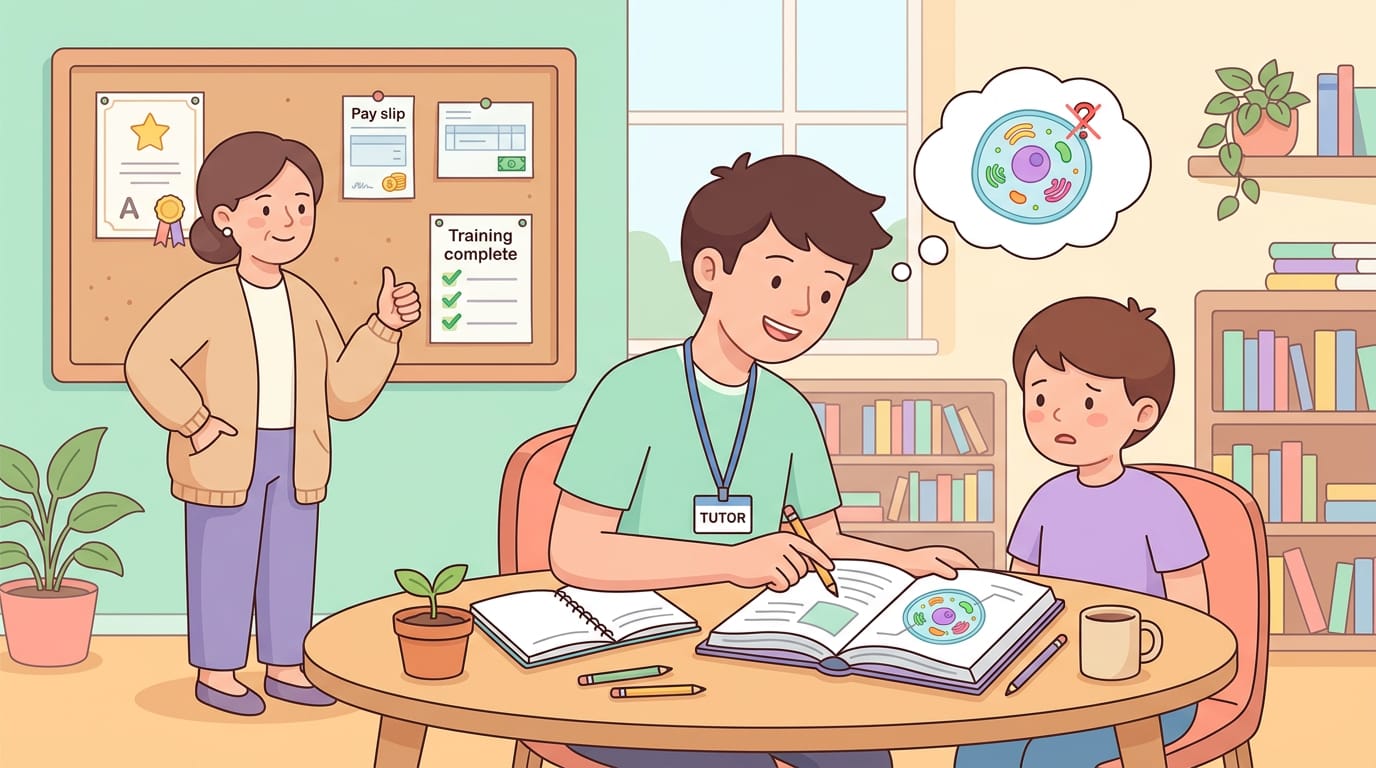
Start with a minimum GPA requirement. It's a simple signal that tutors understand the material they'll teach.
Treat tutoring as a paid student position, not a favor. Tutors take a paid role more seriously.
Require a training course for employees before their first session, so every student gets the same quality of help. Consistency builds trust.
Look closely at successful past course students. Picture a biology teacher who asks a former student with a strong grade to tutor the next cohort. That student remembers which diagram once confused them, so they can walk a newcomer through it.
What the peer model gives everyone
The benefits reach well beyond the tutored students:
Active learning facilitation. Peer tutors aim for understanding rather than simply handing over answers. A study of peer supplemental instruction in STEM courses describes tutors who "create active lesson plans that foster interactive cognitive input from the group of students in attendance."
Leadership and communication skills. Tutors practice explaining ideas clearly, running a small group, and checking that everyone's following. Those skills last well beyond tutoring.
Reinforced knowledge. Explaining a concept tests what you really understand, not just what you've memorized. A systematic review of medical students as peer tutors found that tutors reported an "opportunity to reflect on their own knowledge gaps and a deeper level of understanding of content."
Comfort asking peers. A hesitant student may find a classmate a safer first place to ask. Less pressure makes that first question easier.
Support for Every Kind of Learner
Students arrive with very different needs, so good academic support reaches well beyond tutoring. The goal isn't just more help but help that fits how each student learns.
Support for disability and neurodiverse students
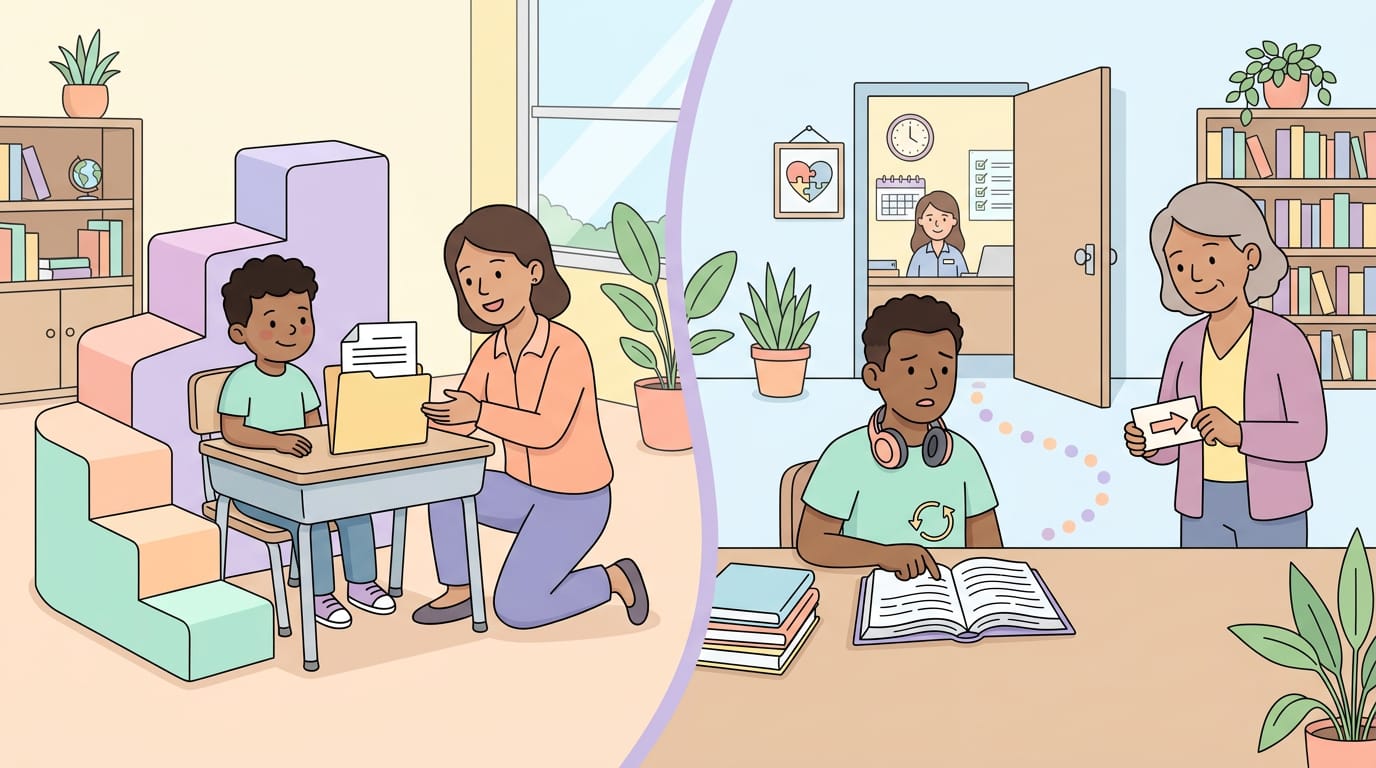
In K-12 (kindergarten through grade 12) schools, a Multi-Tiered System of Supports (MTSS) layers increasingly intensive help, Response to Intervention (RTI) tracks how students respond to targeted teaching, and an Individualized Education Program (IEP) lays out services for students with qualifying disabilities.
In college, students usually have to ask for help themselves.
College options include:
Accommodations through disability offices, such as extended test time, once a student registers.
Structured support programs that add regular check-ins and study routines.
Executive function coaching that builds the planning and time management skills coursework demands.
Fee-based neurodiverse programs offered by some schools and outside providers, so check what's covered first.
Picture a teacher who notices a student rereading the same paragraph three times and still unable to summarize it.
A referral to the disability office connects that student with someone who can look into what's going on, so the teacher isn't left guessing.
More campus resources for specific groups
Other offices serve students by identity or goals. Cultural centers offer community beyond the classroom, and career development offices help students link coursework to internships and jobs.
International student services guide students through visa rules and campus systems, while orientation introduces new students to campus life before the term gets busy. Know these offices before you need them.
Libraries, Research Help, and Study Spaces
Your campus library does far more than hold books. Students can get research help, find a focused place to work, and borrow equipment there. Here's how to point students to each one.
Ask a librarian for research help
Librarians offer more than book finding. Database assistance shows students how to search effectively and narrow results. Picture a history student who keeps finding the same three websites. One session can teach a skill they'll use on every paper after.
Finding sources is rarely the hard part. Finding credible ones is. Librarians help students tell scholarly sources (research that other experts review before publication) from popular articles.
Course guides gather the databases, books, and sources a librarian has picked for a specific class. Ask your librarian whether one exists for yours.
Can't make it in person? Online chat help lets students ask a librarian a research question from anywhere.
Where to study and borrow equipment
Campus learning centers pair study space with support. A nursing student with a Friday pharmacology exam can book a room, work through practice questions with a nearby tutor, and leave with a plan instead of a panic.
Study rooms with whiteboards help students work through problems, not just reread notes. A group can sketch a chemistry problem, erase it, and try again. Point study partners toward rooms with boards.
Not every student owns a laptop, a calculator, or recording gear for lab work. Check what your library offers, from on-site computers to equipment loans, and share that list with students who need it. Often, the right desk is one referral away.
Academic support works best when students know what's available and teachers know how to connect them to it. A timely referral can make a real difference, and it often starts with a teacher noticing something small.
Helping struggling students takes energy, so take care of yourself along the way. Ready to protect your own energy? Explore our Teacher Life & Wellbeing articles for practical ideas to recharge.
References
Tutoring Online During the COVID-19 Pandemic: Use of Critical Incidents to Improve Practice — doi.org (2025)
Investigating the impact of peer supplemental instruction on underprepared and historically underserved students in introductory STEM courses — pmc.ncbi.nlm.nih.gov (2022)
College Student’s Academic Help-Seeking Behavior: A Systematic Literature Review — pmc.ncbi.nlm.nih.gov (2023)
Medical students as peer tutors: a systematic review — pmc.ncbi.nlm.nih.gov (2014)
Nudging Study Habits: A Field Experiment on Peer Tutoring in Higher Education — docs.iza.org (2017)
The Role of Learning Support Services in University Students’ Educational Outcomes — journals.sagepub.com (2017)
Ultimate Teacher Planner
The ultimate all-in-one education management system in Notion.