
15 ELA Games to Energize Your English Lessons
15 ELA Games to Energize Your English Lessons

Article by
Milo
ESL Content Coordinator & Educator
ESL Content Coordinator & Educator
All Posts
Your grammar lesson is bombing. Again. You look up from the textbook and see seven students staring at the clock, two drawing in their notebooks, and one who’s actually asleep. You’ve tried the worksheets. You’ve tried the “interactive” slide decks that came with the curriculum. Nothing sticks. This is exactly why veteran teachers keep a stash of ela games ready for the moments when standard instruction flatlines.
Games aren’t rewards for finishing early or Friday afternoon fillers. They’re legitimate language arts activities that target specific standards. A quick vocabulary relay can wake up a 2:30 PM class faster than another lecture. A writing game gets your reluctant authors putting pencil to paper before they realize they’re doing the heavy lifting.
The trick is matching the right game to your learning objective. Whether you need differentiated instruction for your reading intervention group or a literacy center that runs itself while you confer, the right activity saves your lesson—and your sanity.
Still grading everything by hand?
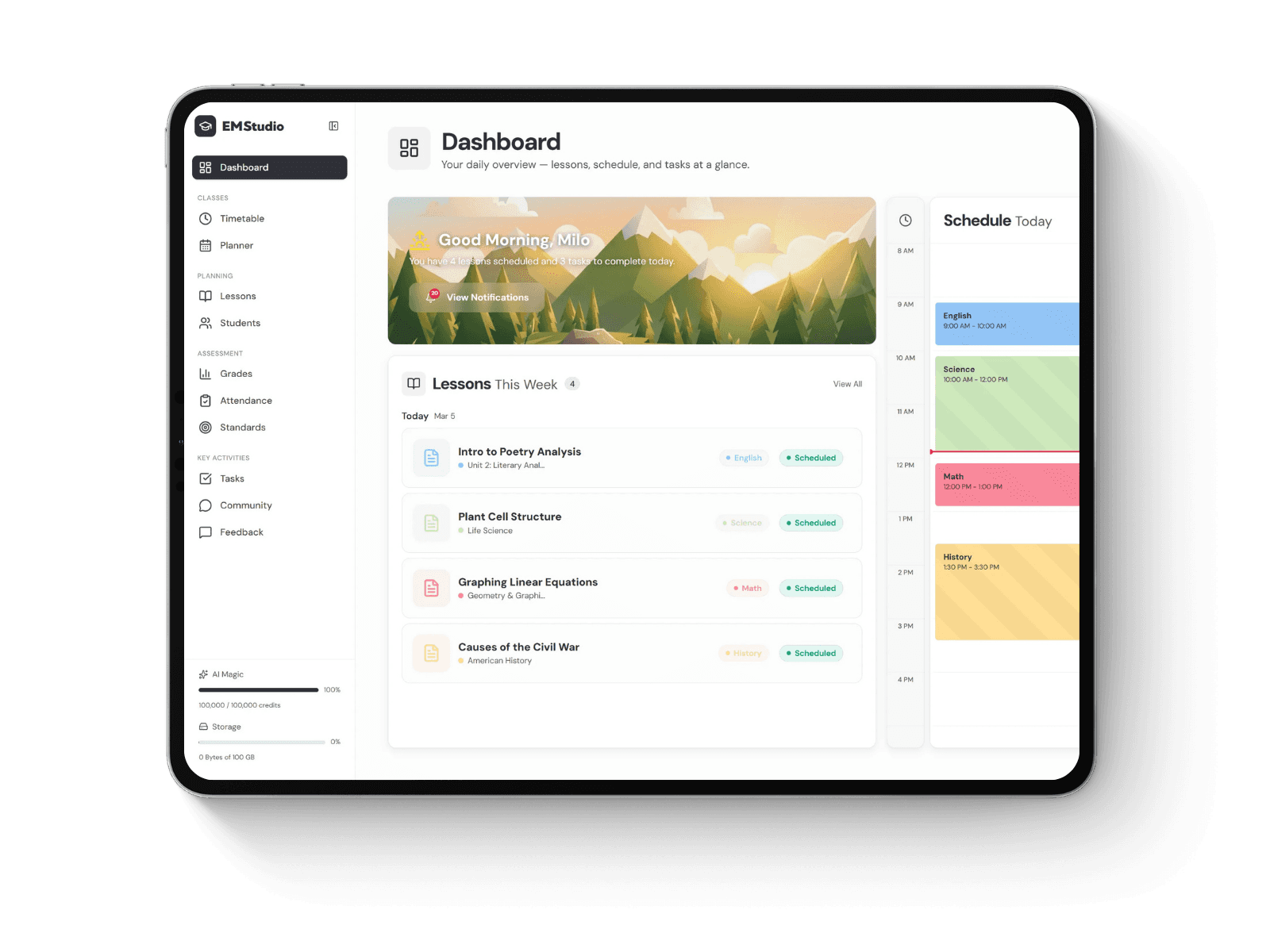
EMStudio is a free teaching management app — manage your classes, students, lessons, and more!
Learn More
Still grading everything by hand?
EMStudio is a free teaching management app — manage your classes, students, lessons, and more!
Learn More
Table of Contents
Vocabulary and Word Play Games
John Hattie's Visible Learning research puts direct vocabulary instruction at an effect size of 0.63—solid ground for your time investment. Games that force students to manipulate words in context push retention even higher. These ela games and language arts activities support differentiated instruction without creating three separate lesson plans. Choose based on your available prep time and grade level.
Game Name | Best Grade Range | Prep Time | Materials Needed | Standards Alignment (CCSS) |
|---|---|---|---|---|
Vocabulary Bingo with Student-Generated Definitions | 3-8 | 15 minutes | Blank Bingo grids, word lists | L.3.4-L.8.4 |
Word Association Chains | 6-12 | 10 minutes | Digital whiteboard or open space | L.6.5-L.11-12.5 |
Context Clue Scavenger Hunts | 4-9 | 20 minutes | Index cards, recording sheets | L.4.4-L.9-10.4 |
Run these as 15-20 minute warm-ups or literacy centers rotations. They boost classroom engagement without sacrificing rigor. They complement your explicit instruction rather than replacing it. I've watched teachers stretch Bingo into a 45-minute block, and the energy flatlines after round three. Short bursts work better.
Adjust support levels without creating new activities:
For ELL students or those in reading intervention, provide word banks with native language cognates.
For advanced learners in the Word Chains activity, require etymological analysis—have them identify Greek or Latin roots before adding to the chain.
Vocabulary Bingo with Student-Generated Definitions
Students create their own Bingo cards using 24 vocabulary words from your current unit. You call out definitions, not words. They mark the corresponding term. It sounds simple, but the magic happens in the setup.
Prep takes 15 minutes: print blank 5x5 grids and generate word lists. I use Quizlet's 'Print Test' feature to scramble terms for different class periods—cheating becomes impossible when every card is unique. Grades 3-8 handle this well; 20 minutes is the sweet spot for gameplay. Any longer and they check out. The novelty dies quickly with vocabulary drills.
Before you start, students must write definitions in their own words on the back of the card. This processing step separates research-backed vocabulary strategies from passive word exposure. No writing, no playing. You'll know they own the word when they can explain it to a peer.
Word Association Chains for Semantic Mapping
Student 1 states a vocabulary word. Student 2 responds with a related word or connotation. Student 3 explains the semantic connection in complete sentences. The chain continues until someone breaks it or time expires.
Use SAT-level vocabulary for grades 9-12, or stick with Tier 2 words for grades 6-8. Stand in a circle or deploy simple educational technology like Jamboard. Set a 2-minute timer per chain. If the link breaks, restart with a new word. The pressure keeps them sharp.
Semantic mapping strengthens neural pathways for retrieval. You're not just drilling definitions; you're building a web of meaning. For AI-enhanced word play techniques, try projecting a living word map that grows as students speak. The visual reinforces the verbal.
Context Clue Scavenger Hunts
Hide 15 index cards around your classroom. Each card displays a sentence with a bolded vocabulary word surrounded by strong contextual clues. Grades 4-9 work in pairs with recording sheets, hunting for cards, inferring meaning from context, and verifying guesses with a dictionary app. The whole activity runs 30 minutes.
If your sentences lack sufficient clues, students guess randomly. You need at least three types of context clues per sentence—definition, example, and contrast. Run a mini-lesson on these clue types first, or the activity becomes an exercise in frustration.
Rotate the hiding spots each period to prevent early classes from tipping off later ones. Keep five extra cards in your pocket for classes that finish early. The movement matters as much as the mental work.

Grammar Games That Actually Work
Most grammar language arts activities fail because they isolate decontextualized rules. Rosenshine's Principles of Instruction state that daily review should connect to prior learning, not random drills. If students score below the 50th percentile on standardized grammar assessments, use direct instruction first. Games supplement explicit teaching; they never replace it.
Most ela games here require only sentence strips, markers, and timers set to 45-second rounds for rapid processing. Use them in literacy centers or whole-group review.
When NOT to Use: Below 50th percentile on grammar tests means direct instruction comes first. Games are the supplement, not the main course.
Grammar Escape Room: Transfer to Writing: High. Prep Time: High. Noise: Medium. Best for: Comma splices, fused sentences.
Parts of Speech Charades: Transfer to Writing: Medium. Prep Time: None. Noise: High. Best for: Parts of speech, verbals.
Sentence Architecture: Transfer to Writing: High. Prep Time: Low. Noise: Low. Best for: Complex sentences, clause punctuation.
Grammar Escape Room Challenges
Buy a Breakout EDU kit for $150 or grab combination locks from Dollar Tree for $3 each. Digital version? Use Google Forms with "response validation" for lock codes. The physical locks create urgency that digital timers cannot match.
Focus on comma splices and fused sentences for grades 9-12. Teams of four get 45 minutes to solve five grammar puzzles. Each correct answer reveals one digit of the combination.
Do not make puzzles too hard. Offer hint cards that cost teams two minutes of time. Aim for an 80% completion rate, not 20%. You want wins, not frustration.
Parts of Speech Charades
One student acts out a verb, adjective, or adverb without speaking or using props. Their team guesses in 30 seconds. Grades 5-8 can play for 20 minutes with zero prep required. The silence rule forces precise physical communication.
For grades 9-10, add verbals: gerunds, participles, and infinitives. The guesser must use the word in a correct sentence to earn the point.
Kinesthetic grammar activities align with dual coding theory. They help students who struggle with worksheet-based rule memorization. These games that reinforce classroom expectations work best when movement connects to meaning.
Sentence Architecture Competitions
Give teams five simple sentences (SV or SVO). They have ten minutes to expand them into compound-complex sentences using subordinating conjunctions and relative clauses. Works for grades 6-10.
Judge with a rubric: one point per clause type, one point for punctuation accuracy, one point for meaning clarity.
Differentiate with sentence expansion strips printed with conjunctions for struggling learners. Require advanced students to use semicolons and conjunctive adverbs correctly. This built-in differentiated instruction keeps all writers challenged. Watch for teams that create run-ons while trying to expand. That is your teaching moment.
What Are the Best Reading Comprehension Games?
The best reading comprehension games include Text Mapping Relay Races for visual annotation, Character Hot Seat interviews for deep analysis, and Inference Mystery Box stations for deductive reasoning. These ela games work across grades 4-12, requiring 20-40 minutes and minimal prep while targeting standards like CCSS.ELA-LITERACY.RL.4.3 for character and inference skills.
Text Mapping Relay Races target CCSS.ELA-LITERACY.RI.6.5 (text structure) and rhetorical analysis standards for grades 6-12. This approach takes 30 minutes for a full class period.
Character Hot Seat Interviews align with CCSS.ELA-LITERACY.RL.4.3 (character analysis) and RL.9-10.3 for high school students. Duration: 20 minutes.
Inference Mystery Box Stations focus on CCSS.ELA-LITERACY.RI.4.1 and RL.4.1 (inference and evidence). Rotation takes 25 minutes with movement.
After each game, students cite textual evidence using the 'Quote-Paraphrase-Connect' sentence frame. They pull a direct quote from the text, paraphrase it in their own words, then explain how it connects to their analysis. This protocol transforms these activities from mere fun into rigorous reading intervention that meets standards.
Text Mapping Relay Races
Teams of 4 receive 4 different colored highlighters: pink for main idea, yellow for evidence, green for vocabulary, and blue for questions. Each student annotates a 2-page excerpt for 3 minutes, then passes the text clockwise. After 4 rotations, the team defends their annotations to the class. This differentiated instruction strategy works for grades 6-12 and takes 30 minutes for a full period.
For grades 6-7, provide annotation key cards to scaffold the activity. For AP classes in grades 11-12, require rhetorical analysis labels like ethos, pathos, and logos. This builds active reading comprehension strategies while keeping classroom engagement high through competition. Students learn to read closely under pressure without realizing they're doing rigorous analysis.
Character Hot Seat Interviews
One student sits in the "hot seat" as a character from your current novel while classmates ask questions based on textual evidence. The student in the hot seat gets 2 minutes to review character notes and evidence before questioning begins. Each interview lasts 5 minutes, with a 20-minute total rotation allowing four different characters in a single period.
Audience members write down one question asked and the textual evidence cited in the answer, submitting it as an exit ticket. This literacy centers approach targets CCSS.ELA-LITERACY.RL.4.3 for character analysis. It works as an effective reading intervention for reluctant readers who engage more deeply when they perform the character live. The public questioning forces them to cite specific passages to justify motivations.
Inference Mystery Box Stations
Set up 5 boxes with mystery objects like old keys, photos, or letters that hint at upcoming story events. Students rotate every 5 minutes, making predictions based on inferences from the objects. They complete prediction charts using the frame: "I observed... I infer... This connects to the text because..." The 25-minute rotation keeps momentum moving.
This station activity suits grades 4-8 and aligns with CCSS.ELA-LITERACY.RI/RL.4.1. If objects are too abstract, students make random guesses without textual support. Calibrate objects to specific plot points, like a compass for "guidance" themes or a torn photo for "broken relationships." These tactile language arts activities build deductive reasoning skills important for educational technology integration.

Which Creative Writing Games Engage Reluctant Writers?
Story Cubes, round-robin storytelling, and flash fiction sprints effectively engage reluctant writers by lowering stakes and emphasizing quantity over quality. These 10-20 minute activities work for grades 6-12, requiring only dice or timers, and align with narrative writing standards while building confidence through collaborative creation.
Reluctant writers freeze because they fear the blank page. These ela games bypass that anxiety by making writing collaborative, fast, and low-stakes.
Research indicates that low-stakes, collaborative writing reduces writing anxiety and increases fluency. When students write in groups during language arts activities, they produce more text than when working alone. Quantity precedes quality; the student who writes three rough paragraphs learns more mechanics than the student who spends twenty minutes crafting one perfect sentence.
Do not begin with competitive timed writing. For anxious writers, a countdown timer increases stress and blocks output. Begin with collaborative games for english lessons where the group shares the burden. Only transition to individual sprints after students demonstrate they can generate text without self-censorship.
Choose your starting point based on student needs:
If the student has an IEP for writing, start with Round-Robin. Shared responsibility reduces individual production pressure.
If the student is gifted but blocked, start with Flash Fiction constraints. Strict limits paradoxically unlock creativity for perfectionists.
If the student is ELL, start with Story Cubes. Visual prompts bypass language retrieval barriers common in reading intervention settings.
Story Cube Narrative Challenges
Use Rory's Story Cubes ($20) or DIY with nine blank dice and Sharpies. Have students draw simple symbols on each face. For grades 5-9, writers roll three dice and must incorporate all three images into a 150-word opening paragraph. This works perfectly for literacy centers or early finisher stations.
Add structure by requiring a complete narrative arc—exposition, inciting incident, and climax—within the 15-minute writing window. The random images remove the "what should I write about?" paralysis. For overcoming common writing blocks, try the collaborative option: pairs roll separately to combine six images, then write alternating sentences to build one coherent narrative.
Collaborative Round-Robin Storytelling
Use the "Fortunately/Unfortunately" structure. Student 1 writes two sentences establishing character and setting. Student 2 adds "Unfortunately..." followed by a complication. Student 3 adds "Fortunately..." with a resolution attempt. This format builds classroom engagement through suspense and shared ownership.
Pass papers every two minutes for twenty minutes total. Grades 6-12. The paper must return to the original author, who writes the final conclusion. Manage the rotation with music—when the song changes, students pass. This eliminates the "how much time left?" interruptions that break flow during differentiated instruction blocks. Keep the pace brisk to prevent overthinking.
Flash Fiction Sprint Competitions
Set word count targets by grade: Grade 6 writes 150 words, Grade 9 writes 300 words, Grade 12 writes 500 words. For a tighter constraint, use exactly 100 words (title excluded). Grades 8-12. Set the timer for ten minutes of writing and five minutes of peer sharing. No erasing allowed—forward motion only. The constraints force decisions.
Score based on Story Arc Completeness, not grammar. Did the piece have a beginning, middle, and end within the limit? Publish the best entries using educational technology like a class blog or Padlet wall. Digital tools for creative writing make publication immediate, and research shows publication motivation increases writing effort in secondary students.

How to Choose the Right Game for Your Learning Objective?
Choose ELA games by first identifying your standard (vocabulary acquisition vs. analytical writing), then matching complexity to your students' zone of proximal development. Assess engagement needs versus assessment rigor—use high-energy games for introduction and structured activities for summative checks. Always pilot with a 15-minute trial before full implementation.
Stop guessing. The right game fits your objective like a glove fits a hand—tight, purposeful, and immediately useful. Match the tool to the task, or you're just burning minutes.
Step 1: Identify Standard. Is this foundational (vocabulary, grammar) or analytical (theme, rhetoric)?
Step 2: Assess Readiness. Check Lexile levels and prior knowledge gaps before selecting mechanics.
Step 3: Determine Purpose. Are you formatively checking understanding or demanding summative demonstration?
If the game takes longer to explain than to play, abort. If the noise level exceeds 75 decibels (check your phone app), pivot immediately. These are non-negotiable boundaries for effective english class games.
CCSS.ELA-LITERACY.L.7.4 (vocabulary acquisition) pairs naturally with Word Chains. CCSS.ELA-LITERACY.W.9-10.3 (narrative writing) works with Story Cubes. For CCSS.ELA-LITERACY.RL.11-12.6 (point of view analysis), deploy Hot Seat. These connections aren't accidental—they're deliberate alignment choices.
Spend ten minutes explaining rules for a thirty-minute game; five minutes for a fifteen-minute activity. Exceed this ratio and you've lost your return on investment. Your literacy centers deserve better time management than that.
Aligning Games with Specific Standards
Create a simple three-column chart: Standard, Game Used, Evidence of Mastery. For example, RL.9-10.1 (Cite strong evidence) aligns with Text Mapping Relay. This documentation satisfies administrators who question your proven classroom gamification methods.
Prioritize ruthlessly. If a standard appears on your state test blueprint as a 'major cluster' (fifty percent or more of questions), use games for reinforcement only, never initial instruction. The stakes are too high for experimental first exposure.
Track alignment visibly. Print the specific standard number at the top of exit tickets. When your principal walks through, the connection between language arts activities and learning objectives is obvious and immediate.
Matching Complexity to Grade Level
Calibrate to Lexile bands. Elementary readers (BR-1000L) handle Context Clue Hunts. Middle schoolers (1000L-1200L) manage Grammar Escape Rooms. High school students (1200L+) need Sentence Architecture challenges. This differentiated instruction prevents frustration.
Never use Hot Seat for novels above students' independent reading level—specifically Frustration Level on the QRI-5 assessment—unless you've provided scene summaries first. The cognitive load of decoding plus analysis crushes engagement.
For IEP students, reduce output by thirty percent (fewer sentences, shorter chains) while maintaining cognitive demand. This modification keeps reading intervention accessible without dumbing down the thinking.
Balancing Engagement and Assessment Needs
Follow the 80/20 Rule: eighty percent of game time should be active engagement, twenty percent setup and explanation. When assessment is the primary goal, leverage educational technology like Kahoot or Blooket that auto-grades. Your planning time is finite.
Distinguish between formative and summative. Use Charades and Round-Robin for formative checks—participation points only, no grade book pressure. Reserve Escape Rooms and Flash Fiction for summative demonstrations with rubrics.
Collect data beyond participation. Require a written reflection component—three sentences explaining what was learned—to document mastery. This bridges the gap between classroom engagement and aligning activities with curriculum standards with hard evidence.

Digital ELA Games for Modern Classrooms
Platform Name | Free Tier Limits | Best For | Device Needs | Setup Time |
|---|---|---|---|---|
Blooket | 60 students | Vocabulary & Grammar | Any browser | 5 minutes |
Kahoot | 50 players | Whole-class review | Any device | 2 minutes |
Gimkit | 5 games limit | Homework/Individual | Any device | 10 minutes |
Book Creator | 40 libraries, 1 teacher | Long-form writing | Tablets preferred | 15 minutes |
Genially | Limited templates | Escape rooms | Laptops preferred | 30 minutes |
Device ratios dictate your game choice. Full 1:1 lets everyone play solo. With 2:1 ratios, use Quizlet Live with teams of three rather than individual games. Station rotation works better than whole-class for most literacy centers—half your students work on devices while others engage in reading intervention groups or paper-based language arts activities. Test your Wi-Fi thirty minutes before class. Nothing kills classroom engagement like thirty kids staring at frozen loading screens.
Break down costs per student honestly. A Breakout EDU kit amortizes to $3 per student across a class of thirty and lasts for years. Book Creator runs $2 per student annually. Free tools cost $0 upfront but demand hours of prep time. Always maintain a low-tech backup. When Wi-Fi crashes during your Grammar Escape Room, you need that paper version ready in your desk drawer. I learned that lesson during a formal observation in October when the router died five minutes into third period.
Interactive Quiz Platform Showdowns
Blooket wins for vocabulary drills. Gold Quest mode turns word study into a loot-collecting frenzy where students answer questions to earn virtual coins. Switch to Factory mode for grammar practice—students build production lines with correct answers, watching their digital factories grow with every proper noun they identify.
Kahoot keeps everyone synchronized. Its linear progression works for whole-class review when you need lockstep pacing and immediate celebration of winners. Gimkit excels at homework. The Assignments feature lets kids play asynchronously, making it perfect for reading intervention groups who need extra practice without the pressure of live competition.
Blooket requires student accounts—email or Google SSO. Kahoot lets them join with nicknames, which saves precious minutes in younger grades. Both platforms cap free tiers at 50-60 students, but paid versions ($60-120 yearly) handle 100+.
Here's the time-saver: import your existing Quizlet sets into Blooket in thirty seconds. Don't rebuild what you already have. For students who were absent during the whole-class game, assign Solo mode. They get the same content without missing the instruction. These interactive digital learning platforms work best when you leverage existing resources for your games for english lessons.
These english class games naturally support differentiated instruction. Struggling readers can replay Gimkit assignments until they master the concept. Advanced students race through Blooket modes while others take their time. You see the data instantly—who missed the metaphor questions, who aced the comma rules. That information drives tomorrow's small groups.
Digital Storytelling and Comic Creation
Book Creator dominates this space for long-form narrative projects. The free tier gives you forty libraries and one teacher account. Upgrade to the $120 yearly plan for unlimited libraries across your grade level. Storyboard That runs $80 annually with better comic-specific templates, though the free version limits you to basic characters. Canva for Education costs nothing and offers robust design tools, but lacks the built-in publishing has that make student work feel like real books.
Book Creator: $120/year, includes speech-to-text and read-aloud features.
Storyboard That: $80/year, specialized comic templates and characters.
Canva for Education: Free, robust design tools but no native book publishing.
Treat these as multi-day projects, not single-period activities. Grades 4-10 thrive when creating graphic novel pages based on mythology or historical fiction. Three to five days lets them draft, peer-edit, and polish. Rushing destroys the writing process.
Book Creator's accessibility has justify the cost alone. Built-in speech-to-text lets IEP and 504 students dictate their narratives instead of typing. The read-aloud function reads their finished work back to them, catching errors their eyes missed. This isn't just educational technology—it's a differentiator that levels the playing field for students who struggle with traditional writing output.
Plan for device hogs. These projects drain batteries faster than quiz games because students record audio and import images. Position charging stations at the back of your room. If you're using shared devices, schedule so that half the class drafts on paper while the other half digitizes. This rotation prevents the "he took my iPad" arguments that derail language arts activities.
Virtual Escape Room Adventures
Genially costs $50 yearly for educators and provides the slickest interface for immersive virtual reality adventures. If budget is zero, Google Forms with "Go to section based on answer" branching logic works beautifully. Minecraft Education offers the deepest immersion, but only if your district already owns licenses. Don't buy new software for one lesson.
Design constraints matter more than decoration. Limit yourself to five puzzles maximum for a forty-five minute period. Each puzzle should consume five to eight minutes. Target grades 6-12; younger students lack the frustration tolerance for complex branching logic. Start with a narrative hook—a locked library, a missing manuscript—and scatter clues across Google Slides or physical props around your room.
Here's the critical warning: branching logic in Google Forms breaks instantly if students hit the browser back button. One click backward scrambles their progress. Post explicit instructions on your board: "Use 'Next' and 'Previous' buttons only. Never the browser back button." Test your escape room twice on a student device before going live. Tech failures during these ela games embarrass everyone and waste your precious instructional minutes.
These work best in 1:1 environments, but station rotation handles shared devices fine. One group solves digital puzzles while another deciphers paper clues. Just ensure your low-tech backup lives in a manila folder at your desk. When the Wi-Fi dies—and it will—you'll hand out the paper equivalent without breaking stride. Your administrator will notice the smooth pivot. Your students won't notice the difference.

What Ela Games Really Comes Down To
You do not need fifteen new games tomorrow. You need one that fixes the specific problem your students faced during today’s lesson. Maybe that’s a literacy center station that runs itself while you pull a reading intervention group. Maybe it’s a five-minute grammar warmer that actually wakes everyone up after lunch. The point is precision, not variety.
Pick your game based on the learning objective first, the fun factor second. A vocabulary relay works when kids need repetition, not when they need deep analysis. A digital platform helps when you need instant data, not when students need to argue about a text face-to-face. Match the tool to the gap, and you will see real growth instead of just busywork.
Classroom engagement isn’t just noise and movement. It’s the sound of students leaning forward instead of back. Choose ela games that demand thinking, reward risk, and push your specific readers and writers closer to independence. That is the only scoreboard that matters.

Vocabulary and Word Play Games
John Hattie's Visible Learning research puts direct vocabulary instruction at an effect size of 0.63—solid ground for your time investment. Games that force students to manipulate words in context push retention even higher. These ela games and language arts activities support differentiated instruction without creating three separate lesson plans. Choose based on your available prep time and grade level.
Game Name | Best Grade Range | Prep Time | Materials Needed | Standards Alignment (CCSS) |
|---|---|---|---|---|
Vocabulary Bingo with Student-Generated Definitions | 3-8 | 15 minutes | Blank Bingo grids, word lists | L.3.4-L.8.4 |
Word Association Chains | 6-12 | 10 minutes | Digital whiteboard or open space | L.6.5-L.11-12.5 |
Context Clue Scavenger Hunts | 4-9 | 20 minutes | Index cards, recording sheets | L.4.4-L.9-10.4 |
Run these as 15-20 minute warm-ups or literacy centers rotations. They boost classroom engagement without sacrificing rigor. They complement your explicit instruction rather than replacing it. I've watched teachers stretch Bingo into a 45-minute block, and the energy flatlines after round three. Short bursts work better.
Adjust support levels without creating new activities:
For ELL students or those in reading intervention, provide word banks with native language cognates.
For advanced learners in the Word Chains activity, require etymological analysis—have them identify Greek or Latin roots before adding to the chain.
Vocabulary Bingo with Student-Generated Definitions
Students create their own Bingo cards using 24 vocabulary words from your current unit. You call out definitions, not words. They mark the corresponding term. It sounds simple, but the magic happens in the setup.
Prep takes 15 minutes: print blank 5x5 grids and generate word lists. I use Quizlet's 'Print Test' feature to scramble terms for different class periods—cheating becomes impossible when every card is unique. Grades 3-8 handle this well; 20 minutes is the sweet spot for gameplay. Any longer and they check out. The novelty dies quickly with vocabulary drills.
Before you start, students must write definitions in their own words on the back of the card. This processing step separates research-backed vocabulary strategies from passive word exposure. No writing, no playing. You'll know they own the word when they can explain it to a peer.
Word Association Chains for Semantic Mapping
Student 1 states a vocabulary word. Student 2 responds with a related word or connotation. Student 3 explains the semantic connection in complete sentences. The chain continues until someone breaks it or time expires.
Use SAT-level vocabulary for grades 9-12, or stick with Tier 2 words for grades 6-8. Stand in a circle or deploy simple educational technology like Jamboard. Set a 2-minute timer per chain. If the link breaks, restart with a new word. The pressure keeps them sharp.
Semantic mapping strengthens neural pathways for retrieval. You're not just drilling definitions; you're building a web of meaning. For AI-enhanced word play techniques, try projecting a living word map that grows as students speak. The visual reinforces the verbal.
Context Clue Scavenger Hunts
Hide 15 index cards around your classroom. Each card displays a sentence with a bolded vocabulary word surrounded by strong contextual clues. Grades 4-9 work in pairs with recording sheets, hunting for cards, inferring meaning from context, and verifying guesses with a dictionary app. The whole activity runs 30 minutes.
If your sentences lack sufficient clues, students guess randomly. You need at least three types of context clues per sentence—definition, example, and contrast. Run a mini-lesson on these clue types first, or the activity becomes an exercise in frustration.
Rotate the hiding spots each period to prevent early classes from tipping off later ones. Keep five extra cards in your pocket for classes that finish early. The movement matters as much as the mental work.
Grammar Games That Actually Work
Most grammar language arts activities fail because they isolate decontextualized rules. Rosenshine's Principles of Instruction state that daily review should connect to prior learning, not random drills. If students score below the 50th percentile on standardized grammar assessments, use direct instruction first. Games supplement explicit teaching; they never replace it.
Most ela games here require only sentence strips, markers, and timers set to 45-second rounds for rapid processing. Use them in literacy centers or whole-group review.
When NOT to Use: Below 50th percentile on grammar tests means direct instruction comes first. Games are the supplement, not the main course.
Grammar Escape Room: Transfer to Writing: High. Prep Time: High. Noise: Medium. Best for: Comma splices, fused sentences.
Parts of Speech Charades: Transfer to Writing: Medium. Prep Time: None. Noise: High. Best for: Parts of speech, verbals.
Sentence Architecture: Transfer to Writing: High. Prep Time: Low. Noise: Low. Best for: Complex sentences, clause punctuation.
Grammar Escape Room Challenges
Buy a Breakout EDU kit for $150 or grab combination locks from Dollar Tree for $3 each. Digital version? Use Google Forms with "response validation" for lock codes. The physical locks create urgency that digital timers cannot match.
Focus on comma splices and fused sentences for grades 9-12. Teams of four get 45 minutes to solve five grammar puzzles. Each correct answer reveals one digit of the combination.
Do not make puzzles too hard. Offer hint cards that cost teams two minutes of time. Aim for an 80% completion rate, not 20%. You want wins, not frustration.
Parts of Speech Charades
One student acts out a verb, adjective, or adverb without speaking or using props. Their team guesses in 30 seconds. Grades 5-8 can play for 20 minutes with zero prep required. The silence rule forces precise physical communication.
For grades 9-10, add verbals: gerunds, participles, and infinitives. The guesser must use the word in a correct sentence to earn the point.
Kinesthetic grammar activities align with dual coding theory. They help students who struggle with worksheet-based rule memorization. These games that reinforce classroom expectations work best when movement connects to meaning.
Sentence Architecture Competitions
Give teams five simple sentences (SV or SVO). They have ten minutes to expand them into compound-complex sentences using subordinating conjunctions and relative clauses. Works for grades 6-10.
Judge with a rubric: one point per clause type, one point for punctuation accuracy, one point for meaning clarity.
Differentiate with sentence expansion strips printed with conjunctions for struggling learners. Require advanced students to use semicolons and conjunctive adverbs correctly. This built-in differentiated instruction keeps all writers challenged. Watch for teams that create run-ons while trying to expand. That is your teaching moment.
What Are the Best Reading Comprehension Games?
The best reading comprehension games include Text Mapping Relay Races for visual annotation, Character Hot Seat interviews for deep analysis, and Inference Mystery Box stations for deductive reasoning. These ela games work across grades 4-12, requiring 20-40 minutes and minimal prep while targeting standards like CCSS.ELA-LITERACY.RL.4.3 for character and inference skills.
Text Mapping Relay Races target CCSS.ELA-LITERACY.RI.6.5 (text structure) and rhetorical analysis standards for grades 6-12. This approach takes 30 minutes for a full class period.
Character Hot Seat Interviews align with CCSS.ELA-LITERACY.RL.4.3 (character analysis) and RL.9-10.3 for high school students. Duration: 20 minutes.
Inference Mystery Box Stations focus on CCSS.ELA-LITERACY.RI.4.1 and RL.4.1 (inference and evidence). Rotation takes 25 minutes with movement.
After each game, students cite textual evidence using the 'Quote-Paraphrase-Connect' sentence frame. They pull a direct quote from the text, paraphrase it in their own words, then explain how it connects to their analysis. This protocol transforms these activities from mere fun into rigorous reading intervention that meets standards.
Text Mapping Relay Races
Teams of 4 receive 4 different colored highlighters: pink for main idea, yellow for evidence, green for vocabulary, and blue for questions. Each student annotates a 2-page excerpt for 3 minutes, then passes the text clockwise. After 4 rotations, the team defends their annotations to the class. This differentiated instruction strategy works for grades 6-12 and takes 30 minutes for a full period.
For grades 6-7, provide annotation key cards to scaffold the activity. For AP classes in grades 11-12, require rhetorical analysis labels like ethos, pathos, and logos. This builds active reading comprehension strategies while keeping classroom engagement high through competition. Students learn to read closely under pressure without realizing they're doing rigorous analysis.
Character Hot Seat Interviews
One student sits in the "hot seat" as a character from your current novel while classmates ask questions based on textual evidence. The student in the hot seat gets 2 minutes to review character notes and evidence before questioning begins. Each interview lasts 5 minutes, with a 20-minute total rotation allowing four different characters in a single period.
Audience members write down one question asked and the textual evidence cited in the answer, submitting it as an exit ticket. This literacy centers approach targets CCSS.ELA-LITERACY.RL.4.3 for character analysis. It works as an effective reading intervention for reluctant readers who engage more deeply when they perform the character live. The public questioning forces them to cite specific passages to justify motivations.
Inference Mystery Box Stations
Set up 5 boxes with mystery objects like old keys, photos, or letters that hint at upcoming story events. Students rotate every 5 minutes, making predictions based on inferences from the objects. They complete prediction charts using the frame: "I observed... I infer... This connects to the text because..." The 25-minute rotation keeps momentum moving.
This station activity suits grades 4-8 and aligns with CCSS.ELA-LITERACY.RI/RL.4.1. If objects are too abstract, students make random guesses without textual support. Calibrate objects to specific plot points, like a compass for "guidance" themes or a torn photo for "broken relationships." These tactile language arts activities build deductive reasoning skills important for educational technology integration.
Which Creative Writing Games Engage Reluctant Writers?
Story Cubes, round-robin storytelling, and flash fiction sprints effectively engage reluctant writers by lowering stakes and emphasizing quantity over quality. These 10-20 minute activities work for grades 6-12, requiring only dice or timers, and align with narrative writing standards while building confidence through collaborative creation.
Reluctant writers freeze because they fear the blank page. These ela games bypass that anxiety by making writing collaborative, fast, and low-stakes.
Research indicates that low-stakes, collaborative writing reduces writing anxiety and increases fluency. When students write in groups during language arts activities, they produce more text than when working alone. Quantity precedes quality; the student who writes three rough paragraphs learns more mechanics than the student who spends twenty minutes crafting one perfect sentence.
Do not begin with competitive timed writing. For anxious writers, a countdown timer increases stress and blocks output. Begin with collaborative games for english lessons where the group shares the burden. Only transition to individual sprints after students demonstrate they can generate text without self-censorship.
Choose your starting point based on student needs:
If the student has an IEP for writing, start with Round-Robin. Shared responsibility reduces individual production pressure.
If the student is gifted but blocked, start with Flash Fiction constraints. Strict limits paradoxically unlock creativity for perfectionists.
If the student is ELL, start with Story Cubes. Visual prompts bypass language retrieval barriers common in reading intervention settings.
Story Cube Narrative Challenges
Use Rory's Story Cubes ($20) or DIY with nine blank dice and Sharpies. Have students draw simple symbols on each face. For grades 5-9, writers roll three dice and must incorporate all three images into a 150-word opening paragraph. This works perfectly for literacy centers or early finisher stations.
Add structure by requiring a complete narrative arc—exposition, inciting incident, and climax—within the 15-minute writing window. The random images remove the "what should I write about?" paralysis. For overcoming common writing blocks, try the collaborative option: pairs roll separately to combine six images, then write alternating sentences to build one coherent narrative.
Collaborative Round-Robin Storytelling
Use the "Fortunately/Unfortunately" structure. Student 1 writes two sentences establishing character and setting. Student 2 adds "Unfortunately..." followed by a complication. Student 3 adds "Fortunately..." with a resolution attempt. This format builds classroom engagement through suspense and shared ownership.
Pass papers every two minutes for twenty minutes total. Grades 6-12. The paper must return to the original author, who writes the final conclusion. Manage the rotation with music—when the song changes, students pass. This eliminates the "how much time left?" interruptions that break flow during differentiated instruction blocks. Keep the pace brisk to prevent overthinking.
Flash Fiction Sprint Competitions
Set word count targets by grade: Grade 6 writes 150 words, Grade 9 writes 300 words, Grade 12 writes 500 words. For a tighter constraint, use exactly 100 words (title excluded). Grades 8-12. Set the timer for ten minutes of writing and five minutes of peer sharing. No erasing allowed—forward motion only. The constraints force decisions.
Score based on Story Arc Completeness, not grammar. Did the piece have a beginning, middle, and end within the limit? Publish the best entries using educational technology like a class blog or Padlet wall. Digital tools for creative writing make publication immediate, and research shows publication motivation increases writing effort in secondary students.
How to Choose the Right Game for Your Learning Objective?
Choose ELA games by first identifying your standard (vocabulary acquisition vs. analytical writing), then matching complexity to your students' zone of proximal development. Assess engagement needs versus assessment rigor—use high-energy games for introduction and structured activities for summative checks. Always pilot with a 15-minute trial before full implementation.
Stop guessing. The right game fits your objective like a glove fits a hand—tight, purposeful, and immediately useful. Match the tool to the task, or you're just burning minutes.
Step 1: Identify Standard. Is this foundational (vocabulary, grammar) or analytical (theme, rhetoric)?
Step 2: Assess Readiness. Check Lexile levels and prior knowledge gaps before selecting mechanics.
Step 3: Determine Purpose. Are you formatively checking understanding or demanding summative demonstration?
If the game takes longer to explain than to play, abort. If the noise level exceeds 75 decibels (check your phone app), pivot immediately. These are non-negotiable boundaries for effective english class games.
CCSS.ELA-LITERACY.L.7.4 (vocabulary acquisition) pairs naturally with Word Chains. CCSS.ELA-LITERACY.W.9-10.3 (narrative writing) works with Story Cubes. For CCSS.ELA-LITERACY.RL.11-12.6 (point of view analysis), deploy Hot Seat. These connections aren't accidental—they're deliberate alignment choices.
Spend ten minutes explaining rules for a thirty-minute game; five minutes for a fifteen-minute activity. Exceed this ratio and you've lost your return on investment. Your literacy centers deserve better time management than that.
Aligning Games with Specific Standards
Create a simple three-column chart: Standard, Game Used, Evidence of Mastery. For example, RL.9-10.1 (Cite strong evidence) aligns with Text Mapping Relay. This documentation satisfies administrators who question your proven classroom gamification methods.
Prioritize ruthlessly. If a standard appears on your state test blueprint as a 'major cluster' (fifty percent or more of questions), use games for reinforcement only, never initial instruction. The stakes are too high for experimental first exposure.
Track alignment visibly. Print the specific standard number at the top of exit tickets. When your principal walks through, the connection between language arts activities and learning objectives is obvious and immediate.
Matching Complexity to Grade Level
Calibrate to Lexile bands. Elementary readers (BR-1000L) handle Context Clue Hunts. Middle schoolers (1000L-1200L) manage Grammar Escape Rooms. High school students (1200L+) need Sentence Architecture challenges. This differentiated instruction prevents frustration.
Never use Hot Seat for novels above students' independent reading level—specifically Frustration Level on the QRI-5 assessment—unless you've provided scene summaries first. The cognitive load of decoding plus analysis crushes engagement.
For IEP students, reduce output by thirty percent (fewer sentences, shorter chains) while maintaining cognitive demand. This modification keeps reading intervention accessible without dumbing down the thinking.
Balancing Engagement and Assessment Needs
Follow the 80/20 Rule: eighty percent of game time should be active engagement, twenty percent setup and explanation. When assessment is the primary goal, leverage educational technology like Kahoot or Blooket that auto-grades. Your planning time is finite.
Distinguish between formative and summative. Use Charades and Round-Robin for formative checks—participation points only, no grade book pressure. Reserve Escape Rooms and Flash Fiction for summative demonstrations with rubrics.
Collect data beyond participation. Require a written reflection component—three sentences explaining what was learned—to document mastery. This bridges the gap between classroom engagement and aligning activities with curriculum standards with hard evidence.
Digital ELA Games for Modern Classrooms
Platform Name | Free Tier Limits | Best For | Device Needs | Setup Time |
|---|---|---|---|---|
Blooket | 60 students | Vocabulary & Grammar | Any browser | 5 minutes |
Kahoot | 50 players | Whole-class review | Any device | 2 minutes |
Gimkit | 5 games limit | Homework/Individual | Any device | 10 minutes |
Book Creator | 40 libraries, 1 teacher | Long-form writing | Tablets preferred | 15 minutes |
Genially | Limited templates | Escape rooms | Laptops preferred | 30 minutes |
Device ratios dictate your game choice. Full 1:1 lets everyone play solo. With 2:1 ratios, use Quizlet Live with teams of three rather than individual games. Station rotation works better than whole-class for most literacy centers—half your students work on devices while others engage in reading intervention groups or paper-based language arts activities. Test your Wi-Fi thirty minutes before class. Nothing kills classroom engagement like thirty kids staring at frozen loading screens.
Break down costs per student honestly. A Breakout EDU kit amortizes to $3 per student across a class of thirty and lasts for years. Book Creator runs $2 per student annually. Free tools cost $0 upfront but demand hours of prep time. Always maintain a low-tech backup. When Wi-Fi crashes during your Grammar Escape Room, you need that paper version ready in your desk drawer. I learned that lesson during a formal observation in October when the router died five minutes into third period.
Interactive Quiz Platform Showdowns
Blooket wins for vocabulary drills. Gold Quest mode turns word study into a loot-collecting frenzy where students answer questions to earn virtual coins. Switch to Factory mode for grammar practice—students build production lines with correct answers, watching their digital factories grow with every proper noun they identify.
Kahoot keeps everyone synchronized. Its linear progression works for whole-class review when you need lockstep pacing and immediate celebration of winners. Gimkit excels at homework. The Assignments feature lets kids play asynchronously, making it perfect for reading intervention groups who need extra practice without the pressure of live competition.
Blooket requires student accounts—email or Google SSO. Kahoot lets them join with nicknames, which saves precious minutes in younger grades. Both platforms cap free tiers at 50-60 students, but paid versions ($60-120 yearly) handle 100+.
Here's the time-saver: import your existing Quizlet sets into Blooket in thirty seconds. Don't rebuild what you already have. For students who were absent during the whole-class game, assign Solo mode. They get the same content without missing the instruction. These interactive digital learning platforms work best when you leverage existing resources for your games for english lessons.
These english class games naturally support differentiated instruction. Struggling readers can replay Gimkit assignments until they master the concept. Advanced students race through Blooket modes while others take their time. You see the data instantly—who missed the metaphor questions, who aced the comma rules. That information drives tomorrow's small groups.
Digital Storytelling and Comic Creation
Book Creator dominates this space for long-form narrative projects. The free tier gives you forty libraries and one teacher account. Upgrade to the $120 yearly plan for unlimited libraries across your grade level. Storyboard That runs $80 annually with better comic-specific templates, though the free version limits you to basic characters. Canva for Education costs nothing and offers robust design tools, but lacks the built-in publishing has that make student work feel like real books.
Book Creator: $120/year, includes speech-to-text and read-aloud features.
Storyboard That: $80/year, specialized comic templates and characters.
Canva for Education: Free, robust design tools but no native book publishing.
Treat these as multi-day projects, not single-period activities. Grades 4-10 thrive when creating graphic novel pages based on mythology or historical fiction. Three to five days lets them draft, peer-edit, and polish. Rushing destroys the writing process.
Book Creator's accessibility has justify the cost alone. Built-in speech-to-text lets IEP and 504 students dictate their narratives instead of typing. The read-aloud function reads their finished work back to them, catching errors their eyes missed. This isn't just educational technology—it's a differentiator that levels the playing field for students who struggle with traditional writing output.
Plan for device hogs. These projects drain batteries faster than quiz games because students record audio and import images. Position charging stations at the back of your room. If you're using shared devices, schedule so that half the class drafts on paper while the other half digitizes. This rotation prevents the "he took my iPad" arguments that derail language arts activities.
Virtual Escape Room Adventures
Genially costs $50 yearly for educators and provides the slickest interface for immersive virtual reality adventures. If budget is zero, Google Forms with "Go to section based on answer" branching logic works beautifully. Minecraft Education offers the deepest immersion, but only if your district already owns licenses. Don't buy new software for one lesson.
Design constraints matter more than decoration. Limit yourself to five puzzles maximum for a forty-five minute period. Each puzzle should consume five to eight minutes. Target grades 6-12; younger students lack the frustration tolerance for complex branching logic. Start with a narrative hook—a locked library, a missing manuscript—and scatter clues across Google Slides or physical props around your room.
Here's the critical warning: branching logic in Google Forms breaks instantly if students hit the browser back button. One click backward scrambles their progress. Post explicit instructions on your board: "Use 'Next' and 'Previous' buttons only. Never the browser back button." Test your escape room twice on a student device before going live. Tech failures during these ela games embarrass everyone and waste your precious instructional minutes.
These work best in 1:1 environments, but station rotation handles shared devices fine. One group solves digital puzzles while another deciphers paper clues. Just ensure your low-tech backup lives in a manila folder at your desk. When the Wi-Fi dies—and it will—you'll hand out the paper equivalent without breaking stride. Your administrator will notice the smooth pivot. Your students won't notice the difference.
What Ela Games Really Comes Down To
You do not need fifteen new games tomorrow. You need one that fixes the specific problem your students faced during today’s lesson. Maybe that’s a literacy center station that runs itself while you pull a reading intervention group. Maybe it’s a five-minute grammar warmer that actually wakes everyone up after lunch. The point is precision, not variety.
Pick your game based on the learning objective first, the fun factor second. A vocabulary relay works when kids need repetition, not when they need deep analysis. A digital platform helps when you need instant data, not when students need to argue about a text face-to-face. Match the tool to the gap, and you will see real growth instead of just busywork.
Classroom engagement isn’t just noise and movement. It’s the sound of students leaning forward instead of back. Choose ela games that demand thinking, reward risk, and push your specific readers and writers closer to independence. That is the only scoreboard that matters.
Still grading everything by hand?
EMStudio is a free teaching management app — manage your classes, students, lessons, and more!
Learn More
Still grading everything by hand?
EMStudio is a free teaching management app — manage your classes, students, lessons, and more!
Learn More



Notion4Teachers
Notion templates to simplify administrative tasks and enhance your teaching experience.



2026 Notion4Teachers. All Rights Reserved.
Notion4Teachers
Notion templates to simplify administrative tasks and enhance your teaching experience.
2026 Notion4Teachers. All Rights Reserved.
Notion4Teachers
Notion templates to simplify administrative tasks and enhance your teaching experience.
2026 Notion4Teachers. All Rights Reserved.