12 Model Schools Redefining Modern Education
12 Model Schools Redefining Modern Education

Article by
Milo
ESL Content Coordinator & Educator
ESL Content Coordinator & Educator
All Posts
You're watching a 7th grader tune out during another worksheet packet. It's March, he's brilliant with circuits but failing your class because he can't sit still for 50 minutes. This is exactly why model schools matter—they prove there's a better way to reach kids who don't fit the traditional mold.
Some campuses run like engineering firms where students build real bridges. Others use expeditionary learning to send kids into the field for authentic assessment. You'll find micro-schools serving twice-exceptional students, early college high schools compressing four years into two, and public districts redesigning around competency-based education.
This list breaks down 12 schools actually doing the work. Whether you need inspiration for one struggling student or a full district redesign, these examples show what's possible when you stop fitting kids to schools and start fitting schools to kids.
Still grading everything by hand?
EMStudio is a free teaching management app — manage your classes, students, lessons, and more!
Learn More

Still grading everything by hand?
EMStudio is a free teaching management app — manage your classes, students, lessons, and more!
Learn More
Table of Contents
What Are the Best STEM-Focused Model Schools?
If you are looking for STEM-focused model schools that actually work, consider High Tech High in San Diego for project-based work, BASIS Charter Schools for AP-intensive academics, and the Science Academy of South Texas for early college pathways. These innovative schools represent distinct approaches to integrative STEM education models, serving different student populations and district contexts.
Campus Name | Location | Grades Served | STEM Signature Program | Average AP Exams Per Student | Annual Cost/Tuition | College Acceptance Rate |
|---|---|---|---|---|---|---|
High Tech High | San Diego, CA | 9-12 | Project-based exhibitions | 0 (no AP offered) | $0 (public charter) | 99% |
Science Academy of South Texas | Mercedes, TX | 9-14 | Early college dual enrollment | N/A (Associate degree) | $0 (public magnet) | ~100% |
BASIS Charter Schools | Arizona (27 campuses) | K-12 | Comprehensive exams/AP | 11 | $0 tuition, $2,000+ fees | 90%+ AP pass rate |
When NOT to Use This Model: BASIS-style AP-heavy curricula require robust wellness supports. If your district adopts this framework without dedicated counseling resources, you risk severe student burnout and attrition. These rigorous STEM environments can overwhelm twice-exceptional students who need social-emotional scaffolding alongside academic challenge. Expect homework loads exceeding three hours nightly.
High Tech High Network Campuses
Larry Rosenstock founded this San Diego network in 2000. Four campuses serve grades 9-12 with no tracking and zero AP courses. Your students demonstrate mastery through public exhibitions where they defend projects to community experts rather than taking standardized tests.
The network reports a 99% four-year college acceptance rate despite ignoring AP classes entirely. Their Wall of Honor shows student work quarterly to industry professionals from Qualcomm and Scripps Research. This authentic assessment model replaces exams with real-world deliverables that mirror professional presentations.
Your seniors complete 150 internship hours with mentors in biotech or engineering firms. These expeditionary learning experiences often convert to job offers before graduation. The approach suits self-directed learners but may challenge students in your building who need explicit step-by-step instruction.
The Science Academy of South Texas
This Mercedes campus serves grades 9-14 as an early college high school partnered with Texas State Technical College. Your students earn associate degrees in engineering or computer science alongside their high school diplomas. The public magnet charges zero tuition while providing college credits.
The demographic profile shows 98% Hispanic enrollment and 85% first-generation college students. Staff target 100% graduation rates through mandatory summer bridge programs for incoming freshmen. These four-week intensives close foundational math and literacy gaps before your fall semester begins.
Unlike micro-schools, this campus serves 800-plus students with curriculum aligned to Rio Grande Valley industry needs. Graduates enter local technical careers or transfer as juniors to four-year universities. The model needs year-round schooling but removes financial barriers for low-income families in your community.
BASIS Charter School Models
The Arizona-based charter network operates 27 campuses using European-style comprehensive exams. AP courses begin in 8th grade, and seniors defend 150-page research theses before graduation. This competency-based approach prioritizes direct instruction and standardized test mastery over the project-based assessment you saw at High Tech High.
While tuition-free, families pay $2,000-plus annually for international competitions, lab materials, and exam fees. Students average 11 AP exams by graduation with 90% plus pass rates. This output contrasts sharply with High Tech High's approach, demonstrating that different pedagogical philosophies can both produce STEM-ready graduates for your district.
BASIS works best for academically precocious students with strong home support systems. If you adopt this framework, hire dedicated wellness counselors to prevent burnout. Without these resources, even gifted learners and twice-exceptional students in your classrooms struggle under the intensive workload and high-stakes testing culture.

Which Schools Lead in Project-Based Learning?
Schools leading in project-based learning include New Tech High (Napa) for technology-integrated team projects using the Echo platform, Big Picture Learning academies for internship-centered study with 15:1 advisor ratios, and Expeditionary Learning campuses for rigorous expeditions combining Outward Bound principles with standards-based assessment.
These three model schools dominate the PBL field. Each takes a different path to competency-based education. Check our Project-Based Learning implementation guide before choosing. Your resources and staffing stability determine which fits.
New Tech runs tech-heavy with 1:1 devices. Big Picture runs advisory-heavy with 15:1 ratios and two days weekly off-campus. EL Education runs crew-heavy with outdoor expeditions and authentic assessment through final products.
Implementation timelines vary sharply:
New Tech requires 18-month NTN membership ($150K+ per cohort)
Big Picture needs 3-year whole-school transformation
EL Education requires 2-year crew culture build
Big Picture's advisory model fails without consistent staff. Districts experiencing over 20% annual teacher turnover should stabilize retention before adopting this innovative school design.
New Tech High Schools
New Tech High in Napa runs on Echo, an LMS built specifically for team-taught interdisciplinary projects. Teachers share rosters and grade shared assignments through the platform. Every student has a device. Projects cross subject boundaries regularly, combining math and physics or history and literature. Seniors must complete 120-hour internships before graduation, similar to early college high school programs but without the dual credit focus. These happen in local businesses and government offices. The school uses proficiency-based grading on a 1-4 scale instead of traditional percentages.
NTN school membership runs $155,000 for the initial three-year partnership. This covers up to 600 students, platform licensing, and intensive teacher training. The flagship campus enrolls 65% Latino students and reports an 80% college acceptance rate. Most graduates head to Cal State or UC campuses. The model needs 18 months to implement fully. You cannot rush the platform rollout or the shift to team teaching.
Big Picture Learning Academies
Big Picture Learning started in Providence with founders Dennis Littky and Elliot Washor. The model assigns one advisor to fifteen students for all four years. This creates stability for twice-exceptional students who need consistent adult relationships. The advisor teaches all core subjects and tracks internship progress. Learning Through Internship places students at real worksites like RI Hospital or local design firms two days weekly. They leave campus to learn.
Students draft detailed learning plans with mentors, document 200+ hours per semester, and defend their work at public exhibitions for family and advisors. These exhibitions happen quarterly. Students present evidence of growth against personal goals. This advisory-heavy structure requires stable staffing. Districts with over 20% annual teacher turnover should not attempt the model until retention stabilizes. Advisors cannot be replaced mid-year without destroying trust. Big Picture schools report 70% college persistence rates for low-income students, compared to 30% national averages for similar demographics.
Expeditionary Learning Campuses
EL Education campuses follow the Expeditionary Learning framework, rooted in Outward Bound principles. Unlike micro-schools, these are full-scale campuses. Students join Crews of fifteen peers meeting daily for character building and academic support. Crews stay together for years. Academic work happens in 6-12 week interdisciplinary expeditions culminating in high-quality final products shared with authentic audiences. These might be zoology field guides or historical documentaries.
The literacy block runs 2-3 hours daily, mixing structured phonics with deeper instruction blocks. Teachers use the Models of Excellence gallery to benchmark student writing against professional examples from published authors. Students revise work multiple times to meet these standards. School partnership starts at $75,000 annually. This includes required curriculum materials and a mandatory 5-day summer institute for all instructional staff. Everyone attends, including principals. The crew culture build takes two years before the model runs smoothly.
Top Campuses for Visual-Spatial Learners
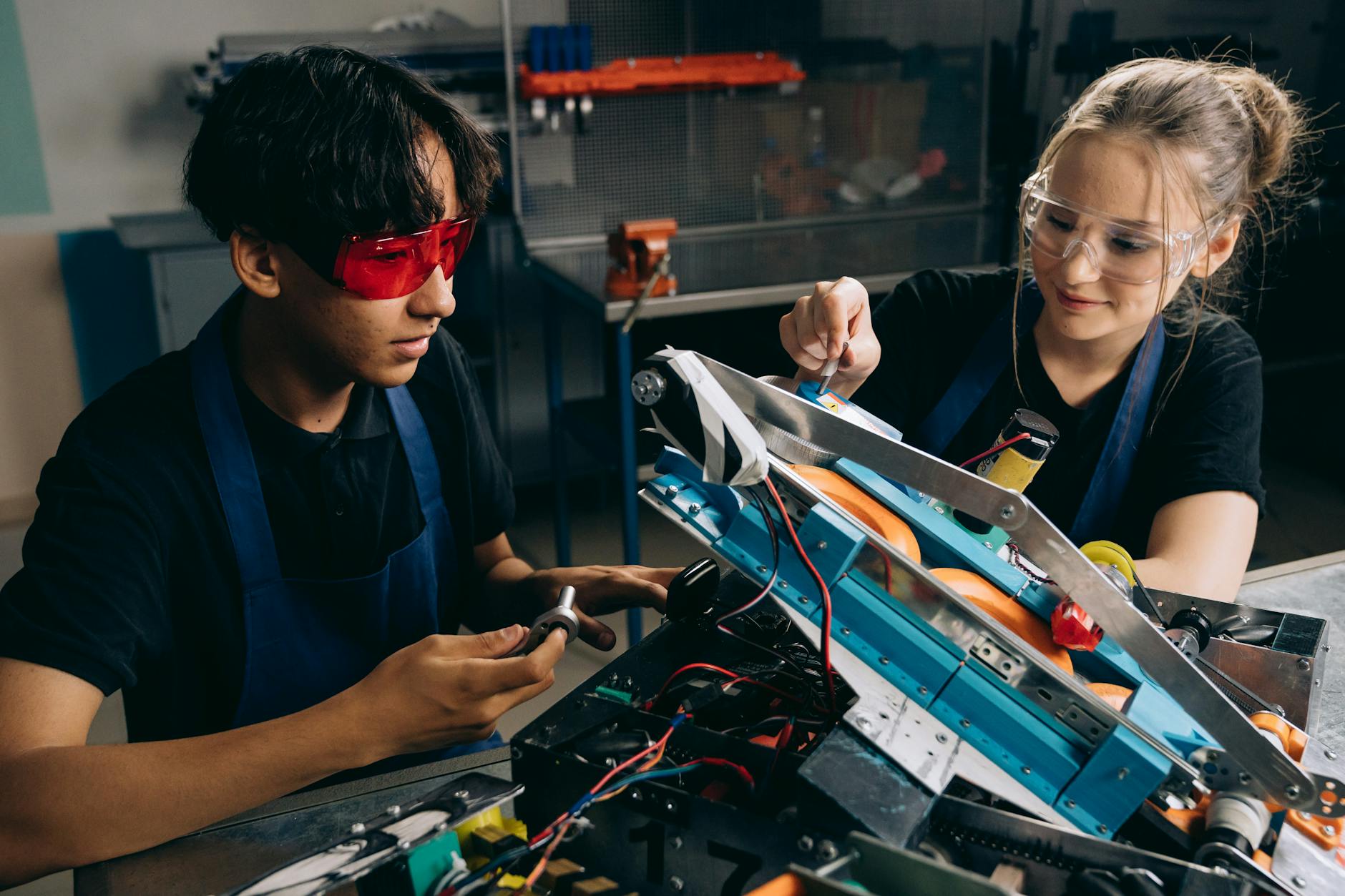
Dr. Linda Silverman's 37-item Visual-Spatial Identifier pinpoints learners who think in pictures, not sequences. These students comprise approximately 30% of your classroom, yet traditional auditory-sequential instruction often misidentifies them as underachieving or distractible. You know the 7th grader who sketches functioning cantilever bridges during math class yet cannot spell "infrastructure"? That is the visual-spatial profile struggling in a text-heavy environment.
These three model schools function as a decision checklist for families desperate for strategies for visual learners:
STEM3 Academy for engineering fixation with integrated autism support.
Templeton Academy for Socratic seminars without standardized curriculum or grades.
Bridges Academy for Hollywood industry pipelines and twice-exceptional psychological services.
All three operate as private micro-schools dependent on tuition ranging from $28,000 to $42,500 annually. Without substantial scholarship endowments, these innovative schools remain inaccessible to most public districts. Study them as aspirational benchmarks, not scalable templates.
STEM3 Academy Model
Dr. Ellis Crasnow founded the Los Angeles campus to serve grades 4 through 12. The school exclusively enrolls twice-exceptional students: documented IQ 120 or higher with co-occurring autism or Asperger's diagnoses. You will not find neurotypical classrooms or separate gifted tracks here.
The facility maintains a 4:1 student-to-staff ratio with $42,500 annual tuition. The maker space houses twelve 3D printers, industrial laser cutters, and CNC machines. Students develop advanced spatial reasoning by machining physical prototypes. They do not fill out geometry worksheets.
Occupational therapists co-teach inside engineering labs. During FIRST Robotics competitions, they embed pragmatic language therapy into the build season. A student learns to explain gear ratios while simultaneously practicing eye contact and conversational turn-taking.
Templeton Academy Design
The Washington D.C. and Nashville campuses seat maximum fifteen students around Harkness oval tables. There are no bells, no 50-minute periods, and no letter grades until junior year. Academic days run exactly five hours, leaving afternoons open for expeditionary learning projects and independent study.
Assessment relies on authentic assessment protocols. Students receive twelve-page narrative evaluations twice yearly. They defend mastery portfolios before promotion committees composed of teachers and outside subject experts. This competency-based education model eliminates the high-stakes standardized testing that typically triggers visual-spatial shutdown.
Forty percent of enrollees carry formal dyslexia or ADHD diagnoses. Tuition runs $28,000 with need-blind admission, though financial aid averages only $8,000 per grant. Most middle-class families pay the full freight.
Bridges Academy Approach
The Studio City campus caps total enrollment at seventy-five students across grades 4 through 12. Their sensory-friendly classroom design supports the Da Vinci schedule. Forty percent of the academic day flows into visual-spatial electives. Course offerings include 3D modeling, cinematography, and architectural drafting.
Psychometric testing identifies each student's "superpowers," typically spatial reasoning or mechanical ability. These strengths drive fifty percent of the final transcript. Remediation happens discreetly through the Chartwell Literacy pull-out program, making sure students never miss electives for basic skills tutoring.
The outcomes validate the strength-based approach. Ninety-five percent of graduates enroll in four-year colleges, primarily entering visual arts and engineering programs at ArtCenter, CalArts, and MIT. This track record establishes Bridges as one of the best schools for visual spatial learners seeking early college high school pathways into creative industries.

Innovative Public School Redesigns
AltSchool Micro-Schools
Max Ventilla launched AltSchool in 2013 with eight micro-schools charging $30,000 yearly tuition. Despite $40 million in venture capital, the San Francisco locations closed in August 2019 after proving financially unsustainable. Operational costs ran north of $50,000 per student annually.
The failure holds a lesson for public districts. AltSchool burned through $10 million yearly on engineering salaries alone to maintain its personalized learning platform. You cannot sustain that research and development on public budgets. The playlist software required expensive iteration that public finance cannot support.
The platform survives under Higher Ground Education Montessori schools. However, these micro-schools failed as model schools for public replication without massive private investment. The physical sites remain defunct.
Van Meter Community Schools
Shannon McClintock Miller leads this rural Iowa district of 1,100 students. Since 2009, the 1:World initiative gives every child a take-home MacBook for a $400 annual tech fee. The district runs Genius Hour blocks weekly, giving students sixty minutes for expeditionary learning projects.
They converted traditional libraries into open learning commons with modular furniture. The initial $150,000 investment covered five classrooms. Students move tables, write on walls, and record podcasts in small studios. The flexible spaces changed how teachers deliver instruction.
Results show 95% graduation and 85% post-secondary enrollment. Van Meter achieves this on standard Iowa per-pupil funding of roughly $11,000. They repurposed textbook budgets for digital resources and professional development.
Lindsay Unified Performance-Based Model
This Central Valley district serves 4,000 students, 95% qualifying for free or reduced lunch. In 2009, Lindsay eliminated grade levels entirely. Students progress through performance bands only after demonstrating mastery using performance-based assessment models and authentic assessment.
Graduation rates climbed from 82% to 94% between 2009 and 2023. Disciplinary incidents dropped 60% after removing Carnegie unit seat-time requirements. Students no longer advance simply by sitting in chairs for 180 days.
The transformation required five years and $1.2 million. That covered $600 per teacher yearly for professional development, PowerSchool customization, and community communication campaigns. Districts expecting competency-based education transformation in eighteen months will fail. Lindsay used standard California ADA funding of $13,000 per pupil.
How to Choose the Right Model for Your District
You cannot photocopy High Tech High and expect it to work in rural Mississippi. Context dictates everything. Use this decision tree to match your constraints with the right architecture before you waste three years and morale on a mismatch.
Step 1: Assess Your Testing Pressure
If your state has takeover laws and your scores hover near the threshold, stop reading about expeditionary learning. Choose the BASIS academic model. It preserves your school through tested AP performance and predictable metrics that satisfy state boards. If your scores are safe and your superintendent tolerates variance, then project-based learning becomes viable. Ignore this step and you will watch your school close before the innovation takes root.
Step 2: Calculate Your Innovation Budget
Be honest about per-pupil spending available for redesign, not general operations. Under $10K annually? Look at Lindsay Unified's competency-based education framework. It requires minimal new hires, just relentless reassessment of existing standards and free tools. Between $10K-$15K? New Tech Network provides the learning platform and embedded literacy coaches. Above $15K with five-year leadership stability? You can attempt High Tech High replication, including the 16-to-1 staffing ratios that make authentic assessment feasible.
Red Flags: When to Say No
Some pairings fail predictably. Check these non-negotiables before you sign contracts.
Do not choose High Tech High if your teacher evaluation rubric weights standardized test scores above 30%. The model thrives on authentic assessment that often suppresses bubble-sheet prep, setting up your staff for failure.
Do not choose Big Picture Learning if your special education compliance rate sits below 95%. The internship model creates IEP documentation nightmares when coordination slips even slightly.
Do not attempt AltSchool-style micro-schools without a five-million-dollar multi-year commitment. The platform costs alone will drown a standard Title I budget before you serve a single twice-exceptional student.
The 3-Year Implementation Timeline
Year One needs patience. Q1-Q2: Audit staff capacity and commit to forty hours of PBL training. Not twelve. Forty. Send your instructional coach first. Q3-Q4: Pilot with exactly two volunteer teachers, preferably teaching adjacent grades so they can plan together and share students. Do not expand beyond these two.
Year Two expands by grade level, not by teacher preference. Add one grade team at a time. This prevents the islands-of-excellence problem where one 7th grade section operates like an innovative school while 8th grade remains traditional lecture-hall style. Use this year to solidify competency-based education rituals like defense of learning exhibitions.
Year Three brings full school transformation. By October of that year, every student should encounter competency-based progressions across core subjects. If you are serving twice-exceptional students, ensure your early college high school pathways include executive function scaffolding by this point. For the detailed change management steps, see our guide on implementing educational change effectively.
Model schools look magical on video. They are not. They are simply intentional matches between philosophy and resource reality. Choose accordingly.
Bringing Model School Strategies to Your Classroom
You don't need new buildings or Silicon Valley budgets to borrow from innovative teaching methodologies. These three adaptations cost nothing but change everything.
Start With Zero Dollars
Exhibition Nights. Clear the cafeteria one evening. Invite community judges—parents, baristas, retirees. Students present three-week projects using single-page rubrics. You get the High Tech High effect without the architecture.
20Time Projects. Dedicate Friday afternoons to self-directed learning. Students pitch passion projects using simple protocols. You shift from lecturer to advisor. This builds the self-regulation that active learning strategies demand.
Harkness Discussions. Arrange desks in an oval. Post Socratic question stems on the board. Step back and let students run the discussion. The Templeton model runs on furniture you already own.
What Breaks First
Buying Chromebooks before writing rubrics for authentic assessment amplifies bad pedagogy. Launching Genius Hour without teaching time management produces chaos. Adding advisory periods without reducing class loads burns teachers out. Fix the systems before adding the tools.
Check Your Readiness
Rate yourself: comfort with ambiguity (1-10), experience with backwards design (1-10), grading flexibility (1-10). Score under 21? Start with Lindsay-style competency tracking. Model schools look effortless because they mastered competency-based education before building complex projects.

Model Schools: The 3-Step Kickoff
You have now seen how real model schools turn progressive theory into Tuesday morning practice. These campuses prove that competency-based education and tailored supports for twice-exceptional students work at real scale. They show you exactly how to structure feedback loops, schedule blocks, and redesign space without waiting for district-wide permission. The barrier was never your willingness to change; it was seeing the specific blueprint that makes radical shifts feel manageable.
You do not need a bond vote or a new wing to begin. Start with your very next unit. Pick one tactic from the schools that felt possible in your context, and run a two-week pilot with your current roster. Small tests beat big announcements every time, and your students will tell you quickly what is actually helping them learn.
Audit next week. Find one 45-minute block where students typically disengage.
Swap in one move. Try a competency-based checkpoint, a visual-spatial thinking routine, or a 15-minute expeditionary learning launch.
Decide by Friday. Keep the strategy if twice-exceptional students and your other learners lean in; scrap it if it only adds paperwork.

What Are the Best STEM-Focused Model Schools?
If you are looking for STEM-focused model schools that actually work, consider High Tech High in San Diego for project-based work, BASIS Charter Schools for AP-intensive academics, and the Science Academy of South Texas for early college pathways. These innovative schools represent distinct approaches to integrative STEM education models, serving different student populations and district contexts.
Campus Name | Location | Grades Served | STEM Signature Program | Average AP Exams Per Student | Annual Cost/Tuition | College Acceptance Rate |
|---|---|---|---|---|---|---|
High Tech High | San Diego, CA | 9-12 | Project-based exhibitions | 0 (no AP offered) | $0 (public charter) | 99% |
Science Academy of South Texas | Mercedes, TX | 9-14 | Early college dual enrollment | N/A (Associate degree) | $0 (public magnet) | ~100% |
BASIS Charter Schools | Arizona (27 campuses) | K-12 | Comprehensive exams/AP | 11 | $0 tuition, $2,000+ fees | 90%+ AP pass rate |
When NOT to Use This Model: BASIS-style AP-heavy curricula require robust wellness supports. If your district adopts this framework without dedicated counseling resources, you risk severe student burnout and attrition. These rigorous STEM environments can overwhelm twice-exceptional students who need social-emotional scaffolding alongside academic challenge. Expect homework loads exceeding three hours nightly.
High Tech High Network Campuses
Larry Rosenstock founded this San Diego network in 2000. Four campuses serve grades 9-12 with no tracking and zero AP courses. Your students demonstrate mastery through public exhibitions where they defend projects to community experts rather than taking standardized tests.
The network reports a 99% four-year college acceptance rate despite ignoring AP classes entirely. Their Wall of Honor shows student work quarterly to industry professionals from Qualcomm and Scripps Research. This authentic assessment model replaces exams with real-world deliverables that mirror professional presentations.
Your seniors complete 150 internship hours with mentors in biotech or engineering firms. These expeditionary learning experiences often convert to job offers before graduation. The approach suits self-directed learners but may challenge students in your building who need explicit step-by-step instruction.
The Science Academy of South Texas
This Mercedes campus serves grades 9-14 as an early college high school partnered with Texas State Technical College. Your students earn associate degrees in engineering or computer science alongside their high school diplomas. The public magnet charges zero tuition while providing college credits.
The demographic profile shows 98% Hispanic enrollment and 85% first-generation college students. Staff target 100% graduation rates through mandatory summer bridge programs for incoming freshmen. These four-week intensives close foundational math and literacy gaps before your fall semester begins.
Unlike micro-schools, this campus serves 800-plus students with curriculum aligned to Rio Grande Valley industry needs. Graduates enter local technical careers or transfer as juniors to four-year universities. The model needs year-round schooling but removes financial barriers for low-income families in your community.
BASIS Charter School Models
The Arizona-based charter network operates 27 campuses using European-style comprehensive exams. AP courses begin in 8th grade, and seniors defend 150-page research theses before graduation. This competency-based approach prioritizes direct instruction and standardized test mastery over the project-based assessment you saw at High Tech High.
While tuition-free, families pay $2,000-plus annually for international competitions, lab materials, and exam fees. Students average 11 AP exams by graduation with 90% plus pass rates. This output contrasts sharply with High Tech High's approach, demonstrating that different pedagogical philosophies can both produce STEM-ready graduates for your district.
BASIS works best for academically precocious students with strong home support systems. If you adopt this framework, hire dedicated wellness counselors to prevent burnout. Without these resources, even gifted learners and twice-exceptional students in your classrooms struggle under the intensive workload and high-stakes testing culture.
Which Schools Lead in Project-Based Learning?
Schools leading in project-based learning include New Tech High (Napa) for technology-integrated team projects using the Echo platform, Big Picture Learning academies for internship-centered study with 15:1 advisor ratios, and Expeditionary Learning campuses for rigorous expeditions combining Outward Bound principles with standards-based assessment.
These three model schools dominate the PBL field. Each takes a different path to competency-based education. Check our Project-Based Learning implementation guide before choosing. Your resources and staffing stability determine which fits.
New Tech runs tech-heavy with 1:1 devices. Big Picture runs advisory-heavy with 15:1 ratios and two days weekly off-campus. EL Education runs crew-heavy with outdoor expeditions and authentic assessment through final products.
Implementation timelines vary sharply:
New Tech requires 18-month NTN membership ($150K+ per cohort)
Big Picture needs 3-year whole-school transformation
EL Education requires 2-year crew culture build
Big Picture's advisory model fails without consistent staff. Districts experiencing over 20% annual teacher turnover should stabilize retention before adopting this innovative school design.
New Tech High Schools
New Tech High in Napa runs on Echo, an LMS built specifically for team-taught interdisciplinary projects. Teachers share rosters and grade shared assignments through the platform. Every student has a device. Projects cross subject boundaries regularly, combining math and physics or history and literature. Seniors must complete 120-hour internships before graduation, similar to early college high school programs but without the dual credit focus. These happen in local businesses and government offices. The school uses proficiency-based grading on a 1-4 scale instead of traditional percentages.
NTN school membership runs $155,000 for the initial three-year partnership. This covers up to 600 students, platform licensing, and intensive teacher training. The flagship campus enrolls 65% Latino students and reports an 80% college acceptance rate. Most graduates head to Cal State or UC campuses. The model needs 18 months to implement fully. You cannot rush the platform rollout or the shift to team teaching.
Big Picture Learning Academies
Big Picture Learning started in Providence with founders Dennis Littky and Elliot Washor. The model assigns one advisor to fifteen students for all four years. This creates stability for twice-exceptional students who need consistent adult relationships. The advisor teaches all core subjects and tracks internship progress. Learning Through Internship places students at real worksites like RI Hospital or local design firms two days weekly. They leave campus to learn.
Students draft detailed learning plans with mentors, document 200+ hours per semester, and defend their work at public exhibitions for family and advisors. These exhibitions happen quarterly. Students present evidence of growth against personal goals. This advisory-heavy structure requires stable staffing. Districts with over 20% annual teacher turnover should not attempt the model until retention stabilizes. Advisors cannot be replaced mid-year without destroying trust. Big Picture schools report 70% college persistence rates for low-income students, compared to 30% national averages for similar demographics.
Expeditionary Learning Campuses
EL Education campuses follow the Expeditionary Learning framework, rooted in Outward Bound principles. Unlike micro-schools, these are full-scale campuses. Students join Crews of fifteen peers meeting daily for character building and academic support. Crews stay together for years. Academic work happens in 6-12 week interdisciplinary expeditions culminating in high-quality final products shared with authentic audiences. These might be zoology field guides or historical documentaries.
The literacy block runs 2-3 hours daily, mixing structured phonics with deeper instruction blocks. Teachers use the Models of Excellence gallery to benchmark student writing against professional examples from published authors. Students revise work multiple times to meet these standards. School partnership starts at $75,000 annually. This includes required curriculum materials and a mandatory 5-day summer institute for all instructional staff. Everyone attends, including principals. The crew culture build takes two years before the model runs smoothly.
Top Campuses for Visual-Spatial Learners
Dr. Linda Silverman's 37-item Visual-Spatial Identifier pinpoints learners who think in pictures, not sequences. These students comprise approximately 30% of your classroom, yet traditional auditory-sequential instruction often misidentifies them as underachieving or distractible. You know the 7th grader who sketches functioning cantilever bridges during math class yet cannot spell "infrastructure"? That is the visual-spatial profile struggling in a text-heavy environment.
These three model schools function as a decision checklist for families desperate for strategies for visual learners:
STEM3 Academy for engineering fixation with integrated autism support.
Templeton Academy for Socratic seminars without standardized curriculum or grades.
Bridges Academy for Hollywood industry pipelines and twice-exceptional psychological services.
All three operate as private micro-schools dependent on tuition ranging from $28,000 to $42,500 annually. Without substantial scholarship endowments, these innovative schools remain inaccessible to most public districts. Study them as aspirational benchmarks, not scalable templates.
STEM3 Academy Model
Dr. Ellis Crasnow founded the Los Angeles campus to serve grades 4 through 12. The school exclusively enrolls twice-exceptional students: documented IQ 120 or higher with co-occurring autism or Asperger's diagnoses. You will not find neurotypical classrooms or separate gifted tracks here.
The facility maintains a 4:1 student-to-staff ratio with $42,500 annual tuition. The maker space houses twelve 3D printers, industrial laser cutters, and CNC machines. Students develop advanced spatial reasoning by machining physical prototypes. They do not fill out geometry worksheets.
Occupational therapists co-teach inside engineering labs. During FIRST Robotics competitions, they embed pragmatic language therapy into the build season. A student learns to explain gear ratios while simultaneously practicing eye contact and conversational turn-taking.
Templeton Academy Design
The Washington D.C. and Nashville campuses seat maximum fifteen students around Harkness oval tables. There are no bells, no 50-minute periods, and no letter grades until junior year. Academic days run exactly five hours, leaving afternoons open for expeditionary learning projects and independent study.
Assessment relies on authentic assessment protocols. Students receive twelve-page narrative evaluations twice yearly. They defend mastery portfolios before promotion committees composed of teachers and outside subject experts. This competency-based education model eliminates the high-stakes standardized testing that typically triggers visual-spatial shutdown.
Forty percent of enrollees carry formal dyslexia or ADHD diagnoses. Tuition runs $28,000 with need-blind admission, though financial aid averages only $8,000 per grant. Most middle-class families pay the full freight.
Bridges Academy Approach
The Studio City campus caps total enrollment at seventy-five students across grades 4 through 12. Their sensory-friendly classroom design supports the Da Vinci schedule. Forty percent of the academic day flows into visual-spatial electives. Course offerings include 3D modeling, cinematography, and architectural drafting.
Psychometric testing identifies each student's "superpowers," typically spatial reasoning or mechanical ability. These strengths drive fifty percent of the final transcript. Remediation happens discreetly through the Chartwell Literacy pull-out program, making sure students never miss electives for basic skills tutoring.
The outcomes validate the strength-based approach. Ninety-five percent of graduates enroll in four-year colleges, primarily entering visual arts and engineering programs at ArtCenter, CalArts, and MIT. This track record establishes Bridges as one of the best schools for visual spatial learners seeking early college high school pathways into creative industries.
Innovative Public School Redesigns
AltSchool Micro-Schools
Max Ventilla launched AltSchool in 2013 with eight micro-schools charging $30,000 yearly tuition. Despite $40 million in venture capital, the San Francisco locations closed in August 2019 after proving financially unsustainable. Operational costs ran north of $50,000 per student annually.
The failure holds a lesson for public districts. AltSchool burned through $10 million yearly on engineering salaries alone to maintain its personalized learning platform. You cannot sustain that research and development on public budgets. The playlist software required expensive iteration that public finance cannot support.
The platform survives under Higher Ground Education Montessori schools. However, these micro-schools failed as model schools for public replication without massive private investment. The physical sites remain defunct.
Van Meter Community Schools
Shannon McClintock Miller leads this rural Iowa district of 1,100 students. Since 2009, the 1:World initiative gives every child a take-home MacBook for a $400 annual tech fee. The district runs Genius Hour blocks weekly, giving students sixty minutes for expeditionary learning projects.
They converted traditional libraries into open learning commons with modular furniture. The initial $150,000 investment covered five classrooms. Students move tables, write on walls, and record podcasts in small studios. The flexible spaces changed how teachers deliver instruction.
Results show 95% graduation and 85% post-secondary enrollment. Van Meter achieves this on standard Iowa per-pupil funding of roughly $11,000. They repurposed textbook budgets for digital resources and professional development.
Lindsay Unified Performance-Based Model
This Central Valley district serves 4,000 students, 95% qualifying for free or reduced lunch. In 2009, Lindsay eliminated grade levels entirely. Students progress through performance bands only after demonstrating mastery using performance-based assessment models and authentic assessment.
Graduation rates climbed from 82% to 94% between 2009 and 2023. Disciplinary incidents dropped 60% after removing Carnegie unit seat-time requirements. Students no longer advance simply by sitting in chairs for 180 days.
The transformation required five years and $1.2 million. That covered $600 per teacher yearly for professional development, PowerSchool customization, and community communication campaigns. Districts expecting competency-based education transformation in eighteen months will fail. Lindsay used standard California ADA funding of $13,000 per pupil.
How to Choose the Right Model for Your District
You cannot photocopy High Tech High and expect it to work in rural Mississippi. Context dictates everything. Use this decision tree to match your constraints with the right architecture before you waste three years and morale on a mismatch.
Step 1: Assess Your Testing Pressure
If your state has takeover laws and your scores hover near the threshold, stop reading about expeditionary learning. Choose the BASIS academic model. It preserves your school through tested AP performance and predictable metrics that satisfy state boards. If your scores are safe and your superintendent tolerates variance, then project-based learning becomes viable. Ignore this step and you will watch your school close before the innovation takes root.
Step 2: Calculate Your Innovation Budget
Be honest about per-pupil spending available for redesign, not general operations. Under $10K annually? Look at Lindsay Unified's competency-based education framework. It requires minimal new hires, just relentless reassessment of existing standards and free tools. Between $10K-$15K? New Tech Network provides the learning platform and embedded literacy coaches. Above $15K with five-year leadership stability? You can attempt High Tech High replication, including the 16-to-1 staffing ratios that make authentic assessment feasible.
Red Flags: When to Say No
Some pairings fail predictably. Check these non-negotiables before you sign contracts.
Do not choose High Tech High if your teacher evaluation rubric weights standardized test scores above 30%. The model thrives on authentic assessment that often suppresses bubble-sheet prep, setting up your staff for failure.
Do not choose Big Picture Learning if your special education compliance rate sits below 95%. The internship model creates IEP documentation nightmares when coordination slips even slightly.
Do not attempt AltSchool-style micro-schools without a five-million-dollar multi-year commitment. The platform costs alone will drown a standard Title I budget before you serve a single twice-exceptional student.
The 3-Year Implementation Timeline
Year One needs patience. Q1-Q2: Audit staff capacity and commit to forty hours of PBL training. Not twelve. Forty. Send your instructional coach first. Q3-Q4: Pilot with exactly two volunteer teachers, preferably teaching adjacent grades so they can plan together and share students. Do not expand beyond these two.
Year Two expands by grade level, not by teacher preference. Add one grade team at a time. This prevents the islands-of-excellence problem where one 7th grade section operates like an innovative school while 8th grade remains traditional lecture-hall style. Use this year to solidify competency-based education rituals like defense of learning exhibitions.
Year Three brings full school transformation. By October of that year, every student should encounter competency-based progressions across core subjects. If you are serving twice-exceptional students, ensure your early college high school pathways include executive function scaffolding by this point. For the detailed change management steps, see our guide on implementing educational change effectively.
Model schools look magical on video. They are not. They are simply intentional matches between philosophy and resource reality. Choose accordingly.
Bringing Model School Strategies to Your Classroom
You don't need new buildings or Silicon Valley budgets to borrow from innovative teaching methodologies. These three adaptations cost nothing but change everything.
Start With Zero Dollars
Exhibition Nights. Clear the cafeteria one evening. Invite community judges—parents, baristas, retirees. Students present three-week projects using single-page rubrics. You get the High Tech High effect without the architecture.
20Time Projects. Dedicate Friday afternoons to self-directed learning. Students pitch passion projects using simple protocols. You shift from lecturer to advisor. This builds the self-regulation that active learning strategies demand.
Harkness Discussions. Arrange desks in an oval. Post Socratic question stems on the board. Step back and let students run the discussion. The Templeton model runs on furniture you already own.
What Breaks First
Buying Chromebooks before writing rubrics for authentic assessment amplifies bad pedagogy. Launching Genius Hour without teaching time management produces chaos. Adding advisory periods without reducing class loads burns teachers out. Fix the systems before adding the tools.
Check Your Readiness
Rate yourself: comfort with ambiguity (1-10), experience with backwards design (1-10), grading flexibility (1-10). Score under 21? Start with Lindsay-style competency tracking. Model schools look effortless because they mastered competency-based education before building complex projects.
Model Schools: The 3-Step Kickoff
You have now seen how real model schools turn progressive theory into Tuesday morning practice. These campuses prove that competency-based education and tailored supports for twice-exceptional students work at real scale. They show you exactly how to structure feedback loops, schedule blocks, and redesign space without waiting for district-wide permission. The barrier was never your willingness to change; it was seeing the specific blueprint that makes radical shifts feel manageable.
You do not need a bond vote or a new wing to begin. Start with your very next unit. Pick one tactic from the schools that felt possible in your context, and run a two-week pilot with your current roster. Small tests beat big announcements every time, and your students will tell you quickly what is actually helping them learn.
Audit next week. Find one 45-minute block where students typically disengage.
Swap in one move. Try a competency-based checkpoint, a visual-spatial thinking routine, or a 15-minute expeditionary learning launch.
Decide by Friday. Keep the strategy if twice-exceptional students and your other learners lean in; scrap it if it only adds paperwork.
Still grading everything by hand?
EMStudio is a free teaching management app — manage your classes, students, lessons, and more!
Learn More
Still grading everything by hand?
EMStudio is a free teaching management app — manage your classes, students, lessons, and more!
Learn More




Notion4Teachers
Notion templates to simplify administrative tasks and enhance your teaching experience.



2026 Notion4Teachers. All Rights Reserved.
Notion4Teachers
Notion templates to simplify administrative tasks and enhance your teaching experience.
2026 Notion4Teachers. All Rights Reserved.
Notion4Teachers
Notion templates to simplify administrative tasks and enhance your teaching experience.
2026 Notion4Teachers. All Rights Reserved.