
Utopia Education: 12 Resources for Future-Ready Classrooms
Utopia Education: 12 Resources for Future-Ready Classrooms

Article by
Milo
ESL Content Coordinator & Educator
ESL Content Coordinator & Educator
All Posts
Last October, my 7th graders were video-chatting with a classroom in Kenya while simultaneously collaborating on a shared digital whiteboard. I stood back and watched them solve a climate change project together in real-time, and I realized this was the classroom I'd always imagined but never quite reached in my first five years of teaching.
That moment sent me hunting for what I now call utopia education — the specific resources that actually deliver on future-ready classrooms without burying you in endless login credentials. You know the gap. You see the potential in your students, but finding the hubs and platforms that truly move the needle eats up hours you don't have.
This post cuts through that noise. I've tested twelve resources across research hubs, equity organizations, and global connection platforms that support innovative teaching practices without the fluff. You'll find advocacy groups that fight for educational equity, professional development that respects your time, and project-based learning resources that feel manageable even on a Monday morning.
Still grading everything by hand?
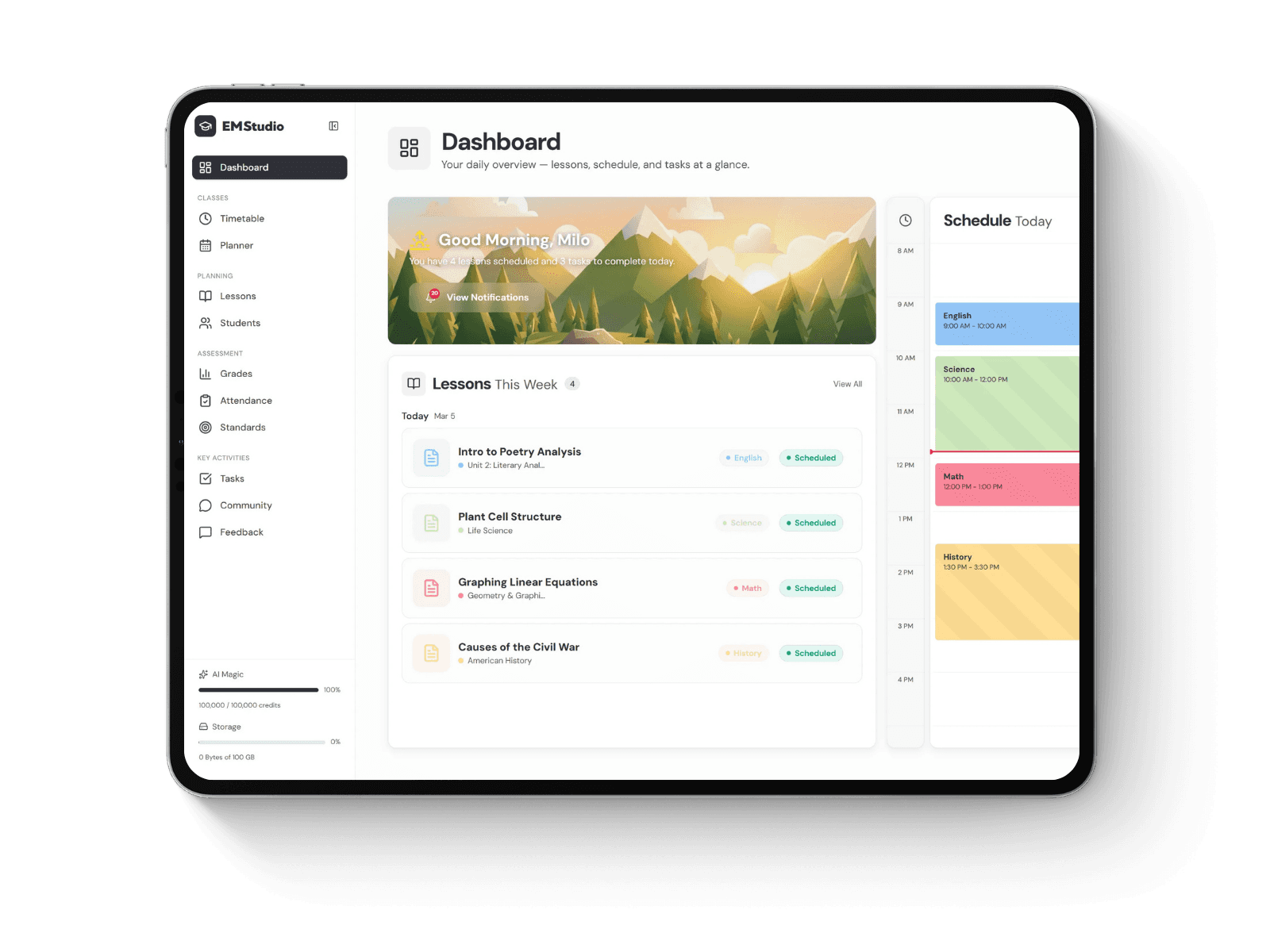
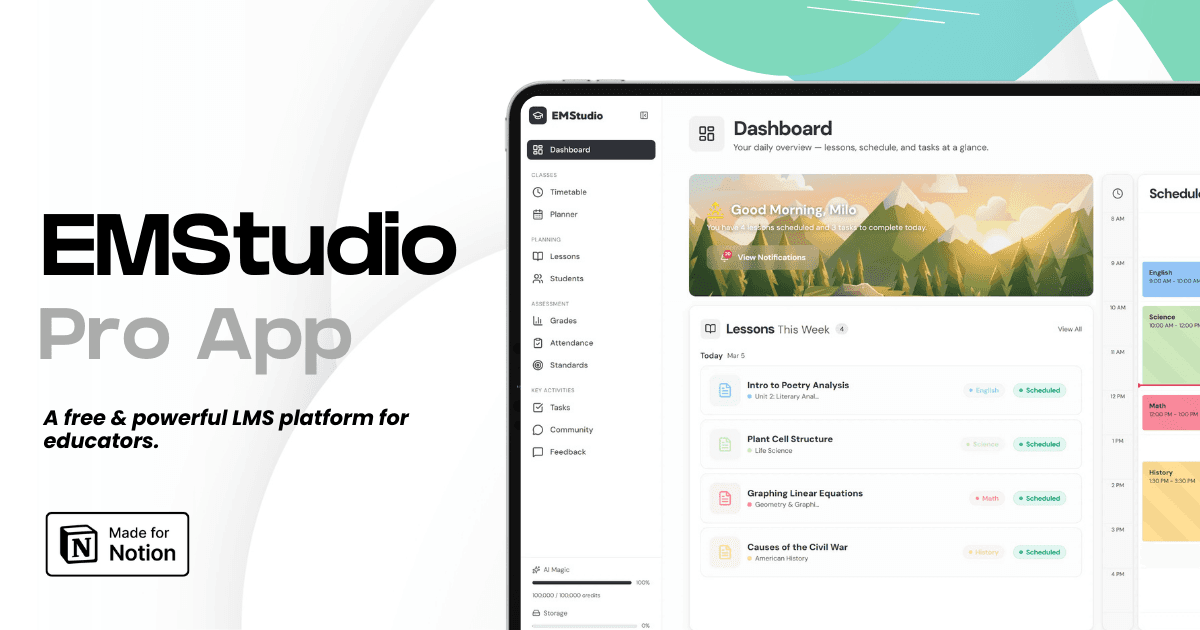
EMStudio is a free teaching management app — manage your classes, students, lessons, and more!
Learn More
Still grading everything by hand?
EMStudio is a free teaching management app — manage your classes, students, lessons, and more!
Learn More
Table of Contents
What Are the Best Research Hubs for Innovative Practices?
The best research hubs for innovative practices include the George Lucas Educational Foundation (Edutopia) for project-based learning video case studies, Educator Innovator for literacy-focused connected learning grants up to $15,000, and TeachThought Network for critical thinking frameworks and daily pedagogical essays. These platforms offer free, evidence-based resources with grade-specific filters.
Utopia education resources combine evidence-based pedagogy with practical K-12 tools. These platforms bridge the gap between academic research and your Monday morning lesson plans. You will find video case studies, grant networks, and critical thinking frameworks tailored to real classrooms pursuing innovative teaching methods and educational equity.
Think of these three hubs as a progression of media types. Edutopia gives you visual documentary proof of what works. Educator Innovator centers youth voice and written application processes. TeachThought offers analytical text for deep pedagogical reflection.
Organization | Content Update Frequency | Primary Format | Registration Requirement | Mobile App Availability |
|---|---|---|---|---|
Edutopia | Daily | Video/Documentary | Optional | Yes |
Educator Innovator | Grant-cycle based | Grant Writing/Youth Voice | Required for funding | No |
TeachThought Network | Daily | Text/Essays | Email required | No |
Research on professional development suggests teachers accessing three or more hubs weekly report higher curriculum satisfaction. However, you must time-block strictly. Twenty minutes of focused browsing beats two hours of falling down rabbit holes.
George Lucas Educational Foundation (Edutopia)
The George Lucas Educational Foundation launched in 1991 with roughly $6 million in annual operating budget. Their nonprofit status keeps everything free and ad-free. You will not hit paywalls while watching their documentary content, which matters when you are planning during your prep period.
Their strategy pairs project-based learning resources with social-emotional support. The Schools That Work series has over sixty episodes running eight to twelve minutes each. You see real teachers managing real chaos while hitting academic standards in actual school buildings.
Downloadable PBL planning templates come with attached rubrics for grades K-12. You can filter their differentiation strategies database by subject, grade band, and specific classroom demographics. I used their elementary literacy templates last October with my third graders during a nonfiction unit, and the attached rubric saved me forty minutes of grading time. The video case studies prove these strategies work in diverse settings.
Educator Innovator
Educator Innovator operates as a National Writing Project initiative that started in 2013. They apply connected learning principles specifically to secondary literacy classrooms. Their approach remains peer-supported, interest-powered, and academically oriented toward future-ready classrooms with authentic youth voice at the center.
Their flagship LRNG Innovators Challenge awards implementation grants between $5,000 and $15,000 for secondary teachers. You can redesign physical learning spaces or daily schedules with this funding. The application window runs February through April with decisions returned within sixty days of submission.
Their micro-credentialing system offers digital badges in Youth Participatory Action Research and Civic Engagement. Each badge requires fifteen to twenty hours of documented student work and reflection. You submit teacher analysis alongside the student portfolios to demonstrate innovative teaching practices and educational equity in action. The digital badge format works well for your own professional portfolio.
TeachThought Network
TeachThought Network started in 2012 under former classroom teacher Terry Heick. The newsletter reaches over fifty thousand subscribers with daily three-hundred-word pedagogical essays focused on inquiry-based instruction and critical reflection for teacher professional development.
Heick developed the TeachThought Taxonomy as an alternative to Bloom's framework. It organizes six levels from Recall to Self-Knowledge. Each tier includes specific question stems and cognitive actions you can use tomorrow during your global classroom connections discussions.
The TeachThought Podcast has over two hundred episodes averaging forty-five minutes of runtime. Classroom teachers describe specific unit failures and subsequent instructional pivots. You hear honest conversations about what broke and how they fixed it without edu-jargon or false optimism. These stories normalize the messiness of innovative teaching practices.

Which Organizations Lead the Equity and Social Justice Movement?
Leading equity and social justice organizations include Education 4 Equity for district-level equity audits and leadership training ($2,500-$7,500), We Are Educators for collective bargaining and funding advocacy with 3.2 million members, and Learning for Justice for K-12 anti-bias curriculum standards and free classroom resources. Each serves distinct roles in systemic change from classroom to policy level.
These groups form the equity infrastructure behind sustainable change, moving us closer to utopia education where every student has access. They do not offer single lesson plans. Education 4 Equity targets systems, We Are Educators mobilizes people, and Learning for Justice builds curriculum standards.
Education 4 Equity: Leadership training / $2,500-$7,500 / District administrators / 450+ districts served
We Are Educators: Policy advocacy / Membership dues / Local chapter leaders / 3.2 million members
Learning for Justice: Curriculum standards / Free / Classroom teachers / 500+ learning plans
Studies on teacher professional development indicate that sustained equity training—twenty or more contact hours—correlates with measurable reductions in disciplinary disproportionality and course access gaps. I watched three years of one-off workshops change exactly zero discipline referrals in my building. You need sustained support.
These resources approach equity through complementary lenses. We Are Educators handles organizing and mobilization. Learning for Justice provides instructional materials for anti-bias education in the classroom. Education 4 Equity redesigns administrative systems using culturally responsive teaching principles. This triad covers the classroom, the staffroom, and the boardroom.
Education 4 Equity
Dr. Stephanie Wood-Garnett founded this organization in 2018 after serving as a state education commissioner. It now serves over 450 districts across 35 states. Their flagship Equity Audit Protocol is a free thirty-page downloadable PDF analyzing discipline data, advanced course enrollment patterns, and staff diversity across twelve quantitative indicators. Their Professional learning institutes run multi-day training sessions costing $2,500 for small districts under 1,000 students and $7,500 for large districts over 10,000, focusing on equitable grading practices, culturally responsive leadership, and resource allocation models.
We Are Educators
With 3.2 million members across 14,000 local chapters, this is the largest educator-led advocacy organization in North America. Their specific campaigns include Fund Our Future, targeting state-level per-pupil funding increases through legislative lobbying, and Red for Ed, which provides organizing toolkits for walk-ins, sick-outs, and electoral advocacy including media training templates. New chapters complete a six-week onboarding sequence covering collective bargaining basics, contract enforcement strategies, and grievance filing procedures.
Learning for Justice
This Southern Poverty Law Center educational program operated as Teaching Tolerance from 1991 until rebranding in 2021 to emphasize action-oriented justice work beyond mere tolerance. Their Social Justice Standards Framework establishes four anchor domains—Identity, Diversity, Justice, and Action—with specific grade-band outcomes for K-2, 3-5, 6-8, and 9-12, totaling twenty standards with measurable student outcomes. The Learning Plan Builder provides project-based learning resources and innovative teaching practices to help you build future-ready classrooms with global classroom connections, allowing you to save and share three-to-four week instructional sequences.

Where Can Teachers Find Professional Support and Advocacy?
Teachers find professional support through National Education Association membership offering $1 million liability insurance and legal defense, Education Support providing 24/7 mental health counseling and burnout recovery coaching, and DonorsChoose enabling classroom material crowdfunding with 88% project success rates and average funding of $512. These address legal protection, wellness maintenance, and material resource gaps respectively.
You need three safety nets: legal protection, mental health support, and material resources for future-ready classrooms.
National Education Association Membership
The national education association membership covers 3 million educators across 14,000 districts. You get $1 million liability insurance and attorneys for disputes. Members access 175 micro-credential courses for teacher professional development costing non-members $75-$200. Full membership averages $600 yearly.
Speed is immediate, but ongoing obligation hits your paycheck monthly. Scalability is national, yet hidden costs emerge in credential fees. Learn about teacher advocacy in educational policy through their lobbying.
Education Support
Education Support opened its U.S. helpline in 2020. They offer 24/7 licensed clinicians and hardship grants averaging £500. Their six-session burnout coaching helps teachers recover.
Their Teacher Wellbeing Index 2023 found 75% of education staff showed stress symptoms. Take their free ten-question Wellbeing Check. This is not utopia education—it is triage.
Access is instant, but ongoing obligation requires admitting vulnerability. Scalability is limited by counselor availability. Hidden costs appear when you need sessions beyond the initial six.
DonorsChoose
DonorsChoose lets you post projects for project-based learning resources. Founded by teacher Charles Best in 2000, it funds 88% of requests averaging $512. Materials ship from pre-approved vendors to public schools and remain school property.
Speed depends on donor interest. Scalability is capped by your networking ability. The hidden cost is reputation: colleagues resent teachers who crowdfund basics districts should provide.
Relying on this for educational equity backfires. Affluent parents fund projects fast while high-poverty schools wait. Use it for innovative teaching practices. Explore career development opportunities for educators.

What Platforms Connect Classrooms to Global Opportunities?
Platforms connecting classrooms globally include Connection Education for live virtual field trips with museums and scientists ($200-$450 per session), Educate Me for structured 6-week cultural exchanges between Arab and Western students ($50/student for premium), and iEARN for long-term collaborative projects spanning 140 countries ($100 classroom fee). Requirements range from standard video conferencing software to specialized project facilitation training.
Not every global connection works the same way. You need to match the platform to your schedule, bandwidth, and your vision for future-ready classrooms.
Connection Education offers synchronous virtual exchange through live video field trips. Educate Me provides structured curriculum-based exchanges with set lesson plans and facilitated sessions. iEARN supports long-term project collaboration spanning months with tangible outcomes like student exchanges and shared research.
Before you book, run a tech check. You need at least 5 Mbps bandwidth per simultaneous video stream to avoid frozen screens. When partnering with classrooms 8+ hours ahead, set up asynchronous "hand-off" models where your students upload work for their partners to continue during their school day. Verify COPPA and FERPA compliance by collecting parental consent for any student under 13 before cameras turn on or data crosses borders. These steps protect your innovative teaching practices and keep your global classroom connections legally sound.
Teachers running global exchanges often pair these platforms with classroom-side tools — a simple qr code generator printed on hand-outs lets students scan straight into a partner classroom's shared whiteboard or project page without typing long URLs, which saves real minutes during a 45-minute session.
For integrating global perspectives in your classroom, iEARN reports participation from 140+ countries with 2 million+ students annually completing collaborative projects. This is the largest sustained global education network and a cornerstone of utopia education initiatives worldwide.
Connection Education
Connection Education delivers live virtual field trips and guest speaker sessions that have been running since 2015. Their partners include the Smithsonian museums, Monterey Bay Aquarium, and NASA facilities. You get a 45-minute interactive videoconference with pre-visit activities sent 48 hours prior and post-visit guides to extend the learning.
Sessions accommodate 30 students maximum for a single classroom configuration. Pricing runs $200-$450 per live session depending on provider complexity. Title I schools receive 50% discounts. Asynchronous recorded session access costs $75 for a 48-hour streaming window.
Educate Me
Educate Me is an Egyptian-founded platform from 2017 that specifically connects MENA region students with U.S. and European peers. The network includes 50,000+ registered users across 90 countries. Their program model runs as a structured 6-week exchange with weekly 90-minute facilitated video sessions.
The curriculum integrates UN Sustainable Development Goals with cultural storytelling and digital literacy skills. Bilingual Arabic/English facilitation comes from trained moderators. The platform maintains COPPA and FERPA compliance, requires background checks for all adult facilitators, and moderates student interactions in real-time to ensure safety.
iEARN Global Learning Network
iEARN Global Learning Network is a nonprofit founded in 1988 and is the oldest sustained virtual exchange organization. They maintain presence in 140+ countries with 50,000+ educators participating. Their model focuses on 3-month collaborative projects with concrete outcomes.
You might join the "Teddy Bear Project" where K-5 students exchange physical mail and digital stories, "Folk Tales Around the World" for grades 6-8 language arts, or "Solar Explorers" for high school engineering design challenges. The $100 annual classroom fee allows unlimited participation, while a $1,500 site license covers your entire school. This includes access to facilitators and exhibition opportunities at their annual virtual conference, supporting teacher professional development through project-based learning resources. For teaching global citizenship strategies, these concrete outcomes give students something tangible to show for their collaboration.

How Do You Evaluate Which Utopia Education Resources Fit Your Needs?
Evaluate utopia education resources by verifying ISTE Standards alignment, calculating 12-month total cost including hidden fees, assessing implementation time against your calendar, and piloting with 10 students before full adoption. Avoid platforms requiring mandatory student data commercialization or lacking educator advisory oversight.
The Four-Criteria Filter
Check ISTE Standards alignment for innovative teaching practices first. Calculate time-to-first-lesson: under three hours prep. Tally true 12-month cost including hidden fees. Demand evidence: ten classroom testimonials validating educational equity outcomes, not marketing gloss.
Red Flags That Kill Adoption
Run if the tool needs student PII for commercial use. Run if they lock you into multi-year contracts without a 30-day trial. Run if no educator advisory board exists. Run if they push project-based learning resources through influencers without verified classroom experience.
The Pilot Protocol
Start with ten students for thirty days. Measure engagement with exit tickets aiming for eighty percent positive response. Test support responsiveness; twenty-four hours or less means they respect teacher professional development time. Scale to full class or abandon.
Why Small Scale Saves You
Research shows sixty-seven percent of failed adoptions stem from skipped pilots and workflow clashes. Small-scale testing prevents district-wide disasters while protecting global classroom connections. Use our educational technology integration guide to build future-ready classrooms.

Building Your Personal Utopia Education Ecosystem
Start small. Pick two or three hubs that align with your immediate goals—maybe project-based learning resources and global classroom connections—and ignore the rest for now. Use Feedly to aggregate their RSS feeds, or create a dedicated email folder labeled "Utopia Education" so updates land in one spot instead of cluttering your inbox with twelve separate streams.
Block fifteen minutes every Friday afternoon for review. Set a Pomodoro timer, scan your feeds, and save exactly one actionable idea. During winter break and summer, conduct a ruthless audit. Unsubscribe from anything you haven't opened since the last holiday to prevent cognitive overload.
Recruit three to five colleagues for a semester-long professional learning community. Rotate who leads the investigation of one new platform every four months. Share implementation notes in a shared drive so the cognitive load distributes evenly across your team.
Aim to actively use seven of the twelve resources annually. That 70% utilization rate prevents resource hoarding. Track last access dates and specific student impact in a simple spreadsheet. This disciplined approach to teacher professional development supports educational equity and innovative teaching practices without burning you out. building an innovation mindset means curating ruthlessly so you can actually execute. That's how you build future-ready classrooms that last.

Where Does Utopia Education Fit in Your Practice?
You don't need all twelve resources running by Monday. I learned that the hard way when I tried onboarding three new platforms during state testing season and watched my gradebook dissolve into chaos. Pick one tool that fixes a specific pain point in your week. If your students need windows to the world, start with a global classroom platform. If you're drowning in outdated curriculum, grab one research hub for fresh strategies.
Your utopia education ecosystem grows one deliberate choice at a time. Last fall, I added just one equity organization to my RSS feed and shifted three entire units by winter break. Small moves compound faster than giant overhauls. The goal isn't future-ready perfection; it's building a practice that feels sustainable and actually serves the kids in front of you.
So look at your roster tomorrow morning. Which one of these twelve resources could change the conversation in your classroom by Friday?
What Are the Best Research Hubs for Innovative Practices?
The best research hubs for innovative practices include the George Lucas Educational Foundation (Edutopia) for project-based learning video case studies, Educator Innovator for literacy-focused connected learning grants up to $15,000, and TeachThought Network for critical thinking frameworks and daily pedagogical essays. These platforms offer free, evidence-based resources with grade-specific filters.
Utopia education resources combine evidence-based pedagogy with practical K-12 tools. These platforms bridge the gap between academic research and your Monday morning lesson plans. You will find video case studies, grant networks, and critical thinking frameworks tailored to real classrooms pursuing innovative teaching methods and educational equity.
Think of these three hubs as a progression of media types. Edutopia gives you visual documentary proof of what works. Educator Innovator centers youth voice and written application processes. TeachThought offers analytical text for deep pedagogical reflection.
Organization | Content Update Frequency | Primary Format | Registration Requirement | Mobile App Availability |
|---|---|---|---|---|
Edutopia | Daily | Video/Documentary | Optional | Yes |
Educator Innovator | Grant-cycle based | Grant Writing/Youth Voice | Required for funding | No |
TeachThought Network | Daily | Text/Essays | Email required | No |
Research on professional development suggests teachers accessing three or more hubs weekly report higher curriculum satisfaction. However, you must time-block strictly. Twenty minutes of focused browsing beats two hours of falling down rabbit holes.
George Lucas Educational Foundation (Edutopia)
The George Lucas Educational Foundation launched in 1991 with roughly $6 million in annual operating budget. Their nonprofit status keeps everything free and ad-free. You will not hit paywalls while watching their documentary content, which matters when you are planning during your prep period.
Their strategy pairs project-based learning resources with social-emotional support. The Schools That Work series has over sixty episodes running eight to twelve minutes each. You see real teachers managing real chaos while hitting academic standards in actual school buildings.
Downloadable PBL planning templates come with attached rubrics for grades K-12. You can filter their differentiation strategies database by subject, grade band, and specific classroom demographics. I used their elementary literacy templates last October with my third graders during a nonfiction unit, and the attached rubric saved me forty minutes of grading time. The video case studies prove these strategies work in diverse settings.
Educator Innovator
Educator Innovator operates as a National Writing Project initiative that started in 2013. They apply connected learning principles specifically to secondary literacy classrooms. Their approach remains peer-supported, interest-powered, and academically oriented toward future-ready classrooms with authentic youth voice at the center.
Their flagship LRNG Innovators Challenge awards implementation grants between $5,000 and $15,000 for secondary teachers. You can redesign physical learning spaces or daily schedules with this funding. The application window runs February through April with decisions returned within sixty days of submission.
Their micro-credentialing system offers digital badges in Youth Participatory Action Research and Civic Engagement. Each badge requires fifteen to twenty hours of documented student work and reflection. You submit teacher analysis alongside the student portfolios to demonstrate innovative teaching practices and educational equity in action. The digital badge format works well for your own professional portfolio.
TeachThought Network
TeachThought Network started in 2012 under former classroom teacher Terry Heick. The newsletter reaches over fifty thousand subscribers with daily three-hundred-word pedagogical essays focused on inquiry-based instruction and critical reflection for teacher professional development.
Heick developed the TeachThought Taxonomy as an alternative to Bloom's framework. It organizes six levels from Recall to Self-Knowledge. Each tier includes specific question stems and cognitive actions you can use tomorrow during your global classroom connections discussions.
The TeachThought Podcast has over two hundred episodes averaging forty-five minutes of runtime. Classroom teachers describe specific unit failures and subsequent instructional pivots. You hear honest conversations about what broke and how they fixed it without edu-jargon or false optimism. These stories normalize the messiness of innovative teaching practices.
Which Organizations Lead the Equity and Social Justice Movement?
Leading equity and social justice organizations include Education 4 Equity for district-level equity audits and leadership training ($2,500-$7,500), We Are Educators for collective bargaining and funding advocacy with 3.2 million members, and Learning for Justice for K-12 anti-bias curriculum standards and free classroom resources. Each serves distinct roles in systemic change from classroom to policy level.
These groups form the equity infrastructure behind sustainable change, moving us closer to utopia education where every student has access. They do not offer single lesson plans. Education 4 Equity targets systems, We Are Educators mobilizes people, and Learning for Justice builds curriculum standards.
Education 4 Equity: Leadership training / $2,500-$7,500 / District administrators / 450+ districts served
We Are Educators: Policy advocacy / Membership dues / Local chapter leaders / 3.2 million members
Learning for Justice: Curriculum standards / Free / Classroom teachers / 500+ learning plans
Studies on teacher professional development indicate that sustained equity training—twenty or more contact hours—correlates with measurable reductions in disciplinary disproportionality and course access gaps. I watched three years of one-off workshops change exactly zero discipline referrals in my building. You need sustained support.
These resources approach equity through complementary lenses. We Are Educators handles organizing and mobilization. Learning for Justice provides instructional materials for anti-bias education in the classroom. Education 4 Equity redesigns administrative systems using culturally responsive teaching principles. This triad covers the classroom, the staffroom, and the boardroom.
Education 4 Equity
Dr. Stephanie Wood-Garnett founded this organization in 2018 after serving as a state education commissioner. It now serves over 450 districts across 35 states. Their flagship Equity Audit Protocol is a free thirty-page downloadable PDF analyzing discipline data, advanced course enrollment patterns, and staff diversity across twelve quantitative indicators. Their Professional learning institutes run multi-day training sessions costing $2,500 for small districts under 1,000 students and $7,500 for large districts over 10,000, focusing on equitable grading practices, culturally responsive leadership, and resource allocation models.
We Are Educators
With 3.2 million members across 14,000 local chapters, this is the largest educator-led advocacy organization in North America. Their specific campaigns include Fund Our Future, targeting state-level per-pupil funding increases through legislative lobbying, and Red for Ed, which provides organizing toolkits for walk-ins, sick-outs, and electoral advocacy including media training templates. New chapters complete a six-week onboarding sequence covering collective bargaining basics, contract enforcement strategies, and grievance filing procedures.
Learning for Justice
This Southern Poverty Law Center educational program operated as Teaching Tolerance from 1991 until rebranding in 2021 to emphasize action-oriented justice work beyond mere tolerance. Their Social Justice Standards Framework establishes four anchor domains—Identity, Diversity, Justice, and Action—with specific grade-band outcomes for K-2, 3-5, 6-8, and 9-12, totaling twenty standards with measurable student outcomes. The Learning Plan Builder provides project-based learning resources and innovative teaching practices to help you build future-ready classrooms with global classroom connections, allowing you to save and share three-to-four week instructional sequences.
Where Can Teachers Find Professional Support and Advocacy?
Teachers find professional support through National Education Association membership offering $1 million liability insurance and legal defense, Education Support providing 24/7 mental health counseling and burnout recovery coaching, and DonorsChoose enabling classroom material crowdfunding with 88% project success rates and average funding of $512. These address legal protection, wellness maintenance, and material resource gaps respectively.
You need three safety nets: legal protection, mental health support, and material resources for future-ready classrooms.
National Education Association Membership
The national education association membership covers 3 million educators across 14,000 districts. You get $1 million liability insurance and attorneys for disputes. Members access 175 micro-credential courses for teacher professional development costing non-members $75-$200. Full membership averages $600 yearly.
Speed is immediate, but ongoing obligation hits your paycheck monthly. Scalability is national, yet hidden costs emerge in credential fees. Learn about teacher advocacy in educational policy through their lobbying.
Education Support
Education Support opened its U.S. helpline in 2020. They offer 24/7 licensed clinicians and hardship grants averaging £500. Their six-session burnout coaching helps teachers recover.
Their Teacher Wellbeing Index 2023 found 75% of education staff showed stress symptoms. Take their free ten-question Wellbeing Check. This is not utopia education—it is triage.
Access is instant, but ongoing obligation requires admitting vulnerability. Scalability is limited by counselor availability. Hidden costs appear when you need sessions beyond the initial six.
DonorsChoose
DonorsChoose lets you post projects for project-based learning resources. Founded by teacher Charles Best in 2000, it funds 88% of requests averaging $512. Materials ship from pre-approved vendors to public schools and remain school property.
Speed depends on donor interest. Scalability is capped by your networking ability. The hidden cost is reputation: colleagues resent teachers who crowdfund basics districts should provide.
Relying on this for educational equity backfires. Affluent parents fund projects fast while high-poverty schools wait. Use it for innovative teaching practices. Explore career development opportunities for educators.
What Platforms Connect Classrooms to Global Opportunities?
Platforms connecting classrooms globally include Connection Education for live virtual field trips with museums and scientists ($200-$450 per session), Educate Me for structured 6-week cultural exchanges between Arab and Western students ($50/student for premium), and iEARN for long-term collaborative projects spanning 140 countries ($100 classroom fee). Requirements range from standard video conferencing software to specialized project facilitation training.
Not every global connection works the same way. You need to match the platform to your schedule, bandwidth, and your vision for future-ready classrooms.
Connection Education offers synchronous virtual exchange through live video field trips. Educate Me provides structured curriculum-based exchanges with set lesson plans and facilitated sessions. iEARN supports long-term project collaboration spanning months with tangible outcomes like student exchanges and shared research.
Before you book, run a tech check. You need at least 5 Mbps bandwidth per simultaneous video stream to avoid frozen screens. When partnering with classrooms 8+ hours ahead, set up asynchronous "hand-off" models where your students upload work for their partners to continue during their school day. Verify COPPA and FERPA compliance by collecting parental consent for any student under 13 before cameras turn on or data crosses borders. These steps protect your innovative teaching practices and keep your global classroom connections legally sound.
Teachers running global exchanges often pair these platforms with classroom-side tools — a simple qr code generator printed on hand-outs lets students scan straight into a partner classroom's shared whiteboard or project page without typing long URLs, which saves real minutes during a 45-minute session.
For integrating global perspectives in your classroom, iEARN reports participation from 140+ countries with 2 million+ students annually completing collaborative projects. This is the largest sustained global education network and a cornerstone of utopia education initiatives worldwide.
Connection Education
Connection Education delivers live virtual field trips and guest speaker sessions that have been running since 2015. Their partners include the Smithsonian museums, Monterey Bay Aquarium, and NASA facilities. You get a 45-minute interactive videoconference with pre-visit activities sent 48 hours prior and post-visit guides to extend the learning.
Sessions accommodate 30 students maximum for a single classroom configuration. Pricing runs $200-$450 per live session depending on provider complexity. Title I schools receive 50% discounts. Asynchronous recorded session access costs $75 for a 48-hour streaming window.
Educate Me
Educate Me is an Egyptian-founded platform from 2017 that specifically connects MENA region students with U.S. and European peers. The network includes 50,000+ registered users across 90 countries. Their program model runs as a structured 6-week exchange with weekly 90-minute facilitated video sessions.
The curriculum integrates UN Sustainable Development Goals with cultural storytelling and digital literacy skills. Bilingual Arabic/English facilitation comes from trained moderators. The platform maintains COPPA and FERPA compliance, requires background checks for all adult facilitators, and moderates student interactions in real-time to ensure safety.
iEARN Global Learning Network
iEARN Global Learning Network is a nonprofit founded in 1988 and is the oldest sustained virtual exchange organization. They maintain presence in 140+ countries with 50,000+ educators participating. Their model focuses on 3-month collaborative projects with concrete outcomes.
You might join the "Teddy Bear Project" where K-5 students exchange physical mail and digital stories, "Folk Tales Around the World" for grades 6-8 language arts, or "Solar Explorers" for high school engineering design challenges. The $100 annual classroom fee allows unlimited participation, while a $1,500 site license covers your entire school. This includes access to facilitators and exhibition opportunities at their annual virtual conference, supporting teacher professional development through project-based learning resources. For teaching global citizenship strategies, these concrete outcomes give students something tangible to show for their collaboration.
How Do You Evaluate Which Utopia Education Resources Fit Your Needs?
Evaluate utopia education resources by verifying ISTE Standards alignment, calculating 12-month total cost including hidden fees, assessing implementation time against your calendar, and piloting with 10 students before full adoption. Avoid platforms requiring mandatory student data commercialization or lacking educator advisory oversight.
The Four-Criteria Filter
Check ISTE Standards alignment for innovative teaching practices first. Calculate time-to-first-lesson: under three hours prep. Tally true 12-month cost including hidden fees. Demand evidence: ten classroom testimonials validating educational equity outcomes, not marketing gloss.
Red Flags That Kill Adoption
Run if the tool needs student PII for commercial use. Run if they lock you into multi-year contracts without a 30-day trial. Run if no educator advisory board exists. Run if they push project-based learning resources through influencers without verified classroom experience.
The Pilot Protocol
Start with ten students for thirty days. Measure engagement with exit tickets aiming for eighty percent positive response. Test support responsiveness; twenty-four hours or less means they respect teacher professional development time. Scale to full class or abandon.
Why Small Scale Saves You
Research shows sixty-seven percent of failed adoptions stem from skipped pilots and workflow clashes. Small-scale testing prevents district-wide disasters while protecting global classroom connections. Use our educational technology integration guide to build future-ready classrooms.
Building Your Personal Utopia Education Ecosystem
Start small. Pick two or three hubs that align with your immediate goals—maybe project-based learning resources and global classroom connections—and ignore the rest for now. Use Feedly to aggregate their RSS feeds, or create a dedicated email folder labeled "Utopia Education" so updates land in one spot instead of cluttering your inbox with twelve separate streams.
Block fifteen minutes every Friday afternoon for review. Set a Pomodoro timer, scan your feeds, and save exactly one actionable idea. During winter break and summer, conduct a ruthless audit. Unsubscribe from anything you haven't opened since the last holiday to prevent cognitive overload.
Recruit three to five colleagues for a semester-long professional learning community. Rotate who leads the investigation of one new platform every four months. Share implementation notes in a shared drive so the cognitive load distributes evenly across your team.
Aim to actively use seven of the twelve resources annually. That 70% utilization rate prevents resource hoarding. Track last access dates and specific student impact in a simple spreadsheet. This disciplined approach to teacher professional development supports educational equity and innovative teaching practices without burning you out. building an innovation mindset means curating ruthlessly so you can actually execute. That's how you build future-ready classrooms that last.
Where Does Utopia Education Fit in Your Practice?
You don't need all twelve resources running by Monday. I learned that the hard way when I tried onboarding three new platforms during state testing season and watched my gradebook dissolve into chaos. Pick one tool that fixes a specific pain point in your week. If your students need windows to the world, start with a global classroom platform. If you're drowning in outdated curriculum, grab one research hub for fresh strategies.
Your utopia education ecosystem grows one deliberate choice at a time. Last fall, I added just one equity organization to my RSS feed and shifted three entire units by winter break. Small moves compound faster than giant overhauls. The goal isn't future-ready perfection; it's building a practice that feels sustainable and actually serves the kids in front of you.
So look at your roster tomorrow morning. Which one of these twelve resources could change the conversation in your classroom by Friday?
Still grading everything by hand?
EMStudio is a free teaching management app — manage your classes, students, lessons, and more!
Learn More
Still grading everything by hand?
EMStudio is a free teaching management app — manage your classes, students, lessons, and more!
Learn More



Notion4Teachers
Notion templates to simplify administrative tasks and enhance your teaching experience.



2026 Notion4Teachers. All Rights Reserved.
Notion4Teachers
Notion templates to simplify administrative tasks and enhance your teaching experience.
2026 Notion4Teachers. All Rights Reserved.
Notion4Teachers
Notion templates to simplify administrative tasks and enhance your teaching experience.
2026 Notion4Teachers. All Rights Reserved.