Teacher of Record: Who Holds It and What It Means

Picture a middle school science class with two adults in the room. One leads the lesson while the other circulates to help, but when grades are recorded, only one name appears for that class.
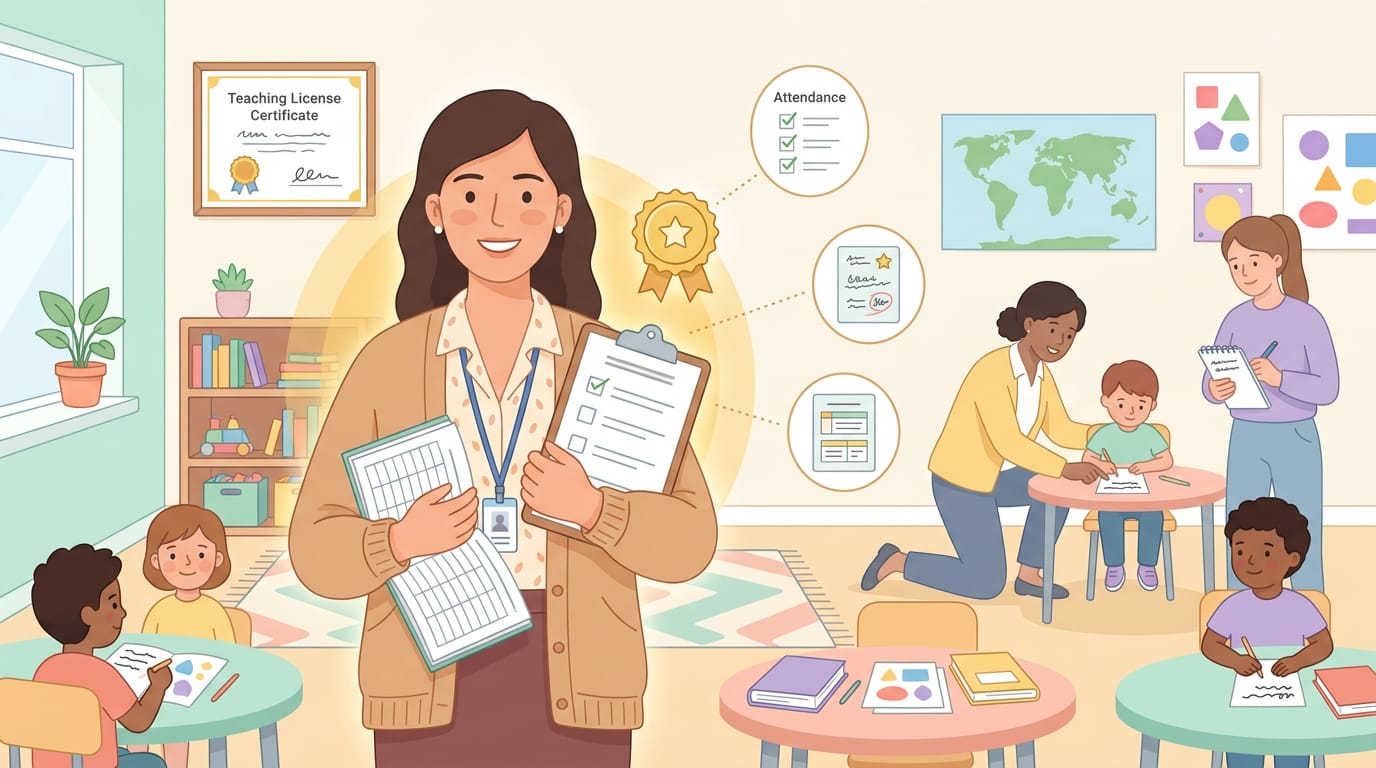
That name belongs to the teacher of record, the educator formally responsible for a student's instruction, assessment, and grades.
Holding the title means carrying that accountability, and it's tied directly to the license that qualifies someone to teach the subject.
In this post, we'll look at who holds the title, what it asks of them, and how it connects to licensure. We'll also show school leaders and teachers how to apply it in staffing, co-teaching, and student teaching.
Ultimate Teacher Planner
The ultimate all-in-one education management system in Notion.
Licenses Needed to Become Teacher of Record
The title rests on a license, so that's where we start. Here's what to check first.
Getting your state license before you teach
Start with the license your state requires, then work through the rest:
License required for employment. Confirm the credential you need before you're hired.
Program leads to state recommendation. Complete a preparation program that ends in a recommendation to the state.
Endorsement area requirements. Your endorsement must match the subject and grade you'll teach.
Background checks. Clear the check your state and district require.
Check your assignment's record status. Confirm the state's records list you as teacher of record for that class.
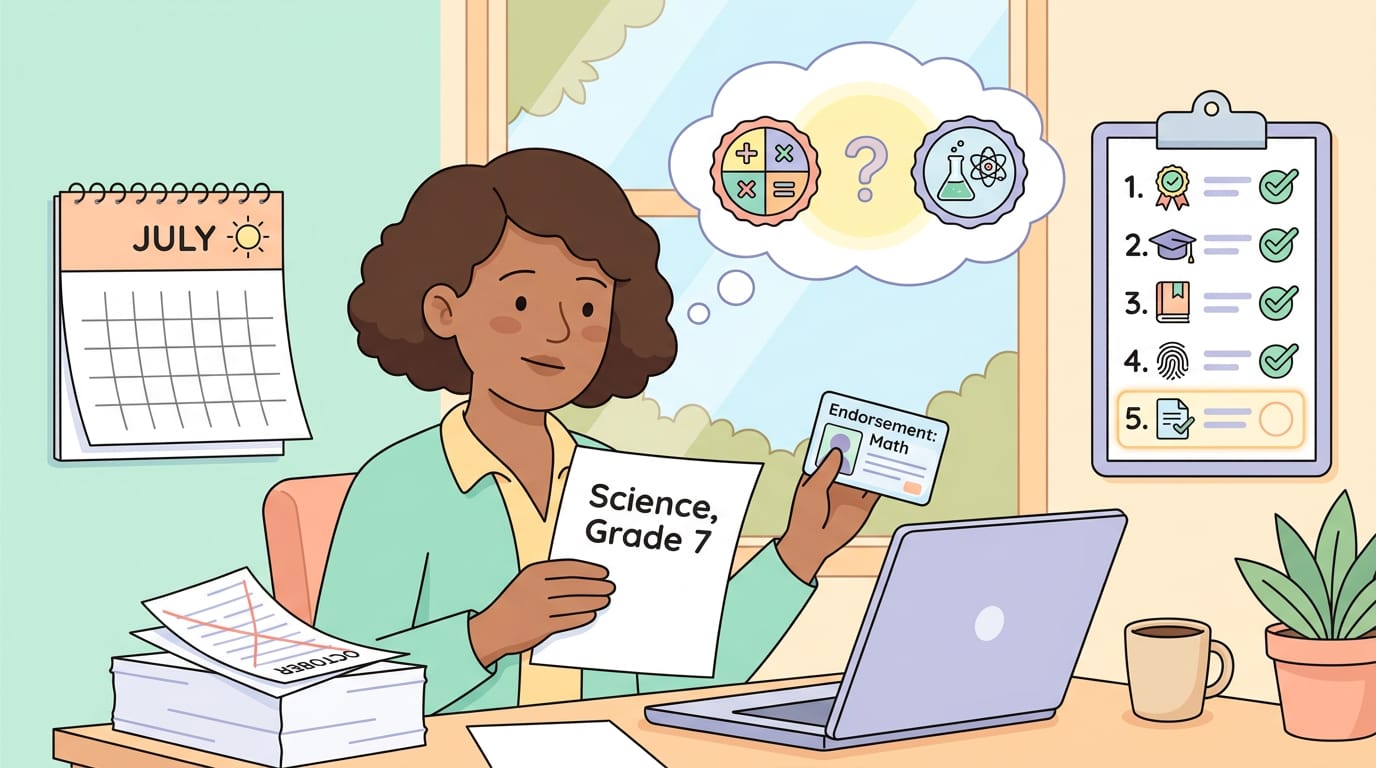
Consider a middle school teacher who's offered a science section but holds a math endorsement. She spots the gap in July, not October. The question isn't whether she has a license, but which subject it covers.
Can you get your teaching license without a degree? That depends on your state, so check with your state education agency for its degree requirement and any alternative route.
Why rules change from state to state
Rules change from state to state, so a license may not carry over. Before you accept a job across a state line, ask about licensure portability, meaning whether your license transfers. Check before you sign.
Don't ignore state rules, even if your old state's requirements look familiar. Placement area matters: your license must cover the area you're placed in, since the teacher of record carries the grades, attendance, and accountability for that class.
Don't assume a substitute, co-teacher, or paraprofessional qualifies by default. Check their credentials against the placement.
Classes and Hands-on Classroom Time
Before anyone leads a class alone, they need solid coursework and real classroom time. Here's how the two fit together.
Core classes most prep programs cover
Most programs start with foundational courses that cover:
Curriculum, instruction, and assessment. Teachers learn to plan lessons, deliver them, and check that students actually learned.
Classroom management. This covers routines, expectations, and keeping a room focused and safe.
Child development. You'll study how learners think and grow at different ages, so your lessons meet students where they are.
Content area pedagogy. It's less about knowing a subject and more about teaching it.
Special education and exceptional learners. These courses prepare you to adapt lessons for students with disabilities and other diverse learning needs.
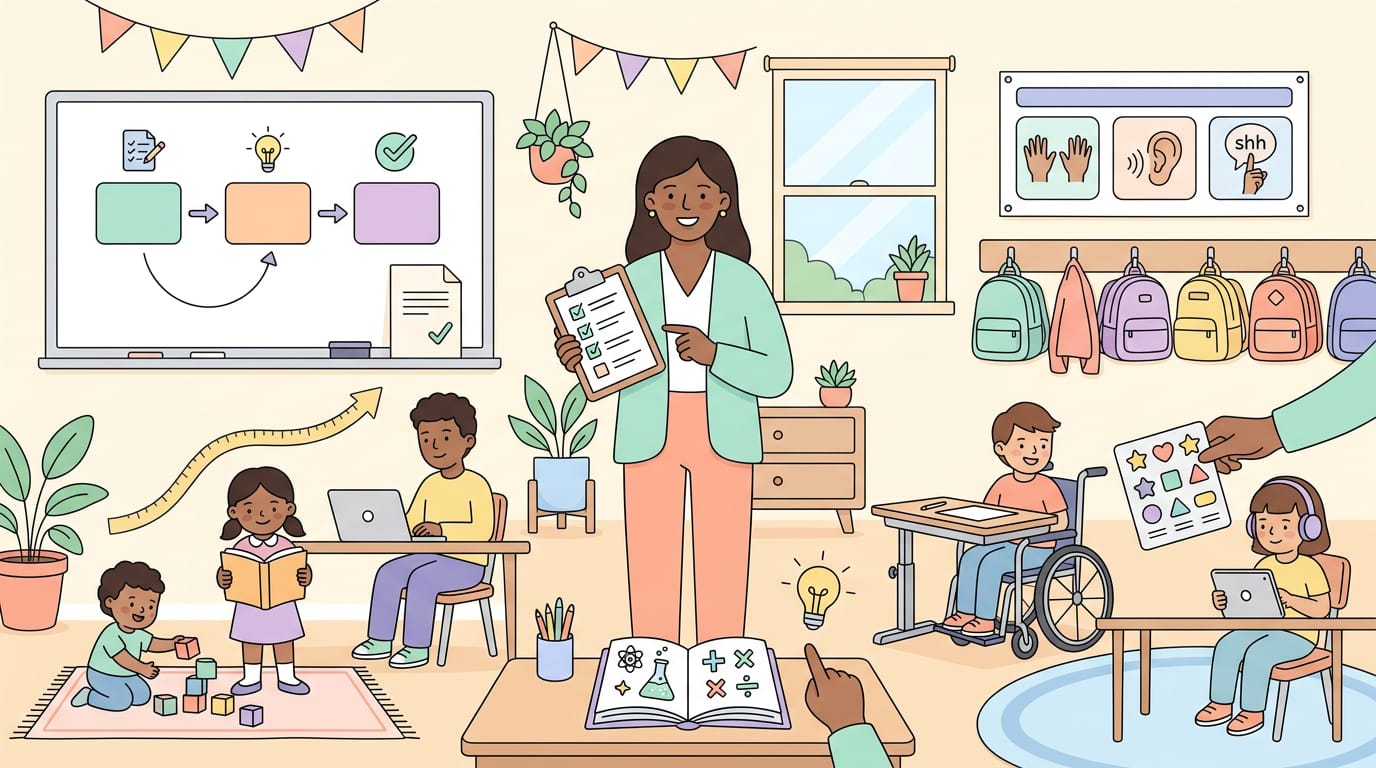
Residencies and student teaching in real classrooms
Coursework builds the foundation, but residencies and student teaching are where it gets tested. Think of a student teacher who plans a fraction lesson and watches half the room lose the thread.
Their mentor teacher helps pinpoint where things slipped, and the next day a hands-on activity brings the room back in. That's how theory becomes skill.
Residency courses pair coursework with placements, so you can test ideas right away. A capstone student teaching placement is the final stretch, where you take on more of the daily work.
Before you lead, you'll observe experienced teachers open lessons, handle transitions, and respond when a student gets stuck. Your mentor teacher then gives feedback on what worked, and that's where much of your growth happens.
One key distinction matters here. A student teacher works under supervision, while the teacher of record holds official responsibility for the class. The real difference is who answers for the class, not just how much you teach.
What Is the Fastest Way to Get Certified?
Before you pick a route, know what teacher of record means. It's the educator officially assigned to a class: the name on the roster and the person accountable for grades and learning.
Because that role requires a valid license, the fastest way to certify usually starts with the degree you already hold.
Licensing paths for working adults with degrees
Start with the emergency licensed teacher route, which lets you teach while you finish the remaining requirements. Once you complete them, you move to a clear state license.
If you already hold a bachelor's degree, the post-baccalaureate option adds teaching coursework on top of it. And any prior degree can qualify, not just education majors.
Think of a former accountant who wants to teach high school math. Her finance degree still qualifies her, so she isn't starting from scratch. It's less about starting over and more about building on what you've already earned. That's a real head start.

How programs run and who gets in
Some routes are a 21 semester hour certificate, a focused block of teaching coursework. Programs may admit students seeking a degree or a certificate, so ask which track fits you. Plan on 13 to 24 months from start to finish.
Courses run in person or online, so you can match the format to your work schedule. Contact the program coordinator before you apply.
What certifications should I get as a teacher?
Match the choice to the subject you know best and the students you want to serve. Options include:
Early childhood, English language arts (ELA), math, and science: the core subject and grade-level choices.
Special education generalist: prepares you to support students who receive special education services.
World languages: for teaching a language other than English.
Culturally and linguistically diverse (CLD) endorsement: an add-on to another certification that prepares you to serve diverse learners.
Aim for fit as much as speed.
Your state's guide to becoming a teacher
Your state's department of education hub is the best source for the rules, so start there. Look for:
Education requirements: the coursework and experience your state expects.
Required tests and credentials: the exams and documents you'll need.
Job search resources: where to look for openings in your state.
Check those rules before you enroll, not after.
Pay, Demand, and Whether Teaching Fits You
Pay and demand tell only part of the story. Here's how we'd read the numbers, then test whether the work fits you.
How pay and job demand look
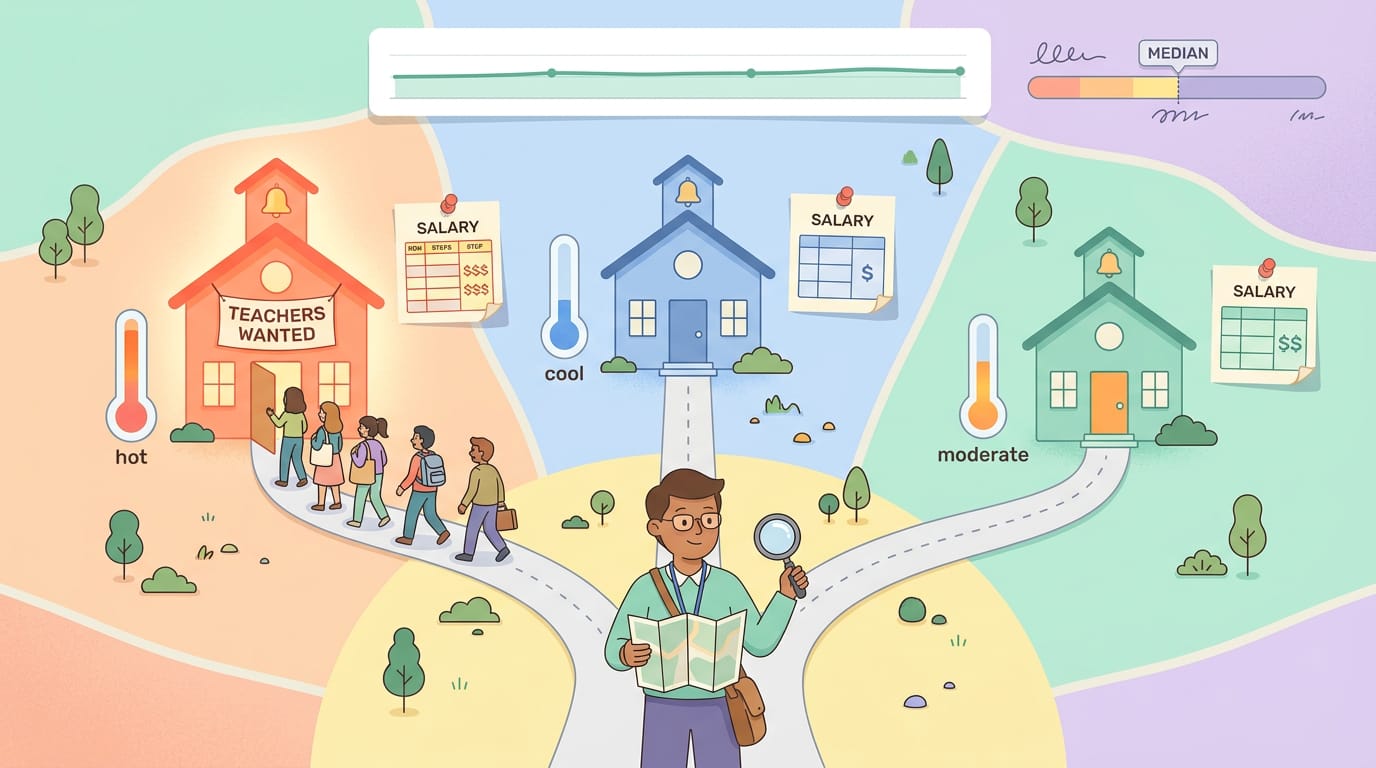
Starting pay is set locally, so check each district's salary schedule.
The Occupational Outlook Handbook from the U.S. Bureau of Labor Statistics reports a median annual wage of $63,970 for elementary school teachers, except special education, in May 2025. That midpoint isn't a starting salary.
The U.S. Bureau of Labor Statistics's occupational projections show national teacher employment holding nearly flat, growing about 0.3 percent over the projection period. The outlook is steady, not shrinking.
Shortages are local, though. Demand can run hot in one district and cool in the next, so where you teach matters as much as whether you do.
Test whether teaching suits you
Liking the idea isn't the same as liking the daily work. The best test is doing the work rather than imagining it. Try these three steps:
Observe classrooms. Ask a school whether you can spend a few mornings in the grade you're considering.
Tutor or coach. Work with students regularly to see what energizes you.
Compare specialties. Elementary, special education, and science, technology, engineering, and math (STEM) classrooms each ask for different things.
Consider a former accountant who tutors fourth graders twice a week. After six weeks, she knows whether she loves planning lessons.
Graduate degrees and paths to advance
Advanced study can wait. Once you've spent time in a classroom, a Master of Education (MEd) can deepen your skills or open a new lane. Common options include:
Reading specialist: helping students build literacy skills.
School counselor: supporting students' academic and personal growth.
Administrator licensure: a later step if you want to lead a school.

Groups That Support and Advocate for Teachers
Teachers don't have to go it alone. Associations support people just starting out and give working educators a collective voice.
How an association helps aspiring educators
An association's aspiring educators group is built for people who aren't in a classroom yet, such as students in teacher preparation programs. It gives them a place to meet peers and learn from working teachers.
Support arrives before a problem, not after one.
Member news and benefits keep members informed and offer perks that ease the early years. Think of a student teacher in their final semester who reads one update and finds a benefit they didn't know existed.
The association is open to various school roles, not just classroom teachers, so future educators can meet people across the building. Nobody has to figure it out alone.
Ways to speak up for schools
Associations also give members a voice in the decisions that shape schools. Members can get involved in three main ways:
Fight for Schools campaign. Members can join this effort to stand up for schools alongside other educators.
Educator leave legislation. This is the set of laws governing teacher leave, and the association weighs in on it.
Surveys and pledges. Members answer surveys about their schools and sign pledges that publicly commit them to a cause.
Picture a high school science teacher who fills out a short survey about overcrowded labs. When enough colleagues respond, leaders get concrete evidence to act on. Your voice counts most when it's added to others.
Clear roles make a school run more smoothly, and the teacher of record sits at the center of that clarity.
When everyone knows who answers for a student's learning, grades, and licensure, co-teachers and student teachers can contribute without confusion about accountability.
Ready to put this into practice? Explore more ideas in School Leadership & Management.
References
Ultimate Teacher Planner
The ultimate all-in-one education management system in Notion.