
SmartyMe App Review: A 30-Day Microlearning Test for Educators
SmartyMe App Review: A 30-Day Microlearning Test for Educators

Article by
Milo
ESL Content Coordinator & Educator
ESL Content Coordinator & Educator
All Posts
Still grading everything by hand?
EMStudio is a free teaching management app — manage your classes, students, lessons, and more!
Learn More
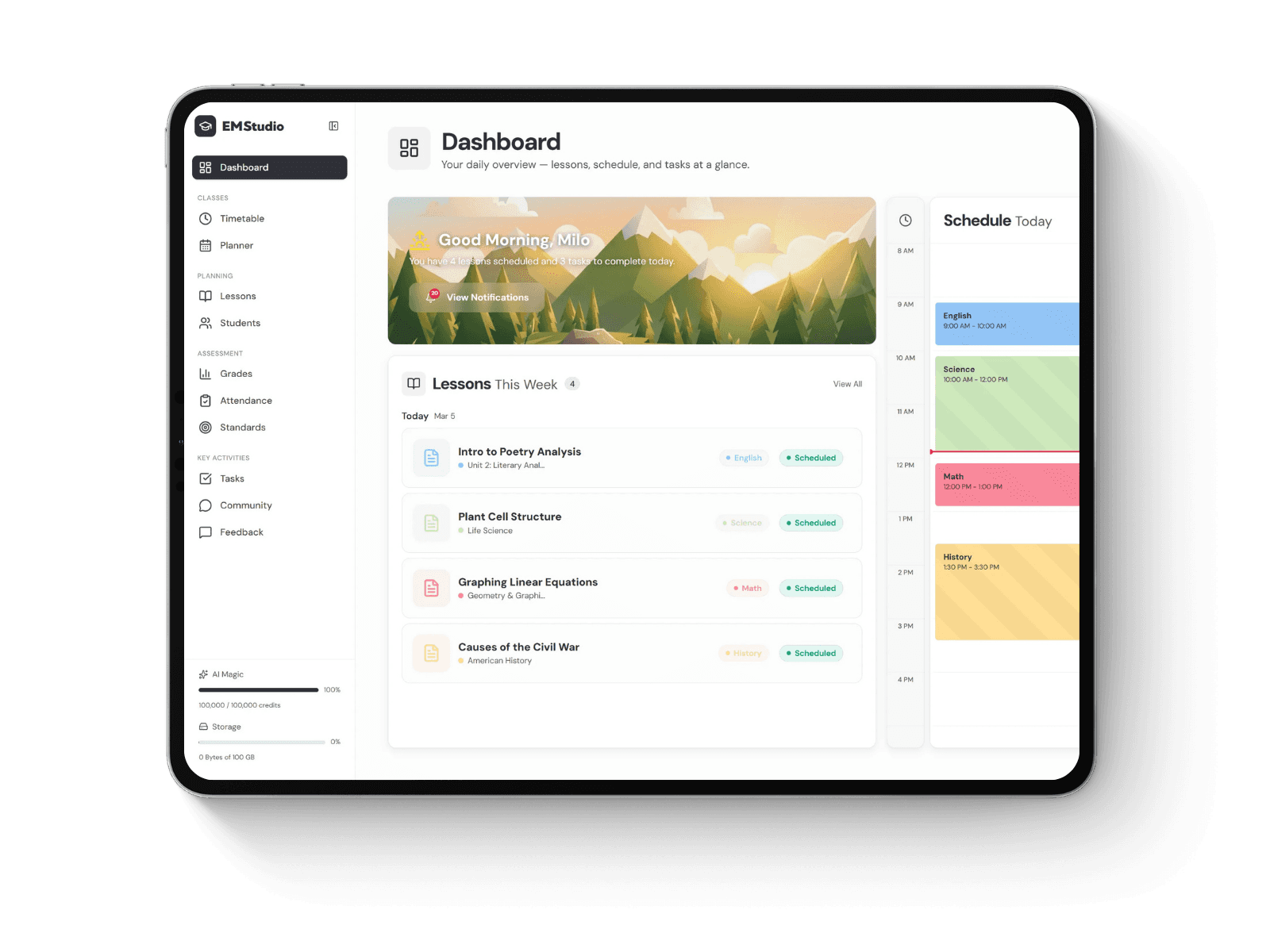
Still grading everything by hand?
EMStudio is a free teaching management app — manage your classes, students, lessons, and more!
Learn More
Table of Contents
SmartyMe app review: my 30-day experience on iPhone so far
Any subscription app really shows its value after the first couple of weeks. Novelty fades, the daily routine either holds or breaks, and what remains gives you the real answer. I've spent the last month opening SmartyMe app review every single day, and here's what that consistency showed me.📱

First impressions after the setup
Getting started took less time than I expected. I found the app through the App Store, and the download was under 100 MB - small enough that it was ready within a minute on a standard Wi-Fi connection. The first launch walked me through a short registration process: email, a few taps to select topics of interest, and a quick question about how much time I could commit daily. No lengthy onboarding tutorials or forced walkthroughs. 🔧
The topic selection screen offered a solid range - everything from cognitive psychology and communication skills to productivity frameworks and critical thinking. I picked five categories to start and immediately received my first lesson.
That first lesson set the tone for what followed. It was brief (about four minutes), focused on a single concept, and ended with a quick check to see if the idea landed. The presentation was clean and distraction-free. As an iPhone learning app, it felt native to the platform - smooth scrolling, responsive interface, and no awkward formatting that sometimes plagues cross-platform ports. The visual design matched Apple's design conventions closely enough that navigating felt intuitive from the start.
One detail worth noting: the app didn't push a premium upgrade screen before I'd even tried a lesson. That restraint made a positive first impression. Aggressive monetization is one of the top reasons users uninstall apps within the first 48 hours. The fact that the app let me experience value first was a smart move.
How the format actually fit into my day
The lessons run between three and seven minutes each, which turned out to be the key factor in whether they stuck. I experimented with different time slots during the first two weeks to find where the format worked best. ☕
Morning coffee was the winner. I'd open the app right after my first cup, complete one or two lessons before checking email, and move on with my day. The whole thing took about ten minutes - short enough to feel effortless, long enough to cover something meaningful. Lunch breaks worked reasonably well too, but I found my focus was better in the morning before the day's tasks started competing for attention.
I also tested the app during my commute (I take a 25-minute train ride three days a week). The lessons worked fine offline once downloaded, which was a practical advantage in areas with spotty reception. However, I preferred the morning slot because it created a clearer start-of-day routine.
Customizing notifications made a noticeable difference. The default reminder was set for 9 AM, but I moved it to 6:45 AM to match my actual wake-up window. That small adjustment meant the prompt arrived when I was already reaching for my phone, not when I was already mid-task. The flexibility here is worth mentioning - the app lets you set multiple reminders or turn them off entirely without penalty. My daily microlearning sessions became far more consistent once I matched the notification timing to my natural rhythm rather than fighting against it. 🔔
What really stayed with me by day 30
Around week three, I started noticing something that separates useful apps from forgettable ones: the content showed up outside the app. A lesson on the "5 Whys" root cause analysis technique came back to me during a team troubleshooting session at work. Instead of jumping to the first obvious fix, I walked the group through the questioning framework - and we identified a deeper issue that had been recurring for months. 🧠
Another lesson on active listening changed how I approached one-on-one conversations. The specific technique - pausing for two full seconds before responding - felt awkward at first but quickly became automatic. A colleague even commented that I seemed "more thoughtful" in discussions, without knowing I'd been practicing a structured method.
By day 30, the app had quietly reshaped my morning routine in a few concrete ways:
I reached for a lesson before social media, which reduced aimless scrolling by roughly 15 minutes daily
I started carrying a small notebook to jot down ideas triggered by lessons - something I hadn't done in years
My approach to problem-solving at work became more structured, relying on frameworks rather than instinct alone
These weren't dramatic overhauls. They were small shifts that compounded over a month. Habit formation is generally driven more by consistency and context cues than by willpower or motivation.
Not every lesson landed equally, of course. A handful of topics in the "personal finance basics" category covered ground I already knew well, and the app doesn't yet offer a robust way to test out of beginner material. That's probably the clearest area for improvement I'd flag after 30 days.
My take after the first 30 days
A month of consistent use gave me a clear picture of what this app does well and where it has room to grow. Here's my honest breakdown based on this SmartyMe app review experience.
The format's strengths stood out clearly:
Lessons short enough to complete without schedule disruption
Content that translates to real-world application, not just trivia
Clean iPhone-native interface with no intrusive ads or upsells
Flexible notification system that adapts to your schedule
And the areas where improvement would help:
Limited ability to skip or test out of topics you already know
Some beginner-level content could go deeper for experienced users
No community or discussion feature for comparing perspectives on lessons
The bottom line after 30 days is straightforward. The app works best for people who want practical, bite-sized learning that fits into an existing routine without demanding a lifestyle change. It won't replace a university course or a deep-dive book on a subject, but that's not what it's trying to do. It fills the gap between doing nothing and committing to something overwhelming - and it fills it well.
Whether it fits your specific schedule and goals is something only you can test. I'd recommend giving it at least three weeks before judging, since the first few days don't reflect what consistent use actually delivers. 📊
SmartyMe app review: my 30-day experience on iPhone so far
Any subscription app really shows its value after the first couple of weeks. Novelty fades, the daily routine either holds or breaks, and what remains gives you the real answer. I've spent the last month opening SmartyMe app review every single day, and here's what that consistency showed me.📱
First impressions after the setup
Getting started took less time than I expected. I found the app through the App Store, and the download was under 100 MB - small enough that it was ready within a minute on a standard Wi-Fi connection. The first launch walked me through a short registration process: email, a few taps to select topics of interest, and a quick question about how much time I could commit daily. No lengthy onboarding tutorials or forced walkthroughs. 🔧
The topic selection screen offered a solid range - everything from cognitive psychology and communication skills to productivity frameworks and critical thinking. I picked five categories to start and immediately received my first lesson.
That first lesson set the tone for what followed. It was brief (about four minutes), focused on a single concept, and ended with a quick check to see if the idea landed. The presentation was clean and distraction-free. As an iPhone learning app, it felt native to the platform - smooth scrolling, responsive interface, and no awkward formatting that sometimes plagues cross-platform ports. The visual design matched Apple's design conventions closely enough that navigating felt intuitive from the start.
One detail worth noting: the app didn't push a premium upgrade screen before I'd even tried a lesson. That restraint made a positive first impression. Aggressive monetization is one of the top reasons users uninstall apps within the first 48 hours. The fact that the app let me experience value first was a smart move.
How the format actually fit into my day
The lessons run between three and seven minutes each, which turned out to be the key factor in whether they stuck. I experimented with different time slots during the first two weeks to find where the format worked best. ☕
Morning coffee was the winner. I'd open the app right after my first cup, complete one or two lessons before checking email, and move on with my day. The whole thing took about ten minutes - short enough to feel effortless, long enough to cover something meaningful. Lunch breaks worked reasonably well too, but I found my focus was better in the morning before the day's tasks started competing for attention.
I also tested the app during my commute (I take a 25-minute train ride three days a week). The lessons worked fine offline once downloaded, which was a practical advantage in areas with spotty reception. However, I preferred the morning slot because it created a clearer start-of-day routine.
Customizing notifications made a noticeable difference. The default reminder was set for 9 AM, but I moved it to 6:45 AM to match my actual wake-up window. That small adjustment meant the prompt arrived when I was already reaching for my phone, not when I was already mid-task. The flexibility here is worth mentioning - the app lets you set multiple reminders or turn them off entirely without penalty. My daily microlearning sessions became far more consistent once I matched the notification timing to my natural rhythm rather than fighting against it. 🔔
What really stayed with me by day 30
Around week three, I started noticing something that separates useful apps from forgettable ones: the content showed up outside the app. A lesson on the "5 Whys" root cause analysis technique came back to me during a team troubleshooting session at work. Instead of jumping to the first obvious fix, I walked the group through the questioning framework - and we identified a deeper issue that had been recurring for months. 🧠
Another lesson on active listening changed how I approached one-on-one conversations. The specific technique - pausing for two full seconds before responding - felt awkward at first but quickly became automatic. A colleague even commented that I seemed "more thoughtful" in discussions, without knowing I'd been practicing a structured method.
By day 30, the app had quietly reshaped my morning routine in a few concrete ways:
I reached for a lesson before social media, which reduced aimless scrolling by roughly 15 minutes daily
I started carrying a small notebook to jot down ideas triggered by lessons - something I hadn't done in years
My approach to problem-solving at work became more structured, relying on frameworks rather than instinct alone
These weren't dramatic overhauls. They were small shifts that compounded over a month. Habit formation is generally driven more by consistency and context cues than by willpower or motivation.
Not every lesson landed equally, of course. A handful of topics in the "personal finance basics" category covered ground I already knew well, and the app doesn't yet offer a robust way to test out of beginner material. That's probably the clearest area for improvement I'd flag after 30 days.
My take after the first 30 days
A month of consistent use gave me a clear picture of what this app does well and where it has room to grow. Here's my honest breakdown based on this SmartyMe app review experience.
The format's strengths stood out clearly:
Lessons short enough to complete without schedule disruption
Content that translates to real-world application, not just trivia
Clean iPhone-native interface with no intrusive ads or upsells
Flexible notification system that adapts to your schedule
And the areas where improvement would help:
Limited ability to skip or test out of topics you already know
Some beginner-level content could go deeper for experienced users
No community or discussion feature for comparing perspectives on lessons
The bottom line after 30 days is straightforward. The app works best for people who want practical, bite-sized learning that fits into an existing routine without demanding a lifestyle change. It won't replace a university course or a deep-dive book on a subject, but that's not what it's trying to do. It fills the gap between doing nothing and committing to something overwhelming - and it fills it well.
Whether it fits your specific schedule and goals is something only you can test. I'd recommend giving it at least three weeks before judging, since the first few days don't reflect what consistent use actually delivers. 📊
Still grading everything by hand?
EMStudio is a free teaching management app — manage your classes, students, lessons, and more!
Learn More
Still grading everything by hand?
EMStudio is a free teaching management app — manage your classes, students, lessons, and more!
Learn More




Notion4Teachers
Notion templates to simplify administrative tasks and enhance your teaching experience.



2026 Notion4Teachers. All Rights Reserved.
Notion4Teachers
Notion templates to simplify administrative tasks and enhance your teaching experience.
2026 Notion4Teachers. All Rights Reserved.
Notion4Teachers
Notion templates to simplify administrative tasks and enhance your teaching experience.
2026 Notion4Teachers. All Rights Reserved.