
Professional Learning Communities: A Complete Educator's Guide
Professional Learning Communities: A Complete Educator's Guide

Article by
Milo
ESL Content Coordinator & Educator
ESL Content Coordinator & Educator
All Posts
Is your PLC time actually moving the needle, or just another block on the calendar? I've sat through both kinds. The best professional learning communities I've been in didn't just share lesson plans—they committed to collective teacher efficacy, believing we could push every kid further together than any of us could alone.
That only happens when you look at common formative assessment data and act on it. Not admiring the problem. Not complaining about the copy machine. Real collaborative inquiry. The DuFour model works because it forces that discipline, but any structure fails if you skip the hard part: changing instruction based on what the data shows.
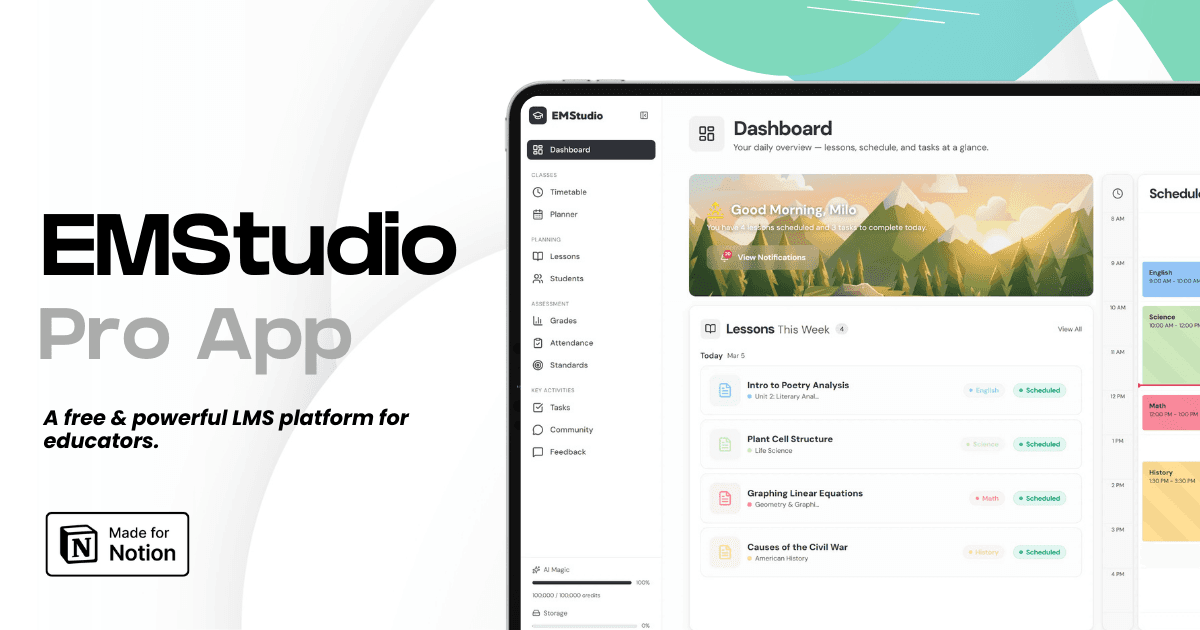
Still grading everything by hand?
EMStudio is a free teaching management app — manage your classes, students, lessons, and more!
Learn More
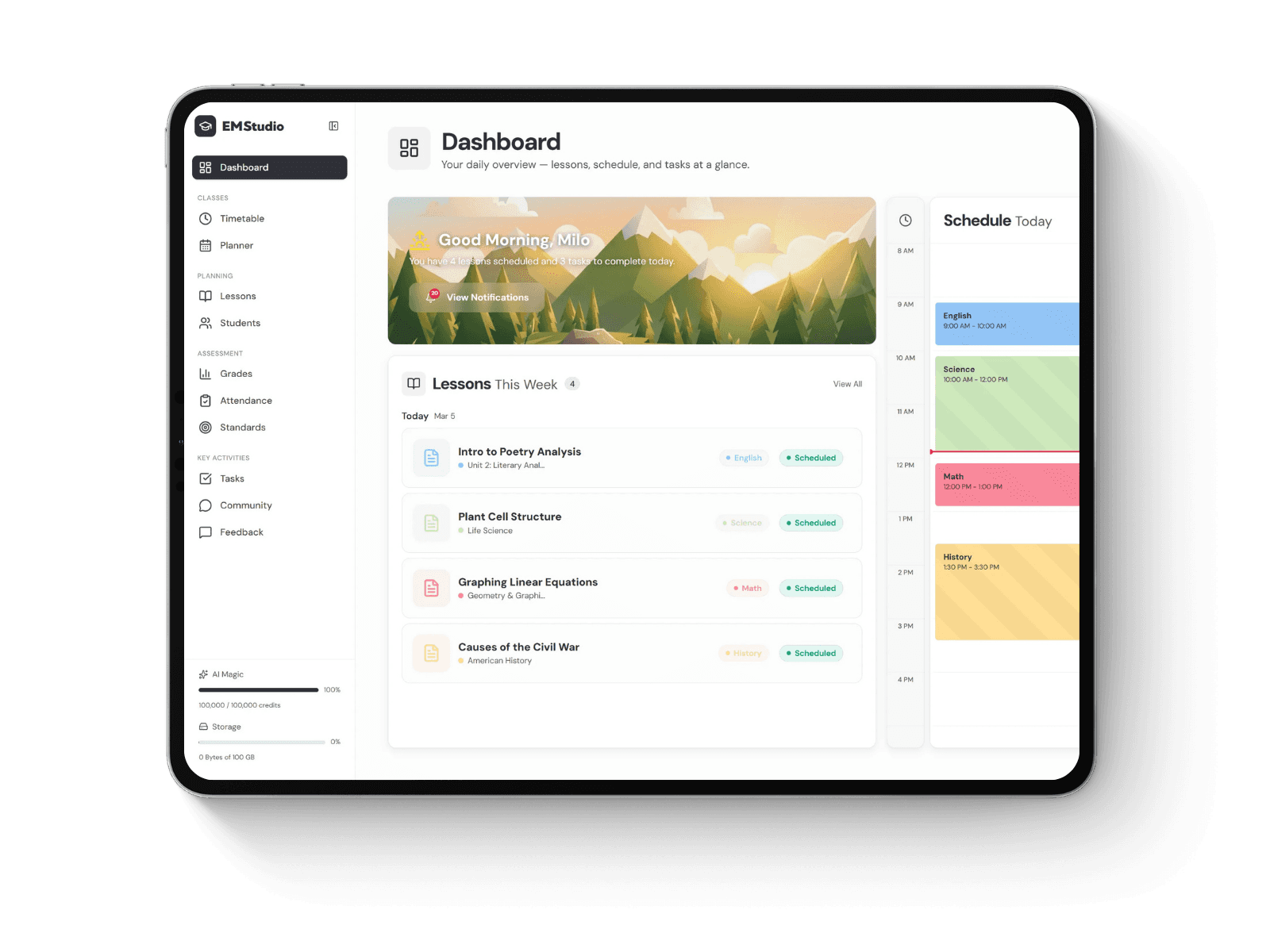
Still grading everything by hand?
EMStudio is a free teaching management app — manage your classes, students, lessons, and more!
Learn More
Table of Contents
What Are Professional Learning Communities?
Professional learning communities are groups of educators who meet regularly to analyze student learning data, collaborate on instructional strategies, and hold each other accountable for results. Unlike traditional one-time workshops, PLCs operate on an ongoing cycle of collective inquiry focused on making sure all students learn at high levels.
The Foundational Definition and Core Purpose
Rick DuFour defines professional learning communities as educators committed to working collaboratively in ongoing processes of collective inquiry and action research to achieve better results for the students they serve. This foundational definition and core purpose of PLCs rejects the solo practitioner model that dominates traditional schools.
The DuFour model rests on three non-negotiable principles that distinguish a true professional learning community from a loose group of congenial colleagues. First, we must ensure high levels of learning for all students—not just the ones who show up ready to learn, but every single child regardless of background or prior achievement.
This means we reject the assumption that some kids "just can't learn" certain content. Second, we build a collaborative culture where isolation becomes professionally unacceptable and interdependence becomes the norm. Third, we focus relentlessly on results not just intentions, using hard evidence from common formative assessments to drive every instructional decision we make.
I learned this distinction the hard way during my fourth year teaching 7th grade English. I sat through a brilliant workshop on differentiated instruction, then closed my classroom door and taught exactly the same way I always had. Without colleagues to practice with or data to check if it worked, the strategies died in my binder. That is the limitation DuFour identified: good ideas require collaborative structures to survive implementation.
Traditional "sit-and-get" workshops assume that hearing about a strategy equals implementing it. PLCs recognize that sustainable change requires the collective teacher efficacy built through ongoing dialogue, not one-time exposure to expert advice.
The Four Pillars of Effective PLC Work
Sustainable PLC work stands on four concrete pillars that transform collaboration from vague "team time" into structured professional learning networks.
Shared mission: Every member agrees why the school exists. For example: "All students will read at grade level by grade 3," leaving no room for exceptions based on socioeconomic status or prior performance.
Shared vision: The team articulates what the school hopes to become within three to five years. Example: "Becoming a model PLC district by 2026 where collaborative inquiry drives every instructional decision."
Collective commitments: These are behavioral agreements about how team members work together. Example: "We arrive on time with student data analyzed, phones away, ready to engage in difficult conversations about instructional practice."
SMART goals: Specific, measurable targets that mark progress. Example: "Reduce the failure rate in 9th grade math from 18% to 10% by June through weekly common formative assessments and reteaching protocols."
These four elements separate functional PLCs from dysfunctional groups that meet to discuss logistics but never improve instruction. Without collective commitments, teams avoid the hard conversations about ineffective teaching. Without SMART goals, they celebrate activity not actual student achievement.
Key Differences From Traditional Professional Development
Traditional professional development follows what educators call the "transmission model." An expert deposits information into teachers through a one-to-many broadcast, assuming the recipient will translate abstract theory into classroom practice. Teachers sit, listen, receive. PLCs flip this script entirely, operating as many-to-many knowledge construction through dialogue and action research cycles where the practitioners themselves generate solutions.
DuFour's research consistently shows that traditional PD has minimal transfer to classroom practice without collaborative follow-up. You cannot deposit teaching skill like you deposit a check. Lasting improvement requires the collective teacher efficacy built when peers study common formative assessment data together, question their own assumptions, and adjust instruction in real time based on what the evidence reveals.
Consider the contrast:
Dimension | Traditional Professional Development | Professional Learning Communities |
|---|---|---|
Frequency | Annual event or isolated workshop | Weekly cycle of meeting, assessing, adjusting |
Delivery Method | Expert-led presentation | Teacher-led collaborative inquiry |
Focus | Input delivery (covering content) | Student results (evidence of learning) |
Engagement | Passive listening and note-taking | Active inquiry and protocol-driven discussion |
Accountability | Attendance-based (sign-in sheet) | Outcome-based (measured student growth) |
The difference shows up in student work. Traditional PD produces binders that sit on shelves. PLCs produce measurable gains because teachers own the process from question to implementation.
Why Do Professional Learning Communities Matter for Student and Teacher Growth?
Professional learning communities improve student achievement by focusing collective effort on specific learning outcomes and evidence-based instruction. They also reduce teacher isolation and burnout by creating shared responsibility for student success, leading to higher retention rates and more equitable outcomes across student subgroups.
Impact on Student Achievement and Equity
John Hattie's Visible Learning meta-analysis puts collective teacher efficacy at the top of his rankings with an effect size of 1.39. That is nearly quadruple the average educational intervention effect size of 0.40. Professional learning communities in education build this efficacy by making student outcomes a shared responsibility, not individual luck.
When teams focus on "high levels of learning for all," they stop debating which students belong in which tracks. My 4th grade math PLC stopped pulling kids out for below-grade-level work during our fractions unit. We kept everyone working on grade-level problems while deploying a pyramid of interventions—from small group reteaching to individual manipulative kits—to ensure mastery. No one got the easy worksheet. Everyone got the grade-level standard with the support they needed.
This shift from sorting to supporting closes achievement gaps. Common formative assessment data reveals which students need which interventions, not which teachers failed. The DuFour model insists we own every student's growth as a team.
Equity happens when access becomes non-negotiable. In our PLC, "all means all" is not a slogan but a lesson planning constraint. We design the core instruction for the grade level, then layer supports.
Transforming Individual Practice Through Collective Inquiry
Professional learning communities for teachers function as action research cycles operating in real time. Last Tuesday, I brought my 4th graders' fraction exit tickets to our meeting. Within ten minutes, colleagues spotted that my students were manipulating symbols before understanding concrete models. I had not described my lesson. She read the misconception in the student work. "Try the area model tiles first," Maria said. "Then move to the algorithm." The specificity caught me off guard.
I implemented the change during Thursday's lesson. This is transforming individual practice through collective inquiry—the active learning academy model applied to adults.
We bring student work samples.
We receive specific instructional feedback.
We adjust within 48 hours.
The cycle repeats every week. This velocity matters. Teacher improvement typically happens in isolation over years. Collaborative inquiry compresses that timeline into weeks.
Unlike traditional professional development, this targets my actual students' work. No generic strategies. Just precise adjustments based on what my specific kids produced yesterday. These professional learning networks inside our school walls create faster improvement loops than any district workshop. We are not waiting for the annual training. We are fixing Tuesday's lesson by Thursday.
Building Sustainable School Culture and Retention
Research indicates that schools with robust collaborative cultures report lower teacher turnover, particularly in high-need areas. The mechanism is collective autonomy—we hold professional judgment as a team, not receiving dictates from above. This balance of agency and belonging predicts retention better than salary in many studies. Teachers need both. PLCs deliver both.
When my grade-level team designs our common formative assessment calendar and intervention schedule, we own the decisions. Administration trusts the process because we share the data openly. This distributed authority creates culture that survives leadership transitions or staff changes. The system persists because the team owns it, not because the principal mandated it.
New teachers join a functioning organism rather than isolated classrooms. Veteran teachers stay because their expertise gets amplified, not ignored. Professional learning communities provide the social connection and professional respect that keep educators in the classroom year after year. Studies suggest this is why teachers in PLC schools stay longer even in tough neighborhoods. The work is still hard. But we are not doing it alone.

How Professional Learning Communities Function Day-to-Day
Professional learning communities run on rhythm. We meet every Tuesday at 7:15 AM. We teach the same lesson on Monday. We look at the same data on Tuesday. We fix what didn't work on Wednesday.
That rhythm follows the PDSA cycle. Every four to six weeks, we Plan a common formative assessment targeting one or two essential standards. We keep it short—five to ten items max. On Do day, every 7th grade ELA teacher gives the same assessment simultaneously. We score them together using the rubric before we leave Monday afternoon.
The Study phase happens fast. We use Stephen White's Data Dialogue protocol within 24 to 48 hours while the instruction is still fresh. Tuesday morning, we sort kids into four corners: exceeded, met, approached, or fell far below. Then we Act. By Wednesday, struggling students get targeted intervention while others move to enrichment. Friday brings a quick progress check to see if our fixes worked. This weekly pulse keeps us responsive.
The Cycle of Collective Inquiry and Action Research
Beyond weekly assessments, we run longer action research cycles. Last fall, my 7th grade team noticed our kids couldn't cite text evidence consistently despite our best efforts. That became our focused problem of practice.
We committed to the RACES paragraph structure across all five classrooms. Every teacher used the same anchor chart and sentence starters for six weeks. We collected writing samples weekly and tracked growth on a shared spreadsheet, looking for patterns.
At week nine, we presented our findings to the whole faculty. Three classes showed significant growth. Two showed less. We discussed the differences honestly. That transparency builds collective teacher efficacy. When one of us succeeds, we all learn. When we fail, we troubleshoot together. These cycles usually last six to nine weeks—long enough to see real change, short enough to keep us from drifting.
Data Analysis Protocols and Common Formative Assessments
Not every Tuesday meeting uses the same structure. We choose our data analysis protocols and common formative assessments based on exactly what we're examining.
The 4-Step Data Dialogue works for CFA results. We review the standard, analyze student work samples, identify error patterns, and plan differentiated instruction for the next two days.
The Consultancy Protocol helps when a teacher brings a dilemma, like a student who suddenly refuses to write. The team asks clarifying questions, then offers concrete suggestions without judgment.
The Tuning Protocol examines student work when we disagree on quality. We look at anonymous samples and calibrate our scoring against the rubric.
Picking the right tool keeps us efficient. We don't waste forty minutes on lengthy philosophical discussions when we need quick instructional decisions. The DuFour model emphasizes this relentless focus on results over activities.
From Collaborative Planning to Classroom Implementation
Tuesday's meeting means nothing if Wednesday's lesson stays exactly the same. We enforce a hard handoff between talk and action.
By 8 AM Wednesday, every teacher posts revised lesson plans in our shared Google Drive folder. These aren't generic templates. They name specific students in the "approaching" group and list the exact intervention strategy—maybe a graphic organizer, a sentence stem, or a small-group reteach.
Our instructional coach pulls these plans Thursday morning. She pops into classrooms Thursday and Friday to watch implementation. Did we actually group the kids the way we promised? Are we using the strategy we agreed on, or sliding back to old habits?
She reports back at the next PLC meeting. This closes the loop. Planning becomes action. Action becomes evidence. Evidence drives the next plan. Without this accountability step, collaborative inquiry stays theoretical.
What Are the Most Effective Professional Learning Community Models?
The most effective professional learning community models include the DuFour Four Critical Questions framework for results-oriented teams, Japanese Lesson Study for deep instructional analysis, and Critical Friends Groups for protocol-based peer feedback. The best choice depends on your school's goals: DuFour for systemic reform, Lesson Study for math/science instruction, and CFGs for reflective practice.
Pick the structure that matches your team's pain point. Don't force a model that doesn't fit your schedule or your students' needs.
Model Name | Core Structure/Protocol | Time Investment | Best Use Case |
|---|---|---|---|
DuFour Model (Four Critical Questions) | Four questions cycle + common formative assessment | 2-3 days initial training; 45-90 min weekly | Systemic reform, data-driven instruction |
Japanese Lesson Study | Research lesson cycles with live observation | 1-2 lessons per semester; 2-4 hours planning + 2-3 hours debrief | Mathematics and science deep analysis |
Critical Friends Groups | Tuning protocols and structured feedback | 45-90 minutes per session | Cross-content reflection |
The DuFour Model: Four Critical Questions Framework
The DuFour model centers on four questions that drive collaborative inquiry:
What do we want students to learn?
How will we know if they learned it?
How will we respond if they didn't learn it?
How will we respond if they already know it?
I watched our 7th grade science team wrestle with these last October while planning a photosynthesis unit. They started by defining the essential standard: students will explain how photosynthesis converts light energy into chemical energy using a model. For question two, they designed a common formative assessment with a diagram analysis and a three-sentence explanation prompt.
When they reached question three, they stopped talking in generalities. Students who scored below 70% would attend a 30-minute reteach session during advisory, three days per week, using hands-on labs with flashlights and elodea. For question four, those who demonstrated mastery early would analyze C4 and CAM plant adaptations in a two-day extension project. This specificity separates effective professional learning communities from lunch-bunch complaining sessions. Implementing the DuFour model requires 2-3 days of initial training for all staff, but the clarity around intervention and enrichment pays off within the first month.
Japanese Lesson Study and Structured Observation
Japanese Lesson Study asks you to slow down and watch learning happen in real time. This model builds deep collective teacher efficacy through public research lessons that originated in Japan.
Phase one involves 2-4 hours of collaborative planning. Four to six teachers design a single research lesson, anticipating every student response and crafting precise questions. Phase two puts the lesson on display. One teacher teaches while 10-20 colleagues observe, each focusing on 2-3 case students and documenting thinking in real time. Phase three lasts 2-3 hours. Teams analyze the data first—what did the case students actually produce—before discussing teaching moves. The conversation stays grounded in evidence, not opinions about what might have worked.
This plc lesson study approach is central to Japanese elementary education. One cycle per semester is sustainable and yields more insight than a year of surface-level meetings. It works especially well for mathematics and science, where student thinking reveals itself through problem-solving steps. The structure forces you to see your instruction through the eyes of specific children, which changes everything.
Critical Friends Groups for Protocol-Based Feedback
Critical Friends Groups work best when you need fresh eyes, not when you need to plan tomorrow's lesson. These professional learning networks use strict protocols developed by the National School Reform Faculty to keep feedback constructive and focused. Meetings run 45-90 minutes with a trained facilitator keeping time.
The Tuning Protocol follows a tight timeline. The presenter shares student work for ten minutes. The group asks clarifying questions for five minutes—no suggestions yet. Warm feedback fills the next ten minutes, followed by ten minutes of cool feedback on gaps or confusions. The presenter reflects for five minutes while the group listens, then the group debriefs the process itself.
This isn't about fixing the teacher. It's about improving the work. The structured facilitation rules prevent the conversation from drifting into griping or unstructured advice. CFGs are ideal for cross-content reflection, making them useful when your professional learning communities span departments and you need action research cycles that respect everyone's time. Unlike the collaborative teaching models for K-12 teams focused on daily instruction, CFGs prioritize the quality of student work over the logistics of teaching it.

Professional Learning Community Examples by Grade Band and Subject
Professional learning communities adapt to developmental needs and content demands. These three examples show how teams structure their actual meeting time.
Elementary School Literacy and Math PLCs
The K-2 team at Lincoln Elementary meets twice weekly for forty-five minutes during specials coverage. They protect this time for common formative assessment review using DIBELS 8 data and math fluency tracking.
Their math PLC runs a strict forty-minute agenda. Ten minutes reviewing last week's addition fact fluency data. The target is twenty correct digits per minute. Twenty minutes planning the next week's concrete-representational-abstract sequence using Rekenreks and ten-frames. Teachers map exactly when students move from physical beads to drawn representations to abstract equations. Ten minutes assigning intervention groups for the academy learning center rotation.
While students move through targeted phonics stations focusing on specific sound patterns, teachers analyze fresh running records. I watched this in a 2nd grade classroom in October. One teacher spotted three kids confusing /b/ and /d/ consistently. The team adjusted guided reading groups that afternoon. Students shifted stations two days later. That speed matters. They adjust groupings every two weeks based on DIBELS 8 data. The rotation model means instruction continues while the PLC meets. Kids don't lose learning time because of the design.
Middle School Interdisciplinary Team Structures
The 7th grade team at Roosevelt serves ninety students across four homerooms. Four teachers—ELA, math, science, social studies—share a daily common planning period. These interdisciplinary team structures allow them to coordinate parent contacts and align behavior expectations through shared Google Sheets.
The shared Google Sheet updates in real time. A behavior note from first period appears instantly for the fourth period teacher. They use this intel to coordinate support consistently across all four subjects. They also plan "Team Days" where students present integrated projects. Last spring they ran a Medieval Europe unit. Math classes analyzed castle geometry and angles while ELA read Crispin. Science examined siege weapon physics. Social studies covered feudal systems. The ninety students rotate through all four teachers, so the team sees every child daily.
The shared conference period lets them make parent calls as a unit. One conversation covers all four subjects. This collaborative inquiry prevents students from falling through cracks. Without that daily common planning, the coordination collapses by Wednesday. The professional learning networks they build extend beyond their own classrooms to include counselors and administrators.
High School Departmental and Career Pathway PLCs
The 11th-12th grade Health Science CTE pathway at Central High aligns curriculum with Certified Nursing Assistant certification requirements. Teachers meet weekly with the local community college coordinator. They review clinical skill checklists and backward plan from exam dates.
Teachers develop common rubrics for twelve clinical competencies, including handwashing and patient transfer procedures. Each rubric breaks skills into observable steps. Students upload demonstration videos to shared digital portfolios using Google Sites or Canvas LMS. The team conducts action research cycles, reviewing portfolios weekly to track mastery against state standards. They maintain a ninety-five percent pass rate on certification exams.
The DuFour model guides their four essential questions, but they apply them to healthcare standards. When a student fails a clinical checklist, the team regroups within twenty-four hours. They adjust instruction before the next skill assessment. This is what professional learning community examples look like when the outcome determines employment eligibility. The focus stays on measurable student results, not teaching activities.
How Can Schools Build Professional Learning Communities From the Ground Up?
Schools build professional learning communities by first establishing collective commitments and protected meeting time, then identifying essential standards and creating common formative assessments. Success requires moving from activity-based meetings to a results-oriented culture where teams analyze student data every 4-6 weeks and adjust instruction accordingly.
Step 1: Establishing Norms and Collective Commitments
I start every new PLC with the Finally, Sometime, Never protocol. Teams list specific behaviors like "checking phones" or "side conversations" on sticky notes. We sort them into three categories: acceptable finally, occasionally sometime, or unacceptable never. Everyone gets three votes to prioritize the behaviors causing the most friction. This takes 15 minutes but saves hours of conflict later.
The never column becomes our working document. We convert those behaviors into 5-7 specific collective commitments using stems like "We will start exactly at 3:00," "We won't interrupt during data review," "We'll always respond to emails within 48 hours," and "We'll never skip the data protocol." This creates establishing norms and collective commitments that actually stick because teachers wrote them. I keep the signed sheet visible during every meeting. The signed document lives in our PLC binder and gets reviewed monthly. When someone checks their phone, we point to the wall, not at each other.
These norms build collective teacher efficacy faster than any icebreaker. Teams that commit to specific behaviors shift from griping to problem-solving within one semester. The signed document creates accountability without hierarchy. Teachers police themselves, not administrators.
Step 2: Creating Protected Time and Scheduling Systems
You cannot build professional learning communities without protecting the time. I have seen three structures work:
Early release gives you 1.5 hours weekly at zero cost, but requires childcare coordination.
Late start provides monthly 2-hour blocks, though it requires union negotiation for bus routes.
Instructional coverage costs $150 daily per sub; four teachers rotating runs $600 weekly.
Teams need 6-9 hours of protected time monthly to complete the DuFour model cycle. Early release works best for elementary sites with onsite aftercare. Most principals prefer it because it minimizes disruption. Secondary schools often prefer late start since older students arrive independently. Pull-out coverage needs a budget line item and sub tracking system, but keeps instructional days intact.
Pick one structure and defend it fiercely. Teams that protect their time show measurable common formative assessment gains within one quarter. Principals stop asking to cancel meetings when they see student results improve. Consistency matters more than the specific model you choose.
Step 3: Identifying Essential Learning Standards and SMART Goals
I use Larry Ainsworth's method to prioritize 12-15 power standards per grade level. Teams review state standards and rate each on a 1-3 scale for three criteria: endurance (needed next year), leverage (cross-curricular), and readiness for the next level. Standards scoring 7-9 become our essentials receiving 70% of instructional time. This prevents the mile-wide, inch-deep curriculum trap. Everything else gets covered quickly, not mastered slowly. Teachers stop rushing through content and start teaching for mastery.
We use a simple yes/no flowchart: does the standard meet at least two of the three criteria? If yes, it stays. If no, it goes. Fraction operations prepare kids for algebra and proportional reasoning; Roman numerals fill time. Choose accordingly.
This focus creates collaborative inquiry around what matters most. Teams write SMART goals attached to these specific standards, not vague improvement plans. We measure growth every 4-6 weeks using action research cycles tied to actual student results on common assessments. Clarity drives action.
Step 4: Implementing Data Protocols and Action Cycles
Every 4-6 weeks, we run the same four-step protocol:
Review the standard and assessment.
Sort student work into four performance levels.
Identify instructional patterns showing what worked.
Plan differentiated response for the next cycle.
This rhythm creates predictability. Teachers know exactly when they will analyze results. The schedule lives on our shared calendar.
Our tracking template includes specific fields: date of assessment, standard code, number of students at each performance level, instructional strategy used, retention errors observed, and specific action for next cycle. We spend one full meeting learning to sort work accurately before analyzing trends. Actions are limited to three choices: reteach, enrich, or intervene. This requires professional learning community training in data literacy and protocols. Without it, teams drown in spreadsheets and miss the story.
I watched my 7th grade team discover that 60% of errors on the proportional reasoning assessment came from calculator dependence, not fraction fluency. We changed our approach the next day. These effective peer support networks for teachers turn raw numbers into specific next steps for struggling students.

What Causes Professional Learning Communities to Fail and How to Prevent It?
Professional learning communities fail when they become pseudoplation—groups that discuss logistics instead of learning, lack protected time for collaboration, or mistake activity for results. Prevention requires structural support with 6-9 hours monthly, training in protocols like the Four Critical Questions, and administrative insistence on evidence of student learning rather than meeting attendance.
I have sat in meetings where we spent forty minutes debating copy machine codes and five minutes on student writing samples. That is not collaboration. It is compliance theater, and it kills collective teacher efficacy faster than any standardized test.
The Pseudoplation Trap: When Compliance Replaces Authentic Learning
Pseudoplation looks like a professional learning community but functions as a staff lounge with an agenda. Teams gather weekly to dissect field trip logistics, discipline referrals, or copy machine outages. They never examine actual student work. I watched a 4th grade team spend twenty minutes debating pizza party protocols while a stack of ungraded narrative essays sat in the center of the table, untouched and unremarked upon.
Here is the litmus test. If a stranger observed your meeting, would they see analysis of student work within the first ten minutes? If the answer is no, you are practicing pseudoplation, not authentic collective teacher efficacy.
Agendas focus on housekeeping items like schedules or supply orders.
No actual student work or common formative assessment data artifacts are present on the table or screen.
Conversation consists of serial sharing rather than dialogue about instruction.
Meetings end with no action items tied specifically to student learning outcomes.
Teachers leave saying, "That was a waste of my time."
These symptoms, noted in many professional learning communities articles, indicate compliance without collaborative inquiry. The group meets because the principal checks a box, not because the DuFour model needs evidence of learning.
Time Constraints and Structural Barriers
You cannot build professional learning networks on scraps of time. Thirty-minute meetings once weekly equals eighteen hours annually. That is insufficient for genuine action research cycles or deep examination of student misconceptions. Effective models demand ninety minutes weekly, totaling fifty-four hours of protected collaboration time per year.
Without substitute coverage or schedule restructuring, PLCs become add-ons shoved into lunch periods or early dismissals. Teachers resent the work because they know it deserves better. I have seen districts layer PLCs on top of five other competing initiatives—new literacy curricula, SEL programs, and tech rollouts—then wonder why teams treat collaboration as background noise, not core instructional practice.
Training requires substantial investment that many budgets ignore. Initial implementation needs two to three days of intensive DuFour training plus ongoing monthly coaching, costing approximately five to fifteen thousand dollars per school. Skipping this step to save money guarantees shallow implementation and rapid burnout. Teachers need specific protocols for examining data, not just permission to talk in a circle.
Moving From Activity-Based Meetings to Results-Oriented Culture
Warning signs show up in the meeting logs. Teams record "shared guided reading strategies" without citing specific student outcome data. They describe lessons in show-and-tell format without peer critique or revision. Months pass without any documented change to instructional practice based on common assessment evidence. This is mere activity, not professional improvement.
Effective teams avoid vague summaries like "we discussed phonics." Instead, they state: "We identified that 40% of 2nd graders are guessing at unknown words, not applying decoding strategies. We will implement sound boxes for fifteen minutes daily and reassess Friday using a common running record." This is moving from activity-based meetings to a results-oriented culture.
Use this template for every meeting note. First, what specific evidence did we examine today? Second, what precise learning gap did we identify? Third, what strategy will we collectively test? Fourth, how will we measure impact before we meet again? If your professional learning communities in education pdf documentation or archived agendas do not contain these four elements, you are filing motion, not measuring progress toward collective teacher efficacy.
What Are Professional Learning Communities?
Professional learning communities are groups of educators who meet regularly to analyze student learning data, collaborate on instructional strategies, and hold each other accountable for results. Unlike traditional one-time workshops, PLCs operate on an ongoing cycle of collective inquiry focused on making sure all students learn at high levels.
The Foundational Definition and Core Purpose
Rick DuFour defines professional learning communities as educators committed to working collaboratively in ongoing processes of collective inquiry and action research to achieve better results for the students they serve. This foundational definition and core purpose of PLCs rejects the solo practitioner model that dominates traditional schools.
The DuFour model rests on three non-negotiable principles that distinguish a true professional learning community from a loose group of congenial colleagues. First, we must ensure high levels of learning for all students—not just the ones who show up ready to learn, but every single child regardless of background or prior achievement.
This means we reject the assumption that some kids "just can't learn" certain content. Second, we build a collaborative culture where isolation becomes professionally unacceptable and interdependence becomes the norm. Third, we focus relentlessly on results not just intentions, using hard evidence from common formative assessments to drive every instructional decision we make.
I learned this distinction the hard way during my fourth year teaching 7th grade English. I sat through a brilliant workshop on differentiated instruction, then closed my classroom door and taught exactly the same way I always had. Without colleagues to practice with or data to check if it worked, the strategies died in my binder. That is the limitation DuFour identified: good ideas require collaborative structures to survive implementation.
Traditional "sit-and-get" workshops assume that hearing about a strategy equals implementing it. PLCs recognize that sustainable change requires the collective teacher efficacy built through ongoing dialogue, not one-time exposure to expert advice.
The Four Pillars of Effective PLC Work
Sustainable PLC work stands on four concrete pillars that transform collaboration from vague "team time" into structured professional learning networks.
Shared mission: Every member agrees why the school exists. For example: "All students will read at grade level by grade 3," leaving no room for exceptions based on socioeconomic status or prior performance.
Shared vision: The team articulates what the school hopes to become within three to five years. Example: "Becoming a model PLC district by 2026 where collaborative inquiry drives every instructional decision."
Collective commitments: These are behavioral agreements about how team members work together. Example: "We arrive on time with student data analyzed, phones away, ready to engage in difficult conversations about instructional practice."
SMART goals: Specific, measurable targets that mark progress. Example: "Reduce the failure rate in 9th grade math from 18% to 10% by June through weekly common formative assessments and reteaching protocols."
These four elements separate functional PLCs from dysfunctional groups that meet to discuss logistics but never improve instruction. Without collective commitments, teams avoid the hard conversations about ineffective teaching. Without SMART goals, they celebrate activity not actual student achievement.
Key Differences From Traditional Professional Development
Traditional professional development follows what educators call the "transmission model." An expert deposits information into teachers through a one-to-many broadcast, assuming the recipient will translate abstract theory into classroom practice. Teachers sit, listen, receive. PLCs flip this script entirely, operating as many-to-many knowledge construction through dialogue and action research cycles where the practitioners themselves generate solutions.
DuFour's research consistently shows that traditional PD has minimal transfer to classroom practice without collaborative follow-up. You cannot deposit teaching skill like you deposit a check. Lasting improvement requires the collective teacher efficacy built when peers study common formative assessment data together, question their own assumptions, and adjust instruction in real time based on what the evidence reveals.
Consider the contrast:
Dimension | Traditional Professional Development | Professional Learning Communities |
|---|---|---|
Frequency | Annual event or isolated workshop | Weekly cycle of meeting, assessing, adjusting |
Delivery Method | Expert-led presentation | Teacher-led collaborative inquiry |
Focus | Input delivery (covering content) | Student results (evidence of learning) |
Engagement | Passive listening and note-taking | Active inquiry and protocol-driven discussion |
Accountability | Attendance-based (sign-in sheet) | Outcome-based (measured student growth) |
The difference shows up in student work. Traditional PD produces binders that sit on shelves. PLCs produce measurable gains because teachers own the process from question to implementation.
Why Do Professional Learning Communities Matter for Student and Teacher Growth?
Professional learning communities improve student achievement by focusing collective effort on specific learning outcomes and evidence-based instruction. They also reduce teacher isolation and burnout by creating shared responsibility for student success, leading to higher retention rates and more equitable outcomes across student subgroups.
Impact on Student Achievement and Equity
John Hattie's Visible Learning meta-analysis puts collective teacher efficacy at the top of his rankings with an effect size of 1.39. That is nearly quadruple the average educational intervention effect size of 0.40. Professional learning communities in education build this efficacy by making student outcomes a shared responsibility, not individual luck.
When teams focus on "high levels of learning for all," they stop debating which students belong in which tracks. My 4th grade math PLC stopped pulling kids out for below-grade-level work during our fractions unit. We kept everyone working on grade-level problems while deploying a pyramid of interventions—from small group reteaching to individual manipulative kits—to ensure mastery. No one got the easy worksheet. Everyone got the grade-level standard with the support they needed.
This shift from sorting to supporting closes achievement gaps. Common formative assessment data reveals which students need which interventions, not which teachers failed. The DuFour model insists we own every student's growth as a team.
Equity happens when access becomes non-negotiable. In our PLC, "all means all" is not a slogan but a lesson planning constraint. We design the core instruction for the grade level, then layer supports.
Transforming Individual Practice Through Collective Inquiry
Professional learning communities for teachers function as action research cycles operating in real time. Last Tuesday, I brought my 4th graders' fraction exit tickets to our meeting. Within ten minutes, colleagues spotted that my students were manipulating symbols before understanding concrete models. I had not described my lesson. She read the misconception in the student work. "Try the area model tiles first," Maria said. "Then move to the algorithm." The specificity caught me off guard.
I implemented the change during Thursday's lesson. This is transforming individual practice through collective inquiry—the active learning academy model applied to adults.
We bring student work samples.
We receive specific instructional feedback.
We adjust within 48 hours.
The cycle repeats every week. This velocity matters. Teacher improvement typically happens in isolation over years. Collaborative inquiry compresses that timeline into weeks.
Unlike traditional professional development, this targets my actual students' work. No generic strategies. Just precise adjustments based on what my specific kids produced yesterday. These professional learning networks inside our school walls create faster improvement loops than any district workshop. We are not waiting for the annual training. We are fixing Tuesday's lesson by Thursday.
Building Sustainable School Culture and Retention
Research indicates that schools with robust collaborative cultures report lower teacher turnover, particularly in high-need areas. The mechanism is collective autonomy—we hold professional judgment as a team, not receiving dictates from above. This balance of agency and belonging predicts retention better than salary in many studies. Teachers need both. PLCs deliver both.
When my grade-level team designs our common formative assessment calendar and intervention schedule, we own the decisions. Administration trusts the process because we share the data openly. This distributed authority creates culture that survives leadership transitions or staff changes. The system persists because the team owns it, not because the principal mandated it.
New teachers join a functioning organism rather than isolated classrooms. Veteran teachers stay because their expertise gets amplified, not ignored. Professional learning communities provide the social connection and professional respect that keep educators in the classroom year after year. Studies suggest this is why teachers in PLC schools stay longer even in tough neighborhoods. The work is still hard. But we are not doing it alone.
How Professional Learning Communities Function Day-to-Day
Professional learning communities run on rhythm. We meet every Tuesday at 7:15 AM. We teach the same lesson on Monday. We look at the same data on Tuesday. We fix what didn't work on Wednesday.
That rhythm follows the PDSA cycle. Every four to six weeks, we Plan a common formative assessment targeting one or two essential standards. We keep it short—five to ten items max. On Do day, every 7th grade ELA teacher gives the same assessment simultaneously. We score them together using the rubric before we leave Monday afternoon.
The Study phase happens fast. We use Stephen White's Data Dialogue protocol within 24 to 48 hours while the instruction is still fresh. Tuesday morning, we sort kids into four corners: exceeded, met, approached, or fell far below. Then we Act. By Wednesday, struggling students get targeted intervention while others move to enrichment. Friday brings a quick progress check to see if our fixes worked. This weekly pulse keeps us responsive.
The Cycle of Collective Inquiry and Action Research
Beyond weekly assessments, we run longer action research cycles. Last fall, my 7th grade team noticed our kids couldn't cite text evidence consistently despite our best efforts. That became our focused problem of practice.
We committed to the RACES paragraph structure across all five classrooms. Every teacher used the same anchor chart and sentence starters for six weeks. We collected writing samples weekly and tracked growth on a shared spreadsheet, looking for patterns.
At week nine, we presented our findings to the whole faculty. Three classes showed significant growth. Two showed less. We discussed the differences honestly. That transparency builds collective teacher efficacy. When one of us succeeds, we all learn. When we fail, we troubleshoot together. These cycles usually last six to nine weeks—long enough to see real change, short enough to keep us from drifting.
Data Analysis Protocols and Common Formative Assessments
Not every Tuesday meeting uses the same structure. We choose our data analysis protocols and common formative assessments based on exactly what we're examining.
The 4-Step Data Dialogue works for CFA results. We review the standard, analyze student work samples, identify error patterns, and plan differentiated instruction for the next two days.
The Consultancy Protocol helps when a teacher brings a dilemma, like a student who suddenly refuses to write. The team asks clarifying questions, then offers concrete suggestions without judgment.
The Tuning Protocol examines student work when we disagree on quality. We look at anonymous samples and calibrate our scoring against the rubric.
Picking the right tool keeps us efficient. We don't waste forty minutes on lengthy philosophical discussions when we need quick instructional decisions. The DuFour model emphasizes this relentless focus on results over activities.
From Collaborative Planning to Classroom Implementation
Tuesday's meeting means nothing if Wednesday's lesson stays exactly the same. We enforce a hard handoff between talk and action.
By 8 AM Wednesday, every teacher posts revised lesson plans in our shared Google Drive folder. These aren't generic templates. They name specific students in the "approaching" group and list the exact intervention strategy—maybe a graphic organizer, a sentence stem, or a small-group reteach.
Our instructional coach pulls these plans Thursday morning. She pops into classrooms Thursday and Friday to watch implementation. Did we actually group the kids the way we promised? Are we using the strategy we agreed on, or sliding back to old habits?
She reports back at the next PLC meeting. This closes the loop. Planning becomes action. Action becomes evidence. Evidence drives the next plan. Without this accountability step, collaborative inquiry stays theoretical.
What Are the Most Effective Professional Learning Community Models?
The most effective professional learning community models include the DuFour Four Critical Questions framework for results-oriented teams, Japanese Lesson Study for deep instructional analysis, and Critical Friends Groups for protocol-based peer feedback. The best choice depends on your school's goals: DuFour for systemic reform, Lesson Study for math/science instruction, and CFGs for reflective practice.
Pick the structure that matches your team's pain point. Don't force a model that doesn't fit your schedule or your students' needs.
Model Name | Core Structure/Protocol | Time Investment | Best Use Case |
|---|---|---|---|
DuFour Model (Four Critical Questions) | Four questions cycle + common formative assessment | 2-3 days initial training; 45-90 min weekly | Systemic reform, data-driven instruction |
Japanese Lesson Study | Research lesson cycles with live observation | 1-2 lessons per semester; 2-4 hours planning + 2-3 hours debrief | Mathematics and science deep analysis |
Critical Friends Groups | Tuning protocols and structured feedback | 45-90 minutes per session | Cross-content reflection |
The DuFour Model: Four Critical Questions Framework
The DuFour model centers on four questions that drive collaborative inquiry:
What do we want students to learn?
How will we know if they learned it?
How will we respond if they didn't learn it?
How will we respond if they already know it?
I watched our 7th grade science team wrestle with these last October while planning a photosynthesis unit. They started by defining the essential standard: students will explain how photosynthesis converts light energy into chemical energy using a model. For question two, they designed a common formative assessment with a diagram analysis and a three-sentence explanation prompt.
When they reached question three, they stopped talking in generalities. Students who scored below 70% would attend a 30-minute reteach session during advisory, three days per week, using hands-on labs with flashlights and elodea. For question four, those who demonstrated mastery early would analyze C4 and CAM plant adaptations in a two-day extension project. This specificity separates effective professional learning communities from lunch-bunch complaining sessions. Implementing the DuFour model requires 2-3 days of initial training for all staff, but the clarity around intervention and enrichment pays off within the first month.
Japanese Lesson Study and Structured Observation
Japanese Lesson Study asks you to slow down and watch learning happen in real time. This model builds deep collective teacher efficacy through public research lessons that originated in Japan.
Phase one involves 2-4 hours of collaborative planning. Four to six teachers design a single research lesson, anticipating every student response and crafting precise questions. Phase two puts the lesson on display. One teacher teaches while 10-20 colleagues observe, each focusing on 2-3 case students and documenting thinking in real time. Phase three lasts 2-3 hours. Teams analyze the data first—what did the case students actually produce—before discussing teaching moves. The conversation stays grounded in evidence, not opinions about what might have worked.
This plc lesson study approach is central to Japanese elementary education. One cycle per semester is sustainable and yields more insight than a year of surface-level meetings. It works especially well for mathematics and science, where student thinking reveals itself through problem-solving steps. The structure forces you to see your instruction through the eyes of specific children, which changes everything.
Critical Friends Groups for Protocol-Based Feedback
Critical Friends Groups work best when you need fresh eyes, not when you need to plan tomorrow's lesson. These professional learning networks use strict protocols developed by the National School Reform Faculty to keep feedback constructive and focused. Meetings run 45-90 minutes with a trained facilitator keeping time.
The Tuning Protocol follows a tight timeline. The presenter shares student work for ten minutes. The group asks clarifying questions for five minutes—no suggestions yet. Warm feedback fills the next ten minutes, followed by ten minutes of cool feedback on gaps or confusions. The presenter reflects for five minutes while the group listens, then the group debriefs the process itself.
This isn't about fixing the teacher. It's about improving the work. The structured facilitation rules prevent the conversation from drifting into griping or unstructured advice. CFGs are ideal for cross-content reflection, making them useful when your professional learning communities span departments and you need action research cycles that respect everyone's time. Unlike the collaborative teaching models for K-12 teams focused on daily instruction, CFGs prioritize the quality of student work over the logistics of teaching it.
Professional Learning Community Examples by Grade Band and Subject
Professional learning communities adapt to developmental needs and content demands. These three examples show how teams structure their actual meeting time.
Elementary School Literacy and Math PLCs
The K-2 team at Lincoln Elementary meets twice weekly for forty-five minutes during specials coverage. They protect this time for common formative assessment review using DIBELS 8 data and math fluency tracking.
Their math PLC runs a strict forty-minute agenda. Ten minutes reviewing last week's addition fact fluency data. The target is twenty correct digits per minute. Twenty minutes planning the next week's concrete-representational-abstract sequence using Rekenreks and ten-frames. Teachers map exactly when students move from physical beads to drawn representations to abstract equations. Ten minutes assigning intervention groups for the academy learning center rotation.
While students move through targeted phonics stations focusing on specific sound patterns, teachers analyze fresh running records. I watched this in a 2nd grade classroom in October. One teacher spotted three kids confusing /b/ and /d/ consistently. The team adjusted guided reading groups that afternoon. Students shifted stations two days later. That speed matters. They adjust groupings every two weeks based on DIBELS 8 data. The rotation model means instruction continues while the PLC meets. Kids don't lose learning time because of the design.
Middle School Interdisciplinary Team Structures
The 7th grade team at Roosevelt serves ninety students across four homerooms. Four teachers—ELA, math, science, social studies—share a daily common planning period. These interdisciplinary team structures allow them to coordinate parent contacts and align behavior expectations through shared Google Sheets.
The shared Google Sheet updates in real time. A behavior note from first period appears instantly for the fourth period teacher. They use this intel to coordinate support consistently across all four subjects. They also plan "Team Days" where students present integrated projects. Last spring they ran a Medieval Europe unit. Math classes analyzed castle geometry and angles while ELA read Crispin. Science examined siege weapon physics. Social studies covered feudal systems. The ninety students rotate through all four teachers, so the team sees every child daily.
The shared conference period lets them make parent calls as a unit. One conversation covers all four subjects. This collaborative inquiry prevents students from falling through cracks. Without that daily common planning, the coordination collapses by Wednesday. The professional learning networks they build extend beyond their own classrooms to include counselors and administrators.
High School Departmental and Career Pathway PLCs
The 11th-12th grade Health Science CTE pathway at Central High aligns curriculum with Certified Nursing Assistant certification requirements. Teachers meet weekly with the local community college coordinator. They review clinical skill checklists and backward plan from exam dates.
Teachers develop common rubrics for twelve clinical competencies, including handwashing and patient transfer procedures. Each rubric breaks skills into observable steps. Students upload demonstration videos to shared digital portfolios using Google Sites or Canvas LMS. The team conducts action research cycles, reviewing portfolios weekly to track mastery against state standards. They maintain a ninety-five percent pass rate on certification exams.
The DuFour model guides their four essential questions, but they apply them to healthcare standards. When a student fails a clinical checklist, the team regroups within twenty-four hours. They adjust instruction before the next skill assessment. This is what professional learning community examples look like when the outcome determines employment eligibility. The focus stays on measurable student results, not teaching activities.
How Can Schools Build Professional Learning Communities From the Ground Up?
Schools build professional learning communities by first establishing collective commitments and protected meeting time, then identifying essential standards and creating common formative assessments. Success requires moving from activity-based meetings to a results-oriented culture where teams analyze student data every 4-6 weeks and adjust instruction accordingly.
Step 1: Establishing Norms and Collective Commitments
I start every new PLC with the Finally, Sometime, Never protocol. Teams list specific behaviors like "checking phones" or "side conversations" on sticky notes. We sort them into three categories: acceptable finally, occasionally sometime, or unacceptable never. Everyone gets three votes to prioritize the behaviors causing the most friction. This takes 15 minutes but saves hours of conflict later.
The never column becomes our working document. We convert those behaviors into 5-7 specific collective commitments using stems like "We will start exactly at 3:00," "We won't interrupt during data review," "We'll always respond to emails within 48 hours," and "We'll never skip the data protocol." This creates establishing norms and collective commitments that actually stick because teachers wrote them. I keep the signed sheet visible during every meeting. The signed document lives in our PLC binder and gets reviewed monthly. When someone checks their phone, we point to the wall, not at each other.
These norms build collective teacher efficacy faster than any icebreaker. Teams that commit to specific behaviors shift from griping to problem-solving within one semester. The signed document creates accountability without hierarchy. Teachers police themselves, not administrators.
Step 2: Creating Protected Time and Scheduling Systems
You cannot build professional learning communities without protecting the time. I have seen three structures work:
Early release gives you 1.5 hours weekly at zero cost, but requires childcare coordination.
Late start provides monthly 2-hour blocks, though it requires union negotiation for bus routes.
Instructional coverage costs $150 daily per sub; four teachers rotating runs $600 weekly.
Teams need 6-9 hours of protected time monthly to complete the DuFour model cycle. Early release works best for elementary sites with onsite aftercare. Most principals prefer it because it minimizes disruption. Secondary schools often prefer late start since older students arrive independently. Pull-out coverage needs a budget line item and sub tracking system, but keeps instructional days intact.
Pick one structure and defend it fiercely. Teams that protect their time show measurable common formative assessment gains within one quarter. Principals stop asking to cancel meetings when they see student results improve. Consistency matters more than the specific model you choose.
Step 3: Identifying Essential Learning Standards and SMART Goals
I use Larry Ainsworth's method to prioritize 12-15 power standards per grade level. Teams review state standards and rate each on a 1-3 scale for three criteria: endurance (needed next year), leverage (cross-curricular), and readiness for the next level. Standards scoring 7-9 become our essentials receiving 70% of instructional time. This prevents the mile-wide, inch-deep curriculum trap. Everything else gets covered quickly, not mastered slowly. Teachers stop rushing through content and start teaching for mastery.
We use a simple yes/no flowchart: does the standard meet at least two of the three criteria? If yes, it stays. If no, it goes. Fraction operations prepare kids for algebra and proportional reasoning; Roman numerals fill time. Choose accordingly.
This focus creates collaborative inquiry around what matters most. Teams write SMART goals attached to these specific standards, not vague improvement plans. We measure growth every 4-6 weeks using action research cycles tied to actual student results on common assessments. Clarity drives action.
Step 4: Implementing Data Protocols and Action Cycles
Every 4-6 weeks, we run the same four-step protocol:
Review the standard and assessment.
Sort student work into four performance levels.
Identify instructional patterns showing what worked.
Plan differentiated response for the next cycle.
This rhythm creates predictability. Teachers know exactly when they will analyze results. The schedule lives on our shared calendar.
Our tracking template includes specific fields: date of assessment, standard code, number of students at each performance level, instructional strategy used, retention errors observed, and specific action for next cycle. We spend one full meeting learning to sort work accurately before analyzing trends. Actions are limited to three choices: reteach, enrich, or intervene. This requires professional learning community training in data literacy and protocols. Without it, teams drown in spreadsheets and miss the story.
I watched my 7th grade team discover that 60% of errors on the proportional reasoning assessment came from calculator dependence, not fraction fluency. We changed our approach the next day. These effective peer support networks for teachers turn raw numbers into specific next steps for struggling students.
What Causes Professional Learning Communities to Fail and How to Prevent It?
Professional learning communities fail when they become pseudoplation—groups that discuss logistics instead of learning, lack protected time for collaboration, or mistake activity for results. Prevention requires structural support with 6-9 hours monthly, training in protocols like the Four Critical Questions, and administrative insistence on evidence of student learning rather than meeting attendance.
I have sat in meetings where we spent forty minutes debating copy machine codes and five minutes on student writing samples. That is not collaboration. It is compliance theater, and it kills collective teacher efficacy faster than any standardized test.
The Pseudoplation Trap: When Compliance Replaces Authentic Learning
Pseudoplation looks like a professional learning community but functions as a staff lounge with an agenda. Teams gather weekly to dissect field trip logistics, discipline referrals, or copy machine outages. They never examine actual student work. I watched a 4th grade team spend twenty minutes debating pizza party protocols while a stack of ungraded narrative essays sat in the center of the table, untouched and unremarked upon.
Here is the litmus test. If a stranger observed your meeting, would they see analysis of student work within the first ten minutes? If the answer is no, you are practicing pseudoplation, not authentic collective teacher efficacy.
Agendas focus on housekeeping items like schedules or supply orders.
No actual student work or common formative assessment data artifacts are present on the table or screen.
Conversation consists of serial sharing rather than dialogue about instruction.
Meetings end with no action items tied specifically to student learning outcomes.
Teachers leave saying, "That was a waste of my time."
These symptoms, noted in many professional learning communities articles, indicate compliance without collaborative inquiry. The group meets because the principal checks a box, not because the DuFour model needs evidence of learning.
Time Constraints and Structural Barriers
You cannot build professional learning networks on scraps of time. Thirty-minute meetings once weekly equals eighteen hours annually. That is insufficient for genuine action research cycles or deep examination of student misconceptions. Effective models demand ninety minutes weekly, totaling fifty-four hours of protected collaboration time per year.
Without substitute coverage or schedule restructuring, PLCs become add-ons shoved into lunch periods or early dismissals. Teachers resent the work because they know it deserves better. I have seen districts layer PLCs on top of five other competing initiatives—new literacy curricula, SEL programs, and tech rollouts—then wonder why teams treat collaboration as background noise, not core instructional practice.
Training requires substantial investment that many budgets ignore. Initial implementation needs two to three days of intensive DuFour training plus ongoing monthly coaching, costing approximately five to fifteen thousand dollars per school. Skipping this step to save money guarantees shallow implementation and rapid burnout. Teachers need specific protocols for examining data, not just permission to talk in a circle.
Moving From Activity-Based Meetings to Results-Oriented Culture
Warning signs show up in the meeting logs. Teams record "shared guided reading strategies" without citing specific student outcome data. They describe lessons in show-and-tell format without peer critique or revision. Months pass without any documented change to instructional practice based on common assessment evidence. This is mere activity, not professional improvement.
Effective teams avoid vague summaries like "we discussed phonics." Instead, they state: "We identified that 40% of 2nd graders are guessing at unknown words, not applying decoding strategies. We will implement sound boxes for fifteen minutes daily and reassess Friday using a common running record." This is moving from activity-based meetings to a results-oriented culture.
Use this template for every meeting note. First, what specific evidence did we examine today? Second, what precise learning gap did we identify? Third, what strategy will we collectively test? Fourth, how will we measure impact before we meet again? If your professional learning communities in education pdf documentation or archived agendas do not contain these four elements, you are filing motion, not measuring progress toward collective teacher efficacy.
Still grading everything by hand?
EMStudio is a free teaching management app — manage your classes, students, lessons, and more!
Learn More
Still grading everything by hand?
EMStudio is a free teaching management app — manage your classes, students, lessons, and more!
Learn More



Notion4Teachers
Notion templates to simplify administrative tasks and enhance your teaching experience.



2026 Notion4Teachers. All Rights Reserved.
Notion4Teachers
Notion templates to simplify administrative tasks and enhance your teaching experience.
2026 Notion4Teachers. All Rights Reserved.
Notion4Teachers
Notion templates to simplify administrative tasks and enhance your teaching experience.
2026 Notion4Teachers. All Rights Reserved.