
How to Choose the Nurse Practitioner Path That Fits Your Career
How to Choose the Nurse Practitioner Path That Fits Your Career

Article by
Milo
ESL Content Coordinator & Educator
ESL Content Coordinator & Educator
All Posts
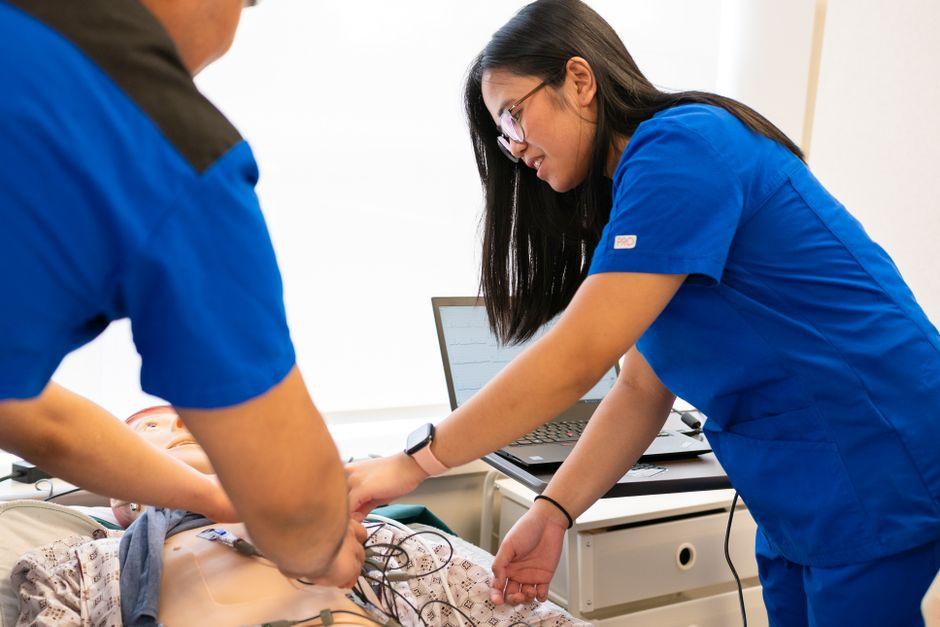
Choosing between advanced nursing degrees can feel like trying to read a medical chart during a fire drill. You know both paths can lead to meaningful nurse practitioner work, but the day-to-day reality, time commitment, and career outcomes aren’t identical. If you’re mapping out your future in clinical practice, leadership, or healthcare systems, it helps to understand where each degree actually takes you and what employers may expect from you over time.
Still grading everything by hand?
EMStudio is a free teaching management app — manage your classes, students, lessons, and more!
Learn More
Still grading everything by hand?
EMStudio is a free teaching management app — manage your classes, students, lessons, and more!
Learn More
Table of Contents
Start With the Role You Actually Want
Before you compare course lists or tuition numbers, get clear on the work you want to do. If you picture yourself diagnosing patients, managing treatment plans, and working directly in a specialty like family practice or psychiatric mental health, both an MSN and a DNP can support that direction.
The bigger question is scale. Do you want to stay focused on individual patient care, or do you also want to influence healthcare delivery, policy, quality improvement, and clinical leadership? According to St. Thomas University, understanding the differences betweenMSN vs DNP can help you see how each degree supports different levels of nursing practice and leadership.
Think of it less like choosing the “better” degree and more like choosing the lane that matches your long game. One path gets you into advanced practice faster. The other often stretches your reach beyond the exam room.
What an MSN Usually Offers You First
An MSN, or Master of Science in Nursing, is often the more direct route into nurse practitioner practice. If you already have your BSN and RN license, this option can help you move into advanced clinical training without adding extra years you may not need right away.
For many students, the appeal is obvious:
- Shorter time to completion than a DNP
- Lower overall tuition in many cases
- Faster entry into NP certification and workforce opportunities
- Strong preparation for direct patient care roles
You’ll usually study advanced pharmacology, health assessment, pathophysiology, and population-specific care. Clinical hours are a major piece of the program, so expect a workload that feels serious, because it is.
If your priority is getting into practice efficiently and building experience on the job, an MSN can make a lot of sense. It’s not the “lite” version of advanced nursing. It’s a respected, rigorous credential with a clear purpose.
What a DNP Adds Beyond Clinical Practice
A DNP, or Doctor of Nursing Practice, includes advanced clinical preparation too, but it goes wider. You’re not only learning to care for patients. You’re also learning how to improve systems, evaluate evidence, lead teams, and shape care delivery at an organizational level.
That matters in a healthcare environment full of staffing pressure, policy shifts, and technology changes. Hospitals and health systems don’t just need excellent clinicians. They need people who can spot breakdowns in care and fix them without turning every meeting into a buzzword festival.
A DNP program often includes:
- Evidence-based practice and translation of research
- Healthcare policy and advocacy
- Organizational leadership
- Quality improvement and systems thinking
- A final scholarly or practice-focused project
If you want room to grow into executive nursing roles, faculty positions, or high-level clinical leadership, the DNP can give you added leverage. Not instant magic, obviously, but a wider professional runway.
How Employers and the Field May View Each Degree
In many settings, MSN-prepared nurse practitioners and DNP-prepared nurse practitioners can qualify for similar NP licensure and certification tracks. That said, hiring trends can shift depending on region, specialty, and employer priorities.
Some healthcare organizations prefer or increasingly favor DNP-prepared candidates for leadership-heavy or academically affiliated roles. Others care more about certification, clinical competence, and experience than the letters after your name. In a busy clinic, patient outcomes usually matter more than degree drama.
You should also pay attention to the future direction of the profession. Nursing organizations have pushed for stronger doctoral preparation in advanced practice, even though MSN pathways remain common and valid.
If you’re aiming for long-term flexibility, the DNP may position you well for evolving expectations. If you need a faster launch into practice, the MSN still offers a strong and widely accepted route.
How to Make a Smart Decision for Your Next Step
A smart choice usually comes from matching your degree to your current stage, not someone else’s ideal career map. If you’re eager to become an NP soon, build clinical confidence, and start working in advanced practice, an MSN can be a strong move.
If you already know you want to lead initiatives, influence healthcare systems, teach, or compete for roles where doctoral preparation stands out, a DNP may fit better.
Use this checklist when deciding:
- Define your five-year career goal
- Compare total tuition, not just per-credit cost
- Review certification and licensure outcomes
- Look at clinical placement support
- Check whether the curriculum fits your specialty interests
- Be honest about your bandwidth
The best degree isn’t the most impressive one on paper. It’s the one that gets you where you want to go, with enough stamina left to enjoy the trip.
Start With the Role You Actually Want
Before you compare course lists or tuition numbers, get clear on the work you want to do. If you picture yourself diagnosing patients, managing treatment plans, and working directly in a specialty like family practice or psychiatric mental health, both an MSN and a DNP can support that direction.
The bigger question is scale. Do you want to stay focused on individual patient care, or do you also want to influence healthcare delivery, policy, quality improvement, and clinical leadership? According to St. Thomas University, understanding the differences betweenMSN vs DNP can help you see how each degree supports different levels of nursing practice and leadership.
Think of it less like choosing the “better” degree and more like choosing the lane that matches your long game. One path gets you into advanced practice faster. The other often stretches your reach beyond the exam room.
What an MSN Usually Offers You First
An MSN, or Master of Science in Nursing, is often the more direct route into nurse practitioner practice. If you already have your BSN and RN license, this option can help you move into advanced clinical training without adding extra years you may not need right away.
For many students, the appeal is obvious:
- Shorter time to completion than a DNP
- Lower overall tuition in many cases
- Faster entry into NP certification and workforce opportunities
- Strong preparation for direct patient care roles
You’ll usually study advanced pharmacology, health assessment, pathophysiology, and population-specific care. Clinical hours are a major piece of the program, so expect a workload that feels serious, because it is.
If your priority is getting into practice efficiently and building experience on the job, an MSN can make a lot of sense. It’s not the “lite” version of advanced nursing. It’s a respected, rigorous credential with a clear purpose.
What a DNP Adds Beyond Clinical Practice
A DNP, or Doctor of Nursing Practice, includes advanced clinical preparation too, but it goes wider. You’re not only learning to care for patients. You’re also learning how to improve systems, evaluate evidence, lead teams, and shape care delivery at an organizational level.
That matters in a healthcare environment full of staffing pressure, policy shifts, and technology changes. Hospitals and health systems don’t just need excellent clinicians. They need people who can spot breakdowns in care and fix them without turning every meeting into a buzzword festival.
A DNP program often includes:
- Evidence-based practice and translation of research
- Healthcare policy and advocacy
- Organizational leadership
- Quality improvement and systems thinking
- A final scholarly or practice-focused project
If you want room to grow into executive nursing roles, faculty positions, or high-level clinical leadership, the DNP can give you added leverage. Not instant magic, obviously, but a wider professional runway.
How Employers and the Field May View Each Degree
In many settings, MSN-prepared nurse practitioners and DNP-prepared nurse practitioners can qualify for similar NP licensure and certification tracks. That said, hiring trends can shift depending on region, specialty, and employer priorities.
Some healthcare organizations prefer or increasingly favor DNP-prepared candidates for leadership-heavy or academically affiliated roles. Others care more about certification, clinical competence, and experience than the letters after your name. In a busy clinic, patient outcomes usually matter more than degree drama.
You should also pay attention to the future direction of the profession. Nursing organizations have pushed for stronger doctoral preparation in advanced practice, even though MSN pathways remain common and valid.
If you’re aiming for long-term flexibility, the DNP may position you well for evolving expectations. If you need a faster launch into practice, the MSN still offers a strong and widely accepted route.
How to Make a Smart Decision for Your Next Step
A smart choice usually comes from matching your degree to your current stage, not someone else’s ideal career map. If you’re eager to become an NP soon, build clinical confidence, and start working in advanced practice, an MSN can be a strong move.
If you already know you want to lead initiatives, influence healthcare systems, teach, or compete for roles where doctoral preparation stands out, a DNP may fit better.
Use this checklist when deciding:
- Define your five-year career goal
- Compare total tuition, not just per-credit cost
- Review certification and licensure outcomes
- Look at clinical placement support
- Check whether the curriculum fits your specialty interests
- Be honest about your bandwidth
The best degree isn’t the most impressive one on paper. It’s the one that gets you where you want to go, with enough stamina left to enjoy the trip.
Still grading everything by hand?
EMStudio is a free teaching management app — manage your classes, students, lessons, and more!
Learn More
Still grading everything by hand?
EMStudio is a free teaching management app — manage your classes, students, lessons, and more!
Learn More




Notion4Teachers
Notion templates to simplify administrative tasks and enhance your teaching experience.



2026 Notion4Teachers. All Rights Reserved.
Notion4Teachers
Notion templates to simplify administrative tasks and enhance your teaching experience.
2026 Notion4Teachers. All Rights Reserved.
Notion4Teachers
Notion templates to simplify administrative tasks and enhance your teaching experience.
2026 Notion4Teachers. All Rights Reserved.