
How Schools Can Turn Institutional Knowledge Into Connected Workflows
How Schools Can Turn Institutional Knowledge Into Connected Workflows

Article by
Milo
ESL Content Coordinator & Educator
ESL Content Coordinator & Educator
All Posts
Every school has a Sarah. She knows which form to use, where information is stored, who approves each request, and what to do when an exception comes up.
What happens when Sarah is unavailable?
Requests slow down, questions go unanswered, and staff struggles to find the latest information. This reveals a larger problem: important school processes depend on knowledge stored in one person’s head.
Still grading everything by hand?
EMStudio is a free teaching management app — manage your classes, students, lessons, and more!
Learn More
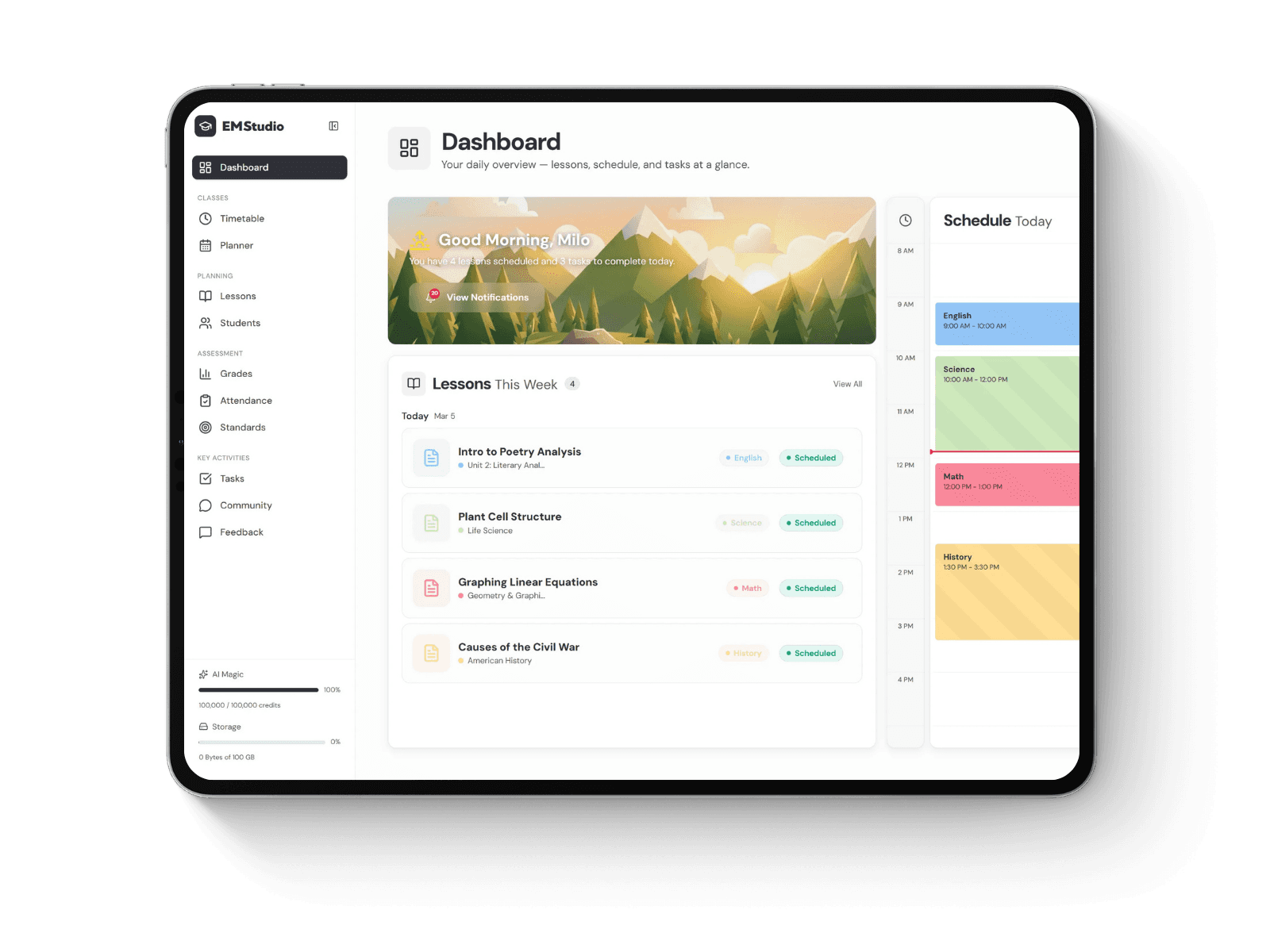
Still grading everything by hand?
EMStudio is a free teaching management app — manage your classes, students, lessons, and more!
Learn More
Table of Contents

How Much Does “Just Ask Sarah” Really Cost?
The cost appears through small interruptions throughout the day:
“Which form should I use?”
“Who needs to approve this?”
“Has anyone reviewed my request?”
“Where is the latest report?”
“What happens next?”
“Can you remind the department about this?”
Each question takes time from the person asking and the person answering. When these questions are repeated across departments, they create delays that affect purchasing, maintenance, student support, equipment requests, reimbursements, donations, and field trips.
Processes may also be handled differently depending on who receives the request. One employee remembers an additional approval step. Another uses an outdated document. A third person stores the update in a separate spreadsheet.
Turn Repeated Questions Into Connected Workflows
Repeated questions reveal where a school needs greater structure. Approval paths, responsibilities, and request statuses should be easy for authorized staff to find.
AnyDB connects requests, departments, budgets, assets, approvals, and documents within a custom operational system. Each request can follow the rules required for its type, value, department, or funding source.
Teachers can check their submissions, reviewers can see items requiring action, and administrators can follow activity across the school. Every update and decision remains connected to the relevant record.
Collect Complete Information From the Start
Many workflow problems begin with incomplete or inconsistent submissions. A request sent by email may be missing a budget code, attachment, deadline, or other detail required for approval.
AnyDB’s integrated forms allow schools to collect structured information directly within their operational system. Forms can be customized for equipment requests, maintenance issues, field trips, student support referrals, donations, and other school processes.
Teachers, staff, and authorized students can submit the required details, add notes, and attach supporting files. Each submission becomes a connected record that can trigger assignments, approvals, notifications, and follow-up actions.
This gives every workflow a more complete and consistent starting point.
Use Automation to Keep Requests Moving
Consider a teacher requesting new science equipment. The request may need to pass through a department head, finance, purchasing, and an administrator before the equipment can be ordered.
Withworkflow automation, the school can create a process that automatically:
Assigns the request to the appropriate department.
Evaluates its category, value, and funding source.
Sends it through the required approval stages.
Notifies each reviewer when action is needed.
Creates reminders as deadlines approach.
Updates the teacher as the request progresses.
Automation gives every request a defined path and reduces manual follow-ups. Sarah’s experience can guide the workflow rules, including the exceptions she has learned to manage over time.
Turn Operational Data Into Clear Reports
Connected information becomes more useful when schools can organize it around specific questions.
AnyDB’s Reports feature allows teams to filter, summarize, and analyze live operational data. Results can be displayed as numbers or charts, making patterns and bottlenecks easier to identify.
Schools could create reports to:
Compare request volumes across departments
Visualize average processing times
Track monthly spending
Monitor overdue approvals
Review equipment availability
Identify recurring delays
Follow upcoming compliance deadlines
Report charts give administrators a clearer view of performance, workload, and trends. Staff can find the information they need more easily, and school leaders can make decisions using current operational data.
Create a Reliable Source for AI
AI has become a familiar part of education, and school staff is beginning to expect the same convenience when working with internal information.
They could ask questions such as:
“Which technology requests require my approval?”
“What is the status of the science equipment request?”
“Which compliance documents expire next month?”
“Show me unresolved maintenance issues in Building B.”
An AI assistant needs reliable operational context to answer these questions accurately. It must be able to work with current records, connected information, and established access permissions.
Model Context Protocol, or MCP, provides a standardized way for compatible AI assistants to interact with external systems.AnyDB’s AI and MCP capabilities allow authorized assistants to work with teams, workspaces, records, files, and workflows.
Permissions determine what each person can access. Teachers, administrators, finance employees, and students can have different levels of visibility. An AI assistant follows the access available to the authorized account, helping protect sensitive school information.
With structured operational context, AI can become a practical interface for finding information and completing authorized work.
Start With One Process
Schools can begin with one process and expand as new needs emerge, connecting more records, reports, and departments while preserving the rules each process requires.
Sarah’s expertise can shape a system that supports the entire team.
And Sarah can finally take a day off without taking the school’s operational knowledge with her.
How Much Does “Just Ask Sarah” Really Cost?
The cost appears through small interruptions throughout the day:
“Which form should I use?”
“Who needs to approve this?”
“Has anyone reviewed my request?”
“Where is the latest report?”
“What happens next?”
“Can you remind the department about this?”
Each question takes time from the person asking and the person answering. When these questions are repeated across departments, they create delays that affect purchasing, maintenance, student support, equipment requests, reimbursements, donations, and field trips.
Processes may also be handled differently depending on who receives the request. One employee remembers an additional approval step. Another uses an outdated document. A third person stores the update in a separate spreadsheet.
Turn Repeated Questions Into Connected Workflows
Repeated questions reveal where a school needs greater structure. Approval paths, responsibilities, and request statuses should be easy for authorized staff to find.
AnyDB connects requests, departments, budgets, assets, approvals, and documents within a custom operational system. Each request can follow the rules required for its type, value, department, or funding source.
Teachers can check their submissions, reviewers can see items requiring action, and administrators can follow activity across the school. Every update and decision remains connected to the relevant record.
Collect Complete Information From the Start
Many workflow problems begin with incomplete or inconsistent submissions. A request sent by email may be missing a budget code, attachment, deadline, or other detail required for approval.
AnyDB’s integrated forms allow schools to collect structured information directly within their operational system. Forms can be customized for equipment requests, maintenance issues, field trips, student support referrals, donations, and other school processes.
Teachers, staff, and authorized students can submit the required details, add notes, and attach supporting files. Each submission becomes a connected record that can trigger assignments, approvals, notifications, and follow-up actions.
This gives every workflow a more complete and consistent starting point.
Use Automation to Keep Requests Moving
Consider a teacher requesting new science equipment. The request may need to pass through a department head, finance, purchasing, and an administrator before the equipment can be ordered.
Withworkflow automation, the school can create a process that automatically:
Assigns the request to the appropriate department.
Evaluates its category, value, and funding source.
Sends it through the required approval stages.
Notifies each reviewer when action is needed.
Creates reminders as deadlines approach.
Updates the teacher as the request progresses.
Automation gives every request a defined path and reduces manual follow-ups. Sarah’s experience can guide the workflow rules, including the exceptions she has learned to manage over time.
Turn Operational Data Into Clear Reports
Connected information becomes more useful when schools can organize it around specific questions.
AnyDB’s Reports feature allows teams to filter, summarize, and analyze live operational data. Results can be displayed as numbers or charts, making patterns and bottlenecks easier to identify.
Schools could create reports to:
Compare request volumes across departments
Visualize average processing times
Track monthly spending
Monitor overdue approvals
Review equipment availability
Identify recurring delays
Follow upcoming compliance deadlines
Report charts give administrators a clearer view of performance, workload, and trends. Staff can find the information they need more easily, and school leaders can make decisions using current operational data.
Create a Reliable Source for AI
AI has become a familiar part of education, and school staff is beginning to expect the same convenience when working with internal information.
They could ask questions such as:
“Which technology requests require my approval?”
“What is the status of the science equipment request?”
“Which compliance documents expire next month?”
“Show me unresolved maintenance issues in Building B.”
An AI assistant needs reliable operational context to answer these questions accurately. It must be able to work with current records, connected information, and established access permissions.
Model Context Protocol, or MCP, provides a standardized way for compatible AI assistants to interact with external systems.AnyDB’s AI and MCP capabilities allow authorized assistants to work with teams, workspaces, records, files, and workflows.
Permissions determine what each person can access. Teachers, administrators, finance employees, and students can have different levels of visibility. An AI assistant follows the access available to the authorized account, helping protect sensitive school information.
With structured operational context, AI can become a practical interface for finding information and completing authorized work.
Start With One Process
Schools can begin with one process and expand as new needs emerge, connecting more records, reports, and departments while preserving the rules each process requires.
Sarah’s expertise can shape a system that supports the entire team.
And Sarah can finally take a day off without taking the school’s operational knowledge with her.
Still grading everything by hand?
EMStudio is a free teaching management app — manage your classes, students, lessons, and more!
Learn More
Still grading everything by hand?
EMStudio is a free teaching management app — manage your classes, students, lessons, and more!
Learn More


Notion4Teachers
Notion templates to simplify administrative tasks and enhance your teaching experience.



2026 Notion4Teachers. All Rights Reserved.
Notion4Teachers
Notion templates to simplify administrative tasks and enhance your teaching experience.
2026 Notion4Teachers. All Rights Reserved.
Notion4Teachers
Notion templates to simplify administrative tasks and enhance your teaching experience.
2026 Notion4Teachers. All Rights Reserved.