
How a Teacher Would Set Up a Homeschool (Three Cadences and a Thin Record)
How a Teacher Would Set Up a Homeschool (Three Cadences and a Thin Record)

Article by
Milo
ESL Content Coordinator & Educator
ESL Content Coordinator & Educator
All Posts
Ultimate Homeschool Planner
The ultimate all-in-one homeschooling system in Notion.
Learn More
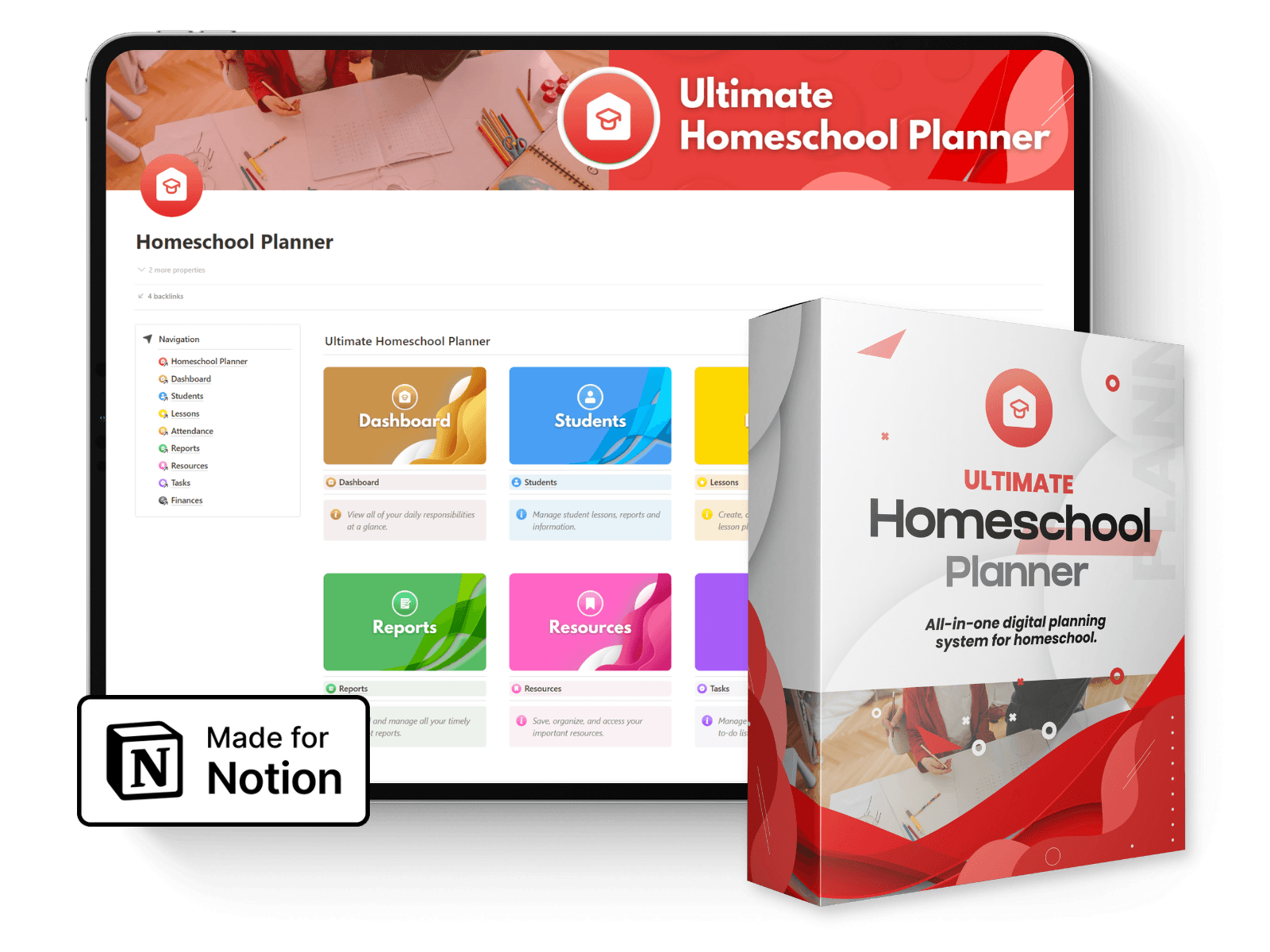
Ultimate Homeschool Planner
The ultimate all-in-one homeschooling system in Notion.
Learn More
Table of Contents
A fourth-grade teacher who tutors in the summer will eventually land a homeschooling family. The parents are not shopping for content; content can be bought. What they want is the thing the teacher carries around without noticing: a sense of how learning gets structured over time. Sequence, pacing, review, assessment. The invisible architecture of a school year.
New homeschooling parents tend to build that architecture last, usually after a bumpy first semester, and it shows in how they shop. Read any honest account of how homeschooling families evaluate online school options and the pattern is plain: parents compare placement tests, sample weeks, and scheduling flexibility long before they compare price. They are buying structure. They just do not have a word for it yet.
That makes educators genuinely useful to these families. Teachers tutor them, sell them planning templates, consult on curriculum, and sometimes teach their own children at home. The professional advantage is real. So are the surprises. Here is the transferable core: three planning cadences, a four-artifact record, one rule for tooling, and the adjustments an audience of one demands.
The three cadences: year, term, week
Start where a curriculum planner starts: at the end. Decide what the student should be able to do in June, then count backward. A home academic year keeps the school-year skeleton, roughly 36 instructional weeks, minus holidays, minus the late-November week that always dissolves. Write down the real number of teaching weeks. It is smaller than expected, and knowing it early prevents the classic first-year error: March arrives with half the math book left.
From there, plan at three grains:
The year sets destinations: which books get finished, which skills close out, roughly which month each unit lands in.
The term, six to nine weeks at home, is the scope-and-sequence layer. Order the units here, and schedule anything that needs an outside resource: a co-op session, a library run, a lab kit.
The week is the working unit. A fifteen-minute Sunday reset beats daily lesson plans: what got done, what carries over, what this week holds.
Drop the formal daily lesson plan entirely. With one student, adjustment happens in real time; writing objectives and transitions for an audience of one is planning theater. The week is the smallest unit worth putting in writing.
The thin record: four artifacts, kept weekly
Teachers over-document at home, because school builds the habit deep. The correction is not to skip records. It is to keep a small set, on a cadence a family will actually sustain.
Which records matter depends on where the family lives, because homeschool law in the United States is state law. Requirements come in a few recognizable shapes: a notice of intent, an attendance count in days or hours, a portfolio of work samples, a periodic evaluation or standardized test. Which of those apply, and in what combination, depends entirely on the state. Before designing a record system, a family reads its own state's rules. Before advising one, so should you.
Four artifacts cover most situations: an attendance log kept weekly, never reconstructed in May; one dated work sample per subject per term; a running list of curriculum and materials used; and, once high school begins, hours by course, because hours become credits and credits become a transcript. Skip the daily narratives and the elaborate rubrics. An audience of one does not need the paper trail a classroom of thirty does. It needs a thin, consistent one.
Templates for what you design, apps for what the state defines
Readers here know what a well-built workspace can do, so the useful question is where it stops. A template wins wherever the family designs the system itself: unit plans, reading logs, project trackers, the weekly reset. One student's schedule is idiosyncratic, and a workspace bends in places where an app's data model will not.
The template loses where someone else defines the system. State requirements are the clearest case. The family does not choose what counts as attendance, what a reviewer expects in a portfolio, or when a filing is due, and a self-built tracker drifts quietly away from what the rules actually say. That is where purpose-built software earns its keep. Some families pair their workspace with Numa School, a homeschool planning and record-keeping platform, and let it track what their own state requires while the workspace handles everything the family gets to invent. The rule is the point, not the tools: design what is yours to design, and do not hand-build what has already been defined for you.
What an audience of one changes
Speed, first. A lesson built for forty-five minutes takes twelve. No transitions, no settling the room, no re-teaching the middle while both ends idle. Direct instruction to one attentive student is startlingly efficient, and a full school day at home often fits inside three or four focused hours, less for younger children.
That efficiency breaks classroom instincts in both directions. Pacing guides become suggestions, because there is no cohort to hold together; the student moves when the concept is mastered, whether that takes a day or three weeks. Differentiation stops being a layer on the lesson and becomes the lesson. Materials follow the same logic: curriculum gets chosen for one learner rather than a class median, and Numa School's guide to choosing a homeschool curriculum maps the trade-offs families weigh. Assessment simplifies too. Watching the work happen means knowing, almost in real time, what the student understands, so a short weekly retention check does more than any unit test.
What teachers report missing are the parts of school that were never about instruction. Colleagues down the hall. The energy of a group. The clean break between the teaching role and the parenting role at three o'clock. Families who thrive rebuild those pieces deliberately, through co-ops, outside classes, and firm start and stop rituals. The structure of relationships needs as much design as the structure of content.
Teaching thirty students and teaching one are different crafts on the same foundation, and the foundation travels: the backward plan, the three cadences, the thin record, the one tooling rule. Families who make home education look effortless are almost always running a system a teacher would recognize on sight. They had to find it by trial. A teacher walks in already holding it.
A fourth-grade teacher who tutors in the summer will eventually land a homeschooling family. The parents are not shopping for content; content can be bought. What they want is the thing the teacher carries around without noticing: a sense of how learning gets structured over time. Sequence, pacing, review, assessment. The invisible architecture of a school year.
New homeschooling parents tend to build that architecture last, usually after a bumpy first semester, and it shows in how they shop. Read any honest account of how homeschooling families evaluate online school options and the pattern is plain: parents compare placement tests, sample weeks, and scheduling flexibility long before they compare price. They are buying structure. They just do not have a word for it yet.
That makes educators genuinely useful to these families. Teachers tutor them, sell them planning templates, consult on curriculum, and sometimes teach their own children at home. The professional advantage is real. So are the surprises. Here is the transferable core: three planning cadences, a four-artifact record, one rule for tooling, and the adjustments an audience of one demands.
The three cadences: year, term, week
Start where a curriculum planner starts: at the end. Decide what the student should be able to do in June, then count backward. A home academic year keeps the school-year skeleton, roughly 36 instructional weeks, minus holidays, minus the late-November week that always dissolves. Write down the real number of teaching weeks. It is smaller than expected, and knowing it early prevents the classic first-year error: March arrives with half the math book left.
From there, plan at three grains:
The year sets destinations: which books get finished, which skills close out, roughly which month each unit lands in.
The term, six to nine weeks at home, is the scope-and-sequence layer. Order the units here, and schedule anything that needs an outside resource: a co-op session, a library run, a lab kit.
The week is the working unit. A fifteen-minute Sunday reset beats daily lesson plans: what got done, what carries over, what this week holds.
Drop the formal daily lesson plan entirely. With one student, adjustment happens in real time; writing objectives and transitions for an audience of one is planning theater. The week is the smallest unit worth putting in writing.
The thin record: four artifacts, kept weekly
Teachers over-document at home, because school builds the habit deep. The correction is not to skip records. It is to keep a small set, on a cadence a family will actually sustain.
Which records matter depends on where the family lives, because homeschool law in the United States is state law. Requirements come in a few recognizable shapes: a notice of intent, an attendance count in days or hours, a portfolio of work samples, a periodic evaluation or standardized test. Which of those apply, and in what combination, depends entirely on the state. Before designing a record system, a family reads its own state's rules. Before advising one, so should you.
Four artifacts cover most situations: an attendance log kept weekly, never reconstructed in May; one dated work sample per subject per term; a running list of curriculum and materials used; and, once high school begins, hours by course, because hours become credits and credits become a transcript. Skip the daily narratives and the elaborate rubrics. An audience of one does not need the paper trail a classroom of thirty does. It needs a thin, consistent one.
Templates for what you design, apps for what the state defines
Readers here know what a well-built workspace can do, so the useful question is where it stops. A template wins wherever the family designs the system itself: unit plans, reading logs, project trackers, the weekly reset. One student's schedule is idiosyncratic, and a workspace bends in places where an app's data model will not.
The template loses where someone else defines the system. State requirements are the clearest case. The family does not choose what counts as attendance, what a reviewer expects in a portfolio, or when a filing is due, and a self-built tracker drifts quietly away from what the rules actually say. That is where purpose-built software earns its keep. Some families pair their workspace with Numa School, a homeschool planning and record-keeping platform, and let it track what their own state requires while the workspace handles everything the family gets to invent. The rule is the point, not the tools: design what is yours to design, and do not hand-build what has already been defined for you.
What an audience of one changes
Speed, first. A lesson built for forty-five minutes takes twelve. No transitions, no settling the room, no re-teaching the middle while both ends idle. Direct instruction to one attentive student is startlingly efficient, and a full school day at home often fits inside three or four focused hours, less for younger children.
That efficiency breaks classroom instincts in both directions. Pacing guides become suggestions, because there is no cohort to hold together; the student moves when the concept is mastered, whether that takes a day or three weeks. Differentiation stops being a layer on the lesson and becomes the lesson. Materials follow the same logic: curriculum gets chosen for one learner rather than a class median, and Numa School's guide to choosing a homeschool curriculum maps the trade-offs families weigh. Assessment simplifies too. Watching the work happen means knowing, almost in real time, what the student understands, so a short weekly retention check does more than any unit test.
What teachers report missing are the parts of school that were never about instruction. Colleagues down the hall. The energy of a group. The clean break between the teaching role and the parenting role at three o'clock. Families who thrive rebuild those pieces deliberately, through co-ops, outside classes, and firm start and stop rituals. The structure of relationships needs as much design as the structure of content.
Teaching thirty students and teaching one are different crafts on the same foundation, and the foundation travels: the backward plan, the three cadences, the thin record, the one tooling rule. Families who make home education look effortless are almost always running a system a teacher would recognize on sight. They had to find it by trial. A teacher walks in already holding it.
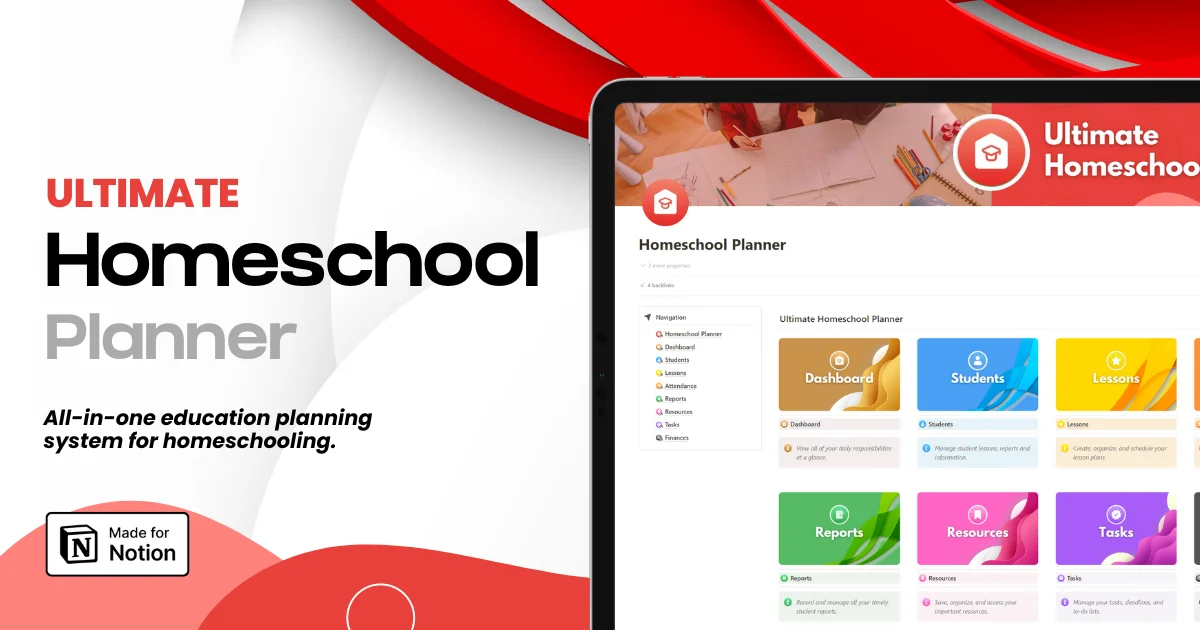
Ultimate Homeschool Planner
The ultimate all-in-one homeschooling system in Notion.
Learn More
Ultimate Homeschool Planner
The ultimate all-in-one homeschooling system in Notion.
Learn More





Notion4Teachers
Notion templates to simplify administrative tasks and enhance your teaching experience.



2026 Notion4Teachers. All Rights Reserved.
Notion4Teachers
Notion templates to simplify administrative tasks and enhance your teaching experience.
2026 Notion4Teachers. All Rights Reserved.
Notion4Teachers
Notion templates to simplify administrative tasks and enhance your teaching experience.
2026 Notion4Teachers. All Rights Reserved.