
15 Education Policy Changes Every Teacher Should Track
15 Education Policy Changes Every Teacher Should Track

Article by
Milo
ESL Content Coordinator & Educator
ESL Content Coordinator & Educator
All Posts
Most education policy is written by people who haven't stepped in a classroom since the Bush administration. I stopped trusting the acronyms after NCLB turned my 3rd graders into test-taking robots. But ignoring these shifts costs you—last year, my district lost $40K because we misunderstood new federal funding formulas.
The rules keep changing. New teacher licensure requirements drop mid-year. Standardized testing windows shift without warning. Student data protection laws now ban apps I've used for years. You need to know what's coming before it hits your gradebook.
This isn't another boring legislative recap. I'm tracking the fifteen changes that actually impact your planning period—from K-12 policy implementation timelines to instructional coaching mandates. What matters for your classroom right now.
Still grading everything by hand?
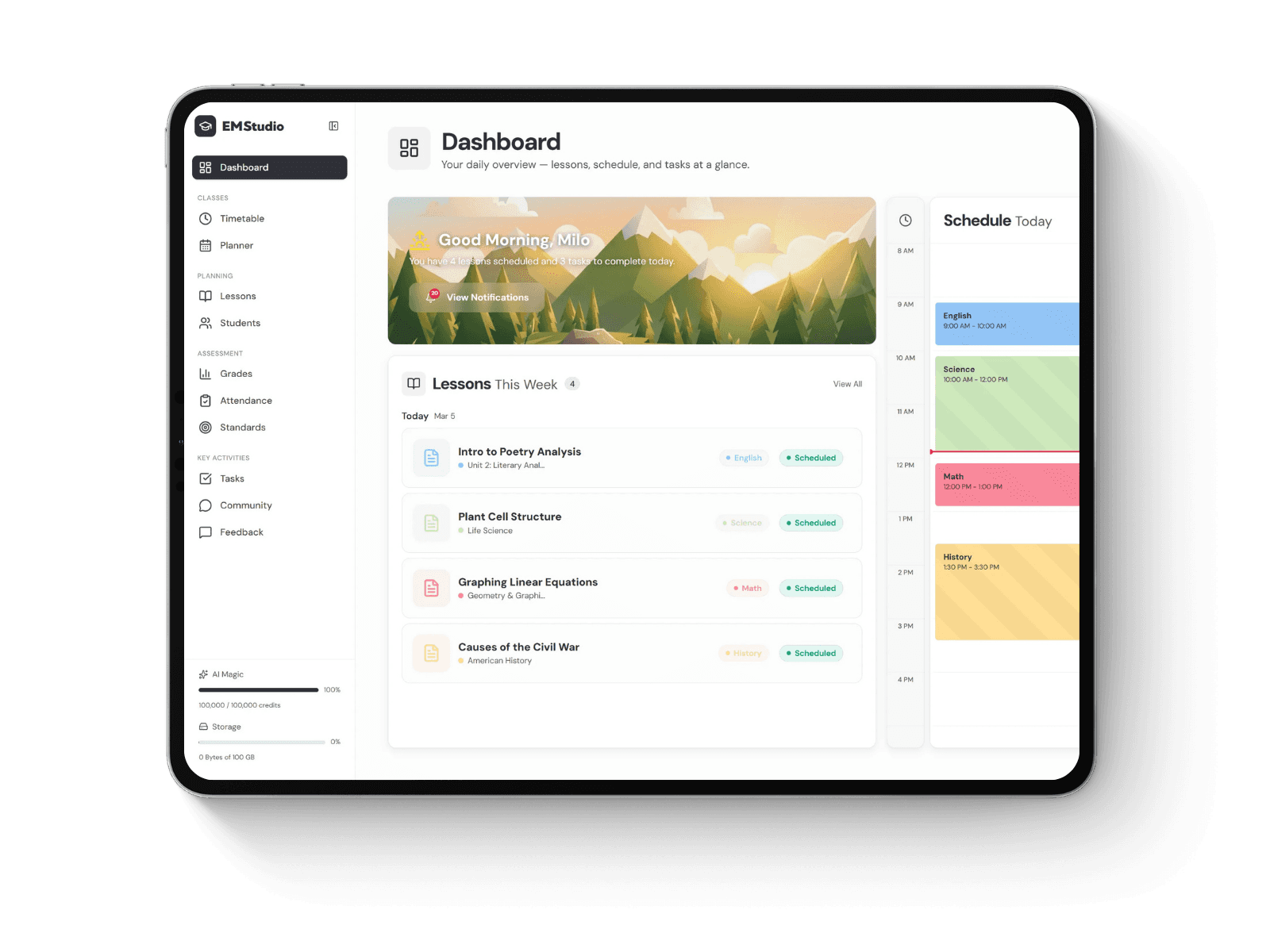
EMStudio is a free teaching management app — manage your classes, students, lessons, and more!
Learn More
Still grading everything by hand?
EMStudio is a free teaching management app — manage your classes, students, lessons, and more!
Learn More
Table of Contents
Which Federal Education Policies Require Immediate Attention?
Teachers must monitor updated ESSA state accountability plans lowering subgroup n-sizes from 30 to 20 students, revised Title I funding formulas redirecting resources to schools above 40% poverty thresholds, and stricter IDEA compliance requiring 60-day evaluation timelines. These federal mandates drive local budget decisions and classroom testing protocols.
Fifteen states face a 2024-2025 deadline to amend their ESSA plans. These education policy changes hit your classroom within 18 months. New testing requirements and reporting standards cascade fast. Stay ahead of the latest in education by reading your state K-12 policy implementation guidelines.
ð Accountability shifts (AMOs): New Annual Measurable Objectives replace AYP metrics with lower n-sizes for subgroups.
ð° Funding formula changes (Title I): Reallocations after ESSER expires shift resources to high-poverty schools.
⏱️ Compliance timelines (IDEA): Strict 60-day evaluation deadlines and Maintenance of Effort requirements.
Federal funding covers roughly 8% of K-12 spending according to NCES. That small slice drives 100% of mandates for special education and accountability. Washington sets the terms through rigid federal funding formulas. Local districts pay the actual bill. This disconnect creates constant tension in education news coverage.
ESSER funds expired September 2024. Districts must replace $190 billion using Title I allocations. That money dries up fast. Schools already slash instructional coaching positions and delay curriculum purchases. Understanding these budget shifts requires active teacher advocacy in educational policy at board meetings.
ESSA Accountability Requirements
States abandoned Adequate Yearly Progress for Annual Measurable Objectives. California, Texas, and New York lowered n-sizes from 30 to 10 students. Now your small groups of English learners or special education students trigger separate accountability reporting. Previously, tiny subgroups hid in aggregate data. That means more data meetings and intervention tracking for you.
Comprehensive Support and Improvement identifies the bottom 5% of Title I schools. Targeted Support and Improvement flags specific subgroup underperformance lasting three consecutive years. The 2024 identification lists release this August. If your school lands on either list, expect mandatory standardized testing audits and increased documentation requirements. Your daily schedule changes immediately. Check your state website before school starts.
Title I Funding Allocations
Schools above 40% poverty qualify for Schoolwide programs. Those between 35% and 40% get Targeted Assistance only. The comparability loophole lets districts exclude teacher salary differentials from resource calculations. Rich schools keep experienced teachers. Poor schools get newer ones. The funding looks equal on paper. It never is.
Congress appropriated $18.4 billion for Title I in 2024. Per-pupil allocations range from $1,200 in Connecticut to $2,800 in Mississippi and New Mexico. States adjust these figures using cost-of-living indexes. Your district's federal funding formula determines which students receive pull-out services and instructional coaching support. When ESSER disappeared, many districts used these Title I dollars to save teaching positions.
IDEA Special Education Compliance
Federal law gives you 60 days from parental consent to hold the IEP meeting and complete evaluations. The significant disproportionality rule affects over 8,000 districts annually. If your district suspends special education students at higher rates than general education peers, you face mandatory budget redirection. Washington pays only 15% of special education costs. States cover the remaining 85%.
Maintenance of Effort rules prohibit reducing special education spending below prior year levels. Exceptions exist for declining enrollment or terminated programs. Auditors review 12 months of financial records. Violate MOE and you lose future federal funding. Track every dollar spent on IEP services and student data protection compliance. Teacher licensure requirements now include specific IDEA training modules in many states.
What State Assessment Reforms Are Reshaping Testing?
States are shortening testing windows from unlimited to 3-4 hour fixed limits, launching through-year assessment pilots like Louisiana's LEAP 360 replacing summative tests, and creating divergent opt-out policies ranging from New York's 20% refusal rights to Florida's mandatory participation requirements. These changes affect 50 million K-12 students annually.
Testing used to consume your entire spring calendar. Now state education policy shifts and K-12 policy implementation changes are compressing that window. Three distinct movements are reshaping how we measure learning.
Time Reduction: Windows shrinking from unlimited to 3-4 hours. Texas STAAR, New York Regents, Colorado CMAS.
Format Innovation: Through-year pilots replacing single summative. Louisiana LEAP 360, New Hampshire PACE, Georgia MAP Growth.
Parent Rights: Divergent opt-out policies. New York (20% refusal), Florida (mandatory), California (counts as non-proficient).
Standardized testing once ate 20-50 hours annually per grade level. Reform states now cut instructional interruption by 30-40% through compressed windows. That returns roughly 8-15 hours to actual teaching in May.
Here's the tension. Shorter windows reduce student stress but require tighter item sampling. States must maintain reliability coefficients above 0.85 or the data becomes statistically shaky. You can't just cut questions; you have to get smarter about which ones you ask.
Reduced Testing Windows
Texas now caps STAAR at four hours per test. Previously, students could work until the school day ended. That change alone reclaimed three weeks of scattered testing days in April and May. New York fixed Regents exams at three hours. Colorado cut CMAS from three sessions to two, trimming roughly ninety minutes of seat time.
Louisiana's LEAP 360 is the "through-year" trend you probably read about in Education Week. Three interim assessments, thirty minutes each, replace the single four-hour summative. Students take them in September, February, and April. But here's the infrastructure reality: districts need 1:1 device ratios to participate. If you're sharing a Chromebook cart between three classes, you can't pilot this yet. You also need strong student data protection protocols for three testing windows instead of one.
Your spring calendar looks different now. Instead of losing six instructional days to test administration, you might lose two. That matters when you're trying to finish a novel before Memorial Day. Your instructional coaching team noticed the difference immediately. Compressed windows mean less disruption to intervention schedules.
Alternative Assessment Pilots
New Hampshire's PACE districts have been running performance-based assessments since 2015. Students complete complex tasks—designing experiments, defending historical arguments—instead of filling bubbles. Teachers score these using common rubrics during district calibration days. The state aggregates results into accountability metrics that satisfy federal requirements without a traditional summative exam.
Georgia launched a MAP Growth pilot replacing end-of-grade tests for fourth through eighth graders. Computer-adaptive testing adjusts question difficulty in real time. You see growth percentiles instead of just proficiency buckets. This changes how you group students for intervention. A child scoring at the 20th percentile needs different support than one labeled "novice" on a fixed-form test.
Federal Innovative Assessment Demonstration Authority (IADA) rules govern these experiments and impact federal funding formulas. States get 2-7 year waivers, but the bar is high. Districts need 10,000-plus students and prior competency-based experience. Your assessment must achieve reliability scores above 0.85 correlation with NAEP to maintain approval. If local data doesn't track with national benchmarks, the feds pull the waiver and you revert to the old test. This creates pressure on teacher licensure requirements—you need educators trained in both instruction and rigorous assessment design, not just test prep.
Opt-Out Policy Variations
Opt-out policies create a patchwork that affects your classroom directly. New York grants formal refusal rights. Twenty percent of families opted out in 2019, concentrated in suburban districts. California permits opt-outs but counts absent students as non-proficient for accountability calculations. That can tank your school's rating even if those kids are passing your class.
Florida prohibits opt-outs entirely. The state enforces the federal 95% participation requirement strictly. Parents refusing testing face administrative pushback. Washington takes the middle path: no consequence for the student, but the district gets penalized on accountability indexes. Your school suffers, not the child.
That participation math matters. Schools falling below 95% lose one to two points on state accountability indexes. Drop below that threshold and you trigger CSI status. That label brings mandatory improvement planning, potential state takeover, and intense scrutiny of your instructional coaching programs. I've seen principals panic over three absences on testing day because those missing students could drop the school below the line.
The divergence creates confusion. A teacher moving from Brooklyn to Miami faces completely different testing cultures. In one place, you track who brought the refusal letter. In the other, you track who has a doctor's note. Both scenarios require different classroom management strategies during testing week.

How Are Curriculum and Content Standards Shifting?
Thirty-two states now mandate Science of Reading instruction requiring 160 hours of LETRS training, while California's 2023 Math Framework introduces data science pathways delaying Algebra. Simultaneously, 14 states enacted content restriction laws like Florida's HB 1069 requiring book ratings and parent opt-in forms for library selections.
These shifts aren't theoretical. They're rewriting your lesson plans, your bookshelf, and your certification requirements simultaneously. And unlike past reforms, these come with teeth: mandatory training hours, curriculum audits, and felony penalties for noncompliance.
Science of Reading Mandates
Thirty-two states now require K-3 teachers to complete LETRS Volume 1 and 2, totaling 160 hours of evidence-based instruction in the science of reading. Mississippi proves this works: after full implementation, they climbed from 49th to 21st nationally on 4th-grade NAEP standardized testing between 2017 and 2022. That's rare good news in education with data behind it.
But implementation creates chaos. Ohio, Tennessee, and Indiana explicitly ban three-cueing (MSV: Meaning, Structure, Visual) strategies. Districts must purge leveled readers lacking decodability criteria. I watched my district box up thousands of books last August because they didn't meet phonics alignment standards. Some teachers misinterpret the mandate as "phonics only," stripping authentic literature from classrooms entirely.
Mathematics Instruction Revisions
California's 2023 Mathematics Framework pushes data science pathways and delays Algebra to 9th grade, hitting 6 million students with a 2024-2025 adoption deadline. The state rejected Saxon Math entirely, mandating open-source CPM and Illustrative Mathematics curricula instead.
Texas diverged sharply. Their 2024 standards mandate traditional algorithms and math fact fluency by 3rd grade. When I compared these mathematics instruction strategies with my instructional coach, the divide was clear: California builds data literacy while Texas enforces automaticity. Neither state offers transition funding for the curriculum overhauls hitting districts this fall.
Content Restriction Legislation
Fourteen states now restrict content through laws like Florida's HB 1069, which mandates book ratings and threatens felony penalties. Texas's HB 900 requires vendor ratings under the READER Act. These K-12 policy implementation shifts ban "divisive concepts" and forced College Board to water down AP African American Studies and SEL curriculum.
The penalties are devastating. A 7th-grade EFL teacher in Florida assigning The Hate U Give without district approval and parent opt-in forms faces $5,000 fines and 5-year teacher licensure requirements suspension. Appeals must file within 30 days. This is education policy with consequences: curriculum choice now carries criminal liability.

Teacher Evaluation and Accountability Updates
American teachers face a split field right now. Some states double down on test-based accountability while others retreat. You need to know which camp your state falls into before the next evaluation cycle starts.
Watch states still weight high-stakes VAM at 35% to 50% of your rating. Monitor legislative sessions closely.
Act states shifted to growth models with multiple measures. Focus on portfolio evidence and professional goal documentation.
The math is shifting nationwide. Most hybrid models now split evaluations roughly 50% observations, 30% student growth measures, and 20% professional goals. Your district pays education per teacher evaluation costs averaging $400 to $800 per FTE annually. That's money coming out of instructional coaching budgets.
The failures are documented. Teachers in Tennessee and Houston ISD successfully challenged their Value-Added Model scores. Data showed penalties of 0.2 to 0.3 standard deviations just for teaching gifted populations or ELL newcomers. Same instruction quality, lower algorithmic scores. While student data protection gets headlines, these compliance algorithms drain resources that could fund actual classroom support.
Value-Added Model Revisions
Tennessee cut its VAM weight from 35% to 20% after years of litigation. Houston ISD terminated its $4.5 million SAS EVAAS contract in 2023. New York imposed a 2024 moratorium on test-based growth scores for grades 3-8. These aren't isolated technical adjustments.
The testing ceilings problem in standardized testing is brutal. If you teach gifted students in the top 10%, they hit the assessment ceiling early. Your "growth" looks flat despite delivering rigorous instruction. Teach ELL newcomers in the bottom quartile? Same penalty. Research confirms rating penalties of 0.2 to 0.3 standard deviations for these assignments.
This education policy shift reflects hard lessons. States spent millions defending algorithms that couldn't distinguish between ineffective teaching and hard-to-test populations. Houston teachers proved in court that algorithms assigned negative scores when gifted students hit perfect marks. Texas courts recognized this flaw explicitly. When systems penalize teachers for high-need students, you create a retention crisis.
You cannot show growth on a test where students already scored maximum points. Similarly, ELL teachers faced penalties for rapid English gains that didn't translate immediately to test points. These statistical penalties effectively block affected teachers from merit bonuses or tenure protections regardless of actual classroom quality.
Observation Protocol Changes
The Danielson Framework looked different in 2011. Four domains, 22 components, exhaustive evidence collection that consumed planning periods. The 2022 update simplifies the rubric and prioritizes cognitive engagement over procedural compliance. Charlotte Danielson stated in 2023 that her framework should never drive high-stakes employment decisions.
Enter the Marshall Mini-Observation model. Ten minutes per visit, minimum ten times per semester, versus traditional 45-minute evaluations. I sat through both cycles last year in my building. Short windows catch actual teaching moments instead of performance theater where you script every transition.
National survey data shows 72% of districts now use shortened observation cycles. Observer fatigue drops when evaluators aren't writing novels during single periods. Feedback arrives within 48 hours instead of six weeks. That's actionable for changing practice immediately, not months later.
The trade-off matters for your daily prep. Traditional models let you stage a show lesson with technology. Mini-observations capture your actual instruction, including messy moments when labs fail. Make sure your administrator understands your content standards. They see ten unannounced snapshots rather than one polished script.
Ask your union rep which protocol your district adopted. The difference determines whether you spend August prepping elaborate show units or refining actual daily routines.
Tenure and Licensure Adjustments
Entry barriers are rising fast. Praxis Core Academic Skills for Mathematics raised cut scores from 150 to 162 in twelve states effective January 2024. Georgia pilot data shows first-attempt pass rates plummeting from 68% to 54% among university-prepared candidates. Fewer candidates means different staffing pressures for veteran teachers already covering unfilled positions.
Performance-based assessments are tightening simultaneously. Washington raised edTPA passing scores from 38 to 42. California replaced the RICA reading exam with the new CalTPA, requiring 20-minute video submissions of reading instruction plus commentary on pedagogical choices. These changes affect how you mentor student teachers in your classroom.
They need support managing teacher records online before they reach your classroom. Document everything when hosting candidates. When cut scores shift mid-year, your written feedback becomes evidence of their growth trajectory against previous standards.
The pipeline restrictions create long-term implications for K-12 policy implementation and federal funding formulas. Fewer licensed teachers means larger class sizes for those who remain in the profession. Track your state legislature's moves on these teacher licensure requirements carefully. The cut score debates determine who sits beside you next fall for IEP meetings.

Student Data Privacy and Technology Regulations
K-12 schools suffered over 1,600 data breaches between 2016 and 2022. Two-thirds started with phishing emails targeting district accounts—often containing IEPs and 504 plans with sensitive student health data. One click, and thousands of records scatter across the dark web. The financial hit matters, but the trust fracture hurts worse.
Red flags trigger investigations fast. Using free AI tools without Business Associate Agreements violates FERPA. Illinois BIPA penalties hit $1,000 to $5,000 per student for unauthorized biometric data collection. That's $150,000 for a single middle school grade. Check your student data protection protocols before the auditor arrives.
AI Usage Guidelines
New York City banned ChatGPT outright in January 2023. By September, they reversed course with mandatory AI Usage Guidelines. Teachers now train on spotting AI hallucinations and keeping student names out of public prompts. The policy recognizes that AI tools for teachers and students are here to stay, but boundaries keep us legal.
Los Angeles Unified spent $6 million on "Ed," their AllHere chatbot. District lawyers specifically prohibited using AI for IEP writing. Inputting a student's diagnosis into free ChatGPT? That's a direct FERPA violation without a signed Data Privacy Agreement, risking federal funding formulas compliance. I've seen teachers draft accommodation suggestions in Google Docs instead—safer, slower, compliant.
Third-Party App Compliance
Before downloading any app, check your district's digital safety in schools approved list. Red flags include freemium versions that harvest student emails and apps lacking signed Data Privacy Agreements. COPPA requires age verification for under-13 users. FERPA needs directory information opt-out compliance before sharing photos or names in instructional coaching videos.
Banned apps list grows monthly. Montgomery County, Maryland blocked TikTok on all district devices. Unvetted AI detectors like GPTZero show 15-30% false positive rates—imagine accusing a special education student of cheating incorrectly. Never use consumer Gmail to transmit IEPs. Districts face immediate audit triggers that threaten teacher licensure requirements when sensitive documents leave secure servers.
Surveillance Technology Limits
Illinois BIPA rules are strict. Written parental consent precedes any facial recognition scanning. Vendors like Securly and Gaggle must destroy biometric data within three years. Violations cost $1,000 to $5,000 per student—enough to bankrupt a small district's standardized testing budget.
The education nation splits on surveillance. New York banned facial recognition in schools statewide in 2023. Meanwhile, Florida, Texas, and Arkansas mandate panic buttons and live-feed cameras under Alyssa's Law variations. One education policy protects privacy; the other prioritizes emergency response. Your district's stance determines whether cameras recognize faces or simply record hallways. Check your state K-12 policy implementation guides before purchasing.

How Can Educators Navigate Local Policy Implementation?
Navigate local policy by mapping your district's chain of command from department chair to school board policy committee, building coalitions with PTA presidents and union representatives to secure agenda items, and presenting classroom impact using NWEA MAP growth percentiles, not proficiency rates, to demonstrate student progress.
You can't fight city hall until you know which office to visit. Map the chain first, build your crew second, bring data last. Skip a step and you end up emailing the superintendent about a broken copier while your instructional coaching request dies in committee.
Understanding Your District's Policy Chain
Start with your Department Chair. They filter requests to the Assistant Principal for Instruction, who decides what reaches the Principal's desk. Principals handle discretionary funds up to $50,000 for supplies, but Area Superintendents control staffing allocations and teacher licensure requirements. Don't ask your Principal for a new FTE when they cannot approve it.
I learned this the hard way when I requested a reading interventionist from my Principal during standardized testing prep. She had to punt it upward, costing us six weeks of support. Know the education policy chain: curriculum stops at the Chief Academic Officer, but personnel changes need School Board Policy Committee sign-off. K-12 policy implementation lives or dies at these handoffs.
Decision tree:
Is your issue under $10,000 and curriculum-related? Stop at the Principal.
Does it involve federal funding formulas or new hires? Escalate to Area Superintendent.
Are you changing district-wide student data protection protocols? That's Board level.
Building Alliances with Stakeholders
Solo teachers get ignored. Last year, I partnered with our PTA President who commands 500+ parent emails and can place items on board agendas during public comment. We looped in our Union Building Rep for grievance expertise and our Instructional Coach for data credibility. Mastering stakeholder involvement means knowing who controls the microphone and the agenda.
Frame everything around student impact metrics, never your workload. When I wanted reduced class sizes, I didn't complain about grading papers. I showed how 32 students per class dropped our standardized testing growth percentiles compared to schools with 24. Parents care about outcomes. Administrators care about optics. Speak both languages.
Never bypass your chain of command to email the school board directly with complaints. I watched a colleague do this over a curriculum change she disliked. The Superintendent froze her out of future instructional coaching opportunities, and her Department Chair stopped forwarding her requests entirely. She spent three years in professional isolation. Build coalitions strategically. Involving school stakeholders requires patience, not petulance.
Communicating Classroom Impact to Administrators
Administrators drown in narrative text. Give them visual data they can scan during a five-minute break. Last month, I presented a one-page brief showing our new reading initiative's Implementation Cost-Benefit Analysis. I used bar charts comparing time costs—5 hours weekly of compliance paperwork—against student outcome gains measured in NWEA MAP growth percentiles.
Here's the formula: Show growth percentiles, not proficiency rates. A student moving from the 20th to 45th percentile proves your teaching worked, regardless of demographics. Proficiency rates just show which zip codes you serve. Growth data isolates teacher impact. My Principal approved the program in ten minutes because the chart made the case undeniable.
Create your brief this week for your k12 newsletter or direct presentation. Lead with a 0.4 effect size improvement. Use pie charts for time allocation, line graphs for standardized testing gains. Skip the paragraphs. Attach this to your education policy request and watch it move through the chain you mapped instead of dying in an assistant principal's inbox.

Which Federal Education Policies Require Immediate Attention?
Teachers must monitor updated ESSA state accountability plans lowering subgroup n-sizes from 30 to 20 students, revised Title I funding formulas redirecting resources to schools above 40% poverty thresholds, and stricter IDEA compliance requiring 60-day evaluation timelines. These federal mandates drive local budget decisions and classroom testing protocols.
Fifteen states face a 2024-2025 deadline to amend their ESSA plans. These education policy changes hit your classroom within 18 months. New testing requirements and reporting standards cascade fast. Stay ahead of the latest in education by reading your state K-12 policy implementation guidelines.
ð Accountability shifts (AMOs): New Annual Measurable Objectives replace AYP metrics with lower n-sizes for subgroups.
ð° Funding formula changes (Title I): Reallocations after ESSER expires shift resources to high-poverty schools.
⏱️ Compliance timelines (IDEA): Strict 60-day evaluation deadlines and Maintenance of Effort requirements.
Federal funding covers roughly 8% of K-12 spending according to NCES. That small slice drives 100% of mandates for special education and accountability. Washington sets the terms through rigid federal funding formulas. Local districts pay the actual bill. This disconnect creates constant tension in education news coverage.
ESSER funds expired September 2024. Districts must replace $190 billion using Title I allocations. That money dries up fast. Schools already slash instructional coaching positions and delay curriculum purchases. Understanding these budget shifts requires active teacher advocacy in educational policy at board meetings.
ESSA Accountability Requirements
States abandoned Adequate Yearly Progress for Annual Measurable Objectives. California, Texas, and New York lowered n-sizes from 30 to 10 students. Now your small groups of English learners or special education students trigger separate accountability reporting. Previously, tiny subgroups hid in aggregate data. That means more data meetings and intervention tracking for you.
Comprehensive Support and Improvement identifies the bottom 5% of Title I schools. Targeted Support and Improvement flags specific subgroup underperformance lasting three consecutive years. The 2024 identification lists release this August. If your school lands on either list, expect mandatory standardized testing audits and increased documentation requirements. Your daily schedule changes immediately. Check your state website before school starts.
Title I Funding Allocations
Schools above 40% poverty qualify for Schoolwide programs. Those between 35% and 40% get Targeted Assistance only. The comparability loophole lets districts exclude teacher salary differentials from resource calculations. Rich schools keep experienced teachers. Poor schools get newer ones. The funding looks equal on paper. It never is.
Congress appropriated $18.4 billion for Title I in 2024. Per-pupil allocations range from $1,200 in Connecticut to $2,800 in Mississippi and New Mexico. States adjust these figures using cost-of-living indexes. Your district's federal funding formula determines which students receive pull-out services and instructional coaching support. When ESSER disappeared, many districts used these Title I dollars to save teaching positions.
IDEA Special Education Compliance
Federal law gives you 60 days from parental consent to hold the IEP meeting and complete evaluations. The significant disproportionality rule affects over 8,000 districts annually. If your district suspends special education students at higher rates than general education peers, you face mandatory budget redirection. Washington pays only 15% of special education costs. States cover the remaining 85%.
Maintenance of Effort rules prohibit reducing special education spending below prior year levels. Exceptions exist for declining enrollment or terminated programs. Auditors review 12 months of financial records. Violate MOE and you lose future federal funding. Track every dollar spent on IEP services and student data protection compliance. Teacher licensure requirements now include specific IDEA training modules in many states.
What State Assessment Reforms Are Reshaping Testing?
States are shortening testing windows from unlimited to 3-4 hour fixed limits, launching through-year assessment pilots like Louisiana's LEAP 360 replacing summative tests, and creating divergent opt-out policies ranging from New York's 20% refusal rights to Florida's mandatory participation requirements. These changes affect 50 million K-12 students annually.
Testing used to consume your entire spring calendar. Now state education policy shifts and K-12 policy implementation changes are compressing that window. Three distinct movements are reshaping how we measure learning.
Time Reduction: Windows shrinking from unlimited to 3-4 hours. Texas STAAR, New York Regents, Colorado CMAS.
Format Innovation: Through-year pilots replacing single summative. Louisiana LEAP 360, New Hampshire PACE, Georgia MAP Growth.
Parent Rights: Divergent opt-out policies. New York (20% refusal), Florida (mandatory), California (counts as non-proficient).
Standardized testing once ate 20-50 hours annually per grade level. Reform states now cut instructional interruption by 30-40% through compressed windows. That returns roughly 8-15 hours to actual teaching in May.
Here's the tension. Shorter windows reduce student stress but require tighter item sampling. States must maintain reliability coefficients above 0.85 or the data becomes statistically shaky. You can't just cut questions; you have to get smarter about which ones you ask.
Reduced Testing Windows
Texas now caps STAAR at four hours per test. Previously, students could work until the school day ended. That change alone reclaimed three weeks of scattered testing days in April and May. New York fixed Regents exams at three hours. Colorado cut CMAS from three sessions to two, trimming roughly ninety minutes of seat time.
Louisiana's LEAP 360 is the "through-year" trend you probably read about in Education Week. Three interim assessments, thirty minutes each, replace the single four-hour summative. Students take them in September, February, and April. But here's the infrastructure reality: districts need 1:1 device ratios to participate. If you're sharing a Chromebook cart between three classes, you can't pilot this yet. You also need strong student data protection protocols for three testing windows instead of one.
Your spring calendar looks different now. Instead of losing six instructional days to test administration, you might lose two. That matters when you're trying to finish a novel before Memorial Day. Your instructional coaching team noticed the difference immediately. Compressed windows mean less disruption to intervention schedules.
Alternative Assessment Pilots
New Hampshire's PACE districts have been running performance-based assessments since 2015. Students complete complex tasks—designing experiments, defending historical arguments—instead of filling bubbles. Teachers score these using common rubrics during district calibration days. The state aggregates results into accountability metrics that satisfy federal requirements without a traditional summative exam.
Georgia launched a MAP Growth pilot replacing end-of-grade tests for fourth through eighth graders. Computer-adaptive testing adjusts question difficulty in real time. You see growth percentiles instead of just proficiency buckets. This changes how you group students for intervention. A child scoring at the 20th percentile needs different support than one labeled "novice" on a fixed-form test.
Federal Innovative Assessment Demonstration Authority (IADA) rules govern these experiments and impact federal funding formulas. States get 2-7 year waivers, but the bar is high. Districts need 10,000-plus students and prior competency-based experience. Your assessment must achieve reliability scores above 0.85 correlation with NAEP to maintain approval. If local data doesn't track with national benchmarks, the feds pull the waiver and you revert to the old test. This creates pressure on teacher licensure requirements—you need educators trained in both instruction and rigorous assessment design, not just test prep.
Opt-Out Policy Variations
Opt-out policies create a patchwork that affects your classroom directly. New York grants formal refusal rights. Twenty percent of families opted out in 2019, concentrated in suburban districts. California permits opt-outs but counts absent students as non-proficient for accountability calculations. That can tank your school's rating even if those kids are passing your class.
Florida prohibits opt-outs entirely. The state enforces the federal 95% participation requirement strictly. Parents refusing testing face administrative pushback. Washington takes the middle path: no consequence for the student, but the district gets penalized on accountability indexes. Your school suffers, not the child.
That participation math matters. Schools falling below 95% lose one to two points on state accountability indexes. Drop below that threshold and you trigger CSI status. That label brings mandatory improvement planning, potential state takeover, and intense scrutiny of your instructional coaching programs. I've seen principals panic over three absences on testing day because those missing students could drop the school below the line.
The divergence creates confusion. A teacher moving from Brooklyn to Miami faces completely different testing cultures. In one place, you track who brought the refusal letter. In the other, you track who has a doctor's note. Both scenarios require different classroom management strategies during testing week.
How Are Curriculum and Content Standards Shifting?
Thirty-two states now mandate Science of Reading instruction requiring 160 hours of LETRS training, while California's 2023 Math Framework introduces data science pathways delaying Algebra. Simultaneously, 14 states enacted content restriction laws like Florida's HB 1069 requiring book ratings and parent opt-in forms for library selections.
These shifts aren't theoretical. They're rewriting your lesson plans, your bookshelf, and your certification requirements simultaneously. And unlike past reforms, these come with teeth: mandatory training hours, curriculum audits, and felony penalties for noncompliance.
Science of Reading Mandates
Thirty-two states now require K-3 teachers to complete LETRS Volume 1 and 2, totaling 160 hours of evidence-based instruction in the science of reading. Mississippi proves this works: after full implementation, they climbed from 49th to 21st nationally on 4th-grade NAEP standardized testing between 2017 and 2022. That's rare good news in education with data behind it.
But implementation creates chaos. Ohio, Tennessee, and Indiana explicitly ban three-cueing (MSV: Meaning, Structure, Visual) strategies. Districts must purge leveled readers lacking decodability criteria. I watched my district box up thousands of books last August because they didn't meet phonics alignment standards. Some teachers misinterpret the mandate as "phonics only," stripping authentic literature from classrooms entirely.
Mathematics Instruction Revisions
California's 2023 Mathematics Framework pushes data science pathways and delays Algebra to 9th grade, hitting 6 million students with a 2024-2025 adoption deadline. The state rejected Saxon Math entirely, mandating open-source CPM and Illustrative Mathematics curricula instead.
Texas diverged sharply. Their 2024 standards mandate traditional algorithms and math fact fluency by 3rd grade. When I compared these mathematics instruction strategies with my instructional coach, the divide was clear: California builds data literacy while Texas enforces automaticity. Neither state offers transition funding for the curriculum overhauls hitting districts this fall.
Content Restriction Legislation
Fourteen states now restrict content through laws like Florida's HB 1069, which mandates book ratings and threatens felony penalties. Texas's HB 900 requires vendor ratings under the READER Act. These K-12 policy implementation shifts ban "divisive concepts" and forced College Board to water down AP African American Studies and SEL curriculum.
The penalties are devastating. A 7th-grade EFL teacher in Florida assigning The Hate U Give without district approval and parent opt-in forms faces $5,000 fines and 5-year teacher licensure requirements suspension. Appeals must file within 30 days. This is education policy with consequences: curriculum choice now carries criminal liability.
Teacher Evaluation and Accountability Updates
American teachers face a split field right now. Some states double down on test-based accountability while others retreat. You need to know which camp your state falls into before the next evaluation cycle starts.
Watch states still weight high-stakes VAM at 35% to 50% of your rating. Monitor legislative sessions closely.
Act states shifted to growth models with multiple measures. Focus on portfolio evidence and professional goal documentation.
The math is shifting nationwide. Most hybrid models now split evaluations roughly 50% observations, 30% student growth measures, and 20% professional goals. Your district pays education per teacher evaluation costs averaging $400 to $800 per FTE annually. That's money coming out of instructional coaching budgets.
The failures are documented. Teachers in Tennessee and Houston ISD successfully challenged their Value-Added Model scores. Data showed penalties of 0.2 to 0.3 standard deviations just for teaching gifted populations or ELL newcomers. Same instruction quality, lower algorithmic scores. While student data protection gets headlines, these compliance algorithms drain resources that could fund actual classroom support.
Value-Added Model Revisions
Tennessee cut its VAM weight from 35% to 20% after years of litigation. Houston ISD terminated its $4.5 million SAS EVAAS contract in 2023. New York imposed a 2024 moratorium on test-based growth scores for grades 3-8. These aren't isolated technical adjustments.
The testing ceilings problem in standardized testing is brutal. If you teach gifted students in the top 10%, they hit the assessment ceiling early. Your "growth" looks flat despite delivering rigorous instruction. Teach ELL newcomers in the bottom quartile? Same penalty. Research confirms rating penalties of 0.2 to 0.3 standard deviations for these assignments.
This education policy shift reflects hard lessons. States spent millions defending algorithms that couldn't distinguish between ineffective teaching and hard-to-test populations. Houston teachers proved in court that algorithms assigned negative scores when gifted students hit perfect marks. Texas courts recognized this flaw explicitly. When systems penalize teachers for high-need students, you create a retention crisis.
You cannot show growth on a test where students already scored maximum points. Similarly, ELL teachers faced penalties for rapid English gains that didn't translate immediately to test points. These statistical penalties effectively block affected teachers from merit bonuses or tenure protections regardless of actual classroom quality.
Observation Protocol Changes
The Danielson Framework looked different in 2011. Four domains, 22 components, exhaustive evidence collection that consumed planning periods. The 2022 update simplifies the rubric and prioritizes cognitive engagement over procedural compliance. Charlotte Danielson stated in 2023 that her framework should never drive high-stakes employment decisions.
Enter the Marshall Mini-Observation model. Ten minutes per visit, minimum ten times per semester, versus traditional 45-minute evaluations. I sat through both cycles last year in my building. Short windows catch actual teaching moments instead of performance theater where you script every transition.
National survey data shows 72% of districts now use shortened observation cycles. Observer fatigue drops when evaluators aren't writing novels during single periods. Feedback arrives within 48 hours instead of six weeks. That's actionable for changing practice immediately, not months later.
The trade-off matters for your daily prep. Traditional models let you stage a show lesson with technology. Mini-observations capture your actual instruction, including messy moments when labs fail. Make sure your administrator understands your content standards. They see ten unannounced snapshots rather than one polished script.
Ask your union rep which protocol your district adopted. The difference determines whether you spend August prepping elaborate show units or refining actual daily routines.
Tenure and Licensure Adjustments
Entry barriers are rising fast. Praxis Core Academic Skills for Mathematics raised cut scores from 150 to 162 in twelve states effective January 2024. Georgia pilot data shows first-attempt pass rates plummeting from 68% to 54% among university-prepared candidates. Fewer candidates means different staffing pressures for veteran teachers already covering unfilled positions.
Performance-based assessments are tightening simultaneously. Washington raised edTPA passing scores from 38 to 42. California replaced the RICA reading exam with the new CalTPA, requiring 20-minute video submissions of reading instruction plus commentary on pedagogical choices. These changes affect how you mentor student teachers in your classroom.
They need support managing teacher records online before they reach your classroom. Document everything when hosting candidates. When cut scores shift mid-year, your written feedback becomes evidence of their growth trajectory against previous standards.
The pipeline restrictions create long-term implications for K-12 policy implementation and federal funding formulas. Fewer licensed teachers means larger class sizes for those who remain in the profession. Track your state legislature's moves on these teacher licensure requirements carefully. The cut score debates determine who sits beside you next fall for IEP meetings.
Student Data Privacy and Technology Regulations
K-12 schools suffered over 1,600 data breaches between 2016 and 2022. Two-thirds started with phishing emails targeting district accounts—often containing IEPs and 504 plans with sensitive student health data. One click, and thousands of records scatter across the dark web. The financial hit matters, but the trust fracture hurts worse.
Red flags trigger investigations fast. Using free AI tools without Business Associate Agreements violates FERPA. Illinois BIPA penalties hit $1,000 to $5,000 per student for unauthorized biometric data collection. That's $150,000 for a single middle school grade. Check your student data protection protocols before the auditor arrives.
AI Usage Guidelines
New York City banned ChatGPT outright in January 2023. By September, they reversed course with mandatory AI Usage Guidelines. Teachers now train on spotting AI hallucinations and keeping student names out of public prompts. The policy recognizes that AI tools for teachers and students are here to stay, but boundaries keep us legal.
Los Angeles Unified spent $6 million on "Ed," their AllHere chatbot. District lawyers specifically prohibited using AI for IEP writing. Inputting a student's diagnosis into free ChatGPT? That's a direct FERPA violation without a signed Data Privacy Agreement, risking federal funding formulas compliance. I've seen teachers draft accommodation suggestions in Google Docs instead—safer, slower, compliant.
Third-Party App Compliance
Before downloading any app, check your district's digital safety in schools approved list. Red flags include freemium versions that harvest student emails and apps lacking signed Data Privacy Agreements. COPPA requires age verification for under-13 users. FERPA needs directory information opt-out compliance before sharing photos or names in instructional coaching videos.
Banned apps list grows monthly. Montgomery County, Maryland blocked TikTok on all district devices. Unvetted AI detectors like GPTZero show 15-30% false positive rates—imagine accusing a special education student of cheating incorrectly. Never use consumer Gmail to transmit IEPs. Districts face immediate audit triggers that threaten teacher licensure requirements when sensitive documents leave secure servers.
Surveillance Technology Limits
Illinois BIPA rules are strict. Written parental consent precedes any facial recognition scanning. Vendors like Securly and Gaggle must destroy biometric data within three years. Violations cost $1,000 to $5,000 per student—enough to bankrupt a small district's standardized testing budget.
The education nation splits on surveillance. New York banned facial recognition in schools statewide in 2023. Meanwhile, Florida, Texas, and Arkansas mandate panic buttons and live-feed cameras under Alyssa's Law variations. One education policy protects privacy; the other prioritizes emergency response. Your district's stance determines whether cameras recognize faces or simply record hallways. Check your state K-12 policy implementation guides before purchasing.
How Can Educators Navigate Local Policy Implementation?
Navigate local policy by mapping your district's chain of command from department chair to school board policy committee, building coalitions with PTA presidents and union representatives to secure agenda items, and presenting classroom impact using NWEA MAP growth percentiles, not proficiency rates, to demonstrate student progress.
You can't fight city hall until you know which office to visit. Map the chain first, build your crew second, bring data last. Skip a step and you end up emailing the superintendent about a broken copier while your instructional coaching request dies in committee.
Understanding Your District's Policy Chain
Start with your Department Chair. They filter requests to the Assistant Principal for Instruction, who decides what reaches the Principal's desk. Principals handle discretionary funds up to $50,000 for supplies, but Area Superintendents control staffing allocations and teacher licensure requirements. Don't ask your Principal for a new FTE when they cannot approve it.
I learned this the hard way when I requested a reading interventionist from my Principal during standardized testing prep. She had to punt it upward, costing us six weeks of support. Know the education policy chain: curriculum stops at the Chief Academic Officer, but personnel changes need School Board Policy Committee sign-off. K-12 policy implementation lives or dies at these handoffs.
Decision tree:
Is your issue under $10,000 and curriculum-related? Stop at the Principal.
Does it involve federal funding formulas or new hires? Escalate to Area Superintendent.
Are you changing district-wide student data protection protocols? That's Board level.
Building Alliances with Stakeholders
Solo teachers get ignored. Last year, I partnered with our PTA President who commands 500+ parent emails and can place items on board agendas during public comment. We looped in our Union Building Rep for grievance expertise and our Instructional Coach for data credibility. Mastering stakeholder involvement means knowing who controls the microphone and the agenda.
Frame everything around student impact metrics, never your workload. When I wanted reduced class sizes, I didn't complain about grading papers. I showed how 32 students per class dropped our standardized testing growth percentiles compared to schools with 24. Parents care about outcomes. Administrators care about optics. Speak both languages.
Never bypass your chain of command to email the school board directly with complaints. I watched a colleague do this over a curriculum change she disliked. The Superintendent froze her out of future instructional coaching opportunities, and her Department Chair stopped forwarding her requests entirely. She spent three years in professional isolation. Build coalitions strategically. Involving school stakeholders requires patience, not petulance.
Communicating Classroom Impact to Administrators
Administrators drown in narrative text. Give them visual data they can scan during a five-minute break. Last month, I presented a one-page brief showing our new reading initiative's Implementation Cost-Benefit Analysis. I used bar charts comparing time costs—5 hours weekly of compliance paperwork—against student outcome gains measured in NWEA MAP growth percentiles.
Here's the formula: Show growth percentiles, not proficiency rates. A student moving from the 20th to 45th percentile proves your teaching worked, regardless of demographics. Proficiency rates just show which zip codes you serve. Growth data isolates teacher impact. My Principal approved the program in ten minutes because the chart made the case undeniable.
Create your brief this week for your k12 newsletter or direct presentation. Lead with a 0.4 effect size improvement. Use pie charts for time allocation, line graphs for standardized testing gains. Skip the paragraphs. Attach this to your education policy request and watch it move through the chain you mapped instead of dying in an assistant principal's inbox.
Still grading everything by hand?
EMStudio is a free teaching management app — manage your classes, students, lessons, and more!
Learn More
Still grading everything by hand?
EMStudio is a free teaching management app — manage your classes, students, lessons, and more!
Learn More




Notion4Teachers
Notion templates to simplify administrative tasks and enhance your teaching experience.



2026 Notion4Teachers. All Rights Reserved.
Notion4Teachers
Notion templates to simplify administrative tasks and enhance your teaching experience.
2026 Notion4Teachers. All Rights Reserved.
Notion4Teachers
Notion templates to simplify administrative tasks and enhance your teaching experience.
2026 Notion4Teachers. All Rights Reserved.