How Digital Laboratory Management Is Transforming Science Education

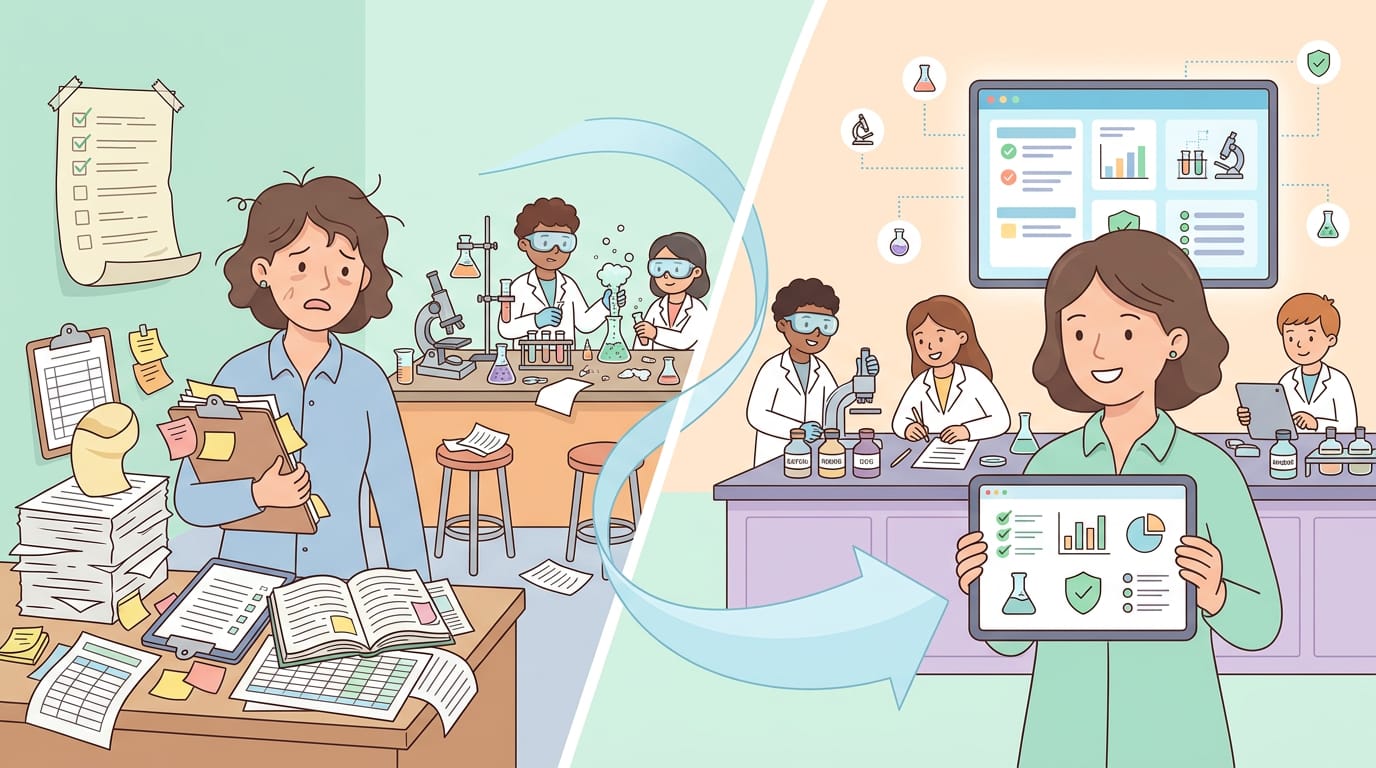
Hands-on learning has remained a cornerstone of science education for ages. Through such practices like chemistry experiments, biology research, and physics demonstration, labs enable students to understand concepts beyond textbooks. Yet, the job of running an educational lab is not only about getting the equipment ready, guiding students through the practical side of their subjects and ensuring safety procedures. Among other things, teaching involves a lot of materials' arrangement, documentation of works, close watching of students' behaviors, and, of course, verifying if all experiments conform to safety regulations.
With the increasing use of technology in education, educational institutions are gradually introducing digital tools into their daily processes, including laboratory activities. Teachers can benefit from digital platforms that help organize practical lessons, manage experimental information, and create more structured learning environments. One important application is software for laboratory management, which can help educators organize laboratory activities, maintain accurate records, monitor ongoing work, and coordinate operations across multiple educational and research laboratories.
Still grading everything by hand?
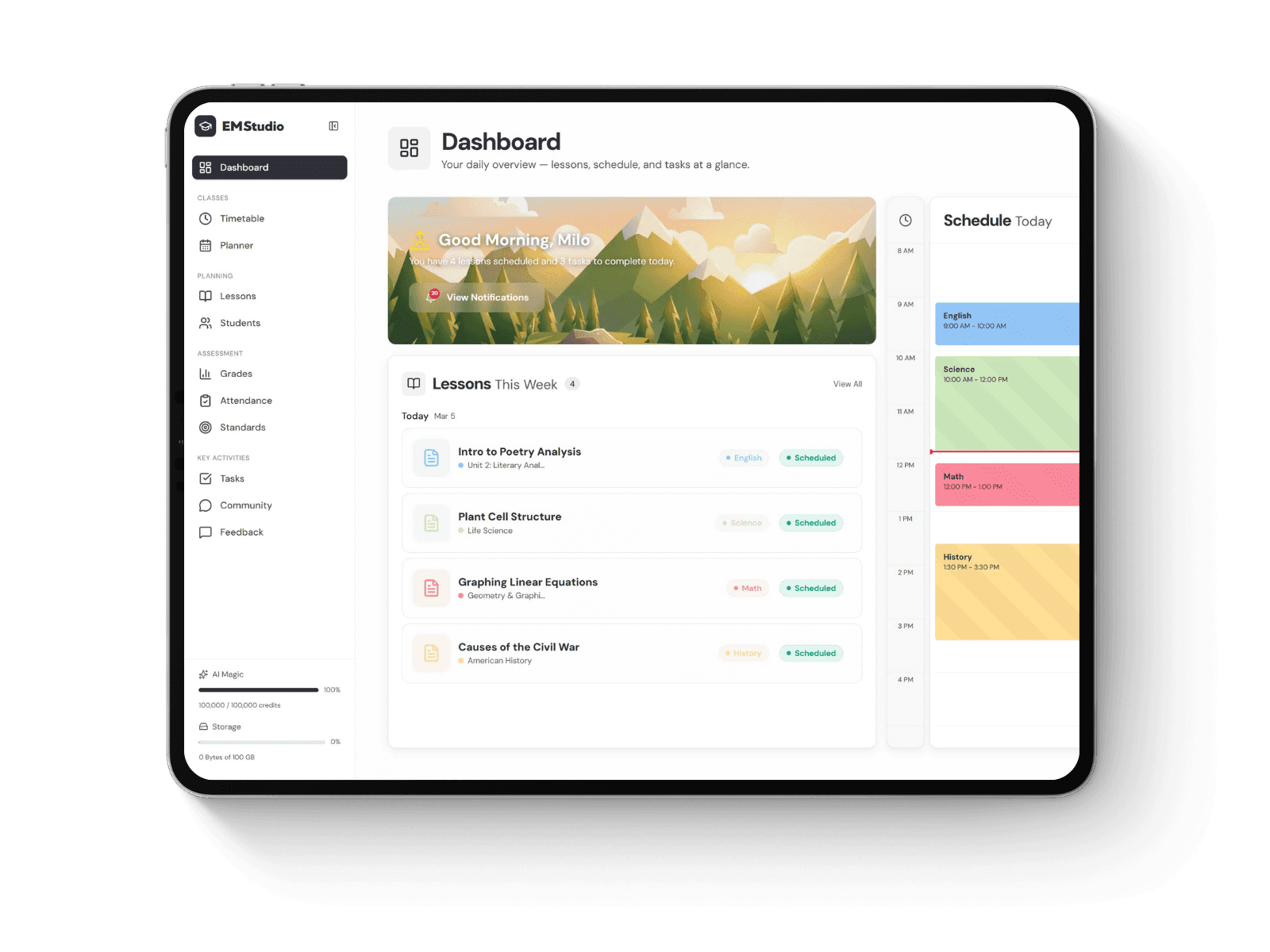
EMStudio is a free teaching management app — manage your classes, students, lessons, and more!
Technology's Expanding Role in Science Education
Keeping paper-based records for laboratory management is the most traditional method. Manual records, spreadsheet applications for data organization and the like have been methods of record-keeping, especially in a lab setting. While these are suitable in small-scale, they become increasingly difficult to manage for the situation when several classes or even teachers or research teams are sharing the common facilities of a lab. Digital solutions offer a more organized way to handle these responsibilities, making it easier for teachers to keep structured records of experiments, organize laboratory activities, and access relevant information without flipping the pages of different papers.
For universities or institutions having several science departments, centralized digital information can be a great enabler to foster effective work collaboration between the personnel in the labs, teachers, and researchers. This is very conducive to organizing lab work and maintaining uniform requirements in various educational programs.
How LIMS Can Support Educational Laboratories
A Laboratory Information Management System (LIMS) is basically a computer system that helps to organize laboratory information and support different ways of running lab work.
Although they are mostly used by industries and research facilities, these systems also have many features which can help educational laboratories to operate more efficiently.
Imagine that a laboratory within a chemistry department of a university is conducting many experimental projects with diverse samples, materials, equipment, and testing processes. Manually documenting laboratory work can lead to a lot of unnecessary administrative work. The right LIMS can be a great assistance in managing the sample details, saving experiment logs, and providing easier access to important documents. Teachers and authorized laboratory staff will find it easy to get access to organized data for planning practical sessions or reviewing past activities.
Helping Teachers Organize Practical Learning
Teachers are one of the most important persons when it comes to successful laboratory sessions, and they play a central role in making laboratory sessions educational, safe, and productive. In fact, organizing a lab lesson takes a lot from the teacher. Before an experiment begins, a teacher may need to find out if the required equipment is available, get the needed laboratory materials ready, review the methods of doing the experiment, and explain the steps to the students.
After conducting a practical, they may need to record observations, organize results, and figure out how the students learned. The use of digital tools will greatly make the teacher's workload more manageable, because once the files are well organized, the teacher can easily find an experiment file, look at the procedure, and track lab resources.
A case for using laboratory management software could be that several teachers use the same lab, then with a central management software that would help them keep consistent documentation and not get confused about equipment availability or what was done before.
Improving Data Accuracy and Scientific Research Skills
One of the main goals of science education is to guide students on how to gather, write down, analyze and present trustworthy information. Laboratory work allows students to hone these skills. Not only that, but if documentation is inaccurate enough or a record of an experiment is left missing it may be very hard to review and understand the results obtained from the experiment after all.
Using digital tools will help in better managing information via a well-organized way. By making good use of a consistent format, experimental details, sample records, observations and results can be stored and found in an easy way. For students in universities working on research projects, this method can give them very valuable hands-on experience of the information management practices that are used in professional laboratories.
Preparing Students for Technology-Driven Careers
The use of digital systems for managing technical information and for handling operational processes is becoming very common in business today. Those students studying for scientific and industrial professions may eventually be working not only with laboratory management platforms, research databases, and instruments that are automated but also many other connected technologies. Exposure to digital laboratory practices from the start of education may assist in students becoming familiar with these modes of work.
Also, educational institutions can help build bridges between academic learning and professional environments by integrating practical courses that include realistic data management elements. Through this method, the students get to see that scientific work includes both the experimentation side and the side concerned with managing information, maintaining documentation, and reporting work accurately.
The Future of Digital Laboratories in Education
It's probable that the next era of science education will consist of a combination of physical experiments and digital technological applications. Artificial intelligence, Internet of Things-connected devices, data analytics and cloud platforms are creating new opportunities for teaching as well as research experiences.
Successful implementation will depend on proper teacher training as well as the availability of clear procedures and systems that are user-friendly for both staff and students. Technology only enhances learning outcomes when it is in line with authentic goals of educators instead of over-complexifying matters.
Final Thoughts
Lab digitalisation is creating new opportunities for schools, colleges, and universities to improve practical science education. Through data organisation, teachers’ support, accurate data, and laboratory resource management are some of the areas in which digital platforms can make learning environments more effective.
If students get used to handling structured digital information, they may be better positioned for research and the workplace, areas where technology continues to have a growing influence. Combining traditional hands-on experiments with modern lab management practices can help institutions build stronger foundations for future scientific learning and innovation.
Still grading everything by hand?
EMStudio is a free teaching management app — manage your classes, students, lessons, and more!