
Why Accepted Students Skip Enrolling
Why Accepted Students Skip Enrolling

Article by
Milo
ESL Content Coordinator & Educator
ESL Content Coordinator & Educator
All Posts
Successful admissions recruiting brings excited high school seniors opening up acceptance letters with relief, joy, and anticipation, and campus admissions teams celebrating another successful recruitment cycle. Though schools' solid application numbers and healthy admission rates appear to confirm a promising success story soon to unfold, in reality, a significant number of those accepted students never end up enrolling at the school.
Where do they go?
It has become one of the biggest problems higher education is currently facing: large numbers of students who are accepted at colleges and universities never end up matriculating. Most admissions people would say that the reason for this so-called "summer melt" is that the students who accepted admission at various colleges simply lost interest after they were accepted. However, the true reason is far more complicated.
Still grading everything by hand?
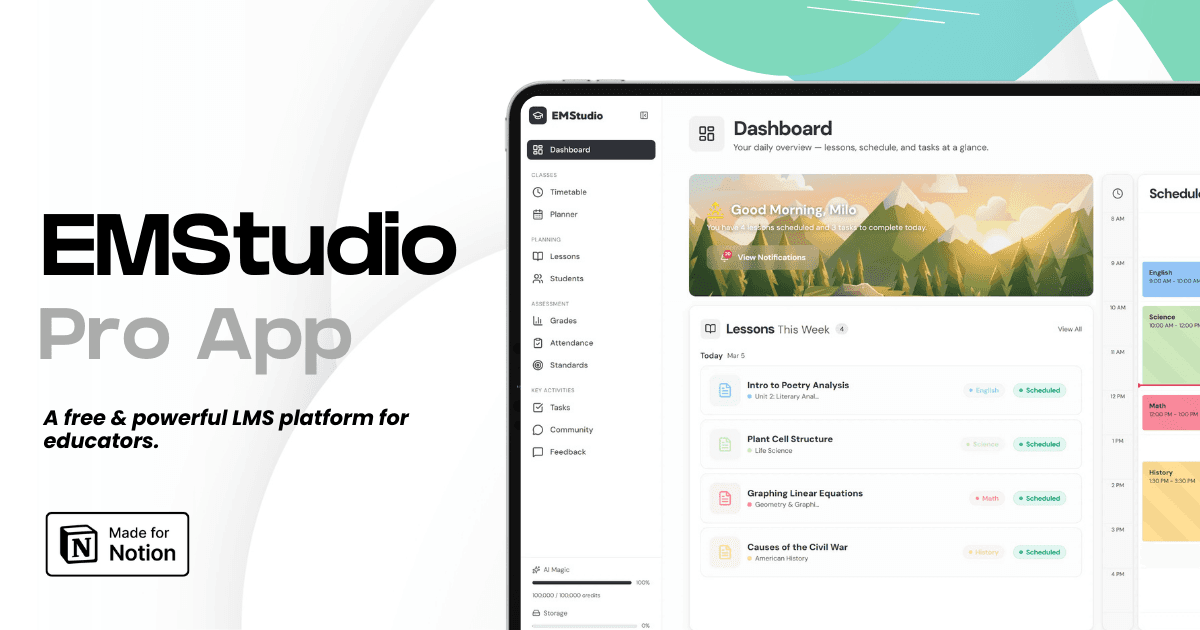
EMStudio is a free teaching management app — manage your classes, students, lessons, and more!
Learn More

Still grading everything by hand?
EMStudio is a free teaching management app — manage your classes, students, lessons, and more!
Learn More
Table of Contents
The Financial Fear Factor and Hidden Costs
While it's true that most families assume that tuition, room, and board are going to cost a lot, that's not necessarily the problem as it's initially communicated. Rather, it's the secondary costs that start to add up after the college has extended the offer of admission and families go back to review the financial aid offer that sometimes surprises families.
At first glance, the tuition, room, and board in a university's offer letter look like mere pennies to the parents of accepted high school seniors. But after the excitement of acceptance fades and the decision deadline approaches, they're forced to scrutinize the rest of the financial details that add up. By the time they sit in their living rooms and family kitchens, poring over financial aid awards late into the night under dim lighting, the initial number can look like a vastly different figure to families. That uncomfortable moment of realizing exactly how much a university is going to cost is often described as a sinking feeling in the stomach.
But uncertainty about what you will really owe for financial aid can have an even greater effect. Many complex financial aid letters have large gaps in the promised financial aid that schools fail to explain before a student has to decide whether to attend. Even when award letters are provided in a timely manner, some schools promise financial aid that isn't available when financial aid is actually disbursed to students. This causes families to feel uncertain and nervous about financial aid, leading them to look elsewhere for the safety of knowing exactly what they will owe for a university education. When in doubt, most families choose the path of least financial risk, and opt for the community college down the road, a gap year, or entry into the workforce. Safety over risk every time.
The Onboarding Maze and Administrative Friction
While students are waiting to enroll, new students are required to complete online processes for verification, to complete forms, and to register for classes, housing, etc. This very complicated web of processes that must be completed by the student creates a major "barrier to entry".
For first-generation students or those who are going off to college with little support, this can be a huge problem. One missed health record or other requirement for classes to start can keep a student from registering for classes. Being stuck on a college's website can be frustrating enough for anyone, but for those without someone to help guide them through the process, it can be overwhelming. The exhaustion and frustration that comes with it can lead students to drop out of the process before they even arrive on campus.
Roadblocks stack up quickly.
A student who encounters three or four successive barriers to enrollment is left with the strong impression that the university does not care whether or not they attend. Does this experience provide a foretaste of the four years that follow for this student?
Reaching students of this generation during this transitional period requires effective communication and engagement throughout the onboarding process at a university. Motimatic's higher education campaigns focus on this exact yield window, keeping admitted students engaged with personalized, timely messaging from the acceptance letter through the first day of class, rather than leaving them to sort things out on their own. Keeping communication channels open and accessible will stop minor snags from becoming permanent dropouts.
The Emotional Gap: Melt and Belonging
Another real challenge faced by higher education is to move the student and their family from a focus on how they are going to pay for their education to a discussion of how they will be prepared to succeed in their chosen program of study and to transition to life after graduation. Indeed, the transition to university is a major identity shift for many students and requires careful support and guidance, especially for first-generation students.
The phenomenon known as "summer melt" describes the large number of accepted students who stay away from campus before the start of the academic year. Many reasons for this phenomenon are investigated, the most important ones being doubt and anxiety.
Doubts creep in fast.
They're sitting in their bedrooms all summer, staring at campus pictures loading on the laptop screen in the middle of the night. They have lots of fears and doubts. Will I fit in? Am I smart enough to handle the work? Will I find my people?
Only after the student has negotiated the acceptance process and enrolled does the institution go into "students-as-customers" mode, offering them academic and other support. Meanwhile, a competing school down the road makes the student feel valued, welcomed, and supported over the summer, and the student decides to go there instead.
Competing Alternatives and Changing Priorities
The traditional concept of a 4 year college education as the pinnacle of success has been turned on its head. In today's world, there are a plethora of different pathways that students can take after high school. Vocational training, special certifications, immediate entry into the workforce, and online classes are all becoming increasingly popular due to their affordable cost and quick return on investment.
Immediate earning potential with a decent starting salary looks increasingly attractive in a world awash with student debt. Several years of deferred income during college can feel like a real cost against the chance to secure financial independence right away.
As applications rise and students apply to more and more universities, many students find themselves accepted to multiple institutions. They will hold onto multiple acceptances until the end of the enrollment period, when they ultimately decide where to deposit their tuition dollars. Institutions are now competing with one another for the commitments of their accepted students, and a slightly better financial aid offer, or a more responsive academic advisor, can win a student over to a competitor's school.
Reimagining the Pathway to Enrollment
A shift in how higher education leaders view the time between a student's acceptance and their eventual enrollment is also necessary. This period is no longer a passive waiting period, but rather an extremely high-stakes retention period, and institutions must utilize engagement strategies to close the summer melt gap.
How do institutions bridge this gap?
The entire higher education system should be designed to support, inform, and serve accepted students from the date of acceptance until the student actually starts classes at the university.
However, students want to feel supported, confident, and excited to attend college. Institutions can help create this feeling by combining clear logistics with genuine human connection with accepted students from the date of acceptance until the student arrives on campus.
The Financial Fear Factor and Hidden Costs
While it's true that most families assume that tuition, room, and board are going to cost a lot, that's not necessarily the problem as it's initially communicated. Rather, it's the secondary costs that start to add up after the college has extended the offer of admission and families go back to review the financial aid offer that sometimes surprises families.
At first glance, the tuition, room, and board in a university's offer letter look like mere pennies to the parents of accepted high school seniors. But after the excitement of acceptance fades and the decision deadline approaches, they're forced to scrutinize the rest of the financial details that add up. By the time they sit in their living rooms and family kitchens, poring over financial aid awards late into the night under dim lighting, the initial number can look like a vastly different figure to families. That uncomfortable moment of realizing exactly how much a university is going to cost is often described as a sinking feeling in the stomach.
But uncertainty about what you will really owe for financial aid can have an even greater effect. Many complex financial aid letters have large gaps in the promised financial aid that schools fail to explain before a student has to decide whether to attend. Even when award letters are provided in a timely manner, some schools promise financial aid that isn't available when financial aid is actually disbursed to students. This causes families to feel uncertain and nervous about financial aid, leading them to look elsewhere for the safety of knowing exactly what they will owe for a university education. When in doubt, most families choose the path of least financial risk, and opt for the community college down the road, a gap year, or entry into the workforce. Safety over risk every time.
The Onboarding Maze and Administrative Friction
While students are waiting to enroll, new students are required to complete online processes for verification, to complete forms, and to register for classes, housing, etc. This very complicated web of processes that must be completed by the student creates a major "barrier to entry".
For first-generation students or those who are going off to college with little support, this can be a huge problem. One missed health record or other requirement for classes to start can keep a student from registering for classes. Being stuck on a college's website can be frustrating enough for anyone, but for those without someone to help guide them through the process, it can be overwhelming. The exhaustion and frustration that comes with it can lead students to drop out of the process before they even arrive on campus.
Roadblocks stack up quickly.
A student who encounters three or four successive barriers to enrollment is left with the strong impression that the university does not care whether or not they attend. Does this experience provide a foretaste of the four years that follow for this student?
Reaching students of this generation during this transitional period requires effective communication and engagement throughout the onboarding process at a university. Motimatic's higher education campaigns focus on this exact yield window, keeping admitted students engaged with personalized, timely messaging from the acceptance letter through the first day of class, rather than leaving them to sort things out on their own. Keeping communication channels open and accessible will stop minor snags from becoming permanent dropouts.
The Emotional Gap: Melt and Belonging
Another real challenge faced by higher education is to move the student and their family from a focus on how they are going to pay for their education to a discussion of how they will be prepared to succeed in their chosen program of study and to transition to life after graduation. Indeed, the transition to university is a major identity shift for many students and requires careful support and guidance, especially for first-generation students.
The phenomenon known as "summer melt" describes the large number of accepted students who stay away from campus before the start of the academic year. Many reasons for this phenomenon are investigated, the most important ones being doubt and anxiety.
Doubts creep in fast.
They're sitting in their bedrooms all summer, staring at campus pictures loading on the laptop screen in the middle of the night. They have lots of fears and doubts. Will I fit in? Am I smart enough to handle the work? Will I find my people?
Only after the student has negotiated the acceptance process and enrolled does the institution go into "students-as-customers" mode, offering them academic and other support. Meanwhile, a competing school down the road makes the student feel valued, welcomed, and supported over the summer, and the student decides to go there instead.
Competing Alternatives and Changing Priorities
The traditional concept of a 4 year college education as the pinnacle of success has been turned on its head. In today's world, there are a plethora of different pathways that students can take after high school. Vocational training, special certifications, immediate entry into the workforce, and online classes are all becoming increasingly popular due to their affordable cost and quick return on investment.
Immediate earning potential with a decent starting salary looks increasingly attractive in a world awash with student debt. Several years of deferred income during college can feel like a real cost against the chance to secure financial independence right away.
As applications rise and students apply to more and more universities, many students find themselves accepted to multiple institutions. They will hold onto multiple acceptances until the end of the enrollment period, when they ultimately decide where to deposit their tuition dollars. Institutions are now competing with one another for the commitments of their accepted students, and a slightly better financial aid offer, or a more responsive academic advisor, can win a student over to a competitor's school.
Reimagining the Pathway to Enrollment
A shift in how higher education leaders view the time between a student's acceptance and their eventual enrollment is also necessary. This period is no longer a passive waiting period, but rather an extremely high-stakes retention period, and institutions must utilize engagement strategies to close the summer melt gap.
How do institutions bridge this gap?
The entire higher education system should be designed to support, inform, and serve accepted students from the date of acceptance until the student actually starts classes at the university.
However, students want to feel supported, confident, and excited to attend college. Institutions can help create this feeling by combining clear logistics with genuine human connection with accepted students from the date of acceptance until the student arrives on campus.
Still grading everything by hand?
EMStudio is a free teaching management app — manage your classes, students, lessons, and more!
Learn More
Still grading everything by hand?
EMStudio is a free teaching management app — manage your classes, students, lessons, and more!
Learn More



Notion4Teachers
Notion templates to simplify administrative tasks and enhance your teaching experience.



2026 Notion4Teachers. All Rights Reserved.
Notion4Teachers
Notion templates to simplify administrative tasks and enhance your teaching experience.
2026 Notion4Teachers. All Rights Reserved.
Notion4Teachers
Notion templates to simplify administrative tasks and enhance your teaching experience.
2026 Notion4Teachers. All Rights Reserved.