
15 Teacher Classes to Advance Your Career and Skills
15 Teacher Classes to Advance Your Career and Skills

Article by
Milo
ESL Content Coordinator & Educator
ESL Content Coordinator & Educator
All Posts
Which teacher classes are actually worth your time? The ones that fill your requirements without wasting your Saturdays. You need professional development hours that count toward teacher recertification, not theory-heavy lectures that don't translate to Monday morning. The best ones give you tools for Tuesday.
Over fifteen years, I've earned continuing education credits in everything from instructional coaching to ed tech integration. This guide cuts through the noise to show you specific options in educational technology, graduate-level study, classroom management, and subject-specific pedagogy. These aren't generic recommendations. They're courses that changed how I teach and gave me strategies I used the next day with my own students.
Whether you need summer intensives or micro-credentials you can stack during the school year, these teacher classes respect your time. No fluff. Just practical pedagogical training that moves your career forward and actually helps your students learn better.
Still grading everything by hand?
EMStudio is a free teaching management app — manage your classes, students, lessons, and more!
Learn More
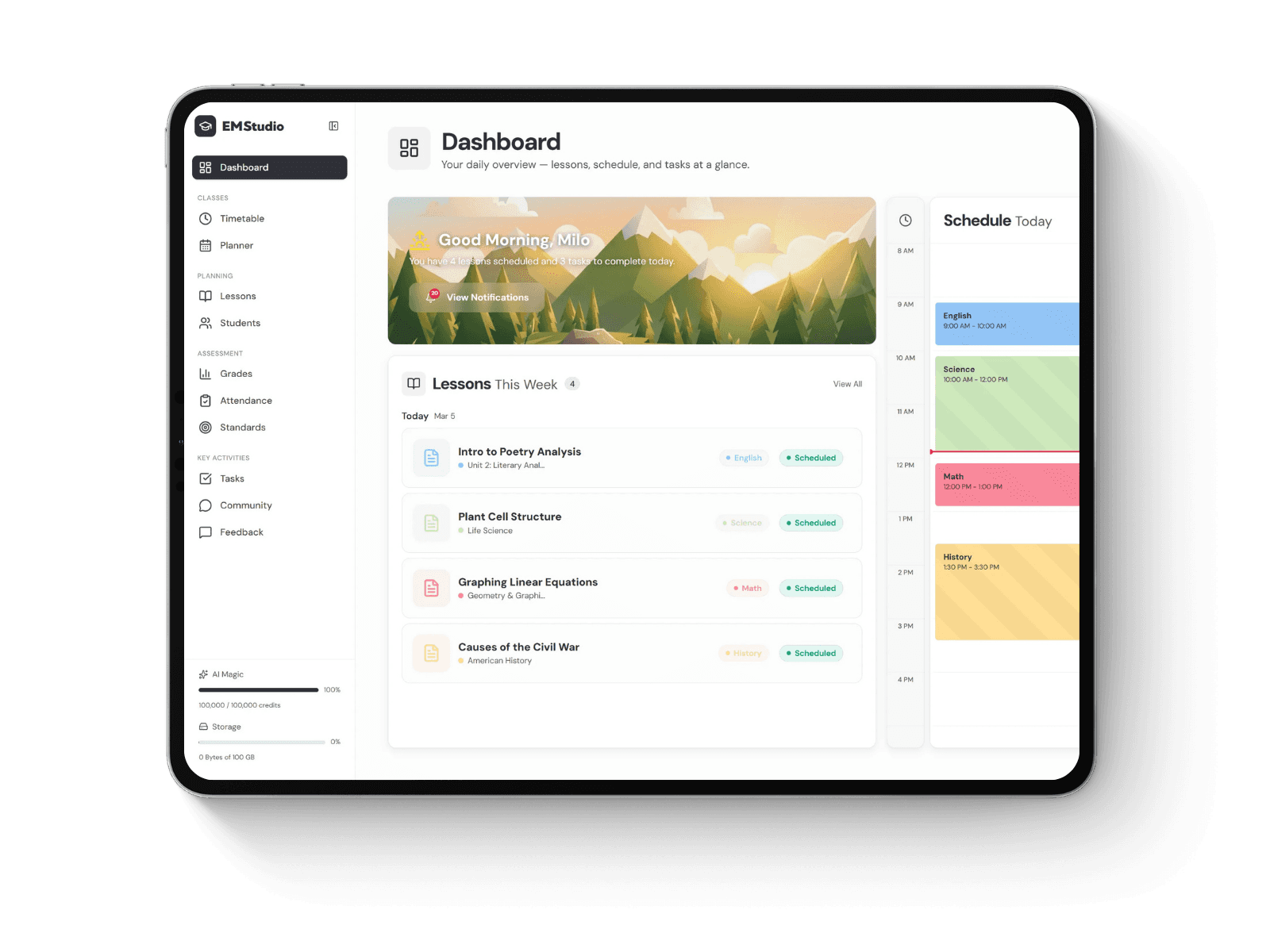
Still grading everything by hand?
EMStudio is a free teaching management app — manage your classes, students, lessons, and more!
Learn More
Table of Contents
What Are the Best Education Technology Courses for Teachers?
The best education technology courses combine certification credibility with classroom utility. Google for Education Certification (Levels 1-2) provides free, foundational LMS mastery. ISTE Certification offers advanced portfolio-based credentials for technology coaches. For emerging needs, AI fundamentals courses teach prompt engineering and ethical implementation across grade levels.
You don't need another theoretical teaching course. You need skills that shave minutes off your prep time and actually work with your district's setup. These three tiers move you from basic workflow automation to advanced instructional coaching without wasting professional development hours on fluff.
Program | Cost | Time Commitment | Hardware Needs |
|---|---|---|---|
Google Certification | $0 | 15 hours | Chrome browser |
ISTE Certification | $995 | 6-12 months | Computer with webcam |
AI Fundamentals | $0-200 | 8-20 hours | Any device |
Districts with certified technology integration specialists report higher effective technology usage rates. Implementation fidelity varies by building culture. A certified coach succeeds where leadership treats technology as core infrastructure, not an add-on. The credential alone cannot overcome administrative resistance.
Do not pursue advanced AI certifications until mastering foundational LMS workflows. For most K-5 teachers, Google Classroom automation saves more time than ChatGPT lesson planning. Advanced AI amplifies existing practice but cannot replace basic platform fluency.
Google for Education Certification Programs
Google Certified Educator Level 1 costs nothing but your time. The exam runs 180 minutes with 80 multiple-choice questions plus performance tasks testing Gmail filters, Google Forms quiz settings, and Google Sites portfolio creation. Budget 15 hours of prep if you're already comfortable with Workspace basics.
Level 2 requires completing Level 1 first. It covers advanced Sheets formulas, YouTube video editing, and data analysis tools. Expect 12-15 hours of study time. Both certifications expire after three years, so mark your calendar for renewal if you need these credentials for teacher recertification or continuing education credits.
These credentials prove you can navigate district LMS requirements without calling IT every Tuesday. They also satisfy most district requirements for technology leadership roles.
ISTE Standards-Based Technology Integration Courses
ISTE Certification targets educators ready for instructional coaching roles. The program costs $995 total for training and portfolio submission, requiring 6-12 months to complete. You'll build evidence aligned with all seven ISTE Standards for Educators rather than memorizing specific tools. This credential carries weight for district technology coordinator positions and signals serious pedagogical training commitment.
If you need targeted skills without the portfolio grind, ISTE U micro-credentials cost $45-99 per 15-hour module. These cover specific platforms like Flipgrid or Book Creator. They're better for just-in-time learning when your district suddenly adopts new software mid-year.
Consider pairing ISTE Certification with Educational Technology Master's Degree programs for maximum career mobility in administration or coaching tracks.
AI and Machine Learning Fundamentals for Educators
AI competencies for educators focus on practical classroom applications, not coding. You need prompt engineering skills to generate leveled reading passages instantly. You need detection strategies for grades 6-12 essay submissions. And you need ethical frameworks for student data privacy when using these tools.
Specific platforms vary in cost and access. ChatGPT Edu offers free pilot programs for districts willing to test enterprise features. MagicSchool.ai provides 50 free prompts daily with built-in classroom safety filters. Microsoft's AI for Educators learning path remains completely free and integrates directly with Teams and OneNote environments.
These skills complement traditional teacher classes rather than replacing them. Explore AI in teacher education to understand how speech-to-text tools specifically support diverse learners before diving deeper into generative AI.

Which Graduate-Level Teacher Study Courses Offer the Most Value?
Graduate courses offering highest ROI include Curriculum and Instruction master's for classroom teachers seeking salary lane advancement ($5,000-$10,000 annual increase), Educational Leadership certificates for aspiring administrators within 3-5 years, and Special Education endorsements addressing shortages in 48 states with immediate hiring demand and retention stipends.
Not all teacher study courses pay off. Pick the wrong one and you're stuck with debt and a useless credential. Choose based on your timeline, your district's pay scale, and whether you actually want the job at the end.
According to BLS data, teachers with master's degrees earn $5,000-$10,000 annually above bachelor's level. Payback period is 3-5 years. Check that extra teacher classes actually boost your paycheck on your district schedule.
Choose MA+30 if staying in the classroom 10+ years. Choose administration certificate if seeking roles within 3 years. Choose endorsement only if changing assignments immediately.
Do not pursue $30,000 private programs if your district only pays a $2,000 differential. Calculate ROI based on years until retirement. If you're 50 with 10 years left, that degree never pays for itself.
Master's in Curriculum and Instruction Programs
Western Governors University runs $3,500-$4,000 per six-month term, competency-based, finished in 12-24 months. Traditional programs cost $15,000-$30,000. WGU lets you accelerate through material you know from classroom experience.
Move into a Curriculum and Instruction coordinator role for a $5,000 stipend. Instructional coaching requires five-plus years experience first. These education courses for teachers won't substitute for managing 3rd graders in October.
Some use this teacher study course for professional development hours while earning graduate credit. Verify state acceptance for teacher recertification.
Educational Leadership and Administration Certificates
Principal certification requires 18-36 credits, a 300-hour internship, and passing the School Leaders Licensure Assessment. Cost is $8,000-$25,000. You need 3-5 years teaching experience and typically a master's degree.
This leads to assistant principal roles. Explore Doctor of Education programs for leadership later. The certificate gets you hired; the EdD gets you the superintendent job.
Don't pursue this if you're burned out and think administration is easier. You trade classroom chaos for parent complaints. Only enroll if you want to lead adults.
Special Education Endorsement and Licensure Courses
Forty-eight states report special education teacher shortages. Endorsements require 12-24 credits. Many districts offer $5,000-plus retention stipends.
High-incidence disabilities include learning disabilities and emotional behavioral disorders.
Low-incidence disabilities cover severe and multiple disabilities.
Autism spectrum disorders focus on behavioral interventions.
Complete endorsement courses in two summers while working. Unlike full Special Education graduate degrees, endorsements get you hired immediately with emergency certification while you finish pedagogical training.
Special education roles involve IEP meetings and legal compliance. Consider micro-credentials in Universal Design for Learning instead if you want skills without the paperwork. These continuing education credits improve practice without the IEP burden.

Classroom Management and Pedagogy Essentials
Classroom management certifications show measurable impact when implemented with fidelity. Schools report 20-40% decreases in suspensions after two years of restorative implementation. But these results require a 6-month minimum commitment; single-day workshops without follow-up coaching show no measurable impact on office referrals. You need sustained pedagogical training, not drive-by inspiration.
Restorative Practices Certification Programs
These teacher classes deliver measurable results. Schools that implement restorative practices with fidelity see a 20-40% drop in suspensions after two years. The data is clear: this works when you actually do the work, not just attend a one-off seminar.
The International Institute for Restorative Practices (IIRP) runs the gold-standard training. Their basic 2-day course ($450) teaches affective statements and questions. The 5-day facilitator training ($1,200) certifies you to lead circles. But here's the catch: you need 18 months for whole-school transformation, and single-day workshops without follow-up coaching show zero measurable impact. You can't fix climate with drive-by professional development.
The biggest mistake districts make? Buying restorative practice licenses for individual teachers while skipping principal training. Without administrator buy-in, the work dies when that teacher transfers. Whole-school implementation requires your principal in the room, learning alongside staff. Otherwise, you're throwing money at a sustainability problem. implementing restorative practices only sticks with district-level commitment and ongoing instructional coaching.
Differentiated Instruction Intensive Workshops
Carol Ann Tomlinson's framework separates boutique strategies from real pedagogical training that changes daily practice. You can grab a 3-day intensive workshop for $600-900, or invest in university credit courses for educators (3 graduate credits, $900-1,500) that count toward teacher recertification. Both formats work, but the university route typically gives you continuing education credits that actually bump your pay scale, while the workshop offers immediate tactics.
Concrete strategies separate these courses from theory-heavy seminars:
Tiered assignments using Bloom's Taxonomy for mixed-ability groups.
Learning menus for book reports that let 4th graders choose their own adventure.
RAFT writing (Role, Audience, Format, Topic) for grades 3-10 that forces students to write from different perspectives.
I've seen differentiated instruction strategies crash and burn when teachers try to tier every lesson simultaneously. Start with one subject. Master the learning menu in literacy first, then expand to math. These micro-credentials and intensive workshops give you the playbook, but you need six months of deliberate practice before tiering becomes automatic, not exhausting.
Culturally Responsive Teaching Methods
Zaretta Hammond's Culturally Responsive Teaching and the Brain shifted how I think about engagement. Her work focuses on brain-based strategies for diverse learners, grades K-12, with heavy emphasis on relational trust building. You aren't just managing behavior; you're rewiring safety signals in the brain.
The Culturally and Linguistically Responsive Teaching (CLR) 4-day institute runs $1,100 and dives deep into Hammond's framework, focusing on the neuroscience behind engagement. Alternatively, the National SEED Project (Seeking Educational Equity and Diversity) offers year-long seminars that build capacity gradually across your faculty. SEED costs less upfront but demands more professional development hours scattered across the school year, requiring administrative scheduling support.
These courses for educators employ instructional coaching models that prioritize authentic student voice and agency. You learn to recognize cultural loading in your curriculum and adjust your pacing in real-time. The real payoff happens when you stop trying to "fix" kids and start using their cultural capital as intellectual assets not deficits to overcome.

Subject-Specific Professional Development Classes
Subject-specific teacher classes drill deep into content knowledge. They skip the broad classroom strategies you mastered in your early years. Research shows these courses boost student achievement significantly more than general pedagogy sessions—provided you've got at least three years in the classroom. The payoff comes when you already know how to manage a room and need to master what you're actually teaching.
Pick content-heavy professional development hours over generic teaching study when:
Your district adopts new standards (hello, math shifts).
You're pursuing department chair or instructional coaching roles.
You need continuing education credits in a specific endorsement area.
Watch the hidden costs. Many organizations charge membership fees on top of tuition. Expect to pay an extra $100-200 annually before you even register for the course.
STEM and Math Teaching Methodologies
The National Council of Teachers of Mathematics runs intensive institutes that cost between $400 and $800. You get two days focused on narrow bands like fractions for grades 3-5 or functions for grades 8-10. These aren't overview sessions. You leave with specific lesson sequences and assessment strategies tied to exact standards. The catch? You need an NCTM membership first.
Texas Instruments offers free T³ workshops for mastering TI-84 or TI-Nspire calculators. They ship you loaner equipment to use during the training and often let you keep demo units for classroom trials. It's the rare vendor session that actually improves your instruction without pushing a sales pitch.
For broader integrative STEM education training, look for programs combining engineering design with your specific math content. These often count toward your continuing education credits while building usable unit plans.
Literacy and Reading Specialist Training
LETRS (Language Essentials for Teachers of Reading and Spelling) runs $2,400 per teacher across two years. You commit to 45-60 hours of training covering phonology, phonics, and comprehension. Districts sometimes cover this for interventionists, but if you're paying yourself, budget for the full 24-month timeline. The certificate carries weight for reading specialist positions and satisfies most teacher recertification requirements for literacy endorsements.
Orton-Gillingham certification targets K-3 intervention specifically. Plan for 30 hours of coursework plus 100 supervised practicum hours. Costs range from $1,500 to $2,500. You'll need to practice on actual students under observation, so this isn't a summer-only option. The credential opens doors for instructional coaching roles focused on early reading.
Before enrolling in either program, check if your state accepts these hours toward reading specialist licensure. Some require additional literacy instruction training through accredited universities.
Arts Integration and Art of Ed University Programs
Art of Ed University offers two tracks. The FLEX subscription costs $349 yearly and provides professional development hours plus completion certificates. Upgrade to PRO at $549 annually if you need graduate credit through partner universities. Both tiers grant access to the same course library, but only PRO builds toward advanced degrees.
Their 3-credit courses include Choice-Based Art Education and Art and English Language Learners. You complete 30 hours of work at your own pace within an 8-week window. The format suits art teachers seeking micro-credentials without committing to semester-long pedagogical training.
These classes work best for maintaining your teacher recertification or building an instructional coaching portfolio around arts integration. You won't get the same depth as a university studio course, but you'll walk away with immediate lesson plans and assessment rubrics ready for Monday morning. Most districts accept these hours toward your annual continuing education credits requirement.

Summer Classes for Teachers: Intensive Options
Summer intensives pack a semester's worth of learning into your vacation weeks. These summer classes for teachers cram 40-60 contact hours into one or two weeks. That's the equivalent of a full semester of evening courses, except you sacrifice your pool time, not your Tuesday nights.
But here's the trap. Not all summer programs count toward teacher recertification. Some hand you a fancy certificate at the end that your state licensing board ignores. Before you sign up, verify the program offers either graduate credit with an official transcript or state-approved CEUs. Travel programs are notorious for this—they provide documentation that looks official but carries zero weight for license renewal.
Check your wallet, too. District PD funds rarely cover travel-based education classes for teachers. Those $3,000-5,000 programs to Rome or Costa Rica? That's usually coming out of your pocket. Unless you land a Fund for Teachers grant. Those run $5,000-10,000 and actually fund international experiences. Apply in October for the following summer.
Summer Institute for Professional Learning
The Teachers College Reading and Writing Project Summer Institute remains the gold standard for literacy coaches seeking instructional coaching on the workshop model. It runs $700 per day for 4-5 days in New York City. You dive deep into Units of Study implementation with the actual authors. It's intense. You eat, sleep, and breathe workshop model pedagogy for a week. Bring comfortable shoes and a laptop with full battery.
The National Writing Project offers a different flavor. Their invitational institutes run 4-6 weeks at local university sites nationwide. Cost sits around $500-800, and most offer 6 graduate credits. That's real credit you can transfer toward a degree or use for continuing education credits. The schedule spreads out, so you keep some summer afternoons free for your own kids.
Both options provide the professional development hours you need for license renewal. Just confirm the credit transfers to your specific state before you book that hotel room.
Travel-Based Teacher Study Abroad Programs
GEEO, or Global Exploration for Educators Organization, runs 8-15 day trips to places like Peru or Thailand. Costs range $2,500-4,000 including airfare. You explore the culture during mornings and develop curriculum in afternoons. It's legitimate pedagogical training, not a vacation with worksheets slapped on top.
The Fulbright-Hays Seminars Abroad program covers everything—flights, hotels, meals—for 4-6 weeks. But it's competitive. You need three years of classroom experience and a solid curriculum project proposal. These look incredible on resumes and provide deep content knowledge for social studies or world language teachers.
Neither program typically awards graduate credit. They provide certificates of completion that may not satisfy your state board. If you need these hours for license renewal, double-check before applying. Most teachers fund these through Fund for Teachers grants or personal savings, not district PD budgets.
Accelerated License Renewal Courses
ASU Online runs Accelerated Teacher Preparation courses that last 6-8 weeks. They're asynchronous, so you log in when your toddler naps. Each course provides 45-60 recertification hours for $450-600. That's enough to cover a full renewal cycle in one summer.
Most states also approve PDExpress modules, which vary by state name but follow the same model. You pay $150-300 for 15-hour chunks. Stack three or four, and you're done.
Critical warning: Verify these provide graduate credit or state-approved CEUs, not just certificates of completion. Some micro-credentials look impressive but count for nothing at your licensing office. If the syllabus says "certificate" but not "transcript" or "credit," keep looking. These teaching trainings to advance your career only work if your state actually recognizes them.

How to Choose the Right Teacher Class for Your Career Goals?
Choose teacher classes by first auditing your district's salary schedule to identify lane requirements, then verifying state DOE approval for recertification credit. Calculate true cost including lost wages minus reimbursement. Finally, match the credential to your 3-year career trajectory—administration, content specialization, or master teacher status.
Start with your salary matrix. Open your teacher contract and find the schedule. Look for the lane jumps—BA to MA, MA to MA+30, or doctorate levels. Calculate how many years until the pay increase covers your tuition. Some districts break even in three years. Others take eight. Know before you borrow. If you're five years from retirement, that doctorate might not pay back in time. Check the years of service required too. Ask HR for the lane change form to see exactly what documentation you need.
Verify state approval before you click "enroll." Check your state DOE website for the eligible training provider list. Continuing education credits only count toward teacher recertification if the provider appears on that registry. One colleague lost six professional development hours and $1,200 last summer because the course lacked proper accreditation. The provider promised "graduate level" work but wasn't recognized by the state. Always check the list first. Call your certification officer if you're unsure. They can confirm in five minutes what the website might hide in fine print.
Calculate the true cost, not just the sticker price. A two-week intensive means skipping summer school teaching or tutoring gigs. That's $2,000 to $4,000 in lost wages. Add travel, books, and fees. Then subtract your district's reimbursement cap—typically $500 to $2,000 annually. The gap comes from your pocket. If you're paying $3,000 out of pocket but only moving up $800 a year, you need four years to break even. Run the numbers honestly. Don't forget parking and meal costs. Some teachers take online classes while working summer school, doubling their income instead of losing it.
Match every course to your three-year plan. Administration track? Take leadership and principal prep classes. Content specialist? Deepen your subject matter expertise with advanced coursework in your field. Master teacher status? Pursue advanced degrees, National Board Certification, or instructional coaching certificates. Skip the micro-credentials that don't stack toward your specific goal. Random certificates look good on a wall but don't advance your salary or role. Be strategic about every credit hour you earn.
These choices determine your career development opportunities for educators. Don't hoard random pedagogical training hoping it helps someday. Pick teacher classes that move you toward the specific role you want. Your time and money are too limited for decorative credits. Every hour you spend in a classroom should build toward the job description you want, not just the license you need to renew.

What Are the Best Education Technology Courses for Teachers?
The best education technology courses combine certification credibility with classroom utility. Google for Education Certification (Levels 1-2) provides free, foundational LMS mastery. ISTE Certification offers advanced portfolio-based credentials for technology coaches. For emerging needs, AI fundamentals courses teach prompt engineering and ethical implementation across grade levels.
You don't need another theoretical teaching course. You need skills that shave minutes off your prep time and actually work with your district's setup. These three tiers move you from basic workflow automation to advanced instructional coaching without wasting professional development hours on fluff.
Program | Cost | Time Commitment | Hardware Needs |
|---|---|---|---|
Google Certification | $0 | 15 hours | Chrome browser |
ISTE Certification | $995 | 6-12 months | Computer with webcam |
AI Fundamentals | $0-200 | 8-20 hours | Any device |
Districts with certified technology integration specialists report higher effective technology usage rates. Implementation fidelity varies by building culture. A certified coach succeeds where leadership treats technology as core infrastructure, not an add-on. The credential alone cannot overcome administrative resistance.
Do not pursue advanced AI certifications until mastering foundational LMS workflows. For most K-5 teachers, Google Classroom automation saves more time than ChatGPT lesson planning. Advanced AI amplifies existing practice but cannot replace basic platform fluency.
Google for Education Certification Programs
Google Certified Educator Level 1 costs nothing but your time. The exam runs 180 minutes with 80 multiple-choice questions plus performance tasks testing Gmail filters, Google Forms quiz settings, and Google Sites portfolio creation. Budget 15 hours of prep if you're already comfortable with Workspace basics.
Level 2 requires completing Level 1 first. It covers advanced Sheets formulas, YouTube video editing, and data analysis tools. Expect 12-15 hours of study time. Both certifications expire after three years, so mark your calendar for renewal if you need these credentials for teacher recertification or continuing education credits.
These credentials prove you can navigate district LMS requirements without calling IT every Tuesday. They also satisfy most district requirements for technology leadership roles.
ISTE Standards-Based Technology Integration Courses
ISTE Certification targets educators ready for instructional coaching roles. The program costs $995 total for training and portfolio submission, requiring 6-12 months to complete. You'll build evidence aligned with all seven ISTE Standards for Educators rather than memorizing specific tools. This credential carries weight for district technology coordinator positions and signals serious pedagogical training commitment.
If you need targeted skills without the portfolio grind, ISTE U micro-credentials cost $45-99 per 15-hour module. These cover specific platforms like Flipgrid or Book Creator. They're better for just-in-time learning when your district suddenly adopts new software mid-year.
Consider pairing ISTE Certification with Educational Technology Master's Degree programs for maximum career mobility in administration or coaching tracks.
AI and Machine Learning Fundamentals for Educators
AI competencies for educators focus on practical classroom applications, not coding. You need prompt engineering skills to generate leveled reading passages instantly. You need detection strategies for grades 6-12 essay submissions. And you need ethical frameworks for student data privacy when using these tools.
Specific platforms vary in cost and access. ChatGPT Edu offers free pilot programs for districts willing to test enterprise features. MagicSchool.ai provides 50 free prompts daily with built-in classroom safety filters. Microsoft's AI for Educators learning path remains completely free and integrates directly with Teams and OneNote environments.
These skills complement traditional teacher classes rather than replacing them. Explore AI in teacher education to understand how speech-to-text tools specifically support diverse learners before diving deeper into generative AI.
Which Graduate-Level Teacher Study Courses Offer the Most Value?
Graduate courses offering highest ROI include Curriculum and Instruction master's for classroom teachers seeking salary lane advancement ($5,000-$10,000 annual increase), Educational Leadership certificates for aspiring administrators within 3-5 years, and Special Education endorsements addressing shortages in 48 states with immediate hiring demand and retention stipends.
Not all teacher study courses pay off. Pick the wrong one and you're stuck with debt and a useless credential. Choose based on your timeline, your district's pay scale, and whether you actually want the job at the end.
According to BLS data, teachers with master's degrees earn $5,000-$10,000 annually above bachelor's level. Payback period is 3-5 years. Check that extra teacher classes actually boost your paycheck on your district schedule.
Choose MA+30 if staying in the classroom 10+ years. Choose administration certificate if seeking roles within 3 years. Choose endorsement only if changing assignments immediately.
Do not pursue $30,000 private programs if your district only pays a $2,000 differential. Calculate ROI based on years until retirement. If you're 50 with 10 years left, that degree never pays for itself.
Master's in Curriculum and Instruction Programs
Western Governors University runs $3,500-$4,000 per six-month term, competency-based, finished in 12-24 months. Traditional programs cost $15,000-$30,000. WGU lets you accelerate through material you know from classroom experience.
Move into a Curriculum and Instruction coordinator role for a $5,000 stipend. Instructional coaching requires five-plus years experience first. These education courses for teachers won't substitute for managing 3rd graders in October.
Some use this teacher study course for professional development hours while earning graduate credit. Verify state acceptance for teacher recertification.
Educational Leadership and Administration Certificates
Principal certification requires 18-36 credits, a 300-hour internship, and passing the School Leaders Licensure Assessment. Cost is $8,000-$25,000. You need 3-5 years teaching experience and typically a master's degree.
This leads to assistant principal roles. Explore Doctor of Education programs for leadership later. The certificate gets you hired; the EdD gets you the superintendent job.
Don't pursue this if you're burned out and think administration is easier. You trade classroom chaos for parent complaints. Only enroll if you want to lead adults.
Special Education Endorsement and Licensure Courses
Forty-eight states report special education teacher shortages. Endorsements require 12-24 credits. Many districts offer $5,000-plus retention stipends.
High-incidence disabilities include learning disabilities and emotional behavioral disorders.
Low-incidence disabilities cover severe and multiple disabilities.
Autism spectrum disorders focus on behavioral interventions.
Complete endorsement courses in two summers while working. Unlike full Special Education graduate degrees, endorsements get you hired immediately with emergency certification while you finish pedagogical training.
Special education roles involve IEP meetings and legal compliance. Consider micro-credentials in Universal Design for Learning instead if you want skills without the paperwork. These continuing education credits improve practice without the IEP burden.
Classroom Management and Pedagogy Essentials
Classroom management certifications show measurable impact when implemented with fidelity. Schools report 20-40% decreases in suspensions after two years of restorative implementation. But these results require a 6-month minimum commitment; single-day workshops without follow-up coaching show no measurable impact on office referrals. You need sustained pedagogical training, not drive-by inspiration.
Restorative Practices Certification Programs
These teacher classes deliver measurable results. Schools that implement restorative practices with fidelity see a 20-40% drop in suspensions after two years. The data is clear: this works when you actually do the work, not just attend a one-off seminar.
The International Institute for Restorative Practices (IIRP) runs the gold-standard training. Their basic 2-day course ($450) teaches affective statements and questions. The 5-day facilitator training ($1,200) certifies you to lead circles. But here's the catch: you need 18 months for whole-school transformation, and single-day workshops without follow-up coaching show zero measurable impact. You can't fix climate with drive-by professional development.
The biggest mistake districts make? Buying restorative practice licenses for individual teachers while skipping principal training. Without administrator buy-in, the work dies when that teacher transfers. Whole-school implementation requires your principal in the room, learning alongside staff. Otherwise, you're throwing money at a sustainability problem. implementing restorative practices only sticks with district-level commitment and ongoing instructional coaching.
Differentiated Instruction Intensive Workshops
Carol Ann Tomlinson's framework separates boutique strategies from real pedagogical training that changes daily practice. You can grab a 3-day intensive workshop for $600-900, or invest in university credit courses for educators (3 graduate credits, $900-1,500) that count toward teacher recertification. Both formats work, but the university route typically gives you continuing education credits that actually bump your pay scale, while the workshop offers immediate tactics.
Concrete strategies separate these courses from theory-heavy seminars:
Tiered assignments using Bloom's Taxonomy for mixed-ability groups.
Learning menus for book reports that let 4th graders choose their own adventure.
RAFT writing (Role, Audience, Format, Topic) for grades 3-10 that forces students to write from different perspectives.
I've seen differentiated instruction strategies crash and burn when teachers try to tier every lesson simultaneously. Start with one subject. Master the learning menu in literacy first, then expand to math. These micro-credentials and intensive workshops give you the playbook, but you need six months of deliberate practice before tiering becomes automatic, not exhausting.
Culturally Responsive Teaching Methods
Zaretta Hammond's Culturally Responsive Teaching and the Brain shifted how I think about engagement. Her work focuses on brain-based strategies for diverse learners, grades K-12, with heavy emphasis on relational trust building. You aren't just managing behavior; you're rewiring safety signals in the brain.
The Culturally and Linguistically Responsive Teaching (CLR) 4-day institute runs $1,100 and dives deep into Hammond's framework, focusing on the neuroscience behind engagement. Alternatively, the National SEED Project (Seeking Educational Equity and Diversity) offers year-long seminars that build capacity gradually across your faculty. SEED costs less upfront but demands more professional development hours scattered across the school year, requiring administrative scheduling support.
These courses for educators employ instructional coaching models that prioritize authentic student voice and agency. You learn to recognize cultural loading in your curriculum and adjust your pacing in real-time. The real payoff happens when you stop trying to "fix" kids and start using their cultural capital as intellectual assets not deficits to overcome.
Subject-Specific Professional Development Classes
Subject-specific teacher classes drill deep into content knowledge. They skip the broad classroom strategies you mastered in your early years. Research shows these courses boost student achievement significantly more than general pedagogy sessions—provided you've got at least three years in the classroom. The payoff comes when you already know how to manage a room and need to master what you're actually teaching.
Pick content-heavy professional development hours over generic teaching study when:
Your district adopts new standards (hello, math shifts).
You're pursuing department chair or instructional coaching roles.
You need continuing education credits in a specific endorsement area.
Watch the hidden costs. Many organizations charge membership fees on top of tuition. Expect to pay an extra $100-200 annually before you even register for the course.
STEM and Math Teaching Methodologies
The National Council of Teachers of Mathematics runs intensive institutes that cost between $400 and $800. You get two days focused on narrow bands like fractions for grades 3-5 or functions for grades 8-10. These aren't overview sessions. You leave with specific lesson sequences and assessment strategies tied to exact standards. The catch? You need an NCTM membership first.
Texas Instruments offers free T³ workshops for mastering TI-84 or TI-Nspire calculators. They ship you loaner equipment to use during the training and often let you keep demo units for classroom trials. It's the rare vendor session that actually improves your instruction without pushing a sales pitch.
For broader integrative STEM education training, look for programs combining engineering design with your specific math content. These often count toward your continuing education credits while building usable unit plans.
Literacy and Reading Specialist Training
LETRS (Language Essentials for Teachers of Reading and Spelling) runs $2,400 per teacher across two years. You commit to 45-60 hours of training covering phonology, phonics, and comprehension. Districts sometimes cover this for interventionists, but if you're paying yourself, budget for the full 24-month timeline. The certificate carries weight for reading specialist positions and satisfies most teacher recertification requirements for literacy endorsements.
Orton-Gillingham certification targets K-3 intervention specifically. Plan for 30 hours of coursework plus 100 supervised practicum hours. Costs range from $1,500 to $2,500. You'll need to practice on actual students under observation, so this isn't a summer-only option. The credential opens doors for instructional coaching roles focused on early reading.
Before enrolling in either program, check if your state accepts these hours toward reading specialist licensure. Some require additional literacy instruction training through accredited universities.
Arts Integration and Art of Ed University Programs
Art of Ed University offers two tracks. The FLEX subscription costs $349 yearly and provides professional development hours plus completion certificates. Upgrade to PRO at $549 annually if you need graduate credit through partner universities. Both tiers grant access to the same course library, but only PRO builds toward advanced degrees.
Their 3-credit courses include Choice-Based Art Education and Art and English Language Learners. You complete 30 hours of work at your own pace within an 8-week window. The format suits art teachers seeking micro-credentials without committing to semester-long pedagogical training.
These classes work best for maintaining your teacher recertification or building an instructional coaching portfolio around arts integration. You won't get the same depth as a university studio course, but you'll walk away with immediate lesson plans and assessment rubrics ready for Monday morning. Most districts accept these hours toward your annual continuing education credits requirement.
Summer Classes for Teachers: Intensive Options
Summer intensives pack a semester's worth of learning into your vacation weeks. These summer classes for teachers cram 40-60 contact hours into one or two weeks. That's the equivalent of a full semester of evening courses, except you sacrifice your pool time, not your Tuesday nights.
But here's the trap. Not all summer programs count toward teacher recertification. Some hand you a fancy certificate at the end that your state licensing board ignores. Before you sign up, verify the program offers either graduate credit with an official transcript or state-approved CEUs. Travel programs are notorious for this—they provide documentation that looks official but carries zero weight for license renewal.
Check your wallet, too. District PD funds rarely cover travel-based education classes for teachers. Those $3,000-5,000 programs to Rome or Costa Rica? That's usually coming out of your pocket. Unless you land a Fund for Teachers grant. Those run $5,000-10,000 and actually fund international experiences. Apply in October for the following summer.
Summer Institute for Professional Learning
The Teachers College Reading and Writing Project Summer Institute remains the gold standard for literacy coaches seeking instructional coaching on the workshop model. It runs $700 per day for 4-5 days in New York City. You dive deep into Units of Study implementation with the actual authors. It's intense. You eat, sleep, and breathe workshop model pedagogy for a week. Bring comfortable shoes and a laptop with full battery.
The National Writing Project offers a different flavor. Their invitational institutes run 4-6 weeks at local university sites nationwide. Cost sits around $500-800, and most offer 6 graduate credits. That's real credit you can transfer toward a degree or use for continuing education credits. The schedule spreads out, so you keep some summer afternoons free for your own kids.
Both options provide the professional development hours you need for license renewal. Just confirm the credit transfers to your specific state before you book that hotel room.
Travel-Based Teacher Study Abroad Programs
GEEO, or Global Exploration for Educators Organization, runs 8-15 day trips to places like Peru or Thailand. Costs range $2,500-4,000 including airfare. You explore the culture during mornings and develop curriculum in afternoons. It's legitimate pedagogical training, not a vacation with worksheets slapped on top.
The Fulbright-Hays Seminars Abroad program covers everything—flights, hotels, meals—for 4-6 weeks. But it's competitive. You need three years of classroom experience and a solid curriculum project proposal. These look incredible on resumes and provide deep content knowledge for social studies or world language teachers.
Neither program typically awards graduate credit. They provide certificates of completion that may not satisfy your state board. If you need these hours for license renewal, double-check before applying. Most teachers fund these through Fund for Teachers grants or personal savings, not district PD budgets.
Accelerated License Renewal Courses
ASU Online runs Accelerated Teacher Preparation courses that last 6-8 weeks. They're asynchronous, so you log in when your toddler naps. Each course provides 45-60 recertification hours for $450-600. That's enough to cover a full renewal cycle in one summer.
Most states also approve PDExpress modules, which vary by state name but follow the same model. You pay $150-300 for 15-hour chunks. Stack three or four, and you're done.
Critical warning: Verify these provide graduate credit or state-approved CEUs, not just certificates of completion. Some micro-credentials look impressive but count for nothing at your licensing office. If the syllabus says "certificate" but not "transcript" or "credit," keep looking. These teaching trainings to advance your career only work if your state actually recognizes them.
How to Choose the Right Teacher Class for Your Career Goals?
Choose teacher classes by first auditing your district's salary schedule to identify lane requirements, then verifying state DOE approval for recertification credit. Calculate true cost including lost wages minus reimbursement. Finally, match the credential to your 3-year career trajectory—administration, content specialization, or master teacher status.
Start with your salary matrix. Open your teacher contract and find the schedule. Look for the lane jumps—BA to MA, MA to MA+30, or doctorate levels. Calculate how many years until the pay increase covers your tuition. Some districts break even in three years. Others take eight. Know before you borrow. If you're five years from retirement, that doctorate might not pay back in time. Check the years of service required too. Ask HR for the lane change form to see exactly what documentation you need.
Verify state approval before you click "enroll." Check your state DOE website for the eligible training provider list. Continuing education credits only count toward teacher recertification if the provider appears on that registry. One colleague lost six professional development hours and $1,200 last summer because the course lacked proper accreditation. The provider promised "graduate level" work but wasn't recognized by the state. Always check the list first. Call your certification officer if you're unsure. They can confirm in five minutes what the website might hide in fine print.
Calculate the true cost, not just the sticker price. A two-week intensive means skipping summer school teaching or tutoring gigs. That's $2,000 to $4,000 in lost wages. Add travel, books, and fees. Then subtract your district's reimbursement cap—typically $500 to $2,000 annually. The gap comes from your pocket. If you're paying $3,000 out of pocket but only moving up $800 a year, you need four years to break even. Run the numbers honestly. Don't forget parking and meal costs. Some teachers take online classes while working summer school, doubling their income instead of losing it.
Match every course to your three-year plan. Administration track? Take leadership and principal prep classes. Content specialist? Deepen your subject matter expertise with advanced coursework in your field. Master teacher status? Pursue advanced degrees, National Board Certification, or instructional coaching certificates. Skip the micro-credentials that don't stack toward your specific goal. Random certificates look good on a wall but don't advance your salary or role. Be strategic about every credit hour you earn.
These choices determine your career development opportunities for educators. Don't hoard random pedagogical training hoping it helps someday. Pick teacher classes that move you toward the specific role you want. Your time and money are too limited for decorative credits. Every hour you spend in a classroom should build toward the job description you want, not just the license you need to renew.
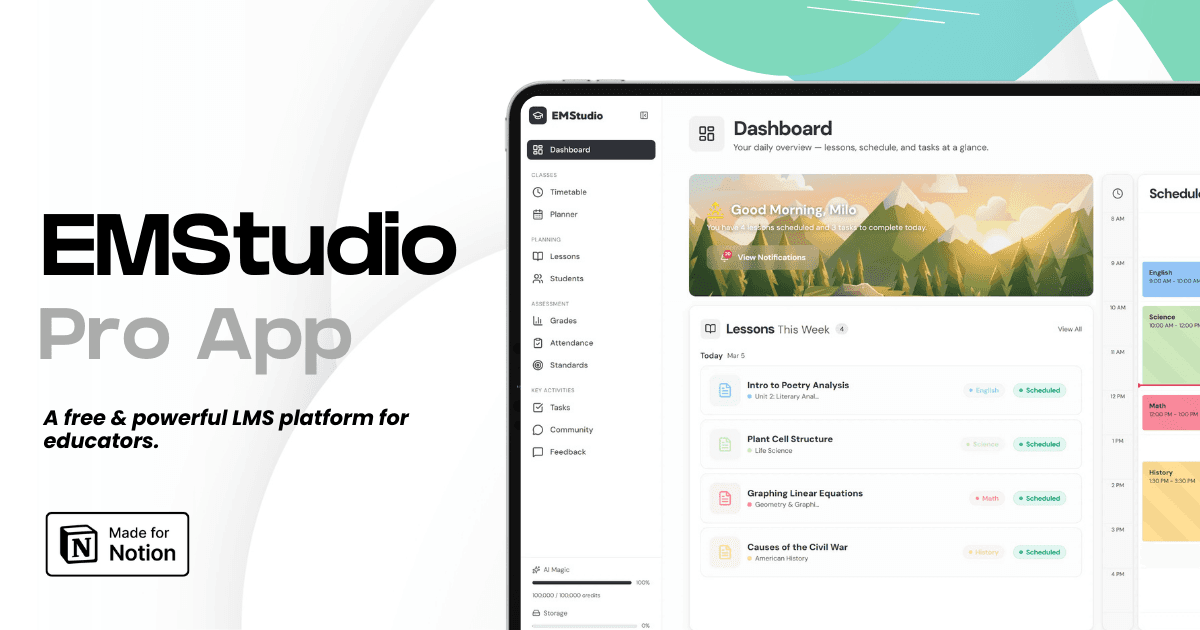
Still grading everything by hand?
EMStudio is a free teaching management app — manage your classes, students, lessons, and more!
Learn More
Still grading everything by hand?
EMStudio is a free teaching management app — manage your classes, students, lessons, and more!
Learn More




Notion4Teachers
Notion templates to simplify administrative tasks and enhance your teaching experience.



2026 Notion4Teachers. All Rights Reserved.
Notion4Teachers
Notion templates to simplify administrative tasks and enhance your teaching experience.
2026 Notion4Teachers. All Rights Reserved.
Notion4Teachers
Notion templates to simplify administrative tasks and enhance your teaching experience.
2026 Notion4Teachers. All Rights Reserved.