
Why Practice Tests Are the Most Effective Learning Tool (CCMA Case Study)
Why Practice Tests Are the Most Effective Learning Tool (CCMA Case Study)

Article by
Milo
ESL Content Coordinator & Educator
ESL Content Coordinator & Educator
All Posts
Most students preparing for a certification exam assume that rereading their notes one more time is the safest way to make information stick. For anyone working toward becoming a Certified Clinical Medical Assistant, that assumption is worth questioning.
Research on retrieval practice improving learning consistently shows that the act of retrieving information from memory strengthens it far more than passive review does. This phenomenon, known as the testing effect, means that a practice test is not simply a score check. It is a learning event in its own right.
When a student reads through a study guide or highlights notes, the material feels familiar, but familiarity is not the same as retention. Active recall, the kind that practice questions demand, forces the brain to reconstruct knowledge rather than just recognize it. That distinction matters enormously when preparing for the NHA CCMA exam, which tests across multiple clinical and administrative domains at once.
The broader benefits of practice tests extend well beyond the National Healthcareer Association exam itself, but for CCMA candidates specifically, consistent retrieval practice builds the durable, cross-domain recall that exam day actually requires.
Still grading everything by hand?
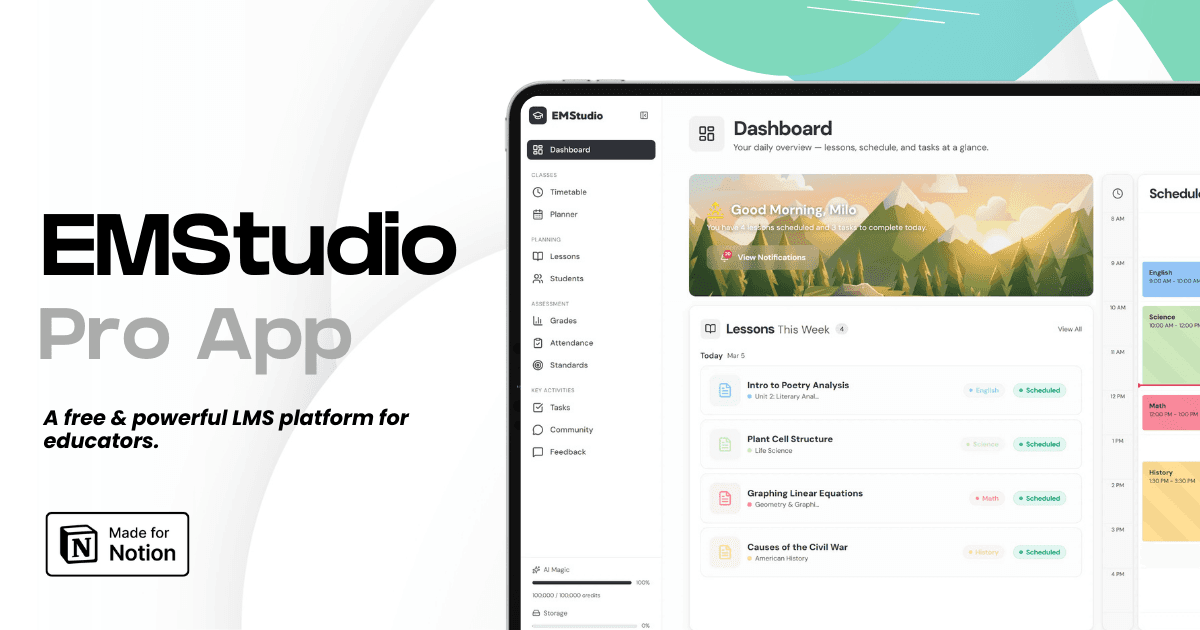
EMStudio is a free teaching management app — manage your classes, students, lessons, and more!
Learn More
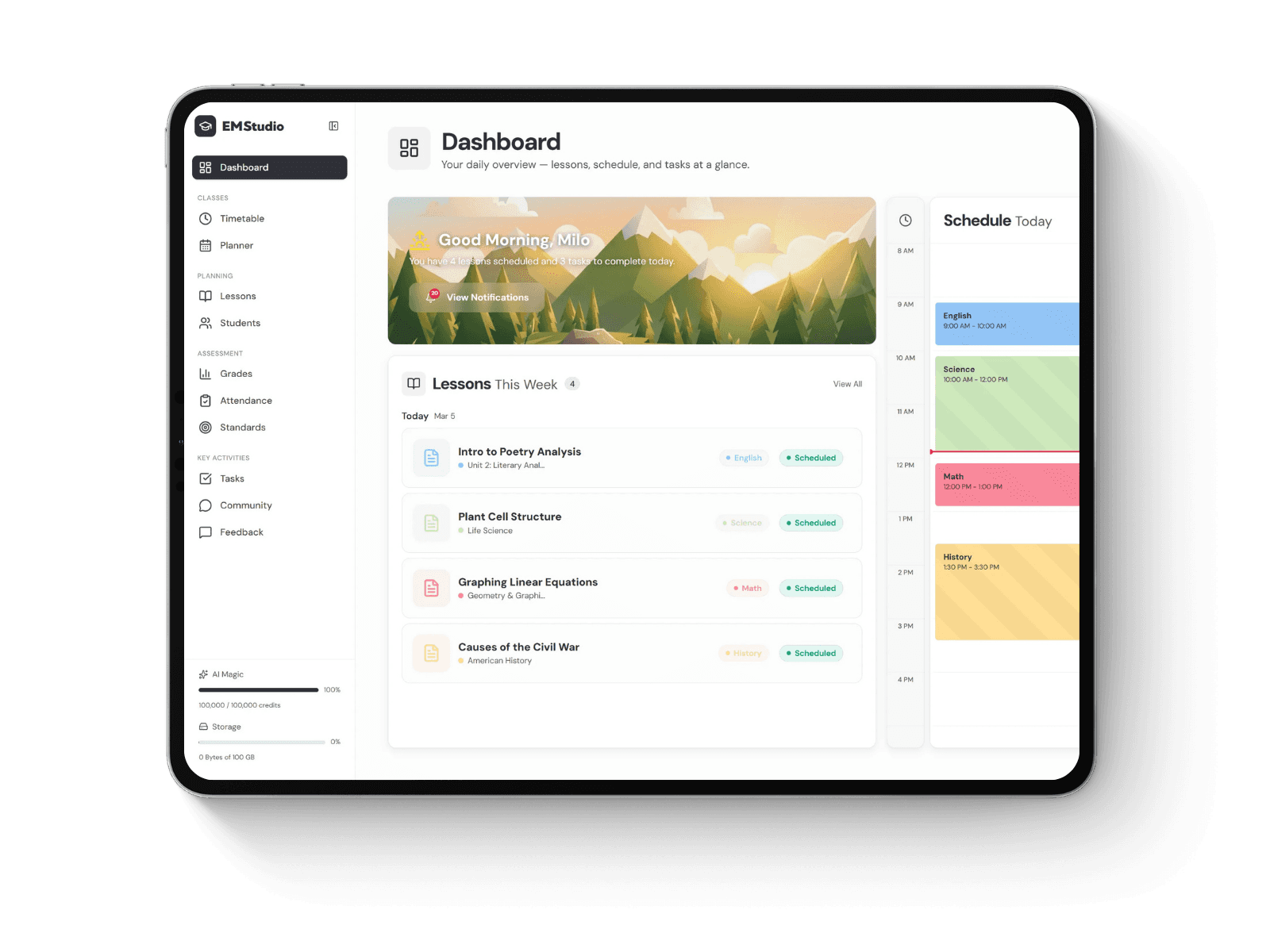
Still grading everything by hand?
EMStudio is a free teaching management app — manage your classes, students, lessons, and more!
Learn More
Table of Contents
Why Practice Tests Work Better Than Rereading
Passive review creates an illusion of mastery. A student who rereads a chapter on infection control may feel confident, yet that confidence often collapses the moment a timed, mixed-topic question set demands actual recall. Practice questions break that illusion early, which is precisely why they are more valuable than another pass through a study guide.
The testing effect is not a study hack. It is a well-supported cognitive principle: every time the brain retrieves a piece of information, that memory becomes more stable and more accessible. Rereading, by contrast, keeps the brain in recognition mode, where material feels familiar without being truly retained. For NHA CCMA preparation specifically, where exam domains span clinical procedures, anatomy and physiology, medical terminology, and administrative knowledge, retrieval practice is the method that builds the kind of recall the exam actually tests.
What the CCMA Exam Rewards in Real Study Sessions
Strong CCMA preparation depends on more than covering the right topics. It depends on practicing under conditions that resemble the real exam, which means timed questions, mixed domains, and no ability to flip back to a study guide mid-question. Understanding what the exam rewards helps candidates choose study methods that actually prepare them for those conditions.
High-Weight Topics Expose Weak Recall Fastest
The NHA CCMA exam is built around multiple content domains, and not all of them carry equal weight. The National Healthcareer Association structures the Certified Clinical Medical Assistant exam so that certain areas, Clinical Patient Care in particular, account for a significant portion of the total assessment.
Other high-yield areas include phlebotomy, infection control, vital signs, anatomy and physiology, and medical terminology. A candidate who studies these topics in isolation may feel prepared until a timed, mixed-format test forces recall across all of them simultaneously.
That is exactly where practice tests become diagnostic tools. When a student misses a question on infection control after feeling confident about it during review, the gap between recognition and actual retrieval becomes impossible to ignore. High-weight domains expose those gaps faster than any other method.
Format Familiarity Improves Pacing and Confidence
Content knowledge and exam readiness are not the same thing. A student can understand phlebotomy techniques thoroughly and still struggle to apply that knowledge under timed conditions, with unrelated questions appearing before and after.
Repeated exposure to the exam format trains the mind to move between domains without losing focus. Over time, the structure of the test stops feeling unfamiliar, and the mental energy that would have gone toward managing uncertainty gets redirected toward answering questions accurately.
Study resources recommended by CCMA Practice Tests point to format repetition as one of the most consistent factors in reaching the passing score, alongside content review. Knowing what to expect from the exam format reduces test-day anxiety before the first question even appears.
How to Turn Every Practice Test Into a Study Plan
A practice test is only as useful as what happens after it. Most candidates check their score, feel relieved or discouraged, and move on. However, the real value of a practice test lies in what the results reveal about where study time should go next. The following approach turns each test into a structured, actionable plan.
Review Misses by Concept, Not Just by Score
A score tells a student how they did. A sorted mistake list tells them what to do next. The difference between those two things determines whether a practice test leads to real improvement or just a momentary confidence check.
After completing any practice test, the most productive step is to group missed questions by exam domains rather than reviewing them in the order they appeared. Sorting errors by subject areas, including Clinical Patient Care, anatomy and physiology, medical terminology, HIPAA, medical law and ethics, infection control, and phlebotomy, reveals patterns that a raw score never could.
A student who misses seven questions might find that five of them cluster around medical terminology and two involve infection control. That pattern immediately redirects study time far more precisely than rereading an entire study guide from the beginning.
Score reports from digital practice tests boost learning efficiency in exactly this way, giving students a structured breakdown that turns a test result into a targeted action plan. The question is no longer "did I pass?" but "which domain needs the next hour?"
Retest Weak Areas on a Spaced Schedule
Identifying a weak area is only the first step. The real work happens when students return to those same topics across multiple sessions rather than addressing them once and moving on.
Spaced repetition works by reintroducing practice questions on a recurring schedule, forcing the brain to retrieve the same material again after a gap. Each successful retrieval strengthens the memory trace, and each failure flags that the concept needs more attention before exam day.
The most effective approach runs as a repeating cycle: take a practice test, review misses by domain, study the flagged subtopics directly, then retest those areas specifically. Running that cycle consistently across a study schedule turns isolated weak spots into reliable knowledge well before the exam arrives.
When a Study Guide Helps and When It Falls Short
A study guide earns its place early in any CCMA preparation plan. For a first-pass review of unfamiliar topics, a well-structured guide helps candidates build baseline familiarity with clinical terminology, exam format expectations, and domain boundaries before attempting any questions.
That initial orientation has real value. A student who has never encountered phlebotomy protocols or HIPAA basics in a structured format benefits from reading through that material before testing themselves on it.
However, passive review starts to fall short in everything that comes after. Reading about infection control feels productive, but it does not prepare the brain to retrieve that information mid-exam after four unrelated questions on anatomy and physiology. Study guides cannot replicate that kind of mental switching, and they offer no feedback on pacing or recall accuracy.
Practice questions address both of those gaps directly. They force retrieval under conditions that resemble the actual NHA CCMA exam, which means they train skills that no amount of rereading can build.
The strongest study routines for the Certified Clinical Medical Assistant exam treat the two methods as complementary rather than competing. A study guide clarifies; practice tests reveal. Reading builds context, but retrieval builds retention. Using a study guide to address a specific weak domain, then immediately retesting that domain with practice questions, produces far better results than either method used alone.
Frequently Asked Questions
What is the testing effect, and why does it matter for CCMA preparation?
The testing effect refers to the well-documented finding that retrieving information from memory strengthens retention more than passive review does. For CCMA candidates, this means practice questions are not just a score check. They are a core learning method.
How many domains does the NHA CCMA exam cover?
The National Healthcareer Association structures the exam across multiple content areas, including Clinical Patient Care, phlebotomy, infection control, anatomy and physiology, medical terminology, and medical law and ethics. Clinical Patient Care carries the highest weight.
When should practice tests be introduced into a study plan?
Most candidates benefit from beginning with a study guide to build baseline familiarity, then introducing practice tests once foundational concepts are in place. From that point, practice questions should run consistently throughout the remainder of the preparation period, not just in the final days before the exam.
Why Practice Tests Should Anchor Your CCMA Prep
Practice tests do three things a study guide cannot: they strengthen recall through active retrieval, expose the specific domains where knowledge breaks down, and reduce anxiety by making the exam format feel familiar before test day.
For anyone preparing for the NHA CCMA, those three functions are not secondary benefits. They are the core of an effective study schedule. The National Healthcareer Association structures the Certified Clinical Medical Assistant exam across multiple domains, and only repeated retrieval practice builds the cross-domain recall that the actual test demands.
The takeaway is straightforward: more reading rarely solves a retention problem. A well-placed practice test, reviewed carefully and followed by targeted study, moves candidates further than any passive review session. Smarter preparation consistently outperforms longer preparation.
Why Practice Tests Work Better Than Rereading
Passive review creates an illusion of mastery. A student who rereads a chapter on infection control may feel confident, yet that confidence often collapses the moment a timed, mixed-topic question set demands actual recall. Practice questions break that illusion early, which is precisely why they are more valuable than another pass through a study guide.
The testing effect is not a study hack. It is a well-supported cognitive principle: every time the brain retrieves a piece of information, that memory becomes more stable and more accessible. Rereading, by contrast, keeps the brain in recognition mode, where material feels familiar without being truly retained. For NHA CCMA preparation specifically, where exam domains span clinical procedures, anatomy and physiology, medical terminology, and administrative knowledge, retrieval practice is the method that builds the kind of recall the exam actually tests.
What the CCMA Exam Rewards in Real Study Sessions
Strong CCMA preparation depends on more than covering the right topics. It depends on practicing under conditions that resemble the real exam, which means timed questions, mixed domains, and no ability to flip back to a study guide mid-question. Understanding what the exam rewards helps candidates choose study methods that actually prepare them for those conditions.
High-Weight Topics Expose Weak Recall Fastest
The NHA CCMA exam is built around multiple content domains, and not all of them carry equal weight. The National Healthcareer Association structures the Certified Clinical Medical Assistant exam so that certain areas, Clinical Patient Care in particular, account for a significant portion of the total assessment.
Other high-yield areas include phlebotomy, infection control, vital signs, anatomy and physiology, and medical terminology. A candidate who studies these topics in isolation may feel prepared until a timed, mixed-format test forces recall across all of them simultaneously.
That is exactly where practice tests become diagnostic tools. When a student misses a question on infection control after feeling confident about it during review, the gap between recognition and actual retrieval becomes impossible to ignore. High-weight domains expose those gaps faster than any other method.
Format Familiarity Improves Pacing and Confidence
Content knowledge and exam readiness are not the same thing. A student can understand phlebotomy techniques thoroughly and still struggle to apply that knowledge under timed conditions, with unrelated questions appearing before and after.
Repeated exposure to the exam format trains the mind to move between domains without losing focus. Over time, the structure of the test stops feeling unfamiliar, and the mental energy that would have gone toward managing uncertainty gets redirected toward answering questions accurately.
Study resources recommended by CCMA Practice Tests point to format repetition as one of the most consistent factors in reaching the passing score, alongside content review. Knowing what to expect from the exam format reduces test-day anxiety before the first question even appears.
How to Turn Every Practice Test Into a Study Plan
A practice test is only as useful as what happens after it. Most candidates check their score, feel relieved or discouraged, and move on. However, the real value of a practice test lies in what the results reveal about where study time should go next. The following approach turns each test into a structured, actionable plan.
Review Misses by Concept, Not Just by Score
A score tells a student how they did. A sorted mistake list tells them what to do next. The difference between those two things determines whether a practice test leads to real improvement or just a momentary confidence check.
After completing any practice test, the most productive step is to group missed questions by exam domains rather than reviewing them in the order they appeared. Sorting errors by subject areas, including Clinical Patient Care, anatomy and physiology, medical terminology, HIPAA, medical law and ethics, infection control, and phlebotomy, reveals patterns that a raw score never could.
A student who misses seven questions might find that five of them cluster around medical terminology and two involve infection control. That pattern immediately redirects study time far more precisely than rereading an entire study guide from the beginning.
Score reports from digital practice tests boost learning efficiency in exactly this way, giving students a structured breakdown that turns a test result into a targeted action plan. The question is no longer "did I pass?" but "which domain needs the next hour?"
Retest Weak Areas on a Spaced Schedule
Identifying a weak area is only the first step. The real work happens when students return to those same topics across multiple sessions rather than addressing them once and moving on.
Spaced repetition works by reintroducing practice questions on a recurring schedule, forcing the brain to retrieve the same material again after a gap. Each successful retrieval strengthens the memory trace, and each failure flags that the concept needs more attention before exam day.
The most effective approach runs as a repeating cycle: take a practice test, review misses by domain, study the flagged subtopics directly, then retest those areas specifically. Running that cycle consistently across a study schedule turns isolated weak spots into reliable knowledge well before the exam arrives.
When a Study Guide Helps and When It Falls Short
A study guide earns its place early in any CCMA preparation plan. For a first-pass review of unfamiliar topics, a well-structured guide helps candidates build baseline familiarity with clinical terminology, exam format expectations, and domain boundaries before attempting any questions.
That initial orientation has real value. A student who has never encountered phlebotomy protocols or HIPAA basics in a structured format benefits from reading through that material before testing themselves on it.
However, passive review starts to fall short in everything that comes after. Reading about infection control feels productive, but it does not prepare the brain to retrieve that information mid-exam after four unrelated questions on anatomy and physiology. Study guides cannot replicate that kind of mental switching, and they offer no feedback on pacing or recall accuracy.
Practice questions address both of those gaps directly. They force retrieval under conditions that resemble the actual NHA CCMA exam, which means they train skills that no amount of rereading can build.
The strongest study routines for the Certified Clinical Medical Assistant exam treat the two methods as complementary rather than competing. A study guide clarifies; practice tests reveal. Reading builds context, but retrieval builds retention. Using a study guide to address a specific weak domain, then immediately retesting that domain with practice questions, produces far better results than either method used alone.
Frequently Asked Questions
What is the testing effect, and why does it matter for CCMA preparation?
The testing effect refers to the well-documented finding that retrieving information from memory strengthens retention more than passive review does. For CCMA candidates, this means practice questions are not just a score check. They are a core learning method.
How many domains does the NHA CCMA exam cover?
The National Healthcareer Association structures the exam across multiple content areas, including Clinical Patient Care, phlebotomy, infection control, anatomy and physiology, medical terminology, and medical law and ethics. Clinical Patient Care carries the highest weight.
When should practice tests be introduced into a study plan?
Most candidates benefit from beginning with a study guide to build baseline familiarity, then introducing practice tests once foundational concepts are in place. From that point, practice questions should run consistently throughout the remainder of the preparation period, not just in the final days before the exam.
Why Practice Tests Should Anchor Your CCMA Prep
Practice tests do three things a study guide cannot: they strengthen recall through active retrieval, expose the specific domains where knowledge breaks down, and reduce anxiety by making the exam format feel familiar before test day.
For anyone preparing for the NHA CCMA, those three functions are not secondary benefits. They are the core of an effective study schedule. The National Healthcareer Association structures the Certified Clinical Medical Assistant exam across multiple domains, and only repeated retrieval practice builds the cross-domain recall that the actual test demands.
The takeaway is straightforward: more reading rarely solves a retention problem. A well-placed practice test, reviewed carefully and followed by targeted study, moves candidates further than any passive review session. Smarter preparation consistently outperforms longer preparation.
Still grading everything by hand?
EMStudio is a free teaching management app — manage your classes, students, lessons, and more!
Learn More
Still grading everything by hand?
EMStudio is a free teaching management app — manage your classes, students, lessons, and more!
Learn More




Notion4Teachers
Notion templates to simplify administrative tasks and enhance your teaching experience.



2026 Notion4Teachers. All Rights Reserved.
Notion4Teachers
Notion templates to simplify administrative tasks and enhance your teaching experience.
2026 Notion4Teachers. All Rights Reserved.
Notion4Teachers
Notion templates to simplify administrative tasks and enhance your teaching experience.
2026 Notion4Teachers. All Rights Reserved.