
How Teachers Can De-Escalate Emotionally Charged Situations in the Classroom
How Teachers Can De-Escalate Emotionally Charged Situations in the Classroom

Article by
Milo
ESL Content Coordinator & Educator
ESL Content Coordinator & Educator
All Posts
Classrooms are not just places of learning. They are social environments where emotions run high, conflicts brew quickly, and a single unaddressed moment can derail an entire lesson. Teachers are increasingly being asked to manage not just curriculum, but the emotional wellbeing of every student in the room.
The good news is that de-escalation is a learnable skill. With the right tools and mindset, any educator can become more confident in navigating those tense, emotionally charged moments before they spiral.
Still grading everything by hand?
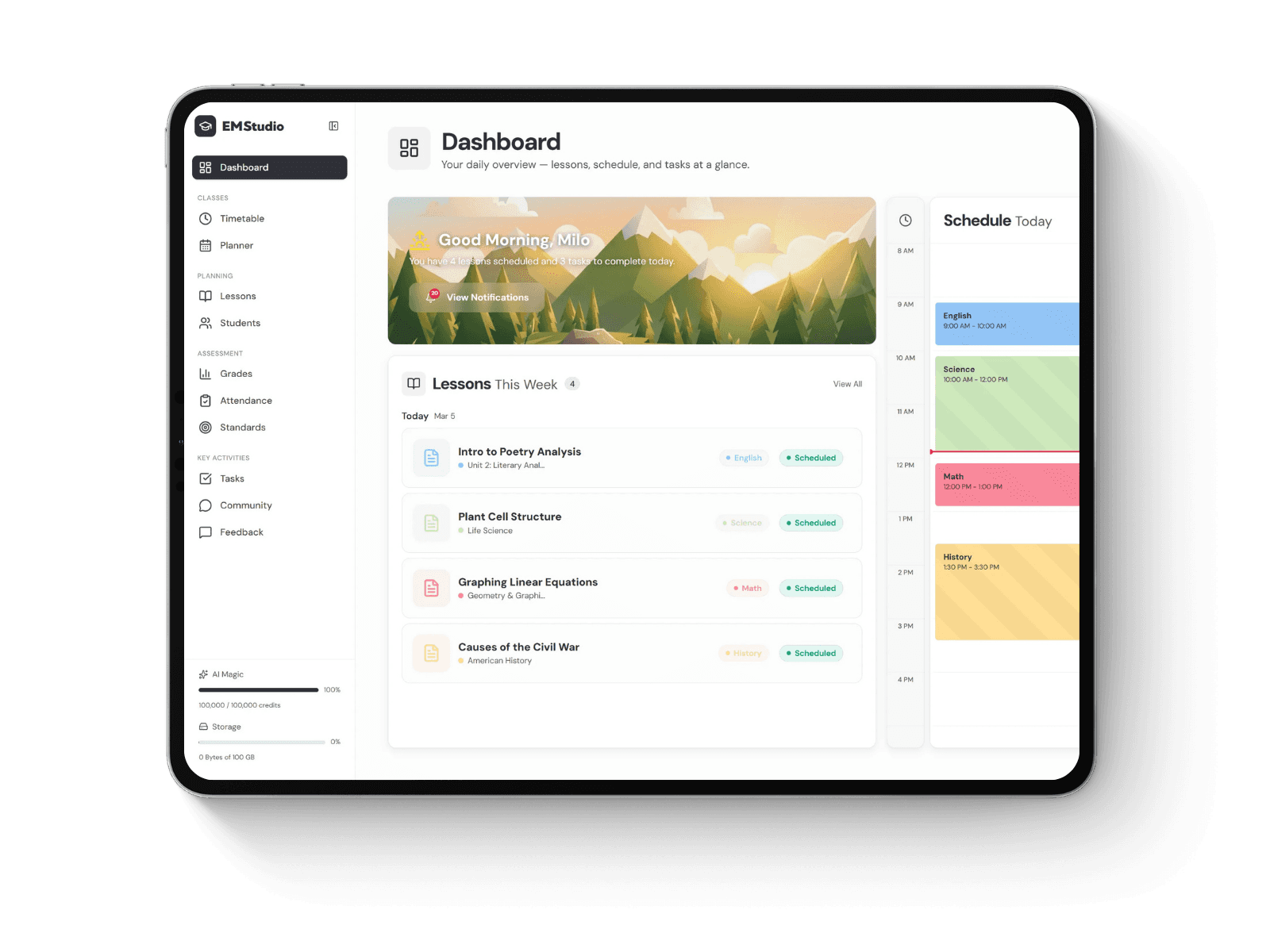
EMStudio is a free teaching management app — manage your classes, students, lessons, and more!
Learn More
Still grading everything by hand?
EMStudio is a free teaching management app — manage your classes, students, lessons, and more!
Learn More
Table of Contents
Why Emotional Escalation Happens in Classrooms
Before you can de-escalate a situation, it helps to understand what is actually happening in a student's brain when they become dysregulated. This foundational knowledge is often emphasized in de-escalation training for educators, as it enables teachers to respond more effectively during challenging situations.
When a student feels threatened, humiliated, overwhelmed, or cornered, the brain's threat response kicks in. The prefrontal cortex, the part responsible for reasoning and impulse control, goes offline. What you are left with is a student who literally cannot think clearly at that moment.
Common triggers include:
Feeling singled out or embarrassed in front of peers
Unresolved conflict from outside the classroom (home, hallways, social media)
Academic frustration or fear of failure
Sensory overwhelm or fatigue
A perceived lack of fairness or respect
Understanding these triggers does not mean excusing disruptive behavior. It means responding in a way that actually works.
The Core Principles of Classroom De-Escalation
1. Stay Regulated Yourself
Your emotional state is contagious. If a student is escalating and you respond with visible frustration, raised voice, or rigid body language, you are adding fuel to the fire. The most powerful thing you can do is stay calm, even when it is uncomfortable.
This is not about suppressing your emotions. It is about regulating them well enough that you can respond thoughtfully rather than react impulsively. Slowing your breathing, softening your tone, and relaxing your posture all send a non-verbal signal that says: this is safe, I am not a threat.
2. Reduce the Audience
Escalation is almost always worse when there is an audience. A student who feels publicly humiliated has far fewer options in their mind. They either comply and feel embarrassed or resist and save face.
Whenever possible, move a difficult conversation away from the group. A quiet word in the hallway, a private signal, or a brief one-on-one moment after class can shift the entire dynamic.
3. Use a Low and Slow Voice
The natural instinct when someone is shouting or acting out is to match their energy, either by raising your own voice or by speaking very quickly. Both approaches backfire.
Instead, lower your voice and slow your speech down. This forces the other person to focus to hear you. It also sends a physiological cue that things are calm and under control.
4. Acknowledge the Emotion Before the Behavior
One of the most effective de-escalation tools is also the most counterintuitive: acknowledge what the student is feeling before you address what they did.
"You seem really frustrated right now" lands very differently than "That behavior is unacceptable." The first opens a door. The second slams it shut.
This does not mean you ignore the behavior. It means you create enough emotional safety for the student to actually hear what you say next.
5. Offer Limited Choices
When someone is escalated, being told what to do feels like a power grab. Offering two or three clear choices returns a sense of control to the student without letting them dictate the situation.
"You can take a seat here or in the back of the room. Which works better for you?" This small shift makes compliance feel like a decision, not a defeat.
Practical Strategies for the Classroom
Build Relationships Before Crisis Hits
The most powerful de-escalation tool is a relationship that already exists. Students who trust you are far more willing to cooperate when things get hard. Make it a point to have brief, positive interactions with every student regularly, especially those who tend to be more volatile.
Create a Class Culture of Emotional Safety
Students should not feel that making a mistake or expressing frustration will result in public shame. Normalizing emotional expression through class discussions, restorative practices, and modeling your own healthy coping strategies reduces the likelihood of situations reaching a boiling point.
Use Non-Verbal Cues
A calm nod, a quiet gesture toward the door, or simply making eye contact and giving a student a moment can communicate volumes without escalating through words. Non-verbal communication is underrated in these moments.
Know When to Step Back
Sometimes the most effective intervention is no intervention. If a student is on the edge and every word you say is making it worse, creating a brief pause by moving on with the lesson and returning to the student privately can prevent full escalation.
When to Seek More Support
De-escalation techniques are powerful, but they are not a substitute for systemic support. If you are regularly facing high-intensity situations in your classroom, it may be time to access structured support.
Formal de-escalation training for educators gives teachers the evidence-based frameworks, practical techniques, and hands-on practice they need to handle even the most challenging classroom moments with skill and confidence.
This kind of professional development is particularly valuable for educators working with trauma-affected students, those in high-pressure school environments, or teachers who simply want to deepen their skill set.
Conclusion
Managing emotionally charged classroom situations is one of the hardest parts of teaching, and one of the least talked about. But with intentional practice, the right techniques, and professional support, it becomes a skill like any other. The teachers who handle conflict well are not those who never feel frustrated. They are the ones who have learned how to stay grounded and respond wisely when it matters most.
Why Emotional Escalation Happens in Classrooms
Before you can de-escalate a situation, it helps to understand what is actually happening in a student's brain when they become dysregulated. This foundational knowledge is often emphasized in de-escalation training for educators, as it enables teachers to respond more effectively during challenging situations.
When a student feels threatened, humiliated, overwhelmed, or cornered, the brain's threat response kicks in. The prefrontal cortex, the part responsible for reasoning and impulse control, goes offline. What you are left with is a student who literally cannot think clearly at that moment.
Common triggers include:
Feeling singled out or embarrassed in front of peers
Unresolved conflict from outside the classroom (home, hallways, social media)
Academic frustration or fear of failure
Sensory overwhelm or fatigue
A perceived lack of fairness or respect
Understanding these triggers does not mean excusing disruptive behavior. It means responding in a way that actually works.
The Core Principles of Classroom De-Escalation
1. Stay Regulated Yourself
Your emotional state is contagious. If a student is escalating and you respond with visible frustration, raised voice, or rigid body language, you are adding fuel to the fire. The most powerful thing you can do is stay calm, even when it is uncomfortable.
This is not about suppressing your emotions. It is about regulating them well enough that you can respond thoughtfully rather than react impulsively. Slowing your breathing, softening your tone, and relaxing your posture all send a non-verbal signal that says: this is safe, I am not a threat.
2. Reduce the Audience
Escalation is almost always worse when there is an audience. A student who feels publicly humiliated has far fewer options in their mind. They either comply and feel embarrassed or resist and save face.
Whenever possible, move a difficult conversation away from the group. A quiet word in the hallway, a private signal, or a brief one-on-one moment after class can shift the entire dynamic.
3. Use a Low and Slow Voice
The natural instinct when someone is shouting or acting out is to match their energy, either by raising your own voice or by speaking very quickly. Both approaches backfire.
Instead, lower your voice and slow your speech down. This forces the other person to focus to hear you. It also sends a physiological cue that things are calm and under control.
4. Acknowledge the Emotion Before the Behavior
One of the most effective de-escalation tools is also the most counterintuitive: acknowledge what the student is feeling before you address what they did.
"You seem really frustrated right now" lands very differently than "That behavior is unacceptable." The first opens a door. The second slams it shut.
This does not mean you ignore the behavior. It means you create enough emotional safety for the student to actually hear what you say next.
5. Offer Limited Choices
When someone is escalated, being told what to do feels like a power grab. Offering two or three clear choices returns a sense of control to the student without letting them dictate the situation.
"You can take a seat here or in the back of the room. Which works better for you?" This small shift makes compliance feel like a decision, not a defeat.
Practical Strategies for the Classroom
Build Relationships Before Crisis Hits
The most powerful de-escalation tool is a relationship that already exists. Students who trust you are far more willing to cooperate when things get hard. Make it a point to have brief, positive interactions with every student regularly, especially those who tend to be more volatile.
Create a Class Culture of Emotional Safety
Students should not feel that making a mistake or expressing frustration will result in public shame. Normalizing emotional expression through class discussions, restorative practices, and modeling your own healthy coping strategies reduces the likelihood of situations reaching a boiling point.
Use Non-Verbal Cues
A calm nod, a quiet gesture toward the door, or simply making eye contact and giving a student a moment can communicate volumes without escalating through words. Non-verbal communication is underrated in these moments.
Know When to Step Back
Sometimes the most effective intervention is no intervention. If a student is on the edge and every word you say is making it worse, creating a brief pause by moving on with the lesson and returning to the student privately can prevent full escalation.
When to Seek More Support
De-escalation techniques are powerful, but they are not a substitute for systemic support. If you are regularly facing high-intensity situations in your classroom, it may be time to access structured support.
Formal de-escalation training for educators gives teachers the evidence-based frameworks, practical techniques, and hands-on practice they need to handle even the most challenging classroom moments with skill and confidence.
This kind of professional development is particularly valuable for educators working with trauma-affected students, those in high-pressure school environments, or teachers who simply want to deepen their skill set.
Conclusion
Managing emotionally charged classroom situations is one of the hardest parts of teaching, and one of the least talked about. But with intentional practice, the right techniques, and professional support, it becomes a skill like any other. The teachers who handle conflict well are not those who never feel frustrated. They are the ones who have learned how to stay grounded and respond wisely when it matters most.
Still grading everything by hand?
EMStudio is a free teaching management app — manage your classes, students, lessons, and more!
Learn More
Still grading everything by hand?
EMStudio is a free teaching management app — manage your classes, students, lessons, and more!
Learn More






Notion4Teachers
Notion templates to simplify administrative tasks and enhance your teaching experience.



2026 Notion4Teachers. All Rights Reserved.
Notion4Teachers
Notion templates to simplify administrative tasks and enhance your teaching experience.
2026 Notion4Teachers. All Rights Reserved.
Notion4Teachers
Notion templates to simplify administrative tasks and enhance your teaching experience.
2026 Notion4Teachers. All Rights Reserved.