
Student Success Beyond the Classroom: Building Skills That Last a Lifetime
Student Success Beyond the Classroom: Building Skills That Last a Lifetime

Article by
Milo
ESL Content Coordinator & Educator
ESL Content Coordinator & Educator
All Posts
Every student begins their educational journey with one goal: to learn. Over time, however, it becomes clear that success is shaped by far more than grades or examination scores.
The students who thrive in college, in their careers, and in life are often those who develop curiosity, integrity, confidence, and the ability to work with others. These qualities are not built through textbooks alone.
They grow through everyday experiences, meaningful guidance, and opportunities to apply knowledge in the real world. The rapid growth of digital learning has created incredible opportunities for students, but it has also introduced new challenges.
Information is available within seconds, artificial intelligence can generate essays in minutes, and learning resources have never been more accessible. While these advances have made education more convenient, they have also increased the importance of teaching students how to think independently instead of simply finding the fastest answer.
As education continues to evolve, schools and colleges are placing greater emphasis on preparing students for life rather than simply preparing them for examinations. Academic performance remains important, but it is only one part of a much larger picture.
Still grading everything by hand?
EMStudio is a free teaching management app — manage your classes, students, lessons, and more!
Learn More
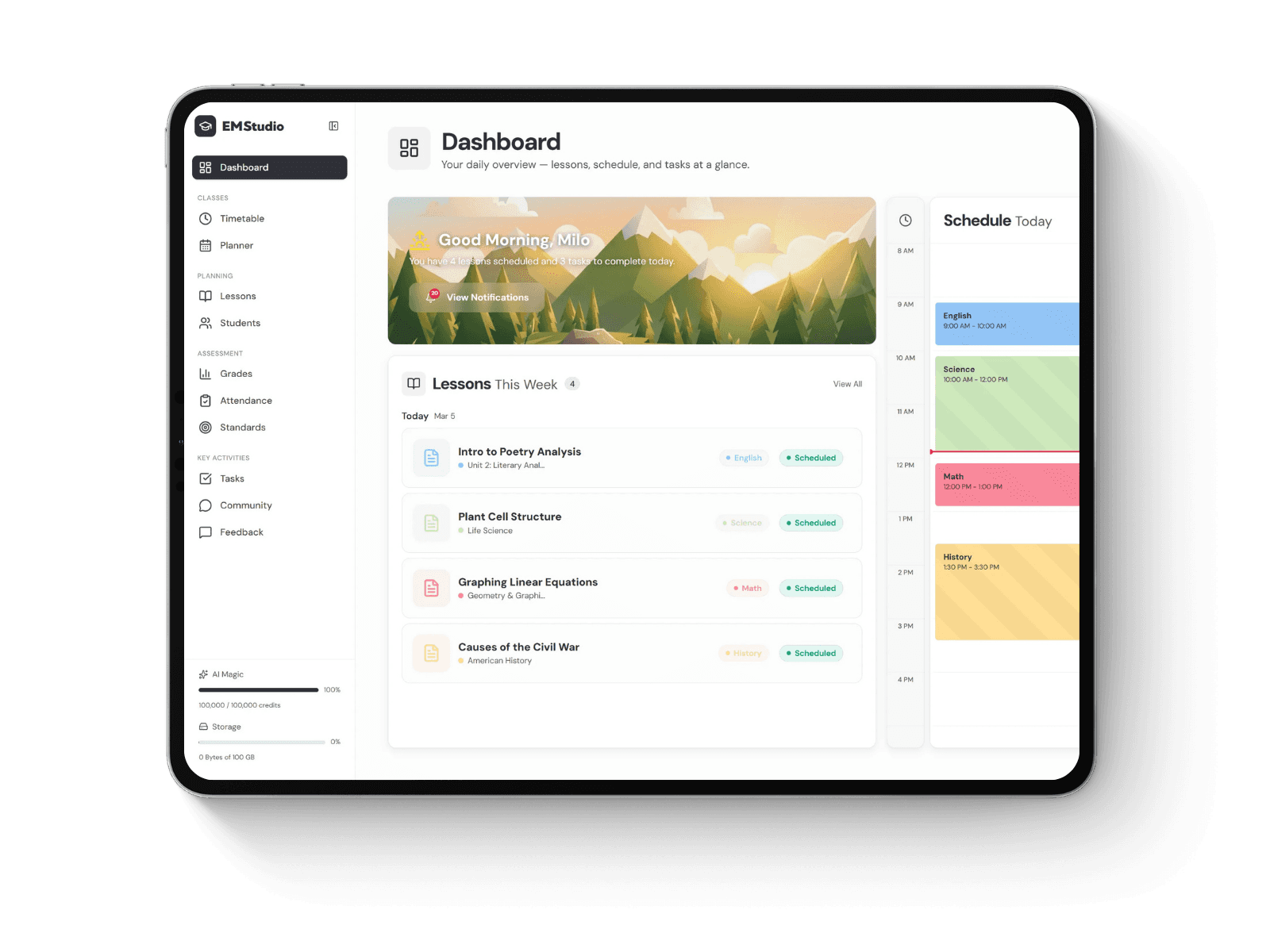
Still grading everything by hand?
EMStudio is a free teaching management app — manage your classes, students, lessons, and more!
Learn More
Table of Contents
Learning with Integrity and the Right Support
The way students learn has changed dramatically over the past few years. Information is easier to access than ever before, and digital tools have become an everyday part of education. While this has opened new opportunities for learning, it has also made academic integrity more important than ever.
One of the biggest concerns for educators today is ensuring that students understand the value of original work. Completing an assignment is only part of the learning process. Researching ideas, evaluating information, and expressing thoughts in one's own words are skills that build confidence and critical thinking.
When shortcuts replace genuine effort, students may earn marks, but they often miss the opportunity to truly understand a subject.
Students should understand that the purpose of an assignment is not just to submit work, but to develop their own understanding of a topic. Writing in their own words, acknowledging the ideas of others, and respecting intellectual property are habits that continue to benefit them throughout higher education and professional life. This is why conversations about plagiarism have become more relevant than ever. Every educational institution should help students understand what constitutes original work, how proper attribution should be given, and why academic honesty matters beyond the classroom. Rather than discussing plagiarism only when problems arise, educators can introduce it as part of responsible learning. A clear explanation of accepted academic practices, such as the principles outlined in this guide on plagiarism policies, can help students understand why originality matters and how proper attribution strengthens their work rather than limiting it.
Every Student Learns Differently
No classroom is made up of identical learners. Some students understand concepts quickly, while others need additional examples, more practice, or simply someone who can explain the same idea from a different perspective. Expecting every student to progress at the same pace often creates unnecessary pressure and leaves many learners behind. This is where personalized learning becomes valuable. A little one-to-one guidance can build confidence, remove confusion, and encourage students to ask questions they may hesitate to raise in a crowded classroom. Today, parents and students can also find tutors through dedicated tutoring platforms that make it easier to connect with qualified tutors based on individual learning goals and subjects. Whether a student is preparing for board examinations, strengthening subject fundamentals, or seeking additional help outside school, connecting with experienced tutors can provide the focused attention that is difficult to achieve in a crowded classroom. Having access to the right mentor at the right time can often change a student's entire learning experience.
Growth Happens Outside the Classroom Too
Academic knowledge is only one part of a student's development. Some of the most valuable lessons are learned during activities that never appear on a report card. Organizing a college festival, volunteering for an event, participating in a cultural program, leading a student club, or working on a collaborative project teaches communication, leadership, creativity, and teamwork in ways that traditional classroom learning cannot. Educational institutions that invest in engaging campus experiences often create stronger student communities. Interactive activities encourage participation, help students build friendships, and give them opportunities to express themselves.
The most successful campus events are often those that invite students to participate instead of simply attending as spectators. Interactive workshops, creative competitions, hackathons, and personalized activity booths create opportunities for students to express themselves while making events more engaging. Even something as simple as letting participants customize their own campus merchandise through live printing experiences can turn an ordinary souvenir into a memorable part of the celebration. It is the experience of creating something personal that students remember long after the campus event has ended. Such experiences often become the moments students remember long after leaving the institute.
Preparing Students for Life, Not Just Exams
Education has always been about more than preparing students for the next test. It is about preparing them for the next challenge, whether that means solving complex problems, communicating ideas with confidence, working ethically, or adapting to a constantly changing world. A well-rounded education is not defined by marks alone.
It is shaped by the habits students develop, the values they carry, the support they receive when they face challenges, and the experiences that encourage them to grow beyond academics.
Students who learn to think independently, write with honesty, seek help when they need it, and actively participate in campus life leave school with far more than subject knowledge. They develop confidence, resilience, and practical skills that continue to serve them in higher education, the workplace, and everyday life.
Learning with Integrity and the Right Support
The way students learn has changed dramatically over the past few years. Information is easier to access than ever before, and digital tools have become an everyday part of education. While this has opened new opportunities for learning, it has also made academic integrity more important than ever.
One of the biggest concerns for educators today is ensuring that students understand the value of original work. Completing an assignment is only part of the learning process. Researching ideas, evaluating information, and expressing thoughts in one's own words are skills that build confidence and critical thinking.
When shortcuts replace genuine effort, students may earn marks, but they often miss the opportunity to truly understand a subject.
Students should understand that the purpose of an assignment is not just to submit work, but to develop their own understanding of a topic. Writing in their own words, acknowledging the ideas of others, and respecting intellectual property are habits that continue to benefit them throughout higher education and professional life. This is why conversations about plagiarism have become more relevant than ever. Every educational institution should help students understand what constitutes original work, how proper attribution should be given, and why academic honesty matters beyond the classroom. Rather than discussing plagiarism only when problems arise, educators can introduce it as part of responsible learning. A clear explanation of accepted academic practices, such as the principles outlined in this guide on plagiarism policies, can help students understand why originality matters and how proper attribution strengthens their work rather than limiting it.
Every Student Learns Differently
No classroom is made up of identical learners. Some students understand concepts quickly, while others need additional examples, more practice, or simply someone who can explain the same idea from a different perspective. Expecting every student to progress at the same pace often creates unnecessary pressure and leaves many learners behind. This is where personalized learning becomes valuable. A little one-to-one guidance can build confidence, remove confusion, and encourage students to ask questions they may hesitate to raise in a crowded classroom. Today, parents and students can also find tutors through dedicated tutoring platforms that make it easier to connect with qualified tutors based on individual learning goals and subjects. Whether a student is preparing for board examinations, strengthening subject fundamentals, or seeking additional help outside school, connecting with experienced tutors can provide the focused attention that is difficult to achieve in a crowded classroom. Having access to the right mentor at the right time can often change a student's entire learning experience.
Growth Happens Outside the Classroom Too
Academic knowledge is only one part of a student's development. Some of the most valuable lessons are learned during activities that never appear on a report card. Organizing a college festival, volunteering for an event, participating in a cultural program, leading a student club, or working on a collaborative project teaches communication, leadership, creativity, and teamwork in ways that traditional classroom learning cannot. Educational institutions that invest in engaging campus experiences often create stronger student communities. Interactive activities encourage participation, help students build friendships, and give them opportunities to express themselves.
The most successful campus events are often those that invite students to participate instead of simply attending as spectators. Interactive workshops, creative competitions, hackathons, and personalized activity booths create opportunities for students to express themselves while making events more engaging. Even something as simple as letting participants customize their own campus merchandise through live printing experiences can turn an ordinary souvenir into a memorable part of the celebration. It is the experience of creating something personal that students remember long after the campus event has ended. Such experiences often become the moments students remember long after leaving the institute.
Preparing Students for Life, Not Just Exams
Education has always been about more than preparing students for the next test. It is about preparing them for the next challenge, whether that means solving complex problems, communicating ideas with confidence, working ethically, or adapting to a constantly changing world. A well-rounded education is not defined by marks alone.
It is shaped by the habits students develop, the values they carry, the support they receive when they face challenges, and the experiences that encourage them to grow beyond academics.
Students who learn to think independently, write with honesty, seek help when they need it, and actively participate in campus life leave school with far more than subject knowledge. They develop confidence, resilience, and practical skills that continue to serve them in higher education, the workplace, and everyday life.
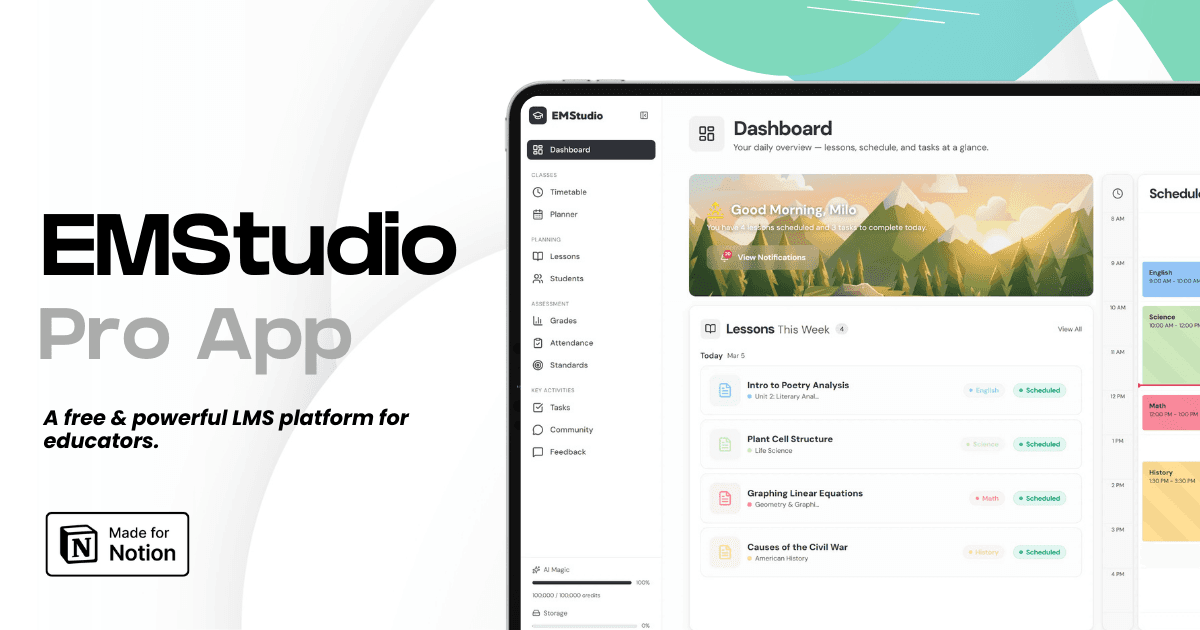
Still grading everything by hand?
EMStudio is a free teaching management app — manage your classes, students, lessons, and more!
Learn More
Still grading everything by hand?
EMStudio is a free teaching management app — manage your classes, students, lessons, and more!
Learn More


Notion4Teachers
Notion templates to simplify administrative tasks and enhance your teaching experience.



2026 Notion4Teachers. All Rights Reserved.
Notion4Teachers
Notion templates to simplify administrative tasks and enhance your teaching experience.
2026 Notion4Teachers. All Rights Reserved.
Notion4Teachers
Notion templates to simplify administrative tasks and enhance your teaching experience.
2026 Notion4Teachers. All Rights Reserved.