
12 Teacher Skills Every Educator Needs Today
12 Teacher Skills Every Educator Needs Today

Article by
Milo
ESL Content Coordinator & Educator
ESL Content Coordinator & Educator
All Posts
You finished your credentialing program thinking you knew how to teach. Then September hit. Suddenly you're managing classroom climate while troubleshooting a broken projector, differentiating for five IEPs, and wondering if your district's new educational technology suite is helping or just creating more work. The gap between what they taught you and what the job demands feels massive because nobody mentioned you'd need project management skills, counseling patience, and data analysis chops just to get through a Tuesday.
This list cuts through the noise. These twelve teacher skills are the ones that actually save your sanity and improve student learning. We'll cover the classroom management moves that stop interruptions before they start, instructional design choices that boost student engagement, and formative assessment tricks that give you real data without eating your weekend. No theory. Just what works when the fire alarm goes off mid-lesson.
Still grading everything by hand?
EMStudio is a free teaching management app — manage your classes, students, lessons, and more!
Learn More

Still grading everything by hand?
EMStudio is a free teaching management app — manage your classes, students, lessons, and more!
Learn More
Table of Contents
What Classroom Management Skills Define Effective Teachers?
Effective classroom management relies on proactive systems rather than reactive discipline. Key skills include establishing clear routines within the first 20 days, using de-escalation techniques like the LEAP method, and maintaining a 3:1 ratio of positive to corrective interactions. Research indicates strong management practices significantly impact student achievement.
John Hattie's Visible Learning research puts classroom management at an effect size of 0.52—above the hinge point of 0.40 where real learning gains happen. That number represents months of additional growth when you nail these teacher skills. But here's the catch: Hattie's data shows proactive systems drive those results. Reactive discipline barely moves the needle. The best educators build structures that prevent chaos rather than manage it.
Think of your classroom like a garden. Proactive work is building the trellis before the vines grow wild—teaching procedures, practicing transitions, establishing relationships. Reactive work is pulling weeds after they've choked the tomatoes—detentions, escalation cycles, damage control. Both matter, but only one creates the conditions for learning.
Behavior Management and De-escalation Techniques
When a student flips a desk or shuts down completely, you don't have time to consult a flowchart. You need muscle memory. The LEAP method gives you that. Listen for thirty seconds minimum—actually count in your head—without interrupting. Empathize by naming the emotion: "You're frustrated because the group isn't listening to your idea." Ask what they need: "What would help right now?" Then problem-solve with two choices: "You can take five minutes in the calm corner or sit by the window with your headphones. Which works?"
For the kid who seems determined to test every boundary, try the 2x10 strategy. Spend two minutes daily for ten consecutive days discussing anything except school—video games, sneakers, their dog's weird habits. By day six, you'll notice the resistance soften. You're building relationship capital before you need to make a withdrawal.
Non-verbal cues keep instruction flowing without stopping to nag. Use these three:
Raise your hand for attention and wait. Do not talk until 100% compliance. It feels awkward for eight seconds, but it trains them to monitor each other.
A light touch on the shoulder redirects without humiliation.
The peace sign silently signals volume—two fingers for whisper level, three for table talk.
These behavior management strategies for success work because they preserve dignity while maintaining order.
Establishing Routines and Procedures
Harry and Rosemary Wong's First 20 Days protocol isn't about being rigid—it's about being predictable. In high school, my bell-ringer entry takes exactly four minutes: materials check (30 seconds), bell work (2 minutes), objective review (90 seconds). Students know that sequence in their bones by October. In kindergarten, line-up means carpet spots, a finger signal for voice level, and a silent count to three before moving. The content differs, but the clarity doesn't.
Do the math. Fifteen minutes of daily procedural waste—fumbling for papers, confusion about transitions—equals forty-five hours of lost instruction annually. That's more than a week of school. Classroom rules and procedures that transform behavior start with this equation: time spent teaching routines early pays compound interest later.
When routines collapse—and they will during week three when the novelty wears off—don't push through. Stop. Restart the procedure. Practice during lunch or before dismissal. Never introduce new content while students are still confused about how to get from desks to groups. It feels backwards to spend ten minutes rehearsing a pencil-sharpening protocol, but chaos costs more time than practice ever does.
Cultivating a Positive Classroom Culture
Restorative circles aren't touchy-feely time-wasters when done right. Use affective statements: "I feel frustrated when the discussion gets interrupted because I want to hear everyone's ideas." Post community agreements at actual student eye level—not adult eye level—so they're looking up to see them. Review them weekly, not just in September.
Track your 3:1 ratio of positive to corrective interactions. Carry a small tally card. During a twenty-minute observation window, mark every correction and every specific praise. If you're running negative, flip it immediately. "I like how Marcus is tracking the speaker" works better than "Stop talking, Marcus."
Build mistake-friendly norms with specific language frames. When a student errors publicly, say: "I love this mistake because it shows us exactly where the confusion lives." Then: "Turn and tell your partner what you learned from this error." This shifts classroom climate from performance to learning.
But here's where essential teaching skills become dangerous. When management morphs into control—when you're chasing 100% compliance through fear, punishment, or micromanagement—you've crossed into counterproductive territory. Students complying out of anxiety aren't learning; they're surviving. If you find yourself repeating "I said eyes on me" twelve times before continuing, or if your highest achievers are terrified of errors, you've built a compliant classroom, not a learning community. The goal isn't silent rows of children. It's engaged learners who trust the structure enough to take intellectual risks.

Which Instructional Strategies Should Every Teacher Master?
You need four moves in your teaching repertoire: direct instruction with constant checks for understanding, grouping kids by readiness rather than ability labels, asking questions that make them think for 3-5 seconds before they speak, and planning backward from what you want to see at the end. Rosenshine's Principles of Instruction give you the skeleton for this. With an effect size of 0.59, these ten principles organize how you manage cognitive load theory: you control intrinsic load by breaking complexity into steps, cut extraneous load by clearing distractions, and build germane load by connecting new content to existing schema. These core teacher skills work because they align with how brains actually process information.
Use this decision tree after your pre-assessment:
Below 50%? Reteach. Strip the content to its essentials and model again.
50-80%? Scaffold. Provide graphic organizers, partial worked examples, or guided notes.
Above 80%? Compact. Let them skip the practice and move to application or extension projects.
Differentiation for Diverse Learners
Stop calling it "the low group." I learned this the hard way when my 7th graders figured out which table was which by October. Real differentiation means tiering versus compacting based on daily data, not destiny. In an equations unit, Tier 1 works with integer solutions only, Tier 2 tackles fractional coefficients, and Tier 3 wrestles with literal equations—all targeting the same standard, just different complexity levels.
Here's the workflow that actually works. Build a Google Form with branching logic. Question 1: solve 2x + 4 = 10. Wrong answer? Branch to an integer reteaching video. Right answer? Send them to fractional coefficients. The form sorts kids automatically based on specific error patterns—like sign errors versus distribution mistakes. You scan results during lunch and form afternoon groups accordingly.
The common failure mode is static grouping. If your reading groups never change because "these are my struggling readers," you've built tracks, not differentiation. Groups should shift weekly based on formative assessment. When you master differentiated instruction for diverse learners, you stay fluid. Kids notice when they move up a tier; it drives student engagement better than any sticker chart.
Questioning Techniques and Wait Time
I used to fire questions like a machine gun and wonder why the same three kids answered every time. Mary Budd Rowe's research on wait time changed my classroom: wait 3-5 seconds after you ask a question, then wait 2-3 seconds after a student responds before you comment. That pause feels like eternity. Count it silently. The depth of answers doubles when you stop filling the silence.
Use Accountable Talk stems to shift the cognitive load: "Can you say more about that?" "Who can rephrase what James said?" "Do you agree or disagree and why?" Post these on chart paper. When a student gives a thin answer, point to a stem instead of fixing it yourself. Make them responsible for the conversation architecture.
Track participation equity with a simple clipboard. Write student names in a grid. Mark who speaks during discussion. Aim for 80% participation within 20 minutes. Watch for patterns—do boys dominate math discussions? Do you only call on kids in the front row? Hard data beats gut feeling when you're building classroom climate that includes every voice.
Backward Design and Curriculum Mapping
Start with the test. Seriously. Wiggins and McTighe's Understanding by Design saved me from "activity addiction"—that rush to plan the cool craft before knowing what learning it proves. Stage 1: Desired Results. Stage 2: Assessment Evidence. Stage 3: Learning Plan. Never reverse this order, no matter how tempting the Pinterest project looks.
Take a 3rd-grade NGSS unit on animal habitats. Before you buy the shoeboxes, design the performance assessment: "Construct a habitat model demonstrating 5 required elements that support specific survival needs." Now plan backward. What lessons lead to that evidence? What vocabulary do they need? What misconceptions about predators will block their thinking?
If you start with "We're making habitat dioramas!" without defining success criteria, you'll get pretty shoeboxes that prove nothing about science understanding. These pedagogical skills for teachers keep you honest. When you use curriculum mapping for educators, you align every activity to specific evidence. That's instructional design that works.
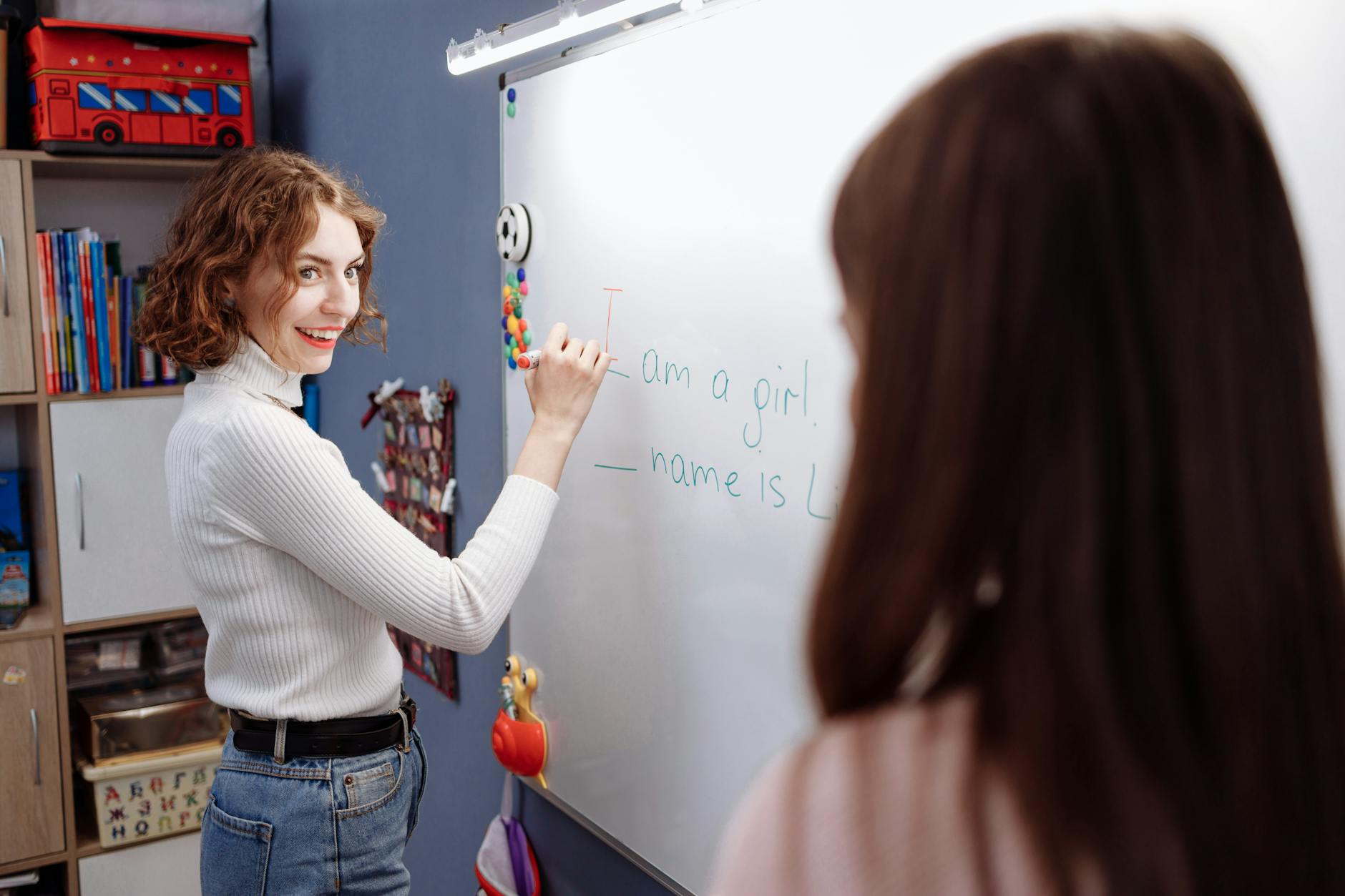
Communication Skills That Strengthen Teacher-Student Relationships
Strong communication isn't about being charismatic. It's about being predictable, clear, and present. Research on teacher skills shows that positive teacher-student relationships carry an effect size of roughly 0.48 on achievement metrics—roughly equivalent to a full year's growth for struggling learners. These education skills separate technicians from teachers.
I think of relationship building like banking. You need five deposits—positive interactions, genuine greetings, noticing their new shoes—before you make a withdrawal (a correction or consequence). Drop below that 5:1 ratio and you overdraw the account.
Verbal | Non-verbal | Written |
|---|---|---|
Tone: Warm and steady, not louder for emphasis | Proximity: 3–5 feet for instruction, closer only for private correction | Specificity: Name the exact error and the next step |
Active Listening and Empathetic Response
Most of us listen to reply, not to understand. To build classroom climate that actually supports learning, you need therapeutic communication techniques in your toolkit:
Paraphrasing: "What I hear you saying is..."
Validating: "It makes sense you're frustrated."
Clarifying: "Help me understand what happened right before..."
Implement a two-minute uninterrupted listening protocol. When a kid comes to you with a concern—social drama, missing work, home stress—set a timer. For 120 seconds, you cannot offer solutions, advice, or "what I would do." You can only nod, reflect, and ask clarifying questions. Most students solve their own problem by minute three if you don't interrupt.
When a student discloses trauma, you are not their therapist. Your job is to be a safe bridge, not the destination. Use this exact script: "Thank you for trusting me. I'm going to connect you with someone who can help." Then follow your mandatory reporting protocol immediately. Don't promise secrecy. Don't ask for details you don't need.
Giving Constructive Feedback
Throw away the sandwich method—praise, criticism, praise. Kids taste the bread and ignore the meat. Instead, use the GAR model: Goal, Action, Result. "The goal was to support your thesis with evidence. The action you took was quoting the text without explaining it. The result is the reader doesn't know why the quote matters." Timely, specific feedback represents good teaching skills in action.
For complex processes—solving equations, revising essays—video feedback beats red ink. Use Loom or similar educational technology with these parameters:
Maximum length: 5 minutes
Timestamp comments at exact error points
Demonstrate the correct process on screen
Timing matters for memory. Return formative assessment feedback within 24 hours while the thinking is still fresh. For summative work, take up to a week; the delay signals finality and prevents grade-grubbing. This rhythm respects your sanity while optimizing retention.
Parent-Teacher Communication
Conferences shouldn't be surprise parties. Structure them using the 5-5-5 model: five minutes of celebration with specific data ("Maya has mastered three-digit regrouping"), five minutes of concern with work samples visible, and five minutes of action plan where the parent's role is defined clearly. Send the agenda beforehand. No ambushes.
Pick your tools based on grade level and purpose:
ClassDojo: Elementary-focused, behavior tracking, point system
Remind: Secondary, quick announcements, 140-character limit
Scheduled email: Documentation, formal tone, paper trail
Difficult conversations require scripting. Use this frame: "When you [specific behavior], I feel [concern], because [impact on learning]. What supports do you need?" For example: "When Jordan arrives 20 minutes late, I worry he's missing the vocabulary foundation, because the reading gets dense after 8:15. What supports do you need to get him here on time?" It keeps the focus on student engagement and solutions, not blame. Explore more parent communication strategies for modern teachers to match your community.
Honing these approaches is professional development you do in real time, not a workshop you attend once. Mastering effective communication in education means practicing these scripts until they sound natural while maintaining your instructional design priorities.

What Technical and Digital Skills Support Modern Teaching?
Modern teaching requires proficiency in Learning Management Systems like Google Classroom or Canvas for workflow automation, data analysis using spreadsheet pivot tables to identify students needing intervention, and multimedia creation following WCAG accessibility standards. These technical skills enable data-driven differentiation and timely feedback loops essential for student growth.
Before adopting any new tool, run it through this decision matrix. Can you set it up in under 15 minutes? Can students learn it in two class sessions or less? Does it move past Substitution on the SAMR model—actually transforming the task rather than digitizing a worksheet? I have abandoned tools that failed these tests after watching 4th graders stare blankly at interfaces that required seven clicks to submit one sentence. The best educational technology removes barriers to learning or automates feedback loops. It does not exist to impress administrators during walkthroughs. When tech adds steps instead of removing them, it dies in your classroom.
Digital equity must drive every choice. Test your assignments on a three-year-old Android phone using cellular data. If the page crashes, loads images larger than 2MB, or requires downloads that eat data plans, you have excluded families without broadband. Every tool must function on the bus ride home or at the kitchen table with spotty Wi-Fi. I keep an old phone on my desk specifically for this check.
Learning Management System Proficiency
Your learning management system is the engine room of your classroom. I have used all three major platforms extensively, and they serve different masters.
Google Classroom works best for districts already using Google Workspace. It is free, handles about 60 students per class comfortably, and offers a basic gradebook that exports directly to Sheets.
Canvas brings serious firepower with LTI integrations and mastery paths that branch assignments based on scores, but districts pay $10-25 per student annually.
Schoology feels like Facebook—parents love the access codes and messaging, though the interface confuses younger elementary students.
Set automation rules that save your sanity. When a student scores above 90%, the LMS automatically unlocks an extension activity. Below 60% triggers a remediation module instead of you manually re-teaching. Connect your gradebook to PowerSchool or Infinite Campus using the SIS integration protocols so scores pass back without double entry. I learned this the hard way after retyping 120 grades during my first semester.
Data Analysis for Student Growth
Data analysis represents one of the most practical teacher skills you can develop. Spreadsheet proficiency separates guessing from knowing. Build pivot tables to analyze which test questions half your class missed—that is your reteach target for tomorrow. Use conditional formatting to color-code scores below 60% in red; the visual pop saves precious minutes during grade-level data meetings. Vlookup functions cross-reference demographic data with achievement gaps you might otherwise miss.
NWEA MAP scores tell stories if you read them right. Flag students below the 20th percentile for Tier 2 intervention immediately; do not wait for the next benchmark. Students above the 80th percentile need curriculum compacting, not more worksheets on mastered standards. Here is the rule that changed my practice: formative assessment data dies after three days. If you have not adjusted instruction by then, the moment is gone and the data becomes historical trivia. Check your collecting and managing educational data systems to keep this cycle tight and instructionally actionable.
Multimedia Content Creation
Stop reading slides aloud to improve your teaching skills. Use Canva for Education—it is free for verified teachers—to build infographics that chunk information into five to seven pieces maximum. Brains tap out after that point; cognitive overload kills student engagement.
Accessibility is not an add-on; it is the foundation of good instructional design. Follow WCAG 2.1 AA compliance standards. Write alt text under 125 characters so screen readers do not drone on and lose the listener. Cap videos at seven minutes—the attention cliff drops hard after that window—and provide closed captions for everything. Students watch on mute in the car or the cafeteria.
For flipped lessons, I have tested both Screencast-O-Matic and Loom extensively. Screencast-O-Matic costs nothing but limits you to 15 minutes with basic trimming tools. Loom runs $10 monthly for unlimited recording and advanced editing. If you are building a library of micro-lessons for absent students, the paid plan pays for itself in time saved. Host this content in your learning management systems guide hub so students actually find it when they need it.
Master one of these three areas this quarter. Technical proficiency is not about collecting apps; it is about building systems that give you time to actually teach.

How Can Teachers Continuously Develop These Essential Skills?
Teachers develop essential skills through structured professional learning networks using platforms like Twitter or Voxer, earning targeted micro-credentials in high-need areas through systems like BloomBoard, and conducting video self-analysis using instructional frameworks. Deliberate practice with specific feedback loops accelerates expertise development more than experience alone. Anders Ericsson's research shows that 10,000 hours of repetition doesn't guarantee expertise. What matters is working just beyond your current skill level with immediate, specific feedback on what worked and what didn't.
Think of professional development as a decision flowchart. First, identify your skill gap. Need quick strategies for tomorrow? Choose a micro-credential. Want long-term growth? Join a PLN. Need intensive intervention? Pick a workshop. Match the format to your constraints. Budget tight? Look for free options. Time limited? Choose 15-minute daily habits over six-hour commitments. The goal is targeted growth, not just accumulation of seat time.
Keep an essential teaching skills pdf from ASCD or Edutopia bookmarked on your phone. These checklists help you audit your practice during lunch breaks. Mark one area to improve this month. Then pick your path.
Building Professional Learning Networks
Professional learning networks replace the isolated lunchroom with 24/7 access to colleagues solving the same problems. Twitter chats run on predictable schedules:
#edchat meets Tuesdays at 7pm ET for general pedagogy discussions
#mathchat tackles grade-specific instructional strategies
#ditchbook focuses on creative uses of educational technology
Show up ten minutes early, introduce yourself, and lurk until you feel comfortable jumping in. The moderators usually post three questions during the hour. Answer one, retweet two others. You are not required to stay for the full sixty minutes.
Voxer works better if you hate typing. This walkie-talkie app lets you listen to voice messages from educators during your commute. Some professional learning communities run entirely on Voxer, with teachers sharing formative assessment wins or classroom climate strategies via voice notes. You can listen at 2x speed and respond when parked.
Curate your feed carefully. Follow @Larryferlazzo for ELL resources, @WeAreTeachers for practical strategies you can use Monday morning, and @edutopia for research summaries that justify your methods to administrators. Spend 15 minutes daily: five minutes reading threads, five minutes replying or retweeting, five minutes bookmarking resources into a "Try This Week" folder. Consistency beats marathon sessions. Skip a day, but never two.
Micro-credentialing and Targeted Workshops
Micro-credentials let you earn digital badges for specific competencies instead of sitting through generic PD. BloomBoard offers free, stackable credentials in areas like student engagement. Digital Promise provides research-backed options requiring 10-40 hours of demonstrated practice. Some districts run their own badging systems tied to salary steps. The work is submitted online and assessed by master teachers, not machines.
The investment is manageable. Most badges require 5-15 hours and cost between $0 and $150. Compare that to traditional six-hour sit-and-get workshops with no follow-up. You actually build evidence of your professional growth in teaching strategy rather than just receiving a certificate of attendance. The portfolio you create serves as interview material if you transfer schools.
Target high-need areas first:
Trauma-informed practices help you respond to behavioral outbursts without escalation
Blended learning credentials improve your use of educational technology
Data-driven instruction badges sharpen your formative assessment analysis
Pick one. Complete it. Display the badge in your email signature so parents and administrators see your commitment to continuous improvement.
Self-Reflection and Video Analysis
Video doesn't lie. A SWIVL robot ($150) rotates to follow your voice, capturing 360-degree views of student engagement. A $20 phone tripod works too. Record a 20-minute lesson segment. Use the IRIS Center STAR rubric to review your footage:
Setting: How you organized physical and digital space
Teaching: Your specific instructional moves and questioning techniques
Assessment: How you checked for understanding in the moment
Reflection: Your in-the-moment adjustments and decisions
Implement the 3-2-1 protocol immediately after viewing. Write down three effective moves you made, two adjustments for next time, and one question about patterns in student engagement. Did certain students dominate while others disappeared? This data drives your next lesson plan more honestly than memory alone.
Check your bias. Watch the first twenty minutes of your video with a tally chart. Track who gets called on by gender and race. Most teachers think they distribute questions equally until they see the data. If you spot inequity, set a timer on your phone to ensure you wait three seconds after asking a question, then intentionally call on students who rarely volunteer. These teacher skills around self-monitoring separate good instructors from great ones.

Start Here: Teacher Skills
You don't need all twelve mastered by Monday. Pick one. Maybe it's the formative assessment check you skipped today, or the student engagement hook you kept meaning to try. The teachers who last aren't the ones with perfect instructional design on day one. They're the ones who tweak one thing tomorrow, then one thing the week after. Small shifts beat grand overhauls every time.
Before you leave today, write down one moment from this week when the classroom climate felt off, or when a lesson flopped. Not a general worry—a specific minute that stuck with you. Tomorrow, change one small input. Move two desks. Add a 30-second check for understanding. Send one email to a parent you haven't heard from. Skill-building isn't a course you finish. It's the choice to fix one friction point, then show up again ready to adjust.

What Classroom Management Skills Define Effective Teachers?
Effective classroom management relies on proactive systems rather than reactive discipline. Key skills include establishing clear routines within the first 20 days, using de-escalation techniques like the LEAP method, and maintaining a 3:1 ratio of positive to corrective interactions. Research indicates strong management practices significantly impact student achievement.
John Hattie's Visible Learning research puts classroom management at an effect size of 0.52—above the hinge point of 0.40 where real learning gains happen. That number represents months of additional growth when you nail these teacher skills. But here's the catch: Hattie's data shows proactive systems drive those results. Reactive discipline barely moves the needle. The best educators build structures that prevent chaos rather than manage it.
Think of your classroom like a garden. Proactive work is building the trellis before the vines grow wild—teaching procedures, practicing transitions, establishing relationships. Reactive work is pulling weeds after they've choked the tomatoes—detentions, escalation cycles, damage control. Both matter, but only one creates the conditions for learning.
Behavior Management and De-escalation Techniques
When a student flips a desk or shuts down completely, you don't have time to consult a flowchart. You need muscle memory. The LEAP method gives you that. Listen for thirty seconds minimum—actually count in your head—without interrupting. Empathize by naming the emotion: "You're frustrated because the group isn't listening to your idea." Ask what they need: "What would help right now?" Then problem-solve with two choices: "You can take five minutes in the calm corner or sit by the window with your headphones. Which works?"
For the kid who seems determined to test every boundary, try the 2x10 strategy. Spend two minutes daily for ten consecutive days discussing anything except school—video games, sneakers, their dog's weird habits. By day six, you'll notice the resistance soften. You're building relationship capital before you need to make a withdrawal.
Non-verbal cues keep instruction flowing without stopping to nag. Use these three:
Raise your hand for attention and wait. Do not talk until 100% compliance. It feels awkward for eight seconds, but it trains them to monitor each other.
A light touch on the shoulder redirects without humiliation.
The peace sign silently signals volume—two fingers for whisper level, three for table talk.
These behavior management strategies for success work because they preserve dignity while maintaining order.
Establishing Routines and Procedures
Harry and Rosemary Wong's First 20 Days protocol isn't about being rigid—it's about being predictable. In high school, my bell-ringer entry takes exactly four minutes: materials check (30 seconds), bell work (2 minutes), objective review (90 seconds). Students know that sequence in their bones by October. In kindergarten, line-up means carpet spots, a finger signal for voice level, and a silent count to three before moving. The content differs, but the clarity doesn't.
Do the math. Fifteen minutes of daily procedural waste—fumbling for papers, confusion about transitions—equals forty-five hours of lost instruction annually. That's more than a week of school. Classroom rules and procedures that transform behavior start with this equation: time spent teaching routines early pays compound interest later.
When routines collapse—and they will during week three when the novelty wears off—don't push through. Stop. Restart the procedure. Practice during lunch or before dismissal. Never introduce new content while students are still confused about how to get from desks to groups. It feels backwards to spend ten minutes rehearsing a pencil-sharpening protocol, but chaos costs more time than practice ever does.
Cultivating a Positive Classroom Culture
Restorative circles aren't touchy-feely time-wasters when done right. Use affective statements: "I feel frustrated when the discussion gets interrupted because I want to hear everyone's ideas." Post community agreements at actual student eye level—not adult eye level—so they're looking up to see them. Review them weekly, not just in September.
Track your 3:1 ratio of positive to corrective interactions. Carry a small tally card. During a twenty-minute observation window, mark every correction and every specific praise. If you're running negative, flip it immediately. "I like how Marcus is tracking the speaker" works better than "Stop talking, Marcus."
Build mistake-friendly norms with specific language frames. When a student errors publicly, say: "I love this mistake because it shows us exactly where the confusion lives." Then: "Turn and tell your partner what you learned from this error." This shifts classroom climate from performance to learning.
But here's where essential teaching skills become dangerous. When management morphs into control—when you're chasing 100% compliance through fear, punishment, or micromanagement—you've crossed into counterproductive territory. Students complying out of anxiety aren't learning; they're surviving. If you find yourself repeating "I said eyes on me" twelve times before continuing, or if your highest achievers are terrified of errors, you've built a compliant classroom, not a learning community. The goal isn't silent rows of children. It's engaged learners who trust the structure enough to take intellectual risks.
Which Instructional Strategies Should Every Teacher Master?
You need four moves in your teaching repertoire: direct instruction with constant checks for understanding, grouping kids by readiness rather than ability labels, asking questions that make them think for 3-5 seconds before they speak, and planning backward from what you want to see at the end. Rosenshine's Principles of Instruction give you the skeleton for this. With an effect size of 0.59, these ten principles organize how you manage cognitive load theory: you control intrinsic load by breaking complexity into steps, cut extraneous load by clearing distractions, and build germane load by connecting new content to existing schema. These core teacher skills work because they align with how brains actually process information.
Use this decision tree after your pre-assessment:
Below 50%? Reteach. Strip the content to its essentials and model again.
50-80%? Scaffold. Provide graphic organizers, partial worked examples, or guided notes.
Above 80%? Compact. Let them skip the practice and move to application or extension projects.
Differentiation for Diverse Learners
Stop calling it "the low group." I learned this the hard way when my 7th graders figured out which table was which by October. Real differentiation means tiering versus compacting based on daily data, not destiny. In an equations unit, Tier 1 works with integer solutions only, Tier 2 tackles fractional coefficients, and Tier 3 wrestles with literal equations—all targeting the same standard, just different complexity levels.
Here's the workflow that actually works. Build a Google Form with branching logic. Question 1: solve 2x + 4 = 10. Wrong answer? Branch to an integer reteaching video. Right answer? Send them to fractional coefficients. The form sorts kids automatically based on specific error patterns—like sign errors versus distribution mistakes. You scan results during lunch and form afternoon groups accordingly.
The common failure mode is static grouping. If your reading groups never change because "these are my struggling readers," you've built tracks, not differentiation. Groups should shift weekly based on formative assessment. When you master differentiated instruction for diverse learners, you stay fluid. Kids notice when they move up a tier; it drives student engagement better than any sticker chart.
Questioning Techniques and Wait Time
I used to fire questions like a machine gun and wonder why the same three kids answered every time. Mary Budd Rowe's research on wait time changed my classroom: wait 3-5 seconds after you ask a question, then wait 2-3 seconds after a student responds before you comment. That pause feels like eternity. Count it silently. The depth of answers doubles when you stop filling the silence.
Use Accountable Talk stems to shift the cognitive load: "Can you say more about that?" "Who can rephrase what James said?" "Do you agree or disagree and why?" Post these on chart paper. When a student gives a thin answer, point to a stem instead of fixing it yourself. Make them responsible for the conversation architecture.
Track participation equity with a simple clipboard. Write student names in a grid. Mark who speaks during discussion. Aim for 80% participation within 20 minutes. Watch for patterns—do boys dominate math discussions? Do you only call on kids in the front row? Hard data beats gut feeling when you're building classroom climate that includes every voice.
Backward Design and Curriculum Mapping
Start with the test. Seriously. Wiggins and McTighe's Understanding by Design saved me from "activity addiction"—that rush to plan the cool craft before knowing what learning it proves. Stage 1: Desired Results. Stage 2: Assessment Evidence. Stage 3: Learning Plan. Never reverse this order, no matter how tempting the Pinterest project looks.
Take a 3rd-grade NGSS unit on animal habitats. Before you buy the shoeboxes, design the performance assessment: "Construct a habitat model demonstrating 5 required elements that support specific survival needs." Now plan backward. What lessons lead to that evidence? What vocabulary do they need? What misconceptions about predators will block their thinking?
If you start with "We're making habitat dioramas!" without defining success criteria, you'll get pretty shoeboxes that prove nothing about science understanding. These pedagogical skills for teachers keep you honest. When you use curriculum mapping for educators, you align every activity to specific evidence. That's instructional design that works.
Communication Skills That Strengthen Teacher-Student Relationships
Strong communication isn't about being charismatic. It's about being predictable, clear, and present. Research on teacher skills shows that positive teacher-student relationships carry an effect size of roughly 0.48 on achievement metrics—roughly equivalent to a full year's growth for struggling learners. These education skills separate technicians from teachers.
I think of relationship building like banking. You need five deposits—positive interactions, genuine greetings, noticing their new shoes—before you make a withdrawal (a correction or consequence). Drop below that 5:1 ratio and you overdraw the account.
Verbal | Non-verbal | Written |
|---|---|---|
Tone: Warm and steady, not louder for emphasis | Proximity: 3–5 feet for instruction, closer only for private correction | Specificity: Name the exact error and the next step |
Active Listening and Empathetic Response
Most of us listen to reply, not to understand. To build classroom climate that actually supports learning, you need therapeutic communication techniques in your toolkit:
Paraphrasing: "What I hear you saying is..."
Validating: "It makes sense you're frustrated."
Clarifying: "Help me understand what happened right before..."
Implement a two-minute uninterrupted listening protocol. When a kid comes to you with a concern—social drama, missing work, home stress—set a timer. For 120 seconds, you cannot offer solutions, advice, or "what I would do." You can only nod, reflect, and ask clarifying questions. Most students solve their own problem by minute three if you don't interrupt.
When a student discloses trauma, you are not their therapist. Your job is to be a safe bridge, not the destination. Use this exact script: "Thank you for trusting me. I'm going to connect you with someone who can help." Then follow your mandatory reporting protocol immediately. Don't promise secrecy. Don't ask for details you don't need.
Giving Constructive Feedback
Throw away the sandwich method—praise, criticism, praise. Kids taste the bread and ignore the meat. Instead, use the GAR model: Goal, Action, Result. "The goal was to support your thesis with evidence. The action you took was quoting the text without explaining it. The result is the reader doesn't know why the quote matters." Timely, specific feedback represents good teaching skills in action.
For complex processes—solving equations, revising essays—video feedback beats red ink. Use Loom or similar educational technology with these parameters:
Maximum length: 5 minutes
Timestamp comments at exact error points
Demonstrate the correct process on screen
Timing matters for memory. Return formative assessment feedback within 24 hours while the thinking is still fresh. For summative work, take up to a week; the delay signals finality and prevents grade-grubbing. This rhythm respects your sanity while optimizing retention.
Parent-Teacher Communication
Conferences shouldn't be surprise parties. Structure them using the 5-5-5 model: five minutes of celebration with specific data ("Maya has mastered three-digit regrouping"), five minutes of concern with work samples visible, and five minutes of action plan where the parent's role is defined clearly. Send the agenda beforehand. No ambushes.
Pick your tools based on grade level and purpose:
ClassDojo: Elementary-focused, behavior tracking, point system
Remind: Secondary, quick announcements, 140-character limit
Scheduled email: Documentation, formal tone, paper trail
Difficult conversations require scripting. Use this frame: "When you [specific behavior], I feel [concern], because [impact on learning]. What supports do you need?" For example: "When Jordan arrives 20 minutes late, I worry he's missing the vocabulary foundation, because the reading gets dense after 8:15. What supports do you need to get him here on time?" It keeps the focus on student engagement and solutions, not blame. Explore more parent communication strategies for modern teachers to match your community.
Honing these approaches is professional development you do in real time, not a workshop you attend once. Mastering effective communication in education means practicing these scripts until they sound natural while maintaining your instructional design priorities.
What Technical and Digital Skills Support Modern Teaching?
Modern teaching requires proficiency in Learning Management Systems like Google Classroom or Canvas for workflow automation, data analysis using spreadsheet pivot tables to identify students needing intervention, and multimedia creation following WCAG accessibility standards. These technical skills enable data-driven differentiation and timely feedback loops essential for student growth.
Before adopting any new tool, run it through this decision matrix. Can you set it up in under 15 minutes? Can students learn it in two class sessions or less? Does it move past Substitution on the SAMR model—actually transforming the task rather than digitizing a worksheet? I have abandoned tools that failed these tests after watching 4th graders stare blankly at interfaces that required seven clicks to submit one sentence. The best educational technology removes barriers to learning or automates feedback loops. It does not exist to impress administrators during walkthroughs. When tech adds steps instead of removing them, it dies in your classroom.
Digital equity must drive every choice. Test your assignments on a three-year-old Android phone using cellular data. If the page crashes, loads images larger than 2MB, or requires downloads that eat data plans, you have excluded families without broadband. Every tool must function on the bus ride home or at the kitchen table with spotty Wi-Fi. I keep an old phone on my desk specifically for this check.
Learning Management System Proficiency
Your learning management system is the engine room of your classroom. I have used all three major platforms extensively, and they serve different masters.
Google Classroom works best for districts already using Google Workspace. It is free, handles about 60 students per class comfortably, and offers a basic gradebook that exports directly to Sheets.
Canvas brings serious firepower with LTI integrations and mastery paths that branch assignments based on scores, but districts pay $10-25 per student annually.
Schoology feels like Facebook—parents love the access codes and messaging, though the interface confuses younger elementary students.
Set automation rules that save your sanity. When a student scores above 90%, the LMS automatically unlocks an extension activity. Below 60% triggers a remediation module instead of you manually re-teaching. Connect your gradebook to PowerSchool or Infinite Campus using the SIS integration protocols so scores pass back without double entry. I learned this the hard way after retyping 120 grades during my first semester.
Data Analysis for Student Growth
Data analysis represents one of the most practical teacher skills you can develop. Spreadsheet proficiency separates guessing from knowing. Build pivot tables to analyze which test questions half your class missed—that is your reteach target for tomorrow. Use conditional formatting to color-code scores below 60% in red; the visual pop saves precious minutes during grade-level data meetings. Vlookup functions cross-reference demographic data with achievement gaps you might otherwise miss.
NWEA MAP scores tell stories if you read them right. Flag students below the 20th percentile for Tier 2 intervention immediately; do not wait for the next benchmark. Students above the 80th percentile need curriculum compacting, not more worksheets on mastered standards. Here is the rule that changed my practice: formative assessment data dies after three days. If you have not adjusted instruction by then, the moment is gone and the data becomes historical trivia. Check your collecting and managing educational data systems to keep this cycle tight and instructionally actionable.
Multimedia Content Creation
Stop reading slides aloud to improve your teaching skills. Use Canva for Education—it is free for verified teachers—to build infographics that chunk information into five to seven pieces maximum. Brains tap out after that point; cognitive overload kills student engagement.
Accessibility is not an add-on; it is the foundation of good instructional design. Follow WCAG 2.1 AA compliance standards. Write alt text under 125 characters so screen readers do not drone on and lose the listener. Cap videos at seven minutes—the attention cliff drops hard after that window—and provide closed captions for everything. Students watch on mute in the car or the cafeteria.
For flipped lessons, I have tested both Screencast-O-Matic and Loom extensively. Screencast-O-Matic costs nothing but limits you to 15 minutes with basic trimming tools. Loom runs $10 monthly for unlimited recording and advanced editing. If you are building a library of micro-lessons for absent students, the paid plan pays for itself in time saved. Host this content in your learning management systems guide hub so students actually find it when they need it.
Master one of these three areas this quarter. Technical proficiency is not about collecting apps; it is about building systems that give you time to actually teach.
How Can Teachers Continuously Develop These Essential Skills?
Teachers develop essential skills through structured professional learning networks using platforms like Twitter or Voxer, earning targeted micro-credentials in high-need areas through systems like BloomBoard, and conducting video self-analysis using instructional frameworks. Deliberate practice with specific feedback loops accelerates expertise development more than experience alone. Anders Ericsson's research shows that 10,000 hours of repetition doesn't guarantee expertise. What matters is working just beyond your current skill level with immediate, specific feedback on what worked and what didn't.
Think of professional development as a decision flowchart. First, identify your skill gap. Need quick strategies for tomorrow? Choose a micro-credential. Want long-term growth? Join a PLN. Need intensive intervention? Pick a workshop. Match the format to your constraints. Budget tight? Look for free options. Time limited? Choose 15-minute daily habits over six-hour commitments. The goal is targeted growth, not just accumulation of seat time.
Keep an essential teaching skills pdf from ASCD or Edutopia bookmarked on your phone. These checklists help you audit your practice during lunch breaks. Mark one area to improve this month. Then pick your path.
Building Professional Learning Networks
Professional learning networks replace the isolated lunchroom with 24/7 access to colleagues solving the same problems. Twitter chats run on predictable schedules:
#edchat meets Tuesdays at 7pm ET for general pedagogy discussions
#mathchat tackles grade-specific instructional strategies
#ditchbook focuses on creative uses of educational technology
Show up ten minutes early, introduce yourself, and lurk until you feel comfortable jumping in. The moderators usually post three questions during the hour. Answer one, retweet two others. You are not required to stay for the full sixty minutes.
Voxer works better if you hate typing. This walkie-talkie app lets you listen to voice messages from educators during your commute. Some professional learning communities run entirely on Voxer, with teachers sharing formative assessment wins or classroom climate strategies via voice notes. You can listen at 2x speed and respond when parked.
Curate your feed carefully. Follow @Larryferlazzo for ELL resources, @WeAreTeachers for practical strategies you can use Monday morning, and @edutopia for research summaries that justify your methods to administrators. Spend 15 minutes daily: five minutes reading threads, five minutes replying or retweeting, five minutes bookmarking resources into a "Try This Week" folder. Consistency beats marathon sessions. Skip a day, but never two.
Micro-credentialing and Targeted Workshops
Micro-credentials let you earn digital badges for specific competencies instead of sitting through generic PD. BloomBoard offers free, stackable credentials in areas like student engagement. Digital Promise provides research-backed options requiring 10-40 hours of demonstrated practice. Some districts run their own badging systems tied to salary steps. The work is submitted online and assessed by master teachers, not machines.
The investment is manageable. Most badges require 5-15 hours and cost between $0 and $150. Compare that to traditional six-hour sit-and-get workshops with no follow-up. You actually build evidence of your professional growth in teaching strategy rather than just receiving a certificate of attendance. The portfolio you create serves as interview material if you transfer schools.
Target high-need areas first:
Trauma-informed practices help you respond to behavioral outbursts without escalation
Blended learning credentials improve your use of educational technology
Data-driven instruction badges sharpen your formative assessment analysis
Pick one. Complete it. Display the badge in your email signature so parents and administrators see your commitment to continuous improvement.
Self-Reflection and Video Analysis
Video doesn't lie. A SWIVL robot ($150) rotates to follow your voice, capturing 360-degree views of student engagement. A $20 phone tripod works too. Record a 20-minute lesson segment. Use the IRIS Center STAR rubric to review your footage:
Setting: How you organized physical and digital space
Teaching: Your specific instructional moves and questioning techniques
Assessment: How you checked for understanding in the moment
Reflection: Your in-the-moment adjustments and decisions
Implement the 3-2-1 protocol immediately after viewing. Write down three effective moves you made, two adjustments for next time, and one question about patterns in student engagement. Did certain students dominate while others disappeared? This data drives your next lesson plan more honestly than memory alone.
Check your bias. Watch the first twenty minutes of your video with a tally chart. Track who gets called on by gender and race. Most teachers think they distribute questions equally until they see the data. If you spot inequity, set a timer on your phone to ensure you wait three seconds after asking a question, then intentionally call on students who rarely volunteer. These teacher skills around self-monitoring separate good instructors from great ones.
Start Here: Teacher Skills
You don't need all twelve mastered by Monday. Pick one. Maybe it's the formative assessment check you skipped today, or the student engagement hook you kept meaning to try. The teachers who last aren't the ones with perfect instructional design on day one. They're the ones who tweak one thing tomorrow, then one thing the week after. Small shifts beat grand overhauls every time.
Before you leave today, write down one moment from this week when the classroom climate felt off, or when a lesson flopped. Not a general worry—a specific minute that stuck with you. Tomorrow, change one small input. Move two desks. Add a 30-second check for understanding. Send one email to a parent you haven't heard from. Skill-building isn't a course you finish. It's the choice to fix one friction point, then show up again ready to adjust.
Still grading everything by hand?
EMStudio is a free teaching management app — manage your classes, students, lessons, and more!
Learn More
Still grading everything by hand?
EMStudio is a free teaching management app — manage your classes, students, lessons, and more!
Learn More





Notion4Teachers
Notion templates to simplify administrative tasks and enhance your teaching experience.



2026 Notion4Teachers. All Rights Reserved.
Notion4Teachers
Notion templates to simplify administrative tasks and enhance your teaching experience.
2026 Notion4Teachers. All Rights Reserved.
Notion4Teachers
Notion templates to simplify administrative tasks and enhance your teaching experience.
2026 Notion4Teachers. All Rights Reserved.