How To Help Students Break Down Large Assignments Into Smaller Steps
How To Help Students Break Down Large Assignments Into Smaller Steps

Article by
Milo
ESL Content Coordinator & Educator
ESL Content Coordinator & Educator
All Posts
Students are still confused after staring for 20 minutes at a five-page essay prompt. This isn't because they're lazy. Not because they are laziness. Sometimes it's just because the job is too big.
When students have large projects to complete, they must be able do multi-types of thinking. They need to comprehend the instructions, choose a subject, research that topic, organize it, draft it, revise it, then submit. Writers understand that this is an entirely different task. Students think this is one big, overwhelming task called "Do The Paper". This is about as useful as telling someone else how to build their home.
It's a valuable tool that parents, tutors and teachers can teach to their students. It increases the students' time management and reduces their stress.
Still grading everything by hand?
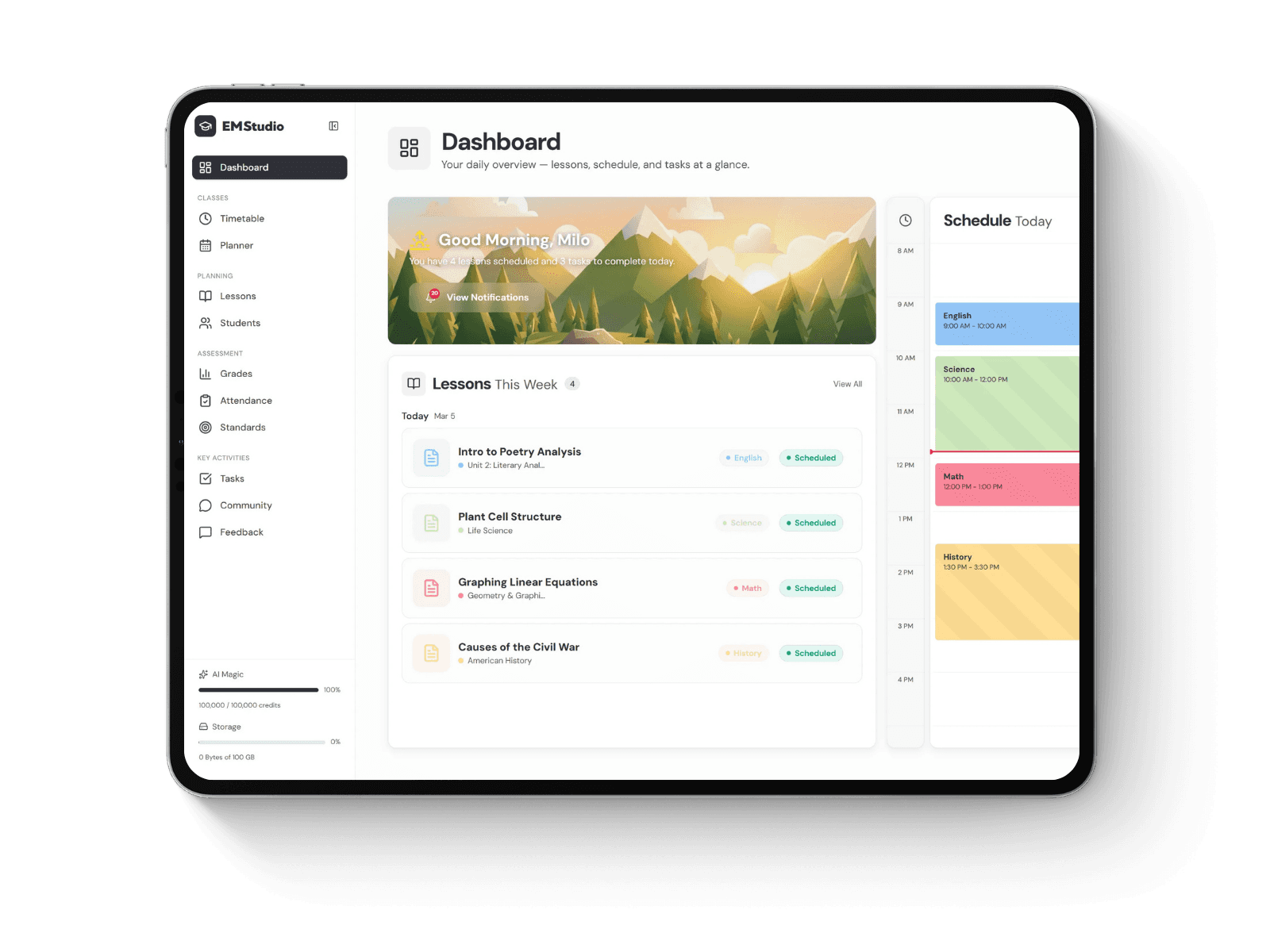
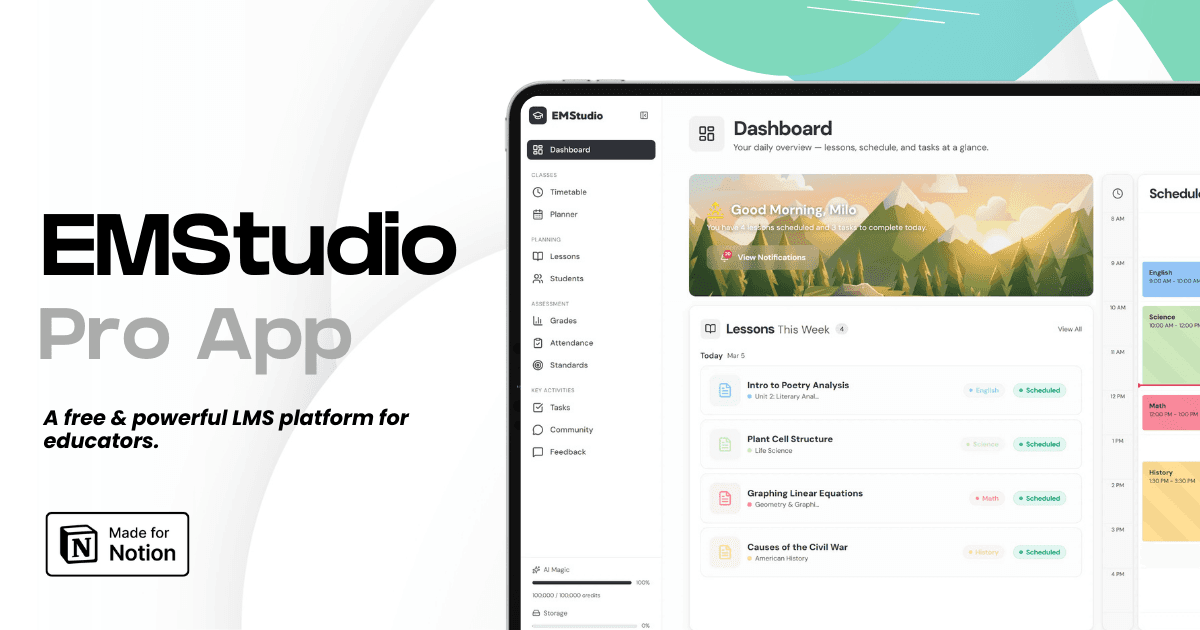
EMStudio is a free teaching management app — manage your classes, students, lessons, and more!
Learn More
Still grading everything by hand?
EMStudio is a free teaching management app — manage your classes, students, lessons, and more!
Learn More
Table of Contents
Start By Making Your Assignment Visible
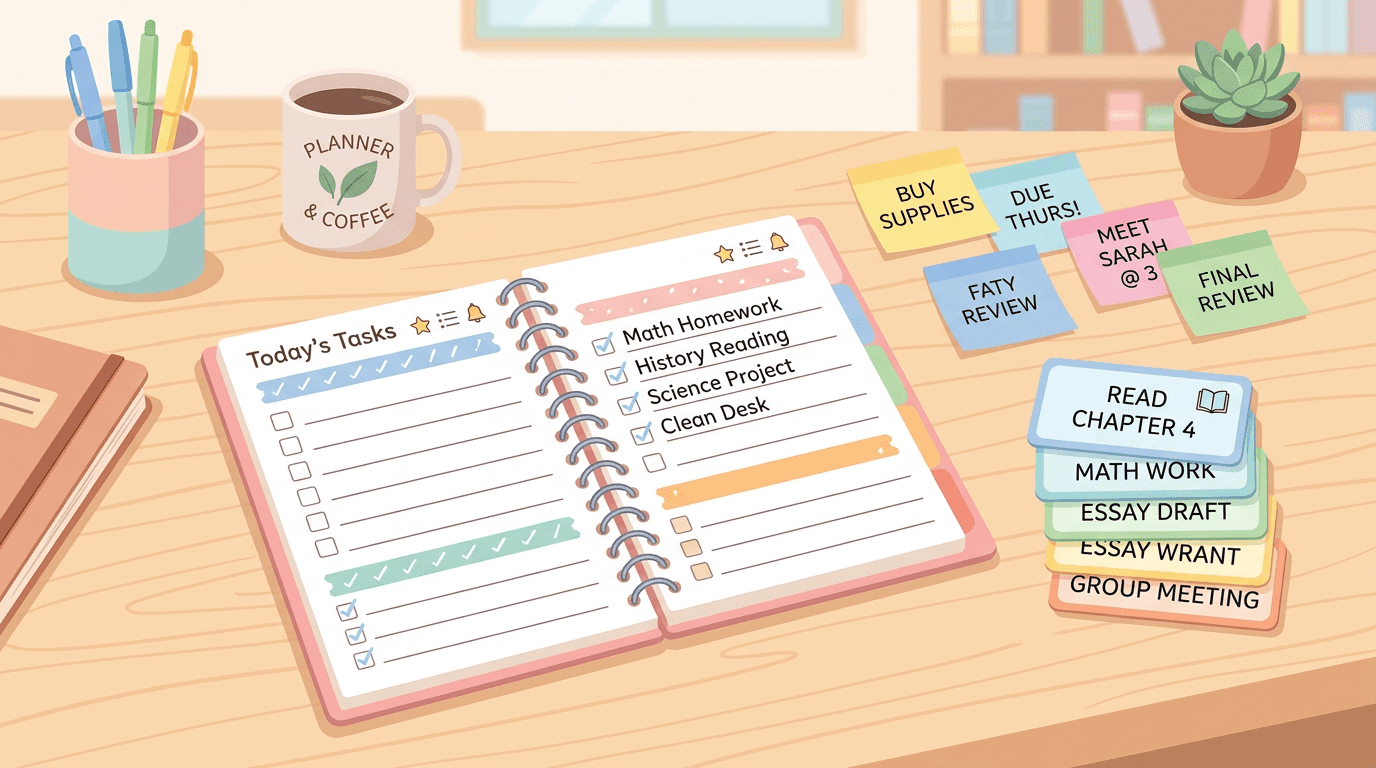
Many students are unable to complete their work because it is only an abstract deadline that they have in mind. It is important to make your project visible. You can do this by using a calendar, planning sheet or sticky notes.
Ask them to read through the assignment instructions while holding a pen. Circularize the product that must be submitted. Underline the action: compare and analyze, solve a problem, cite sources, reflect on, explain. You can put the following in a box: word counts, sources, formats, due dates, presentation length.
This is a basic idea. It isn't. Students often miss the hidden work within a prompt. Writing a research essay about climate change can mean many things: choosing a topic, locating credible sources and incorporating evidence.
Students can also benefit from resources that make academic tasks easier to understand and manage. These include university writing centres, class examples, and student-focused services like Speedy Paper, which can help students with different academic tasks and provide useful support when they are struggling with their workload.
Once the task is visible, it can be treated as a hill instead of a mountain.
Teach Students How To Work Backwards Starting From The Deadline
The simplest way to prevent panic is to work backwards. Students will also understand that the deadline is Friday, not Thursday.
This is a useful conversation to have: If you are due on Friday for the final draft, when should you start the rough draft? If you need sources for the rough draft, when do you want to finish your research? When does a topic have to be approved if the research is dependent on it?
Here's an example of a practical sequence that can be used by students for a variety of large assignments.
Identify what the final product is. Is the product an essay or lab report?
List each part. Include sources, visuals (including citations), drafts (including outlines), reflections on the work, and submission formats.
You must choose the first real step. Read the prompt, and then write down three possible topics.
Estimate your time to complete each task. Students underestimate the amount of time they will spend on research, revisions, and formatting.
Create a task calendar. Use the weekends, school holidays, practice schedules and other commitments.
Add buffer time. A printer jams. A source disappears. A student gets sick. Building in extra space to accommodate life is a good idea.
Define what "done", in each case, means. When a student has notes and five useful sources, they can consider their research complete. This is different from when they open ten tabs on the browser.
The last point is much more important than it seems. Students must have a clear idea of where to stop. Without them, students either keep polishing or quit before they have actually completed the task.
Change Vague Tasks With Physical Actions
They avoid difficult assignments because they are overwhelmed by their to-do lists. It is not a job to complete a history project. Studies, research and writing are not tasks.
The best tasks start with a verb producing concrete results. Write your claim in one sentence. Create five titles. Please let the teacher know if there are any missing rubrics by emailing them.
By taking small steps, you can lower the costs of entry. Students who cannot "write an essay" may write a crude introduction or type only the title. Then paste it. It is important to begin. Action is usually the first step, followed by momentum.
Those with executive dysfunction will especially benefit. An overwhelming assignment can cause problems with planning, prioritizing and even working memory. The brain can handle less work at one time by breaking down the task into steps that are visible.
Use Checkpoints Instead Of One Final Deadline
A single due date is risky. The students are left with too much leeway to delay and receive too little feedback.
Teachers can add checkpoints to the assignment. For instance, they could say that the topic is due on Tuesday, the source list is due on Thursday and then Monday for an outline, and Wednesday for a rough draft. Tutors and parents can also set informal checkpoints. The goal of this is not to micromanage everything. It is important to detect problems early.
As an example, it is possible for a student to appear fine during the first couple of weeks but then find out the night prior to the deadline that their experiment was a failure. A checkpoint on the hypothesis, materials and data collection as well as board layout could have detected the problem earlier.
Good checkpoints will be small, easily reviewed, and specific. "Show progress" sounds too vague. "Show Me Your Thesis and Three Pieces of Evidence" is better.
Help Students Estimate The Time More Honestly
It is a common phrase among students to say that they will finish in an hour. Sometimes, they truly mean it. They can be protecting themselves to avoid the embarrassment of having to admit they don't understand.
Time estimation is an acquired skill and not a character trait. It is useful to ask students to make a prediction about how long they think a task will last, and compare it with the reality. No shame. Just the data.
When a student expects to spend twenty minutes annotating two articles, and instead it takes seventy. That is not a failure. It is information about the next step.
Purdue Online Writing Lab highlights writing as an ongoing process that includes invention and drafting. It also emphasizes revision and editing. The fact that this view emphasizes the process is helpful because it helps remind students that final versions are only one part of the writing process. The time prior to the draft is just as important.
Build In Choice But Not Too Many
The assignments can be made more meaningful. Students can become frozen by their choice.
Students can spend the whole week researching topics like codebreaking, propaganda or aircraft if they are given the option to pick any World War II-related topic. You may want to look at codebreaking or rationing. The student who has too much free time will end up having a big assignment before even starting the assignment.
Choose a limited number of topics. Pick a narrower subject than a wide one.
Before they can be innovative, students often need boundaries. Boundaries do not hinder independence. They are scaffolding.
Take Note Of The Emotional Side Of Big Assignments
This is not only an effective planning tool. This technique is also a good way to reduce stress.
Some students will not begin because the task threatens their self-confidence. The students who wait and do not start will be forced to admit that they "are bad at writing" or are "not science people".
The adults can help by normalizing the messy beginnings. It's normal for first drafts to be uneven. Research questions change. Outlines collapse. Presentations are rebuilt. It is not only the most experienced students who can avoid confusion but also those who know how to proceed when confusion does occur.
You don't even have to fix the problem tonight. Let's take the next step.
The Language Students Use To Ask For Help
Students may be stuck but not understand where they are. Teach them how to ask precise questions. This will help you get the help you need faster and in a less embarrassing way.
Examples of useful prompts include:
I have a general understanding of the topic but do not know what to focus on.
I found some sources, but it is difficult to tell which of them are reliable.
My main claim may be supported by evidence, but it is not clear to me what the evidence supports.
I've written a draft. But the paragraphs seem out of sequence.
I have a lot to say but am having trouble with the introduction.
These sentences make confusion a manageable problem. The sentences also allow teachers to provide targeted encouragement instead of encouraging students in general.
Keep The System Simple Enough To Use
A planning system which requires three apps, color-coded binders or a perfect routine for Sunday will not be able to survive a busy academic semester. The best planning system is one that the student actually uses.
For some students that's a planner on paper. Others use a phone calendar that includes alerts. Some students require sticky notes to physically move them from "to do", to "done"; younger students might need a list created by their teacher. Older students can gradually become responsible for their own breakdown.
This is not a goal of making every task easy. It is important that students are stretched with big academic work. It shouldn't leave students wondering where to begin.
When students can break down a big assignment into small, manageable pieces, they get more than a finalized essay or project. They can use the method again in college, in the workplace, or any situation that seems overwhelming.
Start small. Next, identify the action you'll take. Then, take that action.
Start By Making Your Assignment Visible
Many students are unable to complete their work because it is only an abstract deadline that they have in mind. It is important to make your project visible. You can do this by using a calendar, planning sheet or sticky notes.
Ask them to read through the assignment instructions while holding a pen. Circularize the product that must be submitted. Underline the action: compare and analyze, solve a problem, cite sources, reflect on, explain. You can put the following in a box: word counts, sources, formats, due dates, presentation length.
This is a basic idea. It isn't. Students often miss the hidden work within a prompt. Writing a research essay about climate change can mean many things: choosing a topic, locating credible sources and incorporating evidence.
Students can also benefit from resources that make academic tasks easier to understand and manage. These include university writing centres, class examples, and student-focused services like Speedy Paper, which can help students with different academic tasks and provide useful support when they are struggling with their workload.
Once the task is visible, it can be treated as a hill instead of a mountain.
Teach Students How To Work Backwards Starting From The Deadline
The simplest way to prevent panic is to work backwards. Students will also understand that the deadline is Friday, not Thursday.
This is a useful conversation to have: If you are due on Friday for the final draft, when should you start the rough draft? If you need sources for the rough draft, when do you want to finish your research? When does a topic have to be approved if the research is dependent on it?
Here's an example of a practical sequence that can be used by students for a variety of large assignments.
Identify what the final product is. Is the product an essay or lab report?
List each part. Include sources, visuals (including citations), drafts (including outlines), reflections on the work, and submission formats.
You must choose the first real step. Read the prompt, and then write down three possible topics.
Estimate your time to complete each task. Students underestimate the amount of time they will spend on research, revisions, and formatting.
Create a task calendar. Use the weekends, school holidays, practice schedules and other commitments.
Add buffer time. A printer jams. A source disappears. A student gets sick. Building in extra space to accommodate life is a good idea.
Define what "done", in each case, means. When a student has notes and five useful sources, they can consider their research complete. This is different from when they open ten tabs on the browser.
The last point is much more important than it seems. Students must have a clear idea of where to stop. Without them, students either keep polishing or quit before they have actually completed the task.
Change Vague Tasks With Physical Actions
They avoid difficult assignments because they are overwhelmed by their to-do lists. It is not a job to complete a history project. Studies, research and writing are not tasks.
The best tasks start with a verb producing concrete results. Write your claim in one sentence. Create five titles. Please let the teacher know if there are any missing rubrics by emailing them.
By taking small steps, you can lower the costs of entry. Students who cannot "write an essay" may write a crude introduction or type only the title. Then paste it. It is important to begin. Action is usually the first step, followed by momentum.
Those with executive dysfunction will especially benefit. An overwhelming assignment can cause problems with planning, prioritizing and even working memory. The brain can handle less work at one time by breaking down the task into steps that are visible.
Use Checkpoints Instead Of One Final Deadline
A single due date is risky. The students are left with too much leeway to delay and receive too little feedback.
Teachers can add checkpoints to the assignment. For instance, they could say that the topic is due on Tuesday, the source list is due on Thursday and then Monday for an outline, and Wednesday for a rough draft. Tutors and parents can also set informal checkpoints. The goal of this is not to micromanage everything. It is important to detect problems early.
As an example, it is possible for a student to appear fine during the first couple of weeks but then find out the night prior to the deadline that their experiment was a failure. A checkpoint on the hypothesis, materials and data collection as well as board layout could have detected the problem earlier.
Good checkpoints will be small, easily reviewed, and specific. "Show progress" sounds too vague. "Show Me Your Thesis and Three Pieces of Evidence" is better.
Help Students Estimate The Time More Honestly
It is a common phrase among students to say that they will finish in an hour. Sometimes, they truly mean it. They can be protecting themselves to avoid the embarrassment of having to admit they don't understand.
Time estimation is an acquired skill and not a character trait. It is useful to ask students to make a prediction about how long they think a task will last, and compare it with the reality. No shame. Just the data.
When a student expects to spend twenty minutes annotating two articles, and instead it takes seventy. That is not a failure. It is information about the next step.
Purdue Online Writing Lab highlights writing as an ongoing process that includes invention and drafting. It also emphasizes revision and editing. The fact that this view emphasizes the process is helpful because it helps remind students that final versions are only one part of the writing process. The time prior to the draft is just as important.
Build In Choice But Not Too Many
The assignments can be made more meaningful. Students can become frozen by their choice.
Students can spend the whole week researching topics like codebreaking, propaganda or aircraft if they are given the option to pick any World War II-related topic. You may want to look at codebreaking or rationing. The student who has too much free time will end up having a big assignment before even starting the assignment.
Choose a limited number of topics. Pick a narrower subject than a wide one.
Before they can be innovative, students often need boundaries. Boundaries do not hinder independence. They are scaffolding.
Take Note Of The Emotional Side Of Big Assignments
This is not only an effective planning tool. This technique is also a good way to reduce stress.
Some students will not begin because the task threatens their self-confidence. The students who wait and do not start will be forced to admit that they "are bad at writing" or are "not science people".
The adults can help by normalizing the messy beginnings. It's normal for first drafts to be uneven. Research questions change. Outlines collapse. Presentations are rebuilt. It is not only the most experienced students who can avoid confusion but also those who know how to proceed when confusion does occur.
You don't even have to fix the problem tonight. Let's take the next step.
The Language Students Use To Ask For Help
Students may be stuck but not understand where they are. Teach them how to ask precise questions. This will help you get the help you need faster and in a less embarrassing way.
Examples of useful prompts include:
I have a general understanding of the topic but do not know what to focus on.
I found some sources, but it is difficult to tell which of them are reliable.
My main claim may be supported by evidence, but it is not clear to me what the evidence supports.
I've written a draft. But the paragraphs seem out of sequence.
I have a lot to say but am having trouble with the introduction.
These sentences make confusion a manageable problem. The sentences also allow teachers to provide targeted encouragement instead of encouraging students in general.
Keep The System Simple Enough To Use
A planning system which requires three apps, color-coded binders or a perfect routine for Sunday will not be able to survive a busy academic semester. The best planning system is one that the student actually uses.
For some students that's a planner on paper. Others use a phone calendar that includes alerts. Some students require sticky notes to physically move them from "to do", to "done"; younger students might need a list created by their teacher. Older students can gradually become responsible for their own breakdown.
This is not a goal of making every task easy. It is important that students are stretched with big academic work. It shouldn't leave students wondering where to begin.
When students can break down a big assignment into small, manageable pieces, they get more than a finalized essay or project. They can use the method again in college, in the workplace, or any situation that seems overwhelming.
Start small. Next, identify the action you'll take. Then, take that action.
Still grading everything by hand?
EMStudio is a free teaching management app — manage your classes, students, lessons, and more!
Learn More
Still grading everything by hand?
EMStudio is a free teaching management app — manage your classes, students, lessons, and more!
Learn More


Notion4Teachers
Notion templates to simplify administrative tasks and enhance your teaching experience.



2026 Notion4Teachers. All Rights Reserved.
Notion4Teachers
Notion templates to simplify administrative tasks and enhance your teaching experience.
2026 Notion4Teachers. All Rights Reserved.
Notion4Teachers
Notion templates to simplify administrative tasks and enhance your teaching experience.
2026 Notion4Teachers. All Rights Reserved.