
How Students Can Maintain Academic Integrity in the Age of AI Writing?
How Students Can Maintain Academic Integrity in the Age of AI Writing?

Article by
Milo
ESL Content Coordinator & Educator
ESL Content Coordinator & Educator
All Posts
Do you remember the guy who proudly showed his ChatGPT history at the convocation? What happened to him? His degree was revoked. That’s the consequence of using AI for academic writing.
As a student, you have to showcase your knowledge, topic understanding, and original thinking. Depending on AI is not an option. You know why? It ruins academic integrity.
Remember, AI itself is not a bad thing. Its usage is. You can use it for assistance.
However, if you use it to cheat, prepare yourself for consequences. This guide offers concrete steps for maintaining honesty while leveraging modern tools effectively.
Let’s dive in!
Still grading everything by hand?
EMStudio is a free teaching management app — manage your classes, students, lessons, and more!
Learn More
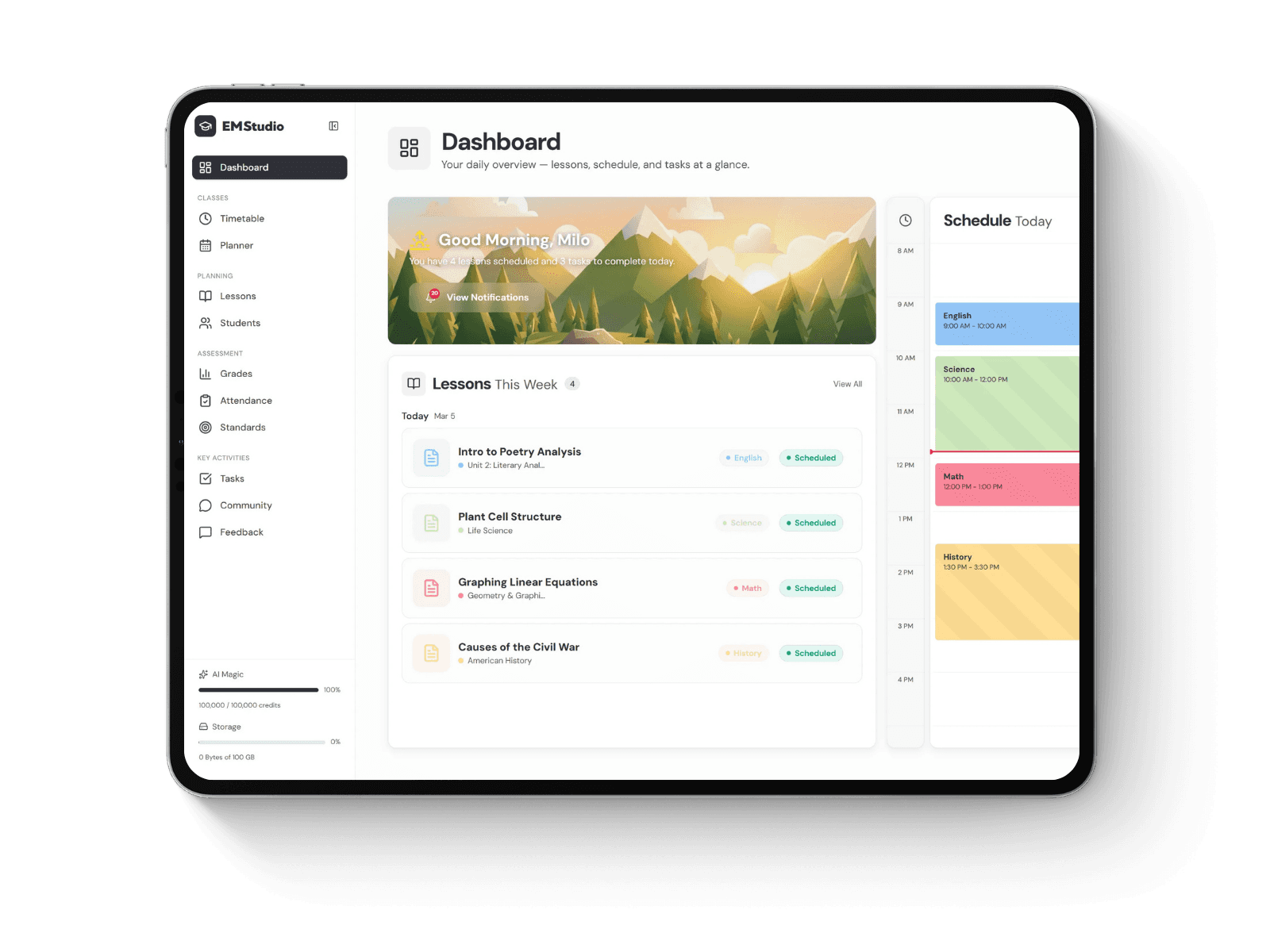
Still grading everything by hand?
EMStudio is a free teaching management app — manage your classes, students, lessons, and more!
Learn More
Table of Contents
Understand Academic Integrity
Academic integrity isn’t confined to avoiding plagiarism. It includes honesty in all aspects. Students who practice integrity build trust with professors and peers. This trust forms the foundation of scholarly communities.
The digital age has expanded the definition of cheating. Using AI to produce complete assignments now violates most honor codes. Many institutions treat machine-generated text the same as copied content. Understanding these rules protects students from unintentional violations.
Remember, integrity ultimately serves the student's own development. Genuine effort produces genuine learning outcomes. Shortcuts may provide temporary relief but sacrifice long-term growth. Every assignment offers a chance to build valuable skills.
Know AI Limitations
AI tools cannot think or reason like humans. They process patterns in data without understanding meaning. This fundamental limitation creates serious problems for academic work. The technology often produces plausible but completely false information.
There is another issue with AI. They might not differentiate between a well-reputed and unreliable source. They will fetch information from wherever they can. However, you must not do it. So, if you rely on AI-generated text, you might get dozens of references from unreliable sources. They will eventually hurt your credibility.
Additionally, the writing style of AI often appears generic and repetitive. Your tutors can find it immediately. In fact, many people can quickly spot if something is human-written or AI-generated. So, avoid AI output. Instead, write it yourself.
Use AI Responsibly
Yes, you can use AI for different purposes. For instance, you have explored multiple studies but couldn’t find relevant information. In this case, just put your question to an AI tool and ask it to find you the best sources for the study. The tool will show you many similar articles you can use.
You can even brainstorm ideas with AI. Don’t know where to begin? Ask AI. It will explore the web, find a knowledge gap, show you many critical aspects, and help you get a great start.
AI should be your research companion, not the ghostwriter. If you write everything with AI and claim its ownership, it’s against academic integrity.
Follow University Policies
Every academic institution now addresses AI usage in its official guidelines. Some prohibit all AI involvement in graded assignments. Some permits students to use it with limitations. Before you use any tool, check your institute’s guidelines. This will help you make the right choices.
Moreover, you must ask your tutors as well. Sometimes, universities allow it, but teachers don’t. So, you should reach out to your teachers, tell them what you think, and ask for their preferences. Eventually, you will be able to make the right call.
Cite AI Assistance
In some projects, you can use AI-generated content. For instance, you want to compare how a human writer and AI tools craft content. In such cases, you should clearly
mention AI usage along with the passages it crafted. This way, you don’t cheat.
Academic integrity is about being honest. If you are honest, you are following the right practice. However, in such cases, don’t just mention AI usage. Instead, name the tool, version, your prompts, etc.
Many universities require students to submit chat logs. So, save your conversations with AI tools as evidence of proper usage. This documentation shows your good faith efforts.
Responsible citation practices distinguish ethical students from those who hide their methods.
Write Original Arguments
Your unique perspective gives academic writing its value. AI can summarize existing debates but cannot produce fresh insights. Developing your own thesis requires deep engagement with source materials.
Read widely and take careful notes on your reading. Allow your ideas to mature through reflection and discussion. This process takes time but yields stronger arguments. Quick AI-generated content cannot match this depth.
Use AI to test your arguments for weaknesses. Ask the tool to find counterexamples or alternative interpretations. This exercise sharpens your thinking and improves your work. The final argument must always remain your own creation.
Verify AI-Generated Facts
Never assume that AI provides accurate information. These systems frequently invent facts, dates, and citations. Students must independently confirm every piece of data the tool produces.
Cross-reference AI claims. Compare those claims with authoritative academic sources. For that, you can rely on your university’s library databases. These resources provide trustworthy information for your assignments. Trust them far more than any machine output.
Always return to original sources for verification. Reading primary documents gives you context and a deeper understanding. This approach prevents errors and strengthens your paper. Fact-checking takes extra effort but significantly improves quality.
Review Before Submission
Always perform a careful final review of your work. Read your entire paper to ensure it reflects your best effort. Check for logical flow, clear arguments, and proper citations.
Compare your submission against the assignment requirements. Verify that you covered every required element completely. This step catches many oversights that could cost points.
Finally, conduct a plagiarism test. Actually, AI tools don’t always provide plagiarism-free content. So, you need to confirm if the machine-generated text is original. That’s where an advanced plagiarism checker can help. If the tool highlights duplicate segments in your text, make sure to remove them before submission. This way, you can ensure academic integrity and avoid many consequences.
Conclusion
The AI tools available today offer remarkable capabilities for learning support. But they also tempt users toward shortcuts that undermine education. Responsible AI usage means understanding its proper place in your workflow. Maintain your intellectual engagement throughout the writing process. Be transparent about any assistance you receive from these systems. The competencies you develop through honest academic work have lasting value. Critical thinking, original analysis, and ethical judgment remain essential professional skills. Embrace these strengths while using technology as a helpful aid. Your future career will reward genuine expertise far more than quick fixes.
FAQs
How universities detect AI in academic assignments?
Almost all the academic institutes use the best tools to detect plagiarism and AI. These tools are trained on the best models, and they quickly realize who wrote the text, AI or a human. They don’t give a simple verdict. Instead, they provide detailed reports, highlighting all the AI-generated sections in the text.
Is using AI for brainstorming considered cheating?
Not necessarily. If your tutor didn’t clearly ask you to do everything yourself, you can use AI for brainstorming. AI basically goes through the web and finds many aspects you might find in days. Then, it helps you discover how you can organize your assignment perfectly. So, it’s not cheating.
What are the consequences of submitting AI-generated content?
It depends on multiple factors. They include the percentage of AI usage, your intention, and the institution’s own policies. Depending on the situation, they might ask you to revise your assignment, fail you, or, in the worst case, revoke the degree.
How can students verify information provided by AI tools?
By cross-checking. If the AI has provided a stat, ask it to give the source as well. Then, check the source and analyze if it’s accurate or not. You can also use independent fact-checking tools for that. Or you can explore multiple studies on the same topic.
Understand Academic Integrity
Academic integrity isn’t confined to avoiding plagiarism. It includes honesty in all aspects. Students who practice integrity build trust with professors and peers. This trust forms the foundation of scholarly communities.
The digital age has expanded the definition of cheating. Using AI to produce complete assignments now violates most honor codes. Many institutions treat machine-generated text the same as copied content. Understanding these rules protects students from unintentional violations.
Remember, integrity ultimately serves the student's own development. Genuine effort produces genuine learning outcomes. Shortcuts may provide temporary relief but sacrifice long-term growth. Every assignment offers a chance to build valuable skills.
Know AI Limitations
AI tools cannot think or reason like humans. They process patterns in data without understanding meaning. This fundamental limitation creates serious problems for academic work. The technology often produces plausible but completely false information.
There is another issue with AI. They might not differentiate between a well-reputed and unreliable source. They will fetch information from wherever they can. However, you must not do it. So, if you rely on AI-generated text, you might get dozens of references from unreliable sources. They will eventually hurt your credibility.
Additionally, the writing style of AI often appears generic and repetitive. Your tutors can find it immediately. In fact, many people can quickly spot if something is human-written or AI-generated. So, avoid AI output. Instead, write it yourself.
Use AI Responsibly
Yes, you can use AI for different purposes. For instance, you have explored multiple studies but couldn’t find relevant information. In this case, just put your question to an AI tool and ask it to find you the best sources for the study. The tool will show you many similar articles you can use.
You can even brainstorm ideas with AI. Don’t know where to begin? Ask AI. It will explore the web, find a knowledge gap, show you many critical aspects, and help you get a great start.
AI should be your research companion, not the ghostwriter. If you write everything with AI and claim its ownership, it’s against academic integrity.
Follow University Policies
Every academic institution now addresses AI usage in its official guidelines. Some prohibit all AI involvement in graded assignments. Some permits students to use it with limitations. Before you use any tool, check your institute’s guidelines. This will help you make the right choices.
Moreover, you must ask your tutors as well. Sometimes, universities allow it, but teachers don’t. So, you should reach out to your teachers, tell them what you think, and ask for their preferences. Eventually, you will be able to make the right call.
Cite AI Assistance
In some projects, you can use AI-generated content. For instance, you want to compare how a human writer and AI tools craft content. In such cases, you should clearly
mention AI usage along with the passages it crafted. This way, you don’t cheat.
Academic integrity is about being honest. If you are honest, you are following the right practice. However, in such cases, don’t just mention AI usage. Instead, name the tool, version, your prompts, etc.
Many universities require students to submit chat logs. So, save your conversations with AI tools as evidence of proper usage. This documentation shows your good faith efforts.
Responsible citation practices distinguish ethical students from those who hide their methods.
Write Original Arguments
Your unique perspective gives academic writing its value. AI can summarize existing debates but cannot produce fresh insights. Developing your own thesis requires deep engagement with source materials.
Read widely and take careful notes on your reading. Allow your ideas to mature through reflection and discussion. This process takes time but yields stronger arguments. Quick AI-generated content cannot match this depth.
Use AI to test your arguments for weaknesses. Ask the tool to find counterexamples or alternative interpretations. This exercise sharpens your thinking and improves your work. The final argument must always remain your own creation.
Verify AI-Generated Facts
Never assume that AI provides accurate information. These systems frequently invent facts, dates, and citations. Students must independently confirm every piece of data the tool produces.
Cross-reference AI claims. Compare those claims with authoritative academic sources. For that, you can rely on your university’s library databases. These resources provide trustworthy information for your assignments. Trust them far more than any machine output.
Always return to original sources for verification. Reading primary documents gives you context and a deeper understanding. This approach prevents errors and strengthens your paper. Fact-checking takes extra effort but significantly improves quality.
Review Before Submission
Always perform a careful final review of your work. Read your entire paper to ensure it reflects your best effort. Check for logical flow, clear arguments, and proper citations.
Compare your submission against the assignment requirements. Verify that you covered every required element completely. This step catches many oversights that could cost points.
Finally, conduct a plagiarism test. Actually, AI tools don’t always provide plagiarism-free content. So, you need to confirm if the machine-generated text is original. That’s where an advanced plagiarism checker can help. If the tool highlights duplicate segments in your text, make sure to remove them before submission. This way, you can ensure academic integrity and avoid many consequences.
Conclusion
The AI tools available today offer remarkable capabilities for learning support. But they also tempt users toward shortcuts that undermine education. Responsible AI usage means understanding its proper place in your workflow. Maintain your intellectual engagement throughout the writing process. Be transparent about any assistance you receive from these systems. The competencies you develop through honest academic work have lasting value. Critical thinking, original analysis, and ethical judgment remain essential professional skills. Embrace these strengths while using technology as a helpful aid. Your future career will reward genuine expertise far more than quick fixes.
FAQs
How universities detect AI in academic assignments?
Almost all the academic institutes use the best tools to detect plagiarism and AI. These tools are trained on the best models, and they quickly realize who wrote the text, AI or a human. They don’t give a simple verdict. Instead, they provide detailed reports, highlighting all the AI-generated sections in the text.
Is using AI for brainstorming considered cheating?
Not necessarily. If your tutor didn’t clearly ask you to do everything yourself, you can use AI for brainstorming. AI basically goes through the web and finds many aspects you might find in days. Then, it helps you discover how you can organize your assignment perfectly. So, it’s not cheating.
What are the consequences of submitting AI-generated content?
It depends on multiple factors. They include the percentage of AI usage, your intention, and the institution’s own policies. Depending on the situation, they might ask you to revise your assignment, fail you, or, in the worst case, revoke the degree.
How can students verify information provided by AI tools?
By cross-checking. If the AI has provided a stat, ask it to give the source as well. Then, check the source and analyze if it’s accurate or not. You can also use independent fact-checking tools for that. Or you can explore multiple studies on the same topic.
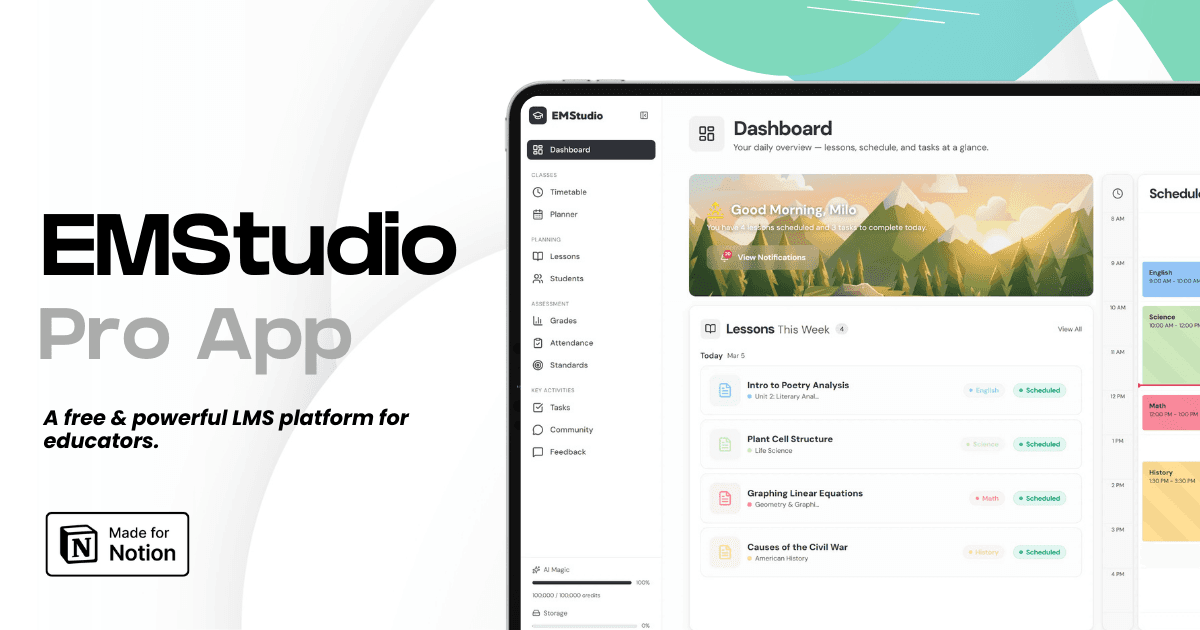
Still grading everything by hand?
EMStudio is a free teaching management app — manage your classes, students, lessons, and more!
Learn More
Still grading everything by hand?
EMStudio is a free teaching management app — manage your classes, students, lessons, and more!
Learn More




Notion4Teachers
Notion templates to simplify administrative tasks and enhance your teaching experience.



2026 Notion4Teachers. All Rights Reserved.
Notion4Teachers
Notion templates to simplify administrative tasks and enhance your teaching experience.
2026 Notion4Teachers. All Rights Reserved.
Notion4Teachers
Notion templates to simplify administrative tasks and enhance your teaching experience.
2026 Notion4Teachers. All Rights Reserved.