15 Self Care Strategies for Educators That Actually Work
15 Self Care Strategies for Educators That Actually Work

Article by
Milo
ESL Content Coordinator & Educator
ESL Content Coordinator & Educator
All Posts
It's March. Your 7th graders are bouncing off the walls after spring break, your grading pile has its own zip code, and you're running on coffee and sheer willpower. This is exactly when self care for educators matters most—not as a luxury, but as survival.
I've been there. The strategies below aren't bubble baths or meditation apps you'll never open. They're practical tools I've used to stay sane through 15 years in the classroom.
Still grading everything by hand?
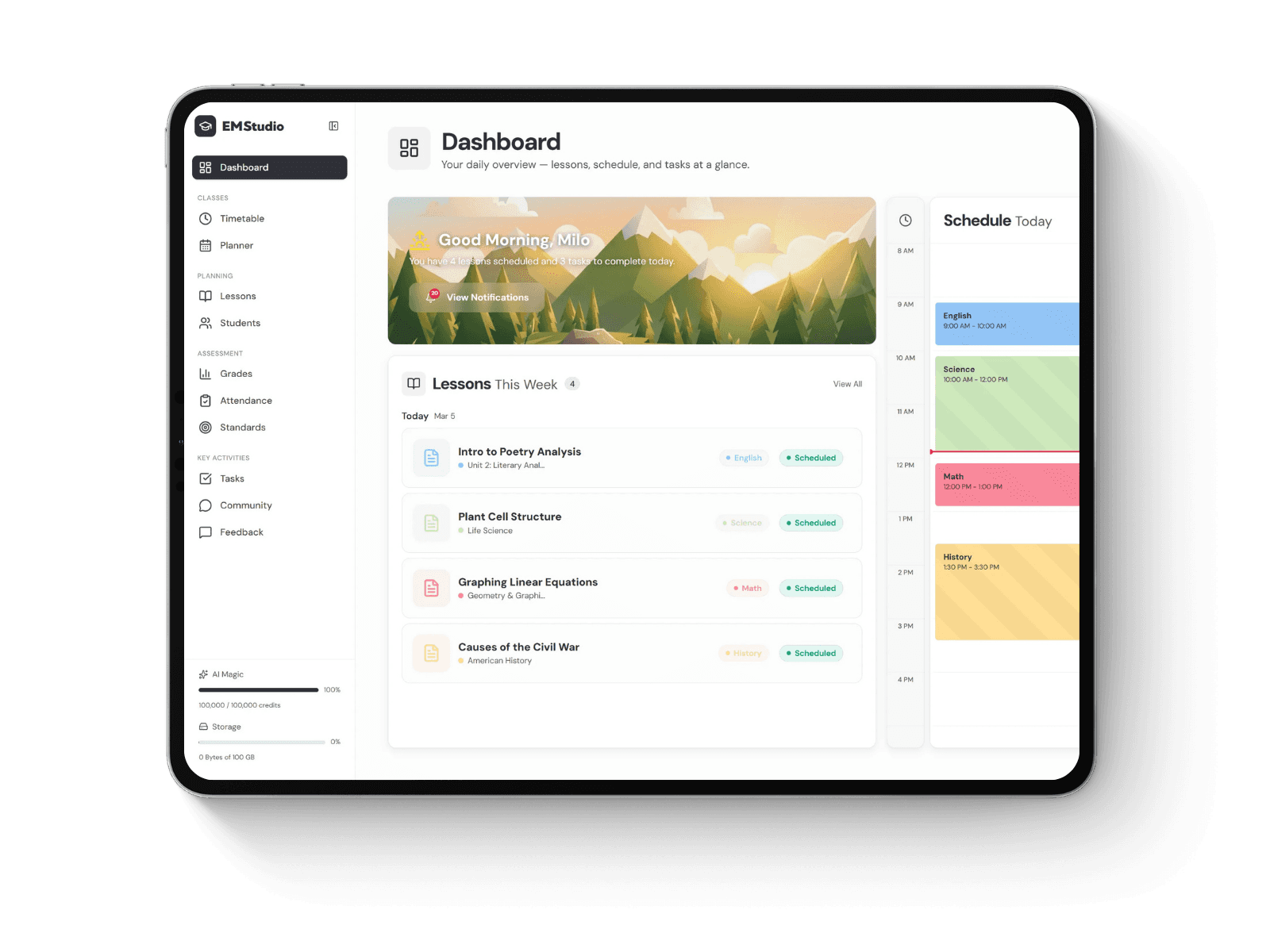
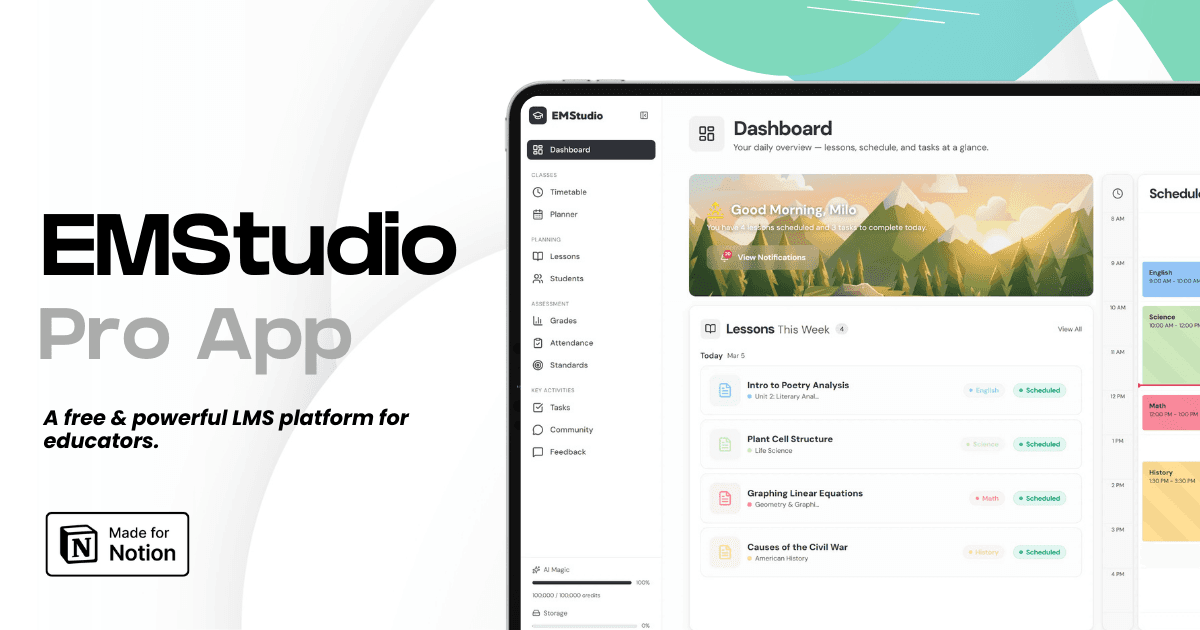
EMStudio is a free teaching management app — manage your classes, students, lessons, and more!
Learn More
Still grading everything by hand?
EMStudio is a free teaching management app — manage your classes, students, lessons, and more!
Learn More
Table of Contents
What Are the Best Quick Self Care Wins for Busy Teachers?
The best quick self care wins for busy teachers include 5-minute transition rituals between classes using box breathing, desk-based hydration tracking with 32oz bottles marked hourly, and strategic snack stashes to prevent blood sugar crashes. These micro-interventions require zero prep time and provide immediate stress relief during chaotic school days.
You don't need an hour at the spa. You need ninety seconds between third and fourth period that doesn't involve refreshing your inbox. Most teacher self care advice fails because it needs time you don't have. These wins fit into the existing cracks of your schedule.
I stopped pretending I'd meditate for twenty minutes after school. Instead, I built self care for educators into the transitions. These three protocols cost nothing to $40 and pay back immediately in emotional regulation. Ignore them and you'll hit 3 PM running on cortisol and regret, making poor choices by sixth period after skipping breaks to answer emails.
Morning arrival: Set your 32oz bottle on the desk with the 8 AM line facing you. Cost: $30-40 for insulated steel, $0 for a rubber band marker.
Between periods: Run the Threshold Technique. Two minutes clearing your desk surface, three minutes box breathing with a physical timer. Cost: Free using your phone or $25 for a Time Timer.
Lunch break: Eat your pre-portioned 150-calorie snack before you check email. Cost: About $1.50 per day to avoid the staff room donut crash.
When you skip these micro-breaks to clear your inbox, you trigger decision fatigue by period six. Your blood sugar crashes at 3 PM. You snap at kids who don't deserve it. These techniques for teacher stress management work only if you treat them as non-negotiable appointments, not luxuries.
The 5-Minute Transition Ritual Between Classes
I call this the Threshold Technique. When the last student leaves, start a physical timer. Two minutes to clear every paper off your desk—no grading, just clearing. Then three minutes of guided breathing using free YouTube videos or the Calm app. High school teachers get four to five minutes during passing periods; elementary teachers with prep can use the full five. The rule is absolute: no email, no gradebook.
The physical timer matters. I use a Time Timer because the red wedge keeps me honest, but your phone works if you disable notifications. Without the timer, I cheated every time, sneaking peeks at my laptop. If you have four minutes between bells, set the timer for three minutes of breathing, leaving sixty seconds to reset your whiteboard. Protecting these minutes preserves your sanity.
Desk-Based Breathing Exercises for Stress Relief
You don't need a yoga mat to change your physiology. I use two protocols from Stanford's Huberman Lab. First, Box Breathing: inhale, hold, exhale, hold at four counts each for three to five cycles. Second, the Physiological Sigh: double inhale through the nose, long exhale through the mouth. Two repetitions reset your carbon dioxide levels and calm your nervous system.
Deploy these in specific trigger moments. I use Box Breathing immediately after disruptive incidents, before my heart rate hijacks my response. I use the Sigh before difficult parent calls and during hall duty. Last October, after a student threw a chair in my second period, I ran three cycles with the lights off. It took ninety seconds. Then I taught third period without carrying the adrenaline forward. That is teacher resilience in practice.
Strategic Hydration and Snack Reminders
Dehydration mimics anxiety. I keep a 32oz insulated bottle ($30-40) with marks at 8 AM, 10 AM, and 12 PM. When the 10:05 bell rings, if the water isn't below the line, I drink until it is. This prevents afternoon headaches. Pair this with desk drawer snacks: RXBars, quarter-cup almond bags, or string cheese at 150 calories each.
Eat one at 10:30 AM whether you're hungry or not. This prevents the blood sugar crash that turns minor annoyances into meltdowns. Skip the staff room treats. The upfront cost is $40 for the bottle and $8 weekly for snacks. Compare that to educator burnout prevention. Your brain needs fuel for emotional labor in education. Feed it deliberately.

How Can Educators Protect Their Physical Health During the School Year?
Educators can protect physical health by implementing 3-minute movement breaks between periods to achieve 3,000 steps before lunch, adjusting ergonomic setups with $25 monitor risers and external keyboards to prevent neck strain, and maintaining strict sleep hygiene using the 10-3-2-1-0 method adapted for early morning schedules and cognitive demands.
I ignored the twinge in my lower back for three months. By November, I was sitting on an ice pack during 4th grade reading groups. Physical self care for educators isn't optional—it's classroom management and educator wellness. Your body is the instrument you play every day.
Quick Fixes (0–5 minutes, $0) | Long-term Investments (Setup time, $25–$200) |
|---|---|
Movement: 3-minute hallway laps; stair climbs during prep | Movement: Fitness tracker, supportive walking shoes ($80–$150) |
Ergonomics: Stacked books under monitor; phone reminders to roll shoulders | Ergonomics: Monitor riser ($25), external keyboard ($30), anti-fatigue mat ($40), voice amplifier ($35) |
Sleep: 10-3-2-1-0 method (behavioral only) | Sleep: Wake-up light ($50), blackout curtains ($30), premium sleep app |
Waiting until you lose your voice or need a cortisone shot for your back is the fast track to sick days. Research shows teachers suffer vocal cord strain at higher rates than other professionals. That hoarseness you dismiss as "just allergies" is cumulative damage. Lower back pain doesn't fix itself during winter break. Treat these signals like a fire alarm, not background noise.
Movement Breaks Between Class Periods
Walk 200 steps minimum during every passing period. I clock 3,000 steps before lunch using this rule. Use your phone pedometer or a basic Fitbit. The 3-minute hallway lap clears your head and prevents the afternoon slump that hits during 6th period.
Alternative: Stair Climb Intervals. Run two flights up and down during your prep period. Do this three times daily. You'll burn roughly 50 calories per session and spike your heart rate enough to feel alert without sweating through your dress shirt.
For elementary teachers stuck on morning duty: pace the perimeter. Skip static standing. Those seven minutes of walking add up to 800 steps before the bell even rings. Track it honestly. Most teachers overestimate movement. Your Fitbit buzz at 3,000 steps before noon creates a dopamine hit stronger than the vending machine. It's not gym class; it's a down payment on teacher resilience.
Ergonomic Classroom Setup Adjustments
Raise your monitor to eye level. Use a $25 AmazonBasics riser or stack textbooks until the screen hits eye height. Add an external keyboard and mouse (Logitech MK270 combo runs $30) to prevent shoulder protraction. Position your keyboard so elbows stay at 90 degrees. Most of us hunch forward, creating that "teacher neck" that physical therapists recognize immediately.
Elementary teachers spend six hours projecting their voices over carpet noise and HVAC systems. Research confirms we experience higher rates of vocal cord strain than other professionals. A WinBridge WB001 voice amplifier ($35) clips to your waistband. You speak in a normal tone; 20 kids hear clearly. The $55 investment in riser and keyboard pays for itself if it prevents one chiropractic visit. Save your voice for parent conferences.
Deploy an anti-fatigue mat ($40) if you use a standing desk. Concrete school floors destroy knees and hips by spring. These adjustments aren't luxuries; they're educator burnout prevention tools that extend your career.
Sleep Hygiene for Early Morning Schedules
Use the modified 10-3-2-1-0 method: 10 hours before bed, no caffeine. Three hours before, no work email. Two hours before, no lesson prep. One hour before, no screens. Zero snooze button hits. This framework protects the work-life balance for teachers by creating hard stops.
The 10-3-2-1-0 method works because it externalizes discipline. You don't decide at 9 PM whether to answer one more email; the rule decided at 3 PM. That stress management technique preserves decision-making energy for actual instruction and supports teacher mental health.
Teachers need seven-plus hours to maintain cognitive function and patience. Hattie's research ties teacher clarity to a 0.72 effect size on student learning. You can't deliver that clarity foggy from six hours of sleep. Tools help: a Philips Wake-Up Light ($50) eases winter mornings, and Sleep Cycle tracks your deep sleep phases. For more strategies on building sustainable routines, see our physical health and wellness guide for educators. Protecting your sleep isn't selfish; it's how you manage the emotional labor in education without snapping at 8th period.

Boundary-Setting Strategies to Prevent Teacher Burnout
I stopped saying yes to every committee invitation once I mapped my commitments on a simple grid. High Impact vs. Low Alignment activities separate meaningful work from institutional noise. Coaching the robotics team? High impact, aligned with my STEM background. Covering lunch duty for the third time this week? Low alignment, high resentment cost. When I decline, I use this script: "I want to give this the attention it deserves, and my current workload won't allow that until next semester." The script removes the personal sting of rejection.
The Sunday Scaries hit hardest when boundaries leak. That 10 PM email check turns into three hours of unpaid overtime. Teachers average 10+ hours of unpaid work weekly. This isn't dedication. It's a slow leak that drains teacher mental health and drives attrition. Parkinson's Law explains why: work expands to fill every empty hour we offer it. Without guardrails, lesson planning consumes Tuesday night, then Wednesday, then your entire weekend. The resentment builds until you're updating your resume.
Self care for educators requires treating these limits as infrastructure, not suggestions. These evidence-based strategies for teacher work-life balance changed how I protect my time from infinite expansion.
The Hard Stop at Contract Time Protocol
I set a Contract Time Alarm on my phone for 3:45 PM. When it rings, I stop. Period. My Parking Lot system captures what remains: a whiteboard by the door lists unfinished tasks with tomorrow's timestamp. True emergencies get ten minutes. Everything else waits until my contracted hours resume.
Last October, my principal caught me packing up and asked for a "quick" data review. I used my script: "I can revisit this tomorrow during my 10 AM prep period." She nodded. The data was still there in the morning. The world didn't end, and I made it to my daughter's soccer game.
This protocol combats Parkinson's Law directly. When the container shrinks, so does the work. I leave with energy for my actual life instead of dragging home guilt and exhaustion. That's educator burnout prevention in action, not theory.
Email Auto-Responder and Communication Limits
My Gmail auto-responder states my check times: 7:30 AM, 12:00 PM, and 3:30 PM only. Parents know when to expect replies. I draft emails at 9 PM using Scheduled Send to delay delivery until 7:30 AM. No 11 PM timestamps rewarding after-hours availability.
When colleagues knock with "quick questions," I point to my door sign: "I process emails at three designated times to maintain focus on students." This protects the emotional labor in education from bleeding into every waking moment. The boundary feels awkward for three days. Then it feels like breathing.
Turn off phone notifications via Settings > Notifications > Gmail > Off. The red badge disappears. So does the compulsion to clear it. This small toggle improved my teacher resilience more than any stress management technique I've tried. Your nervous system will thank you by Monday.
Grading Batch Processing to Protect Weekends
I implemented the Touch It Once rule for my 7th graders' essays. Papers get graded immediately upon collection during my prep period. I set a 45-minute Pomodoro timer and power through. No sorting. No "I'll do this after school." Touch it once, or it touches you all week.
Friday at 3:00 PM, I enter Grade Jail. Door closed. Phone in drawer. 90 minutes of focused grading with lo-fi beats playing. If it's not done by 4:30, it waits until Monday. Taking papers home "just this once" always creates Sunday 8-hour grading marathons. The papers will still be there Friday afternoon. Your sanity might not be.
Now I use self-checking stamps for formative assessments. Volume dropped 40%. The work-life balance for teachers requires these ruthless efficiencies. Protect your Sundays. They're not for catching up on unchecked papers. They're for recovering from the emotional labor of the week so you can actually teach on Monday.

Social and Emotional Self Care Practices for Teachers
Research on emotional labor shows teaching needs high empathy with no time to process. You absorb student trauma all day. Without release, you hit compassion fatigue. This is why self care for educators needs two speeds: daily micro-connections (ten minutes) and weekly deep restoration (two hours). Everything here costs under $20 or nothing. Teacher salary realities mean these strategies respect your budget while rebuilding teacher resilience.
Colleague Support Circles and Venting Partnerships
I tried the "open door" policy with 7th graders during my prep. By October, I was dreading that door. The emotional labor in education requires structured release, not just availability. You cannot absorb student trauma for six hours without a processing valve. This daily micro-connection strategy takes ten minutes and requires zero dollars.
Find one trusted colleague for "The 10-Minute Parking Lot Vent." Set a phone timer. Five minutes of pure venting—no solutions allowed. Five minutes to brainstorm fixes. Hard stop when the timer rings. Cap this at twice weekly, like Tuesday and Thursday lunch. More frequent sessions turn into toxic co-rumination that drains teacher mental health instead of restoring it. This boundary protects your lunch period while making sure educator burnout prevention remains active.
Watch for warning signs. If you repeat the same complaint three times without taking action, stop venting. Call your EAP or instructional coach instead. Venting should move you forward, not keep you stuck. This practice builds teacher resilience without costing a dime. Start creating effective peer support networks with just one partner. Don't wait for administration to organize something formal and huge.
Therapeutic Creative Outlets Outside School
Your brain needs cognitive detachment from lesson plans. This weekly deep restoration requires analog activities that generate zero classroom content. No screens, no standards, no objectives. Pick up a Johanna Basford adult coloring book for $10. Use colored pencils you already own from last year's supply closet. The intricate patterns force single-point focus without blue light draining your eyes.
Try The Artist's Way Morning Pages: three pages longhand, stream-of-consciousness, first thing in the morning. Write absolute garbage about your fears, your grocery list, your neighbor's barking dog. Just don't write lesson plans or IEP goals. The notebook costs $2 at Walmart. Pick up crochet hooks and Dollar Tree yarn. Make a lumpy scarf you will definitely unravel and hide from everyone including your cat.
The rule is strict: zero Pinterest browsing for classroom ideas during this time. If you think "I could use this for the bulletin board," stop immediately and switch activities. This is stress management techniques for teacher wellbeing and work-life balance for teachers, not curriculum development. These two-hour weekly blocks reset your nervous system without breaking your budget.
Scheduled Connection Rituals with Family and Friends
Daily micro-connections prevent isolation better than monthly marathons. Calendar-block these like IEP meetings with hard starts and stops. Your family needs the same priority as your students' accommodation plans. This boundary protects teacher mental health without costing anything. Use your phone's "Do Not Disturb" during these windows.
Try "Phone a Friend Friday." Twenty-minute Bluetooth call during your commute. Hands-free, but actually talking about life outside school. No emails. Midweek, enforce "Tech-Free Tuesday Dinner." Phones go in a basket on the counter. Look at your family while you eat. Ask about their day before you vent about yours.
Monthly, schedule "Non-Teacher Brunch." Invite friends outside education only. The rule: absolutely no shop talk about administrators or testing. If someone mentions PD, change the subject. Treat these as immovable. Mark "Busy" in shared calendars. Protecting these connections is central to educator burnout prevention and mastering emotional skills in the classroom requires this external support system. All free.
Professional Wellness and Sustainable Teaching Practices
I stopped attending district PD sessions that scored below 0.60 on Hattie's Visible Learning effect sizes. Direct instruction sits at 0.59. Teacher clarity hits 0.72. If the training doesn't touch these high-impact strategies, I decline. This isn't rebellion. It's educator burnout prevention. Every low-impact session steals time you could spend refining the moves that actually move student achievement. Target 30 minutes daily recovered through smart systems and delegation. That's two and a half hours weekly back for your life. Stress management techniques start with saying no to waste and yes to systems that sustain your career.
Choosing Meaningful Professional Development Only
Run every PD opportunity through the 2-4-8 Filter. Will this impact my teaching in 2 weeks, 4 months, or 8 years? If it only hits the 4-month mark without 8-year career relevance, I say no. I recently declined a three-hour session on temporary district software. That 180 minutes of planning time stayed mine. I used it to rehearse my explanation of fractions for Tuesday's lesson instead.
My decline script is simple: "To honor my current bandwidth focused on teacher clarity strategies, I'm declining this opportunity." No apologies. No lengthy explanations. Teacher mental health requires guarding your calendar like you guard your instruction time. Low-impact PD carries massive opportunity cost. Three hours lost equals nine feedback sessions with struggling readers you never get back. Your growth matters too much to waste on noise. Choose depth over breadth every time.
Classroom Systems That Reduce Daily Decision Fatigue
Deploy Monday Morning Automation every Friday before you leave. Copies complete. Bins labeled Monday through Friday with student handouts inside. Student jobs posted. CHAMPS procedures hang by the door so you never answer "what do I do" again. These time-saving hacks to reduce daily decision fatigue remove the thousand micro-choices that drain teacher resilience by 10 AM. The system runs itself. You just teach.
Numbered seating charts beat letting 7th graders choose their spots daily. Choice sounds nice. It wastes four minutes of chaos. I use the ClassDojo randomizer for participation. I stopped tracking raised hands manually. It removes my unconscious bias and the mental load of tracking who I've called on. Systems beat decisions. Decisions drain your willpower for the lessons that matter most.
Strategic Delegation and Student Agency Methods
A Classroom Economy saves me 30 minutes daily. Students apply for jobs: librarian, tech support, sanitation captain. They earn classroom currency or privileges like lunch with the teacher. I don't pass papers. I don't troubleshoot Chromebooks. I don't sanitize desks. This self care for educators looks like students handling logistics while you teach. Elementary teachers can use Table Captains for materials distribution. High school teachers can train a Student Tech Team to fix projector glitches.
Those tech glitches steal 3-5 minutes each time. They happen twice daily in most classrooms. My student team handles them instantly. That's 10 minutes saved daily right there. Delegation isn't laziness. It's a comprehensive strategy for professional growth that protects your work-life balance for teachers. When you stop managing minutiae, you preserve energy for the emotional labor in education that actually matters. Your students learn independence. You keep your sanity. The math works.
How Do You Build a Self Care Routine That Actually Sticks?
Build a sticky self care routine by auditing energy drains for three days to identify patterns, then habit-stack micro-practices onto existing anchors like brewing coffee or locking your classroom door. Start with two-minute commitments, schedule recovery periods before burnout hits, and treat these appointments as mandatory as parent conferences.
Most teacher wellness plans fail because we aim for hour-long yoga sessions at 5 AM. We need self care for educators that survives November. Try the Tiny Habits method: behaviors so small they feel ridiculous to skip.
Audit Your Current Energy Drains and Triggers
Conduct Energy Accounting for three consecutive days. Track your energy in 30-minute blocks using mood tracker templates to audit your energy drains or a simple Notes app. Rate each period 1-10. Look for patterns below 5/10. Common culprits include Period 5 after lunch, unplanned parent emails, or frantic last-minute photocopying.
When I taught 4th grade, I discovered my energy crashed every Tuesday at 2 PM during back-to-back specials transitions. That data changed my approach to teacher mental health. Identify your top three drains. These become your trigger points for intervention.
Stack New Habits onto Existing Daily Routines
Use the implementation intention formula: "When X happens, I will Y." In teacher terms: "After I start the coffee maker, I will do a 2-minute stretch," or "After I lock my classroom door, I will take three Physiological Sighs." My favorite anchor: "After I sit in my car, I will play one song before driving."
The duration rule is non-negotiable: new habits must stay under two minutes. This bypasses the abstinence violation effect—the research term for when missing one day makes us abandon the whole plan. Two minutes is too small to fail.
Schedule Recovery Periods Before You Need Them
Implement Pre-covering. Block Friday 3:30-4:00 PM for a "Week Close" ritual: tidy your desk, reset whiteboards, and write Monday's prep list. Schedule one Saturday morning monthly as "Nothing Time"—no plans, zero guilt. Mark these as "Wellness - Busy/Private" in your calendar.
Stop waiting for physical illness to force rest. Reactive sick days mean you've already burned out. Proactive educator burnout prevention means booking recovery before the emotional labor in education overwhelms you. Treat these blocks like IEP meetings: completely immovable.

What Are the Best Quick Self Care Wins for Busy Teachers?
The best quick self care wins for busy teachers include 5-minute transition rituals between classes using box breathing, desk-based hydration tracking with 32oz bottles marked hourly, and strategic snack stashes to prevent blood sugar crashes. These micro-interventions require zero prep time and provide immediate stress relief during chaotic school days.
You don't need an hour at the spa. You need ninety seconds between third and fourth period that doesn't involve refreshing your inbox. Most teacher self care advice fails because it needs time you don't have. These wins fit into the existing cracks of your schedule.
I stopped pretending I'd meditate for twenty minutes after school. Instead, I built self care for educators into the transitions. These three protocols cost nothing to $40 and pay back immediately in emotional regulation. Ignore them and you'll hit 3 PM running on cortisol and regret, making poor choices by sixth period after skipping breaks to answer emails.
Morning arrival: Set your 32oz bottle on the desk with the 8 AM line facing you. Cost: $30-40 for insulated steel, $0 for a rubber band marker.
Between periods: Run the Threshold Technique. Two minutes clearing your desk surface, three minutes box breathing with a physical timer. Cost: Free using your phone or $25 for a Time Timer.
Lunch break: Eat your pre-portioned 150-calorie snack before you check email. Cost: About $1.50 per day to avoid the staff room donut crash.
When you skip these micro-breaks to clear your inbox, you trigger decision fatigue by period six. Your blood sugar crashes at 3 PM. You snap at kids who don't deserve it. These techniques for teacher stress management work only if you treat them as non-negotiable appointments, not luxuries.
The 5-Minute Transition Ritual Between Classes
I call this the Threshold Technique. When the last student leaves, start a physical timer. Two minutes to clear every paper off your desk—no grading, just clearing. Then three minutes of guided breathing using free YouTube videos or the Calm app. High school teachers get four to five minutes during passing periods; elementary teachers with prep can use the full five. The rule is absolute: no email, no gradebook.
The physical timer matters. I use a Time Timer because the red wedge keeps me honest, but your phone works if you disable notifications. Without the timer, I cheated every time, sneaking peeks at my laptop. If you have four minutes between bells, set the timer for three minutes of breathing, leaving sixty seconds to reset your whiteboard. Protecting these minutes preserves your sanity.
Desk-Based Breathing Exercises for Stress Relief
You don't need a yoga mat to change your physiology. I use two protocols from Stanford's Huberman Lab. First, Box Breathing: inhale, hold, exhale, hold at four counts each for three to five cycles. Second, the Physiological Sigh: double inhale through the nose, long exhale through the mouth. Two repetitions reset your carbon dioxide levels and calm your nervous system.
Deploy these in specific trigger moments. I use Box Breathing immediately after disruptive incidents, before my heart rate hijacks my response. I use the Sigh before difficult parent calls and during hall duty. Last October, after a student threw a chair in my second period, I ran three cycles with the lights off. It took ninety seconds. Then I taught third period without carrying the adrenaline forward. That is teacher resilience in practice.
Strategic Hydration and Snack Reminders
Dehydration mimics anxiety. I keep a 32oz insulated bottle ($30-40) with marks at 8 AM, 10 AM, and 12 PM. When the 10:05 bell rings, if the water isn't below the line, I drink until it is. This prevents afternoon headaches. Pair this with desk drawer snacks: RXBars, quarter-cup almond bags, or string cheese at 150 calories each.
Eat one at 10:30 AM whether you're hungry or not. This prevents the blood sugar crash that turns minor annoyances into meltdowns. Skip the staff room treats. The upfront cost is $40 for the bottle and $8 weekly for snacks. Compare that to educator burnout prevention. Your brain needs fuel for emotional labor in education. Feed it deliberately.
How Can Educators Protect Their Physical Health During the School Year?
Educators can protect physical health by implementing 3-minute movement breaks between periods to achieve 3,000 steps before lunch, adjusting ergonomic setups with $25 monitor risers and external keyboards to prevent neck strain, and maintaining strict sleep hygiene using the 10-3-2-1-0 method adapted for early morning schedules and cognitive demands.
I ignored the twinge in my lower back for three months. By November, I was sitting on an ice pack during 4th grade reading groups. Physical self care for educators isn't optional—it's classroom management and educator wellness. Your body is the instrument you play every day.
Quick Fixes (0–5 minutes, $0) | Long-term Investments (Setup time, $25–$200) |
|---|---|
Movement: 3-minute hallway laps; stair climbs during prep | Movement: Fitness tracker, supportive walking shoes ($80–$150) |
Ergonomics: Stacked books under monitor; phone reminders to roll shoulders | Ergonomics: Monitor riser ($25), external keyboard ($30), anti-fatigue mat ($40), voice amplifier ($35) |
Sleep: 10-3-2-1-0 method (behavioral only) | Sleep: Wake-up light ($50), blackout curtains ($30), premium sleep app |
Waiting until you lose your voice or need a cortisone shot for your back is the fast track to sick days. Research shows teachers suffer vocal cord strain at higher rates than other professionals. That hoarseness you dismiss as "just allergies" is cumulative damage. Lower back pain doesn't fix itself during winter break. Treat these signals like a fire alarm, not background noise.
Movement Breaks Between Class Periods
Walk 200 steps minimum during every passing period. I clock 3,000 steps before lunch using this rule. Use your phone pedometer or a basic Fitbit. The 3-minute hallway lap clears your head and prevents the afternoon slump that hits during 6th period.
Alternative: Stair Climb Intervals. Run two flights up and down during your prep period. Do this three times daily. You'll burn roughly 50 calories per session and spike your heart rate enough to feel alert without sweating through your dress shirt.
For elementary teachers stuck on morning duty: pace the perimeter. Skip static standing. Those seven minutes of walking add up to 800 steps before the bell even rings. Track it honestly. Most teachers overestimate movement. Your Fitbit buzz at 3,000 steps before noon creates a dopamine hit stronger than the vending machine. It's not gym class; it's a down payment on teacher resilience.
Ergonomic Classroom Setup Adjustments
Raise your monitor to eye level. Use a $25 AmazonBasics riser or stack textbooks until the screen hits eye height. Add an external keyboard and mouse (Logitech MK270 combo runs $30) to prevent shoulder protraction. Position your keyboard so elbows stay at 90 degrees. Most of us hunch forward, creating that "teacher neck" that physical therapists recognize immediately.
Elementary teachers spend six hours projecting their voices over carpet noise and HVAC systems. Research confirms we experience higher rates of vocal cord strain than other professionals. A WinBridge WB001 voice amplifier ($35) clips to your waistband. You speak in a normal tone; 20 kids hear clearly. The $55 investment in riser and keyboard pays for itself if it prevents one chiropractic visit. Save your voice for parent conferences.
Deploy an anti-fatigue mat ($40) if you use a standing desk. Concrete school floors destroy knees and hips by spring. These adjustments aren't luxuries; they're educator burnout prevention tools that extend your career.
Sleep Hygiene for Early Morning Schedules
Use the modified 10-3-2-1-0 method: 10 hours before bed, no caffeine. Three hours before, no work email. Two hours before, no lesson prep. One hour before, no screens. Zero snooze button hits. This framework protects the work-life balance for teachers by creating hard stops.
The 10-3-2-1-0 method works because it externalizes discipline. You don't decide at 9 PM whether to answer one more email; the rule decided at 3 PM. That stress management technique preserves decision-making energy for actual instruction and supports teacher mental health.
Teachers need seven-plus hours to maintain cognitive function and patience. Hattie's research ties teacher clarity to a 0.72 effect size on student learning. You can't deliver that clarity foggy from six hours of sleep. Tools help: a Philips Wake-Up Light ($50) eases winter mornings, and Sleep Cycle tracks your deep sleep phases. For more strategies on building sustainable routines, see our physical health and wellness guide for educators. Protecting your sleep isn't selfish; it's how you manage the emotional labor in education without snapping at 8th period.
Boundary-Setting Strategies to Prevent Teacher Burnout
I stopped saying yes to every committee invitation once I mapped my commitments on a simple grid. High Impact vs. Low Alignment activities separate meaningful work from institutional noise. Coaching the robotics team? High impact, aligned with my STEM background. Covering lunch duty for the third time this week? Low alignment, high resentment cost. When I decline, I use this script: "I want to give this the attention it deserves, and my current workload won't allow that until next semester." The script removes the personal sting of rejection.
The Sunday Scaries hit hardest when boundaries leak. That 10 PM email check turns into three hours of unpaid overtime. Teachers average 10+ hours of unpaid work weekly. This isn't dedication. It's a slow leak that drains teacher mental health and drives attrition. Parkinson's Law explains why: work expands to fill every empty hour we offer it. Without guardrails, lesson planning consumes Tuesday night, then Wednesday, then your entire weekend. The resentment builds until you're updating your resume.
Self care for educators requires treating these limits as infrastructure, not suggestions. These evidence-based strategies for teacher work-life balance changed how I protect my time from infinite expansion.
The Hard Stop at Contract Time Protocol
I set a Contract Time Alarm on my phone for 3:45 PM. When it rings, I stop. Period. My Parking Lot system captures what remains: a whiteboard by the door lists unfinished tasks with tomorrow's timestamp. True emergencies get ten minutes. Everything else waits until my contracted hours resume.
Last October, my principal caught me packing up and asked for a "quick" data review. I used my script: "I can revisit this tomorrow during my 10 AM prep period." She nodded. The data was still there in the morning. The world didn't end, and I made it to my daughter's soccer game.
This protocol combats Parkinson's Law directly. When the container shrinks, so does the work. I leave with energy for my actual life instead of dragging home guilt and exhaustion. That's educator burnout prevention in action, not theory.
Email Auto-Responder and Communication Limits
My Gmail auto-responder states my check times: 7:30 AM, 12:00 PM, and 3:30 PM only. Parents know when to expect replies. I draft emails at 9 PM using Scheduled Send to delay delivery until 7:30 AM. No 11 PM timestamps rewarding after-hours availability.
When colleagues knock with "quick questions," I point to my door sign: "I process emails at three designated times to maintain focus on students." This protects the emotional labor in education from bleeding into every waking moment. The boundary feels awkward for three days. Then it feels like breathing.
Turn off phone notifications via Settings > Notifications > Gmail > Off. The red badge disappears. So does the compulsion to clear it. This small toggle improved my teacher resilience more than any stress management technique I've tried. Your nervous system will thank you by Monday.
Grading Batch Processing to Protect Weekends
I implemented the Touch It Once rule for my 7th graders' essays. Papers get graded immediately upon collection during my prep period. I set a 45-minute Pomodoro timer and power through. No sorting. No "I'll do this after school." Touch it once, or it touches you all week.
Friday at 3:00 PM, I enter Grade Jail. Door closed. Phone in drawer. 90 minutes of focused grading with lo-fi beats playing. If it's not done by 4:30, it waits until Monday. Taking papers home "just this once" always creates Sunday 8-hour grading marathons. The papers will still be there Friday afternoon. Your sanity might not be.
Now I use self-checking stamps for formative assessments. Volume dropped 40%. The work-life balance for teachers requires these ruthless efficiencies. Protect your Sundays. They're not for catching up on unchecked papers. They're for recovering from the emotional labor of the week so you can actually teach on Monday.
Social and Emotional Self Care Practices for Teachers
Research on emotional labor shows teaching needs high empathy with no time to process. You absorb student trauma all day. Without release, you hit compassion fatigue. This is why self care for educators needs two speeds: daily micro-connections (ten minutes) and weekly deep restoration (two hours). Everything here costs under $20 or nothing. Teacher salary realities mean these strategies respect your budget while rebuilding teacher resilience.
Colleague Support Circles and Venting Partnerships
I tried the "open door" policy with 7th graders during my prep. By October, I was dreading that door. The emotional labor in education requires structured release, not just availability. You cannot absorb student trauma for six hours without a processing valve. This daily micro-connection strategy takes ten minutes and requires zero dollars.
Find one trusted colleague for "The 10-Minute Parking Lot Vent." Set a phone timer. Five minutes of pure venting—no solutions allowed. Five minutes to brainstorm fixes. Hard stop when the timer rings. Cap this at twice weekly, like Tuesday and Thursday lunch. More frequent sessions turn into toxic co-rumination that drains teacher mental health instead of restoring it. This boundary protects your lunch period while making sure educator burnout prevention remains active.
Watch for warning signs. If you repeat the same complaint three times without taking action, stop venting. Call your EAP or instructional coach instead. Venting should move you forward, not keep you stuck. This practice builds teacher resilience without costing a dime. Start creating effective peer support networks with just one partner. Don't wait for administration to organize something formal and huge.
Therapeutic Creative Outlets Outside School
Your brain needs cognitive detachment from lesson plans. This weekly deep restoration requires analog activities that generate zero classroom content. No screens, no standards, no objectives. Pick up a Johanna Basford adult coloring book for $10. Use colored pencils you already own from last year's supply closet. The intricate patterns force single-point focus without blue light draining your eyes.
Try The Artist's Way Morning Pages: three pages longhand, stream-of-consciousness, first thing in the morning. Write absolute garbage about your fears, your grocery list, your neighbor's barking dog. Just don't write lesson plans or IEP goals. The notebook costs $2 at Walmart. Pick up crochet hooks and Dollar Tree yarn. Make a lumpy scarf you will definitely unravel and hide from everyone including your cat.
The rule is strict: zero Pinterest browsing for classroom ideas during this time. If you think "I could use this for the bulletin board," stop immediately and switch activities. This is stress management techniques for teacher wellbeing and work-life balance for teachers, not curriculum development. These two-hour weekly blocks reset your nervous system without breaking your budget.
Scheduled Connection Rituals with Family and Friends
Daily micro-connections prevent isolation better than monthly marathons. Calendar-block these like IEP meetings with hard starts and stops. Your family needs the same priority as your students' accommodation plans. This boundary protects teacher mental health without costing anything. Use your phone's "Do Not Disturb" during these windows.
Try "Phone a Friend Friday." Twenty-minute Bluetooth call during your commute. Hands-free, but actually talking about life outside school. No emails. Midweek, enforce "Tech-Free Tuesday Dinner." Phones go in a basket on the counter. Look at your family while you eat. Ask about their day before you vent about yours.
Monthly, schedule "Non-Teacher Brunch." Invite friends outside education only. The rule: absolutely no shop talk about administrators or testing. If someone mentions PD, change the subject. Treat these as immovable. Mark "Busy" in shared calendars. Protecting these connections is central to educator burnout prevention and mastering emotional skills in the classroom requires this external support system. All free.
Professional Wellness and Sustainable Teaching Practices
I stopped attending district PD sessions that scored below 0.60 on Hattie's Visible Learning effect sizes. Direct instruction sits at 0.59. Teacher clarity hits 0.72. If the training doesn't touch these high-impact strategies, I decline. This isn't rebellion. It's educator burnout prevention. Every low-impact session steals time you could spend refining the moves that actually move student achievement. Target 30 minutes daily recovered through smart systems and delegation. That's two and a half hours weekly back for your life. Stress management techniques start with saying no to waste and yes to systems that sustain your career.
Choosing Meaningful Professional Development Only
Run every PD opportunity through the 2-4-8 Filter. Will this impact my teaching in 2 weeks, 4 months, or 8 years? If it only hits the 4-month mark without 8-year career relevance, I say no. I recently declined a three-hour session on temporary district software. That 180 minutes of planning time stayed mine. I used it to rehearse my explanation of fractions for Tuesday's lesson instead.
My decline script is simple: "To honor my current bandwidth focused on teacher clarity strategies, I'm declining this opportunity." No apologies. No lengthy explanations. Teacher mental health requires guarding your calendar like you guard your instruction time. Low-impact PD carries massive opportunity cost. Three hours lost equals nine feedback sessions with struggling readers you never get back. Your growth matters too much to waste on noise. Choose depth over breadth every time.
Classroom Systems That Reduce Daily Decision Fatigue
Deploy Monday Morning Automation every Friday before you leave. Copies complete. Bins labeled Monday through Friday with student handouts inside. Student jobs posted. CHAMPS procedures hang by the door so you never answer "what do I do" again. These time-saving hacks to reduce daily decision fatigue remove the thousand micro-choices that drain teacher resilience by 10 AM. The system runs itself. You just teach.
Numbered seating charts beat letting 7th graders choose their spots daily. Choice sounds nice. It wastes four minutes of chaos. I use the ClassDojo randomizer for participation. I stopped tracking raised hands manually. It removes my unconscious bias and the mental load of tracking who I've called on. Systems beat decisions. Decisions drain your willpower for the lessons that matter most.
Strategic Delegation and Student Agency Methods
A Classroom Economy saves me 30 minutes daily. Students apply for jobs: librarian, tech support, sanitation captain. They earn classroom currency or privileges like lunch with the teacher. I don't pass papers. I don't troubleshoot Chromebooks. I don't sanitize desks. This self care for educators looks like students handling logistics while you teach. Elementary teachers can use Table Captains for materials distribution. High school teachers can train a Student Tech Team to fix projector glitches.
Those tech glitches steal 3-5 minutes each time. They happen twice daily in most classrooms. My student team handles them instantly. That's 10 minutes saved daily right there. Delegation isn't laziness. It's a comprehensive strategy for professional growth that protects your work-life balance for teachers. When you stop managing minutiae, you preserve energy for the emotional labor in education that actually matters. Your students learn independence. You keep your sanity. The math works.
How Do You Build a Self Care Routine That Actually Sticks?
Build a sticky self care routine by auditing energy drains for three days to identify patterns, then habit-stack micro-practices onto existing anchors like brewing coffee or locking your classroom door. Start with two-minute commitments, schedule recovery periods before burnout hits, and treat these appointments as mandatory as parent conferences.
Most teacher wellness plans fail because we aim for hour-long yoga sessions at 5 AM. We need self care for educators that survives November. Try the Tiny Habits method: behaviors so small they feel ridiculous to skip.
Audit Your Current Energy Drains and Triggers
Conduct Energy Accounting for three consecutive days. Track your energy in 30-minute blocks using mood tracker templates to audit your energy drains or a simple Notes app. Rate each period 1-10. Look for patterns below 5/10. Common culprits include Period 5 after lunch, unplanned parent emails, or frantic last-minute photocopying.
When I taught 4th grade, I discovered my energy crashed every Tuesday at 2 PM during back-to-back specials transitions. That data changed my approach to teacher mental health. Identify your top three drains. These become your trigger points for intervention.
Stack New Habits onto Existing Daily Routines
Use the implementation intention formula: "When X happens, I will Y." In teacher terms: "After I start the coffee maker, I will do a 2-minute stretch," or "After I lock my classroom door, I will take three Physiological Sighs." My favorite anchor: "After I sit in my car, I will play one song before driving."
The duration rule is non-negotiable: new habits must stay under two minutes. This bypasses the abstinence violation effect—the research term for when missing one day makes us abandon the whole plan. Two minutes is too small to fail.
Schedule Recovery Periods Before You Need Them
Implement Pre-covering. Block Friday 3:30-4:00 PM for a "Week Close" ritual: tidy your desk, reset whiteboards, and write Monday's prep list. Schedule one Saturday morning monthly as "Nothing Time"—no plans, zero guilt. Mark these as "Wellness - Busy/Private" in your calendar.
Stop waiting for physical illness to force rest. Reactive sick days mean you've already burned out. Proactive educator burnout prevention means booking recovery before the emotional labor in education overwhelms you. Treat these blocks like IEP meetings: completely immovable.
Still grading everything by hand?
EMStudio is a free teaching management app — manage your classes, students, lessons, and more!
Learn More
Still grading everything by hand?
EMStudio is a free teaching management app — manage your classes, students, lessons, and more!
Learn More




Notion4Teachers
Notion templates to simplify administrative tasks and enhance your teaching experience.



2026 Notion4Teachers. All Rights Reserved.
Notion4Teachers
Notion templates to simplify administrative tasks and enhance your teaching experience.
2026 Notion4Teachers. All Rights Reserved.
Notion4Teachers
Notion templates to simplify administrative tasks and enhance your teaching experience.
2026 Notion4Teachers. All Rights Reserved.