
How to Motivate Students: 15 Strategies That Work (Even With Teens Who "Don't Care")
How to Motivate Students: 15 Strategies That Work (Even With Teens Who "Don't Care")

Article by
Milo
ESL Content Coordinator & Educator
ESL Content Coordinator & Educator
All Posts
MD: Practical ways to motivate students to learn, from mood check-ins and praise scripts to gamification and mindfulness, for any grade level.
If your class feels harder to motivate than it used to, you're not imagining it, though students may see it differently. In one survey, 87% of middle and high school educators said the pandemic lowered student motivation, while only 38% of teens said it lowered theirs [1].
The 15 strategies below work from elementary through high school, and most take less than 10 minutes to start.

Still grading everything by hand?
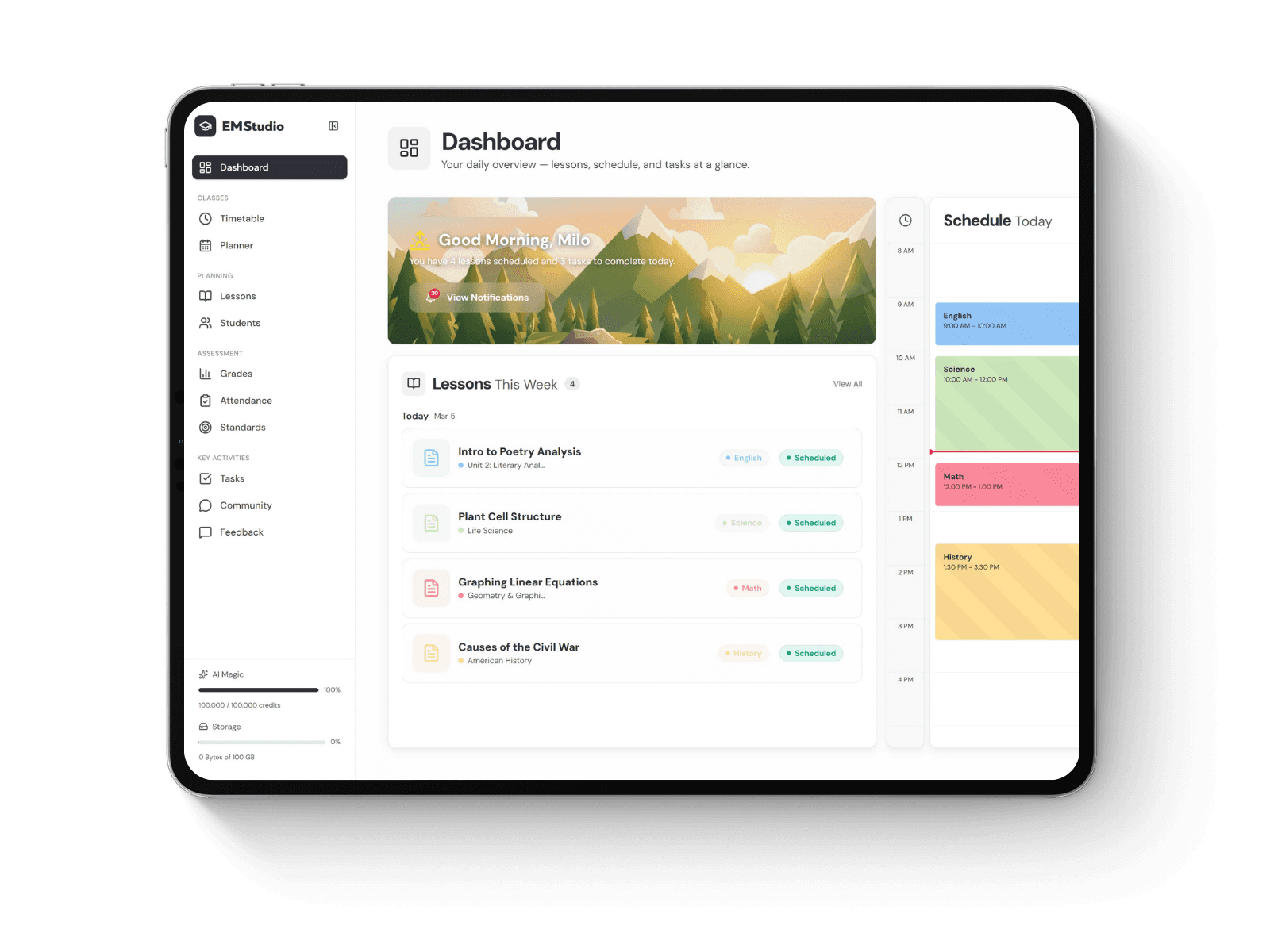
EMStudio is a free teaching management app — manage your classes, students, lessons, and more!
Learn More
Still grading everything by hand?
EMStudio is a free teaching management app — manage your classes, students, lessons, and more!
Learn More
Table of Contents
15 Ways to Motivate Students at a Glance
The fastest ways to motivate students are to make them feel seen and give them small, visible wins. Here's what each strategy is best for and how long it takes to set up.
# | Strategy | Best for | Time to set up |
|---|---|---|---|
1 | Make students feel important beyond their grades | Withdrawn or struggling students | 2 minutes a day |
2 | Personalize lessons with an interest inventory | Bored or disengaged classes | 15 minutes once |
3 | Make students compete with their past selves | Students who give up after comparing themselves | 10 minutes |
4 | Put students in charge | Students who push back on control | 5 minutes |
5 | Break work into small wins | Overwhelmed students | During planning |
6 | Praise the process, not the person | Students afraid of failing | None |
7 | Allow redos and retakes | Students who stop trying after a low grade | One policy change |
8 | Start lessons with a curiosity hook | Slow lesson starts | 5 minutes |
9 | Connect lessons to students' futures | Teens asking "When will I use this?" | 5 minutes |
10 | Use real problems from students' lives | Abstract subjects like math | 20 minutes |
11 | Turn units into quests with XP and levels | Long units that lose steam | 1 hour per unit |
12 | Use streaks and badges to reward effort | Inconsistent effort | 15 minutes |
13 | Run a mindful minute before tests | Test anxiety and restless classes | 1 minute |
14 | Build brain breaks into long lessons | Long blocks and low energy | 2 minutes |
15 | Turn phones into a focus tool | Classes fighting digital distraction | 10 minutes |
2 Strategies That Build Connection
Students work harder for teachers who see more than students in them. Connection must be a base for every other motivational strategy.
1. Make Students Feel Important Beyond Their Grades
Students are more motivated when they feel someone cares about how they're doing, not only how their work is going.
Some students find it easier to sort out their feelings privately before talking to an adult. For them, you can suggest that they try Breeze, an app with a quick mood tracker and short guided journaling. Just one minute before a class to choose an emoji relaxes the classroom and builds trust.
A popular way to make hard-to-reach students feel important is the 2x10 strategy:
Spend 2 minutes a day for 10 days in a row talking with one student about anything except school, like their favorite game or the show they're bingeing.
Ask about their weekend. Pay attention to details. Bring up things they were talking about previously.
Not only does it make a student trust you more, but it also allows you to see a kid from a different perspective and understand their behavior.
2. Personalize Lessons With a Quick Interest Inventory
An interest inventory tells you what each student cares about, so you can hook lessons to it.
On day one (or when you plan to make changes), hand out five quick questions:
What do you do when you have a free afternoon?
What's a topic you could talk about for an hour?
What job sounds cool to you, even if it's unrealistic?
What's one thing you wish teachers knew about you?
Then use the answers. Trust when we say that the students will notice you remembered.
2 Strategies That Give Students Ownership
Students care more about work they have a say in. These strategies hand over some of the control to kids, which trains them to take responsibility and see progress.
3. Make Students Compete With Their Past Selves
Comparing students to classmates creates competition that isn’t effective for many students. But comparing them to their own past work makes them see progress and growth.
Keep a simple progress chart for each student, like quiz scores across the term or the number of words read per minute.
Once a month, put an old piece of work next to a new one and ask, "What can you do now that you couldn't do in September?"
For a student who has never been top of the class, seeing their own line go up can be the first win they've had in years.
4. Put Students in Charge
Giving students real responsibility turns them into participants. Rotate classroom jobs like tech helper or discussion leader, and let a different student run the review game each Friday.
Small choices count too. Instead of assigning all four problems, let students pick any two, which gives a reluctant student a sense of control.

https://www.pexels.com/uk-ua/photo/6936400/
3 Strategies That Build Confidence
Many "lazy" students are actually afraid they'll fail. These strategies make success feel more down-to-earth.
5. Break Work Into Small Wins
Big assignments feel impossible to an overwhelmed student. Split a research paper into mini-deadlines: topic, three sources, outline, and first paragraph.
Check off each step visibly, on paper or on the board. Every tick is proof that the student is moving, and that proof is often what gets them to the next step.
6. Praise the Process, Not the Person
Praise works best when it names what the student did, not what they are. "You're so smart" teaches students that ability is fixed. So, they may hesitate to take a hard task because it becomes a threat to their “smartness.”
Praise for effort teaches kids that getting better is in their hands.
Among teens with a mentor at school, praise and encouragement were the most common forms of help they reported receiving, at 47% [1].
Here's how to make “correct” praisals:
Instead of | Try |
|---|---|
"You're so smart!" | "You kept trying new methods until one worked." |
"Good job." | "Your opening sentence made me want to keep reading." |
"You're a natural at this." | "All that practice on fractions is really showing." |
"Perfect score, as usual." | "This was a hard one. How did you figure out step three?" |
A note on praise: Many teens would rather hear praise privately than in front of the whole class.
7. Allow Redos and Retakes
Letting students redo work after a low grade is one of the motivators they ask for most. When teens were asked what teachers could do to motivate them, the top answer was a chance to redo assignments after a low grade (35%) [1].
A redo policy turns a bad grade into a next step instead of a final verdict. Set simple rules, like correcting mistakes and explaining what went wrong, so a retake still means extra learning.
3 Strategies That Make Learning Feel Worth It
It’s our human nature to put effort into things that we feel matter to us. Students do the same: they put in efforts when they can see why a lesson matters.
8. Start Lessons With a Curiosity Hook
Examples of curiosity hooks in the classroom:
Asking questions students can't answer yet, e.g., "Why is it so hard to fold a piece of paper in half more than seven times?"
Showing a surprising photo with no explanation.
Putting a worked problem with a deliberate mistake on the board and asking the class to find it.
Conducting a short in-class survey.
Telling a story or a paradox that makes ordinary things more unusual than they actually are.
9. Connect Lessons to Students' Futures
Students are more motivated when they see how a lesson connects to a future they actually want.
In a national survey, 87% of teens said they feel more engaged when they see a direct link between what they're learning and skills they'd use in a career [1].
Try a two-minute writing prompt at the end of a lesson: "How could this help you in a job you'd like, or in your life outside school?" Students who make the connection themselves often find it more convincing than anything you could tell them.
10. Use Real Problems From Students' Own Lives
Abstract topics click faster when students apply them to something they already care about.
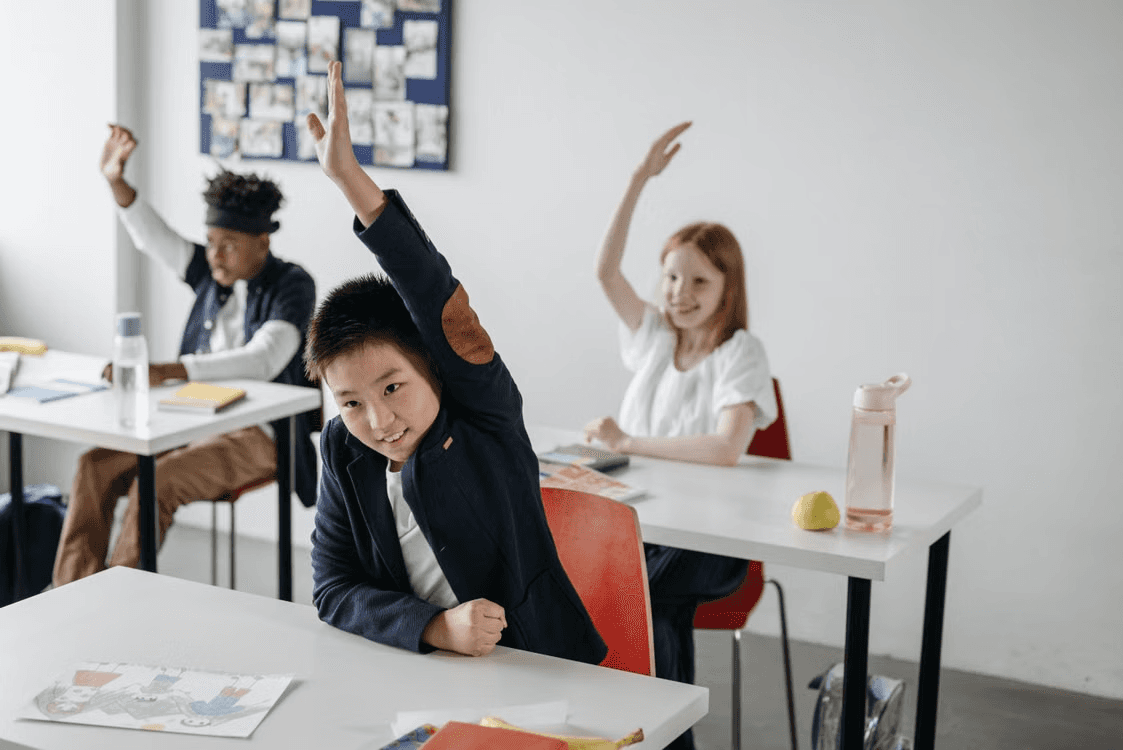
Have a math class budget a real class trip, or let students analyze a week of their own screen-time data in a statistics unit.
https://www.pexels.com/uk-ua/photo/8423044/
2 Gamification Strategies That Keep Students Playing
Game elements can make practice feel less like a chore, especially when they reward effort rather than only the top scores.
11. Turn Units Into Quests With XP and Levels
Turning a unit into a quest gives students a story to follow and a reason to keep going.
In a large review of studies, gamification had small but real effects on learning and motivation. The effectiveness of gamified learning was greater when it included a story and combined competition with teamwork [2].
Frame a unit as a mission, like "escaping the island" by mastering each chapter. For example, your students can earn XP (experience points) for completed tasks and "level up" at set points. Their teams can also pool their XP toward a shared goal.
12. Use Streaks and Badges to Reward Effort
Streaks and badges work best when they reward showing up and trying. Track streaks for things every student can control, like turning in homework on time or reading 20 minutes a day.
Give badges for effort-based milestones, such as "Asked for Help" or "Fixed Five Mistakes." A student who will never top the leaderboard can still earn the "Comeback" badge.
3 Wellbeing Strategies That Help Students Focus
Stressed or distracted brains struggle to care about anything. Well-being strategies help to clear some space for learning first.
13. Run a Mindful Minute Before Tests and Transitions
In a meta-analysis of school mindfulness programs from grades 1 to 12, students improved most in cognitive performance and resilience to stress [3].
Try box breathing:
Breathe in for four counts
Hold for four
Breathe out for four
Hold for four
Repeat three times.
Do it before tests or whenever the room feels like it had too much sugar.
14. Build Brain Breaks Into Long Lessons
Most students' attention drops well before a long lesson ends, so short breaks help them reset. Plan lessons in chunks of about 15 to 20 minutes, with a quick change of activity in between. For example, an in-lesson break can include:
Mindfulness minute
Short journaling prompt about students’ emotional state
Stretching
Fast round of "would you rather" linked to the topic
Students come back to the next chunk with more energy, and you get two minutes to breathe, too.
15. Turn Phones From a Fight Into a Focus Tool
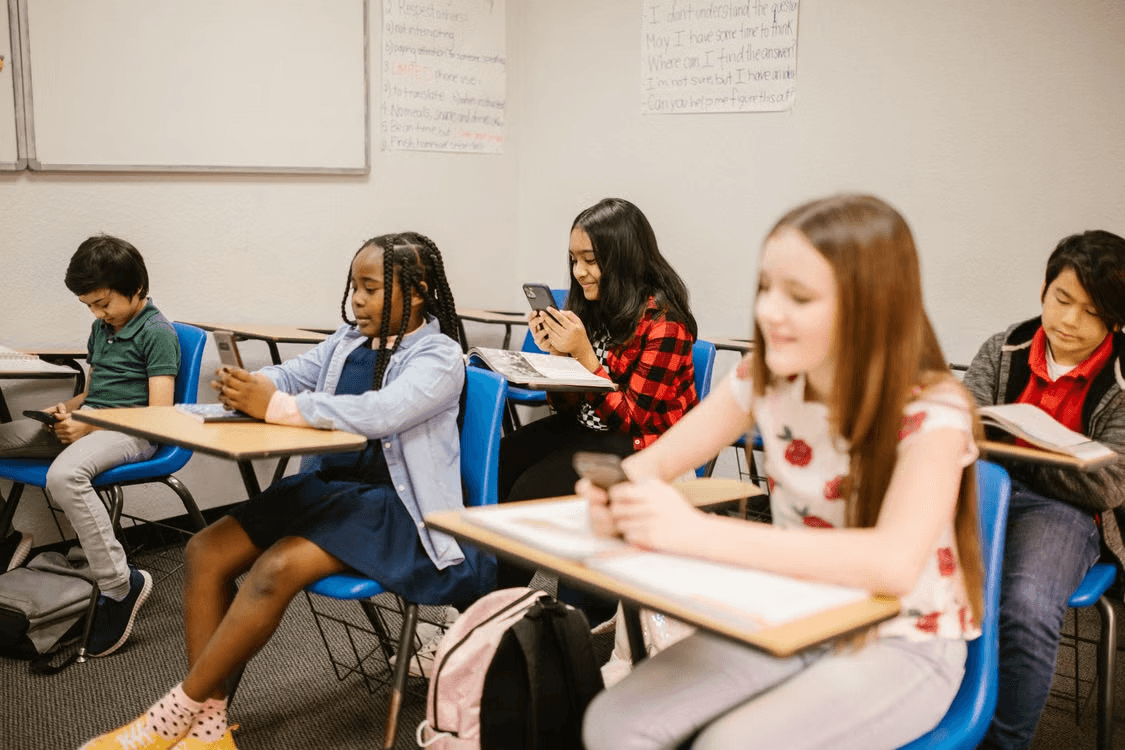
Phones compete for students' attention all lesson long. Across OECD countries, students who were distracted by classmates' devices in at least some math lessons scored 15 points lower in math. 45% of kids said they feel nervous when their phone isn't nearby [4].
That second number explains why a sudden ban can backfire. Try a "phone parking" spot during focused work, with a promised two-minute phone check at the end of each sprint, so students know they'll get their phones back soon.
https://www.pexels.com/uk-ua/photo/6936137/
How to Motivate Students Who Act Like They Don't Care
Start by figuring out what "I don't care" really means, because it's usually a cover for something else. Here are some common explanations for careless behaviors and what to do about them:
What it might really mean | What it can look like | What to try |
|---|---|---|
Fear of failing | Refuses to start, jokes around during tests | Small wins (strategy 5), redos (strategy 7) |
Overwhelm | Freezes on big tasks, misses deadlines | Mini-deadlines, fewer problems |
Problems outside school | Sudden drop in effort, tired or withdrawn | Connection (strategy 1), a quiet check-in |
Need for control | Argues, does the opposite of what's asked | Choices, classroom jobs (strategy 4) |
Boredom | Finishes fast or tunes out | Curiosity hooks, real problems (strategies 8 and 10) |
When to Involve a School Counselor
Sometimes low motivation is a sign that a student needs more support than a teacher can give. Reach out to your school counselor if a student:
Seems sad or withdrawn for more than a couple of weeks.
Suddenly stops attending, or their grades drop sharply.
Mentions feeling hopeless or worthless.
Hints at problems at home, like not feeling safe or not having enough to eat.
If a student mentions wanting to hurt themselves, follow your school's safeguarding procedure right away.
How to Tell If Your Motivation Strategies Are Working
Tracking is important here. Of course, your gut feeling might notice changes first. But first changes may be slow and unnoticeable, so build a system for tracking:
Run a 3-question pulse survey on Fridays, asking "How interesting was this week, from 1 to 5?", "What helped you learn?" and "Is there anything you’d like to change?"
Use exit tickets with one question about the lesson and one about how students felt during it.
Count hands and homework. Note how many students participate and turn in work on time, and compare week to week.
Watch your quietest students. If they start asking questions or joining discussions, something is working.
Give each new strategy at least two or three weeks before judging it. Students are suspicious of anything new, especially if it came from a professional development day.
FAQs
Do Rewards Kill Intrinsic Motivation?
Not if you use them carefully. Small, unexpected rewards for effort rarely hurt, but promising a prize for every task can teach students to ask "What do I get?" before they start. Use rewards to get things moving, then shift the focus to progress and praise.
How Do You Motivate Students to Learn Online?
Online students need connection and structure even more than students in a classroom. Keep live sessions interactive with polls and breakout rooms, and break work into short tasks with clear deadlines. A quick one-on-one message to a student who's gone quiet can bring them back.
How Do You Motivate Students at the End of the School Year?
Give the last weeks a clear finish line and something to look forward to. Projects with a final showcase and more student choice work well when energy is low. It also helps to remind students how far they've come by showing them their work from the start of the year.
Sources
Student Motivation: Student and Educator Perceptions. EdWeek Research Center. 2023.
The Gamification of Learning: a Meta-analysis. Educational Psychology Review. 2020.
Mindfulness-based interventions in schools—a systematic review and meta-analysis. Frontiers in Psychology. June 2014.
PISA 2022 Results: Decline in educational performance only partly attributable to the COVID-19 pandemic. OECD. December 2023.
15 Ways to Motivate Students at a Glance
The fastest ways to motivate students are to make them feel seen and give them small, visible wins. Here's what each strategy is best for and how long it takes to set up.
# | Strategy | Best for | Time to set up |
|---|---|---|---|
1 | Make students feel important beyond their grades | Withdrawn or struggling students | 2 minutes a day |
2 | Personalize lessons with an interest inventory | Bored or disengaged classes | 15 minutes once |
3 | Make students compete with their past selves | Students who give up after comparing themselves | 10 minutes |
4 | Put students in charge | Students who push back on control | 5 minutes |
5 | Break work into small wins | Overwhelmed students | During planning |
6 | Praise the process, not the person | Students afraid of failing | None |
7 | Allow redos and retakes | Students who stop trying after a low grade | One policy change |
8 | Start lessons with a curiosity hook | Slow lesson starts | 5 minutes |
9 | Connect lessons to students' futures | Teens asking "When will I use this?" | 5 minutes |
10 | Use real problems from students' lives | Abstract subjects like math | 20 minutes |
11 | Turn units into quests with XP and levels | Long units that lose steam | 1 hour per unit |
12 | Use streaks and badges to reward effort | Inconsistent effort | 15 minutes |
13 | Run a mindful minute before tests | Test anxiety and restless classes | 1 minute |
14 | Build brain breaks into long lessons | Long blocks and low energy | 2 minutes |
15 | Turn phones into a focus tool | Classes fighting digital distraction | 10 minutes |
2 Strategies That Build Connection
Students work harder for teachers who see more than students in them. Connection must be a base for every other motivational strategy.
1. Make Students Feel Important Beyond Their Grades
Students are more motivated when they feel someone cares about how they're doing, not only how their work is going.
Some students find it easier to sort out their feelings privately before talking to an adult. For them, you can suggest that they try Breeze, an app with a quick mood tracker and short guided journaling. Just one minute before a class to choose an emoji relaxes the classroom and builds trust.
A popular way to make hard-to-reach students feel important is the 2x10 strategy:
Spend 2 minutes a day for 10 days in a row talking with one student about anything except school, like their favorite game or the show they're bingeing.
Ask about their weekend. Pay attention to details. Bring up things they were talking about previously.
Not only does it make a student trust you more, but it also allows you to see a kid from a different perspective and understand their behavior.
2. Personalize Lessons With a Quick Interest Inventory
An interest inventory tells you what each student cares about, so you can hook lessons to it.
On day one (or when you plan to make changes), hand out five quick questions:
What do you do when you have a free afternoon?
What's a topic you could talk about for an hour?
What job sounds cool to you, even if it's unrealistic?
What's one thing you wish teachers knew about you?
Then use the answers. Trust when we say that the students will notice you remembered.
2 Strategies That Give Students Ownership
Students care more about work they have a say in. These strategies hand over some of the control to kids, which trains them to take responsibility and see progress.
3. Make Students Compete With Their Past Selves
Comparing students to classmates creates competition that isn’t effective for many students. But comparing them to their own past work makes them see progress and growth.
Keep a simple progress chart for each student, like quiz scores across the term or the number of words read per minute.
Once a month, put an old piece of work next to a new one and ask, "What can you do now that you couldn't do in September?"
For a student who has never been top of the class, seeing their own line go up can be the first win they've had in years.
4. Put Students in Charge
Giving students real responsibility turns them into participants. Rotate classroom jobs like tech helper or discussion leader, and let a different student run the review game each Friday.
Small choices count too. Instead of assigning all four problems, let students pick any two, which gives a reluctant student a sense of control.
https://www.pexels.com/uk-ua/photo/6936400/
3 Strategies That Build Confidence
Many "lazy" students are actually afraid they'll fail. These strategies make success feel more down-to-earth.
5. Break Work Into Small Wins
Big assignments feel impossible to an overwhelmed student. Split a research paper into mini-deadlines: topic, three sources, outline, and first paragraph.
Check off each step visibly, on paper or on the board. Every tick is proof that the student is moving, and that proof is often what gets them to the next step.
6. Praise the Process, Not the Person
Praise works best when it names what the student did, not what they are. "You're so smart" teaches students that ability is fixed. So, they may hesitate to take a hard task because it becomes a threat to their “smartness.”
Praise for effort teaches kids that getting better is in their hands.
Among teens with a mentor at school, praise and encouragement were the most common forms of help they reported receiving, at 47% [1].
Here's how to make “correct” praisals:
Instead of | Try |
|---|---|
"You're so smart!" | "You kept trying new methods until one worked." |
"Good job." | "Your opening sentence made me want to keep reading." |
"You're a natural at this." | "All that practice on fractions is really showing." |
"Perfect score, as usual." | "This was a hard one. How did you figure out step three?" |
A note on praise: Many teens would rather hear praise privately than in front of the whole class.
7. Allow Redos and Retakes
Letting students redo work after a low grade is one of the motivators they ask for most. When teens were asked what teachers could do to motivate them, the top answer was a chance to redo assignments after a low grade (35%) [1].
A redo policy turns a bad grade into a next step instead of a final verdict. Set simple rules, like correcting mistakes and explaining what went wrong, so a retake still means extra learning.
3 Strategies That Make Learning Feel Worth It
It’s our human nature to put effort into things that we feel matter to us. Students do the same: they put in efforts when they can see why a lesson matters.
8. Start Lessons With a Curiosity Hook
Examples of curiosity hooks in the classroom:
Asking questions students can't answer yet, e.g., "Why is it so hard to fold a piece of paper in half more than seven times?"
Showing a surprising photo with no explanation.
Putting a worked problem with a deliberate mistake on the board and asking the class to find it.
Conducting a short in-class survey.
Telling a story or a paradox that makes ordinary things more unusual than they actually are.
9. Connect Lessons to Students' Futures
Students are more motivated when they see how a lesson connects to a future they actually want.
In a national survey, 87% of teens said they feel more engaged when they see a direct link between what they're learning and skills they'd use in a career [1].
Try a two-minute writing prompt at the end of a lesson: "How could this help you in a job you'd like, or in your life outside school?" Students who make the connection themselves often find it more convincing than anything you could tell them.
10. Use Real Problems From Students' Own Lives
Abstract topics click faster when students apply them to something they already care about.
Have a math class budget a real class trip, or let students analyze a week of their own screen-time data in a statistics unit.
https://www.pexels.com/uk-ua/photo/8423044/
2 Gamification Strategies That Keep Students Playing
Game elements can make practice feel less like a chore, especially when they reward effort rather than only the top scores.
11. Turn Units Into Quests With XP and Levels
Turning a unit into a quest gives students a story to follow and a reason to keep going.
In a large review of studies, gamification had small but real effects on learning and motivation. The effectiveness of gamified learning was greater when it included a story and combined competition with teamwork [2].
Frame a unit as a mission, like "escaping the island" by mastering each chapter. For example, your students can earn XP (experience points) for completed tasks and "level up" at set points. Their teams can also pool their XP toward a shared goal.
12. Use Streaks and Badges to Reward Effort
Streaks and badges work best when they reward showing up and trying. Track streaks for things every student can control, like turning in homework on time or reading 20 minutes a day.
Give badges for effort-based milestones, such as "Asked for Help" or "Fixed Five Mistakes." A student who will never top the leaderboard can still earn the "Comeback" badge.
3 Wellbeing Strategies That Help Students Focus
Stressed or distracted brains struggle to care about anything. Well-being strategies help to clear some space for learning first.
13. Run a Mindful Minute Before Tests and Transitions
In a meta-analysis of school mindfulness programs from grades 1 to 12, students improved most in cognitive performance and resilience to stress [3].
Try box breathing:
Breathe in for four counts
Hold for four
Breathe out for four
Hold for four
Repeat three times.
Do it before tests or whenever the room feels like it had too much sugar.
14. Build Brain Breaks Into Long Lessons
Most students' attention drops well before a long lesson ends, so short breaks help them reset. Plan lessons in chunks of about 15 to 20 minutes, with a quick change of activity in between. For example, an in-lesson break can include:
Mindfulness minute
Short journaling prompt about students’ emotional state
Stretching
Fast round of "would you rather" linked to the topic
Students come back to the next chunk with more energy, and you get two minutes to breathe, too.
15. Turn Phones From a Fight Into a Focus Tool
Phones compete for students' attention all lesson long. Across OECD countries, students who were distracted by classmates' devices in at least some math lessons scored 15 points lower in math. 45% of kids said they feel nervous when their phone isn't nearby [4].
That second number explains why a sudden ban can backfire. Try a "phone parking" spot during focused work, with a promised two-minute phone check at the end of each sprint, so students know they'll get their phones back soon.
https://www.pexels.com/uk-ua/photo/6936137/
How to Motivate Students Who Act Like They Don't Care
Start by figuring out what "I don't care" really means, because it's usually a cover for something else. Here are some common explanations for careless behaviors and what to do about them:
What it might really mean | What it can look like | What to try |
|---|---|---|
Fear of failing | Refuses to start, jokes around during tests | Small wins (strategy 5), redos (strategy 7) |
Overwhelm | Freezes on big tasks, misses deadlines | Mini-deadlines, fewer problems |
Problems outside school | Sudden drop in effort, tired or withdrawn | Connection (strategy 1), a quiet check-in |
Need for control | Argues, does the opposite of what's asked | Choices, classroom jobs (strategy 4) |
Boredom | Finishes fast or tunes out | Curiosity hooks, real problems (strategies 8 and 10) |
When to Involve a School Counselor
Sometimes low motivation is a sign that a student needs more support than a teacher can give. Reach out to your school counselor if a student:
Seems sad or withdrawn for more than a couple of weeks.
Suddenly stops attending, or their grades drop sharply.
Mentions feeling hopeless or worthless.
Hints at problems at home, like not feeling safe or not having enough to eat.
If a student mentions wanting to hurt themselves, follow your school's safeguarding procedure right away.
How to Tell If Your Motivation Strategies Are Working
Tracking is important here. Of course, your gut feeling might notice changes first. But first changes may be slow and unnoticeable, so build a system for tracking:
Run a 3-question pulse survey on Fridays, asking "How interesting was this week, from 1 to 5?", "What helped you learn?" and "Is there anything you’d like to change?"
Use exit tickets with one question about the lesson and one about how students felt during it.
Count hands and homework. Note how many students participate and turn in work on time, and compare week to week.
Watch your quietest students. If they start asking questions or joining discussions, something is working.
Give each new strategy at least two or three weeks before judging it. Students are suspicious of anything new, especially if it came from a professional development day.
FAQs
Do Rewards Kill Intrinsic Motivation?
Not if you use them carefully. Small, unexpected rewards for effort rarely hurt, but promising a prize for every task can teach students to ask "What do I get?" before they start. Use rewards to get things moving, then shift the focus to progress and praise.
How Do You Motivate Students to Learn Online?
Online students need connection and structure even more than students in a classroom. Keep live sessions interactive with polls and breakout rooms, and break work into short tasks with clear deadlines. A quick one-on-one message to a student who's gone quiet can bring them back.
How Do You Motivate Students at the End of the School Year?
Give the last weeks a clear finish line and something to look forward to. Projects with a final showcase and more student choice work well when energy is low. It also helps to remind students how far they've come by showing them their work from the start of the year.
Sources
Student Motivation: Student and Educator Perceptions. EdWeek Research Center. 2023.
The Gamification of Learning: a Meta-analysis. Educational Psychology Review. 2020.
Mindfulness-based interventions in schools—a systematic review and meta-analysis. Frontiers in Psychology. June 2014.
PISA 2022 Results: Decline in educational performance only partly attributable to the COVID-19 pandemic. OECD. December 2023.
Still grading everything by hand?
EMStudio is a free teaching management app — manage your classes, students, lessons, and more!
Learn More
Still grading everything by hand?
EMStudio is a free teaching management app — manage your classes, students, lessons, and more!
Learn More


Notion4Teachers
Notion templates to simplify administrative tasks and enhance your teaching experience.



2026 Notion4Teachers. All Rights Reserved.
Notion4Teachers
Notion templates to simplify administrative tasks and enhance your teaching experience.
2026 Notion4Teachers. All Rights Reserved.
Notion4Teachers
Notion templates to simplify administrative tasks and enhance your teaching experience.
2026 Notion4Teachers. All Rights Reserved.