
How Leadership Education Can Make You a More Effective Teacher
How Leadership Education Can Make You a More Effective Teacher

Article by
Milo
ESL Content Coordinator & Educator
ESL Content Coordinator & Educator
All Posts

If you spend any time in schools, you already know teaching and leadership are tangled together. You manage a room, guide students through setbacks, work with families, and often help shape the culture around you. That’s a lot for one job title. Formal leadership education can sharpen those skills in a practical way, especially if you want to grow beyond surviving each school day and start influencing what happens across your classroom, team, or entire school.
Still grading everything by hand?
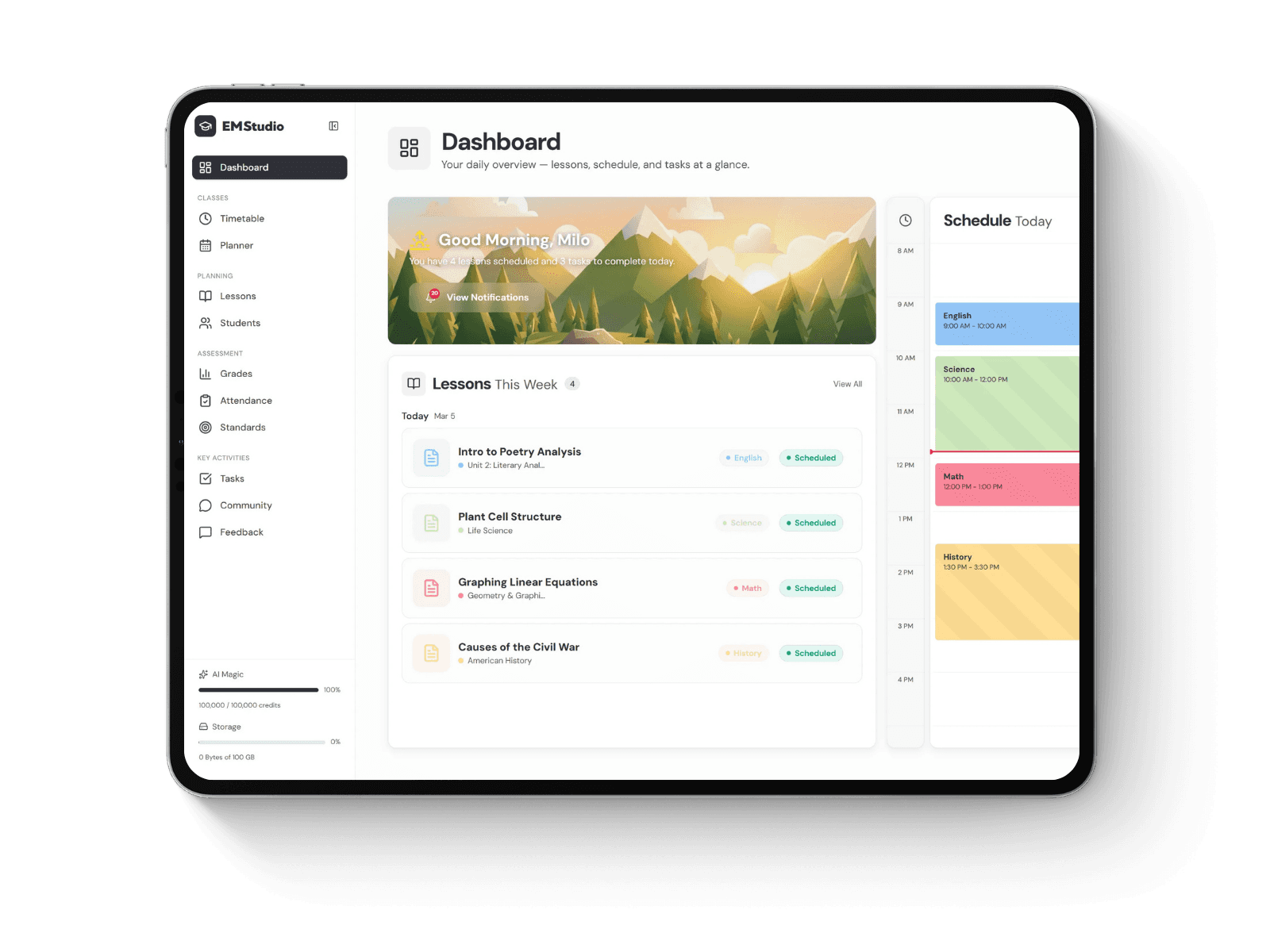
EMStudio is a free teaching management app — manage your classes, students, lessons, and more!
Learn More
Still grading everything by hand?
EMStudio is a free teaching management app — manage your classes, students, lessons, and more!
Learn More
Table of Contents
Graduate study can help you lead with more confidence and precision
Advanced study isn’t only for people chasing titles with nicer office chairs. It can also help you become more effective in work you’re already doing. Programs focused on leadership often cover organizational behavior, ethics, communication, and decision-making, all of which show up daily in education.
For teachers exploring structured growth, masters of arts in leadership can support that shift from instinctive leadership to deliberate leadership. That kind of program is built around leading people and systems, not just managing tasks.
In practical terms, you may become better at running meetings, mentoring peers, resolving conflict, and guiding school initiatives without sounding like you swallowed a district memo. Clearer thinking tends to produce clearer action, and schools need plenty of both.
Leadership in education starts long before a formal title
You don’t need to be a principal to act like a leader in education. If you’ve ever calmed a tense class discussion, helped a new colleague, or adjusted a lesson when the room clearly wasn’t buying it, you’ve already stepped into that role.
Teaching puts you in constant decision-making mode. You read body language, respond to confusion, and keep learning moving even when technology crashes at the worst possible moment. That kind of on-the-spot judgment is leadership in action.
The difference between informal leadership and intentional leadership usually comes down to skill. When you understand communication, strategy, and team dynamics more clearly, your choices get sharper. You stop reacting to every problem like it’s a pop quiz and start handling challenges with more control.
Strong teachers often hit a point where classroom skill isn’t enough
At some point, many teachers realize great instruction alone doesn’t solve every problem. You can plan thoughtful lessons, build strong relationships, and still run into barriers tied to school culture, policy, staffing, or uneven support systems.
That moment can feel frustrating. You know what students need, but you may not yet have the tools to influence decisions beyond your own classroom. Leadership education helps bridge that gap.
It gives you a framework for understanding how institutions function, how change happens, and how people respond to it. That matters in schools, where even small improvements usually involve many moving parts. One smart idea can stall fast if nobody knows how to build buy-in, present evidence, or guide a team through the messy middle.
Better leadership changes how you communicate with students and adults
Communication in education is tricky because you’re rarely speaking to just one audience. In a single day, you might explain a concept to students, discuss progress with a parent, coordinate with a counselor, and respond to an administrator asking for data by 3 p.m. Sharp leadership helps you adjust your message without losing clarity.
That skill goes beyond being polished. It involves listening well, asking better questions, and knowing when people need direction versus collaboration. Students notice this too. A teacher who communicates with consistency and calm usually creates a more stable learning environment.
Leadership training can also help you manage hard conversations. Think of grade disputes, parent concerns, team friction, or discussions around student support plans. Those moments rarely improve through guesswork. Strong communication keeps problems from turning into full-scale email operas.
Schools need leaders who understand people, not just policy
Policy matters, but people decide whether policy lives or dies in practice. A new attendance strategy, literacy push, or behavior framework can look brilliant on paper and still flop if staff members feel confused, excluded, or overloaded.
That’s where people-centered leadership becomes valuable. Teachers who study leadership often gain a stronger grasp of motivation, trust-building, and organizational culture. Those ideas may sound abstract at first, yet they affect concrete outcomes every day.
For example, a department chair leading a curriculum change has to do more than share deadlines. You need to read concerns, clarify expectations, and create enough momentum for others to stay engaged. Schools are deeply human workplaces. Any leader who forgets that usually learns it the hard way, often during a meeting that could’ve been an email.
Leadership education can open paths beyond the classroom
Not every teacher wants to leave the classroom, and that’s completely fair. Still, leadership development can expand your options. You might move into instructional coaching, academic advising, curriculum coordination, student services, nonprofit education work, or administration later on.
Even if you stay in teaching, broader training can make you more effective in committee work, school improvement planning, and cross-functional projects. Those roles often shape student outcomes in ways that aren’t obvious from the outside.
There’s also the career durability factor. Education changes fast, and roles evolve with it. Teachers who understand systems, leadership theory, and organizational problem-solving often have more flexibility when schools restructure or new opportunities appear. In career terms, that’s less drifting and more steering.
Choosing the right leadership program takes more than comparing tuition
Cost matters, obviously. Nobody enjoys financial stress while wearing a graduate school nametag. But choosing a program should also involve looking at curriculum, format, values, and whether the coursework connects to the kind of leadership you actually want to practice.
Start with a few practical questions:
- Does the program focus on ethical and effective leadership?
- Can you balance it with teaching or other work responsibilities?
- Will the coursework help in real educational settings?
- Does it build skills in communication, analysis, and team leadership?
- Can it support both classroom growth and longer-term career goals?
You should also pay attention to whether a program feels grounded in real leadership challenges rather than vague inspiration. A strong program won’t just tell you to lead. It should help you understand how leadership works when people disagree, resources are tight, and the calendar is already packed.
The real value shows up in everyday educational practice
The biggest payoff from leadership education often appears in ordinary moments. You run a smoother parent meeting. You build stronger collaboration with colleagues. You spot a brewing issue before it derails a team. You advocate more effectively for students because you can connect daily needs with bigger institutional goals.
That kind of growth may not look flashy, yet it adds up. Schools improve through repeated good decisions, healthy working relationships, and adults who know how to move ideas into action.
If you care about teaching well, supporting students, and having a stronger voice in the future of education, leadership education deserves serious attention. It won’t remove every challenge from school life. Nothing can. But it can help you handle those challenges with more range, more confidence, and far fewer moments of wondering who left you in charge of all this. Thankfully, you’re more ready than you think.
Graduate study can help you lead with more confidence and precision
Advanced study isn’t only for people chasing titles with nicer office chairs. It can also help you become more effective in work you’re already doing. Programs focused on leadership often cover organizational behavior, ethics, communication, and decision-making, all of which show up daily in education.
For teachers exploring structured growth, masters of arts in leadership can support that shift from instinctive leadership to deliberate leadership. That kind of program is built around leading people and systems, not just managing tasks.
In practical terms, you may become better at running meetings, mentoring peers, resolving conflict, and guiding school initiatives without sounding like you swallowed a district memo. Clearer thinking tends to produce clearer action, and schools need plenty of both.
Leadership in education starts long before a formal title
You don’t need to be a principal to act like a leader in education. If you’ve ever calmed a tense class discussion, helped a new colleague, or adjusted a lesson when the room clearly wasn’t buying it, you’ve already stepped into that role.
Teaching puts you in constant decision-making mode. You read body language, respond to confusion, and keep learning moving even when technology crashes at the worst possible moment. That kind of on-the-spot judgment is leadership in action.
The difference between informal leadership and intentional leadership usually comes down to skill. When you understand communication, strategy, and team dynamics more clearly, your choices get sharper. You stop reacting to every problem like it’s a pop quiz and start handling challenges with more control.
Strong teachers often hit a point where classroom skill isn’t enough
At some point, many teachers realize great instruction alone doesn’t solve every problem. You can plan thoughtful lessons, build strong relationships, and still run into barriers tied to school culture, policy, staffing, or uneven support systems.
That moment can feel frustrating. You know what students need, but you may not yet have the tools to influence decisions beyond your own classroom. Leadership education helps bridge that gap.
It gives you a framework for understanding how institutions function, how change happens, and how people respond to it. That matters in schools, where even small improvements usually involve many moving parts. One smart idea can stall fast if nobody knows how to build buy-in, present evidence, or guide a team through the messy middle.
Better leadership changes how you communicate with students and adults
Communication in education is tricky because you’re rarely speaking to just one audience. In a single day, you might explain a concept to students, discuss progress with a parent, coordinate with a counselor, and respond to an administrator asking for data by 3 p.m. Sharp leadership helps you adjust your message without losing clarity.
That skill goes beyond being polished. It involves listening well, asking better questions, and knowing when people need direction versus collaboration. Students notice this too. A teacher who communicates with consistency and calm usually creates a more stable learning environment.
Leadership training can also help you manage hard conversations. Think of grade disputes, parent concerns, team friction, or discussions around student support plans. Those moments rarely improve through guesswork. Strong communication keeps problems from turning into full-scale email operas.
Schools need leaders who understand people, not just policy
Policy matters, but people decide whether policy lives or dies in practice. A new attendance strategy, literacy push, or behavior framework can look brilliant on paper and still flop if staff members feel confused, excluded, or overloaded.
That’s where people-centered leadership becomes valuable. Teachers who study leadership often gain a stronger grasp of motivation, trust-building, and organizational culture. Those ideas may sound abstract at first, yet they affect concrete outcomes every day.
For example, a department chair leading a curriculum change has to do more than share deadlines. You need to read concerns, clarify expectations, and create enough momentum for others to stay engaged. Schools are deeply human workplaces. Any leader who forgets that usually learns it the hard way, often during a meeting that could’ve been an email.
Leadership education can open paths beyond the classroom
Not every teacher wants to leave the classroom, and that’s completely fair. Still, leadership development can expand your options. You might move into instructional coaching, academic advising, curriculum coordination, student services, nonprofit education work, or administration later on.
Even if you stay in teaching, broader training can make you more effective in committee work, school improvement planning, and cross-functional projects. Those roles often shape student outcomes in ways that aren’t obvious from the outside.
There’s also the career durability factor. Education changes fast, and roles evolve with it. Teachers who understand systems, leadership theory, and organizational problem-solving often have more flexibility when schools restructure or new opportunities appear. In career terms, that’s less drifting and more steering.
Choosing the right leadership program takes more than comparing tuition
Cost matters, obviously. Nobody enjoys financial stress while wearing a graduate school nametag. But choosing a program should also involve looking at curriculum, format, values, and whether the coursework connects to the kind of leadership you actually want to practice.
Start with a few practical questions:
- Does the program focus on ethical and effective leadership?
- Can you balance it with teaching or other work responsibilities?
- Will the coursework help in real educational settings?
- Does it build skills in communication, analysis, and team leadership?
- Can it support both classroom growth and longer-term career goals?
You should also pay attention to whether a program feels grounded in real leadership challenges rather than vague inspiration. A strong program won’t just tell you to lead. It should help you understand how leadership works when people disagree, resources are tight, and the calendar is already packed.
The real value shows up in everyday educational practice
The biggest payoff from leadership education often appears in ordinary moments. You run a smoother parent meeting. You build stronger collaboration with colleagues. You spot a brewing issue before it derails a team. You advocate more effectively for students because you can connect daily needs with bigger institutional goals.
That kind of growth may not look flashy, yet it adds up. Schools improve through repeated good decisions, healthy working relationships, and adults who know how to move ideas into action.
If you care about teaching well, supporting students, and having a stronger voice in the future of education, leadership education deserves serious attention. It won’t remove every challenge from school life. Nothing can. But it can help you handle those challenges with more range, more confidence, and far fewer moments of wondering who left you in charge of all this. Thankfully, you’re more ready than you think.
Still grading everything by hand?
EMStudio is a free teaching management app — manage your classes, students, lessons, and more!
Learn More
Still grading everything by hand?
EMStudio is a free teaching management app — manage your classes, students, lessons, and more!
Learn More




Notion4Teachers
Notion templates to simplify administrative tasks and enhance your teaching experience.



2026 Notion4Teachers. All Rights Reserved.
Notion4Teachers
Notion templates to simplify administrative tasks and enhance your teaching experience.
2026 Notion4Teachers. All Rights Reserved.
Notion4Teachers
Notion templates to simplify administrative tasks and enhance your teaching experience.
2026 Notion4Teachers. All Rights Reserved.