
Is It Really Easy to Learn Korean All by Yourself? 7 Self-Study Tips That Can Help
Is It Really Easy to Learn Korean All by Yourself? 7 Self-Study Tips That Can Help

Article by
Milo
ESL Content Coordinator & Educator
ESL Content Coordinator & Educator
All Posts
Title: Is It Really Easy to Learn Korean All by Yourself?
Meta Description: Is it really easy to learn Korean all by yourself? Learn the answers to this question in this guide with self-study tips for your learning journey.
Many beginners believe they can learn Korean independently. Success depends on your approach, consistency, and access to materials.
For English speakers, Korean can be both simple and confusing. The writing is logical, but the grammar is complex. Still, beginners can succeed with studying the language on their own.
These seven self-study tips break down the answers to the question "Is Korean easy to learn?"
Still grading everything by hand?
EMStudio is a free teaching management app — manage your classes, students, lessons, and more!
Learn More
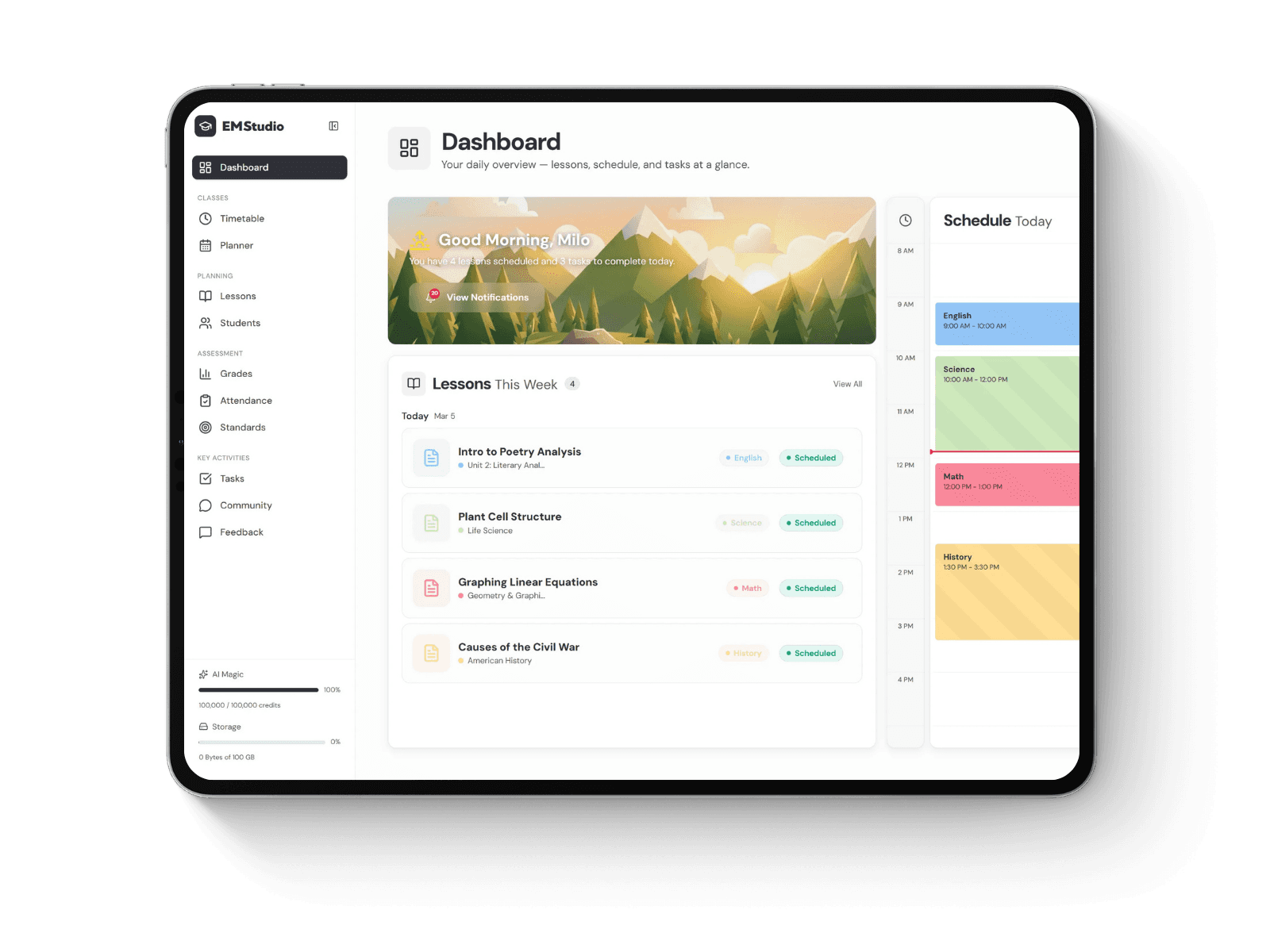
Still grading everything by hand?
EMStudio is a free teaching management app — manage your classes, students, lessons, and more!
Learn More
Table of Contents
1. Start with the Korean Alphabet
You should focus first on learning South Korea’s writing system—the Hangul alphabet. It’s a major foundation of your Korean learning journey, and it’s made up of 14 consonants and 10 vowels that create a sound when combined into a syllabic block.
Practice writing every character. Read basic Korean text and write simple words daily. Once you can read Hangul fluently, learning Korean becomes easier.
2. Build Strong Grammar Basics
Understanding Korean grammar helps you form and write even the most basic Korean sentence. The Korean sentence structure is different from English grammar or even your native language—the object comes before the subject.
Train your brain to think differently when learning Korean grammar. Focus on basic particles, verb conjugation, and sentence endings so you won’t get lost in translation.
3. Immerse in Korean Media
Immersion is essential when you learn a language. You should:
Watch Korean dramas and television programs, such as news and variety shows. It shows you a glimpse of Korean culture, such as honorifics and communication style.
Listen to Korean music, such as ballads and K-pop.
Subscribe to a YouTube channel that shows Korean content.
Begin with English subtitles to understand. Switch to Korean subtitles as you progress. This builds listening skills and natural phrasing.
4. Practice Speaking Early
You can never be ready to speak Korean if you don’t feel like it. Muster up the courage to speak the language daily. Start with simple phrases, and record yourself for pronunciation practice. Repeat sentences from YouTube videos to practice the words.
If you feel frustrated with your progress, you should:
Find a language exchange partner.
Sign up for a language exchange community.
Practice Korean with a language partner or even with a native Korean speaker.
Speaking regularly is crucial. By practicing often, you convert passive knowledge into real conversational skills—one of the main keys to progressing in Korean.
5. Use Tools to a Minimum
Learning the Korean language can be easier with apps and tools, but they shouldn’t be used to think. Use these Korean language learning materials:
Google Translate for quick checks.
Naver Dictionary for accurate definitions.
Use flashcard apps for vocabulary, or make your own with Korean translations.
Don’t translate every word. Focus on understanding the meaning within the context of the sentence.
6. Learn Vocabulary in Context
Memorizing random lists of words won’t help. Instead, you should learn Korean vocabulary through sentences and study phrases used in actual conversations. It helps you remember words more easily and use them more naturally.
7. Write Daily
Writing in Korean helps you retain information from all the Korean lessons you studied. For starters, write a full sentence in Korean in correct grammar. Translate a sentence into Korean to practice your language skills.
Ask for corrections from native speakers or check your online dictionary to spot errors and correct your writing mistakes.
8. Stay Consistent and Patient
Studying Korean will have good and bad days. But what matters more is staying consistent.
You should study a little and review Korean regularly while tracking your progress. Building the discipline of studying and reviewing will pay off in the long run.
Remember, everyone struggles, including intermediate learners. Staying positive and persistent is important for steady progress.
Should You Hire a Tutor or Stay Self-Taught?
Self-studying can work, but working with a Korean tutor can also speed up your progress. Compared with app-only learning or casual language exchange, working with a tutor gives learners more structure and correction. Apps can help with vocabulary, listening, and daily practice, while language exchanges are useful for informal conversation. However, tutor-led platforms like italki can be more focused, as learners can practice Korean one-on-one, receive feedback on pronunciation and grammar, and work on areas they find personally difficult. They can help you practice speaking Korean in casual conversations and structured classes, and write Korean words correctly. They will also explain difficult Korean grammar concepts to ensure you can sincerely say what you mean.
You can still succeed if you want to learn Korean independently. Just make sure to be diligent with daily study and review, and interact with native speakers whenever you have the time.
A Quick Note on 90 Day Korean
If you still choose to study Korean alone, a popular online resource is 90 Day Korean. This platform offers step-by-step lessons that can help you speak and write Korean quickly. It focuses on practical use rather than memorization.
If you feel lost, programs like those offered by 90 Day Korean can give your language learning journey a new direction.
Final Words
Learning Korean without anyone’s help is easy, depending on your mindset and the methods you use. The Korean alphabet requires practice, and Korean grammar and cultural nuances require effort and immersion to fully understand the language.
Consistent study habits are the foundation of learning, understanding, speaking, and writing in Korean at your own pace. Stay steady, and you will see progress over time.
1. Start with the Korean Alphabet
You should focus first on learning South Korea’s writing system—the Hangul alphabet. It’s a major foundation of your Korean learning journey, and it’s made up of 14 consonants and 10 vowels that create a sound when combined into a syllabic block.
Practice writing every character. Read basic Korean text and write simple words daily. Once you can read Hangul fluently, learning Korean becomes easier.
2. Build Strong Grammar Basics
Understanding Korean grammar helps you form and write even the most basic Korean sentence. The Korean sentence structure is different from English grammar or even your native language—the object comes before the subject.
Train your brain to think differently when learning Korean grammar. Focus on basic particles, verb conjugation, and sentence endings so you won’t get lost in translation.
3. Immerse in Korean Media
Immersion is essential when you learn a language. You should:
Watch Korean dramas and television programs, such as news and variety shows. It shows you a glimpse of Korean culture, such as honorifics and communication style.
Listen to Korean music, such as ballads and K-pop.
Subscribe to a YouTube channel that shows Korean content.
Begin with English subtitles to understand. Switch to Korean subtitles as you progress. This builds listening skills and natural phrasing.
4. Practice Speaking Early
You can never be ready to speak Korean if you don’t feel like it. Muster up the courage to speak the language daily. Start with simple phrases, and record yourself for pronunciation practice. Repeat sentences from YouTube videos to practice the words.
If you feel frustrated with your progress, you should:
Find a language exchange partner.
Sign up for a language exchange community.
Practice Korean with a language partner or even with a native Korean speaker.
Speaking regularly is crucial. By practicing often, you convert passive knowledge into real conversational skills—one of the main keys to progressing in Korean.
5. Use Tools to a Minimum
Learning the Korean language can be easier with apps and tools, but they shouldn’t be used to think. Use these Korean language learning materials:
Google Translate for quick checks.
Naver Dictionary for accurate definitions.
Use flashcard apps for vocabulary, or make your own with Korean translations.
Don’t translate every word. Focus on understanding the meaning within the context of the sentence.
6. Learn Vocabulary in Context
Memorizing random lists of words won’t help. Instead, you should learn Korean vocabulary through sentences and study phrases used in actual conversations. It helps you remember words more easily and use them more naturally.
7. Write Daily
Writing in Korean helps you retain information from all the Korean lessons you studied. For starters, write a full sentence in Korean in correct grammar. Translate a sentence into Korean to practice your language skills.
Ask for corrections from native speakers or check your online dictionary to spot errors and correct your writing mistakes.
8. Stay Consistent and Patient
Studying Korean will have good and bad days. But what matters more is staying consistent.
You should study a little and review Korean regularly while tracking your progress. Building the discipline of studying and reviewing will pay off in the long run.
Remember, everyone struggles, including intermediate learners. Staying positive and persistent is important for steady progress.
Should You Hire a Tutor or Stay Self-Taught?
Self-studying can work, but working with a Korean tutor can also speed up your progress. Compared with app-only learning or casual language exchange, working with a tutor gives learners more structure and correction. Apps can help with vocabulary, listening, and daily practice, while language exchanges are useful for informal conversation. However, tutor-led platforms like italki can be more focused, as learners can practice Korean one-on-one, receive feedback on pronunciation and grammar, and work on areas they find personally difficult. They can help you practice speaking Korean in casual conversations and structured classes, and write Korean words correctly. They will also explain difficult Korean grammar concepts to ensure you can sincerely say what you mean.
You can still succeed if you want to learn Korean independently. Just make sure to be diligent with daily study and review, and interact with native speakers whenever you have the time.
A Quick Note on 90 Day Korean
If you still choose to study Korean alone, a popular online resource is 90 Day Korean. This platform offers step-by-step lessons that can help you speak and write Korean quickly. It focuses on practical use rather than memorization.
If you feel lost, programs like those offered by 90 Day Korean can give your language learning journey a new direction.
Final Words
Learning Korean without anyone’s help is easy, depending on your mindset and the methods you use. The Korean alphabet requires practice, and Korean grammar and cultural nuances require effort and immersion to fully understand the language.
Consistent study habits are the foundation of learning, understanding, speaking, and writing in Korean at your own pace. Stay steady, and you will see progress over time.
Still grading everything by hand?
EMStudio is a free teaching management app — manage your classes, students, lessons, and more!
Learn More
Still grading everything by hand?
EMStudio is a free teaching management app — manage your classes, students, lessons, and more!
Learn More




Notion4Teachers
Notion templates to simplify administrative tasks and enhance your teaching experience.



2026 Notion4Teachers. All Rights Reserved.
Notion4Teachers
Notion templates to simplify administrative tasks and enhance your teaching experience.
2026 Notion4Teachers. All Rights Reserved.
Notion4Teachers
Notion templates to simplify administrative tasks and enhance your teaching experience.
2026 Notion4Teachers. All Rights Reserved.