
How to Track Student Progress Without Overwhelming Yourself
How to Track Student Progress Without Overwhelming Yourself

Article by
Milo
ESL Content Coordinator & Educator
ESL Content Coordinator & Educator
All Posts
2026-02-14
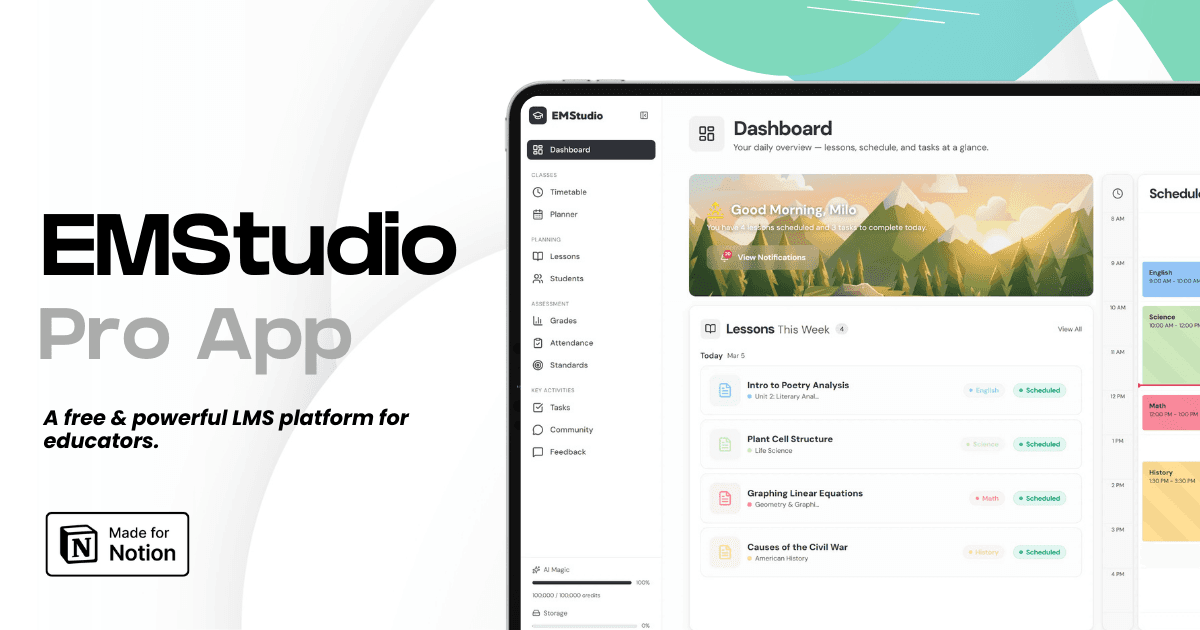
Still grading everything by hand?
EMStudio is a free teaching management app — manage your classes, students, lessons, and more!
Learn More
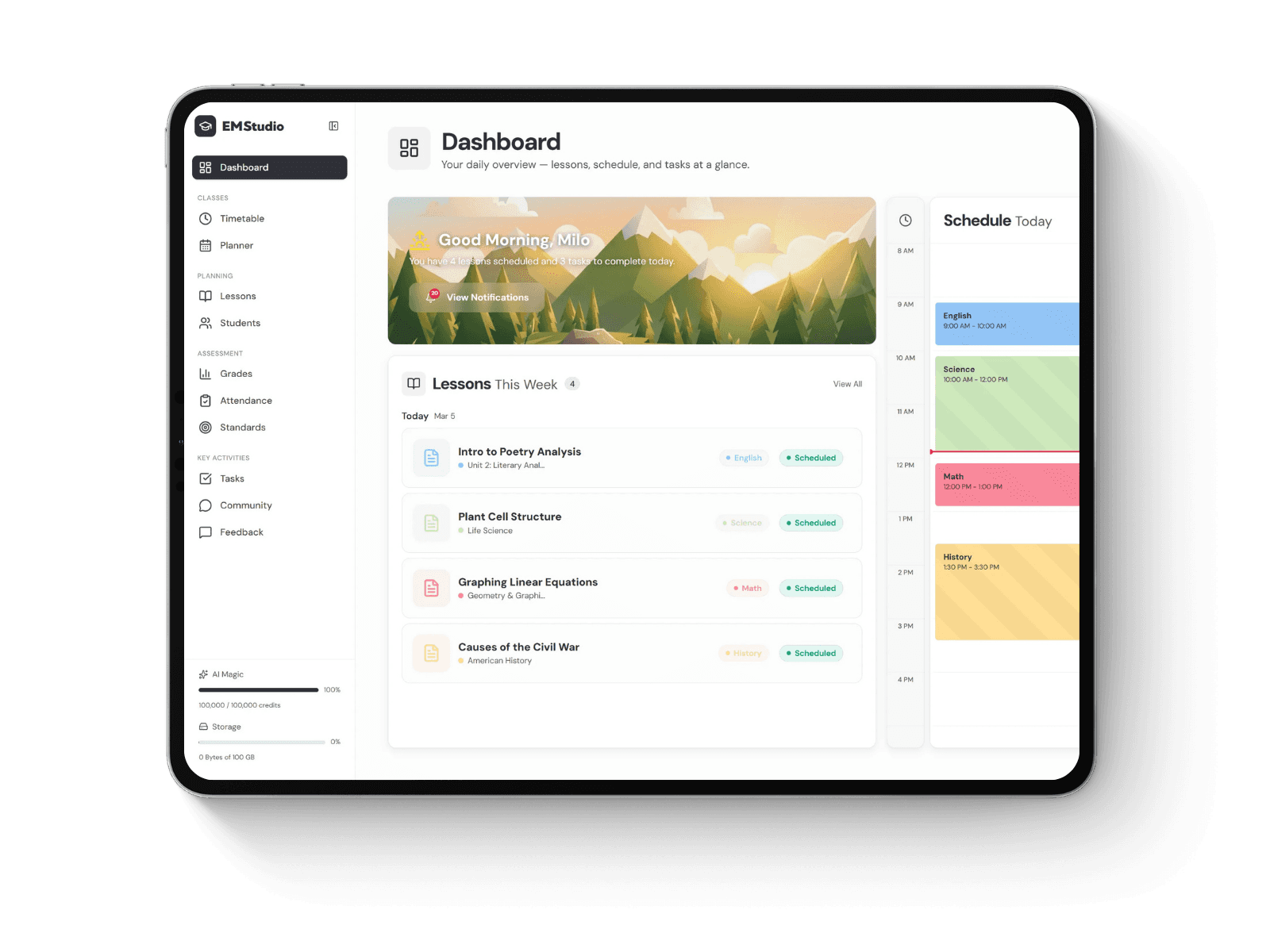
Still grading everything by hand?
EMStudio is a free teaching management app — manage your classes, students, lessons, and more!
Learn More
Table of Contents
Meta title: Student Progress Tracking: 7 Simple Systems Teachers Keep
Meta description: Keep a pulse on student progress without turning evenings into data entry. Learn teacher time management moves that capture student growth with less paperwork.
You blink, and somehow it’s Friday again. The class is moving, the inbox is growing, and you still want a clear answer to one question: who’s getting it, and who’s slipping?
If you’ve ever wished for persuasive essay writing assistance when students struggle to explain their thinking, you already know the power of quick, targeted feedback. We’ll use that same idea for tracking. You’ll leave with a light system you can run in minutes, even on messy weeks.
Source: https://www.pexels.com/photo/a-woman-in-green-long-sleeve-shirt-sitting-at-the-table-holding-a-pencil-on-paper-8363162/
Build One “Home Base” for Evidence
The fastest way to burn out is to collect progress clues in five places: sticky notes, email drafts, photos, and a gradebook. Pick one home base. A single Google Sheet, a notebook, or your LMS is enough.
Set it up with four columns: Date, Skill, Evidence, Next Step. Evidence can be tiny: “exit ticket 3/5,” “read aloud: missed main idea,” “lab write-up: strong claim, weak data.” Next Step is one sentence you can act on in the next lesson.
This is progress note-taking that stays truly teacher-sized. It favors clear, usable notes over perfect records. The goal is to know what to do on Monday.
Track Fewer Things on Purpose
When everything is “important,” nothing is trackable. Choose three skills per unit that actually predict success. In writing, it might be claim, evidence, and organization. In math, it might be accuracy, strategy choice, and explanation. In reading, it might be comprehension, vocabulary in context, and citing text. You get the idea.
Use this filter to decide what makes the cut:
Does this skill show up on assessments and daily work?
Can you see it in a 2-minute check?
If a student improves here, will other work improve, too?
Can you teach one micro-lesson to move it?
Now your notes stay clean, and your feedback stays focused.
Use Mini-Checks That Fit Inside Lessons
You do not need a weekly test. You need small, repeatable checks that reveal thinking. Aim for one mini-check per week per class, plus one deeper check every two or three weeks.
A mini-check can be an exit ticket, a 60-second problem, a short annotation task, or a targeted paragraph. Design each one to map to one of your three skills. Then score it with a 0–2 scale: 0 = missing, 1 = emerging, 2 = solid.
This is where progress monitoring strategies earn their keep. They are simple on purpose. The value is in repetition because repetition shows trend lines.
Batch the Work: Score Now, Decide Later
If you try to score, comment, email, and plan interventions at the same time, tracking becomes a second job. Separate the steps. Score fast in the moment and decide next steps in one batch later.
Here’s a routine you can run without hating your life:
During class: mark the 0–2 for your focus skill.
After class: highlight patterns (lots of 0s, lots of 1s, lots of 2s).
Before the next lesson: plan one “common issue” mini-lesson.
End of the week: pick two students for a check-in.
This keeps you in decision mode, not documentation mode.
Source: https://www.pexels.com/photo/man-wearing-eyeglasses-using-a-laptop-8617506/
Keep “Grade” Separate From “Growth”
Grades tell a story, but they do not always tell the story you need. A student can work hard and still score low. Another can score high while coasting. If you only look at the gradebook, you miss the why.
Build a growth view alongside grades. In your home base, add a tiny tag for each mini-check: “claim,” “evidence,” “strategy,” “vocab,” whatever you choose. Over time, you’ll see the student who always misses the same step, the student who improves quickly with modeling, and the student who needs more language support.
That’s academic performance tracking that supports real teaching moves. It helps you answer, “What should I teach next?” instead of only, “What score did they get?”
Set Thresholds That Trigger Action
Decide in advance what you will do when the data says “help.” If you wait until you feel worried, you will always feel worried.
Try two thresholds.
Class threshold: if around 40% or more score 0 on a mini-check, reteach it to everyone.
Student threshold: if a student scores 0 twice in a row on the same skill, schedule a 3-minute conference or small-group support.
These rules protect your evenings because you are not reinventing decisions every week.
Protect Your Time With a Lightweight Weekly Rhythm
Your system should run on a schedule, not on guilt. A workable rhythm looks like this: run a mini-check early in the week, reteach the most common issue the next day, and reserve one day for small-group practice plus a handful of quick conferences.
Two boundaries make it sustainable. First, tracking only happens in two time blocks: during class and a single 20-minute batch after school. Second, stop writing comments that repeat what your rubric already says. Save your words for the one change that will move the student forward.
These time management tips for teachers keep you consistent, even during report-card season.
One more trick: keep your tools boring. If a new app means new logins, new notifications, and new dashboards, it will not last. Stick with what your school already supports, and make your tracker easy to glance at. Even a printed class list with checkmarks can do the job.
So, What Is a Good Way to Monitor Student Progress?
Use one home base, track three skills, and run one mini-check each week. Then make your next lesson respond to the pattern you saw. If the pattern is class-wide, reteach. If it’s a small cluster, group support. If it’s one student, go for a short conference.
When tracking produces a clear next step, it feels less like paperwork and more like teaching.
Build a weekly rhythm you can repeat, even in busy seasons. When your system stays small and consistent, you stay calmer, and students get clearer next steps. That is the win, every single week.
Meta title: Student Progress Tracking: 7 Simple Systems Teachers Keep
Meta description: Keep a pulse on student progress without turning evenings into data entry. Learn teacher time management moves that capture student growth with less paperwork.
You blink, and somehow it’s Friday again. The class is moving, the inbox is growing, and you still want a clear answer to one question: who’s getting it, and who’s slipping?
If you’ve ever wished for persuasive essay writing assistance when students struggle to explain their thinking, you already know the power of quick, targeted feedback. We’ll use that same idea for tracking. You’ll leave with a light system you can run in minutes, even on messy weeks.
Source: https://www.pexels.com/photo/a-woman-in-green-long-sleeve-shirt-sitting-at-the-table-holding-a-pencil-on-paper-8363162/
Build One “Home Base” for Evidence
The fastest way to burn out is to collect progress clues in five places: sticky notes, email drafts, photos, and a gradebook. Pick one home base. A single Google Sheet, a notebook, or your LMS is enough.
Set it up with four columns: Date, Skill, Evidence, Next Step. Evidence can be tiny: “exit ticket 3/5,” “read aloud: missed main idea,” “lab write-up: strong claim, weak data.” Next Step is one sentence you can act on in the next lesson.
This is progress note-taking that stays truly teacher-sized. It favors clear, usable notes over perfect records. The goal is to know what to do on Monday.
Track Fewer Things on Purpose
When everything is “important,” nothing is trackable. Choose three skills per unit that actually predict success. In writing, it might be claim, evidence, and organization. In math, it might be accuracy, strategy choice, and explanation. In reading, it might be comprehension, vocabulary in context, and citing text. You get the idea.
Use this filter to decide what makes the cut:
Does this skill show up on assessments and daily work?
Can you see it in a 2-minute check?
If a student improves here, will other work improve, too?
Can you teach one micro-lesson to move it?
Now your notes stay clean, and your feedback stays focused.
Use Mini-Checks That Fit Inside Lessons
You do not need a weekly test. You need small, repeatable checks that reveal thinking. Aim for one mini-check per week per class, plus one deeper check every two or three weeks.
A mini-check can be an exit ticket, a 60-second problem, a short annotation task, or a targeted paragraph. Design each one to map to one of your three skills. Then score it with a 0–2 scale: 0 = missing, 1 = emerging, 2 = solid.
This is where progress monitoring strategies earn their keep. They are simple on purpose. The value is in repetition because repetition shows trend lines.
Batch the Work: Score Now, Decide Later
If you try to score, comment, email, and plan interventions at the same time, tracking becomes a second job. Separate the steps. Score fast in the moment and decide next steps in one batch later.
Here’s a routine you can run without hating your life:
During class: mark the 0–2 for your focus skill.
After class: highlight patterns (lots of 0s, lots of 1s, lots of 2s).
Before the next lesson: plan one “common issue” mini-lesson.
End of the week: pick two students for a check-in.
This keeps you in decision mode, not documentation mode.
Source: https://www.pexels.com/photo/man-wearing-eyeglasses-using-a-laptop-8617506/
Keep “Grade” Separate From “Growth”
Grades tell a story, but they do not always tell the story you need. A student can work hard and still score low. Another can score high while coasting. If you only look at the gradebook, you miss the why.
Build a growth view alongside grades. In your home base, add a tiny tag for each mini-check: “claim,” “evidence,” “strategy,” “vocab,” whatever you choose. Over time, you’ll see the student who always misses the same step, the student who improves quickly with modeling, and the student who needs more language support.
That’s academic performance tracking that supports real teaching moves. It helps you answer, “What should I teach next?” instead of only, “What score did they get?”
Set Thresholds That Trigger Action
Decide in advance what you will do when the data says “help.” If you wait until you feel worried, you will always feel worried.
Try two thresholds.
Class threshold: if around 40% or more score 0 on a mini-check, reteach it to everyone.
Student threshold: if a student scores 0 twice in a row on the same skill, schedule a 3-minute conference or small-group support.
These rules protect your evenings because you are not reinventing decisions every week.
Protect Your Time With a Lightweight Weekly Rhythm
Your system should run on a schedule, not on guilt. A workable rhythm looks like this: run a mini-check early in the week, reteach the most common issue the next day, and reserve one day for small-group practice plus a handful of quick conferences.
Two boundaries make it sustainable. First, tracking only happens in two time blocks: during class and a single 20-minute batch after school. Second, stop writing comments that repeat what your rubric already says. Save your words for the one change that will move the student forward.
These time management tips for teachers keep you consistent, even during report-card season.
One more trick: keep your tools boring. If a new app means new logins, new notifications, and new dashboards, it will not last. Stick with what your school already supports, and make your tracker easy to glance at. Even a printed class list with checkmarks can do the job.
So, What Is a Good Way to Monitor Student Progress?
Use one home base, track three skills, and run one mini-check each week. Then make your next lesson respond to the pattern you saw. If the pattern is class-wide, reteach. If it’s a small cluster, group support. If it’s one student, go for a short conference.
When tracking produces a clear next step, it feels less like paperwork and more like teaching.
Build a weekly rhythm you can repeat, even in busy seasons. When your system stays small and consistent, you stay calmer, and students get clearer next steps. That is the win, every single week.
Still grading everything by hand?
EMStudio is a free teaching management app — manage your classes, students, lessons, and more!
Learn More
Still grading everything by hand?
EMStudio is a free teaching management app — manage your classes, students, lessons, and more!
Learn More



Notion4Teachers
Notion templates to simplify administrative tasks and enhance your teaching experience.



2026 Notion4Teachers. All Rights Reserved.
Notion4Teachers
Notion templates to simplify administrative tasks and enhance your teaching experience.
2026 Notion4Teachers. All Rights Reserved.
Notion4Teachers
Notion templates to simplify administrative tasks and enhance your teaching experience.
2026 Notion4Teachers. All Rights Reserved.