
How to Prevent AI Misuse in Classwork: 6 Strategies for Teachers
How to Prevent AI Misuse in Classwork: 6 Strategies for Teachers

Article by
Milo
ESL Content Coordinator & Educator
ESL Content Coordinator & Educator
All Posts
AI tools are becoming a regular part of how students learn, research, and complete assignments. While these tools can support learning, they also introduce new challenges, especially when students rely on them too heavily or use them without understanding the material.
The goal is not to eliminate AI from the classroom, but to prevent AI misuse in classwork by creating clear systems, expectations, and teaching practices. When handled well, AI can actually strengthen learning rather than weaken it.
Below, we’ll explore what AI misuse looks like, why it happens, and the practical strategies educators can use to guide students toward responsible use of AI.
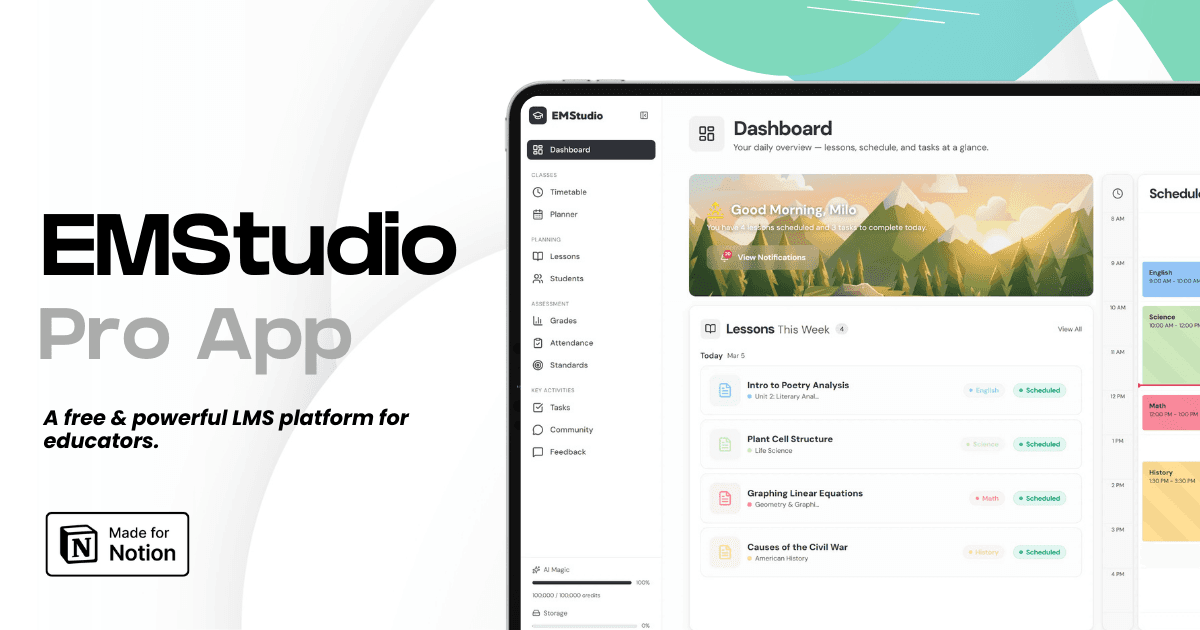
Still grading everything by hand?
EMStudio is a free teaching management app — manage your classes, students, lessons, and more!
Learn More
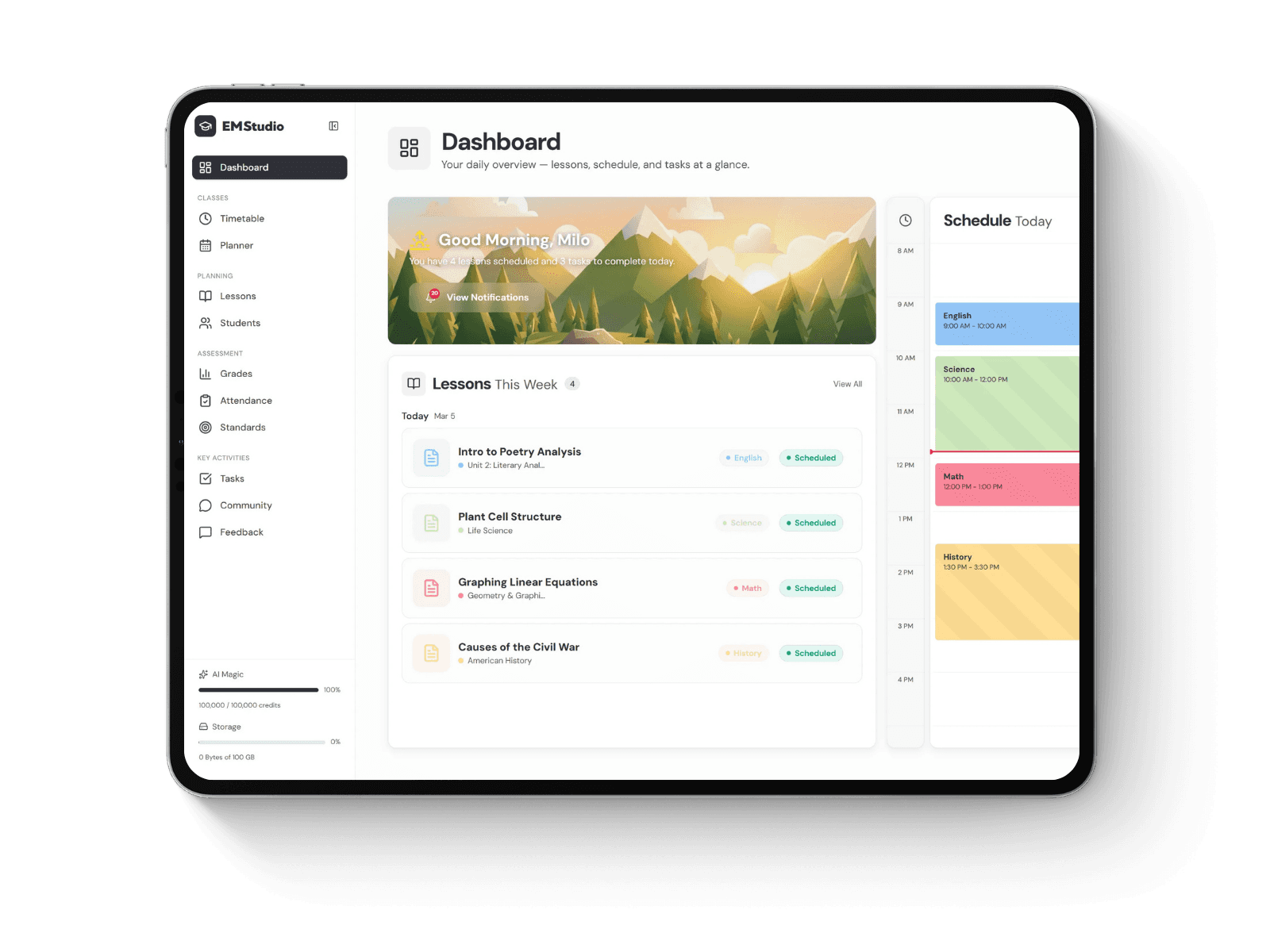
Still grading everything by hand?
EMStudio is a free teaching management app — manage your classes, students, lessons, and more!
Learn More
Table of Contents
Understanding What AI Misuse in Classwork Looks Like and How It Shows Up in Student Work
Before addressing the issue, it’s important to clearly define what AI misuse in education actually looks like in everyday classroom scenarios.
AI misuse doesn’t always mean intentional cheating. In many cases, students may not fully understand what counts as acceptable use.
Common examples include:
Submitting fully AI-generated assignments as their own work
Copying AI responses without reviewing or understanding them
Using AI to complete entire tasks instead of supporting learning
Relying on AI for answers instead of developing critical thinking skills
For example, a student might paste a prompt into an AI tool and submit the output without editing or reflecting on it. While this may seem efficient, it bypasses the learning process entirely.
Recognizing these patterns helps teachers address the issue early, before it becomes a habit.
Why Do Students Misuse AI Tools in Classwork Instead of Using Them Responsibly
Understanding why students misuse AI is key to preventing it effectively. In most cases, misuse is driven by convenience, confusion, or pressure—not just intent to cheat.
Here are some common reasons:
Pressure to complete assignments quickly
Students may turn to AI when they feel overwhelmed or short on timeLack of clear guidelines
If expectations around AI use are unclear, students may assume anything is allowed.Easy access to AI tools
AI platforms are widely available and simple to use, making misuse tempting.Limited understanding of academic integrity
Some students don’t fully grasp why original work matters.
By addressing these root causes, educators can shift from reactive discipline to proactive guidance.
Recognizing the Risks of AI Misuse in Education for Learning and Assessment
Unchecked AI misuse in education can directly impact both student development and classroom fairness.
Some key risks include:
Weakened learning outcomes – Students miss opportunities to practice and understand concepts
Reduced critical thinking skills – Over-reliance on AI limits independent reasoning
Unfair assessment – It becomes harder to evaluate what students truly know
While AI tools are not inherently harmful, using them without structure can undermine the purpose of education itself.
6 Strategies to Prevent AI Misuse in Classwork and Encourage Responsible Use
Preventing misuse doesn’t require strict bans. Instead, it involves building a classroom environment where expectations are clear, and learning is prioritized.
1. Set Clear AI Usage Guidelines for Students From the Start
One of the most effective ways to prevent AI misuse in classwork is to define what is allowed and what isn’t.
You can clarify:
Acceptable use (e.g., brainstorming ideas, outlining essays)
Unacceptable use (e.g., submitting full AI-generated responses)
When and how AI can be used in assignments
For example, you might say:
“AI can be used to generate ideas, but all final answers must be written in your own words.”
Clear guidelines remove ambiguity and help students make better choices.
2. Design Assignments That Encourage Thinking and Personal Input
Assignments that require personal engagement are naturally harder to outsource to AI.
Consider incorporating:
Personal reflections or opinions
Real-world applications
Classroom-based discussions or experiences
For instance, instead of asking students to “Explain a concept,” ask them to apply it to a real-life scenario or reflect on how it relates to their own experiences.
This shifts the focus from answers to understanding.
3. Break Assignments Into Stages to Monitor Student Progress Over Time
Large, one-step assignments make it easier for students to rely entirely on AI. Breaking tasks into smaller stages helps you track their thinking process.
You can include:
Topic proposals
Outlines
Draft submissions
Final versions
This approach allows teachers to:
See how ideas develop
Identify inconsistencies
Provide feedback throughout the process
It also encourages students to stay engaged rather than rushing at the last minute.
4. Teach Students Responsible AI Use Instead of Simply Restricting It
Rather than banning AI tools, teach students how to use them ethically and effectively.
Examples of responsible AI use in education include:
Using AI to brainstorm ideas before writing
Asking AI to explain difficult concepts
Reviewing AI-generated content critically before using it
You can even model this in class by showing how to refine AI responses or identify inaccuracies.
When students understand how to use AI properly, misuse becomes less appealing.
5. Use an AI Detector to Support Your Review Process, Not Replace It
AI detection tools can help identify potential misuse, but they should always be used as a support system, not a final decision-maker.
For example, tools such as an AI detector can help educators determine whether content may be AI-generated. These tools provide insights that can guide further review.
However, it’s important to remember:
Detection tools are not 100% accurate
Context matters when evaluating student work
Teacher judgment is still essential
Using an AI detector alongside your own evaluation helps create a balanced and fair review process.
6. Encourage Transparency and Open Discussions About AI in the Classroom
Creating an open environment where students can discuss the use of AI builds trust and accountability.
You can:
Ask students to disclose how they used AI
Include reflection sections in assignments
Discuss ethical AI use as part of lessons
For example, a simple prompt like:
“Did you use AI for this assignment? If yes, how?”
This normalizes responsible use and reduces the need for hidden shortcuts.
Build a Classroom Policy for Responsible AI Use That Students Can Easily Follow
A clear and consistent policy helps reinforce expectations across all assignments.
Here’s a simple framework you can use:
Define acceptable AI use
Clearly state what students can and cannot do.Communicate expectations clearly
Include guidelines in your syllabus and assignment instructions.Provide examples
Show both acceptable and unacceptable use casesReinforce consistently
Apply the same standards across all students and tasks.
A well-defined policy reduces confusion and supports academic integrity in classrooms.
Balance AI Use and Academic Integrity in Classwork Without Limiting Innovation
AI is not the problem—misuse is. When used correctly, AI can:
Support research and idea generation
Help students understand complex topics
Improve productivity and learning efficiency
The key is balance.
By combining structured assignments, clear expectations, and guided use, educators can maintain academic integrity while still embracing innovation.
Prevent AI Misuse With the Right Classroom Strategies and Systems
AI misuse is a growing challenge in today’s classrooms, but it can be effectively managed with a structured and proactive approach. When educators establish clear guidelines, design assignments that encourage original thinking, and actively teach responsible use of AI, they create a stronger foundation for authentic learning.
Supporting this with tools like an AI detector, used alongside teacher judgment, adds an extra layer of accountability without limiting innovation. By combining these strategies, educators can build a classroom environment that not only discourages misuse but also promotes meaningful learning, critical thinking, and academic integrity.
Understanding What AI Misuse in Classwork Looks Like and How It Shows Up in Student Work
Before addressing the issue, it’s important to clearly define what AI misuse in education actually looks like in everyday classroom scenarios.
AI misuse doesn’t always mean intentional cheating. In many cases, students may not fully understand what counts as acceptable use.
Common examples include:
Submitting fully AI-generated assignments as their own work
Copying AI responses without reviewing or understanding them
Using AI to complete entire tasks instead of supporting learning
Relying on AI for answers instead of developing critical thinking skills
For example, a student might paste a prompt into an AI tool and submit the output without editing or reflecting on it. While this may seem efficient, it bypasses the learning process entirely.
Recognizing these patterns helps teachers address the issue early, before it becomes a habit.
Why Do Students Misuse AI Tools in Classwork Instead of Using Them Responsibly
Understanding why students misuse AI is key to preventing it effectively. In most cases, misuse is driven by convenience, confusion, or pressure—not just intent to cheat.
Here are some common reasons:
Pressure to complete assignments quickly
Students may turn to AI when they feel overwhelmed or short on timeLack of clear guidelines
If expectations around AI use are unclear, students may assume anything is allowed.Easy access to AI tools
AI platforms are widely available and simple to use, making misuse tempting.Limited understanding of academic integrity
Some students don’t fully grasp why original work matters.
By addressing these root causes, educators can shift from reactive discipline to proactive guidance.
Recognizing the Risks of AI Misuse in Education for Learning and Assessment
Unchecked AI misuse in education can directly impact both student development and classroom fairness.
Some key risks include:
Weakened learning outcomes – Students miss opportunities to practice and understand concepts
Reduced critical thinking skills – Over-reliance on AI limits independent reasoning
Unfair assessment – It becomes harder to evaluate what students truly know
While AI tools are not inherently harmful, using them without structure can undermine the purpose of education itself.
6 Strategies to Prevent AI Misuse in Classwork and Encourage Responsible Use
Preventing misuse doesn’t require strict bans. Instead, it involves building a classroom environment where expectations are clear, and learning is prioritized.
1. Set Clear AI Usage Guidelines for Students From the Start
One of the most effective ways to prevent AI misuse in classwork is to define what is allowed and what isn’t.
You can clarify:
Acceptable use (e.g., brainstorming ideas, outlining essays)
Unacceptable use (e.g., submitting full AI-generated responses)
When and how AI can be used in assignments
For example, you might say:
“AI can be used to generate ideas, but all final answers must be written in your own words.”
Clear guidelines remove ambiguity and help students make better choices.
2. Design Assignments That Encourage Thinking and Personal Input
Assignments that require personal engagement are naturally harder to outsource to AI.
Consider incorporating:
Personal reflections or opinions
Real-world applications
Classroom-based discussions or experiences
For instance, instead of asking students to “Explain a concept,” ask them to apply it to a real-life scenario or reflect on how it relates to their own experiences.
This shifts the focus from answers to understanding.
3. Break Assignments Into Stages to Monitor Student Progress Over Time
Large, one-step assignments make it easier for students to rely entirely on AI. Breaking tasks into smaller stages helps you track their thinking process.
You can include:
Topic proposals
Outlines
Draft submissions
Final versions
This approach allows teachers to:
See how ideas develop
Identify inconsistencies
Provide feedback throughout the process
It also encourages students to stay engaged rather than rushing at the last minute.
4. Teach Students Responsible AI Use Instead of Simply Restricting It
Rather than banning AI tools, teach students how to use them ethically and effectively.
Examples of responsible AI use in education include:
Using AI to brainstorm ideas before writing
Asking AI to explain difficult concepts
Reviewing AI-generated content critically before using it
You can even model this in class by showing how to refine AI responses or identify inaccuracies.
When students understand how to use AI properly, misuse becomes less appealing.
5. Use an AI Detector to Support Your Review Process, Not Replace It
AI detection tools can help identify potential misuse, but they should always be used as a support system, not a final decision-maker.
For example, tools such as an AI detector can help educators determine whether content may be AI-generated. These tools provide insights that can guide further review.
However, it’s important to remember:
Detection tools are not 100% accurate
Context matters when evaluating student work
Teacher judgment is still essential
Using an AI detector alongside your own evaluation helps create a balanced and fair review process.
6. Encourage Transparency and Open Discussions About AI in the Classroom
Creating an open environment where students can discuss the use of AI builds trust and accountability.
You can:
Ask students to disclose how they used AI
Include reflection sections in assignments
Discuss ethical AI use as part of lessons
For example, a simple prompt like:
“Did you use AI for this assignment? If yes, how?”
This normalizes responsible use and reduces the need for hidden shortcuts.
Build a Classroom Policy for Responsible AI Use That Students Can Easily Follow
A clear and consistent policy helps reinforce expectations across all assignments.
Here’s a simple framework you can use:
Define acceptable AI use
Clearly state what students can and cannot do.Communicate expectations clearly
Include guidelines in your syllabus and assignment instructions.Provide examples
Show both acceptable and unacceptable use casesReinforce consistently
Apply the same standards across all students and tasks.
A well-defined policy reduces confusion and supports academic integrity in classrooms.
Balance AI Use and Academic Integrity in Classwork Without Limiting Innovation
AI is not the problem—misuse is. When used correctly, AI can:
Support research and idea generation
Help students understand complex topics
Improve productivity and learning efficiency
The key is balance.
By combining structured assignments, clear expectations, and guided use, educators can maintain academic integrity while still embracing innovation.
Prevent AI Misuse With the Right Classroom Strategies and Systems
AI misuse is a growing challenge in today’s classrooms, but it can be effectively managed with a structured and proactive approach. When educators establish clear guidelines, design assignments that encourage original thinking, and actively teach responsible use of AI, they create a stronger foundation for authentic learning.
Supporting this with tools like an AI detector, used alongside teacher judgment, adds an extra layer of accountability without limiting innovation. By combining these strategies, educators can build a classroom environment that not only discourages misuse but also promotes meaningful learning, critical thinking, and academic integrity.
Still grading everything by hand?
EMStudio is a free teaching management app — manage your classes, students, lessons, and more!
Learn More
Still grading everything by hand?
EMStudio is a free teaching management app — manage your classes, students, lessons, and more!
Learn More

Notion4Teachers
Notion templates to simplify administrative tasks and enhance your teaching experience.



2026 Notion4Teachers. All Rights Reserved.
Notion4Teachers
Notion templates to simplify administrative tasks and enhance your teaching experience.
2026 Notion4Teachers. All Rights Reserved.
Notion4Teachers
Notion templates to simplify administrative tasks and enhance your teaching experience.
2026 Notion4Teachers. All Rights Reserved.