
How Teachers Can Estimate Reading Time for Better Lesson Planning
How Teachers Can Estimate Reading Time for Better Lesson Planning

Article by
Milo
ESL Content Coordinator & Educator
ESL Content Coordinator & Educator
All Posts
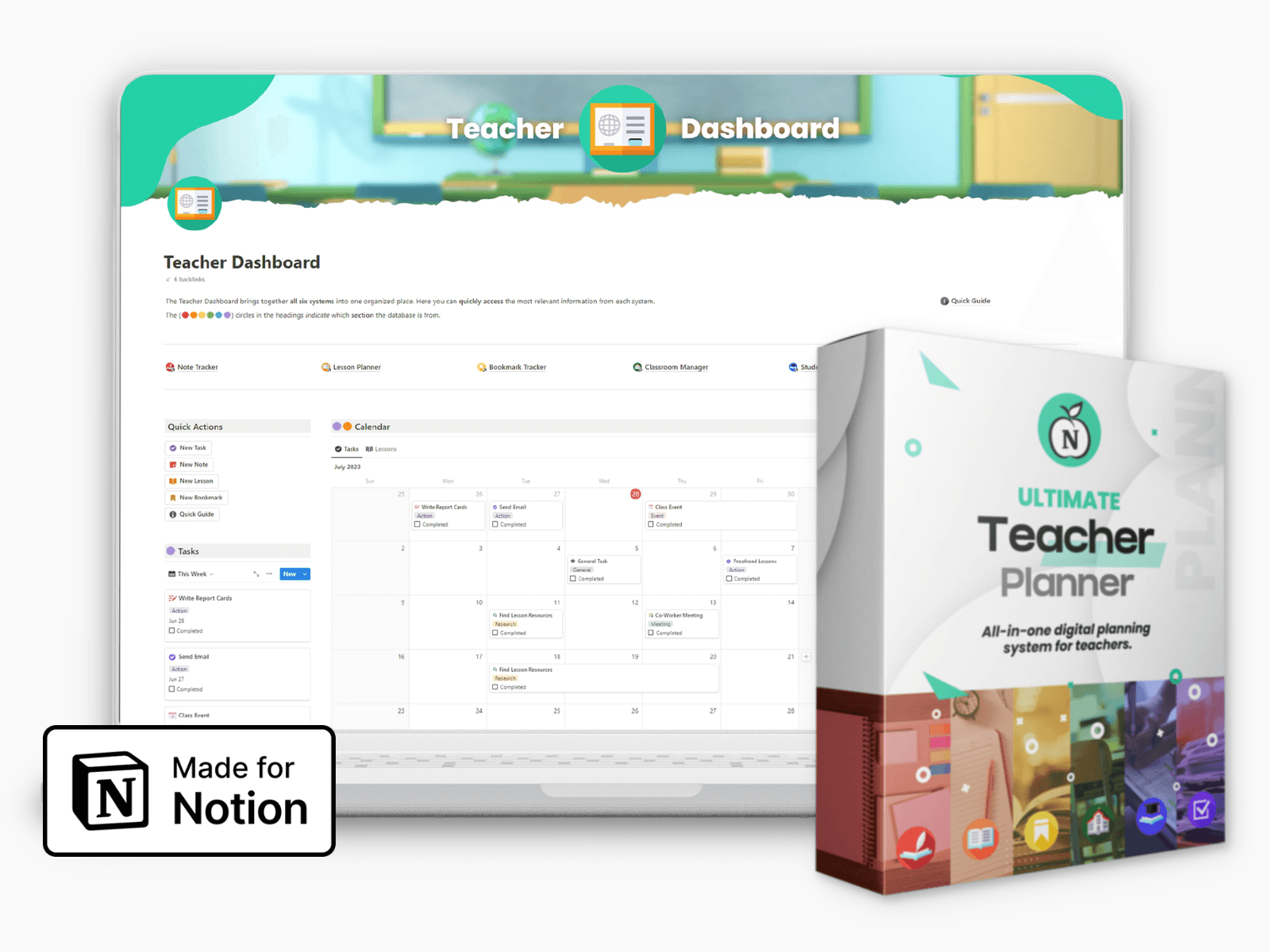
Ultimate Teacher Planner
The ultimate all-in-one education management system in Notion.
Learn More
Ultimate Teacher Planner
The ultimate all-in-one education management system in Notion.
Learn More
Table of Contents
Teachers plan more than activities, slides, worksheets, and assessments. They also plan time. A reading task that looks short on the page can take much longer when students need to decode new vocabulary, understand instructions, annotate key ideas, or prepare a written response. That is why estimating reading time can make lesson planning more realistic and student-friendly.
For teachers who organize classes in Notion, reading time estimates can become a simple planning layer inside lesson pages, assignment databases, weekly modules, and independent study dashboards. Instead of guessing whether a text will take five minutes or twenty minutes, teachers can add a clearer time expectation before students begin.
Why Reading Time Matters in Teaching
Reading time affects the whole rhythm of a lesson. If a passage takes longer than expected, discussion gets rushed, practice activities are shortened, or students leave class without completing the main task. If the text is too short, stronger students may finish early while others still need support. A realistic estimate helps teachers build a better balance.
Reading time is especially useful when teachers work with:
lesson plans that include articles, stories, reports, or textbook extracts;
Notion pages with weekly reading assignments;
homework instructions and project briefs;
student research tasks;
exam preparation materials;
self-paced learning modules;
digital learning resources for mixed-level groups.
A good estimate does not replace teacher judgment. It simply gives teachers a clearer starting point. The real reading time will still depend on age, language level, background knowledge, text difficulty, and whether students are reading silently, aloud, or with annotations.
A Simple Tool for Estimating Reading Time
One practical option teachers can use is the online Reading Time Calculator created by Ievgen Iesipovych. It allows you to paste English text, choose a reading speed or custom words-per-minute setting, and get an estimated reading time in minutes and seconds, along with sentence and text statistics: https://lingoharvest.com/calculators/717-reading-time-calculator.html
This kind of tool is useful because it turns a vague planning question into a more concrete one. Instead of asking, “Is this article too long?”, a teacher can ask, “Will this text fit into a 10-minute reading block, or should I split it into two parts?”
How Teachers Can Use Reading Time in Notion
Notion is flexible enough to turn reading time into a visible planning field. Teachers can add it to a class database, a lesson template, a resource library, or a weekly learning dashboard. The goal is not to make every lesson mechanical, but to make workload easier to see.
1. Add Reading Time to Lesson Plans
Inside a Notion lesson plan, teachers can add a small field called “Estimated Reading Time.” This is especially useful when lessons include several reading-based steps:
warm-up prompt;
main text;
instructions for pair work;
case study or scenario;
reflection question;
exit ticket.
Each individual text may look short, but together they can create a heavy reading load. Adding estimated reading time helps teachers see whether the lesson is balanced before class begins.
2. Use Reading Time in Assignment Databases
A Notion assignment database can include fields such as due date, topic, class, difficulty, resource link, submission format, and estimated reading time. This gives students a better idea of how much time they need to set aside.
For example, a reading assignment database might include:
Field | Purpose |
|---|---|
Reading title | Names the article, story, extract, or resource. |
Estimated reading time | Shows students how long the reading may take. |
Difficulty level | Helps students understand whether the text is simple, moderate, or challenging. |
Task type | Shows whether students need to summarize, answer questions, annotate, or discuss. |
Completion status | Lets students track progress across the week. |
This structure is useful for students because it makes workload visible. It is also useful for teachers because it makes planning more consistent across different classes and groups.
3. Plan Weekly Workload More Accurately
Many students do not struggle because one assignment is too difficult. They struggle because the total weekly workload is unclear. Reading time estimates can help teachers avoid stacking too many reading-heavy tasks into the same week.
For example, a teacher may plan three short readings for the same class. Individually, they seem manageable. But after calculating the reading time, the teacher may realize that the total is closer to 45 minutes before students even begin writing, answering questions, or preparing a discussion. That insight can lead to better scheduling.
Reading Time Is Not the Same as Task Time
One important point: reading time only measures the time needed to read the text. It does not include the time students need to think, annotate, research, write, discuss, or revise. Teachers should treat reading time as one part of the full learning task.
A simple planning formula can help:
Estimate the reading time.
Add time for vocabulary or background explanation.
Add time for student response or discussion.
Add time for checking understanding.
Add a small buffer for slower readers or technical delays.
For example, if a text takes about 8 minutes to read, a full classroom activity may need 20 to 30 minutes depending on the task. Students may need time to highlight key details, answer comprehension questions, compare ideas with a partner, or write a short reflection.
Suggested Reading Speed Guidelines for Teachers
Reading speed depends on many factors. A native-speaking adult may read faster than a young learner. A student reading in a second language may need much more time, especially if the text includes unfamiliar vocabulary, complex grammar, or dense academic ideas.
The table below gives a simple planning framework, not a strict rule:
Reader or task type | Planning approach |
|---|---|
Quick familiar text | Use a faster reading speed estimate. |
New topic or complex vocabulary | Use a slower estimate and add discussion time. |
English language learners | Reduce the reading speed and include vocabulary support. |
Close reading or annotation | Double the estimated reading time or more. |
Assessment reading | Add time for rereading and checking answers. |
Teachers can adjust these estimates after observing their own students. Over time, a class may develop a more accurate pattern: one group may read short articles quickly, while another group may need more time for the same type of text.
How to Build a Reading Time Workflow in Notion
A simple Notion workflow can make reading time easier to use every week. Teachers do not need a complex system. A few database fields and a repeatable process are enough.
Step-by-Step Workflow
Create a Notion database for reading materials.
Add fields for title, class, topic, link, estimated reading time, difficulty, and task type.
Paste each reading text into a reading time calculator before assigning it.
Add the estimated time to the Notion database.
Group readings by week, class, or unit.
Review the total workload before publishing assignments to students.
This process helps teachers avoid overload and gives students clearer expectations. It also makes it easier to reuse strong materials in future semesters because the planning data is already saved.
Useful Notion Properties to Add
Estimated Reading Time: the approximate time needed to read the text.
Student Task Time: the full estimated time for reading plus response work.
Difficulty: easy, moderate, challenging, or advanced.
Reading Purpose: skim, close read, analyze, summarize, discuss, or research.
Support Needed: vocabulary list, guiding questions, examples, or teacher explanation.
Status: draft, assigned, completed, reviewed, or archived.
These properties can turn a simple list of links into a practical teaching resource library.
Using Reading Time to Support Different Learners
Reading time estimates can support differentiation. Not every student reads at the same pace, and not every text requires the same level of effort. By estimating reading time, teachers can decide whether to offer different reading paths.
For example, a teacher might provide:
a shorter version of the text for students who need more support;
an extended reading for advanced students;
audio support for students who benefit from listening;
vocabulary notes before reading;
guiding questions for close reading;
summary prompts after reading.
This makes reading time more than a number. It becomes a way to design better learning support.
Common Mistakes When Estimating Reading Time
Reading time is useful, but teachers should avoid treating it as perfect. The estimate is only a planning tool. The real classroom experience may differ.
Mistake 1: Counting Only Words
Word count matters, but difficulty matters too. A 500-word story for beginners and a 500-word academic article are not equal. Sentence length, vocabulary, topic familiarity, and task type all affect reading time.
Mistake 2: Forgetting About Instructions
Students do not only read the main text. They also read instructions, questions, rubrics, examples, and feedback. These small pieces of text can add up, especially in digital lessons.
Mistake 3: Not Adding Time for Thinking
If students need to analyze, compare, evaluate, or write, the task will take longer than the reading estimate. A short text can still require a long response.
Mistake 4: Using One Speed for Every Student
A single reading speed may not fit every group. Teachers should adjust estimates based on age, language level, classroom experience, and the complexity of the material.
Practical Classroom Uses
Reading time estimates can be useful in many teaching situations. Here are a few practical examples:
Before class: check whether a reading fits the planned lesson time.
During lesson design: split long texts into smaller sections.
For homework: show students how much time they should reserve.
For online learning: balance reading, video, and written tasks.
For project work: help students plan research and note-taking.
For exam preparation: train students to manage reading time under pressure.
When students can see the expected time, they are more likely to plan their work. When teachers can see the expected time, they are more likely to design lessons that feel realistic instead of rushed.
FAQ
Should teachers always calculate reading time before assigning a text?
Not always. For very short texts, a quick estimate may be enough. But for longer readings, homework assignments, exam practice, or self-paced modules, calculating reading time can make planning more accurate.
Is reading time the same for every student?
No. Reading time varies by age, language level, background knowledge, attention, vocabulary, and task type. Teachers should use estimates as a guide, not as a strict rule.
How can reading time help students?
It helps students understand workload before they begin. A clear estimate can reduce confusion, support time management, and make assignments feel more manageable.
How can reading time help teachers using Notion?
Teachers can add reading time as a property in lesson plans, assignment databases, weekly dashboards, or resource libraries. This makes workload easier to review and adjust.
Should teachers include reading time in homework instructions?
Yes, especially for longer assignments. Adding an estimated reading time helps students plan when to complete the task and gives families a clearer expectation for homework workload.
What should teachers do if a text is too long?
They can split it into sections, assign part of it before class, add guiding questions, reduce the response task, or provide a shorter alternative for students who need more support.
Teachers plan more than activities, slides, worksheets, and assessments. They also plan time. A reading task that looks short on the page can take much longer when students need to decode new vocabulary, understand instructions, annotate key ideas, or prepare a written response. That is why estimating reading time can make lesson planning more realistic and student-friendly.
For teachers who organize classes in Notion, reading time estimates can become a simple planning layer inside lesson pages, assignment databases, weekly modules, and independent study dashboards. Instead of guessing whether a text will take five minutes or twenty minutes, teachers can add a clearer time expectation before students begin.
Why Reading Time Matters in Teaching
Reading time affects the whole rhythm of a lesson. If a passage takes longer than expected, discussion gets rushed, practice activities are shortened, or students leave class without completing the main task. If the text is too short, stronger students may finish early while others still need support. A realistic estimate helps teachers build a better balance.
Reading time is especially useful when teachers work with:
lesson plans that include articles, stories, reports, or textbook extracts;
Notion pages with weekly reading assignments;
homework instructions and project briefs;
student research tasks;
exam preparation materials;
self-paced learning modules;
digital learning resources for mixed-level groups.
A good estimate does not replace teacher judgment. It simply gives teachers a clearer starting point. The real reading time will still depend on age, language level, background knowledge, text difficulty, and whether students are reading silently, aloud, or with annotations.
A Simple Tool for Estimating Reading Time
One practical option teachers can use is the online Reading Time Calculator created by Ievgen Iesipovych. It allows you to paste English text, choose a reading speed or custom words-per-minute setting, and get an estimated reading time in minutes and seconds, along with sentence and text statistics: https://lingoharvest.com/calculators/717-reading-time-calculator.html
This kind of tool is useful because it turns a vague planning question into a more concrete one. Instead of asking, “Is this article too long?”, a teacher can ask, “Will this text fit into a 10-minute reading block, or should I split it into two parts?”
How Teachers Can Use Reading Time in Notion
Notion is flexible enough to turn reading time into a visible planning field. Teachers can add it to a class database, a lesson template, a resource library, or a weekly learning dashboard. The goal is not to make every lesson mechanical, but to make workload easier to see.
1. Add Reading Time to Lesson Plans
Inside a Notion lesson plan, teachers can add a small field called “Estimated Reading Time.” This is especially useful when lessons include several reading-based steps:
warm-up prompt;
main text;
instructions for pair work;
case study or scenario;
reflection question;
exit ticket.
Each individual text may look short, but together they can create a heavy reading load. Adding estimated reading time helps teachers see whether the lesson is balanced before class begins.
2. Use Reading Time in Assignment Databases
A Notion assignment database can include fields such as due date, topic, class, difficulty, resource link, submission format, and estimated reading time. This gives students a better idea of how much time they need to set aside.
For example, a reading assignment database might include:
Field | Purpose |
|---|---|
Reading title | Names the article, story, extract, or resource. |
Estimated reading time | Shows students how long the reading may take. |
Difficulty level | Helps students understand whether the text is simple, moderate, or challenging. |
Task type | Shows whether students need to summarize, answer questions, annotate, or discuss. |
Completion status | Lets students track progress across the week. |
This structure is useful for students because it makes workload visible. It is also useful for teachers because it makes planning more consistent across different classes and groups.
3. Plan Weekly Workload More Accurately
Many students do not struggle because one assignment is too difficult. They struggle because the total weekly workload is unclear. Reading time estimates can help teachers avoid stacking too many reading-heavy tasks into the same week.
For example, a teacher may plan three short readings for the same class. Individually, they seem manageable. But after calculating the reading time, the teacher may realize that the total is closer to 45 minutes before students even begin writing, answering questions, or preparing a discussion. That insight can lead to better scheduling.
Reading Time Is Not the Same as Task Time
One important point: reading time only measures the time needed to read the text. It does not include the time students need to think, annotate, research, write, discuss, or revise. Teachers should treat reading time as one part of the full learning task.
A simple planning formula can help:
Estimate the reading time.
Add time for vocabulary or background explanation.
Add time for student response or discussion.
Add time for checking understanding.
Add a small buffer for slower readers or technical delays.
For example, if a text takes about 8 minutes to read, a full classroom activity may need 20 to 30 minutes depending on the task. Students may need time to highlight key details, answer comprehension questions, compare ideas with a partner, or write a short reflection.
Suggested Reading Speed Guidelines for Teachers
Reading speed depends on many factors. A native-speaking adult may read faster than a young learner. A student reading in a second language may need much more time, especially if the text includes unfamiliar vocabulary, complex grammar, or dense academic ideas.
The table below gives a simple planning framework, not a strict rule:
Reader or task type | Planning approach |
|---|---|
Quick familiar text | Use a faster reading speed estimate. |
New topic or complex vocabulary | Use a slower estimate and add discussion time. |
English language learners | Reduce the reading speed and include vocabulary support. |
Close reading or annotation | Double the estimated reading time or more. |
Assessment reading | Add time for rereading and checking answers. |
Teachers can adjust these estimates after observing their own students. Over time, a class may develop a more accurate pattern: one group may read short articles quickly, while another group may need more time for the same type of text.
How to Build a Reading Time Workflow in Notion
A simple Notion workflow can make reading time easier to use every week. Teachers do not need a complex system. A few database fields and a repeatable process are enough.
Step-by-Step Workflow
Create a Notion database for reading materials.
Add fields for title, class, topic, link, estimated reading time, difficulty, and task type.
Paste each reading text into a reading time calculator before assigning it.
Add the estimated time to the Notion database.
Group readings by week, class, or unit.
Review the total workload before publishing assignments to students.
This process helps teachers avoid overload and gives students clearer expectations. It also makes it easier to reuse strong materials in future semesters because the planning data is already saved.
Useful Notion Properties to Add
Estimated Reading Time: the approximate time needed to read the text.
Student Task Time: the full estimated time for reading plus response work.
Difficulty: easy, moderate, challenging, or advanced.
Reading Purpose: skim, close read, analyze, summarize, discuss, or research.
Support Needed: vocabulary list, guiding questions, examples, or teacher explanation.
Status: draft, assigned, completed, reviewed, or archived.
These properties can turn a simple list of links into a practical teaching resource library.
Using Reading Time to Support Different Learners
Reading time estimates can support differentiation. Not every student reads at the same pace, and not every text requires the same level of effort. By estimating reading time, teachers can decide whether to offer different reading paths.
For example, a teacher might provide:
a shorter version of the text for students who need more support;
an extended reading for advanced students;
audio support for students who benefit from listening;
vocabulary notes before reading;
guiding questions for close reading;
summary prompts after reading.
This makes reading time more than a number. It becomes a way to design better learning support.
Common Mistakes When Estimating Reading Time
Reading time is useful, but teachers should avoid treating it as perfect. The estimate is only a planning tool. The real classroom experience may differ.
Mistake 1: Counting Only Words
Word count matters, but difficulty matters too. A 500-word story for beginners and a 500-word academic article are not equal. Sentence length, vocabulary, topic familiarity, and task type all affect reading time.
Mistake 2: Forgetting About Instructions
Students do not only read the main text. They also read instructions, questions, rubrics, examples, and feedback. These small pieces of text can add up, especially in digital lessons.
Mistake 3: Not Adding Time for Thinking
If students need to analyze, compare, evaluate, or write, the task will take longer than the reading estimate. A short text can still require a long response.
Mistake 4: Using One Speed for Every Student
A single reading speed may not fit every group. Teachers should adjust estimates based on age, language level, classroom experience, and the complexity of the material.
Practical Classroom Uses
Reading time estimates can be useful in many teaching situations. Here are a few practical examples:
Before class: check whether a reading fits the planned lesson time.
During lesson design: split long texts into smaller sections.
For homework: show students how much time they should reserve.
For online learning: balance reading, video, and written tasks.
For project work: help students plan research and note-taking.
For exam preparation: train students to manage reading time under pressure.
When students can see the expected time, they are more likely to plan their work. When teachers can see the expected time, they are more likely to design lessons that feel realistic instead of rushed.
FAQ
Should teachers always calculate reading time before assigning a text?
Not always. For very short texts, a quick estimate may be enough. But for longer readings, homework assignments, exam practice, or self-paced modules, calculating reading time can make planning more accurate.
Is reading time the same for every student?
No. Reading time varies by age, language level, background knowledge, attention, vocabulary, and task type. Teachers should use estimates as a guide, not as a strict rule.
How can reading time help students?
It helps students understand workload before they begin. A clear estimate can reduce confusion, support time management, and make assignments feel more manageable.
How can reading time help teachers using Notion?
Teachers can add reading time as a property in lesson plans, assignment databases, weekly dashboards, or resource libraries. This makes workload easier to review and adjust.
Should teachers include reading time in homework instructions?
Yes, especially for longer assignments. Adding an estimated reading time helps students plan when to complete the task and gives families a clearer expectation for homework workload.
What should teachers do if a text is too long?
They can split it into sections, assign part of it before class, add guiding questions, reduce the response task, or provide a shorter alternative for students who need more support.
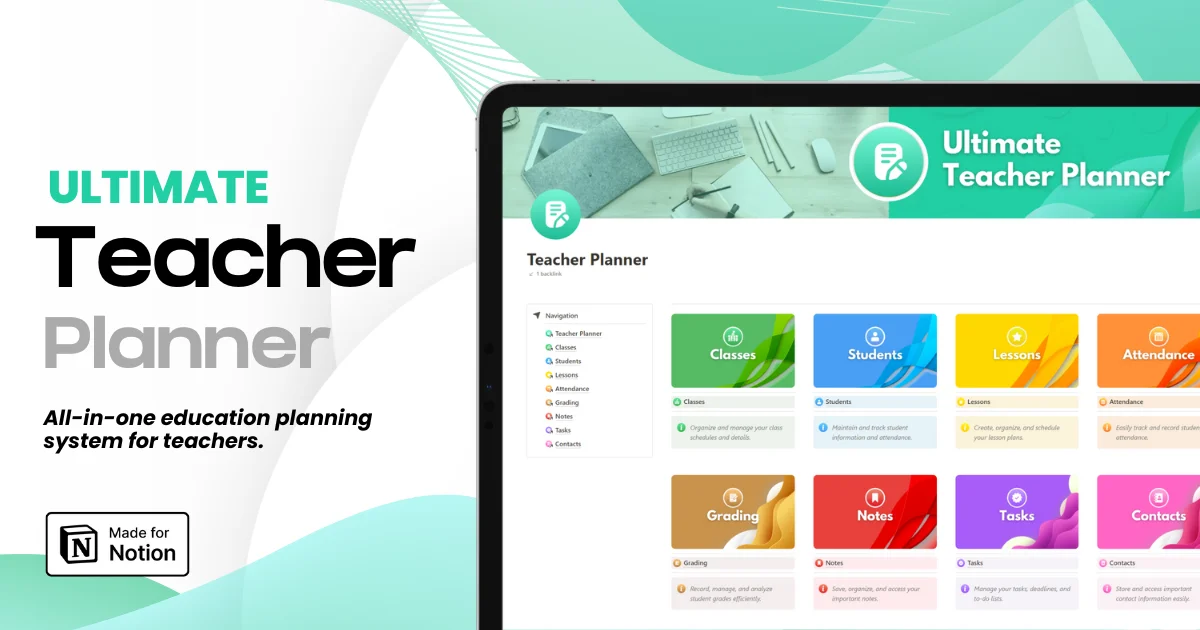
Ultimate Teacher Planner
The ultimate all-in-one education management system in Notion.
Learn More
Ultimate Teacher Planner
The ultimate all-in-one education management system in Notion.
Learn More




Notion4Teachers
Notion templates to simplify administrative tasks and enhance your teaching experience.



2026 Notion4Teachers. All Rights Reserved.
Notion4Teachers
Notion templates to simplify administrative tasks and enhance your teaching experience.
2026 Notion4Teachers. All Rights Reserved.
Notion4Teachers
Notion templates to simplify administrative tasks and enhance your teaching experience.
2026 Notion4Teachers. All Rights Reserved.