
Diversity in the Classroom: 6 Steps to Inclusive Teaching
Diversity in the Classroom: 6 Steps to Inclusive Teaching

Article by
Milo
ESL Content Coordinator & Educator
ESL Content Coordinator & Educator
All Posts
According to the National Center for Education Statistics, students of color now represent 55% of public school enrollment nationwide. That is not a projection; it is the current reality in American classrooms. Diversity in the classroom is no longer limited to specific districts or zip codes—it is everywhere, and it means your roster likely includes multilingual learners, students with IEPs, and kids carrying cultural backgrounds you have not encountered before.
This shift needs more than a poster on the wall or a heritage month celebration. It requires culturally responsive teaching that acknowledges who sits in your desks and adjusts instruction to match their assets, not their deficits.
I have taught in classrooms where I spoke only one of the four languages my students heard at home. I learned quickly that inclusive pedagogy is not a curriculum you purchase; it is a set of daily decisions about seating, questioning, and what counts as "correct." The following six steps walk you through exactly those decisions.
You will learn how to audit your current materials, build asset-based pedagogy into your planning, and design differentiated instruction that serves everyone without creating twenty separate lesson plans. This is practical work. It starts with looking hard at what you already do, then changing what does not serve the kids in front of you.
Still grading everything by hand?
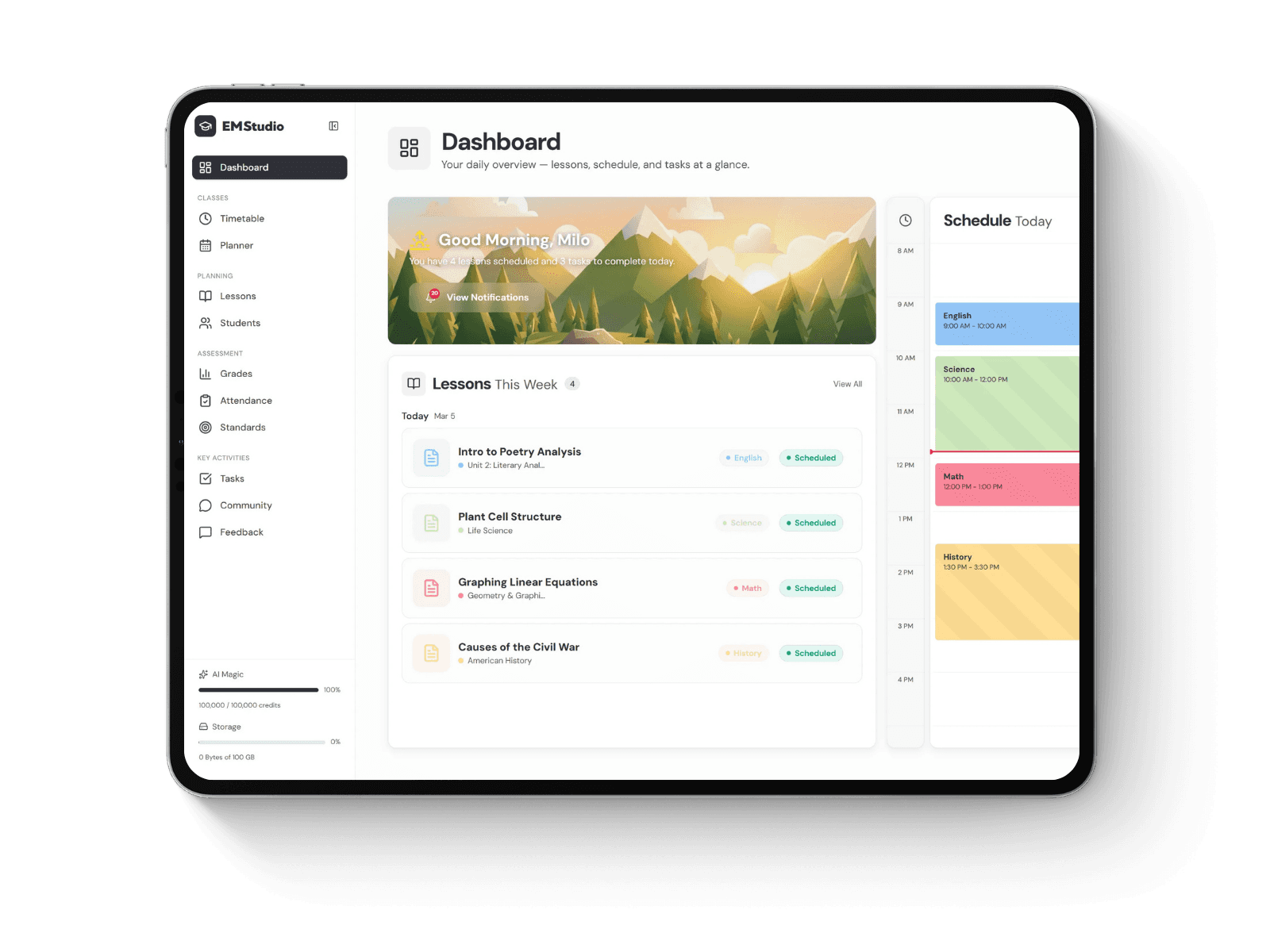
EMStudio is a free teaching management app — manage your classes, students, lessons, and more!
Learn More
Still grading everything by hand?
EMStudio is a free teaching management app — manage your classes, students, lessons, and more!
Learn More
Table of Contents
What Do You Need Before Starting?
Before implementing diversity in the classroom, you need three foundational elements: a baseline assessment of your own cultural competency using validated tools like the IDI, confidential student demographic data including home languages and IEP/504 status, and administrative buy-in with dedicated time for curriculum review and potential funding for multicultural materials.
Skip the flashy bulletin boards for now. You cannot build inclusive pedagogy on guesswork and good intentions. You need hard data, honest self-reflection, and a signed agreement that your principal actually supports this work.
Think of readiness as three pillars you check in order. First, spend three to five hours on self-assessment using the Intercultural Development Inventory to establish your baseline on the denial-to-adaptation continuum. Next, block two hours to analyze registrar data including ELL status, free and reduced lunch eligibility, and IEP or 504 designations.
Finally, schedule one thirty-minute meeting with your administrator to align on expectations. I learned this sequence the hard way in my fourth-grade classroom when I redesigned my entire reading corner without asking my principal first; by October, the funding dried up and I was back to the basal reader.
Document everything. Secure written approval for three to five professional development hours and a two-hundred-to-five-hundred-dollar budget allocation before you change one lesson plan. Teachers who skip this step abandon culturally responsive teaching initiatives within the first semester when resistance hits and there is no administrative cover.
You will need specific tools: the IDI for cultural competency baseline, your district's Home Language Survey for demographic data, and a one-page resource proposal template to formalize your ask.
Assessing Your Current Cultural Competency
Begin by assessing your current cultural competency with the Intercultural Development Inventory or the free Cultural Proficiency Receptiveness Scale. Your results will place you somewhere on the denial-polarization-minimization-acceptance-adaptation continuum. Identify two specific growth areas and set ninety-day targets to move toward adaptation.
The IDI individual profile costs approximately thirty to fifty dollars. If your personal budget is tight, use the free Harvard Implicit Association Test combined with a reflective journaling protocol where you document your reactions to specific classroom moments without judgment.
Gathering Student Demographic and Language Data
Request disaggregated data from your registrar covering ELL status, free and reduced lunch eligibility, home languages, and intersectional IEP or 504 designations. Import this into a tracking spreadsheet and use pivot tables to visualize overlap, such as students who are both ELL and receive special education services.
Then conduct asset-based pedagogy by sending home a standardized ten-question funds of knowledge form translated into families' L1. Ask about family expertise, cultural practices, and home literacy activities to document assets rather than deficits.
Securing Administrative and Resource Support
Draft a one-page proposal requesting three to five hours of professional development time and a two-hundred-to-five-hundred-dollar budget for diverse library materials from specific vendors like Lee and Low Books or Teaching Tolerance. Include projected return on investment data regarding student engagement to justify the costs for multicultural education resources.
Identify a committed ally in your administration, such as a department head or assistant principal, to serve as your equity sponsor. This person will buffer you against resistance and ensure schedule flexibility for the co-planning time required for differentiated instruction and ongoing equity in education initiatives.

Step 1 — Conduct a Diversity Audit of Your Classroom
I use the LOOK-SEE-ACT protocol over three days to audit equity in education. Look Monday, see Tuesday, act Wednesday with a SWOT matrix. Target 40% of bulletin boards for non-dominant cultures and 50% library authors from marginalized groups per Cooperative Children's Book Council stats. Run two 20-minute equity maps, flag if three students take 60% of airtime, and cut your talk to 40%.
Mapping Physical Space Accessibility and Representation
Pull out a tape measure. Check 60-inch diameter turning radius for wheelchairs between desks. Check fluorescent lights for flicker rates that trigger sensitivities. Ensure 10% of seating offers sensory regulation like wobble cushions or standing desks. These details determine who can access your space comfortably.
Audit walls using the window or mirror test. Thirty percent should mirror students' specific cultures. Seventy percent should be windows to other perspectives. Remove tourist-style tribal masks or sombreros that stereotype. Count square footage. If less than 40% of bulletin board space shows non-dominant cultures, list it as a Gap in your matrix.
Reviewing Curriculum Materials for Cultural Relevance
Run a sensitivity read on current texts. Check for outdated terms like "slave" instead of "enslaved person." Hunt for single-story narratives. Flag middle-class assumptions. Create red-yellow-green ratings. When reviewing curriculum materials for cultural relevance, keep texts showing kids' actual lives.
Check library against Cooperative Children's Book Council benchmarks. Count protagonists and authors. If fewer than 50% represent marginalized groups, you have a Gap. Replace outdated basal readers. One novel by a living Native author beats three old texts about "Indians of the past."
Analyzing Interaction Patterns and Participation Equity
Draw a clock-face diagram of your room. Mark hash marks when students speak during 20-minute sessions twice this week. Calculate percentages. If any group is 30% of class but takes 60% of talk time, you have inequity. I tracked my 8th graders and found three boys held 65% of airtime. That hit my Threats column.
Reduce teacher talk to 40%. Use wait-time—count to seven before calling names. Use random call so dominant voices don't self-select. Park the frequent flyers: "Jake, I see you know this—I'm calling someone who hasn't spoken yet." The goal is diversity in the classroom not just in books but in whose thinking fills the air.
Step 2 — Build Comprehensive Student Asset Profiles
The Asset-Based Student Profile organizes everything you need on one page per student. Create three columns: Academic Assets, Cultural/Linguistic Assets, and Accessibility Requirements. Never use deficit language like "struggling reader" or "at-risk." Instead, write "developing decoder with strong oral vocabulary and mechanical reasoning skills." For classes of 25-30, complete five profiles weekly. Use 20-minute conferences to co-create each document with the student. This pace honors diversity in the classroom without consuming your weekends.
Academic Strengths and Challenge Areas Inventory
Pull your DIBELS or i-Ready diagnostic data to pinpoint exact literacy and numeracy levels. Pair these numbers with interest inventories capturing hobbies like Minecraft, anime, or sports. These details become entry points for culturally responsive teaching.
Last year I worked with a 7th-grader reading at a 4th-grade level. He rebuilt carburetors at his dad's shop after school. I noted his expert automotive knowledge on his profile. That single detail changed our year. When we studied force and motion, I asked him to explain engine compression. He lit up. His mechanical reasoning became the bridge to our physics content.
Cultural Background and Language Asset Documentation
Create a "Linguistic Profile" for every multilingual learner. Document home languages, L1 literacy levels, and translanguaging competencies. Note when students code-mesh strategically between languages. Include phonetic pronunciation guides for names. This prevents anglicization during morning attendance.
This cultural background and language asset documentation also captures community knowledge funds. Many students translate for grandparents at pharmacies or negotiate prices at family stores. These are sophisticated linguistic skills. Recording them shifts your stance from remediation to asset-based pedagogy and honors multicultural education principles.
Learning Preferences and Accessibility Requirements
List specific accommodations from IEP and 504 plans. Note extended time at 1.5x, fidget tools, or preferential front-side seating. Add Universal Design preferences discovered through learning inventories. Some kids need white noise. Others need Read&Write software or Speech-to-Text apps. These tools remove barriers to content.
Keep this column practical and specific. "Needs help" wastes space. "Uses graphic organizer for argumentative essays" gives you tomorrow's lesson plan. This precision supports equity in education by making sure every documented need has a matching strategy. It turns inclusive pedagogy into manageable daily practice.

Step 3 — How Do You Design Differentiated Instruction for Diverse Learners?
Design differentiated instruction by pre-assessing readiness levels, then offering tiered assignments with varying complexity while maintaining consistent learning goals. Combine flexible grouping strategies that rotate based on task requirements with choice boards allowing student agency in product format, making sure all pathways lead to grade-level standards mastery.
Start with yesterday's exit tickets. Look at who missed the prerequisite skill. Then build your groups fast. You need current data, not perfect data, to start designing differentiated instruction for diverse learners.
Carol Ann Tomlinson's model adjusts content by readiness. Last year my 9th graders analyzed universal themes. Some used graphic novels for concrete themes like friendship. Others compared abstract postcolonial texts. Same standard, different complexity. This honors asset-based pedagogy and culturally responsive teaching while managing diversity in the classroom.
Use the decision flowchart. If fifty percent lack skills, reteach the whole class. If twenty to thirty percent struggle, use heterogeneous groups with tiered tasks. If under twenty percent need help, compact for independent study. This ensures equity in education.
Watch your budget. Flexible grouping and choice boards cost nothing. Adaptive software runs fifteen to thirty dollars per student. Master zero-cost structural changes before buying tools. Start with protocols that put you in charge.
Tiered Assignment Structures by Readiness Level
Use a three-tier system with identical standards. For 5.NF.A.1, Tier 1 uses fraction bars for concrete understanding. Tier 2 solves grade-level word problems. Tier 3 extends to algebraic fractions. All tiers target the same learning goal. Only the complexity changes.
Flexible Grouping Rotations Based on Task Requirements
Run homogeneous groups for fifteen-minute interventions, heterogeneous base groups of four to six for daily work, and interest-based clusters for projects. Rotate every two to three weeks using "clock partners" for thirty-second transitions. This inclusive pedagogy prevents tracking.
Choice Boards and Learning Menus for Student Agency
Design a three-by-three Tic-Tac-Toe board. The center square is mandatory. Students complete three in a row using options like oral presentations, documentary videos, infographics, or essays. Assess all products with the same rubric. This honors multicultural education through varied expression.

Step 4 — Build a Student Centered Classroom Environment
Shift from "teacher as deliverer" to "teacher as facilitator" by flipping your talk ratio: students drive 70% of the conversation while you clock 30%. Use a Pineapple Chart on your door to invite colleagues to observe.
Watch for the pseudo-student centered classroom (or student centred classroom) where teachers offer "choice" but keep all power. Red flags include students who cannot articulate learning goals, 100% teacher-created materials, and permanent fixed seating. To build a student centered classroom environment that honors diversity in the classroom, share authority authentically.
Student-Led Goal Setting and Reflection Protocols
Run SMART goal-setting cycles every three weeks using visible tracking in data binders or digital portfolios like Google Sites. Students lead five-minute bi-weekly conferences using the protocol: "What are you learning? How do you know? What's next?"
My 7th graders transformed when they owned the grade conversation. One quiet student explained his math growth using portfolio evidence. That's asset-based pedagogy.
Collaborative Norms and Community Agreements
Co-create classroom norms using restorative "Circle of Power and Respect" morning meetings. Post specific agreements like "We disagree with ideas, not people" with student signatures, reviewed monthly.
This anchors culturally responsive teaching and multicultural education, establishing equity in education through shared authority.
Physical Layout Adjustments for Inclusive Interaction
Configure furniture for three modes: theater rows for direct instruction (20% of time max), clusters of four to six for collaboration, and individual alcoves for focus work. Keep 20% of seating alternative: floor cushions, standing desks, or wobble stools.
Fixed seating kills inclusive pedagogy. Your layout must support differentiated instruction, letting students choose environments matching their task.

Step 5 — How Do You Lead and Manage a Differentiated Classroom Daily?
Lead a differentiated classroom by establishing non-negotiable routines that allow multiple activity centers to operate simultaneously while you conduct small-group instruction. Implement a quiet signal system, visual rotation boards showing 15-20 minute station intervals, and assigned roles within groups to minimize dependency on teacher intervention.
Routines make or break your sanity.
Run a daily schedule template that protects your small-group time. Start with a 15-minute whole-group mini-lesson. Then launch a 40-minute rotation block through three stations: your teacher-led small group, a collaborative station, and independent work. Close with five minutes of group sharing. When Group A drifts off-task during independent work, deploy the Ask Three Before Me rule, post anchor charts with exemplar work at eye level, and appoint two experts of the week to handle procedural questions so students don't line up at your table.
Routines for Multiple Concurrent Activity Centers
Teach the STATION protocol until it becomes muscle memory. S means start immediately. T means transition in 30 seconds. A means all materials ready. T means talk at level 1. I means ignore distractions. O means on task until the timer sounds. N means never leave your seat without permission. Post this acronym above each center. Use a Time Timer or online countdown clock visible from every angle so students track their own 15-20 minute intervals without asking you how much time remains.
I learned this the hard way with my 6th graders last spring. They would wander to my small-group table every three minutes until we practiced the "ignore distractions" step for three straight days. Once they stopped using me as their crutch, I could actually teach the kids who needed reteaching on fractions.
Conflict Resolution and Restorative Practice Systems
Disputes will erupt while your back is turned. Train students to use affective statements: "When you took my marker, I felt frustrated, because I needed to finish my poster. What I need is for you to ask first." Teach two or three reliable student mediators per class to run restorative questions before you step in. This builds conflict resolution and restorative practice systems that honor multicultural education, advance equity in education, and respect the diversity in the classroom.
Post the sentence stems at each collaborative station. When students resolve their own arguments about shared materials or turn-taking, you preserve your small-group time for actual academics.
Time Management Strategies for Parallel Instruction
Protect your 15-minute small-group windows with a Must Do/May Do board. While you pull targeted groups, the rest complete required tasks first, then move to choice activities. List three non-negotiable Must Dos on your whiteboard—finish the exit ticket, complete the vocabulary sort, read page 47—followed by two May Do options like math games or journaling. This prevents the "I'm done, what do I do now" interruption that kills your leading and managing a differentiated classroom daily rhythm.
Assign roles within each station group: a facilitator keeps the group on the prompt, a materials manager fetches and returns supplies, and a timekeeper watches the countdown. These jobs distribute leadership and reinforce inclusive pedagogy and culturally responsive teaching through asset-based pedagogy that recognizes every student's capability to contribute to the differentiated instruction happening at each center.
Step 6 — Implement Equitable Assessment Strategies
Traditional tests measure who can write fast and recall facts under pressure. Equitable assessments measure who actually understands the material. The difference lives in the design.
Traditional Assessment | Equitable Assessment |
Single format (written test) | Multiple modalities (oral, visual, performance) |
Standardized timing (45 minutes) | Flexible timing (complete when ready) |
Decontextualized scenarios | Culturally relevant contexts |
Performance-Based and Alternative Evaluation Options
Written tests favor students with strong literacy skills and steady hands on test day. That leaves out your oral processors, your artists, and your kids who panic at blank pages. I learned this with my 7th graders where English learners could explain kinetic energy aloud perfectly but failed the written quiz.
Offer four ways to show mastery. Students choose a five-minute oral defense answering structured questions face-to-face. Other options include a three-minute multimedia project with a written script, a hands-on demonstration like a lab practical, or a visual essay built in Canva. Each option hits the same learning target—proving a theorem, comparing historical eras—just through different doors.
Build one rubric that works for every format. If the standard requires "clear evidence and explanation," the oral defense rubric checks for spoken citations. The video rubric checks for visual citations, and the essay checks for written ones. Learn more about performance-based and alternative evaluation options to support culturally responsive teaching and keep your grading consistent across all modalities.
Removing Cultural Bias from Testing Materials
Standardized tests often assume every kid has seen snow or eaten at a restaurant with silverware. I once gave a math problem about ski lift tickets and watched my Houston students shut down. They weren't struggling with slope; they were stuck on what a ski lift was.
Run a sensitivity review on every assessment. Cut questions testing cultural knowledge rather than academic skills. Replace "ballpark figure" or "par for the course" with precise language. Check that word problems include names like José, Aaliyah, and Priya, not just John and Mary. If you must use a golf or skiing scenario, offer two choices so students pick the setting they recognize.
This audit supports inclusive pedagogy and protects equity in education by measuring what students actually learned, not what they experienced on vacation. When tests reflect the diversity in the classroom, you get accurate data on mastery instead of noise from unfamiliar contexts. It takes ten minutes to swap "ski slope" for "staircase" and changes everything.
Student-Led Portfolio Conferences and Self-Assessment
John Hattie's Visible Learning research puts self-assessment at an effect size of 0.45 and teacher clarity at 0.75. That means when students judge their own work against clear standards, they grow nearly half a year beyond expectations. Portfolio conferences put that research into practice.
Schedule twenty-minute sessions where students run the show with confidence. They bring a scripted guide: "This is my best work because... This shows growth from... My goal is..." Your job is to ask probing questions, not to grade. Sit across from them like a facilitator, not an examiner, and let them lead.
This structure builds asset-based pedagogy by forcing kids to name their own strengths. Maria points to her revised essay and says, "I used to confuse there and their, but now I check twice." She owns that growth. You nod and ask, "What strategy will you use next time?" That's differentiated instruction in action—metacognition first, scores second, and student agency at the center.

How Do You Sustain Diversity Practices Long-Term?
Sustain diversity practices by embedding them into Professional Learning Communities with quarterly equity audits. Establish family advisory councils that meet biannually to review curriculum representation. Create annual review cycles using the Plan-Do-Study-Act model to prevent initiative fatigue and ensure continuous cultural responsiveness.
Most initiatives die at week six. The novelty fades, testing pressure mounts, and inclusive pedagogy becomes yesterday's priority. You need systems that embed culturally responsive teaching into the school's DNA.
Map your first year carefully. Months one through three demand heavy implementation—new texts, revised routines, initial family contact. Months four through six shift to monitoring: track who speaks in class, which books get chosen, where students disengage. Months six through nine require honest adjustment—drop what fails, double down on wins. Months ten through twelve belong to planning your next iteration, securing summer PD, and ordering texts for fall.
Budget realistically. Reserve three hundred to five hundred dollars annually for diverse texts and one hundred fifty for ongoing training. When classroom libraries grow stale by March, DonorsChoose campaigns fund twenty new multicultural titles without district budget delays. PTA grants often support multicultural education expansions when you frame requests around literacy outcomes.
Without structural support, seventy percent of equity work reverts to status quo by year two. Institutionalize practices through written policy and embedded professional development and PLC participation, not individual preference. When diversity in the classroom depends on one teacher's energy, it disappears during burnout or transfer.
Professional Development and PLC Participation
Join or create an Equity PLC meeting twice monthly using Learning Forward protocols. Dedicate one session to analyzing student work for bias in teacher feedback—look for vague praise given to Black students versus specific academic coaching given to white peers. Use the second meeting for strategy sharing and troubleshooting specific classroom scenarios.
Require specific texts. Culturally Responsive Teaching and The Brain by Zaretta Hammond provides the neurological research you need to justify differentiated instruction to skeptical administrators. Book study beats isolated reading because colleagues hold you accountable for implementation through classroom observations and debriefs.
Family and Community Engagement Strategies
Replace traditional conferences with Asset shows where families teach cooking, crafts, or career skills. I watched a guardian demonstrate traditional Oaxacan weaving to my fourth graders—students saw her expertise immediately. Use translation apps or bilingual liaisons to ensure full participation regardless of home language.
Send monthly cultural connection letters validating home knowledge and languages. These brief notes—three sentences recognizing a child's contribution or family tradition—build the trust necessary for honest dialogue about curriculum gaps. Consistent family and community engagement strategies prevent the us versus them dynamic that kills equity in education work.
Annual Review Cycles and Continuous Adjustment Protocols
Run PDSA cycles: Plan one specific diversity goal, Do it for nine weeks, Study the data through student surveys and engagement metrics, then Act by modifying or expanding. Last year I planned to increase complex text representation, tracked who accessed the new books, and acted by adding audiobook versions after surveying reluctant readers.
Document everything in a shared equity journal accessible to all staff. When teachers transfer or retire, institutional memory disappears unless you write down what worked and what failed. Asset-based pedagogy survives only when it becomes embedded school culture rather than individual teacher preference.

Should You Try Diversity In The Classroom?
You don't need another initiative. You need a mirror. Look at your roster tomorrow morning. If every single kid sees themselves in your walls, your books, and your lesson plans already, close this tab. You're done. If not, culturally responsive teaching isn't extra credit—it's the actual job description we signed up for.
Start messy. You won't build comprehensive asset profiles for all thirty kids by Friday. Pick three. Use what you learn to change one assignment next week. That's it. Students notice when you stop teaching the average and start teaching them. That shift matters more than perfect multicultural education theory ever will.
Sustaining diversity in the classroom means checking your gradebook not just for scores, but for whose voices you heard today. Equity in education happens when you see the kid in front of you before the lesson plan in your hand. Which student in your room still believes school wasn't built for them—and what will you do differently on Monday?

What Do You Need Before Starting?
Before implementing diversity in the classroom, you need three foundational elements: a baseline assessment of your own cultural competency using validated tools like the IDI, confidential student demographic data including home languages and IEP/504 status, and administrative buy-in with dedicated time for curriculum review and potential funding for multicultural materials.
Skip the flashy bulletin boards for now. You cannot build inclusive pedagogy on guesswork and good intentions. You need hard data, honest self-reflection, and a signed agreement that your principal actually supports this work.
Think of readiness as three pillars you check in order. First, spend three to five hours on self-assessment using the Intercultural Development Inventory to establish your baseline on the denial-to-adaptation continuum. Next, block two hours to analyze registrar data including ELL status, free and reduced lunch eligibility, and IEP or 504 designations.
Finally, schedule one thirty-minute meeting with your administrator to align on expectations. I learned this sequence the hard way in my fourth-grade classroom when I redesigned my entire reading corner without asking my principal first; by October, the funding dried up and I was back to the basal reader.
Document everything. Secure written approval for three to five professional development hours and a two-hundred-to-five-hundred-dollar budget allocation before you change one lesson plan. Teachers who skip this step abandon culturally responsive teaching initiatives within the first semester when resistance hits and there is no administrative cover.
You will need specific tools: the IDI for cultural competency baseline, your district's Home Language Survey for demographic data, and a one-page resource proposal template to formalize your ask.
Assessing Your Current Cultural Competency
Begin by assessing your current cultural competency with the Intercultural Development Inventory or the free Cultural Proficiency Receptiveness Scale. Your results will place you somewhere on the denial-polarization-minimization-acceptance-adaptation continuum. Identify two specific growth areas and set ninety-day targets to move toward adaptation.
The IDI individual profile costs approximately thirty to fifty dollars. If your personal budget is tight, use the free Harvard Implicit Association Test combined with a reflective journaling protocol where you document your reactions to specific classroom moments without judgment.
Gathering Student Demographic and Language Data
Request disaggregated data from your registrar covering ELL status, free and reduced lunch eligibility, home languages, and intersectional IEP or 504 designations. Import this into a tracking spreadsheet and use pivot tables to visualize overlap, such as students who are both ELL and receive special education services.
Then conduct asset-based pedagogy by sending home a standardized ten-question funds of knowledge form translated into families' L1. Ask about family expertise, cultural practices, and home literacy activities to document assets rather than deficits.
Securing Administrative and Resource Support
Draft a one-page proposal requesting three to five hours of professional development time and a two-hundred-to-five-hundred-dollar budget for diverse library materials from specific vendors like Lee and Low Books or Teaching Tolerance. Include projected return on investment data regarding student engagement to justify the costs for multicultural education resources.
Identify a committed ally in your administration, such as a department head or assistant principal, to serve as your equity sponsor. This person will buffer you against resistance and ensure schedule flexibility for the co-planning time required for differentiated instruction and ongoing equity in education initiatives.
Step 1 — Conduct a Diversity Audit of Your Classroom
I use the LOOK-SEE-ACT protocol over three days to audit equity in education. Look Monday, see Tuesday, act Wednesday with a SWOT matrix. Target 40% of bulletin boards for non-dominant cultures and 50% library authors from marginalized groups per Cooperative Children's Book Council stats. Run two 20-minute equity maps, flag if three students take 60% of airtime, and cut your talk to 40%.
Mapping Physical Space Accessibility and Representation
Pull out a tape measure. Check 60-inch diameter turning radius for wheelchairs between desks. Check fluorescent lights for flicker rates that trigger sensitivities. Ensure 10% of seating offers sensory regulation like wobble cushions or standing desks. These details determine who can access your space comfortably.
Audit walls using the window or mirror test. Thirty percent should mirror students' specific cultures. Seventy percent should be windows to other perspectives. Remove tourist-style tribal masks or sombreros that stereotype. Count square footage. If less than 40% of bulletin board space shows non-dominant cultures, list it as a Gap in your matrix.
Reviewing Curriculum Materials for Cultural Relevance
Run a sensitivity read on current texts. Check for outdated terms like "slave" instead of "enslaved person." Hunt for single-story narratives. Flag middle-class assumptions. Create red-yellow-green ratings. When reviewing curriculum materials for cultural relevance, keep texts showing kids' actual lives.
Check library against Cooperative Children's Book Council benchmarks. Count protagonists and authors. If fewer than 50% represent marginalized groups, you have a Gap. Replace outdated basal readers. One novel by a living Native author beats three old texts about "Indians of the past."
Analyzing Interaction Patterns and Participation Equity
Draw a clock-face diagram of your room. Mark hash marks when students speak during 20-minute sessions twice this week. Calculate percentages. If any group is 30% of class but takes 60% of talk time, you have inequity. I tracked my 8th graders and found three boys held 65% of airtime. That hit my Threats column.
Reduce teacher talk to 40%. Use wait-time—count to seven before calling names. Use random call so dominant voices don't self-select. Park the frequent flyers: "Jake, I see you know this—I'm calling someone who hasn't spoken yet." The goal is diversity in the classroom not just in books but in whose thinking fills the air.
Step 2 — Build Comprehensive Student Asset Profiles
The Asset-Based Student Profile organizes everything you need on one page per student. Create three columns: Academic Assets, Cultural/Linguistic Assets, and Accessibility Requirements. Never use deficit language like "struggling reader" or "at-risk." Instead, write "developing decoder with strong oral vocabulary and mechanical reasoning skills." For classes of 25-30, complete five profiles weekly. Use 20-minute conferences to co-create each document with the student. This pace honors diversity in the classroom without consuming your weekends.
Academic Strengths and Challenge Areas Inventory
Pull your DIBELS or i-Ready diagnostic data to pinpoint exact literacy and numeracy levels. Pair these numbers with interest inventories capturing hobbies like Minecraft, anime, or sports. These details become entry points for culturally responsive teaching.
Last year I worked with a 7th-grader reading at a 4th-grade level. He rebuilt carburetors at his dad's shop after school. I noted his expert automotive knowledge on his profile. That single detail changed our year. When we studied force and motion, I asked him to explain engine compression. He lit up. His mechanical reasoning became the bridge to our physics content.
Cultural Background and Language Asset Documentation
Create a "Linguistic Profile" for every multilingual learner. Document home languages, L1 literacy levels, and translanguaging competencies. Note when students code-mesh strategically between languages. Include phonetic pronunciation guides for names. This prevents anglicization during morning attendance.
This cultural background and language asset documentation also captures community knowledge funds. Many students translate for grandparents at pharmacies or negotiate prices at family stores. These are sophisticated linguistic skills. Recording them shifts your stance from remediation to asset-based pedagogy and honors multicultural education principles.
Learning Preferences and Accessibility Requirements
List specific accommodations from IEP and 504 plans. Note extended time at 1.5x, fidget tools, or preferential front-side seating. Add Universal Design preferences discovered through learning inventories. Some kids need white noise. Others need Read&Write software or Speech-to-Text apps. These tools remove barriers to content.
Keep this column practical and specific. "Needs help" wastes space. "Uses graphic organizer for argumentative essays" gives you tomorrow's lesson plan. This precision supports equity in education by making sure every documented need has a matching strategy. It turns inclusive pedagogy into manageable daily practice.
Step 3 — How Do You Design Differentiated Instruction for Diverse Learners?
Design differentiated instruction by pre-assessing readiness levels, then offering tiered assignments with varying complexity while maintaining consistent learning goals. Combine flexible grouping strategies that rotate based on task requirements with choice boards allowing student agency in product format, making sure all pathways lead to grade-level standards mastery.
Start with yesterday's exit tickets. Look at who missed the prerequisite skill. Then build your groups fast. You need current data, not perfect data, to start designing differentiated instruction for diverse learners.
Carol Ann Tomlinson's model adjusts content by readiness. Last year my 9th graders analyzed universal themes. Some used graphic novels for concrete themes like friendship. Others compared abstract postcolonial texts. Same standard, different complexity. This honors asset-based pedagogy and culturally responsive teaching while managing diversity in the classroom.
Use the decision flowchart. If fifty percent lack skills, reteach the whole class. If twenty to thirty percent struggle, use heterogeneous groups with tiered tasks. If under twenty percent need help, compact for independent study. This ensures equity in education.
Watch your budget. Flexible grouping and choice boards cost nothing. Adaptive software runs fifteen to thirty dollars per student. Master zero-cost structural changes before buying tools. Start with protocols that put you in charge.
Tiered Assignment Structures by Readiness Level
Use a three-tier system with identical standards. For 5.NF.A.1, Tier 1 uses fraction bars for concrete understanding. Tier 2 solves grade-level word problems. Tier 3 extends to algebraic fractions. All tiers target the same learning goal. Only the complexity changes.
Flexible Grouping Rotations Based on Task Requirements
Run homogeneous groups for fifteen-minute interventions, heterogeneous base groups of four to six for daily work, and interest-based clusters for projects. Rotate every two to three weeks using "clock partners" for thirty-second transitions. This inclusive pedagogy prevents tracking.
Choice Boards and Learning Menus for Student Agency
Design a three-by-three Tic-Tac-Toe board. The center square is mandatory. Students complete three in a row using options like oral presentations, documentary videos, infographics, or essays. Assess all products with the same rubric. This honors multicultural education through varied expression.
Step 4 — Build a Student Centered Classroom Environment
Shift from "teacher as deliverer" to "teacher as facilitator" by flipping your talk ratio: students drive 70% of the conversation while you clock 30%. Use a Pineapple Chart on your door to invite colleagues to observe.
Watch for the pseudo-student centered classroom (or student centred classroom) where teachers offer "choice" but keep all power. Red flags include students who cannot articulate learning goals, 100% teacher-created materials, and permanent fixed seating. To build a student centered classroom environment that honors diversity in the classroom, share authority authentically.
Student-Led Goal Setting and Reflection Protocols
Run SMART goal-setting cycles every three weeks using visible tracking in data binders or digital portfolios like Google Sites. Students lead five-minute bi-weekly conferences using the protocol: "What are you learning? How do you know? What's next?"
My 7th graders transformed when they owned the grade conversation. One quiet student explained his math growth using portfolio evidence. That's asset-based pedagogy.
Collaborative Norms and Community Agreements
Co-create classroom norms using restorative "Circle of Power and Respect" morning meetings. Post specific agreements like "We disagree with ideas, not people" with student signatures, reviewed monthly.
This anchors culturally responsive teaching and multicultural education, establishing equity in education through shared authority.
Physical Layout Adjustments for Inclusive Interaction
Configure furniture for three modes: theater rows for direct instruction (20% of time max), clusters of four to six for collaboration, and individual alcoves for focus work. Keep 20% of seating alternative: floor cushions, standing desks, or wobble stools.
Fixed seating kills inclusive pedagogy. Your layout must support differentiated instruction, letting students choose environments matching their task.
Step 5 — How Do You Lead and Manage a Differentiated Classroom Daily?
Lead a differentiated classroom by establishing non-negotiable routines that allow multiple activity centers to operate simultaneously while you conduct small-group instruction. Implement a quiet signal system, visual rotation boards showing 15-20 minute station intervals, and assigned roles within groups to minimize dependency on teacher intervention.
Routines make or break your sanity.
Run a daily schedule template that protects your small-group time. Start with a 15-minute whole-group mini-lesson. Then launch a 40-minute rotation block through three stations: your teacher-led small group, a collaborative station, and independent work. Close with five minutes of group sharing. When Group A drifts off-task during independent work, deploy the Ask Three Before Me rule, post anchor charts with exemplar work at eye level, and appoint two experts of the week to handle procedural questions so students don't line up at your table.
Routines for Multiple Concurrent Activity Centers
Teach the STATION protocol until it becomes muscle memory. S means start immediately. T means transition in 30 seconds. A means all materials ready. T means talk at level 1. I means ignore distractions. O means on task until the timer sounds. N means never leave your seat without permission. Post this acronym above each center. Use a Time Timer or online countdown clock visible from every angle so students track their own 15-20 minute intervals without asking you how much time remains.
I learned this the hard way with my 6th graders last spring. They would wander to my small-group table every three minutes until we practiced the "ignore distractions" step for three straight days. Once they stopped using me as their crutch, I could actually teach the kids who needed reteaching on fractions.
Conflict Resolution and Restorative Practice Systems
Disputes will erupt while your back is turned. Train students to use affective statements: "When you took my marker, I felt frustrated, because I needed to finish my poster. What I need is for you to ask first." Teach two or three reliable student mediators per class to run restorative questions before you step in. This builds conflict resolution and restorative practice systems that honor multicultural education, advance equity in education, and respect the diversity in the classroom.
Post the sentence stems at each collaborative station. When students resolve their own arguments about shared materials or turn-taking, you preserve your small-group time for actual academics.
Time Management Strategies for Parallel Instruction
Protect your 15-minute small-group windows with a Must Do/May Do board. While you pull targeted groups, the rest complete required tasks first, then move to choice activities. List three non-negotiable Must Dos on your whiteboard—finish the exit ticket, complete the vocabulary sort, read page 47—followed by two May Do options like math games or journaling. This prevents the "I'm done, what do I do now" interruption that kills your leading and managing a differentiated classroom daily rhythm.
Assign roles within each station group: a facilitator keeps the group on the prompt, a materials manager fetches and returns supplies, and a timekeeper watches the countdown. These jobs distribute leadership and reinforce inclusive pedagogy and culturally responsive teaching through asset-based pedagogy that recognizes every student's capability to contribute to the differentiated instruction happening at each center.
Step 6 — Implement Equitable Assessment Strategies
Traditional tests measure who can write fast and recall facts under pressure. Equitable assessments measure who actually understands the material. The difference lives in the design.
Traditional Assessment | Equitable Assessment |
Single format (written test) | Multiple modalities (oral, visual, performance) |
Standardized timing (45 minutes) | Flexible timing (complete when ready) |
Decontextualized scenarios | Culturally relevant contexts |
Performance-Based and Alternative Evaluation Options
Written tests favor students with strong literacy skills and steady hands on test day. That leaves out your oral processors, your artists, and your kids who panic at blank pages. I learned this with my 7th graders where English learners could explain kinetic energy aloud perfectly but failed the written quiz.
Offer four ways to show mastery. Students choose a five-minute oral defense answering structured questions face-to-face. Other options include a three-minute multimedia project with a written script, a hands-on demonstration like a lab practical, or a visual essay built in Canva. Each option hits the same learning target—proving a theorem, comparing historical eras—just through different doors.
Build one rubric that works for every format. If the standard requires "clear evidence and explanation," the oral defense rubric checks for spoken citations. The video rubric checks for visual citations, and the essay checks for written ones. Learn more about performance-based and alternative evaluation options to support culturally responsive teaching and keep your grading consistent across all modalities.
Removing Cultural Bias from Testing Materials
Standardized tests often assume every kid has seen snow or eaten at a restaurant with silverware. I once gave a math problem about ski lift tickets and watched my Houston students shut down. They weren't struggling with slope; they were stuck on what a ski lift was.
Run a sensitivity review on every assessment. Cut questions testing cultural knowledge rather than academic skills. Replace "ballpark figure" or "par for the course" with precise language. Check that word problems include names like José, Aaliyah, and Priya, not just John and Mary. If you must use a golf or skiing scenario, offer two choices so students pick the setting they recognize.
This audit supports inclusive pedagogy and protects equity in education by measuring what students actually learned, not what they experienced on vacation. When tests reflect the diversity in the classroom, you get accurate data on mastery instead of noise from unfamiliar contexts. It takes ten minutes to swap "ski slope" for "staircase" and changes everything.
Student-Led Portfolio Conferences and Self-Assessment
John Hattie's Visible Learning research puts self-assessment at an effect size of 0.45 and teacher clarity at 0.75. That means when students judge their own work against clear standards, they grow nearly half a year beyond expectations. Portfolio conferences put that research into practice.
Schedule twenty-minute sessions where students run the show with confidence. They bring a scripted guide: "This is my best work because... This shows growth from... My goal is..." Your job is to ask probing questions, not to grade. Sit across from them like a facilitator, not an examiner, and let them lead.
This structure builds asset-based pedagogy by forcing kids to name their own strengths. Maria points to her revised essay and says, "I used to confuse there and their, but now I check twice." She owns that growth. You nod and ask, "What strategy will you use next time?" That's differentiated instruction in action—metacognition first, scores second, and student agency at the center.
How Do You Sustain Diversity Practices Long-Term?
Sustain diversity practices by embedding them into Professional Learning Communities with quarterly equity audits. Establish family advisory councils that meet biannually to review curriculum representation. Create annual review cycles using the Plan-Do-Study-Act model to prevent initiative fatigue and ensure continuous cultural responsiveness.
Most initiatives die at week six. The novelty fades, testing pressure mounts, and inclusive pedagogy becomes yesterday's priority. You need systems that embed culturally responsive teaching into the school's DNA.
Map your first year carefully. Months one through three demand heavy implementation—new texts, revised routines, initial family contact. Months four through six shift to monitoring: track who speaks in class, which books get chosen, where students disengage. Months six through nine require honest adjustment—drop what fails, double down on wins. Months ten through twelve belong to planning your next iteration, securing summer PD, and ordering texts for fall.
Budget realistically. Reserve three hundred to five hundred dollars annually for diverse texts and one hundred fifty for ongoing training. When classroom libraries grow stale by March, DonorsChoose campaigns fund twenty new multicultural titles without district budget delays. PTA grants often support multicultural education expansions when you frame requests around literacy outcomes.
Without structural support, seventy percent of equity work reverts to status quo by year two. Institutionalize practices through written policy and embedded professional development and PLC participation, not individual preference. When diversity in the classroom depends on one teacher's energy, it disappears during burnout or transfer.
Professional Development and PLC Participation
Join or create an Equity PLC meeting twice monthly using Learning Forward protocols. Dedicate one session to analyzing student work for bias in teacher feedback—look for vague praise given to Black students versus specific academic coaching given to white peers. Use the second meeting for strategy sharing and troubleshooting specific classroom scenarios.
Require specific texts. Culturally Responsive Teaching and The Brain by Zaretta Hammond provides the neurological research you need to justify differentiated instruction to skeptical administrators. Book study beats isolated reading because colleagues hold you accountable for implementation through classroom observations and debriefs.
Family and Community Engagement Strategies
Replace traditional conferences with Asset shows where families teach cooking, crafts, or career skills. I watched a guardian demonstrate traditional Oaxacan weaving to my fourth graders—students saw her expertise immediately. Use translation apps or bilingual liaisons to ensure full participation regardless of home language.
Send monthly cultural connection letters validating home knowledge and languages. These brief notes—three sentences recognizing a child's contribution or family tradition—build the trust necessary for honest dialogue about curriculum gaps. Consistent family and community engagement strategies prevent the us versus them dynamic that kills equity in education work.
Annual Review Cycles and Continuous Adjustment Protocols
Run PDSA cycles: Plan one specific diversity goal, Do it for nine weeks, Study the data through student surveys and engagement metrics, then Act by modifying or expanding. Last year I planned to increase complex text representation, tracked who accessed the new books, and acted by adding audiobook versions after surveying reluctant readers.
Document everything in a shared equity journal accessible to all staff. When teachers transfer or retire, institutional memory disappears unless you write down what worked and what failed. Asset-based pedagogy survives only when it becomes embedded school culture rather than individual teacher preference.
Should You Try Diversity In The Classroom?
You don't need another initiative. You need a mirror. Look at your roster tomorrow morning. If every single kid sees themselves in your walls, your books, and your lesson plans already, close this tab. You're done. If not, culturally responsive teaching isn't extra credit—it's the actual job description we signed up for.
Start messy. You won't build comprehensive asset profiles for all thirty kids by Friday. Pick three. Use what you learn to change one assignment next week. That's it. Students notice when you stop teaching the average and start teaching them. That shift matters more than perfect multicultural education theory ever will.
Sustaining diversity in the classroom means checking your gradebook not just for scores, but for whose voices you heard today. Equity in education happens when you see the kid in front of you before the lesson plan in your hand. Which student in your room still believes school wasn't built for them—and what will you do differently on Monday?
Still grading everything by hand?
EMStudio is a free teaching management app — manage your classes, students, lessons, and more!
Learn More
Still grading everything by hand?
EMStudio is a free teaching management app — manage your classes, students, lessons, and more!
Learn More



Notion4Teachers
Notion templates to simplify administrative tasks and enhance your teaching experience.



2026 Notion4Teachers. All Rights Reserved.
Notion4Teachers
Notion templates to simplify administrative tasks and enhance your teaching experience.
2026 Notion4Teachers. All Rights Reserved.
Notion4Teachers
Notion templates to simplify administrative tasks and enhance your teaching experience.
2026 Notion4Teachers. All Rights Reserved.