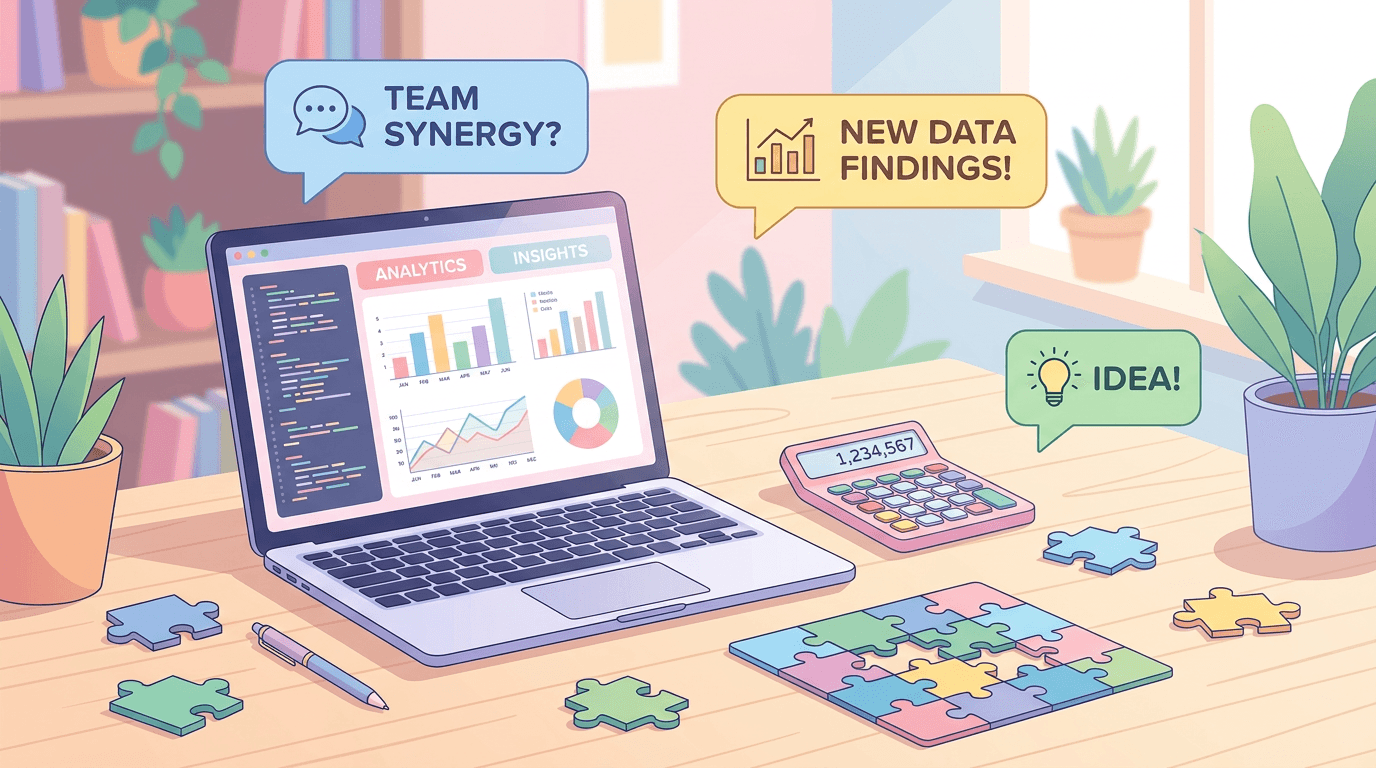
How Analytical Careers Combine Technology, Problem-Solving, and Communication
How Analytical Careers Combine Technology, Problem-Solving, and Communication

Article by
Milo
ESL Content Coordinator & Educator
ESL Content Coordinator & Educator
All Posts

Every organization now collects more information than it can comfortably use. Sales figures, customer records, operational logs, and survey responses pile up faster than anyone can read them, and most of that material sits untouched until someone is asked a question it might answer. That someone is usually an analytical professional.
The work looks technical from the outside, and much of it is, but the people who do it well are rarely the ones who simply know the most tools. They are the ones who can take a messy question, find the right information to answer it, and explain what they found in terms a busy manager can act on. Technology, problem-solving, and communication are not three separate parts of the job. They are three sides of the same task, and a weakness in any one of them limits everything else.
Still grading everything by hand?
EMStudio is a free teaching management app — manage your classes, students, lessons, and more!
Learn More
Still grading everything by hand?
EMStudio is a free teaching management app — manage your classes, students, lessons, and more!
Learn More
Table of Contents
Why Strong Analysis Begins With the Right Preparation
Most people who end up working with information arrive from somewhere else, picking up skills as projects demand them and filling the gaps with short courses and trial and error. That approach gets a career moving, but it tends to stall at the point where the questions become harder, and the expectations become higher. A graduate degree in data science addresses the problem that self-directed learning rarely solves, which is the absence of a structured foundation in statistics, modeling, and sound methods that hold up when the stakes rise.
Professionals who want that foundation without stepping away from their current role pursue anMS in Data Science online, which delivers the same methods and reasoning on a schedule that fits around full-time work. Preparation of that kind is what turns scattered experience into dependable expertise.
The Technology Side of Analytical Work
Technology is the part of the job most people picture first, and it is genuinely demanding. Information arrives in different formats from different systems, often incomplete and frequently inconsistent. Before anyone can draw a conclusion from it, someone has to pull it together, check it for errors, and put it into a shape that calculations can be run on. This stage takes up far more time than newcomers expect, and it is where mistakes do the most damage, because every later step inherits whatever went wrong at the start.
Beyond preparation, there is the work of building models that describe patterns and predict outcomes. Automated systems now handle a great deal of this, which has changed the skill that matters most. The valuable ability is no longer running a calculation but knowing which calculation suits the question, what assumptions it rests on, and when its results should not be trusted.
Problem-Solving as the Core of the Job
Requests arrive in rough form. A department head wants to know why a product is underperforming, or whether a change made last quarter achieved anything. Neither question can be answered directly. The first real task is translation, turning a broad concern into something specific enough to measure, then deciding what information would settle it and whether that information exists.
This is the part of the work that resists automation, because it depends on judgment rather than procedure. The professional has to decide which factors matter, which can safely be set aside, and what a reasonable answer would even look like. Along the way, the available information often turns out to be thinner than hoped, forcing a choice between a narrower question that can be answered properly and a broader one that can only be guessed at.
Why Communication Decides the Value of Analysis
A finding that nobody understands changes nothing. The people who commission analytical work are usually deciding something, and they need to know what the evidence supports, how confident they can be in it, and what it means for the choice in front of them. They do not need the method explained in full, and they rarely have time to sit through it.
This is where many capable professionals fall short. Having spent weeks inside a problem, they present everything they did rather than what it means, and the audience leaves no better informed than when they arrived. The stronger approach reverses the order. Lead with the answer, explain what supports it, and be honest about where the evidence is thin. Charts help when they are simple and chosen to make one clear point. Honesty about uncertainty helps even more.
Industries That Depend on Analytical Thinking
Few fields are untouched by this kind of work now. Hospitals use it to study patient outcomes and plan staffing. Banks use it to assess risk and detect unusual activity. Retailers use it to manage stock and understand buying patterns. Manufacturers use it to anticipate equipment failures before production stops. Public agencies use it to direct limited budgets where they will do the most good.
The methods carry across these settings, but the context does not, and professionals who learn how their industry actually operates consistently produce more useful work than those who treat every problem as a purely technical exercise.
Habits That Help Analytical Professionals Grow
Careers in this field reward steady curiosity more than bursts of effort. Keeping clear records of how a piece of work was done saves hours when someone questions it months later. Asking a colleague to review an approach catches errors that no amount of rechecking alone will find.
Spending time with the people who use the results reveals which questions genuinely matter to them. Reading widely outside the immediate task keeps the mind open to approaches that would not otherwise occur.
Building a Long Career in Analytical Work
The tools used in this profession will keep changing, and anyone who builds a career purely on familiarity with current software will find that foundation shifting under them. What lasts is the ability to think clearly about a problem, apply sound methods to it, and explain the result to people who need to act.
Those strengths transfer across tools, employers, and entire industries. Professionals who deliberately develop all three, rather than leaning on the one that comes easiest, build careers that stay valuable no matter how the technology moves.
Why Strong Analysis Begins With the Right Preparation
Most people who end up working with information arrive from somewhere else, picking up skills as projects demand them and filling the gaps with short courses and trial and error. That approach gets a career moving, but it tends to stall at the point where the questions become harder, and the expectations become higher. A graduate degree in data science addresses the problem that self-directed learning rarely solves, which is the absence of a structured foundation in statistics, modeling, and sound methods that hold up when the stakes rise.
Professionals who want that foundation without stepping away from their current role pursue anMS in Data Science online, which delivers the same methods and reasoning on a schedule that fits around full-time work. Preparation of that kind is what turns scattered experience into dependable expertise.
The Technology Side of Analytical Work
Technology is the part of the job most people picture first, and it is genuinely demanding. Information arrives in different formats from different systems, often incomplete and frequently inconsistent. Before anyone can draw a conclusion from it, someone has to pull it together, check it for errors, and put it into a shape that calculations can be run on. This stage takes up far more time than newcomers expect, and it is where mistakes do the most damage, because every later step inherits whatever went wrong at the start.
Beyond preparation, there is the work of building models that describe patterns and predict outcomes. Automated systems now handle a great deal of this, which has changed the skill that matters most. The valuable ability is no longer running a calculation but knowing which calculation suits the question, what assumptions it rests on, and when its results should not be trusted.
Problem-Solving as the Core of the Job
Requests arrive in rough form. A department head wants to know why a product is underperforming, or whether a change made last quarter achieved anything. Neither question can be answered directly. The first real task is translation, turning a broad concern into something specific enough to measure, then deciding what information would settle it and whether that information exists.
This is the part of the work that resists automation, because it depends on judgment rather than procedure. The professional has to decide which factors matter, which can safely be set aside, and what a reasonable answer would even look like. Along the way, the available information often turns out to be thinner than hoped, forcing a choice between a narrower question that can be answered properly and a broader one that can only be guessed at.
Why Communication Decides the Value of Analysis
A finding that nobody understands changes nothing. The people who commission analytical work are usually deciding something, and they need to know what the evidence supports, how confident they can be in it, and what it means for the choice in front of them. They do not need the method explained in full, and they rarely have time to sit through it.
This is where many capable professionals fall short. Having spent weeks inside a problem, they present everything they did rather than what it means, and the audience leaves no better informed than when they arrived. The stronger approach reverses the order. Lead with the answer, explain what supports it, and be honest about where the evidence is thin. Charts help when they are simple and chosen to make one clear point. Honesty about uncertainty helps even more.
Industries That Depend on Analytical Thinking
Few fields are untouched by this kind of work now. Hospitals use it to study patient outcomes and plan staffing. Banks use it to assess risk and detect unusual activity. Retailers use it to manage stock and understand buying patterns. Manufacturers use it to anticipate equipment failures before production stops. Public agencies use it to direct limited budgets where they will do the most good.
The methods carry across these settings, but the context does not, and professionals who learn how their industry actually operates consistently produce more useful work than those who treat every problem as a purely technical exercise.
Habits That Help Analytical Professionals Grow
Careers in this field reward steady curiosity more than bursts of effort. Keeping clear records of how a piece of work was done saves hours when someone questions it months later. Asking a colleague to review an approach catches errors that no amount of rechecking alone will find.
Spending time with the people who use the results reveals which questions genuinely matter to them. Reading widely outside the immediate task keeps the mind open to approaches that would not otherwise occur.
Building a Long Career in Analytical Work
The tools used in this profession will keep changing, and anyone who builds a career purely on familiarity with current software will find that foundation shifting under them. What lasts is the ability to think clearly about a problem, apply sound methods to it, and explain the result to people who need to act.
Those strengths transfer across tools, employers, and entire industries. Professionals who deliberately develop all three, rather than leaning on the one that comes easiest, build careers that stay valuable no matter how the technology moves.
Still grading everything by hand?
EMStudio is a free teaching management app — manage your classes, students, lessons, and more!
Learn More
Still grading everything by hand?
EMStudio is a free teaching management app — manage your classes, students, lessons, and more!
Learn More



Notion4Teachers
Notion templates to simplify administrative tasks and enhance your teaching experience.



2026 Notion4Teachers. All Rights Reserved.
Notion4Teachers
Notion templates to simplify administrative tasks and enhance your teaching experience.
2026 Notion4Teachers. All Rights Reserved.
Notion4Teachers
Notion templates to simplify administrative tasks and enhance your teaching experience.
2026 Notion4Teachers. All Rights Reserved.