
Why Minecraft Keeps Showing Up in Classrooms
Why Minecraft Keeps Showing Up in Classrooms

Article by
Milo
ESL Content Coordinator & Educator
ESL Content Coordinator & Educator
All Posts
A few years ago, saying "we're playing Minecraft in class today" would have sounded like a joke.
Now it's a normal lesson plan in plenty of schools.
Teachers use it for history, math, science, coding, and even writing. Students who barely talk during a regular lesson suddenly argue about where the village well should go.
So what changed? And why do more teachers keep trying it?
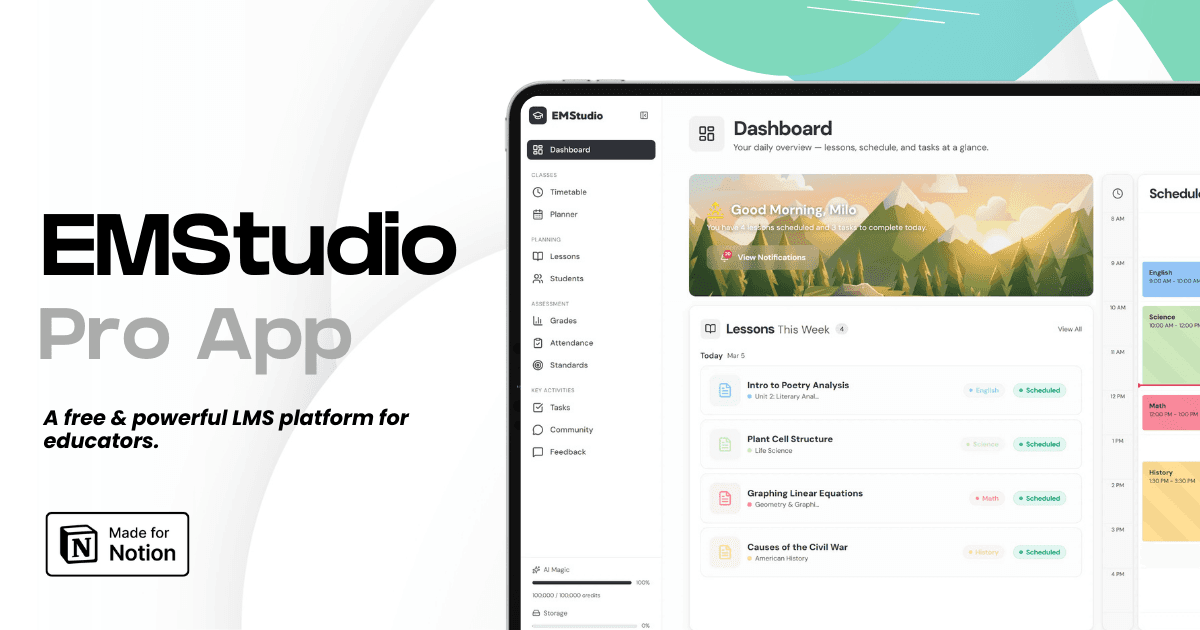
Still grading everything by hand?
EMStudio is a free teaching management app — manage your classes, students, lessons, and more!
Learn More
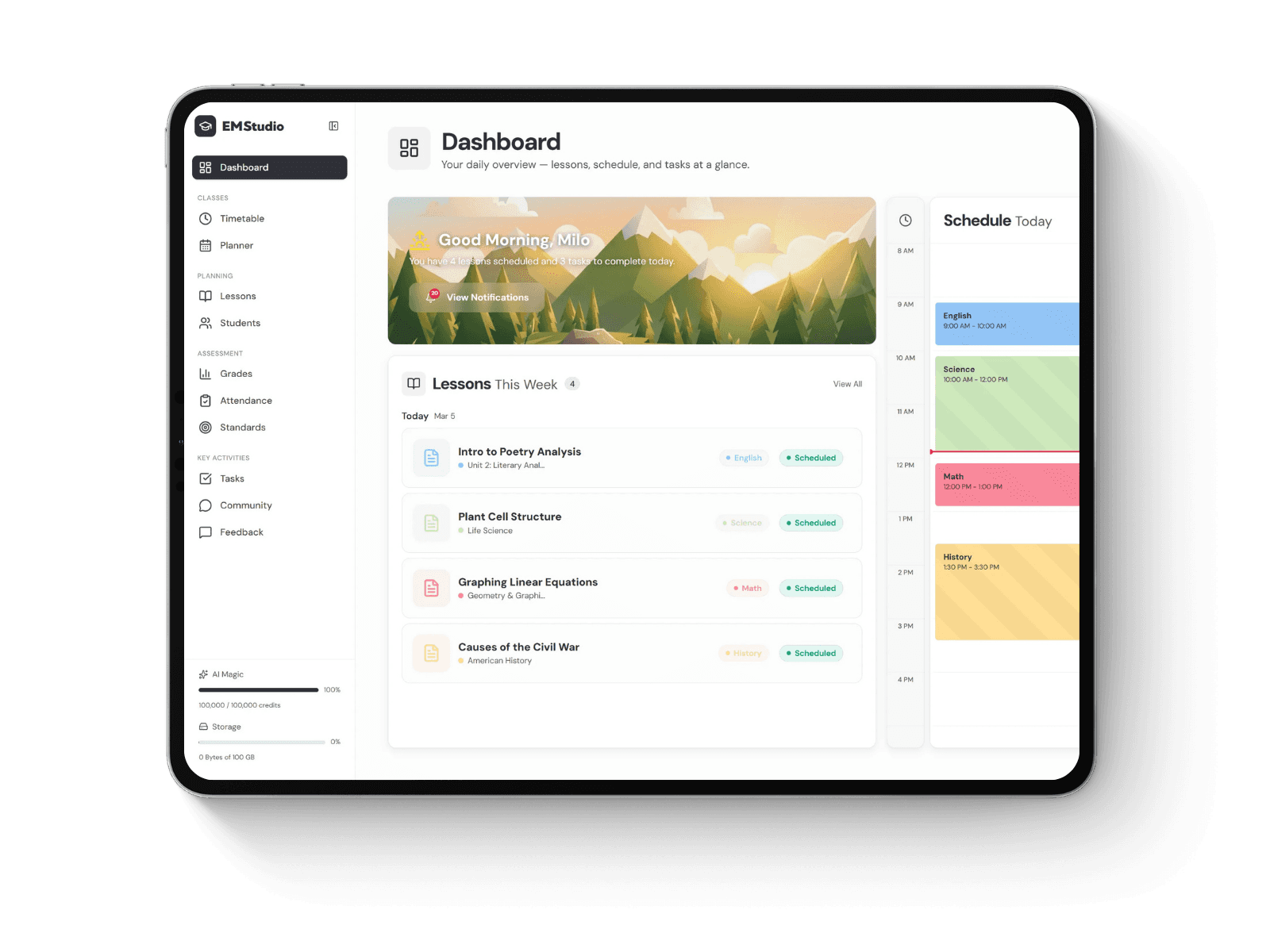
Still grading everything by hand?
EMStudio is a free teaching management app — manage your classes, students, lessons, and more!
Learn More
Table of Contents
Students Already Know How It Works
Most classroom tools need a tutorial before anyone can use them.
Minecraft usually doesn't.
A big part of the class has probably played it at home. They know how to move, build, and break blocks. Some of them know more about it than the teacher does, and that's fine.
It means the lesson can start faster. And the students who already know the game can help those who don't.
That alone changes the mood in the room. Kids who don't usually shine in class get a chance to be the expert for once.

pixabay.com
It Turns Abstract Topics Into Something You Can Walk Through
Some topics are hard to picture from a textbook.
In Minecraft, students can build them.
A class studying ancient Rome can build a small town with a forum and an aqueduct. A science group can design an ecosystem and figure out what happens when one part goes missing. In math, students can work with area, perimeter, and scale while building something to exact measurements.
Once it's built, they can walk around inside it. It's no longer just a picture on page 84.
Many teachers use Minecraft Education for this, since it has ready-made lesson plans and classroom controls. Others prefer the Java edition, especially when they want mods. If you're looking for inspiration, Edutopia has a useful collection of ideas for using Minecraft in the classroom.
Teamwork Happens Naturally
Put four students in one world with one task, and they have to talk.
Who builds the walls? Who collects the materials? What happens when two people want different designs?
Those conversations are messy, but they're real. Students plan, split the work, disagree, and fix mistakes together.
You don't have to invent a group activity. The game creates one on its own. ISTE has shared several Minecraft lesson examples that build collaboration right into the task.
It Opens the Door to Coding
This is a big reason schools are paying attention.
Minecraft Education includes Code Builder, where students can program an in-game agent with blocks or Python. Microsoft even argues that anyone can teach coding with Minecraft, including teachers with no programming background. On the Java side, mods like CC: Tweaked (a modern version of ComputerCraft) let older students write real Lua scripts that control computers and robots inside the world.
It's much easier to care about a loop when the loop builds you a tower.
Classes that go this route often run modpacks on their own server. That's when setup starts to matter. A modded world with thirty students needs more resources than a small vanilla map, so it's worth reading about reliable hosting for forge modpacks before the first lesson, not after the server freezes mid-class.
It Isn't Automatic, Though
Minecraft doesn't teach anything on its own.
Without a clear goal, a lesson can quickly turn into "free play with extra steps." Students wander off, build random houses, or dig straight down.
The lessons that work usually have a few things in common:
One clear learning goal, written down before class.
Groups with specific roles.
A defined building area for each team.
A time limit.
A few minutes at the end to talk about what they built and why.
Keep the lesson plan, the server address, group lists, and the student checklist on one page. A shared Notion page works well here, so you're not searching through tabs while twenty students wait.
Why It's Catching On
In the end, the reason is simple.
Students care about what they're building. When they care, they pay attention, ask questions, and stay with a problem longer than they would on a worksheet.
Teachers noticed that. And once one teacher in a school runs a good Minecraft lesson, others tend to ask how they did it.
Minecraft won't replace regular teaching. But as one tool among many, it gives students a place to try ideas, make mistakes, and actually see what they learned.
Students Already Know How It Works
Most classroom tools need a tutorial before anyone can use them.
Minecraft usually doesn't.
A big part of the class has probably played it at home. They know how to move, build, and break blocks. Some of them know more about it than the teacher does, and that's fine.
It means the lesson can start faster. And the students who already know the game can help those who don't.
That alone changes the mood in the room. Kids who don't usually shine in class get a chance to be the expert for once.
pixabay.com
It Turns Abstract Topics Into Something You Can Walk Through
Some topics are hard to picture from a textbook.
In Minecraft, students can build them.
A class studying ancient Rome can build a small town with a forum and an aqueduct. A science group can design an ecosystem and figure out what happens when one part goes missing. In math, students can work with area, perimeter, and scale while building something to exact measurements.
Once it's built, they can walk around inside it. It's no longer just a picture on page 84.
Many teachers use Minecraft Education for this, since it has ready-made lesson plans and classroom controls. Others prefer the Java edition, especially when they want mods. If you're looking for inspiration, Edutopia has a useful collection of ideas for using Minecraft in the classroom.
Teamwork Happens Naturally
Put four students in one world with one task, and they have to talk.
Who builds the walls? Who collects the materials? What happens when two people want different designs?
Those conversations are messy, but they're real. Students plan, split the work, disagree, and fix mistakes together.
You don't have to invent a group activity. The game creates one on its own. ISTE has shared several Minecraft lesson examples that build collaboration right into the task.
It Opens the Door to Coding
This is a big reason schools are paying attention.
Minecraft Education includes Code Builder, where students can program an in-game agent with blocks or Python. Microsoft even argues that anyone can teach coding with Minecraft, including teachers with no programming background. On the Java side, mods like CC: Tweaked (a modern version of ComputerCraft) let older students write real Lua scripts that control computers and robots inside the world.
It's much easier to care about a loop when the loop builds you a tower.
Classes that go this route often run modpacks on their own server. That's when setup starts to matter. A modded world with thirty students needs more resources than a small vanilla map, so it's worth reading about reliable hosting for forge modpacks before the first lesson, not after the server freezes mid-class.
It Isn't Automatic, Though
Minecraft doesn't teach anything on its own.
Without a clear goal, a lesson can quickly turn into "free play with extra steps." Students wander off, build random houses, or dig straight down.
The lessons that work usually have a few things in common:
One clear learning goal, written down before class.
Groups with specific roles.
A defined building area for each team.
A time limit.
A few minutes at the end to talk about what they built and why.
Keep the lesson plan, the server address, group lists, and the student checklist on one page. A shared Notion page works well here, so you're not searching through tabs while twenty students wait.
Why It's Catching On
In the end, the reason is simple.
Students care about what they're building. When they care, they pay attention, ask questions, and stay with a problem longer than they would on a worksheet.
Teachers noticed that. And once one teacher in a school runs a good Minecraft lesson, others tend to ask how they did it.
Minecraft won't replace regular teaching. But as one tool among many, it gives students a place to try ideas, make mistakes, and actually see what they learned.
Still grading everything by hand?
EMStudio is a free teaching management app — manage your classes, students, lessons, and more!
Learn More
Still grading everything by hand?
EMStudio is a free teaching management app — manage your classes, students, lessons, and more!
Learn More


Notion4Teachers
Notion templates to simplify administrative tasks and enhance your teaching experience.



2026 Notion4Teachers. All Rights Reserved.
Notion4Teachers
Notion templates to simplify administrative tasks and enhance your teaching experience.
2026 Notion4Teachers. All Rights Reserved.
Notion4Teachers
Notion templates to simplify administrative tasks and enhance your teaching experience.
2026 Notion4Teachers. All Rights Reserved.