How to Review MCAT Practice Questions Without Wasting Hours
How to Review MCAT Practice Questions Without Wasting Hours

Article by
Milo
ESL Content Coordinator & Educator
ESL Content Coordinator & Educator
All Posts
A time boxed review system tutors can teach and students can sustain
By LoopdMed Team
Practice questions are supposed to reveal what a student needs to learn next. Too often, though, they create a second full-time job: screenshots, sprawling notes, a crowded error log, and hours spent rereading explanations that feel clear in the moment but do not change the next attempt.
This is especially common with UWorld and other MCAT question banks. Students finish a block, see several misses, and assume every question deserves the same deep review. It does not.
The goal of review is not to document everything. It is to identify what broke, extract one useful lesson, and make sure that lesson appears again before it is forgotten. For tutors and educators, teaching this distinction can help students spend less time reviewing and more time improving.
The system below uses a simple principle: each worthwhile question should produce one diagnosed mistake and one next action.
Still grading everything by hand?
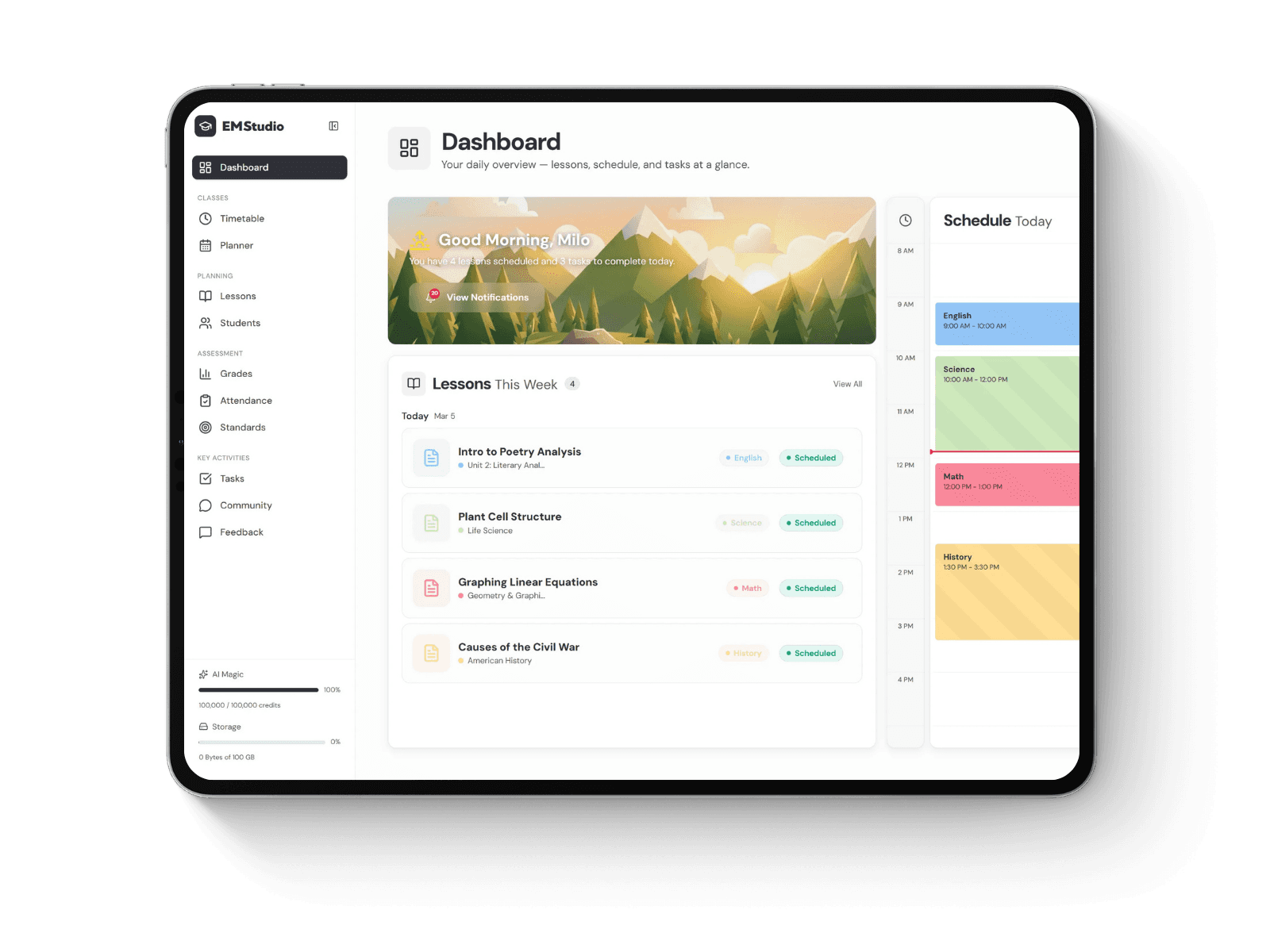
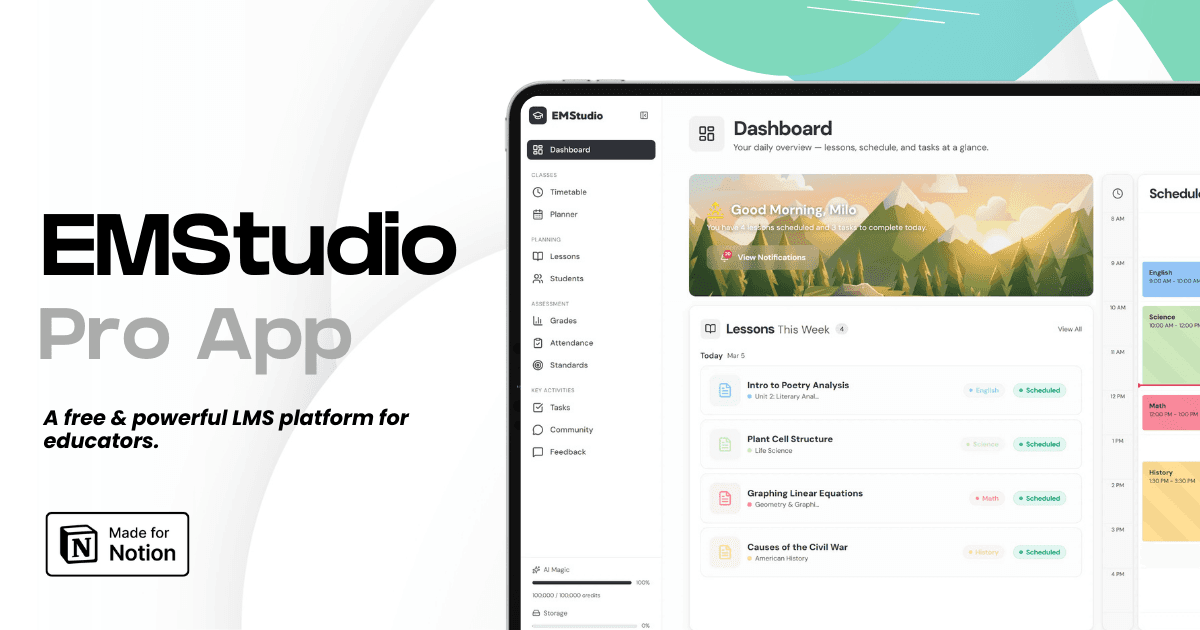
EMStudio is a free teaching management app — manage your classes, students, lessons, and more!
Learn More
Still grading everything by hand?
EMStudio is a free teaching management app — manage your classes, students, lessons, and more!
Learn More
Table of Contents
Start with triage not a full reread
The first pass through a completed question block should take roughly 60 to 90 seconds per question. Its purpose is not to master every detail. It is to decide what deserves attention.
Ask students to sort questions into four groups:
Incorrect: The answer or reasoning was wrong.
Guessed: The answer happened to be correct, but the student could not explain why.
Flagged: The student was uncertain, rushed, or split between two choices.
Confidently correct: The student can explain the reasoning and eliminate the main distractors.
The first three groups deserve a closer look. The fourth usually needs only a quick confirmation, unless the question illustrates an important pattern or exposes a shaky concept.
This keeps review proportional. A straightforward miss caused by a forgotten definition may need a few minutes and one flashcard. A difficult passage where the student misread a graph may need more deliberate reconstruction. Treating both questions as identical wastes time.
The AAMC encourages students to review answers and understand why they were correct or incorrect. The practical challenge is deciding how deeply to go. A triage system provides that boundary: review enough to create a better next attempt, then move on.
For tutors, this is also a useful coaching habit. Instead of asking, Did you review that block? ask, Which questions earned deep review, and why? The answer reveals whether students are using their time deliberately.
Identify the first point where the reasoning broke
Careless mistake is usually not a diagnosis. It is a label that ends the investigation too early.
A student may call an error careless because they skimmed a graph, overlooked except in the stem, rushed a calculation, or changed a correct answer after second-guessing themselves. Those are different problems with different fixes.
Have students identify the first point where their path diverged from sound reasoning. Most misses fit one of five categories:
Content gap: They did not know or could not retrieve the needed concept.
Passage or data interpretation: They misunderstood a graph, experiment, trend, or relationship.
Question task mismatch: They answered a different question than the stem asked.
Strategy or timing issue: They spent too long, used an inefficient approach, or did not eliminate choices.
Execution error: They made a calculation or reading mistake despite knowing the process.
The key word is first. If a student misread a graph, then chose the wrong answer, then forgot a related definition, the graph misread may be the real place to intervene. Sending them back to reread an entire chapter will not fix the habit that caused the miss.
Research on multiple-choice testing suggests that feedback can strengthen retention and reduce the risk of retaining incorrect options. But feedback works best when students connect it to the specific idea or decision that led them astray, not when they simply read the explanation and click next.
Convert each worthwhile miss into one retrieval prompt
An explanation can feel obvious after it is read. That feeling is not the same as being able to retrieve and apply the concept next week.
For each question that survives triage, students should write a short entry using this format:
Field | What to write |
|---|---|
Rule | The idea they needed to know or apply |
Trigger | The clue that should signal that rule next time |
Next action | One retrieval prompt, practice task, or targeted review step |
For example:
Rule: A noncompetitive inhibitor decreases maximum reaction velocity without changing substrate affinity.
Trigger: The question describes reduced enzyme capacity despite unchanged substrate binding.
Next action: Create one recall prompt: What happens to Vmax and Km with noncompetitive inhibition, and why?
That is much more useful than copying a paragraph from an explanation. It preserves the part of the question that should change future behavior.
The same structure works for reasoning errors. A student who answered a different question than the stem asked might write: Rule: identify the task before selecting a familiar fact. Trigger: the stem asks for a conclusion supported by the data, not a definition. Next action: before answering the next similar question, state the task in one sentence.
This is retrieval practice, not passive rereading. Research has repeatedly found that retrieving information supports longer-term retention more effectively than restudying alone. In practical MCAT terms, students should not only recognize why an explanation makes sense; they should test whether they can produce the lesson without it in front of them.
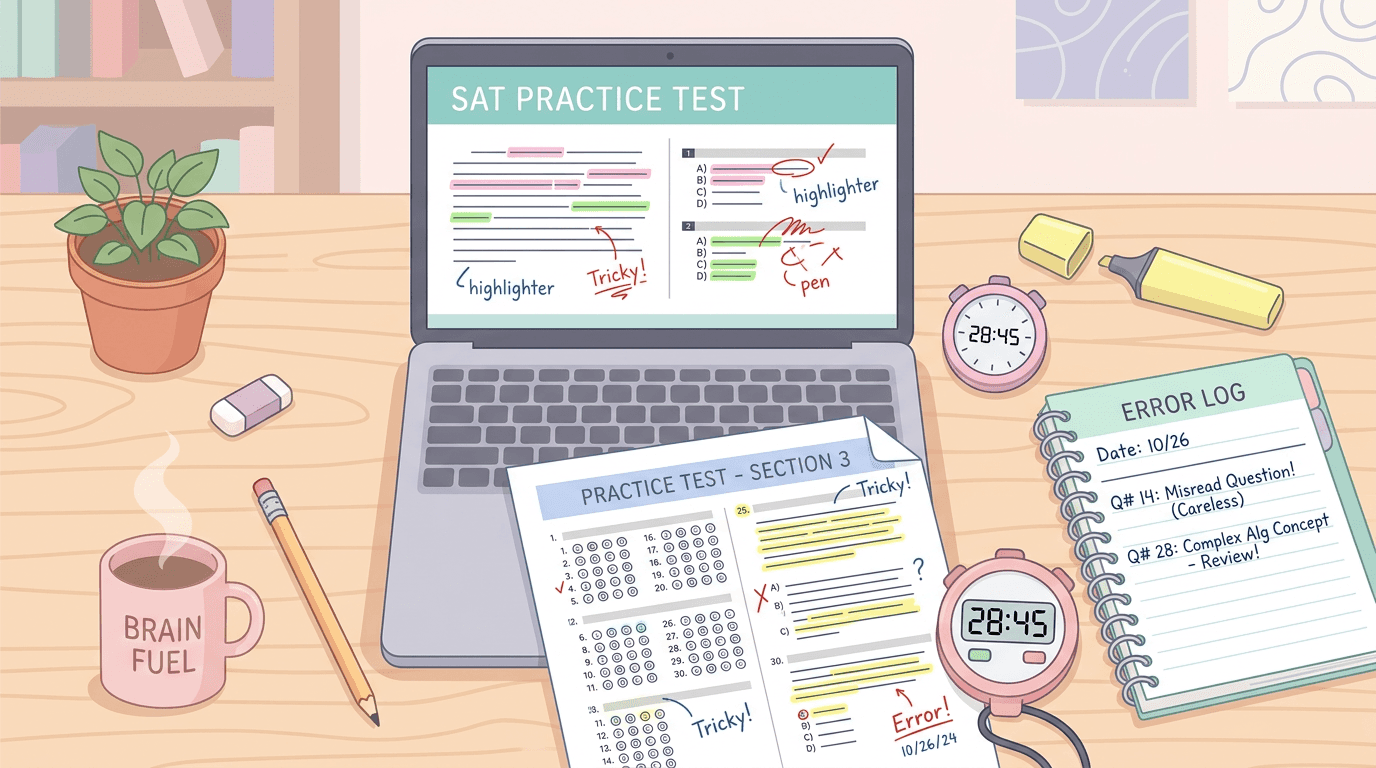
Keep a lightweight mistake log that reveals patterns
A useful error log is not a museum of every question a student has ever missed. It is a decision tool.
Keep it small enough to update consistently: question source, subject or concept, error type, one-sentence lesson, and next review date. The goal is to answer, What should I work on now? rather than merely, What have I gotten wrong before?
A tutor might notice that a student's recent misses cluster around experimental design, even though their overall biology percentage looks fine. Another student may know the content but repeatedly misread comparison questions under time pressure. Those patterns point to very different interventions.
This is similar to the logic behind tracking student progress without overwhelming yourself: use one home base, capture only actionable evidence, and let the record determine the next step.
Avoid collecting five separate notes for one question. If the lesson requires a major content gap to be repaired, add one focused resource or one short study session. Otherwise, write the takeaway and return to practice.
Revisit the lesson on a schedule
A mistake is not fully reviewed because the student understands it once. It is reviewed when they can retrieve and use the lesson later.
A simple revisit schedule works well:
Same day: Write the rule and complete the first retrieval prompt.
Three to seven days later: Answer the prompt again without notes.
Later in the study cycle: Revisit the concept in a mixed set or another practice question.
This does not require an elaborate system. A notebook, spreadsheet, flashcard app, or a dedicated review workflow can all work. What matters is that the lesson reappears after some forgetting has occurred.
Large reviews of learning techniques identify both practice testing and distributed practice as high-utility approaches, while research on distributed practice shows that spacing learning opportunities supports later retention. Students need a manageable way to apply that evidence.
Students who want a purpose-built way to turn difficult questions into a structured review cycle can use a system such as LoopdMed, which is designed around moving from practice-question mistakes to active recall and later review.
Teach the system not dependence on a tool
The best review tool is the one a student will still use after a long day of classes, work, or MCAT prep.
For some students, that is a simple spreadsheet. For others, it is a small stack of flashcards or a Notion database. The format matters less than the sequence: practice, diagnose, extract one lesson, retrieve it later, and check whether the pattern improves.
Tutors can make this system easier to adopt by modeling it with one question at a time. Do not hand students a massive template and expect instant consistency. Review one missed question together. Identify the error type. Write one lesson. Schedule one revisit.
That is enough to build the habit.
The goal is one actionable lesson
MCAT review becomes exhausting when students try to turn every explanation into a complete set of notes. A better goal is simpler: every meaningful miss should leave behind one lesson that changes what the student does next.
The student who completes more questions does not automatically learn more. The student who can explain why a miss happened, retrieve the underlying lesson later, and recognize the same trap next time is building a review system that lasts.
About the author
The LoopdMed Team builds learning workflows for MCAT students that turn missed and difficult practice questions into organized review, active recall, and retention.
Start with triage not a full reread
The first pass through a completed question block should take roughly 60 to 90 seconds per question. Its purpose is not to master every detail. It is to decide what deserves attention.
Ask students to sort questions into four groups:
Incorrect: The answer or reasoning was wrong.
Guessed: The answer happened to be correct, but the student could not explain why.
Flagged: The student was uncertain, rushed, or split between two choices.
Confidently correct: The student can explain the reasoning and eliminate the main distractors.
The first three groups deserve a closer look. The fourth usually needs only a quick confirmation, unless the question illustrates an important pattern or exposes a shaky concept.
This keeps review proportional. A straightforward miss caused by a forgotten definition may need a few minutes and one flashcard. A difficult passage where the student misread a graph may need more deliberate reconstruction. Treating both questions as identical wastes time.
The AAMC encourages students to review answers and understand why they were correct or incorrect. The practical challenge is deciding how deeply to go. A triage system provides that boundary: review enough to create a better next attempt, then move on.
For tutors, this is also a useful coaching habit. Instead of asking, Did you review that block? ask, Which questions earned deep review, and why? The answer reveals whether students are using their time deliberately.
Identify the first point where the reasoning broke
Careless mistake is usually not a diagnosis. It is a label that ends the investigation too early.
A student may call an error careless because they skimmed a graph, overlooked except in the stem, rushed a calculation, or changed a correct answer after second-guessing themselves. Those are different problems with different fixes.
Have students identify the first point where their path diverged from sound reasoning. Most misses fit one of five categories:
Content gap: They did not know or could not retrieve the needed concept.
Passage or data interpretation: They misunderstood a graph, experiment, trend, or relationship.
Question task mismatch: They answered a different question than the stem asked.
Strategy or timing issue: They spent too long, used an inefficient approach, or did not eliminate choices.
Execution error: They made a calculation or reading mistake despite knowing the process.
The key word is first. If a student misread a graph, then chose the wrong answer, then forgot a related definition, the graph misread may be the real place to intervene. Sending them back to reread an entire chapter will not fix the habit that caused the miss.
Research on multiple-choice testing suggests that feedback can strengthen retention and reduce the risk of retaining incorrect options. But feedback works best when students connect it to the specific idea or decision that led them astray, not when they simply read the explanation and click next.
Convert each worthwhile miss into one retrieval prompt
An explanation can feel obvious after it is read. That feeling is not the same as being able to retrieve and apply the concept next week.
For each question that survives triage, students should write a short entry using this format:
Field | What to write |
|---|---|
Rule | The idea they needed to know or apply |
Trigger | The clue that should signal that rule next time |
Next action | One retrieval prompt, practice task, or targeted review step |
For example:
Rule: A noncompetitive inhibitor decreases maximum reaction velocity without changing substrate affinity.
Trigger: The question describes reduced enzyme capacity despite unchanged substrate binding.
Next action: Create one recall prompt: What happens to Vmax and Km with noncompetitive inhibition, and why?
That is much more useful than copying a paragraph from an explanation. It preserves the part of the question that should change future behavior.
The same structure works for reasoning errors. A student who answered a different question than the stem asked might write: Rule: identify the task before selecting a familiar fact. Trigger: the stem asks for a conclusion supported by the data, not a definition. Next action: before answering the next similar question, state the task in one sentence.
This is retrieval practice, not passive rereading. Research has repeatedly found that retrieving information supports longer-term retention more effectively than restudying alone. In practical MCAT terms, students should not only recognize why an explanation makes sense; they should test whether they can produce the lesson without it in front of them.
Keep a lightweight mistake log that reveals patterns
A useful error log is not a museum of every question a student has ever missed. It is a decision tool.
Keep it small enough to update consistently: question source, subject or concept, error type, one-sentence lesson, and next review date. The goal is to answer, What should I work on now? rather than merely, What have I gotten wrong before?
A tutor might notice that a student's recent misses cluster around experimental design, even though their overall biology percentage looks fine. Another student may know the content but repeatedly misread comparison questions under time pressure. Those patterns point to very different interventions.
This is similar to the logic behind tracking student progress without overwhelming yourself: use one home base, capture only actionable evidence, and let the record determine the next step.
Avoid collecting five separate notes for one question. If the lesson requires a major content gap to be repaired, add one focused resource or one short study session. Otherwise, write the takeaway and return to practice.
Revisit the lesson on a schedule
A mistake is not fully reviewed because the student understands it once. It is reviewed when they can retrieve and use the lesson later.
A simple revisit schedule works well:
Same day: Write the rule and complete the first retrieval prompt.
Three to seven days later: Answer the prompt again without notes.
Later in the study cycle: Revisit the concept in a mixed set or another practice question.
This does not require an elaborate system. A notebook, spreadsheet, flashcard app, or a dedicated review workflow can all work. What matters is that the lesson reappears after some forgetting has occurred.
Large reviews of learning techniques identify both practice testing and distributed practice as high-utility approaches, while research on distributed practice shows that spacing learning opportunities supports later retention. Students need a manageable way to apply that evidence.
Students who want a purpose-built way to turn difficult questions into a structured review cycle can use a system such as LoopdMed, which is designed around moving from practice-question mistakes to active recall and later review.
Teach the system not dependence on a tool
The best review tool is the one a student will still use after a long day of classes, work, or MCAT prep.
For some students, that is a simple spreadsheet. For others, it is a small stack of flashcards or a Notion database. The format matters less than the sequence: practice, diagnose, extract one lesson, retrieve it later, and check whether the pattern improves.
Tutors can make this system easier to adopt by modeling it with one question at a time. Do not hand students a massive template and expect instant consistency. Review one missed question together. Identify the error type. Write one lesson. Schedule one revisit.
That is enough to build the habit.
The goal is one actionable lesson
MCAT review becomes exhausting when students try to turn every explanation into a complete set of notes. A better goal is simpler: every meaningful miss should leave behind one lesson that changes what the student does next.
The student who completes more questions does not automatically learn more. The student who can explain why a miss happened, retrieve the underlying lesson later, and recognize the same trap next time is building a review system that lasts.
About the author
The LoopdMed Team builds learning workflows for MCAT students that turn missed and difficult practice questions into organized review, active recall, and retention.
Still grading everything by hand?
EMStudio is a free teaching management app — manage your classes, students, lessons, and more!
Learn More
Still grading everything by hand?
EMStudio is a free teaching management app — manage your classes, students, lessons, and more!
Learn More



Notion4Teachers
Notion templates to simplify administrative tasks and enhance your teaching experience.



2026 Notion4Teachers. All Rights Reserved.
Notion4Teachers
Notion templates to simplify administrative tasks and enhance your teaching experience.
2026 Notion4Teachers. All Rights Reserved.
Notion4Teachers
Notion templates to simplify administrative tasks and enhance your teaching experience.
2026 Notion4Teachers. All Rights Reserved.