
When a Notion Template Business Outgrows Notion
When a Notion Template Business Outgrows Notion

Article by
Milo
ESL Content Coordinator & Educator
ESL Content Coordinator & Educator
All Posts
Talk to enough teacher-creators and you'll notice the same arc. It starts with one lesson-planning dashboard built for yourself, shared in a Facebook group because a colleague asked how you organized your week. A few dozen downloads later, there's a Gumroad link. Then a small catalog: a grading tracker, a parent-communication log, a curriculum map. Notion is perfect for this stage — it's where the product already lives, and duplicating a template costs nothing.
The friction shows up later, once there's an actual audience. A public Notion page reads fine as a product demo, but it's a strange place to run a brand.
There's no real control over layout on mobile, no way to build an email list properly, no room for a blog that explains why a template is organized the way it is — which, for teacher-creators, is often half the value.
At that point most people open Canva or Figma and start sketching what an actual site should look like: a home page, a shop grid, maybe a free resource library to build trust before anyone pays for anything.
Still grading everything by hand?
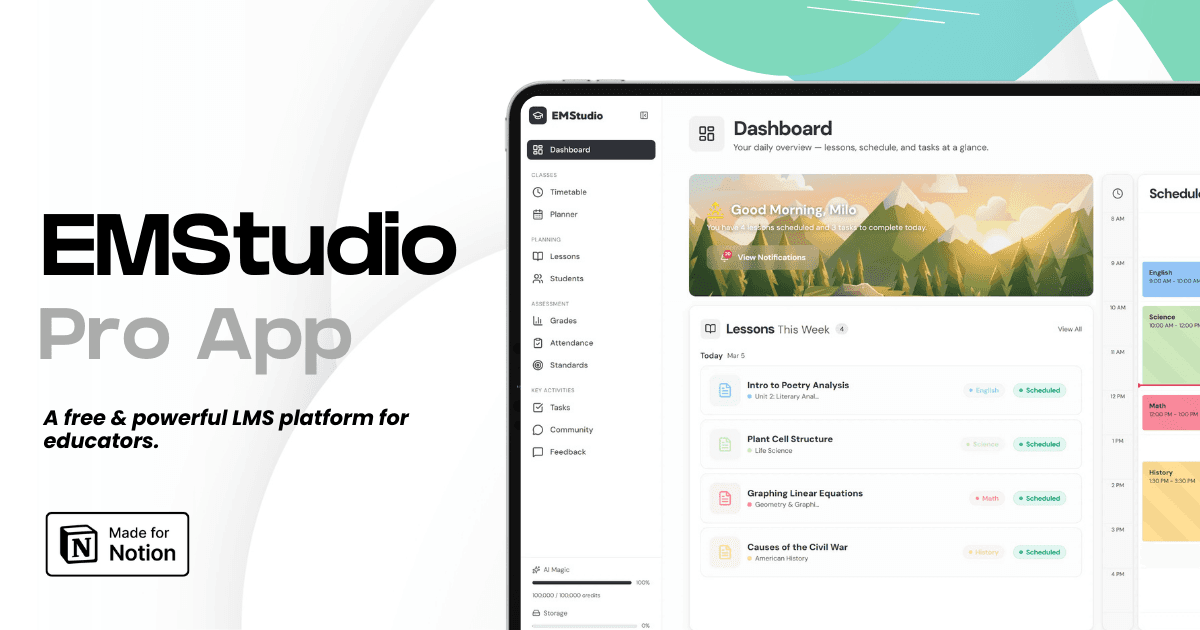
EMStudio is a free teaching management app — manage your classes, students, lessons, and more!
Learn More
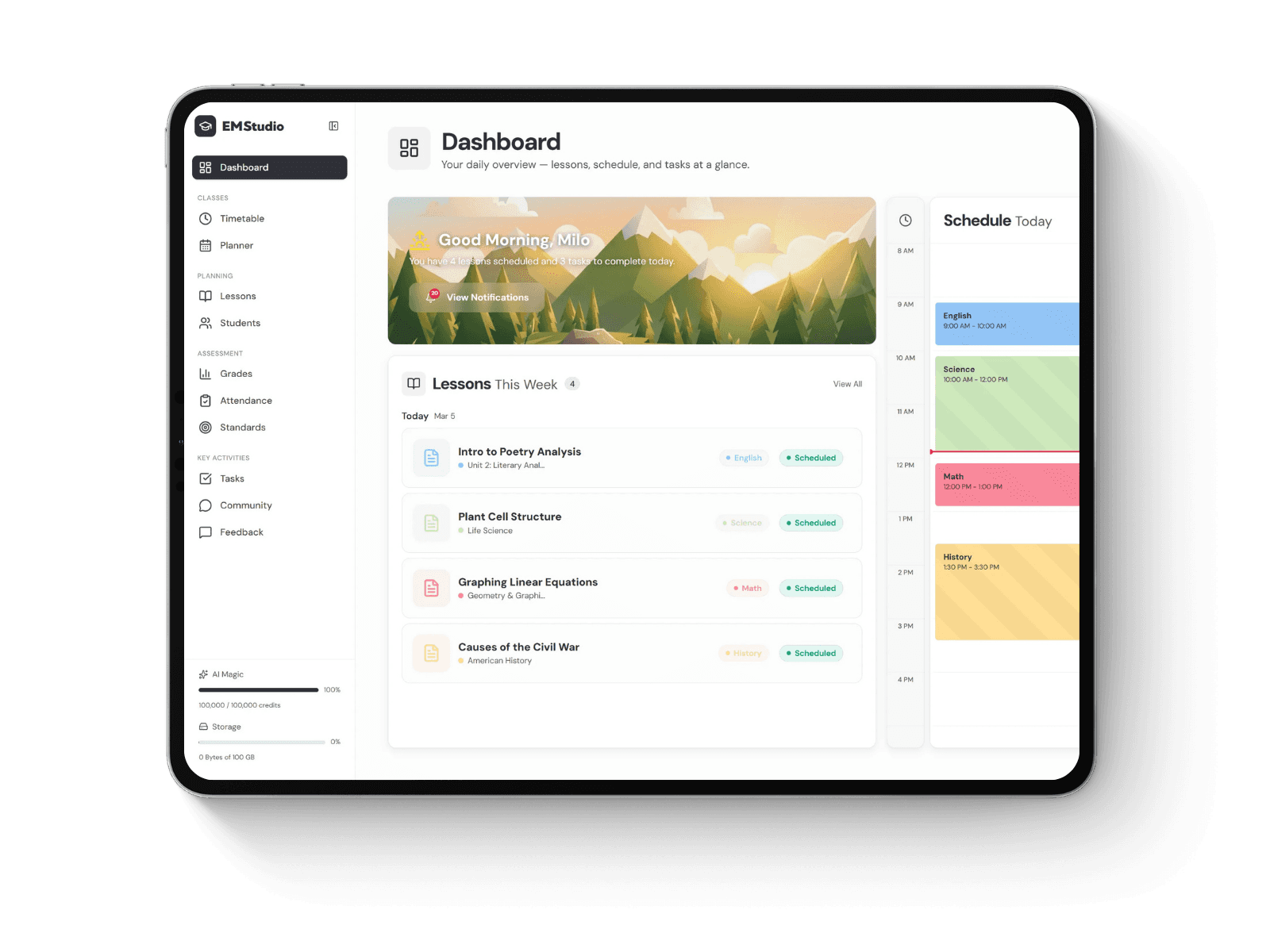
Still grading everything by hand?
EMStudio is a free teaching management app — manage your classes, students, lessons, and more!
Learn More
Table of Contents
The gap between a mockup and a working site
This is where a lot of side businesses stall for months. A finished design file is not a website.
Someone still has to turn every frame into markup that behaves on a phone screen during a five-minute passing period, loads fast on a school Chromebook, and doesn't fall apart the moment a plugin update rolls through.
The usual shortcut is dropping the design into a page builder and eyeballing it until it's close enough — which works, but it rarely matches the file pixel for pixel, and it tends to carry a lot of extra weight (scripts, CSS, dependencies) that a template shop with a handful of products doesn't actually need.
I've seen a few creators go the other way and just have the XD or Figma file hand-coded into WordPress instead of forcing it through a builder. It sounds like a small distinction, but it matters for exactly this kind of site: no bloated builder framework sitting underneath a shop with fifteen products, and the layout actually matches what was designed instead of an approximation of it.
Why it's worth doing properly the first time
A template business runs on trust more than most e-commerce niches — a teacher buying a $12 planner wants to believe the person who made it actually understands a classroom, and a slow, janky, off-brand site undercuts that before anyone reads a product description. It's a small thing that adds up: parents and teachers browsing on a phone between meetings don't wait around for a bloated page to load, and a mismatched layout reads as "someone's side project" instead of "a resource I can rely on."
None of this requires abandoning Notion, either. Plenty of creators keep Notion as the actual product — the template someone duplicates after buying — while the storefront around it lives somewhere built to hold up under real traffic. The tools end up doing what they're each good at: Notion for the product, a proper site for the front door.
If there's one thing worth planning for early, it's this: the moment a Notion side project starts making real money is exactly the moment it needs a home that doesn't look like a side project anymore.
The gap between a mockup and a working site
This is where a lot of side businesses stall for months. A finished design file is not a website.
Someone still has to turn every frame into markup that behaves on a phone screen during a five-minute passing period, loads fast on a school Chromebook, and doesn't fall apart the moment a plugin update rolls through.
The usual shortcut is dropping the design into a page builder and eyeballing it until it's close enough — which works, but it rarely matches the file pixel for pixel, and it tends to carry a lot of extra weight (scripts, CSS, dependencies) that a template shop with a handful of products doesn't actually need.
I've seen a few creators go the other way and just have the XD or Figma file hand-coded into WordPress instead of forcing it through a builder. It sounds like a small distinction, but it matters for exactly this kind of site: no bloated builder framework sitting underneath a shop with fifteen products, and the layout actually matches what was designed instead of an approximation of it.
Why it's worth doing properly the first time
A template business runs on trust more than most e-commerce niches — a teacher buying a $12 planner wants to believe the person who made it actually understands a classroom, and a slow, janky, off-brand site undercuts that before anyone reads a product description. It's a small thing that adds up: parents and teachers browsing on a phone between meetings don't wait around for a bloated page to load, and a mismatched layout reads as "someone's side project" instead of "a resource I can rely on."
None of this requires abandoning Notion, either. Plenty of creators keep Notion as the actual product — the template someone duplicates after buying — while the storefront around it lives somewhere built to hold up under real traffic. The tools end up doing what they're each good at: Notion for the product, a proper site for the front door.
If there's one thing worth planning for early, it's this: the moment a Notion side project starts making real money is exactly the moment it needs a home that doesn't look like a side project anymore.
Still grading everything by hand?
EMStudio is a free teaching management app — manage your classes, students, lessons, and more!
Learn More
Still grading everything by hand?
EMStudio is a free teaching management app — manage your classes, students, lessons, and more!
Learn More


Notion4Teachers
Notion templates to simplify administrative tasks and enhance your teaching experience.



2026 Notion4Teachers. All Rights Reserved.
Notion4Teachers
Notion templates to simplify administrative tasks and enhance your teaching experience.
2026 Notion4Teachers. All Rights Reserved.
Notion4Teachers
Notion templates to simplify administrative tasks and enhance your teaching experience.
2026 Notion4Teachers. All Rights Reserved.