
Choosing a Dissertation Topic for Your EdD While Still Teaching Full-Time
Choosing a Dissertation Topic for Your EdD While Still Teaching Full-Time

Article by
Milo
ESL Content Coordinator & Educator
ESL Content Coordinator & Educator
All Posts
I've seen more than one teacher get stuck right here. Not because they weren't smart. They were three years into full-time teaching, marking piling up, and the one thing standing between them and starting their EdD was a single sentence they couldn't quite get right.
If that's you, here's what nobody tells you early enough: the topic doesn't need to sound clever. It needs to survive your actual week.
Start with something you already notice. Maybe your Year 9 group always loses focus around week four. Maybe there's a marking pattern you can't explain. The EdD is built for this, real questions from your own classroom, not something borrowed from a paper you liked but can't actually study yourself.
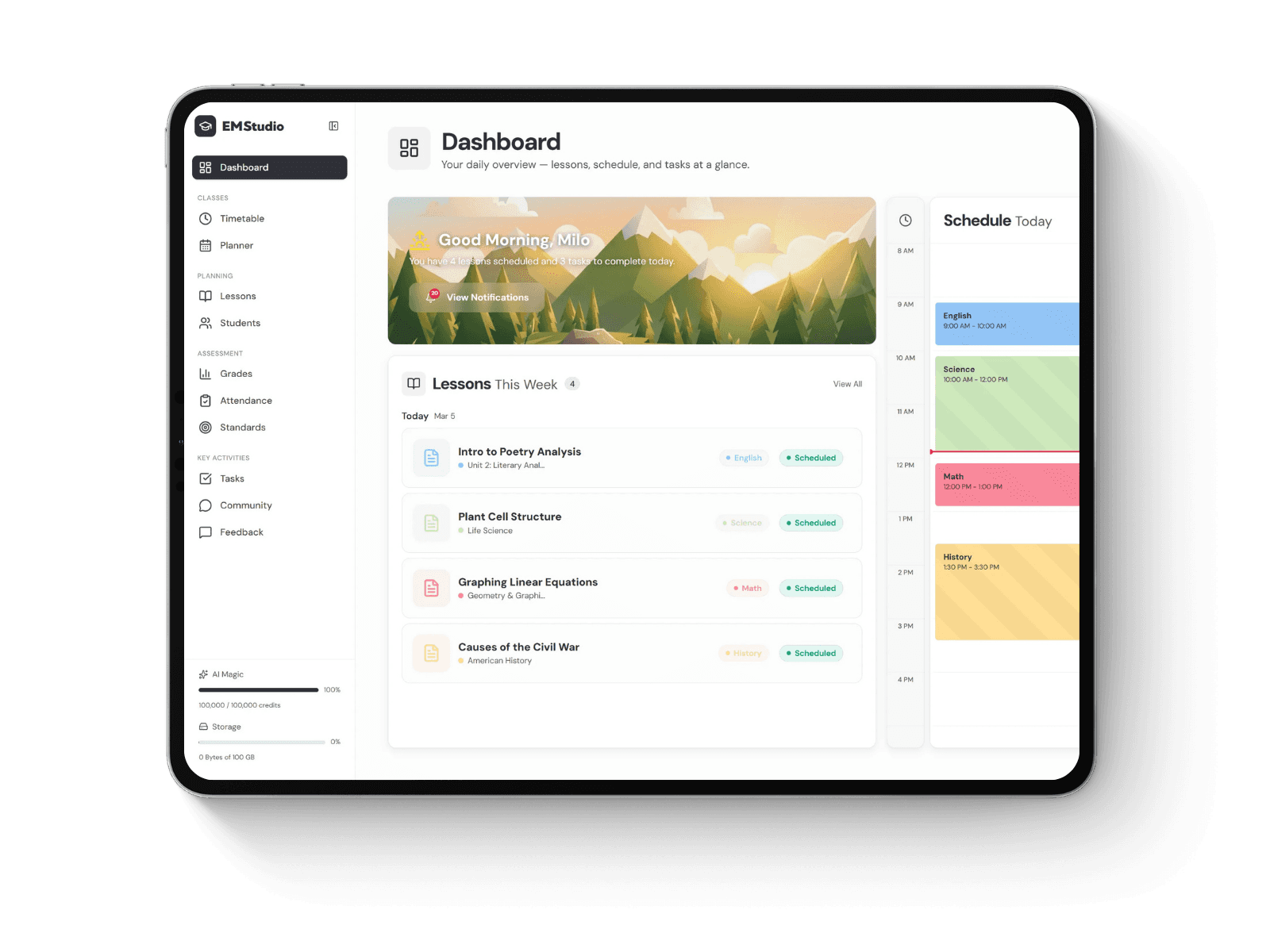
Still grading everything by hand?
EMStudio is a free teaching management app — manage your classes, students, lessons, and more!
Learn More
Still grading everything by hand?
EMStudio is a free teaching management app — manage your classes, students, lessons, and more!
Learn More
Table of Contents
Choosing a Dissertation Topic for Your EdD While Still Teaching Full-Time
Before you fall in love with an idea, ask the boring question first: can you get the data without your job getting in the way? This is where good topics quietly die. Anything that needs formal approval to survey other schools, or pupil data from outside your school, can take months. Your own classroom, your own students, your school's normal consent process, that moves in weeks, not terms.
If you're collecting assessment scores, survey responses, or classroom performance data, organizing and summarizing your findings early can save time later in the research process. Simple academic tools like an Average Calculator can help you quickly calculate mean scores, making it easier to identify trends before moving on to deeper analysis.
Then make it smaller. "How does technology affect engagement" isn't a topic. It's a mood. "Does one specific tool improve Year 10 recall compared to normal homework" is a topic. If you can't say it in one breath, it's not ready yet.
Breaking a large research question into smaller, manageable parts often makes the entire dissertation process feel less overwhelming. The same step-by-step approach is used by educational platforms like StepSolvers, which provide practical learning resources designed to help students solve academic challenges more systematically instead of trying to tackle everything at once.
Read what's recent, not just the classics. Education has changed fast the last two years, AI in classrooms, retrieval practice, gaps left by the pandemic. A topic built only on older reading will feel out of date before you've written a word.
On AI: use it to help you search, not to think for you. It's genuinely useful for getting through a paper you don't have time to read fully. But it can't tell you if a gap is still open right now, its knowledge has a cutoff. And it can't check whether someone's already published your exact idea. If an examiner asks where a claim came from, "the AI said so" won't cut it.
And if you get stuck anyway, that's not a sign you've failed. It usually just means you need someone else's eyes. A supervisor, a coursemate, or someone who works with dissertation topics every day and can tell you in ten minutes if yours is actually the right size.
If you're still choosing,Premier Dissertations' education dissertation topics page is built the same way, real, current gaps, not the same recycled ideas everyone else uses. And if you've got a topic already and need help with your proposal or your data, theirdissertation support page shows what that actually looks like.
Choosing a Dissertation Topic for Your EdD While Still Teaching Full-Time
Before you fall in love with an idea, ask the boring question first: can you get the data without your job getting in the way? This is where good topics quietly die. Anything that needs formal approval to survey other schools, or pupil data from outside your school, can take months. Your own classroom, your own students, your school's normal consent process, that moves in weeks, not terms.
If you're collecting assessment scores, survey responses, or classroom performance data, organizing and summarizing your findings early can save time later in the research process. Simple academic tools like an Average Calculator can help you quickly calculate mean scores, making it easier to identify trends before moving on to deeper analysis.
Then make it smaller. "How does technology affect engagement" isn't a topic. It's a mood. "Does one specific tool improve Year 10 recall compared to normal homework" is a topic. If you can't say it in one breath, it's not ready yet.
Breaking a large research question into smaller, manageable parts often makes the entire dissertation process feel less overwhelming. The same step-by-step approach is used by educational platforms like StepSolvers, which provide practical learning resources designed to help students solve academic challenges more systematically instead of trying to tackle everything at once.
Read what's recent, not just the classics. Education has changed fast the last two years, AI in classrooms, retrieval practice, gaps left by the pandemic. A topic built only on older reading will feel out of date before you've written a word.
On AI: use it to help you search, not to think for you. It's genuinely useful for getting through a paper you don't have time to read fully. But it can't tell you if a gap is still open right now, its knowledge has a cutoff. And it can't check whether someone's already published your exact idea. If an examiner asks where a claim came from, "the AI said so" won't cut it.
And if you get stuck anyway, that's not a sign you've failed. It usually just means you need someone else's eyes. A supervisor, a coursemate, or someone who works with dissertation topics every day and can tell you in ten minutes if yours is actually the right size.
If you're still choosing,Premier Dissertations' education dissertation topics page is built the same way, real, current gaps, not the same recycled ideas everyone else uses. And if you've got a topic already and need help with your proposal or your data, theirdissertation support page shows what that actually looks like.
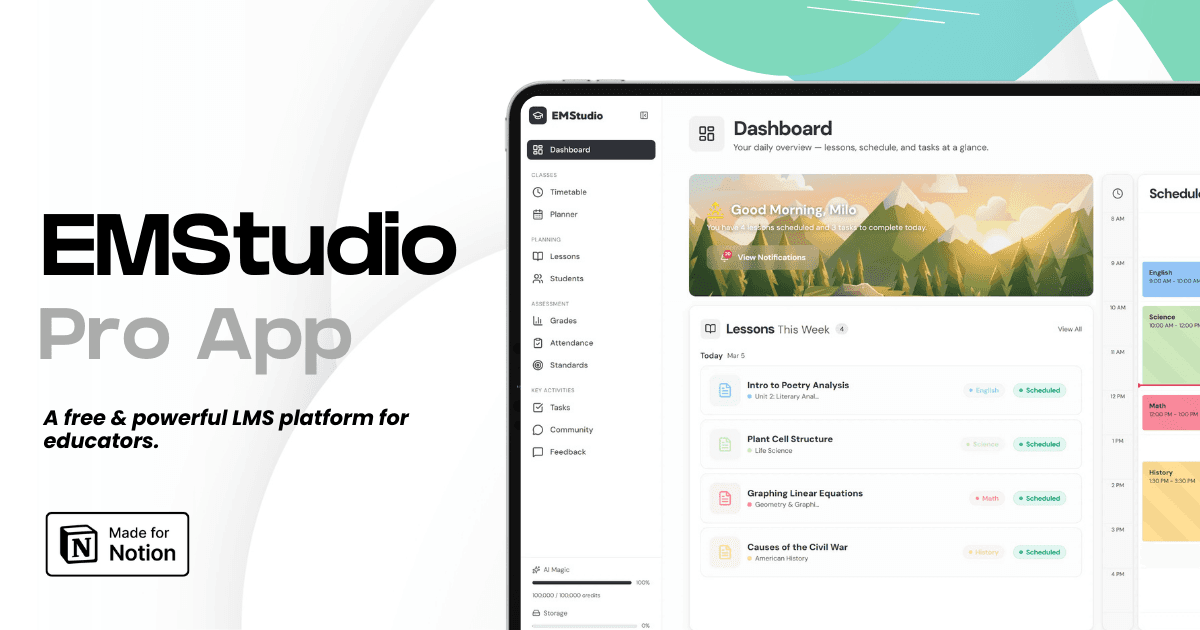
Still grading everything by hand?
EMStudio is a free teaching management app — manage your classes, students, lessons, and more!
Learn More
Still grading everything by hand?
EMStudio is a free teaching management app — manage your classes, students, lessons, and more!
Learn More


Notion4Teachers
Notion templates to simplify administrative tasks and enhance your teaching experience.



2026 Notion4Teachers. All Rights Reserved.
Notion4Teachers
Notion templates to simplify administrative tasks and enhance your teaching experience.
2026 Notion4Teachers. All Rights Reserved.
Notion4Teachers
Notion templates to simplify administrative tasks and enhance your teaching experience.
2026 Notion4Teachers. All Rights Reserved.