Top 7 Ways Teachers Can Collaborate Without Endless Email Chains
Top 7 Ways Teachers Can Collaborate Without Endless Email Chains

Article by
Milo
ESL Content Coordinator & Educator
ESL Content Coordinator & Educator
All Posts
Picture a Tuesday morning. You open your inbox and there it is: a reply-all thread about the science fair, forty-seven messages deep. Who agreed to what? No idea. Somewhere in the middle the room booking changed, and nobody noticed. Meanwhile the one question that matters, is the fair still on Friday, sits unanswered. Sound familiar?
The numbers explain the feeling. RAND's State of the Teacher survey found that U.S. teachers work about 53 hours a week, while similar working adults log 44. On top of that, 59% of teachers report frequent job-related stress. A McKinsey Global Institute report adds another piece: knowledge workers spend roughly 28% of the workweek on email. That figure isn't only about teachers, yet few of us would call our own inboxes light. So let's move the conversation somewhere better. Here are seven ways to do it.
Still grading everything by hand?
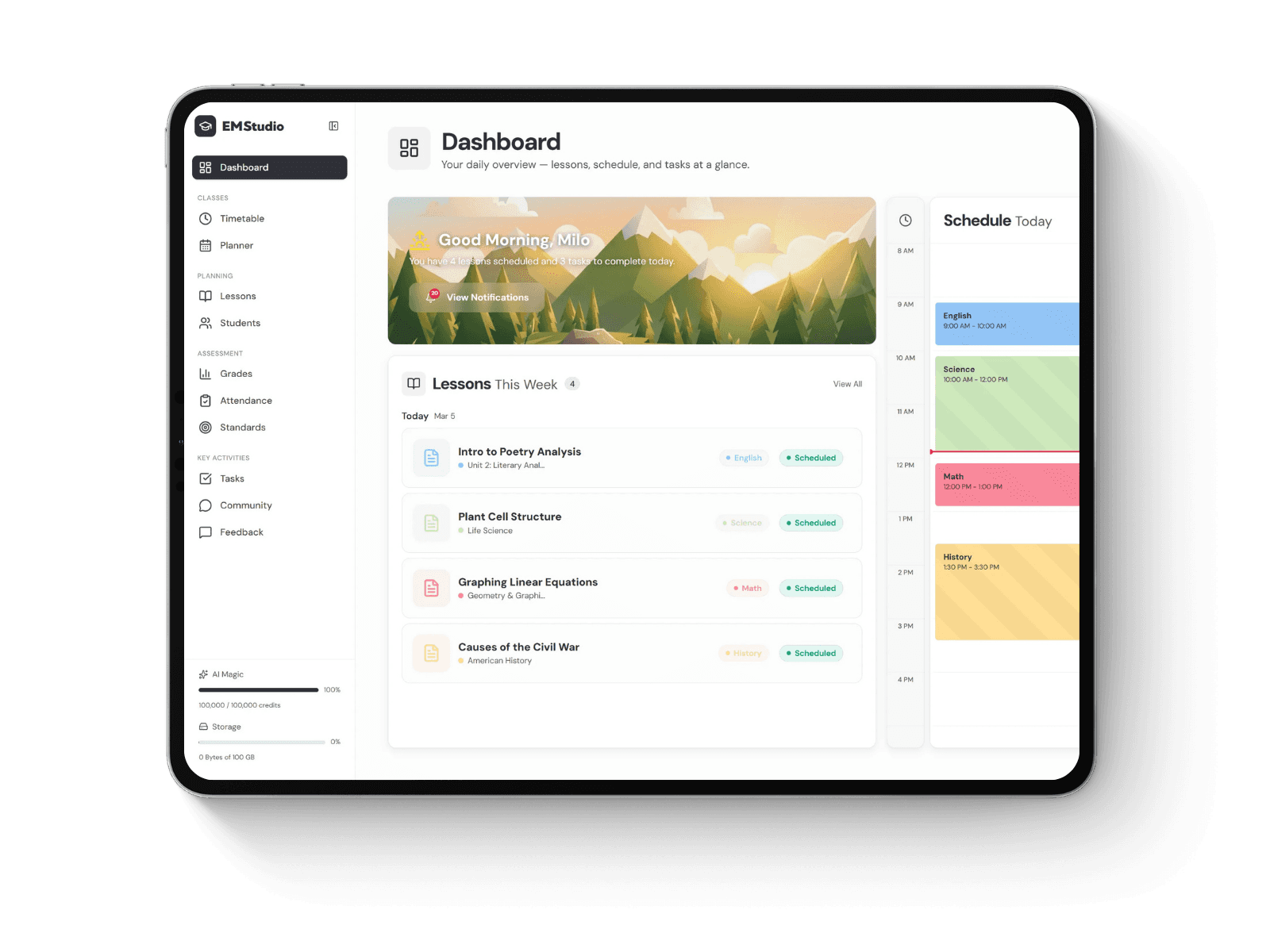
EMStudio is a free teaching management app — manage your classes, students, lessons, and more!
Learn More
Still grading everything by hand?
EMStudio is a free teaching management app — manage your classes, students, lessons, and more!
Learn More
Table of Contents

https://www.pexels.com/photo/6502822/
1. Swap Long Threads for Short Video Huddles
Some questions die in email. "Can we move the quiz to Thursday?" becomes six replies and one misunderstanding. A ten-minute call settles it for good. Video chat for teaching teams works best when it's small, scheduled and a little boring: same slot every week, clear agenda, done.
Real-time video communication carries what text can't. Tone. A quick "wait, what do you mean?" A shared laugh that makes the next hard conversation easier. Set a timer, because fifteen minutes is enough for most planning syncs. Not every topic needs a call, of course. A room change can stay in writing. A disagreement about grading should not.
A 15-Minute Huddle Agenda
Minutes 1–3: quick wins and blockers
Minutes 4–10: the one decision that needs everyone
Minutes 11–15: who does what by Friday
2. Build One Shared Digital Teacher Planner
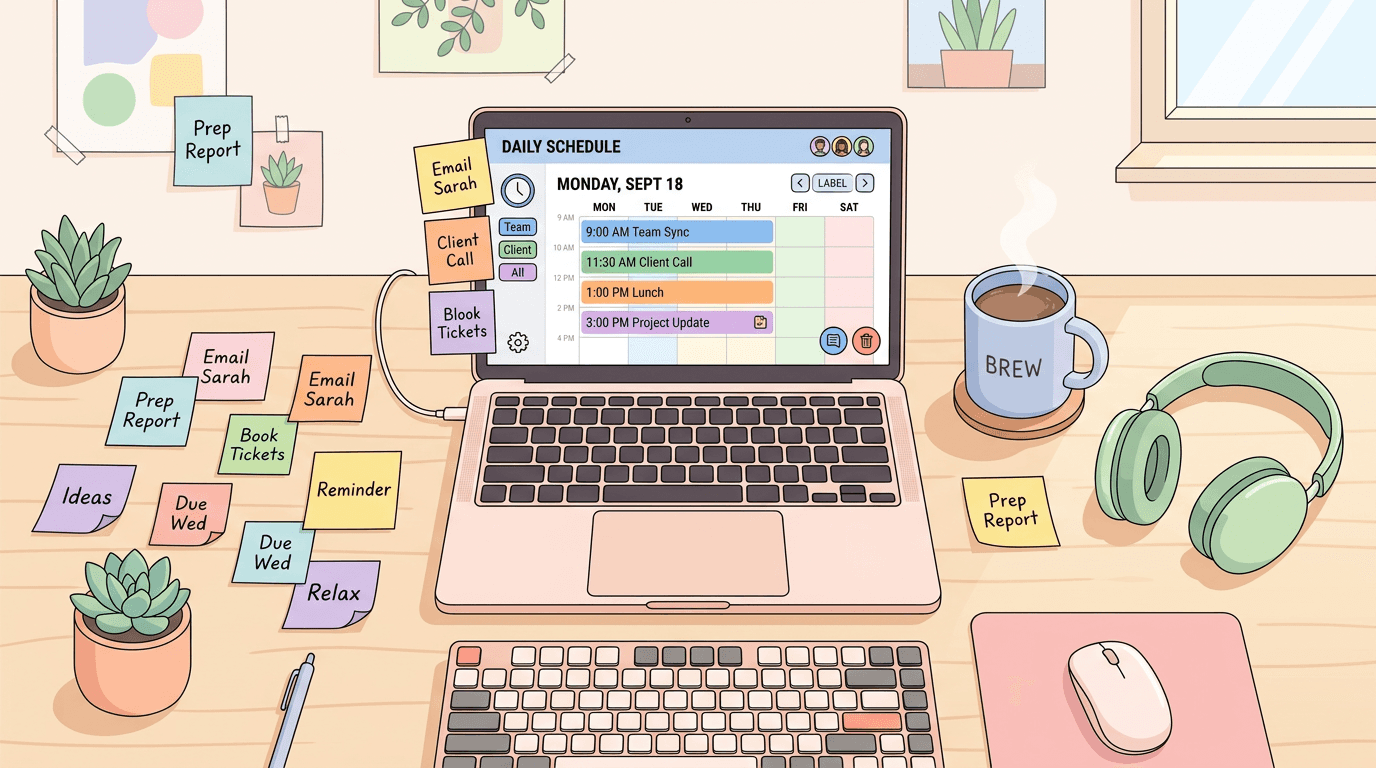
One planner for the whole grade team. Not five versions hiding in five inboxes. A digital teacher planner keeps the calendar, unit maps, duty rotas and deadlines in a single place, and everyone sees a change the moment it's made. Pin the essentials (bell schedule, assessment dates, shared rules) at the top so nobody has to ask.
It also helps with searching. That same McKinsey report estimated that a searchable shared space can cut the time spent hunting for information by up to 35%. Fewer "which version is final?" messages. More minutes for actual teaching.
3. Learn From Teachers Outside Your Building
Sometimes, the best ideas come from afar. Language teachers know this well: nothing hones speaking skills quite like real conversation. CallMeChat is a random video chat platform where adults can meet people from different countries, with built-in translation to help bridge the gap. Those who use interactive video calls quickly notice that their actual ability to understand new languages improves faster than during theoretical lessons. A Spanish or English teacher might pick up fresh phrases and everyday cultural nuances that no textbook covers.
One rule: it's made for adults, so keep it for your own practice, never for lessons with students.
4. Co-Write Units With Lesson Planning Tools
Shared lesson planning tools let two teachers edit the same unit at the same time. One drafts the warm-up while the other builds the quiz. No attachments, no "final_v3_REAL" files floating around.
Try a simple split. Each teacher owns one week of the unit and reviews a colleague's week. Peer review takes about ten minutes and catches gaps early, and version history saves you when somebody accidentally deletes the good part. It happens to everyone.
5. Agree on Classroom Management for Educators
Classroom management for educators gets messy when every room runs on different rules. Students notice fast. One teacher allows phones, the next collects them at the door. Meet once and settle three or four shared routines: entry, transitions, consequences, praise. Post them in your shared hub.
Why bother? In RAND's survey, managing student behavior and administrative work outside of teaching ranked among the top sources of teacher stress. Shared routines take some of that weight off. One meeting can replace dozens of "how do you handle this?" emails over a term.
6. Try Virtual Classroom Video Chat Together
A virtual classroom video chat isn't only for remote lessons. Two teachers can co-teach one session, invite a guest speaker, or open a short peer visit so a colleague can watch and give feedback afterward. Share one calendar link and skip the scheduling ping-pong.
Peer Visit Checklist
Pick one focus, such as questioning or pacing
Keep the visit to twenty minutes
Post feedback in the shared planner, not in an inbox
7. Start With Notion Templates for Teachers
Never build from a blank page. Notion templates for teachers already exist for weekly plans, meeting notes and project tracking. Copy one, trim it down, share it with your team. You can finish before lunch.
Three Pages to Copy First
A weekly plan the whole team can edit
A meeting-notes page with action items and owners
A parent-contact log with privacy settings checked
Start Small, Then Retire the Thread
Pick one change this week. A Friday video huddle, maybe, or a shared planner for your team. Then count the emails you didn't have to write. Fewer messages, clearer plans, and an inbox that goes back to being a quiet corner of your day. Your future self, the one grading papers on Sunday night, will thank you.
https://www.pexels.com/photo/6502822/
1. Swap Long Threads for Short Video Huddles
Some questions die in email. "Can we move the quiz to Thursday?" becomes six replies and one misunderstanding. A ten-minute call settles it for good. Video chat for teaching teams works best when it's small, scheduled and a little boring: same slot every week, clear agenda, done.
Real-time video communication carries what text can't. Tone. A quick "wait, what do you mean?" A shared laugh that makes the next hard conversation easier. Set a timer, because fifteen minutes is enough for most planning syncs. Not every topic needs a call, of course. A room change can stay in writing. A disagreement about grading should not.
A 15-Minute Huddle Agenda
Minutes 1–3: quick wins and blockers
Minutes 4–10: the one decision that needs everyone
Minutes 11–15: who does what by Friday
2. Build One Shared Digital Teacher Planner
One planner for the whole grade team. Not five versions hiding in five inboxes. A digital teacher planner keeps the calendar, unit maps, duty rotas and deadlines in a single place, and everyone sees a change the moment it's made. Pin the essentials (bell schedule, assessment dates, shared rules) at the top so nobody has to ask.
It also helps with searching. That same McKinsey report estimated that a searchable shared space can cut the time spent hunting for information by up to 35%. Fewer "which version is final?" messages. More minutes for actual teaching.
3. Learn From Teachers Outside Your Building
Sometimes, the best ideas come from afar. Language teachers know this well: nothing hones speaking skills quite like real conversation. CallMeChat is a random video chat platform where adults can meet people from different countries, with built-in translation to help bridge the gap. Those who use interactive video calls quickly notice that their actual ability to understand new languages improves faster than during theoretical lessons. A Spanish or English teacher might pick up fresh phrases and everyday cultural nuances that no textbook covers.
One rule: it's made for adults, so keep it for your own practice, never for lessons with students.
4. Co-Write Units With Lesson Planning Tools
Shared lesson planning tools let two teachers edit the same unit at the same time. One drafts the warm-up while the other builds the quiz. No attachments, no "final_v3_REAL" files floating around.
Try a simple split. Each teacher owns one week of the unit and reviews a colleague's week. Peer review takes about ten minutes and catches gaps early, and version history saves you when somebody accidentally deletes the good part. It happens to everyone.
5. Agree on Classroom Management for Educators
Classroom management for educators gets messy when every room runs on different rules. Students notice fast. One teacher allows phones, the next collects them at the door. Meet once and settle three or four shared routines: entry, transitions, consequences, praise. Post them in your shared hub.
Why bother? In RAND's survey, managing student behavior and administrative work outside of teaching ranked among the top sources of teacher stress. Shared routines take some of that weight off. One meeting can replace dozens of "how do you handle this?" emails over a term.
6. Try Virtual Classroom Video Chat Together
A virtual classroom video chat isn't only for remote lessons. Two teachers can co-teach one session, invite a guest speaker, or open a short peer visit so a colleague can watch and give feedback afterward. Share one calendar link and skip the scheduling ping-pong.
Peer Visit Checklist
Pick one focus, such as questioning or pacing
Keep the visit to twenty minutes
Post feedback in the shared planner, not in an inbox
7. Start With Notion Templates for Teachers
Never build from a blank page. Notion templates for teachers already exist for weekly plans, meeting notes and project tracking. Copy one, trim it down, share it with your team. You can finish before lunch.
Three Pages to Copy First
A weekly plan the whole team can edit
A meeting-notes page with action items and owners
A parent-contact log with privacy settings checked
Start Small, Then Retire the Thread
Pick one change this week. A Friday video huddle, maybe, or a shared planner for your team. Then count the emails you didn't have to write. Fewer messages, clearer plans, and an inbox that goes back to being a quiet corner of your day. Your future self, the one grading papers on Sunday night, will thank you.
Still grading everything by hand?
EMStudio is a free teaching management app — manage your classes, students, lessons, and more!
Learn More
Still grading everything by hand?
EMStudio is a free teaching management app — manage your classes, students, lessons, and more!
Learn More




Notion4Teachers
Notion templates to simplify administrative tasks and enhance your teaching experience.



2026 Notion4Teachers. All Rights Reserved.
Notion4Teachers
Notion templates to simplify administrative tasks and enhance your teaching experience.
2026 Notion4Teachers. All Rights Reserved.
Notion4Teachers
Notion templates to simplify administrative tasks and enhance your teaching experience.
2026 Notion4Teachers. All Rights Reserved.